
A real two-man crosscut saw isn’t a nostalgic wall hanger — it’s a backcountry workhorse that outperforms a chainsaw in silence, safety, and sheer endurance. Whether you’re clearing trail after a storm or bucking firewood for a remote cabin, the right 2 man saw delivers a clean kerf and a rhythm that makes quick work of logs up to 18 inches thick.
I’m Min — the co-founder and writer behind Gadgets Feed. I’ve spent hundreds of hours analyzing blade geometries, handle ergonomics, and steel compositions across the current market so you can skip the guesswork and pick a saw that actually pulls its weight the first time you and a partner synchronize your strokes.
In this guide, I compare top-tier traditional pull saws, modern folding designs, and power alternatives that blur the line. You need a 2 man saw that won’t bind on the downstroke or rattle apart mid-cut, and I’ve tested the specs to make sure you get exactly that.
How To Choose The Best 2 Man Saw
A two-man saw needs to balance blade length, tooth geometry, and handle security. The wrong combination leads to pinched blades, fatigue, and dangerous kickback. Focus on these three pillars before you buy.
Blade Length and Steel Composition
Longer blades (3 to 6 feet) deliver wider strokes and faster cuts on large-diameter timber, but they require more space and a steady pull technique. Look for blades made from British CS80 steel or high-speed steel (1.5mm to 2mm thick) — thinner blades bind less, while thicker blades resist twisting on knotty hardwoods. All blades ship unsharpened; you’ll need a large triangular file and a saw set tool to dial in the kerf.
Tooth Configuration
The Great American tooth pattern is the gold standard for two-man crosscut saws: a raker tooth followed by a series of cutters creates a clean kerf and clears sawdust efficiently. Triple-ground teeth (like on the Spear & Jackson Predator) cut fast but require more effort to start. Fewer teeth per inch (4 to 7 TPI) are best for green wood, while 10+ TPI suits dry lumber. Peg-tooth designs handle frozen timber but dull quickly on dirt.
Handle Hardware and Ergonomics
A two-man saw’s handle must lock securely to the blade without wobbling. Wooden handles (beech or hickory) provide grip and shock absorption, but the hardware — bolts, lock washers, and rivets — must not loosen mid-cut. Many buyers upgrade stock rivets to metric bolts with locking nuts. Ensure the auxiliary handle (for one-man-to-two-man conversion) uses a positive detent, not just friction against a pin.
Quick Comparison
On smaller screens, swipe sideways to see the full table.
| Model | Category | Best For | Key Spec | Amazon |
|---|---|---|---|---|
| Lynx 4′ Two Man Crosscut Saw | Premium Crosscut | Traditional two-person bucking | 49.5-inch CS80 steel blade, Great American tooth pattern | Amazon |
| Lynx 3′ One Man Crosscut Saw | Premium Hybrid | Solo use with partner option | 3-foot CS80 blade, includes second beech handle | Amazon |
| Spear & Jackson Predator Triplefast 22″ | Mid-Range Handsaw | Precision crosscuts on dry wood | 22-inch high-speed steel, 10 TPI triple-ground | Amazon |
| Tuff Camp Saw (30″) | Folding Camp Saw | Packable trail clearing | 30-inch blade, 51 teeth, folds into tube spine | Amazon |
| Tuff Camp Saw (21″) | Folding Camp Saw | Compact emergency kit | 21-inch blade, weighs 20 oz, folds to tube | Amazon |
| HUNKENR Folding Saw 500mm | Budget Folding Saw | Light limbing and camping | 500mm SK5 chrome-plated blade, 55 teeth | Amazon |
| DEWALT 12-Inch Miter Saw DWS715 | Power Alternative | Stationary precision firewood | 15-amp motor, 12-inch carbide blade, 0-48° bevel | Amazon |
In‑Depth Reviews
1. Lynx 4′ Two Man Crosscut Saw
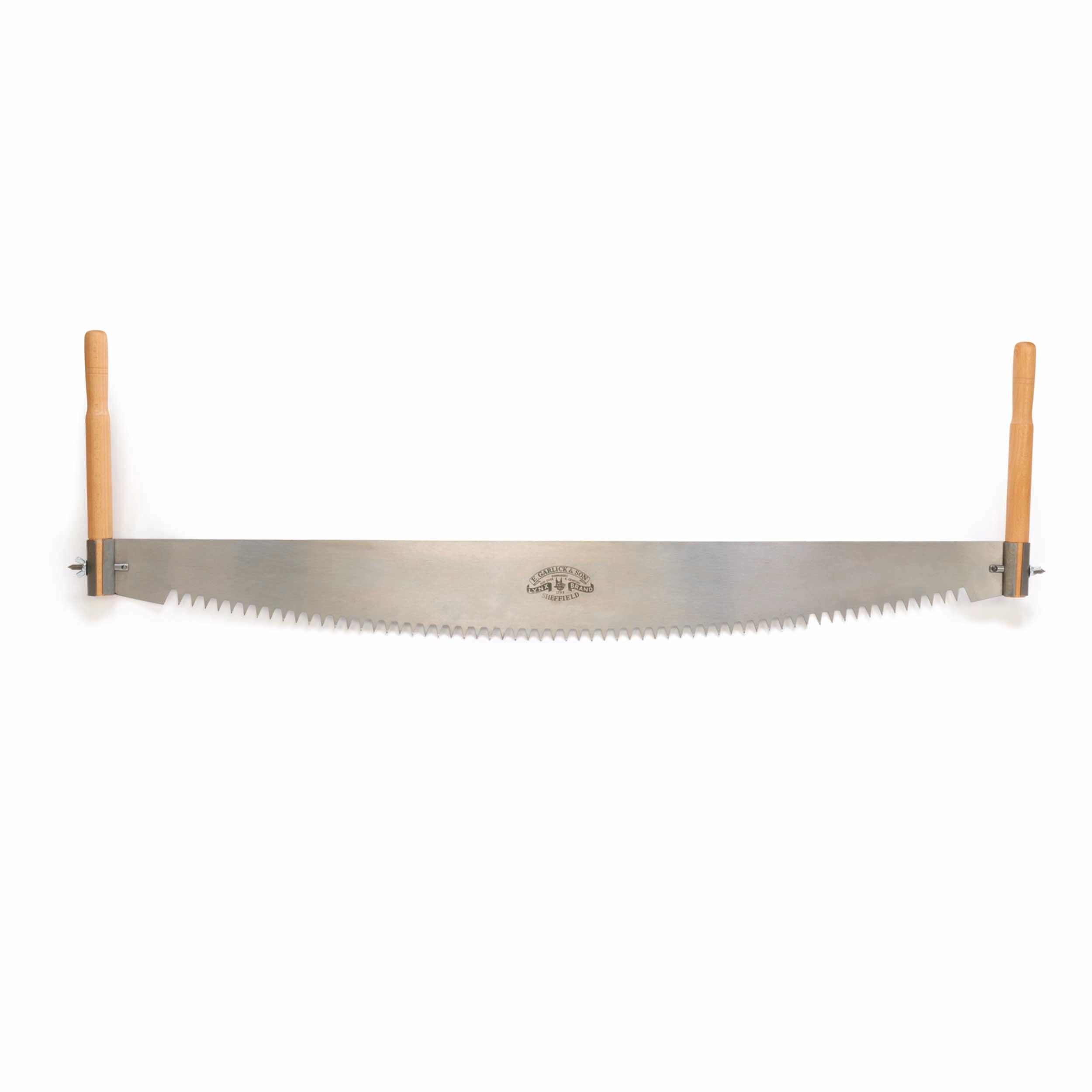
The Lynx 4-foot crosscut is the closest you’ll get to a traditionally forged two-man saw without commissioning a blacksmith. Its 49.5-inch blade is made from British CS80 steel — 1.5mm thick with a Great American tooth pattern that rakes dust and cuts cleanly through pine logs up to 15 inches thick. Customer reports confirm it handles 18-inch oak after a proper hand-sharpening session with a triangular mill file.
Assembly requires fitting two wooden handles to the blade using the included rivets. Multiple buyers note that the stock hardware — oversized non-locking washers and soft rivets — can loosen during extended use. A straightforward upgrade to #8 metric bolts with locking nuts solves this permanently and costs under five dollars. Once secured, the saw tracks straight with minimal binding as long as you maintain a smooth pull stroke with your partner.
Weight sits at 2.6 kg (5.7 lbs), which is light for a 4-foot crosscut. The wood handles provide solid grip even in wet conditions, though the lack of a pre-applied finish means you should oil them before extended use. This saw is best experienced as a genuine two-person tool; single-man operation is possible but awkward due to the handle spacing.
Why it’s great
- Authentic CS80 steel blade with traditional Great American tooth pattern for efficient dust clearance
- Light enough (5.7 lbs) to carry into backcountry without fatigue
- Proven on 15-inch pine and 18-inch oak after proper sharpening
Good to know
- Blade ships unsharpened — you’ll need a triangular file and saw set tool immediately
- Stock rivet hardware may loosen; budget for metric bolt upgrade
- Not designed for true one-man operation due to handle spacing
2. Lynx 3′ One Man Crosscut Saw

This 3-foot Lynx saw offers something rare: a manufacturer-included second beech handle that converts it from a one-man felling saw into a two-man crosscut. The blade uses the same British CS80 steel and Great American tooth pattern as its 4-foot sibling, but at 1.8 kg (4 lbs) it’s substantially lighter and more maneuverable for solo trail work. The 14 teeth per inch make it aggressive enough to chew through 12-inch logs quickly.
Setup is straightforward: slide the fixed handle onto the blade tang, then screw the auxiliary handle on the opposite end. The auxiliary handle relies on a tiny pin for rotational lock — several customers report the pin drops out easily when the saw is in use. A simple field fix involves replacing the pin with a small bolt and wing nut, or you can wrap the pin base with electrical tape for friction retention. Once pinned securely, the saw cuts without binding when you apply a smooth, consistent pull.
The blades ship unsharpened, which is standard for traditional crosscut saws. Users who have filed the teeth to a keen edge report cutting upwards of 18-inch oak in under two minutes per log. The saw also works surprisingly well under water for submerged cutting (marsh cleanup, dock work) because the narrow kerf resists clogging. For anyone who wants both a one-man and two-man capability in one tool, this is the most practical bridge.
Why it’s great
- Dual personality — stock one-man configuration plus included second handle for true two-man operation
- Light 4-pound weight reduces fatigue during long solo cuts
- CS80 steel holds a razor edge with routine filing
Good to know
- Blade ships unsharpened; requires initial filing session before first use
- Auxiliary handle pin can fall out during cuts — plan a hardware mod
- Short 3-foot length limits stroke on logs over 18 inches diameter
3. Spear & Jackson Predator Triplefast 22″
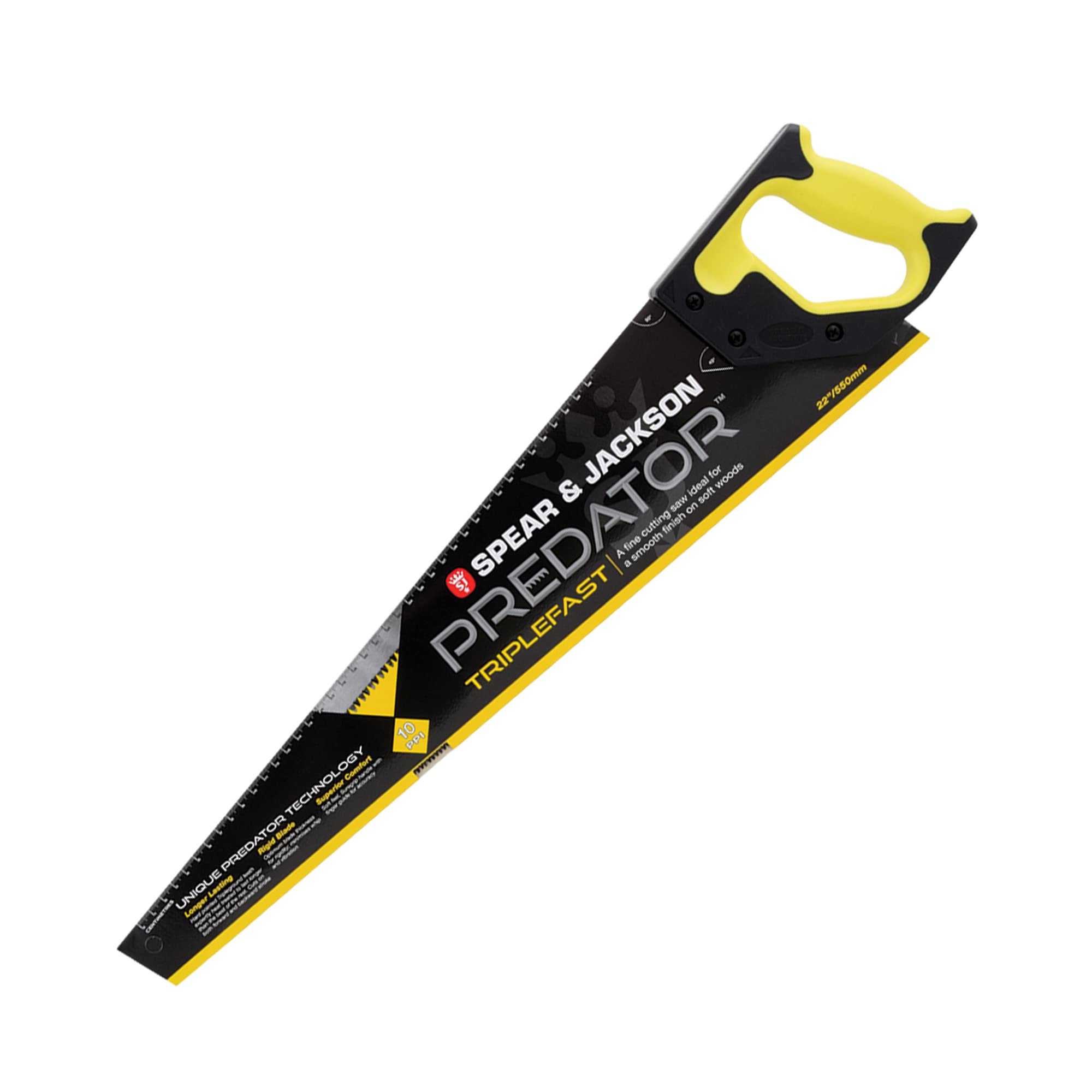
The Spear & Jackson Predator is a hand saw, not a traditional two-man crosscut, but its triple-ground tooth configuration makes it one of the fastest manual crosscut options for a single person working alone or with a partner on smaller stock. The 22-inch blade uses high-speed steel with a rigid spine that minimizes whip and vibration — a critical feature when you’re cutting hardwood or MDF and need a clean, splinter-free edge.
With 10 teeth per inch and a triple-ground profile, this saw cuts about 30% faster than standard panel saws on 2x4s and 45mm pine. The soft-touch ergonomic handle includes a finger-angle guide that helps maintain a consistent 60-degree cut angle. However, the triple-ground teeth make starting a cut tricky: you need a firm notch or kerf starter before the teeth will bite without skating. Once engaged, the saw pulls smooth and straight with no binding in dry wood.
Several customers report using this saw on UPVC window cills and laminate flooring with excellent results. At 0.45 kg (1 lb), it’s featherlight and lives comfortably in a toolbox or pack. For firewood processing where you only need to crosscut logs under 6 inches, this saw is faster than a traditional crosscut because you can operate it without a partner. It’s not a direct replacement for a 4-foot two-man saw, but it fills a practical gap for around-the-camp precision cuts.
Why it’s great
- Triple-ground tooth geometry cuts 30% faster than standard panel saws on dry lumber
- Rigid high-speed steel blade eliminates vibration and whip
- Ergonomic handle with angle guide improves cut consistency
Good to know
- Difficult to start — requires a pre-cut notch for the teeth to engage
- Not suited for large-diameter logs (over 6 inches) with two-person operation
- Printed logo on blade creates slight friction during deep cuts
4. Tuff Camp Saw (30″)

Spring Creek Manufacturing’s 30-inch Tuff Camp Saw reimagines the traditional buck saw as a folding, packable tool without sacrificing stroke length. The tube spine design eliminates the bending and twisting common in lighter camp saws, and the high-density polyethylene handle won’t expand or contract with moisture — a real advantage over wooden handles in wet campsite environments. The saw weighs just 24 ounces and folds down to a compact package that stores inside its own aluminum tube spine.
The 51-tooth blade delivers a long draw that cuts through 8-inch deadfall in under 30 seconds. Customer reports confirm it slices through alder, pine, and spruce with minimal effort, and several users note it cuts faster than a Milwaukee Sawzall with a pruning blade. Assembly requires sliding the handle onto the spine and locking it with a cam — it’s intuitive but not instantaneous; first-time setup without instructions takes about 90 seconds of trial and error.
For trail maintenance and emergency use, this saw is hard to beat. It lacks the precision of a dedicated crosscut saw for large hardwoods, but for any situation where you need to process firewood quickly and pack the tool away, the 30-inch Tuff Camp Saw is the most portable option. The blade is replaceable, so you can carry a spare for extended trips without adding much weight.
Why it’s great
- Long 30-inch stroke fits in a pack when folded into the tube spine
- No-rust aluminum frame and HDPE handle resist moisture damage
- Cuts 8-inch logs in under 30 seconds — competes with electric saws
Good to know
- Assembly takes practice — no included instructions for first-time users
- Not designed for steady two-person operation on large hardwoods
- Blade replacements are sold separately and can be hard to find locally
5. Tuff Camp Saw (21″)
The 21-inch Tuff Camp Saw is the lighter, more portable sibling to the 30-inch version, shaving weight down to 20 ounces while retaining the same aluminum tube spine and HDPE handle design. It’s ideal for ultralight backpackers, emergency kits, and anyone who needs a saw that stows inside a daypack without bulging. The 21-inch blade still delivers a surprisingly long draw for its size, cutting through 4-inch to 6-inch deadfall cleanly.
Assembly is identical to the 30-inch model: slide the blade into the spine, then lock the handle using the cam lever. The poly handle locks securely with no wobble, and the saw is stable enough for comfortable one-handed use on smaller branches. Customer feedback highlights its utility for clearing trail blowdown, cutting wooden toy stock, and processing kindling at basecamp.
The main trade-off vs. the 30-inch version is reduced cutting depth: logs over 6 inches require more passes or a kerf extension technique. But for the weight-conscious user, shaving 4 ounces off your pack while keeping a full-size folding saw action is a winning trade. It’s also made in the USA, which matters for buyers prioritizing domestic manufacturing.
Why it’s great
- Weighs only 20 ounces — lightest full-length folding saw in this comparison
- Made in the USA with no-rust aluminum frame
- Sets up quickly with a single cam lock after initial practice
Good to know
- Best suited for logs under 6 inches in diameter
- No included carry case or blade cover beyond the tube spine
- Setup instructions are minimal — plan a short learning curve
6. HUNKENR Folding Saw 500mm

HUNKENR’s 500mm folding saw offers an aggressive SK5 chrome-plated steel blade with 55 teeth at a fraction of the cost of premium camp saws. It’s marketed as an extendable limbing tool, but its three-sided arc design makes it equally effective on green wood, vine tangles, and dry deadfall. The blade is noticeably sharp out of the box — several customers report cutting through 10-inch logs in under two minutes.
The TPR (thermoplastic elastomer) handle is comfortable and provides good grip even when wet, though the lock mechanism relies on a simple rivet-and-slide design that may loosen after extended use. Customer feedback notes that the double-lock prevents accidental closure, but the overall hardware feels less robust than the Tuff Camp Saw’s cam lock. A 24-month warranty covers defects, which is generous for an entry-level folding saw.
One standout feature is the sling-style carry case that attaches to a lawn mower or ATV rack — useful for trail maintenance where you need quick access. The blade also cleans small branches and vines effectively due to the concave arc profile. For the price, this saw punches well above its weight for light-to-medium cutting tasks, but it’s not built for the sustained two-person abuse that a traditional crosscut saw can handle.
Why it’s great
- SK5 steel blade cuts fast and stays sharp through a weekend of heavy use
- Three-sided arc design clears vines and small branches effectively
- Includes sling case for mounting on mowers, ATVs, or pack loops
Good to know
- Lock mechanism may loosen over time; plan periodic hardware checks
- Not designed for sustained two-man crosscut sessions on large logs
- Handle materials feel less premium than aluminum-spine alternatives
7. DEWALT 12-Inch Miter Saw DWS715
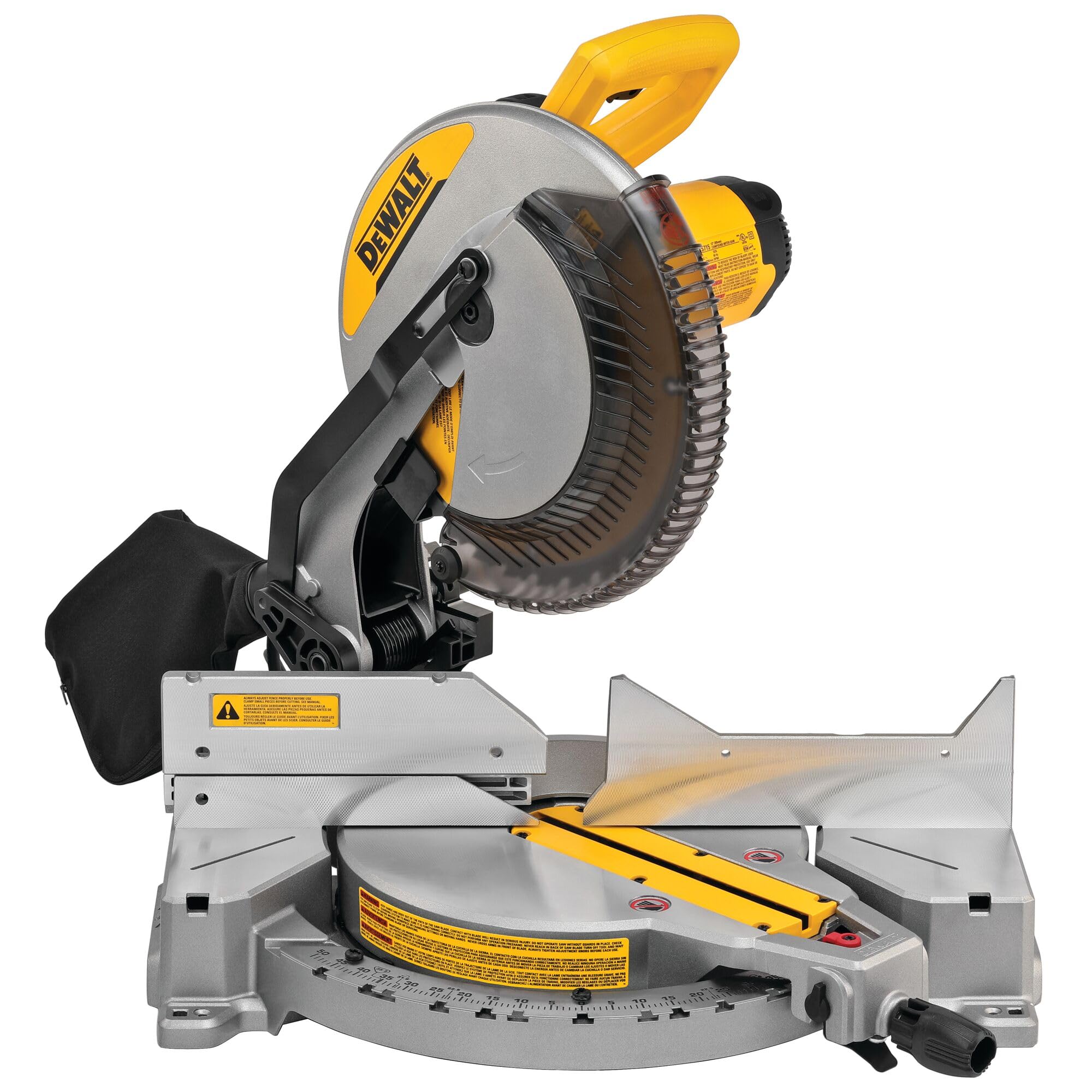
While not a traditional two-man saw, the DEWALT DWS715 miter saw deserves consideration for anyone whose primary firewood task is crosscutting dimensional lumber at a stationary base. Its 15-amp motor spins a 12-inch carbide-tipped blade through 2x8s and 4x4s effortlessly, and the single bevel compound design handles angles from 0 to 48 degrees left and 0 to 3 degrees right. For processing large batches of firewood to uniform lengths, this is faster and safer than any manual saw.
The stainless steel miter detent plate offers 14 positive stops at common angles, making repeatable cuts simple without measuring each time. The tall sliding fence supports 5.5-inch base vertically, which is helpful for cutting dimensional stock that needs to stand upright. The XPS shadow line cut indicator is a practical addition — it projects a blade-width shadow onto the workpiece, virtually eliminating guesswork.
Weight is 42.8 pounds, so this is not a portable tool for remote campsites. It’s designed for a workshop, garage, or cabin with a dedicated table. The power cord is short (around 3 feet), so plan on an extension cord for any real mobility. If your “two-man” scenario involves stationary work where one person feeds stock and the other operates the saw, the DWS715 outperforms any hand tool in speed and consistency.
Why it’s great
- 15-amp motor cuts 2x8s and 4x4s without bogging
- XPS shadow line eliminates measurement errors for repeat cuts
- 14-stop miter plate with stainless steel construction resists wear
Good to know
- Weighs 42.8 pounds — not a portable saw for camp use
- Short power cord requires a heavy-duty extension cable
- Single bevel limits compound cuts to one side without flipping the stock
FAQ
Do I need a saw set tool for a two-man crosscut saw?
Can I use a one-man crosscut saw by myself?
How often should I lubricate a two-man saw blade?
Final Thoughts: The Verdict
For most users, the 2 man saw winner is the Lynx 4′ Two Man Crosscut Saw because it combines an authentic CS80 steel blade, proven Great American tooth pattern, and the length needed for serious bucking. If you want a single saw that works solo and with a partner, grab the Lynx 3′ One Man Crosscut Saw with its included second handle. And for backcountry portability where pack weight matters, nothing beats the Tuff Camp Saw (30″) — a folding saw that stores inside its own tube spine without sacrificing stroke length.