
Our readers keep the lights on and my morning glass full of iced black tea. As an Amazon Associate, I earn from qualifying purchases.
Specs are compiled from manufacturer listings and verified buyer reviews and can change over time — please confirm the key details on the product page before buying.
True 15-gallon pots run big — roughly 18 inches across — so most shoppers end up choosing between a value multi-pack, a breathable air-pruning design, or a flexible fabric-style container. This guide sorts the real strengths and trade-offs of each pick so you can choose right the first time.
I’m Min — the founder and writer behind Gadgets Feed. This guide is built by comparing the manufacturers’ published specifications and the patterns across verified customer reviews, so you get each pick’s real strengths and trade-offs instead of marketing spin.
A quick heads-up on sizing first: this list uses flexible matching, so some picks are the nearest sold size in the 14 to 16 gallon range rather than a strict 15. That keeps the real winners on the list. Here is what actually holds up in a 15 gallon plant pot.
Our Picks at a Glance
How To Choose The Best 15 Gallon Plant Pot
Pick a pot this big and you are committing serious soil, serious water, and a serious plant. Get the basics right and the pot lasts years — get them wrong and you are repotting a root-bound shrub in July heat. Three specs decide whether a pot works or fights you: real dimensions, drain hole placement, and plastic type.
Start with real dimensions, not the gallon number
“15 gallon” is a nursery trade label, not a liquid measure. A pot sold as 15 gallons can sit anywhere from about 14 to 16 gallons of soil. What you can trust is the printed size — a genuine big pot usually lands near 18 inches wide and about 15 inches deep. Measure your floor space and the plant’s root ball before you buy. A pot narrower than 18 inches stalls a fast grower like a tomato within a season.
Where the drain holes sit matters as much as how many
Bottom holes let water run straight out, which suits tomatoes and peppers that hate wet feet. Side-wall holes hold a little water back and aerate the soil, which helps in dry climates or under a covered porch. If you tend to overwater, side-wall holes drain slower and are more forgiving. If your plant likes steady moisture, bottom holes are simpler to manage.
Match the plastic to how you garden
Rigid injection-molded pots hold their shape when you scoop soil and stack flat for storage. Flexible recycled HDPE pots bounce back after a squeeze and shrug off a knock from a wheelbarrow. Polypropylene adds flex without going floppy. All three plastics reuse for years if you clean them out between plantings.
Quick Comparison
| Model | Best For | Capacity | Dimensions | Pieces | Amazon |
|---|---|---|---|---|---|
| 15 Gallon Nursery Pot 10-Pack★ Best Overall | Stocking a whole outdoor bed | 15 gallons | 18.1″ x 18.1″ x 15.7″ | 10 | Amazon |
| 10 Pcs 1 Gallon Nursery Pot | Cheap starter and transplant pots | 1 gallon | 6.5″ x 6.5″ x 6.61″ | 10 | Amazon |
| RooTrimmer 14 Gallon Air Pruning Planters | Root control for long-term crops | 14 gallons | 13.6″ x 16″ x 16″ | 5 | Amazon |
| HOSTIC 15 Gallon Flexible Nursery Pots | Flexible pots for big indoor plants | 12.7 gallons | — | 10 | Amazon |
In‑Depth Reviews
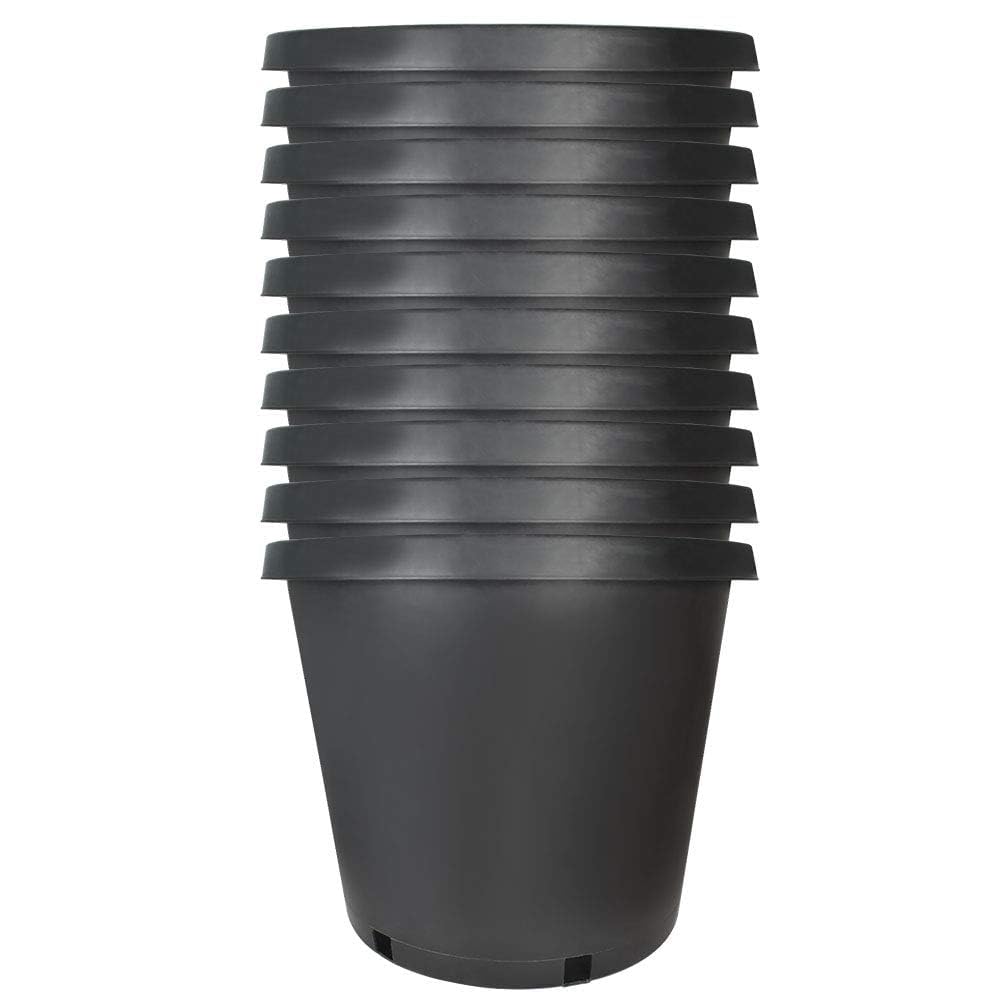
1. 15 Gallon Nursery Pot 10-Pack Plastic Garden Planter Pots
Our pick — 4.5★ from 300+ verified ratings; the strongest balance of quality and price.
A true full-size pot — 18.1 inches wide and 15.7 inches deep — and you get ten of them stacked flat.
Ten pots at a real 18.1″ x 18.1″ x 15.7″ apiece is the headline here. That is a genuine 15-gallon footprint, the kind of room a tomato or a shrub needs to stretch out without going root-bound by midsummer. The pots are injection molded, so they stay rigid while you shovel soil in and still have enough give to avoid cracking. They stack flat between seasons.
What wins people over is the build. The plastic is thick enough to scoop soil straight from the bag without the pot flexing or splitting, and owners run them season after season rather than tossing them. One buyer summed it up neatly: “11” deep pots: correct size, good quality.” The large side drain holes also get plenty of approving nods — they suit plants that hate sitting wet, like sunflowers and pothos. Set a little gravel over the holes and you stop soil washing out with the first watering.
Here is the honest catch. New pots arrive with a strong plastic off-gassing smell that lingers for a while if you leave them sealed. Air them out — unstacked and outdoors — before you plant anything edible. A handful of buyers also planned to paint them, since the plain black shows every scuff and looks unfinished against a porch rail.
What Buyers Praise
- True 15-gallon size at 18.1″ wide and 15.7″ deep — real room for big plants
- Thick molded plastic sturdy enough to scoop soil without cracking
- Ten pots per pack, stackable flat for off-season storage
- Large side drain holes suit plants that dislike wet feet
What To Know First
- Fresh from the start they carry a strong plastic odor — air them out before planting edibles
- Plain black finish scuffs, so some owners spray-paint them
- Big footprint means you need the floor space and the soil to fill ten of them
Grab these if: you are filling a greenhouse, porch, or outdoor bed and want full-size pots without hunting down singles.
Hold off if: you only need one or two pots — a ten-pack this large is more plastic than a small setup can use.
2. RooTrimmer 14 Gallon Air Pruning Planters, 5 Pack
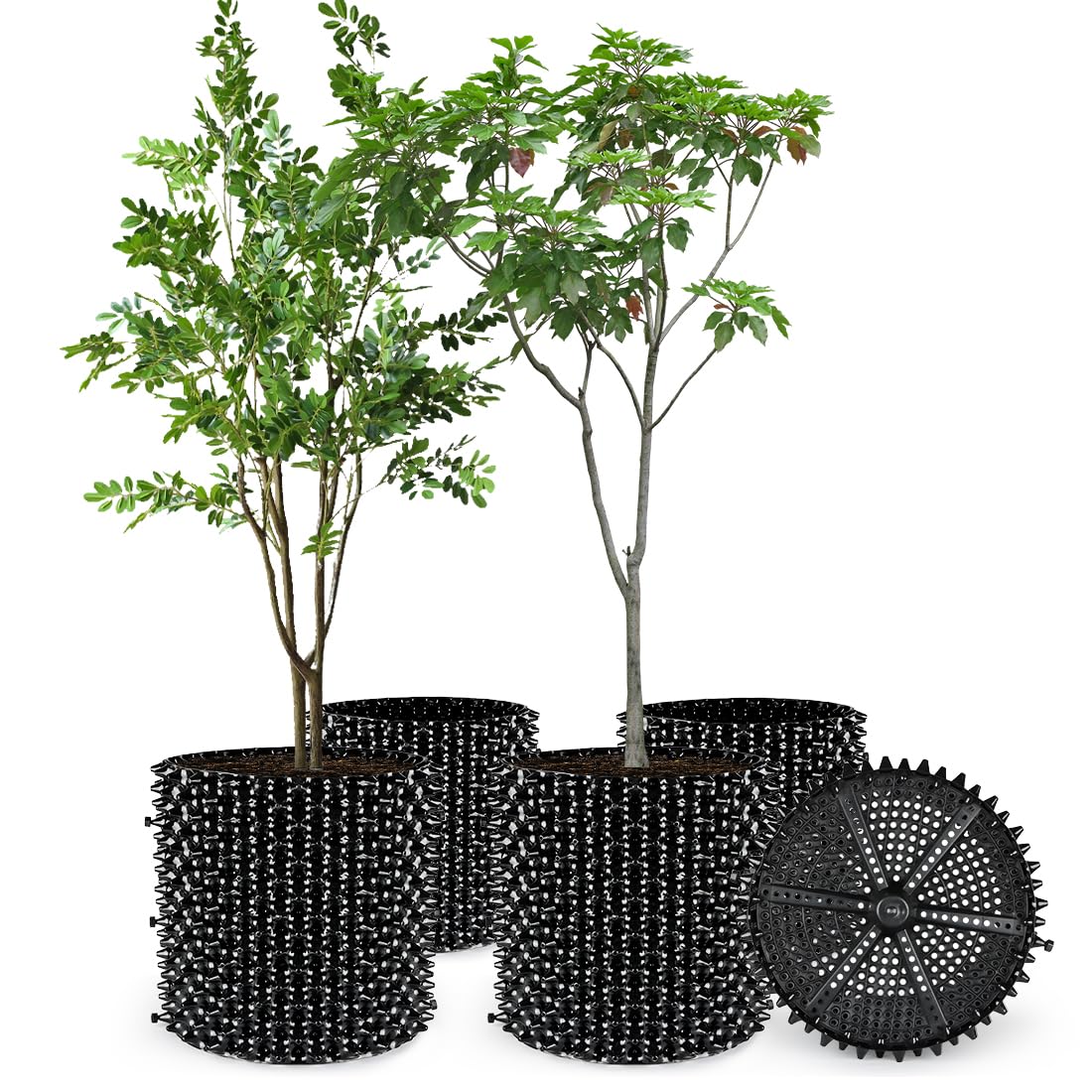
Air-pruning walls that stop roots circling — at the cost of a little assembly and more frequent watering.
These five air-pruning planters skip the one-piece mold entirely. Each assembles from two sheets, a round base, and six screws, giving you a 16-inch square footprint. The whole point is the wall design: air reaches the roots through the sides, so they branch out instead of spiraling around the base. The result is a denser root structure and less chance of rot in a pot this size — genuinely useful for roses, blueberries, and anything you plan to keep in the same container for years.
Quality is the thing that lands with owners here. Sturdy plastic, strong panels, and a build that holds up across seasons. The 14-gallon size is a natural fit for roses and long-term shrubs, and a few people even combined extra pieces into a 20-gallon container. Set-up is straightforward once you have done it once.
What you should not expect is a screwdriver-free five-minute job. The panels need aligning, and the supplied screws draw grumbles — a few buyers found the holes not pre-aligned and reached for their own drill and zip ties. First-timers describe the assembly as more fiddly than they pictured. Because of the airflow design, plan on watering more often than a solid-wall pot, and on hot days that can mean daily. One owner’s honest note: “The plants do love the extra air, but in turn, plan to water more often.”
The root-health payoff: Unlike the rigid one-piece pots above, these breathe through the walls, which is exactly what keeps a long-term shrub from strangling itself in its own container.
Who the assembly suits: If you enjoy building out a garden setup and want reusability plus transplant ease, the panels come apart as cleanly as they click together.
Built for: gardeners growing roses or fruit bushes long-term who want root control and airflow over low-maintenance simplicity.
Think twice if: you want to unbox and plant in minutes — the screw-and-panel build asks for patience the first time.
3. HOSTIC 15 Gallon Flexible Nursery Pots with Drainage Holes, 10 PCS
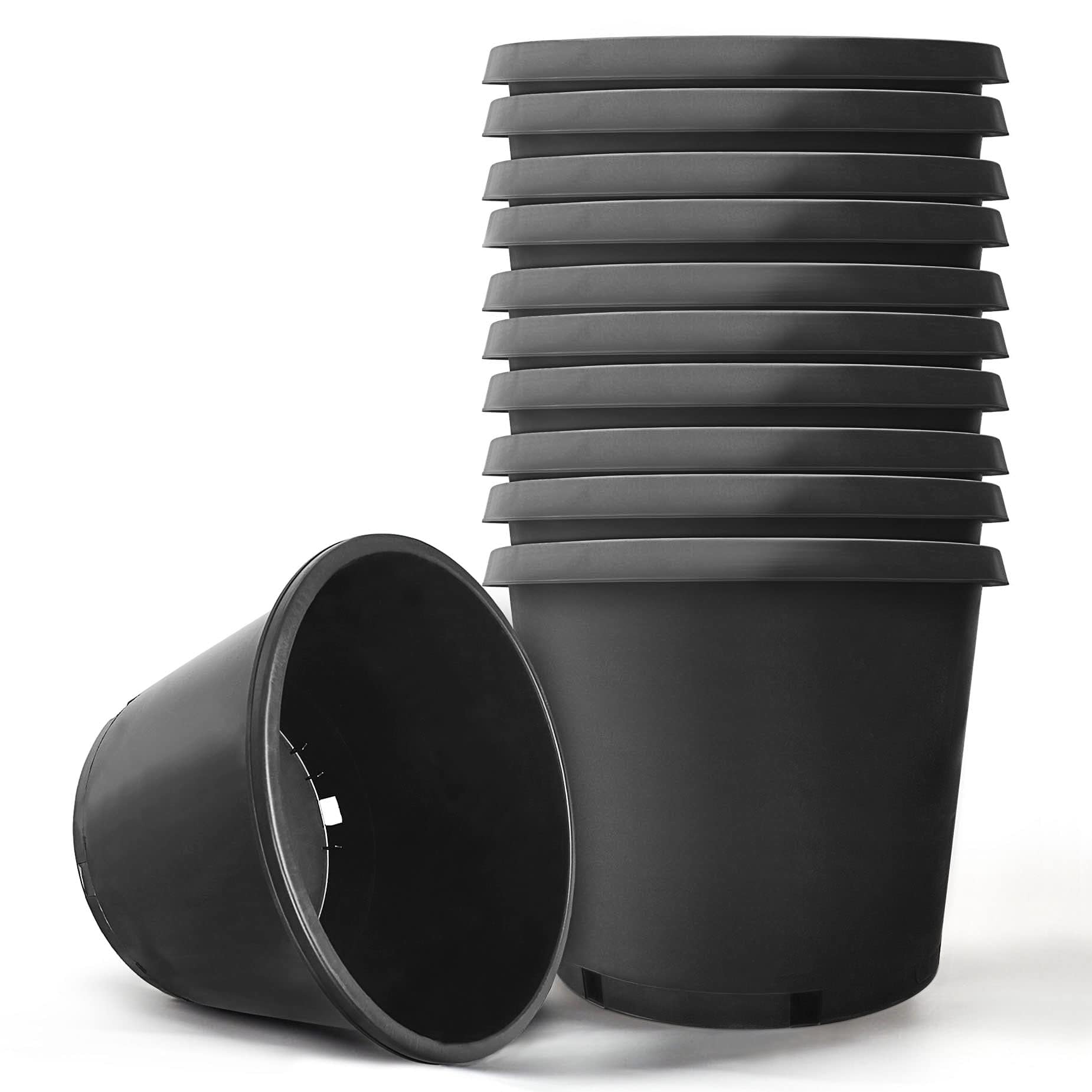
Squeeze them, drop them, stack them — flexible polypropylene pots that rebound instead of cracking.
These are the bendy ones, and that flexibility is the whole selling point. Made from polypropylene — a plastic that flexes without snapping — they take a squeeze, a knock, or a clumsy stack without splitting. Each is rated at 12.7 gallons, the smallest true capacity on this list, so measure before you commit if you need every drop of a full 15. Ten to a pack, with a raised rim that makes them easy to grab and stack.
The drainage is set up thoughtfully. Instead of holes in the base, the drain openings sit on the side wall and stay modest in size, so a heavy watering trickles instead of dumping straight through the bottom. That is a real plus for indoor plants on a saucer or a lanai, where a full flush would otherwise end up on the floor. Owners run cucumbers, tomatoes, basil, and herbs in them and report the pots hold up through a season.
The trade-off to plan for is consistency. Several buyers report the pots run under the advertised size, so do not expect a generous 15 gallons in practice. And like most plastic nursery pots this size, they can arrive with a plastic odor that fades once aired. Give them a wash and a few days outside before they hold anything you plan to eat.
Why They Work Indoors
- Flexible polypropylene flexes without cracking under a squeeze
- Side-wall drain holes release water slowly, not straight through the base
- Raised rim makes handling and stacking simple
- Suitable for flowers, succulents, and vegetables indoors or out
Where They Fall Short
- Rated at 12.7 gallons, the smallest capacity here, and some find them smaller than advertised
- Fresh pots can carry a plastic smell until aired out
- Wall-mount spec listed, but these work best simply set on the floor
Best matched to: indoor growers who want forgiving, flexible pots that will not crack on a lanai and appreciate the gentle side drainage.
Less ideal for: anyone who needs a strict full 15 gallons of soil — the 12.7-gallon rating comes up short on that front.
4. 10 Pcs 1 Gallon Nursery Pot for Plant
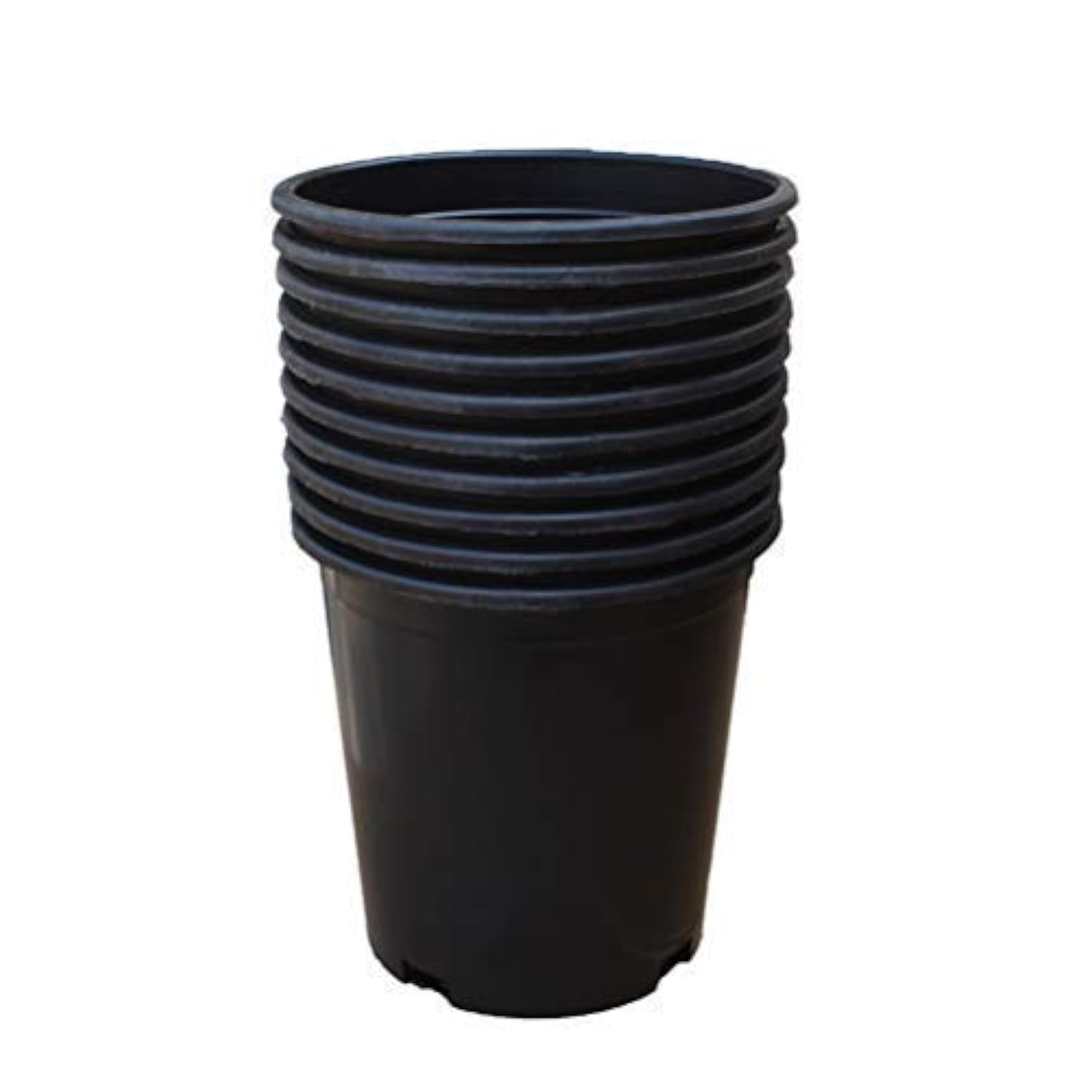
The small-pot value pick — starter and transplant pots that punch far above their size.
Read the specs before you buy this one: each pot is rated at 1 gallon, not 15, and measures 6.5″ x 6.5″ x 6.61″. This is the realistic choice when you are starting seedlings, potting up cuttings, or moving plants along the way to something bigger. For a ten-pack at this footprint, the value is hard to argue with.
What earns the praise is how long they stick around. They are made from recycled HDPE — a tough, flexible plastic — so they hold their shape season after season instead of going brittle. Durability is the quality owners call out most, and a few mention the pots being sturdy enough that tipping them over is a challenge. Six drain holes around the base keep soil aerated and prevent waterlogged roots, which is exactly what young tomatoes and peppers need. The rim design lets them stack neatly when empty.
Two things to keep in mind. Black plastic heats fast in direct sun — one owner noted the pots get “incredibly hot in the sun,” so shade the containers or pick lighter surfaces in peak summer. And expect a chemical smell on arrival; wash and air them before planting. A few buyers also found the larger advertised sizes run slightly under their label, so do not count on a strict two gallons. As pot after pot gets repurchased and reused, the theme is clear: sturdy, lightweight, affordable.
Smart-buyer read: If your 15-gallon pot is the destination, these little ones are the stepping stones — start seeds here, move up later.
Made for: seed starters, cutting-growers, and anyone who needs a stack of cheap, tough small pots for a season of propagation.
Look elsewhere if: you need the full-size 15-gallon pot itself — this pack is deliberately small-pot territory.
Understanding the Specs
Capacity in Gallons
The gallon number on a nursery pot is a loose trade label, not a precise measure. Pots across this range run anywhere from 1 gallon up to 15, and even same-size pots can vary. The listing’s printed dimensions — width, depth, and height — tell you the truth. A wide, deep pot means more soil and more room for roots, while a smaller-gallon pot works for seedlings and transplants before they move up.
Material and Drainage
Plastic is the standard for nursery pots, and the type changes how the pot behaves. Rigid injection-molded pots (made by injecting melted plastic into a mold) hold their shape for scooping soil. Flexible recycled HDPE (high-density polyethylene, a tough recycled plastic) and polypropylene bend without cracking and shrug off knocks. Drain holes matter just as much as plastic: bottom holes let water run straight out for plants that hate wet feet, while side-wall holes release water more slowly and pull air into the soil, which suits covered porches and indoor setups.
Air Pruning and Root Control
Air-pruning pots use walls with openings that expose roots to air as they grow. The air stops roots circling the base and encourages them to branch, which builds a denser root structure — helpful for long-term crops like roses and fruit bushes. The trade-off is airflow both ways: the same openings that help roots also dry the soil faster, so plan on more frequent watering.
Setup, Storage, and Reuse
Some pots ship as one piece and only need planting. Others assemble from panels, a base, and screws, which takes more time but lets them come apart for easy transplanting and flat storage. Reuse depends on care: clean the pots, let them air, and both rigid and flexible plastics can be used again for years. Air out any new plastic pot before planting anything you plan to eat.
FAQ
Is a 15 gallon plant pot the same as a 15 gallon liquid measure?
How wide is a 15 gallon nursery pot in inches?
Should I choose bottom drain holes or side wall drain holes?
Do air pruning planters really stop root circling?
How often will I need to water a large 15 gallon pot?
Can I use a big nursery pot indoors as well as outside?
Is the plastic smell on new nursery pots something to worry about?
Which type of plastic holds up best for reuse?
How do I stop soil from washing out of large drain holes?
Do the pack sizes mean I am paying for pots I do not need?
Final Thoughts: The Verdict
For most people searching for the best 15 gallon plant pot, the winner is the 15 Gallon Nursery Pot 10-Pack because it delivers a true 18.1-inch, 15-gallon footprint with thick plastic and generous side drainage, ten pots at a time. If root control matters more than set-and-forget simplicity, reach for the RooTrimmer 14 Gallon Air Pruning Planters and accept the extra assembly and watering. For indoor plants where a gentle, flexible pot beats a rigid one, the HOSTIC Flexible Nursery Pots are the ones to grab — just plan around the smaller 12.7-gallon rating. And if you are starting from seed, the 10 Pcs 1 Gallon Nursery Pot set is the practical stepping stone before plants move up to full size.
How We Picked
We do not accept paid placement. Every pick is matched to a real buyer and a real use-case; we do not hands-on test units.
Sources & Methodology
Specifications: manufacturer listings and product documentation. Review insights: verified customer reviews, as of September 2026. Pricing: not shown on this page (it changes often); check the current price via the retailer link.
As an Amazon Associate, Gadgets Feed earns from qualifying purchases. This does not affect which products we feature.