
A single undetected gas leak can empty a propane tank, starve an engine of fuel, or turn an earthquake into an inferno. The right automatic gas shut off valve catches the problem at the source — sensing a catastrophic hose rupture, a seismic jolt, or an overflowing tank — and halts the flow before anyone even smells trouble.
I’m Min — the co-founder and writer behind Gadgets Feed. I’ve spent hundreds of hours analyzing the mechanical triggers, flow-rate thresholds, wireless protocols, and brass-versus-alloy construction that separate a reliable safety valve from a false sense of security.
Whether you’re equipping an RV propane system, a home natural gas line, or a fuel-transfer pump setup, this guide breaks down the best automatic gas shut off valve options based on real-world use cases and verified technical specs.
How To Choose The Best Automatic Gas Shut Off Valve
Not all shutoff valves are created equal. Some react to seismic motion, others to liquid overflow, and a few to ultrasonic micro-leak detection. Your choice depends on what you’re trying to protect — a house foundation, an RV propane tank, or a fuel pump transfer setup.
Trigger Mechanism: Seismic vs. Flow vs. Smart Sensor
Earthquake shutoff valves rely on a pendulum that trips at a specific Richter magnitude (commonly 5.4). Flow-sensing nozzles use pressure differential to stop when a tank is full. Smart valves use ultrasonic or optical sensors to detect leaks as small as 0.01 GPM and can shut off via app or device-to-device pairing. Match the trigger to the threat — seismic for earthquake zones, flow-sensing for fuel transfer, smart for whole-home water or gas monitoring.
Material and Build Quality
Brass is the gold standard for gas valves because it resists corrosion and forms reliable seals with NPT threading. Alloy or stainless steel works well for fuel transfer nozzles, but avoid plastic bodies on permanent gas-line installations. Check for UL listing or third-party approvals — certification means the valve has been factory-tested to specific safety standards.
Inlet Size and Flow Rate
Most residential gas lines and propane systems use a 3/4-inch NPT connection. Fuel transfer pumps often need the same size but with a higher flow rate of 16 GPM or more. Smart valves may support both 3/4-inch and 1-inch with included adapters. Getting the wrong size means leaks, pressure drops, or inability to install at all.
Quick Comparison
On smaller screens, swipe sideways to see the full table.
| Model | Category | Best For | Key Spec | Amazon |
|---|---|---|---|---|
| Watts Little Firefighter | Earthquake | Home natural gas/propane line | 5.4 magnitude trigger | Amazon |
| YoLink Smart Valve Kit | Smart Valve | Remote shutoff + leak sensor | 2-year battery backup | Amazon |
| Pacific Seismic 300 Series | Earthquake | Professional-grade seismic | Horizontal 3/4-inch valve | Amazon |
| Frizzlife LP365 | Smart Valve | Whole-house water/gas monitoring | 0.01 GPM ultrasonic detection | Amazon |
| GasStop GSUSA2 | Propane Safety | RV propane system | UL Listed brass valve | Amazon |
| Orion Motor Tech Nozzle | Fuel Transfer | Gasoline/diesel pump | 16 GPM flow rate | Amazon |
| VEECAP Transfer Pump | Fuel Transfer | Portable battery-powered | 3.8 GPM auto-stop | Amazon |
In‑Depth Reviews
1. Watts Little Firefighter Earthquake Gas Shutoff Vertical Valve
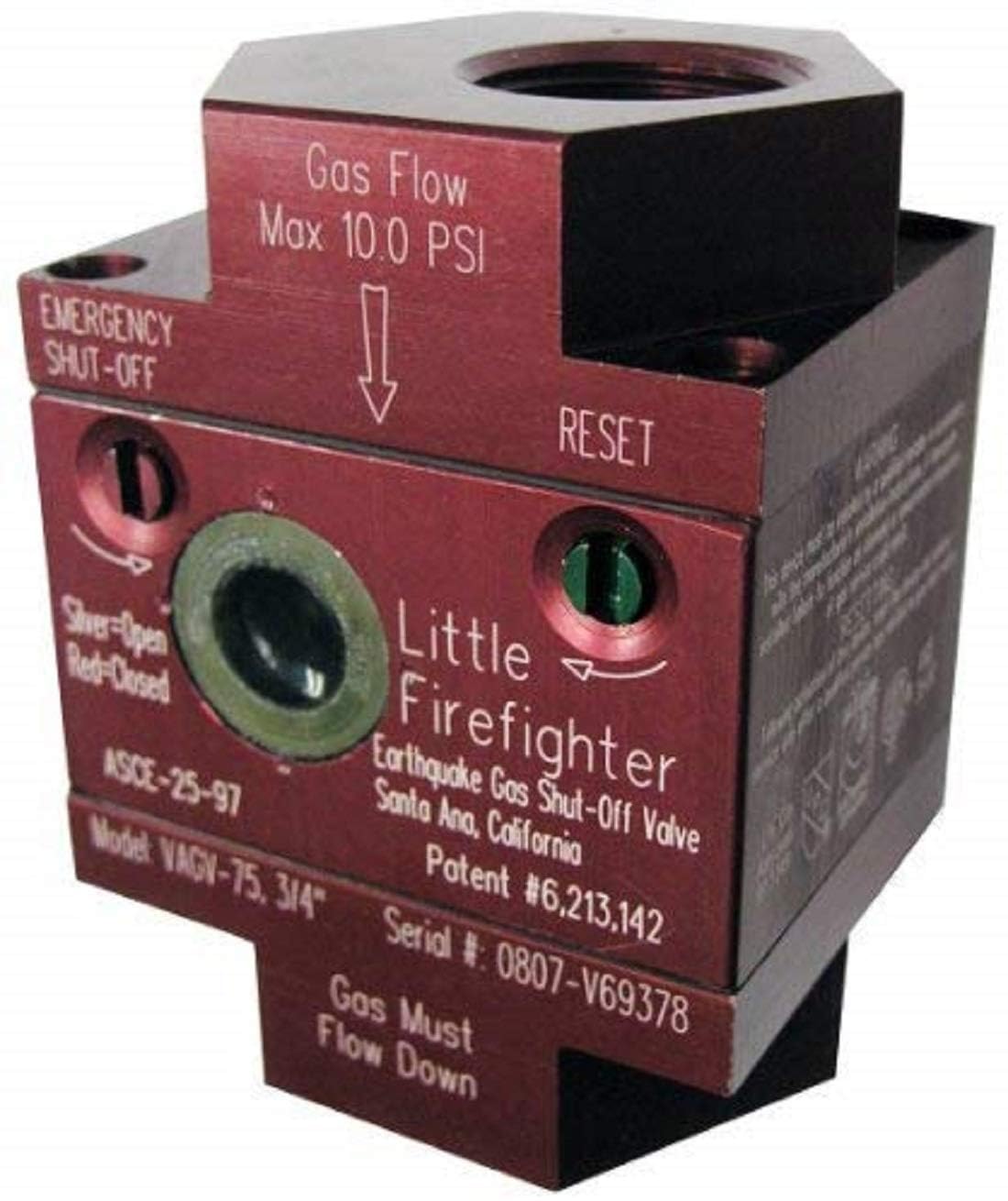
The Watts Little Firefighter is the benchmark for seismically triggered gas shutoff valves. It activates at a 5.4 magnitude shake using a simple, reliable pendulum mechanism — no batteries, no circuits, no false trips. The heavy-duty alloy steel body and NPT threading handle natural gas and propane lines with a maximum pressure of 10 psi.
Installation is straightforward for anyone comfortable with gas line work: it took verified buyers roughly 20 minutes with no leaks reported. The manual reset allows you to reinstate gas flow after the valve trips from either side, which is convenient when the valve is tucked into a tight basement corner or meter pit.
This valve is required by some city codes in earthquake-prone areas like Los Angeles, and it’s also a smart add-on for mobile homes where foundation shifts during tremors can rupture gas lines. At a 3/4-inch size, it fits the majority of residential service lines without needing adapter bushings.
Why it’s great
- Mechanical trigger needs no power
- Proven track record with decades of installations
- 30-minute DIY installation for many homeowners
Good to know
- Only responds to seismic events — not smart-compatible
- May trip from accidental bumping near the valve
2. YoLink Wireless Smart Valve Control Kit
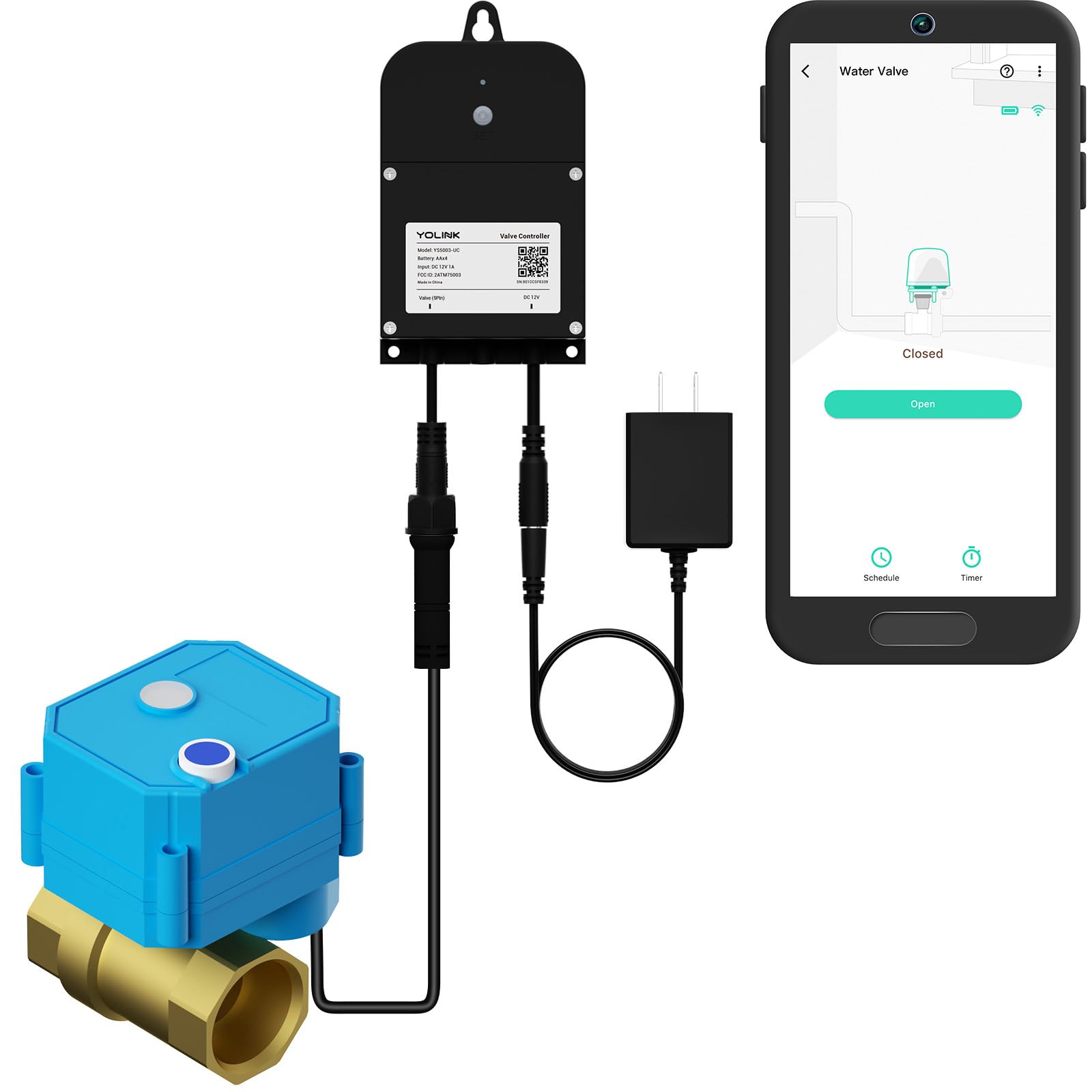
YoLink brings gas shutoff into the smart-home era with a motorized brass ball valve controlled via long-range LoRa wireless. Unlike Wi-Fi-dependent valves, this kit maintains strong signal through concrete basements, meter pits, and detached garages up to a quarter mile away. The 12V adapter keeps the valve powered continuously, while four AA batteries serve as a backup that lasts up to two years.
The real advantage is the D2D (device-to-device) offline feature. Pair the valve directly with YoLink’s leak sensors — when a sensor detects gas or water, the valve closes automatically even if your internet is down. That’s a critical fail-safe for gas line protection that most smart home widgets can’t match.
Setup requires a YoLink Hub for app control and cloud integration, which is a separate purchase. Once paired, you can shut off the gas from anywhere via the app, set schedules, and integrate with Alexa or Home Assistant. The brass construction is durable, though one verified reviewer noted it contains about 3% lead and is not NSF-certified for potable water — fine for gas, just know the material limits.
Why it’s great
- Offline D2D auto-shutoff pairs with leak sensors
- Long-range LoRa reaches distant utility areas
- 2-year battery backup during power outages
Good to know
- Requires separate YoLink Hub for full app features
- Brass valve not certified lead-free
3. Pacific Seismic Products 300 Series Horizontal Earthquake Gas Shut-Off Valve

Professional plumbers and contractors consistently choose the Pacific Seismic 300 Series for its all-metal construction and proven field performance. The horizontal configuration is designed for gas lines that run parallel to the ground, and the valve triggers on strong seismic motion through a tried pendulum mechanism — the same principle that protected a facility just seven miles from the epicenter of the 1989 Loma Prieta earthquake.
Verified buyers who replaced other seismic valves were struck by the build quality difference. This valve is noticeably heavier and more solid than cheaper alternatives, with precision-machined internal components that won’t stick or bind. The 3/4-inch NPT connection fits standard residential and light commercial lines without adapters.
Installation requires basic gas-line skills, and the manual reset is straightforward. Some buyers noted that this valve is part of a product category that is notoriously overpriced across the industry, but for safety-critical applications where you need 100% mechanical reliability, the 300 Series justifies the investment.
Why it’s great
- Heavy-duty steel construction with precise machining
- Proven earthquake protection since 1989
- No batteries or external power needed
Good to know
- Premium price reflects industrial-grade build
- Horizontal orientation may not fit all gas line layouts
4. Frizzlife LP365 Smart Water Monitor and Automatic Shutoff
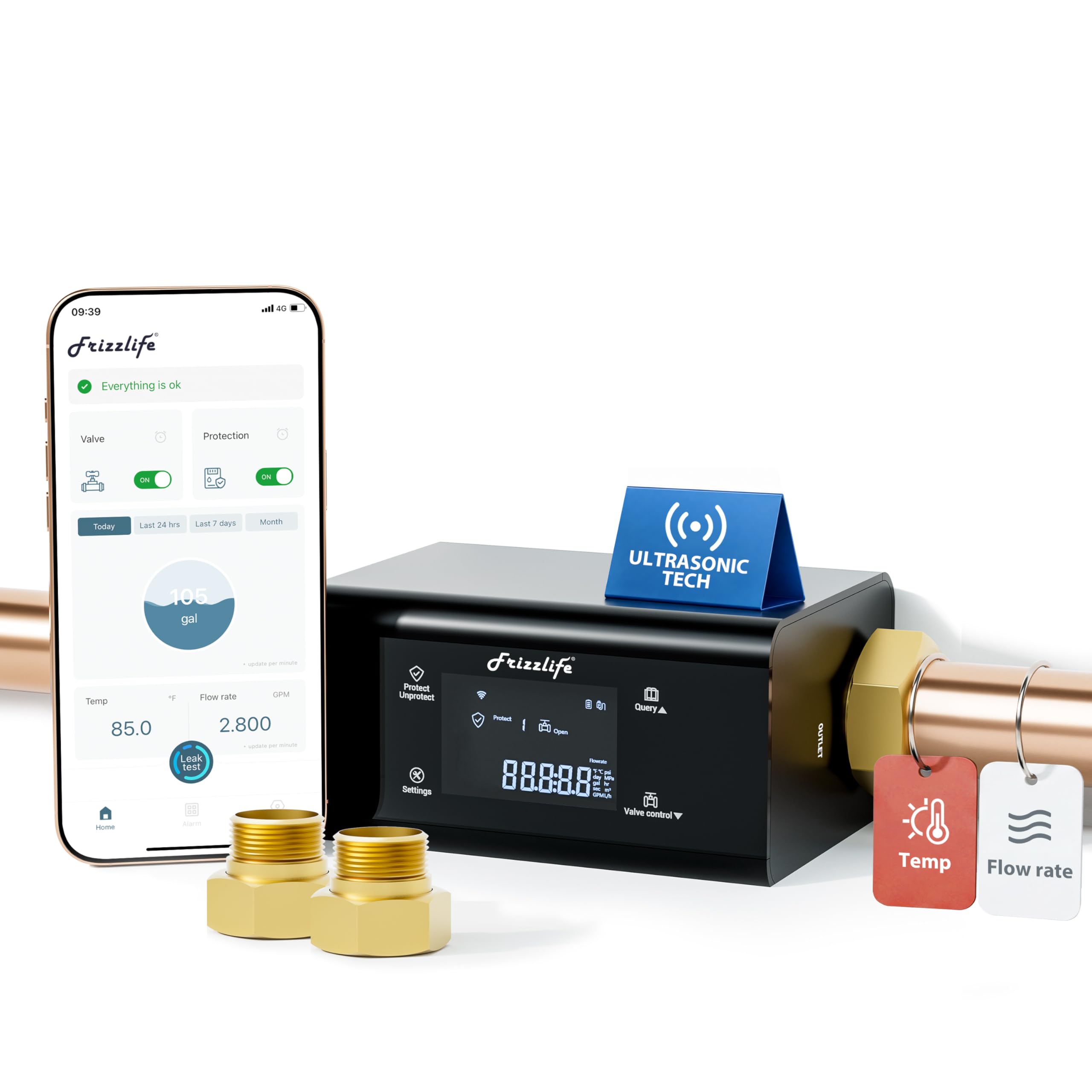
The Frizzlife LP365 takes a different approach — instead of seismic or overflow triggers, it uses ultrasonic technology to detect micro-leaks as small as 0.01 GPM. This is overkill for earthquake protection but ideal for whole-house monitoring where a slow toilet leak or dripping garden-hose connection can waste hundreds of gallons or cause structural damage.
It supports dual configurations: the standard LP365 measures flow rate and temperature, while the LP365-P adds pressure monitoring. The valve fits both 3/4-inch and 1-inch pipes with the included adapters, and it integrates with Smart Life, Alexa, Google Assistant, and Home Assistant via the Tuya API. Verified buyers caught slow toilet leaks and even a PRV failure that pushed pressure past 150 psi before the valve shut things down.
The device needs to remain plugged in for networking, which limits placement. Professional installation is recommended if you’re not comfortable with pipe work. One buyer reported a annual insurance discount from Farmers after installation, so the LP365 can help offset its cost over time.
Why it’s great
- Detects leaks as tiny as 0.01 GPM
- Auto-shutoff with customizable leak detection settings
- Smart home integration across major platforms
Good to know
- Requires constant power — no battery backup
- Professional installation recommended for precise fit
5. GasStop GSUSA2 Propane Gauge and Emergency Shut-Off

GasStop is specifically designed for RV and camper propane systems, combining an analog pressure gauge with a catastrophic-leak shutoff. The valve stops all gas flow within seconds of a sudden hose rupture or fitting blowout — one verified buyer tested it and confirmed the flow stopped in under one second.
Installation is simple: tighten the GasStop directly to your propane tank’s service valve, then connect your regulator hose. Tap the device five times to open the flow, and you’re live. The pressure gauge also reveals slow leaks: if you turn off the tank and watch the needle drop over time, you know there’s a minor leak somewhere in the system.
Every unit is UL Listed and individually factory-tested, with a unique QR code on the device for traceability. The brass construction holds up to outdoor conditions, though one buyer caution — GasStop products are classified as hazmat and cannot be returned once shipped, so double-check your Airstream or trailer’s configuration (some require a 90-degree adapter).
Why it’s great
- Shuts off within 1 second on catastrophic leaks
- Dual function as pressure gauge and safety valve
- UL Listed with individual factory testing
Good to know
- Non-returnable due to hazmat regulations
- May need a 90-degree adapter for specific RV setups
6. Orion Motor Tech Automatic Fuel Nozzle Kit

If you’re transferring gasoline, diesel, kerosene, or biodiesel from a bulk tank, the Orion Motor Tech automatic nozzle brings the same convenience as a pump station nozzle to your home or job site. The 3/4-inch NPT inlet supports up to 16 GPM with three flow-rate options, and the automatic shutoff triggers when the receiving tank is full — no more standing watch with a rag over the filler neck.
The included 360-degree hose swivel prevents kinking and keeps the nozzle at a comfortable angle whether you’re filling a car tank on a flat driveway or a construction machine on uneven ground. The alloy and PVC construction resists corrosion, and the kit comes with extra o-rings and a hex wrench for minor adjustments.
One nuance: this valve requires a pressure pump to operate. Gravity flow alone will not open the internal mechanism. Verified buyers paired it successfully with 12-volt fuel transfer pumps on bulk diesel tanks and reported flawless operation with no leaks. The one-year warranty covers any material or workmanship defects.
Why it’s great
- 16 GPM flow rate fills tanks quickly
- Automatic shutoff prevents overflows
- 360-degree swivel prevents hose kinks
Good to know
- Requires a pressure pump — not gravity-fed
- PVC casing protects paint but not impact-proof
7. VEECAP Automatic Electric Fuel Transfer Pump with Auto-Stop
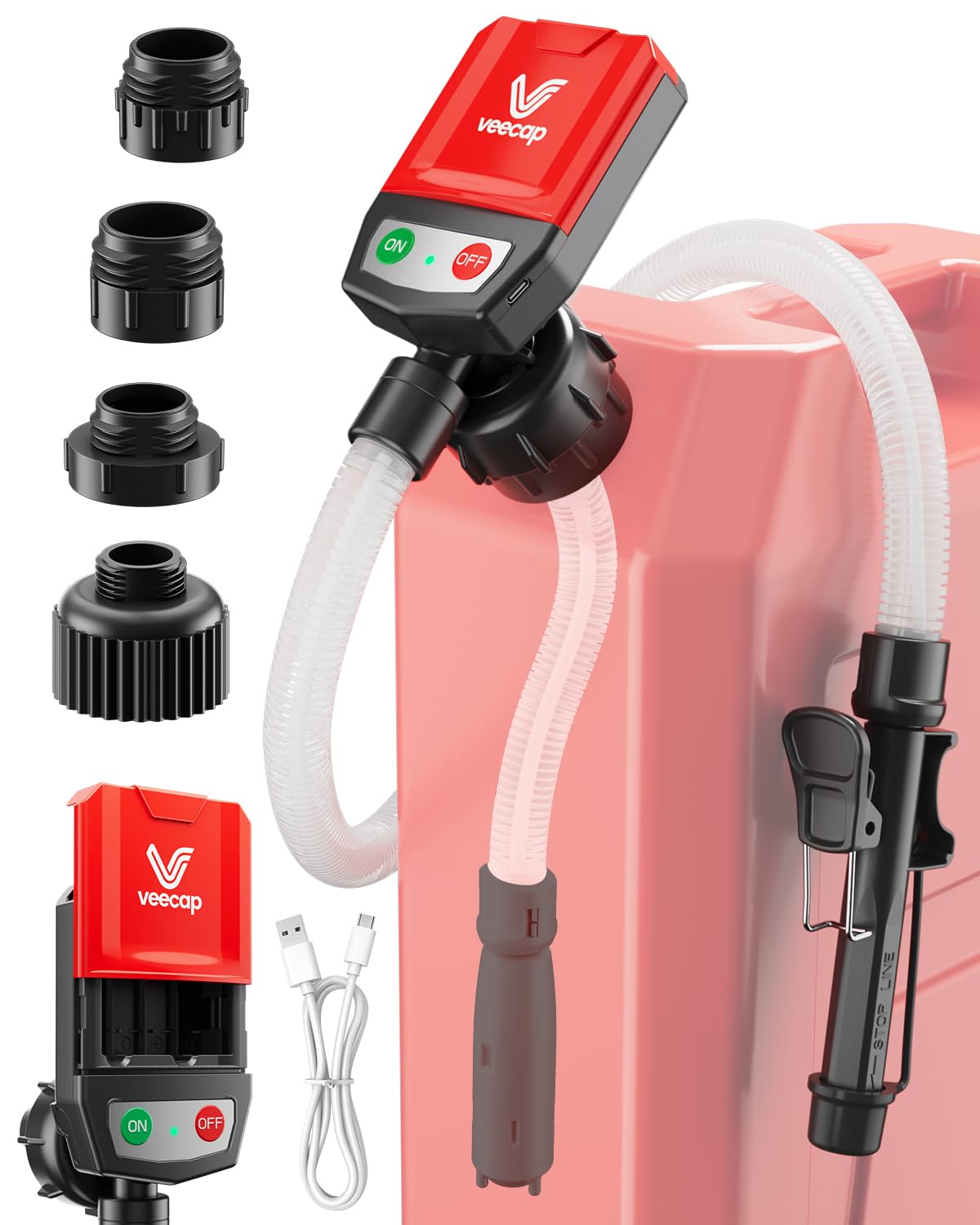
The VEECAP pump is completely different from the other products — it’s a battery-powered or USB-C-powered transfer pump with its own integrated auto-stop sensor. Rather than a check valve installed on a gas line, this is a portable solution for moving fuel from a gas can into a vehicle, lawn mower, or equipment without lifting 40-pound containers.
The auto-stop mechanism uses a sensor in the nozzle that detects when the receiving tank is full and cuts flow immediately. With four included adapters (2.0, 2.1, 2.75, and 3.75 inches), it fits most standard North American gas cans. The 51-inch outtake hose stretches easily to reach the filler neck, and the whole unit weighs only 1.8 pounds, making it genuinely grab-and-go.
It runs on four AA batteries or a USB-C connection to a power bank, which is great for remote job sites. The pump moves fuel at up to 3.8 GPM — slower than a dedicated nozzle but more than enough for personal use. One limitation: it doesn’t fit Scepter SmartControl cans due to internal filters, and it won’t work with barrels taller than 23 inches with openings under 1.3 inches.
Why it’s great
- Dual power (AA batteries or USB-C) for true portability
- Auto-stop sensor prevents spills reliably
- Universal adapter set fits most gas cans
Good to know
- Not compatible with Scepter SmartControl cans
- 3.8 GPM is slower than a bulk-tank nozzle
FAQ
Can I install a seismic gas shutoff valve myself?
Will a smart valve work during a power outage?
What flow rate do I need for a gas nozzle?
How do smart gas valves connect to leak sensors?
Final Thoughts: The Verdict
For most homeowners seeking earthquake protection, the winner for the automatic gas shut off valve category is the Watts Little Firefighter because it offers a proven mechanical trigger at a moderate cost with easy DIY installation. If you want remote control and smart leak-sensor integration, grab the YoLink Smart Valve Kit. And for a portable fuel-transfer solution that eliminates heavy lifting and messy spills, nothing beats the VEECAP battery-powered pump.