
Our readers keep the lights on and my morning glass full of iced black tea. As an Amazon Associate, I earn from qualifying purchases.
Specs are compiled from manufacturer listings and verified buyer reviews and can change over time — please confirm the key details on the product page before buying.
Bantams are roughly half the size of standard hens, so a coop built for full-size birds wastes space, money, and warmth. The right bantam coop gives your little flock a snug, dry, predator-resistant place to sleep and lay, without the drafty dead space of a house built for standard hens. Below are eight coops that genuinely suit small-breed chickens, sorted so you can match one to your flock size, your yard, and how much maintenance you actually want.
I’m Min — the founder and writer behind Gadgets Feed. This guide is built by comparing the manufacturers’ published specifications and the patterns across verified customer reviews, so you get each pick’s real strengths and trade-offs instead of marketing spin.
Small breeds need smaller roosts, shallower nest boxes, and tighter gaps than standard hens, and most coops miss that detail entirely — this guide focuses only on the ones that get the basics right, from the snap-together plastic build that tops our Best Bantam Chicken Coops list to the compact wooden hutches that suit a pair of silkies.
Our Picks at a Glance
How To Choose The Best Bantam Chicken Coops
The biggest mistake new bantam keepers make is buying a coop sized for standard hens and treating the extra room as a bonus. It is not. Space a bantam cannot fill stays cold, stays damp, and burns through more bedding every week.
Match the coop’s bantam capacity, not its hen capacity
Most coops list two numbers: how many large hens fit, and how many bantams fit. A coop rated for 4-6 large hens typically houses 6-12 bantams because each bird takes up far less floor and roost space. Buy to the bantam number, then subtract one bird as a cushion for bad weather days when everyone stays inside.
Check roost height and nest box depth
Bantams fly well but land light, so roosting bars set low to the floor suit them better than the high bars built for heavy breeds. Nest boxes that are too deep swallow a small hen, and shallow dividers let two bantams crowd one box. Look for roosts you can relocate and dividers you can adjust.
Decide between plastic and wood before you buy
Plastic panels resist rot, stay washable, and need no repainting, which suits wet climates and busy owners. Fir and pine coops look better in a garden and insulate naturally, but the wood needs sealing or repainting to survive more than a season outdoors. Neither is wrong — pick the one that matches the upkeep you’ll actually do.
Ventilation and predator hardware are the quiet deciders
Chickens need airflow above their heads without a draft at their backs, so adjustable vents or a ridge gap under the roof matter more than window size. On the security side, the latch is the weak point on most budget coops, and sliding trays without a locking pin can be pried open from underneath.
Quick Comparison
| Model | Best For | Bantam Capacity | Footprint (L x W x H) | Frame Material | Amazon |
|---|---|---|---|---|---|
| Hatching Time Formex Snap Lock★ Best Overall | All-season flock housing | 6-12 bantams | 64″ x 39″ x 42″ | Polyethylene (PE) | Amazon |
| PHONDIKO 80″ Wooden CoopBest Value | Budget run-and-house combo | 3-4 chickens | 80.7″ x 26″ x 44.5″ | Metal, plastic, fir wood | Amazon |
| Gowoodhut Chicken Coop with TraysCompact Pick | A pair of bantams or chicks | 1-2 chickens | 32″ x 23.6″ x 36.6″ | Fir | Amazon |
| PawHut 36″ Weatherproof Coop | Small-space singles and pairs | 1-2 chickens | 36.2″ x 25.2″ x 27.2″ | Fir | Amazon |
| PetsCosset Coop with Run and Wheels | Movable backyard setup | 2-3 hens | 71.3″ x 26.1″ x 39.4″ | Fir | Amazon |
| PawHut 39″ Coop with Nesting Box | Two-hen backyards | 2-4 chickens | 39.4″ x 33.9″ x 39.4″ | Fir | Amazon |
| Omitree Deluxe Large Coop | Larger bantam flocks | 4 large or 8 bantams | 47″ x 38″ x 47″ | Wood | Amazon |
| Omitree Large Coop, 4 Nest Boxes | Beginners wanting room to grow | 4 large or 8 bantams | 43″ x 36″ x 38″ | Wood | Amazon |
In‑Depth Reviews
1. Hatching Time Formex Snap Lock 4-6 Large Chicken Coop, Backyard Hen House
Our pick — 4.5★ from 250+ verified ratings; the strongest balance of quality and price.
The washable plastic coop that shrugs off rot, rain, and raccoons — and sleeps a dozen bantams.
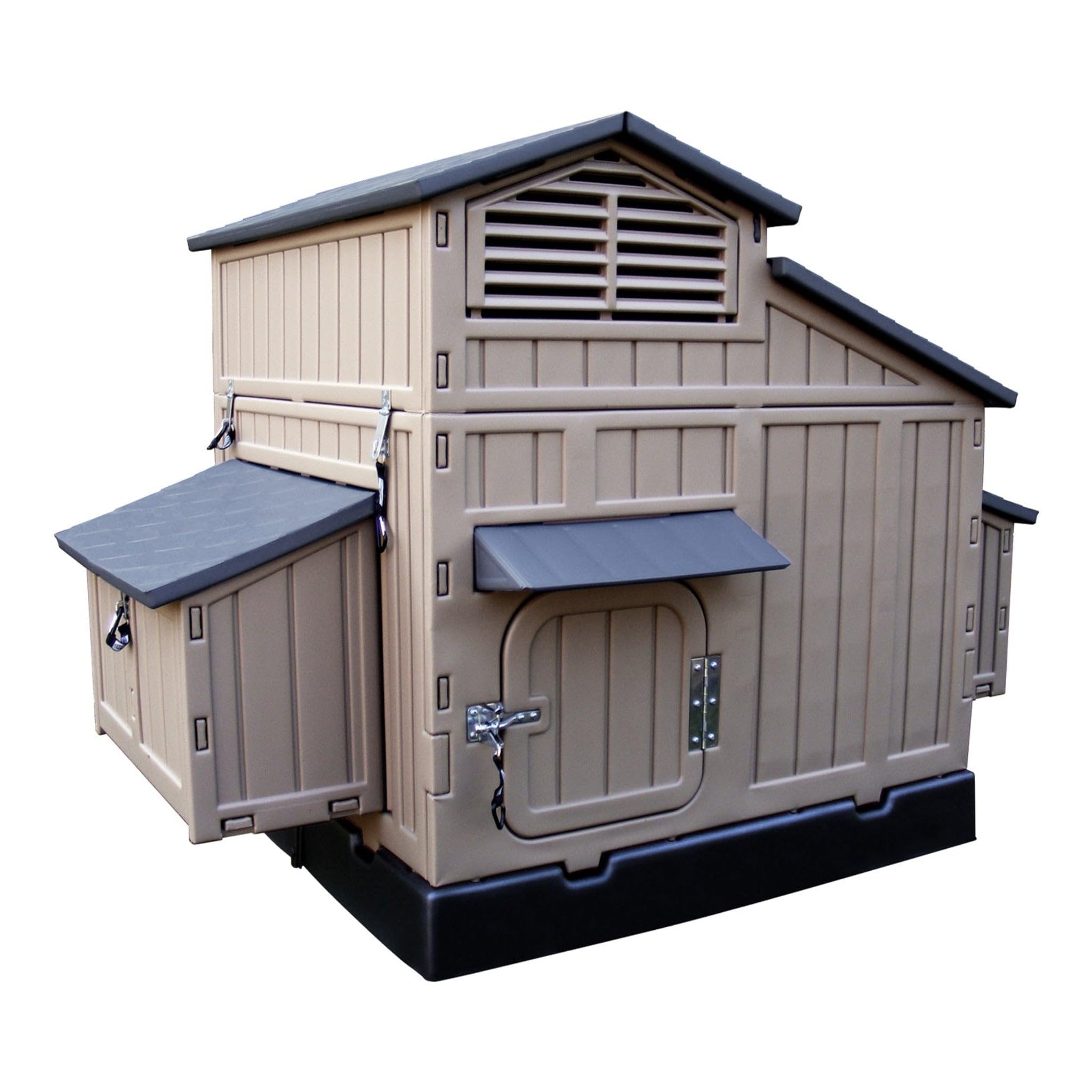
This is the coop to buy if you keep a real flock of bantams and never want to repaint anything. It houses between 6 and 12 bantams, and it does that inside a footprint of 64″L x 39″W x 42″H — noticeably more compact than the PHONDIKO wooden coop above, which stretches to 80.7″ long to house a standard-breed flock. Four nesting spots with removable dividers and three 36″ roosts give your bantams spaces sized for small bodies rather than standard hens.
The panels snap together with no tools, which is why assembly is the thing buyers rave about most. Owners describe setting it up in about 30 minutes and moving it with two people, and the impact-resistant polyethylene shell — the same family of plastic used for outdoor furniture — means no rot, no splinters, and no annual sealing. A pull-out litter tray and quick-access nest boxes keep the daily routine short, and the double-wall insulated construction takes the edge off cold snaps. Its 65-pound weight keeps it from blowing over, but it stays portable enough to reposition when the grass wears down.
The catch is cost and security. The price sits well above the wooden coops on this list, and owners are split on whether the locking system is fully predator-tight — several added their own carabiners or a solar door. The bottom skirt is also the soft spot, and buyers report reinforcing it with cinder blocks or cement pavers. Treat it as a strong shell that still wants a little customizing at the base, and you get a coop that holds up where wood coops rot.
Why Owners Keep It
- Snap-together panels assemble without tools in roughly 30 minutes
- Washable polyethylene shell resists UV, weather, and chemicals — no repainting, no rot
- Houses 6-12 bantams across four nesting spots with removable dividers
- Pull-out tray and adjustable vents keep cleaning and airflow simple
Worth Knowing First
- The base skirt is thin — plan on pavers or blocks underneath
- Latches divide opinion; a few owners upgraded the hardware themselves
Built for: Anyone with a genuine bantam flock who wants a maintenance-free shell instead of a yearly repainting job.
Reconsider if: you want the lowest upfront cost — the budget wooden builds further down deliver shelter for far less money, just with more upkeep.
2. Outdoor Chicken Coop for 3-4 Chickens, 80″ Wooden Chicken House
The longest footprint here, and the friendliest entry point into a run-and-house setup.
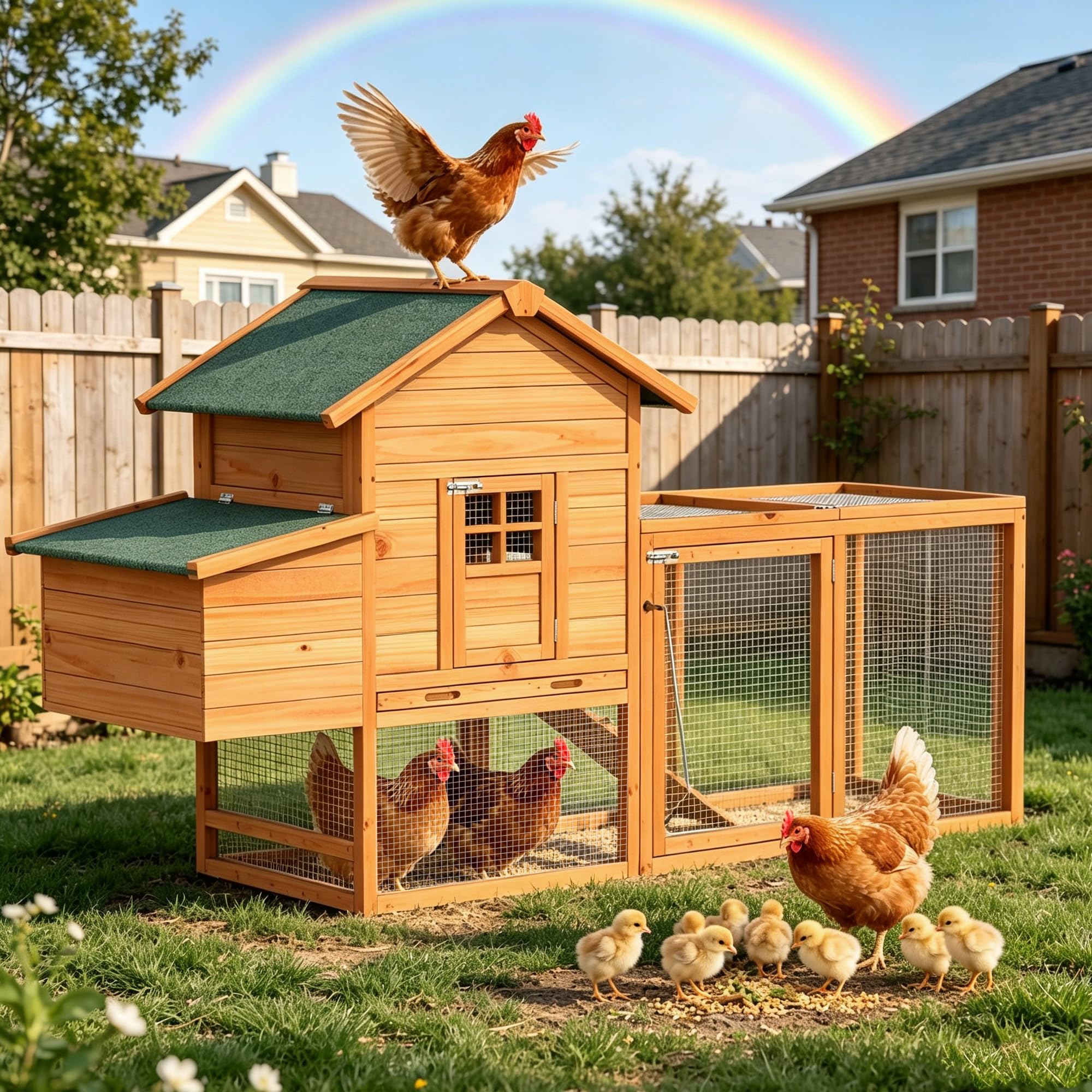
Fir wood, a waterproof slanted roof, and a run built into the same structure — this is the shape most first-time bantam keepers picture. At 80.7″L x 26″W x 44.5″H it is the longest coop in this roundup, and it stretches 16.7 inches longer than the Hatching Time Formex, trading a compact square footprint for a narrow, run-style layout that works against a fence line. The raised sleeping area, nesting box, and ramp come included, so the birds have somewhere to hide at night and a way up.
What buyers praise most is simply the room. Owners mention four chickens sleeping comfortably in it, and the flock takes to the raised house quickly — the review pages sum it up: “they love the house they get to hide in at night.” The side roof opening over the nesting box makes egg collection a lean-in job rather than a crouch, and the galvanized wire mesh and secure latches handle the basics of airflow and predator defense.
Honest trade-off: this is a fir build, and wood moves. One reviewer noted the roof bowing slightly after about four months of rain, while another flagged thin, knotty frame members and unlabeled pieces that made assembly fiddly. The recurring advice is to run a coat of sealant over the wood and level the ground under the legs. Set it up right, though, and it holds up well — and its size advantage over the pricier option is real: the PHONDIKO stretches noticeably longer than the Formex Snap Lock, though the Formex holds the higher score.
Where it wins: a three-to-four bird flock, a narrow strip of yard, and a buyer willing to spend an afternoon sealing wood in exchange for a much lower entry cost.
The honest read: treat the roof and frame as something you maintain, not something you ignore, and it earns its place — the run layout and the low price are the pairing that makes it the value pick here.
Reach for this if: you want a run and a house in one piece and don’t mind sealing fir wood once a year.
Look elsewhere if: you want a set-and-forget shell — plastic beats fir on that front every single season.
3. Gowoodhut Chicken Coop Rabbit Hutch with Removable Trays, Raised Floor Hen House
A nest box split in two for bantams that insist on laying at the same time.
Gowoodhut’s little fir hutch is built around a detail most coops skip: a two-part nesting box with a switchable roof, so two hens can lay side by side without one shoving the other out. The roof lifts up and a wooden rod props it open, which makes egg collection and a quick check on your birds a one-hand job rather than a full door opening. On top of the nest box, a metal lock adds a basic layer of security.
The rest of the design leans practical and small. It sits on 7.5-inch legs to keep the floor off damp ground, and waterproof rubber feet protect the leg ends from rot. That raised floor combines with a pull-out tray and a slatted platform to speed up cleaning, and the door doubles as a ramp with wooden ridges your bantams can grip. A sliding wood window with wire mesh gives you a view without opening anything.
Where this coop divides opinion is size. It is rated for 1-2 chickens, and owners describe it as a snug fit for a pair of bantams or a single standard hen. Ventilation is the other honest limit — the small top window is the main airflow, so if you keep this hutch fully closed in a warm spell, add extra mesh or leave the door ajar. The other quirk some owners mention is a strong smell from the wood finish that fades after a few weeks outdoors. For one or two bantams and a small yard, the trade is fair.
Design You Notice Daily
- Split nest box with a prop-up roof lets two bantams lay at once
- 7.5″ legs, rubber feet, and a raised floor keep bedding dry and protect the wood
- Door doubles as a ridged ramp; sliding mesh window gives a view
Limits to Plan Around
- Best suited to 1-2 bantams or one standard hen — not a flock coop
- Airflow comes mainly from the small top window; add mesh in warm weather
Right fit: a pair of bantams in a small garden where a shallow, narrow hutch tucks against a shed.
Not the fit: anyone planning more than two birds, or owners who want hands-off ventilation in summer.
4. PawHut Chicken Coop Outdoor Weatherproof for 1-2 Chickens

A pine hutch that owners call one of the sturdiest small coops they have owned.
PawHut’s smallest coop here gets its reputation from the frame. It is built from pine, and buyers describe it as sturdy — the phrase that comes up again and again is “one of the best of four coops owned,” with wood and screws that hold up better than the typical prefab panel. Rated for 1-2 chickens, it suits a single bantam hen or a pair of silkie-sized birds, and its asphalt slanted roof handles rain and sun without complaint.
The layout is built for a small keeper. The floor sits 2.4″ above the ground to block moisture and cold, and a galvanized metal pull-out tray resists rust, making waste removal quick. The nesting box roof opens for egg collection, and a clear acrylic window lets you check on your birds without opening the coop at all. A folding ramp doubles as the door, adding a second layer of security at night.
What to know before you commit: ventilation is limited to a ridge vent tucked under the roof peak, so in a closed-up coop on a hot day you may want to crack the door or add a vent yourself. A couple of owners also note the window is a plasticky piece that can crack, and one flagged that the pull-out tray needs screwing down to be truly predator-tight. Those are maintainable issues on a well-built shell, not reasons to skip it — and for a first-time bantam keeper, the easy 20-minute assembly makes the start painless.
The standout spec: a 2.4″ raised floor on a pine frame, which is what keeps bantams dry where a low wooden coop would soak bedding.
Small caveat: the ridge vent is the only airflow swap, so plan a summer upgrade if you keep the coop buttoned up.
Choose it when: you want a small, tidy, well-built home for one or two bantams and value the raised floor and window.
Pause if: you get hot summers and want generous built-in ventilation without modifying anything.
5. PetsCosset Wooden Chicken Coop with Run and Wheels for 2–3 Hens
The coop you roll to fresh grass instead of rebuilding the run every season.
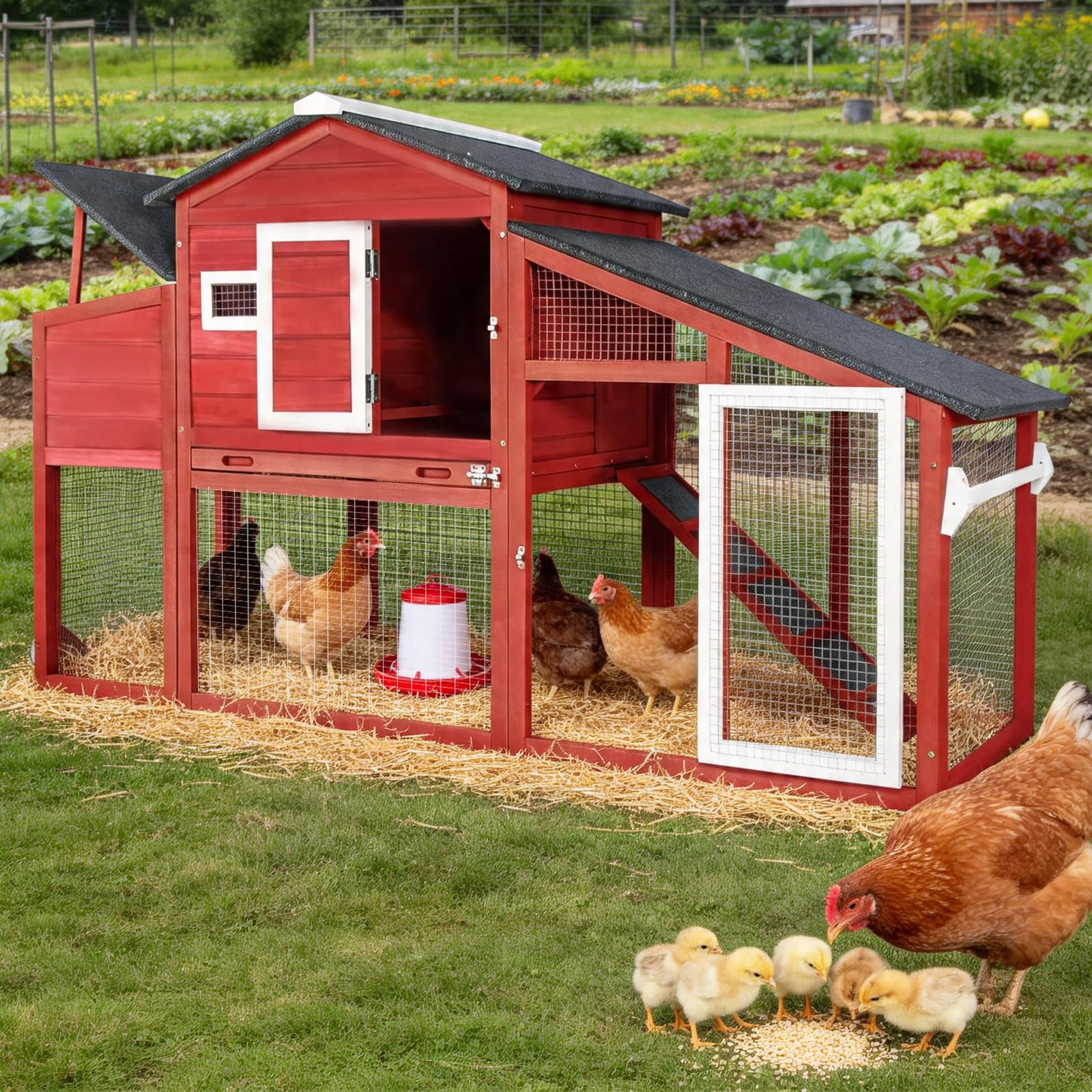
PetsCosset’s design solves a problem the stationary coops above can’t: tired, worn ground under the run. Wheels on the frame let you roll the whole thing — house and run together — to a new patch of yard so the grass under it can recover. At 71.3″L x 26.1″W x 39.4″H it runs about 7.1 inches shorter than the PHONDIKO unit, which fits tighter yards, and it carries a two-story layout: an upper enclosed house with a private nesting box, plus a lower run area for daytime access.
The fir build comes with a weather-resistant asphalt roof, reinforced panels, and lockable doors with wire mesh, so it handles sun, rain, and seasonal swings while keeping predators out. The improve sleeping area lifts your bantams off damp ground, which supports better airflow inside the house, and a removable pull-out tray keeps cleaning efficient. It is also rated to work as a compact duck coop or a shelter for other small animals, so it flexes with your setup.
Assembly is quoted at about 45-60 minutes for two adults using pre-drilled holes and labeled panels. The trade-off is size: this is rated for 2-3 hens, and it suits bantams best. Buyers with full-size birds describe it as a squeeze, and the recurring advice is to keep it for bantams, chicks, or a single isolated hen. The instructions and a couple of hardware details divide opinion — some found the directions clear and some had to work out the ladder placement themselves. For a rotating bantam setup, the wheels outweigh the fuss.
Why It Stands Out
- Wheels let you roll the whole coop-and-run to fresh grass
- Two-story layout splits an enclosed house from a lower run
- Weather-resistant asphalt roof, lockable doors, and wire mesh
- Pre-drilled panels assemble in about 45-60 minutes with two people
Where It Tapers Off
- Rated for 2-3 hens; it’s a bantam-sized fit, not a standard-breed home
- Instructions and some hardware get mixed reactions from owners
Suits you if: your yard is small and you want to protect your grass by moving the coop every week or two.
Move on if: you keep standard-breed hens — three is the honest ceiling and even that feels tight.
6. PawHut Wooden Chicken Coop 39″ with Nesting Box for 2-4 Chickens Light Gray
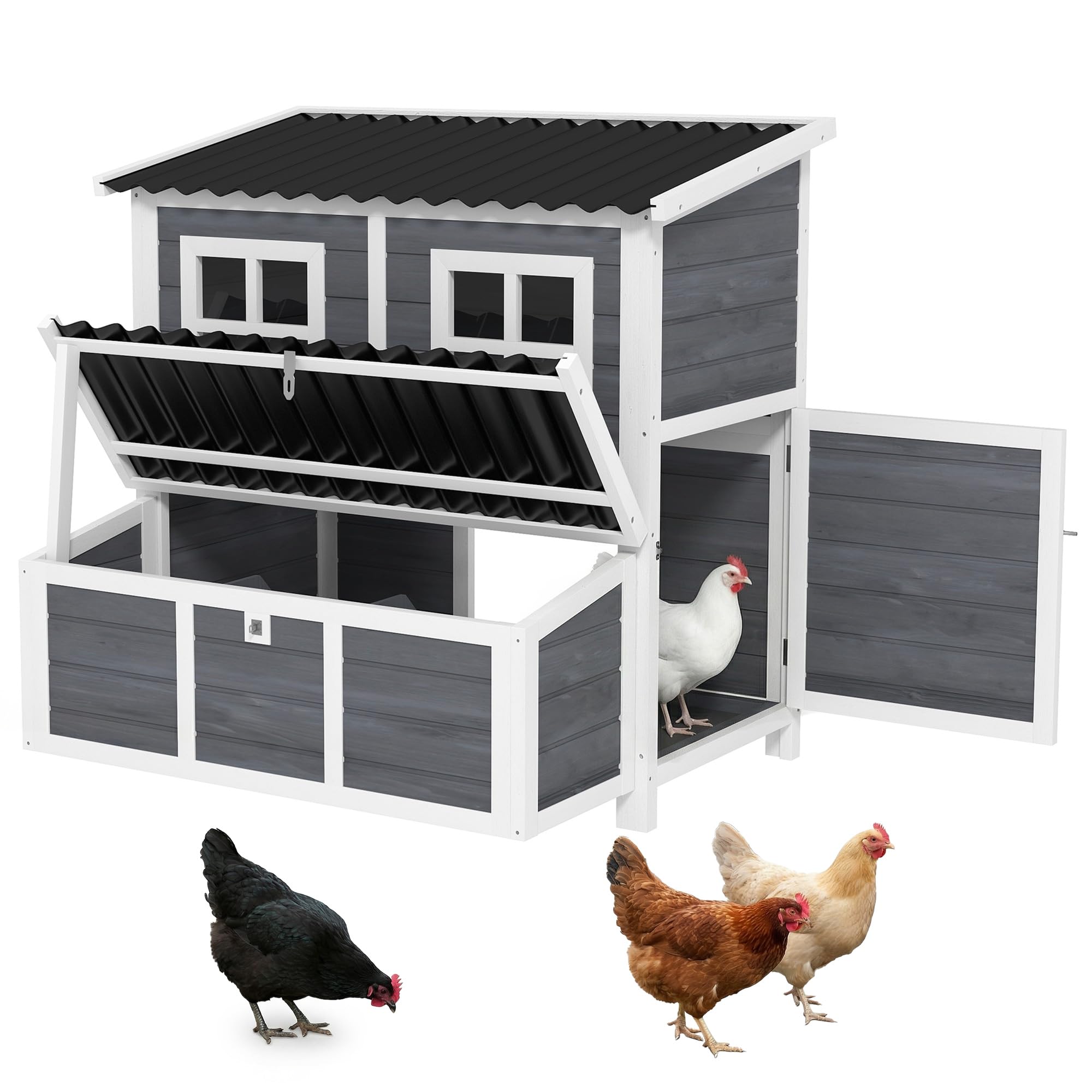
A spacious main house with a three-part nest box, aimed at buyers who want two laying stations plus room for one more hen to grow into.
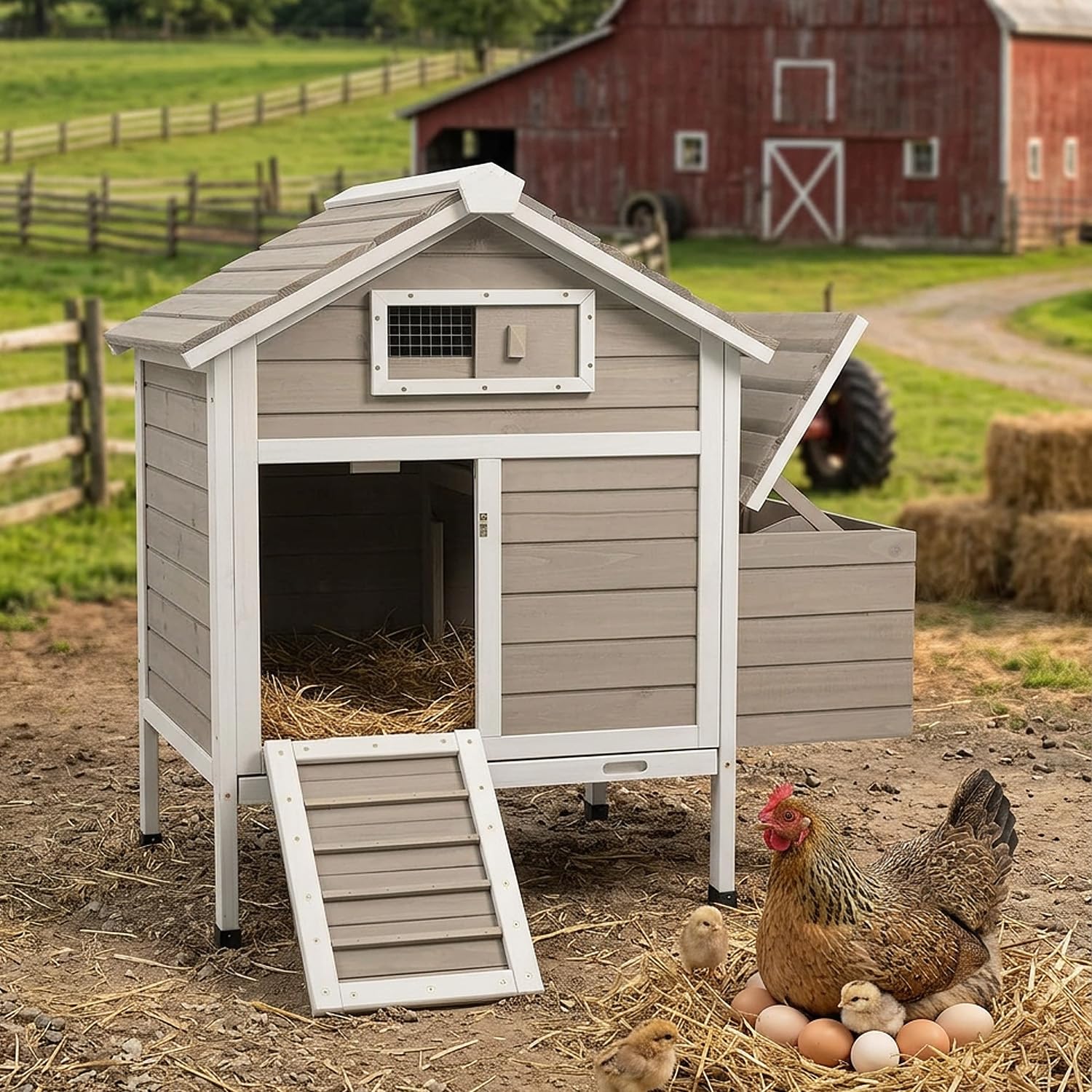
PawHut’s mid-sized fir coop gives you a four-square-foot main house paired with a two-square-foot three-compartment nesting box. That nest box is the reason to look here — three bays mean your bantams can pick a private spot instead of fighting over one box, and the pair of doors, including a ramp door, lets birds move between the house and the yard freely. Two windows give you a look inside without disturbing anyone.
The build reads premium on the outside: solid fir, coated with waterproof paint, set on a raised design with a plastic roof to keep birds out of rain, wind, and extreme weather. A slide-out tray keeps cleaning quick, and the 2-4 chicken rating gives a small flock real breathing room. Assembly is friendly — owners routinely get it built in about an hour with two people.
Where it asks you to work: this is a fir coop, and fir splits. Customers note the wood splitting during assembly, and a few describe thin paint coverage and soft vinyl windows. If you buy this one, plan to seal the roof panel grooves and the wood exterior, and replace the vinyl windows with hardware cloth for ventilation and predator protection. The three-compartment box and the clean lines make it worth the effort — just go in knowing the finish is the part you complete.
Why pick it: a three-bay nesting box and two doors make this a well-organized home for two to four bantams.
The finishing work: budget for sealant and window mesh — up front the paint and vinyl are thin.
Best for: a bantam keeper who wants laying stations sorted before anything else.
Skip if: you want zero assembly-day fuss-finishing — the surface prep is part of the buy.
7. Deluxe Large Wood Chicken Coop Backyard Hen House 4-8 Chickens with 3 Nesting Box

Room for eight bantams on the smallest footprint of the large coops.
For keepers scaling up, this Omitree design covers the most birds on the least ground. It measures 47″L x 38″W x 47″H and is rated for around 4 large hens or 8 bantams — and because it’s a square, not a long strip like the PHONDIKO coop, it fits in a corner where a stretched run won’t. The three nesting boxes and single raised level give a growing bantam flock space to spread out.
Owners speak most often about the overall quality feel and the assembly experience: with about an hour of work, the wood goes together cleanly and the coop looks like a genuine little house in the backyard. The improve design keeps the floor off the ground, and one owner says cleaning time dropped noticeably after switching. For a starter flock of bantams, the room and the look both land.
Two things to weigh. First, the hardware is light — several owners replaced the latches and hinges with heavier ones, and the ramp hinges in particular are a weak point. Second, this is softwood, so the panels want a coat of exterior paint or sealant before they weather, and a floor covering like stick-on tiles helps the interior last. It also arrives unassembled, so set aside an afternoon. As a roomy bantam house, it’s a strong shell — just budget for the small hardware upgrades.
Where it stands out: eight-bantam capacity in a compact square footprint, with three nest boxes and a design that looks intentional in the yard.
What to plan for: heavier hinges and latches, plus exterior sealing, to get the longevity the frame is capable of.
Go here if: you’re expanding to a bantam flock of six or eight and want a compact house that still looks like a coop.
Think twice if: you want to hang a coop without any work — the hardware upgrades and sealing are part of owning this one.
8. New Large Wood Chicken Coop Backyard Hen House 4-8 Chickens w 4 Nesting Box

The easiest build here, for buyers who want bantams housed this weekend.
Assembly is the reason this Omitree model belongs here. Pre-drilled holes, pre-cut doors and ramp, and an instruction sheet owners consistently call clear make it the friendliest build on the list — a single person with a screwdriver can get it standing. The 43″L x 36″W x 38″H frame is rated for around 4 large hens or 8 bantams, and it comes with four nesting boxes, which is generous for the size. It is the simplest way to move bantams from a brooder into a real coop.
from the start, the treated-wood finish looks the part. A treated-wood finish means no immediate painting is required, the roof is sturdy, and the pre-assembled fascia saves time. Owners describe it as lightweight but sturdy once assembled, and the flock settles in fast. For a beginner moving a small flock outdoors, the combination of clear instructions and a complete kit is the appeal.
Be honest about the material. This is a fir build with thin panels, and the recurring note in reviews is wood that splits or gaps between boards — a smear of caulk handles the joints, and exterior paint or sealant will stretch its life. The hardware inside is basic, and several owners upgraded the latches. The coop also wants a level base, as thin wood does not like soft ground. With a little sealing and a heavier latch, it serves a starter bantam flock well.
What You’ll Like
- Pre-drilled holes and clear instructions make it the easiest build here
- Four nesting boxes in a compact 43″ x 36″ x 38″ frame
- Treated wood arrives ready to use without immediate painting
Needs Attention
- Thin fir panels can split; caulk the gaps and seal the exterior
- Basic hardware and latches reward upgrading to heavier kit
The right pick: a first bantam coop where fast, clear assembly matters more than heavy materials.
Not the pick if: you want kit that survives rough weather untouched — the sealing and latch upgrades are yours to handle.
Understanding the Specs
Bantam Capacity vs Hen Capacity
Coop listings give you two numbers, and the bantam figure is the one to trust. A coop marked 4-6 large hens usually carries 6-12 bantams, because a bantam is roughly half the weight and footprint of a standard hen. Pick your bird count against the bantam number, then trim one bird off as a cushion for rainy days when the whole flock stays indoors.
Footprint and Height
The length, width, and height tell you where the coop fits — a long coop suits a fence line, while a square one tucks into a corner. Height matters too: tall coops give you room to stand and add roost bars, while shorter ones are easier to clean from outside. On a raised design, legs lift the floor off damp ground and protect the wood underneath.
Frame Material and Weathering
Plastic panels resist rot, stay washable, and need no repainting, which makes them low-maintenance in wet climates. Fir and pine coops look the part and insulate, but softwood wants sealing or painting to outlast a single season. Whatever you buy, treat softwood before the first rain if you want the frame to hold its shape.
Ventilation and Predator Hardware
Airflow above the birds’ heads prevents damp air without a draft at floor level, so adjustable vents or a gap under the roof are the real airflow feature. The latch is the weakest link on most coops—look for a lockable door and, ideally, a tray that pins or screws down so nothing can pry it from underneath. For bantams, wire mesh gauge and gap width matter more than the door count.
FAQ
How many bantams fit in a coop rated for 4-6 large hens?
Are bantam chickens better off in a smaller coop?
Do bantam chickens need different roosting bars?
Is plastic or wood better for a bantam coop?
How much ventilation does a bantam coop need?
Can I keep bantams and standard hens in the same coop?
How long should a wooden coop last outdoors?
Should I put a bantam coop on a base?
Do bantam coops need a nest box for each hen?
How do I keep a bantam coop warm in winter?
Final Thoughts: The Verdict
For most bantam keepers, the bantam chicken coops winner is the Hatching Time Formex Snap Lock because it solves the two things that most often go wrong with wood — rot, splinters, and yearly repainting — and it houses up to 12 bantams across four nesting spots and three 36″ roosts, with no tools needed to assemble it. If you want a run-and-house build and a lower price, grab the PHONDIKO 80″ Wooden Chicken House and seal it once. And for one or two bantams tucked into a small garden, the Gowoodhut Coop with Removable Trays is the one to reach for, thanks to its split nest box and raised floor.
How We Picked
We do not accept paid placement. Every pick is matched to a real buyer and a real use-case; we do not hands-on test units.
Sources & Methodology
Specifications: manufacturer listings and product documentation. Review insights: verified customer reviews, as of September 2026. Pricing: not shown on this page (it changes often); check the current price via the retailer link.
As an Amazon Associate, Gadgets Feed earns from qualifying purchases. This does not affect which products we feature.