
A garden’s thirst is relentless, but a sagging, kinked mainline that chokes off flow to your emitters is a faster route to parched plants than no system at all. The backbone of any reliable drip network is the tubing that delivers water from valve to drip zone, and getting that choice wrong means hours of troubleshooting leaky barbs and uneven watering.
I’m Min — the co-founder and writer behind Gadgets Feed. I’ve spent hundreds of hours comparing wall thickness, ID/OD tolerances, UV stabilizers, and burst-pressure ratings across dozens of 1/2-inch poly and PVC rolls to separate the distributors that lay flat season after season from the ones that split on a hot afternoon.
Finding the right mainline isn’t complicated once you know the specs that matter. This guide breaks down everything you need to confidently pick the best 1/2 drip irrigation tubing for your exact garden layout and water pressure.
How To Choose The Best 1/2 Drip Irrigation Tubing
Choosing the right mainline for your drip system involves more than grabbing the cheapest roll. Wall thickness, inner and outer diameter tolerances, material composition, and UV resistance all affect how easily the tubing installs, whether it seals against barbs, and how many seasons it lasts before turning brittle in the sun.
Inside Diameter and Outside Diameter — The Fit Factor
A 1/2″ tube that is actually 0.600″ ID seals differently than one that is 0.700″ ID. Most standard barbed fittings are engineered for specific ID ranges. If the tubing’s ID is too tight, you risk splitting the tube while forcing the barb; too loose, and you get weeping leaks at every connection. OD matters for push-to-fit connectors, which need a precise outer diameter range to lock correctly. Always check the actual ID and OD numbers — not just the “1/2 inch” label — against your system’s fittings.
Wall Thickness and Burst Pressure
Thicker walls (0.050″ and above) resist punctures from rocks and staples and handle higher operating pressures without bulging. Thinner walls are lighter and more flexible but more prone to splitting if you run pressure above 50 PSI or if the tube gets nicked during installation. For mainlines that will carry water across long runs or connect directly to a hose bib with 60 PSI, a thicker wall is a cheap insurance policy against mid-summer blowouts.
Material: Polyethylene vs. PVC
Polyethylene (PE) tubing is the classic choice — flexible, UV-stabilized, and widely compatible with barbed fittings. PVC tubing offers similar flexibility but often has a smoother inner bore that reduces friction loss in long runs. PVC can be slightly more prone to kinking if coiled too tight, while PE holds its shape better around gentle curves. Both work above and below ground, but PE generally has better long-term UV resistance unless the PVC is blended with specific stabilizers.
Flexibility and Kink Resistance
A tubing that kinks at the first bend is a nightmare to route around raised-bed corners or irregular garden shapes. High-quality polyethylene and PVC compounds include plasticizers that keep the tube pliable in cold weather and heat without becoming stiff. Pre-softening the tube in warm sunlight before installation can help, but the best tubing stays easy to work with straight out of the roll. Check reviews specifically for “kinking” complaints — this is the single most common frustration in the category.
Quick Comparison
On smaller screens, swipe sideways to see the full table.
| Model | Category | Best For | Key Spec | Amazon |
|---|---|---|---|---|
| Carpathen 50FT | Premium | Push-to-Connect Systems | 0.65″ OD, 0.10″ wall | Amazon |
| Rain Bird T63-050 | Premium | Professional Mainline | 0.634″ OD, 70 PSI max | Amazon |
| Pawfly 50ft Roll | Mid-Range | PVC Flexibility | 0.63″ OD, 0.13″ wall | Amazon |
| TBPA 50FT Kit | Mid-Range | Starter Kit with Parts | 16mm OD, 33 PSI max | Amazon |
| Sulataya 49.2Ft | Budget | Light-Duty Above Ground | 16mm OD, lightweight PE | Amazon |
| Drip Depot 100′ | Budget | Long-Run Value | 100 ft length, 60 PSI | Amazon |
| Letesult 50FT Kit | Budget | Kit with 6-Way Connectors | 16mm OD, 3mm wall | Amazon |
In‑Depth Reviews
1. Carpathen 50 FT 1/2 Irrigation Tubing Mainline

The Carpathen mainline hits the sweet spot with a 0.65-inch OD and a substantial 0.10-inch wall thickness that feels dense without being stiff. It bends easily around raised-bed corners and greenhouse staging without kinking, and the slightly thicker wall gives it a confident feel when you slide in barbed fittings—no worrying about splitting the tube. Multiple user reports confirm it works flawlessly with standard push-to-connect fittings, forming a leak-free seal immediately.
The UV-stabilized plastic holds up in full sun across entire growing seasons, and the fiber-reinforced construction adds a layer of durability that cheaper rolls lack. At 50 feet, it’s the ideal length for a mid-sized garden mainline or a substantial distribution branch. The tube cuts cleanly with standard pruning shears, and its flexibility means you can snake it through tight spaces without fighting the coil memory.
One reviewer noted the material is slightly harder than other brands, which can make pushing barbs more difficult in colder weather. Warming the tube in sunlight or warm water softens it enough for a smooth connection. For a mainline that balances flexibility, wall strength, and UV resilience, this is the top pick for most DIY and professional gardeners.
Why it’s great
- Excellent kink resistance around tight curves and corners
- 0.10-inch wall provides superior puncture and burst resistance
- Compatible with push-to-connect fittings for tool-free assembly
Good to know
- Material can be stiff in cold weather, requiring pre-warming for easier fitting
- Some users report the liner can separate under extreme pressure spikes
2. Rain Bird T63-050 Drip Irrigation 1/2″ Blank Distribution Tubing

Rain Bird’s T63-050 is a professional-grade mainline with a Micro-Porous design that creates an ultra-tight connection to barbed fittings. The 0.634-inch OD and 0.536-inch ID are engineered specifically for Rain Bird’s universal barbed and Easy Fit compression fittings, ensuring a leak-free seal every time. The tubing handles up to 70 PSI, which covers most residential water pressures without the risk of bulging.
The self-dispensing coil reduces layout time dramatically—unroll it straight into the bed without fighting kinks or tangles. Users consistently report it holds up to UV exposure, chemical fertilizers, and algae growth across multiple seasons, with several reviewers noting it performs better after a year of full sun than cheaper home-store varieties. The 50-foot length is perfect for medium-sized gardens, and the tubing can connect directly to a hose bib or underground sprinkler header using Rain Bird’s conversion kits.
One drawback is that the tubing is semi-stiff right out of the box, making tight-radius turns more challenging than highly flexible PVC alternatives. It works best with Rain Bird’s specific fittings for the tightest seal, so if you have a mixed-brand system, test a single connection before committing to a full installation. For a mainline that prioritizes long-term reliability and maximum pressure handling, this is a proven workhorse.
Why it’s great
- 70 PSI max operating pressure handles high-volume systems
- Micro-Porous design creates ultra-tight barbed fitting seals
- UV and chemical resistant for years of outdoor service
Good to know
- Semi-stiff material is harder to route around tight curves
- Best performance achieved with Rain Bird brand fittings
3. Pawfly 1/2 Inch Drip Irrigation Tubing Main Tube (50 ft Roll)
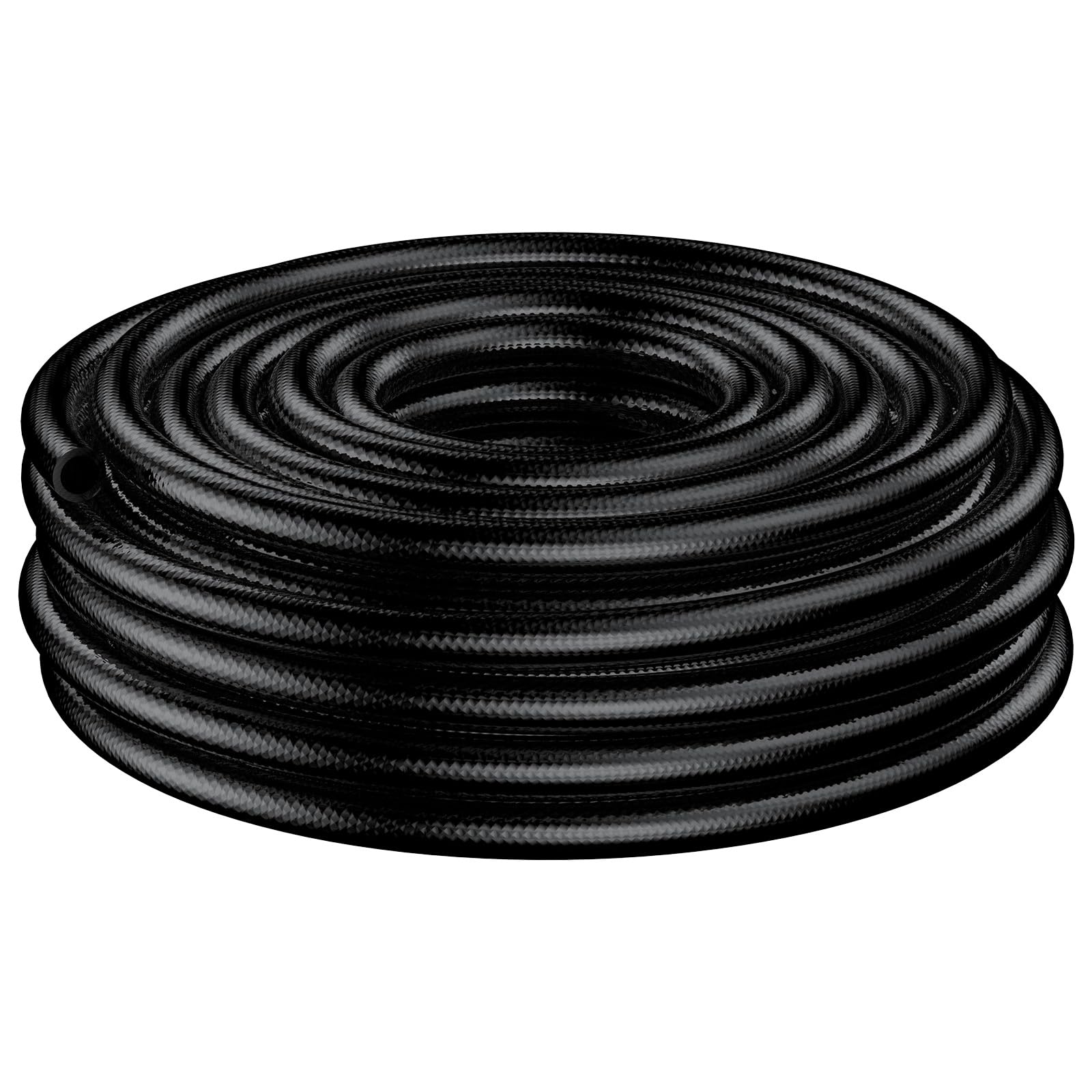
Pawfly stands out with a 0.13-inch wall thickness—significantly thicker than most 1/2-inch tubing on the market—paired with a PVC compound that stays ultra-smooth and kink-resistant even in tight spaces. The 0.63-inch OD works seamlessly with standard barbed emitters and connectors, and the thicker walls provide double the puncture protection of thin-wall poly options. This tubing handles extreme temperatures from –4°F to 158°F without cracking or bursting, making it a strong choice for seasonal climates.
The PVC material delivers a smoother inner bore compared to traditional PE tubing, which reduces friction loss over long runs and delivers more consistent pressure to end-of-line emitters. Users praise its flexibility for navigating curved beds and corners, though some found it difficult to punch holes for 1/4-inch drip lines without splitting. Pre-heating the tube or using a sharp punch helps. The 50-foot roll is generous, and the tubing cuts cleanly without fraying.
Some installers note that the tubing is less flexible than name-brand PVC alternatives and can be prone to kinking if not laid straight immediately. Using elbows at sharp corners prevents flow restriction. For a PVC mainline that prioritizes wall thickness and temperature tolerance at a mid-range price, the Pawfly roll is a solid contender.
Why it’s great
- 0.13-inch wall thickness provides excellent puncture resistance
- Handles extreme temperature range from -4°F to 158°F
- Smooth inner bore reduces friction loss in long runs
Good to know
- Less flexible than premium PVC brands; can kink if not laid straight
- Hard to punch holes for 1/4-inch drip lines without splitting
4. TBPA 1/2in. Drip Irrigation Tubing 50FT Kit

TBPA’s kit bundles 50 feet of 1/2-inch PVC tubing with quick-connect straight connectors, switch valves, T-connectors, 1/2-to-1/4 reducers, and zip ties—everything needed to build a complete drip mainline. The tubing has a 13mm ID and 16mm OD (approximately 0.51″ ID, 0.63″ OD) with a 3mm wall thickness that provides dual-layer explosion-proof protection against sudden pressure spikes. The maximum operating pressure is rated at 33 PSI, which is suitable for low-flow drip systems but not direct hose-bib connections without a pressure regulator.
Users consistently praise the quick-connect fittings as a standout feature—they click into place without the wrestling required for standard barbed connections. The layered PVC construction uses a recycled middle layer with virgin inner and outer skins, offering UV resistance and flexibility that holds up well in both above-ground and buried installations. Several reviewers note this kit replaced a big-box brand’s system with better sealing and easier assembly.
The 33 PSI limit means this tubing won’t handle high-pressure systems, and some users found that pushing 1/4-inch drip tubing into the mainline without the included reducers caused leaks at the insertion point. The included parts are high-quality, but the tubing itself is not as thick or puncture-resistant as premium poly options. For a complete, easy-to-assemble starter system at a mid-range price point, this kit delivers exceptional value.
Why it’s great
- Quick-connect fittings eliminate barbed insertion struggle
- Includes valves, reducers, and zip ties for a complete setup
- Dual-layer PVC wall resists pressure spikes
Good to know
- Maximum pressure of 33 PSI requires a regulator on hose bibs
- Thinner wall than premium poly tubing; less puncture resistant
5. Sulataya 1/2 Inch Drip Irrigation Tubing 49.2Ft
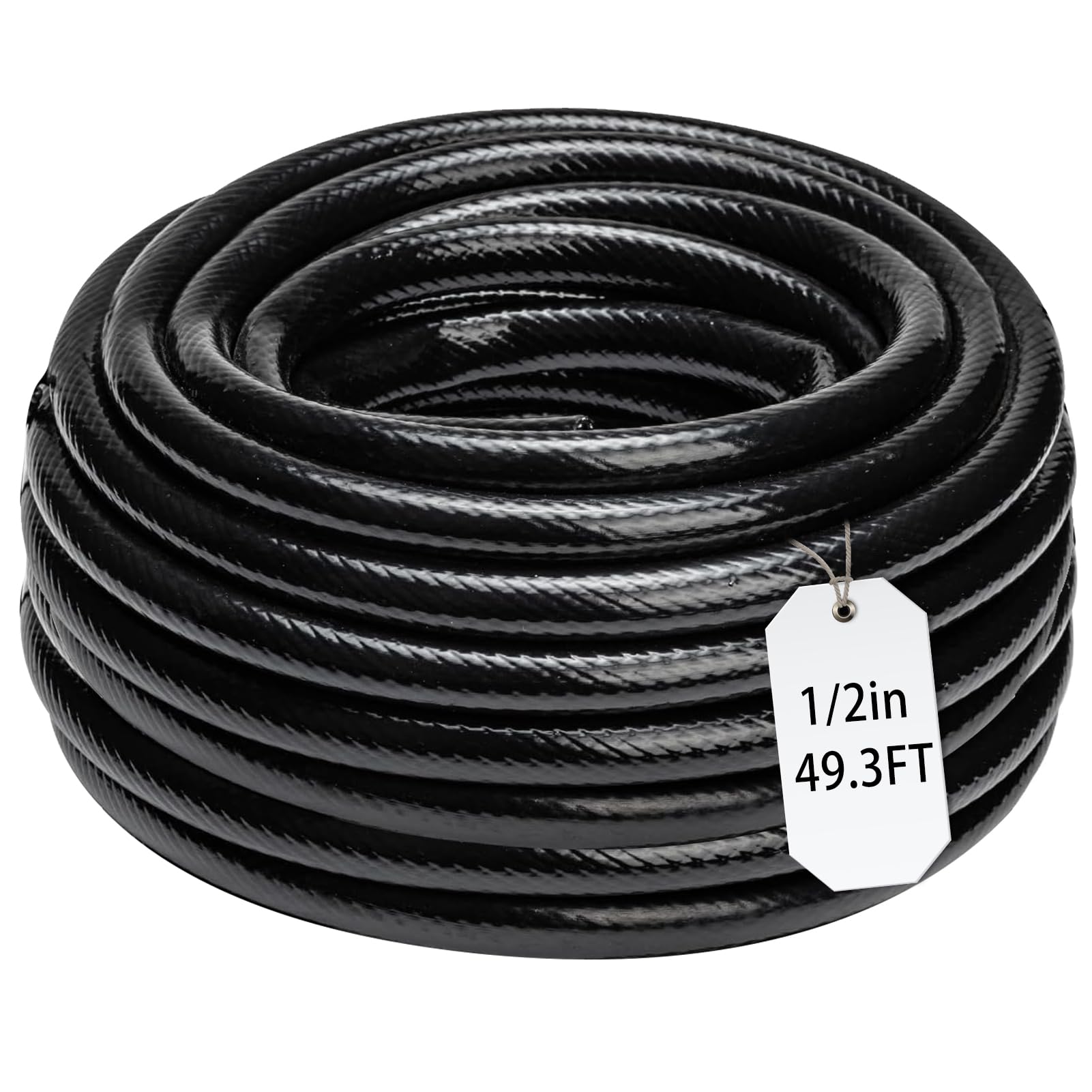
The Sulataya mainline is a lightweight polyethylene option that prioritizes flexibility and ease of use over rugged wall thickness. At 49.2 feet, it covers a standard raised-bed garden or greenhouse easily, and users consistently report that it lays flat and straight without fighting coil memory. The 13mm ID and 16mm OD (roughly 0.51″ ID, 0.63″ OD) fit standard 1/2-inch barbed fittings, though some reviewers note that the thinner wall requires gentle handling when pushing barbs to avoid splitting.
This tubing is noticeably more flexible than many poly alternatives, making it ideal for tight corners and curved beds where stiffer tubing would kink. One reviewer described it as “light duty,” which is accurate—this is best suited for low-pressure systems under 40 PSI and above-ground applications. The material softens easily in sunlight, making installation effortless compared to thicker, stiffer options. Several users successfully used hot water to soften the tube for fitting stubborn connectors.
The trade-off for this flexibility is durability. The thin wall is more susceptible to punctures from landscape staples and UV degradation over time. Users in climates with intense sun may see the tubing become brittle after two seasons. For a budget-friendly mainline that installs quickly and handles gentle curves with ease, the Sulataya roll is a capable choice for light-duty applications.
Why it’s great
- Extremely flexible; lays flat in tight corners without kinking
- Lightweight and easy to cut and connect with standard fittings
- Budget-friendly entry point for small to medium gardens
Good to know
- Thin walls prone to punctures from staples and rocks
- UV degradation may cause brittleness after two seasons in full sun
6. Drip Depot Polyethylene Tubing 100′

The Drip Depot 100-foot roll is a premium agricultural-grade polyethylene tubing with a 0.600-inch ID and 0.700-inch OD. The larger OD means it is a tighter fit for standard 1/2-inch barbed fittings—some users found it incompatible with their existing connectors, requiring specific Drip Depot fittings or a heat gun to soften the tube. The 60 PSI max pressure rating covers most residential systems, and the UV-resistant compound is designed for professional landscape applications.
At 100 feet, this roll offers the best linear value of any option in this roundup, covering large gardens or multiple beds from a single spool. The tubing is stiffer than consumer-grade poly, which helps it lay straight in long runs but makes tight-radius routing more challenging. Professional installers appreciate the consistent ID that maintains flow rates across long distances without reduction. Fast delivery and good packaging keep the tubing free of kinks out of the box.
The biggest issue reported is the dimensional inconsistency—several reviewers confirm the 0.700-inch OD does not match standard 1/2-inch fittings, forcing a return or additional parts purchase. The return shipping cost for heavy tubing rolls is substantial. Verify your fittings’ ID requirements before ordering, or plan to use Drip Depot’s own connectors. For long mainline runs where you can control the fitting ecosystem, this roll delivers professional-grade length and material quality.
Why it’s great
- 100-foot length covers large installations from a single roll
- Premium agricultural-grade PE with UV stabilizers
- 60 PSI rating handles most residential water pressures
Good to know
- 0.700-inch OD may not fit standard 1/2-inch barbed fittings
- Stiffer material is difficult to route around tight curves
7. Letesult 50FT 1/2 Inch Drip Irrigation Tubing Kit
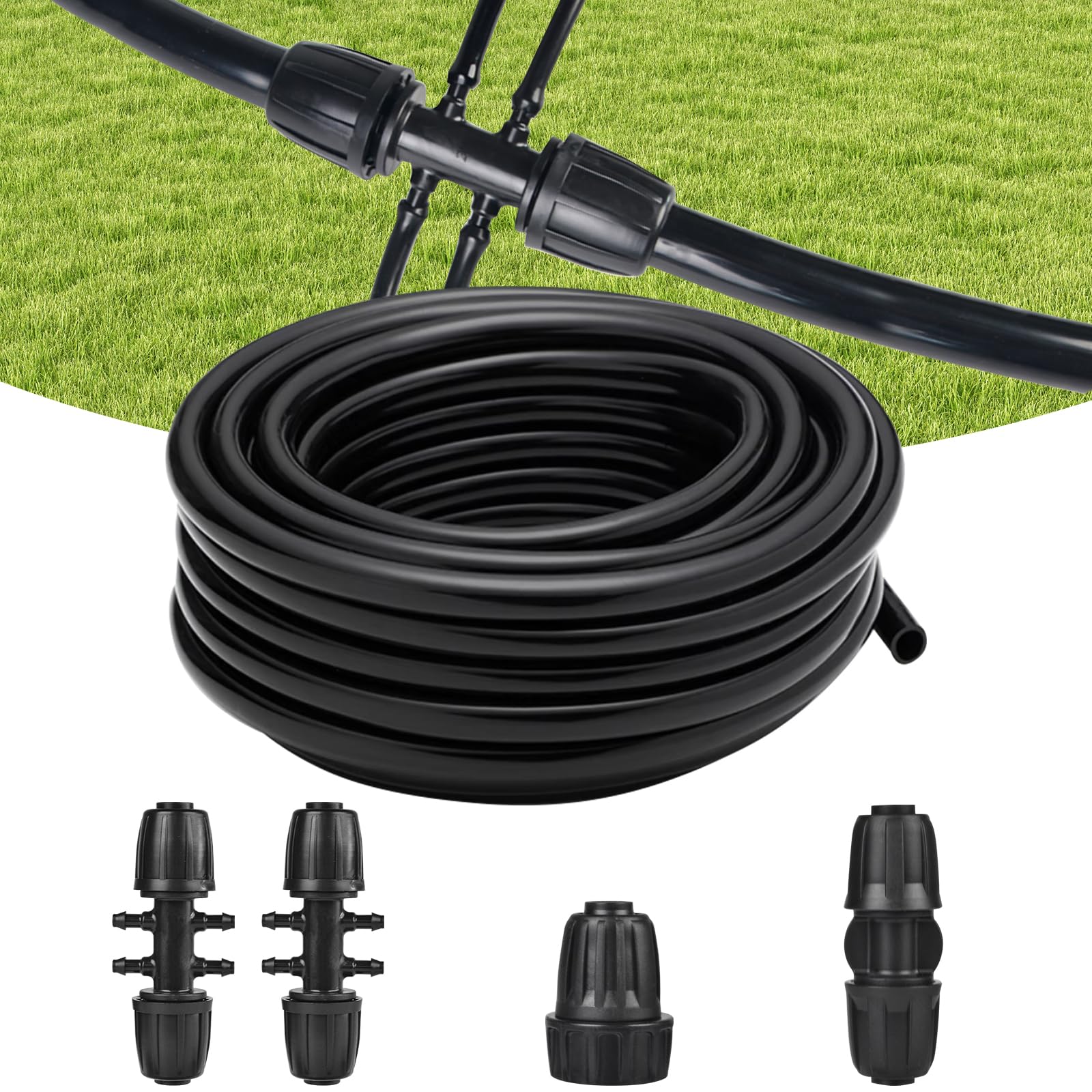
Letesult’s kit combines 50 feet of 1/2-inch PVC tubing with two 6-way connectors, a straight coupler, and a 3/4-to-1/2 faucet adapter for immediate connection to a hose bib. The tubing has a 13mm ID and 16mm OD with a 3mm wall thickness that provides decent burst protection for low-pressure systems. Users report it is significantly more flexible than big-box store equivalents like those from Home Depot, making it easy to snake around raised beds and switchbacks.
The included 6-way connectors allow immediate branching to multiple 1/4-inch drip lines, making this a true plug-and-play starter kit. Several reviewers noted the tubing held up well through Michigan winters and Florida summers, suggesting the UV stabilizers are effective across diverse climates. The flexibility is a highlight—one installer described it as “beating the big name brand by leaps and bounds” in ease of routing. The faucet adapter is a nice touch that saves a separate trip to the hardware store.
The kit lacks end cap terminators, so the open ends of the 6-way connectors need to be capped separately. Some users found the tubing was a tight fit even for the included connectors, requiring hot water or oil to slide the barb in. The wall thickness, while decent, is not as puncture-resistant as the Carpathen or Rain Bird options. For a complete, affordable starter kit with flexible tubing and useful branching parts, the Letesult set is hard to beat at this price tier.
Why it’s great
- Includes two 6-way connectors and a faucet adapter for immediate setup
- Very flexible tubing routes easily around tight corners
- Holds up well across varied climates based on user reports
Good to know
- No end cap terminators included for open connectors
- Tight barb fit may require hot water or oil for installation
FAQ
What is the difference between 1/2-inch and 5/8-inch drip irrigation tubing?
Can I bury 1/2 drip irrigation tubing underground?
Why do my connectors keep leaking on 1/2-inch tubing?
How do I prevent 1/2-inch tubing from kinking at corners?
Final Thoughts: The Verdict
For most users, the best 1/2 drip irrigation tubing winner is the Carpathen 50 FT Mainline because it delivers the ideal balance of wall thickness, kink-resistant flexibility, and compatibility with push-to-connect fittings for tool-free assembly. If you prioritize maximum pressure handling and professional-grade UV resistance, grab the Rain Bird T63-050. And for a complete starter kit with quick-connect parts that simplify installation, nothing beats the TBPA 50FT Kit.