
Our readers keep the lights on and my morning glass full of iced black tea. As an Amazon Associate, I earn from qualifying purchases.
Specs are compiled from manufacturer listings and verified buyer reviews and can change over time — please confirm the key details on the product page before buying.
If you have ever tried to film yourself with a normal camera, you already know the problem — you cannot see whether you are actually in the shot until you stop recording. A flip screen (a monitor that rotates so it faces the same direction as the lens) fixes that in one move. You frame yourself like a mirror, watch your own exposure, and stop burning takes. This guide covers seven cameras that all solve that problem, plus the honest trade-offs that come with each one.
I’m Min — the founder and writer behind Gadgets Feed. This guide is built by comparing the manufacturers’ published specifications and the patterns across verified customer reviews, so you get each pick’s real strengths and trade-offs instead of marketing spin.
A quick note before the picks: this list uses flexible, human-like matching for the flip-screen requirement. Every camera here genuinely has a screen that flips, tilts, rotates or swings out — but not every one is the exact size, sensor class or zoom range you may have searched for. The nearest same-type option serves the same job. That way you know exactly what you are looking at before you commit to the best affordable flip screen camera.
Our Picks at a Glance

How To Choose The Best Affordable Flip Screen Camera
The single biggest mistake first-time buyers make is assuming a flip screen is a flip screen. It is not. A tilting screen hinges up and down only. A side-swivel screen swings all the way out to the side and rotates, which is what lets you see yourself while a tripod or a light stand sits behind the camera. If you plan to film yourself talking, you want the side-swivel type. If you mostly shoot over a crowd or around a corner, a tilt screen is enough and usually cheaper.
Sensor size decides your low-light ceiling
You get cleaner footage when the sun drops if the sensor is bigger. The sensor is the light-catching chip inside the camera. The cameras here range from tiny pocket sensors up to a 1-inch chip and full interchangeable-lens bodies. A 1-inch sensor is the balance for solo creators — noticeably better after dark than a phone-style sensor, without the weight and lens-swapping of a full mirrorless kit.
Stabilization: mechanical gimbal versus in-body
Shaky footage is the number one reason vlogs get abandoned. Two systems fix it. A mechanical gimbal physically holds the lens steady on a motorized arm, and it is the strongest option for walking shots. In-body stabilization (often called IBIS) shifts the sensor inside the camera instead. Some cameras here have one, some have the other, and one has neither — that last one is worth knowing before you buy.
Battery life and charging, not megapixels
Megapixel counts sell cameras; battery life is what actually ends your shoot. Look at the rated recording time, and check whether the camera charges over USB-C so a power bank can top it up mid-trip. If the memory card slot sits behind the tripod mount, changing cards means unscrewing the camera — a small design detail that becomes a daily annoyance.
Quick Comparison
| Model | Best For | Screen Type | Sensor | Battery (Rated) | Amazon |
|---|---|---|---|---|---|
| DJI Osmo Pocket 3 Creator Combo★ Best Overall | All-round solo vlogging | 2-inch rotating touchscreen | 1-inch CMOS | 166 minutes | Amazon |
| Canon PowerShot V10Best for Beginners | Beginner pocket carry | Retractable front-facing screen | 15.2MP 1-inch CMOS | 2 hours | Amazon |
| Nikon Z 30 with 16-50mm Lens | Growing into lenses and streaming | Flip-out touchscreen monitor | APS-C mirrorless | — | Amazon |
| Sony Alpha a6400 (Renewed) | Still photography plus video | Tiltable LCD screen | 24.2MP APS-C | — | Amazon |
| Canon PowerShot SX740 | Long-zoom travel shooting | 3-inch tilt LCD | 20.3MP CMOS | — | Amazon |
| Sony ZV-E10 Bundle (Renewed) | Out-of-the-box starter kit | 3.0-inch side flip-out touchscreen | 24.2MP APS-C | — | Amazon |
| Sony ZV-1 | Point-and-shoot beginners | 3.0-inch side flip-out LCD | 20.1MP 1-inch stacked | — | Amazon |
In‑Depth Reviews
1. DJI Osmo Pocket 3 Creator Combo, Vlogging Camera with 1” CMOS & 4K/120fps
Our pick — 4.5★ from 10,000+ verified ratings; the strongest balance of quality and price.
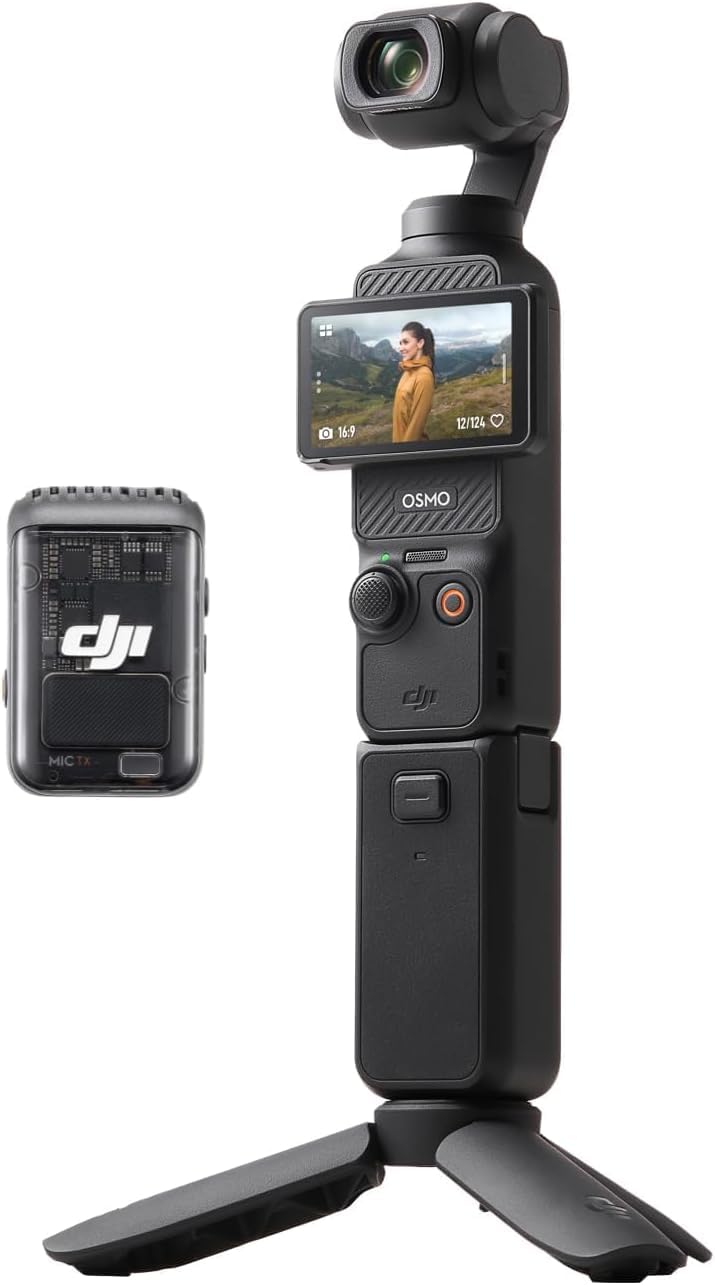
A 1-inch sensor on a 3-axis gimbal, with a 2-inch screen that rotates to face you.
The Osmo Pocket 3 is the camera most solo creators end up buying, and the reason is a single component: a 1-inch CMOS sensor, the biggest light-catching chip in any pocket-format camera here. Next to the Canon PowerShot V10’s 15.2MP chip, this one delivers 9.4MP stills — and that comparison cuts the other way on paper, which tells you megapixels are not the story. What a 1-inch sensor actually buys you is cleaner night footage and real background blur without a lens swap. Add 4K recording at up to 120fps (frames per second — higher means smoother slow-motion) and you can slow action down without it turning mushy.
You can frame yourself without holding the camera sideways thanks to the 2-inch touchscreen that rotates. Spin it and you get a selfie monitor; keep it portrait and you are framing for Reels and TikTok. The 3-axis mechanical stabilization arms do the heavy lifting on walking shots — dance, chase a dog, hike a trail, and the horizon stays level. DJI also tucked D-Log M and 10-bit color depth in here, which is post-production language for “you can push the colors around after you shoot instead of baking them in.” Battery rating sits at 166 minutes, and the Creator Combo adds the DJI Mic 2 transmitter, a battery handle and an Osmo mini tripod — which is why it wins the top slot for people who film themselves, not just things.
What earns it the top slot
- A 1-inch sensor that holds up after dark — the quality of what comes out is the thing owners rave about above anything else.
- Rotating 2-inch touchscreen flips to portrait or landscape in one motion, so vertical and horizontal footage come from the same device.
- 3-axis gimbal kills walking shake far more effectively than software stabilization alone.
- 166-minute rated battery plus a battery handle in the box — that is a long day of shooting without hunting for an outlet.
- Records 4K at up to 120fps, so slow-motion clips stay smooth instead of stuttering.
What you should know first
- Activation is a real hurdle: the camera needs registering before its fifth use or it locks you out until you do.
- The gimbal arm makes it more delicate than a solid-body point-and-shoot — it wants a case, and the front protection is a separate buy.
- Setup and breakdown take longer than grabbing a phone, and the app install on Android is not a one-tap process.
- Value is the most debated point in owner feedback — some call it well worth it, others feel it is priced above the job it does.
Made for: the creator who films themselves on the move and wants gimbal-smooth footage without a rig, a gimbal and a separate audio recorder.
Think twice if: you want a grab-and-go camera with zero setup ritual — the registration step and the learning curve on the gimbal are real.
2. Canon PowerShot V10 Compact Vlogging Camera
A palm-sized vlogging camera with a retractable front-facing screen and a built-in stand.
Canon’s answer to the pocket-vlog problem is clever rather than powerful. Instead of a hinge, a retractable front-facing screen slides out of the body — you always see yourself, and there is nothing sticking out to snag on a bag. The 15.2-megapixel 1-inch back-illuminated CMOS sensor (back-illuminated means the wiring sits behind the light-catching layer so more light gets through) gives you real low-light headroom for a camera this size. The fixed 19mm wide-angle lens (35mm equivalent) is a deliberate choice: plant it on a table in a tight room and everyone still fits in frame without a zoom decision. There is no zoom here, which is the honest trade.
What makes it genuinely beginner-friendly is the stand. It folds in both directions, so the camera props itself up on a desk or a floor and holds an angle without a tripod you forgot to pack. When the stand is not holding it, the camera is genuinely pocketable — small enough to slip into a fanny pack. Video tops out at 8-bit 4K at up to 30fps, with Full HD at up to 60fps if you want smoother motion, and Canon includes 14 movie color filters so you can set a mood without editing. The battery runs about 2 hours, and the recurring note from owners is simply that it drains faster than they would like.
Where it wins: the whole point of this camera is removing friction. Easy setup, a screen you can see, a stand that props it up, and file transfer to a laptop that does not need a card reader. Buyers describe it as the camera they actually carry.
The catch to plan for: no zoom at all, and the battery is the most-cited complaint — buyers report it running dry sooner than expected, so a spare or a USB-C power bank is close to mandatory. One owner also had a unit stop working early, which is worth knowing before you buy from anywhere with a short return window.
Pick it if: you are starting out, want something pocket-sized, and value a screen you can actually see over a zoom range you will rarely use.
Pass if: you need to pull distant subjects close — the fixed wide lens simply does not do that.
3. Nikon Z 30 with Wide-Angle Zoom Lens

An APS-C mirrorless body with a flip-out touchscreen, 209 AF points and USB-C streaming.
You can grow past a fixed-lens pocket camera with the Z 30, which leaves the door open. It is a mirrorless body with an interchangeable Nikon Z mount, so the bundled 16-50mm wide-angle zoom is a starting point, not a ceiling — the whole NIKKOR Z line of lenses fits it later. That versatility is the entire argument for stepping up from a Canon PowerShot V10 style body. What you gain immediately: 209 autofocus points, eye tracking for both people and pets, and 14-bit bit depth (bit depth is how much color information each pixel keeps — more bits means more room to recover shadows and highlights in editing).
The screen swings out on a hinge, which is the correct kind for filming yourself with a tripod sitting behind the camera. Nikon also built in the creator conveniences that usually cost extra: an adjustable stereo microphone, a red REC light so you know it is rolling, and plug-and-play webcam operation over USB-C with continuous power. Full HD streams run at 60p over USB-C, and 4K goes out over HDMI at 30p. Dedicated controls beat touchscreen menus when you are talking to a lens instead of looking at one, and autofocus gets the most consistent praise from owners.
The honest part: there is no viewfinder on this body, so you compose on the screen in bright sun, which takes getting used to. Battery life draws the loudest complaints — owners mention units that will not charge while plugged in, so carry a spare and test that charging path early. Image quality also splits opinion, with some feeling it is a modest step up rather than a leap.
Buy it for: the ability to swap lenses later, stream straight over USB-C, and run continuous power so a livestream does not die mid-sentence.
Know this going in: no viewfinder and a battery that has left enough owners frustrated that a spare pack is standard advice, not an upsell.
Right for: creators who want a camera that grows with them and can double as a streaming camera without extra hardware.
Wrong for: anyone who wants to never think about lenses or charging again.
4. Sony Alpha a6400 Mirrorless Camera (Renewed)
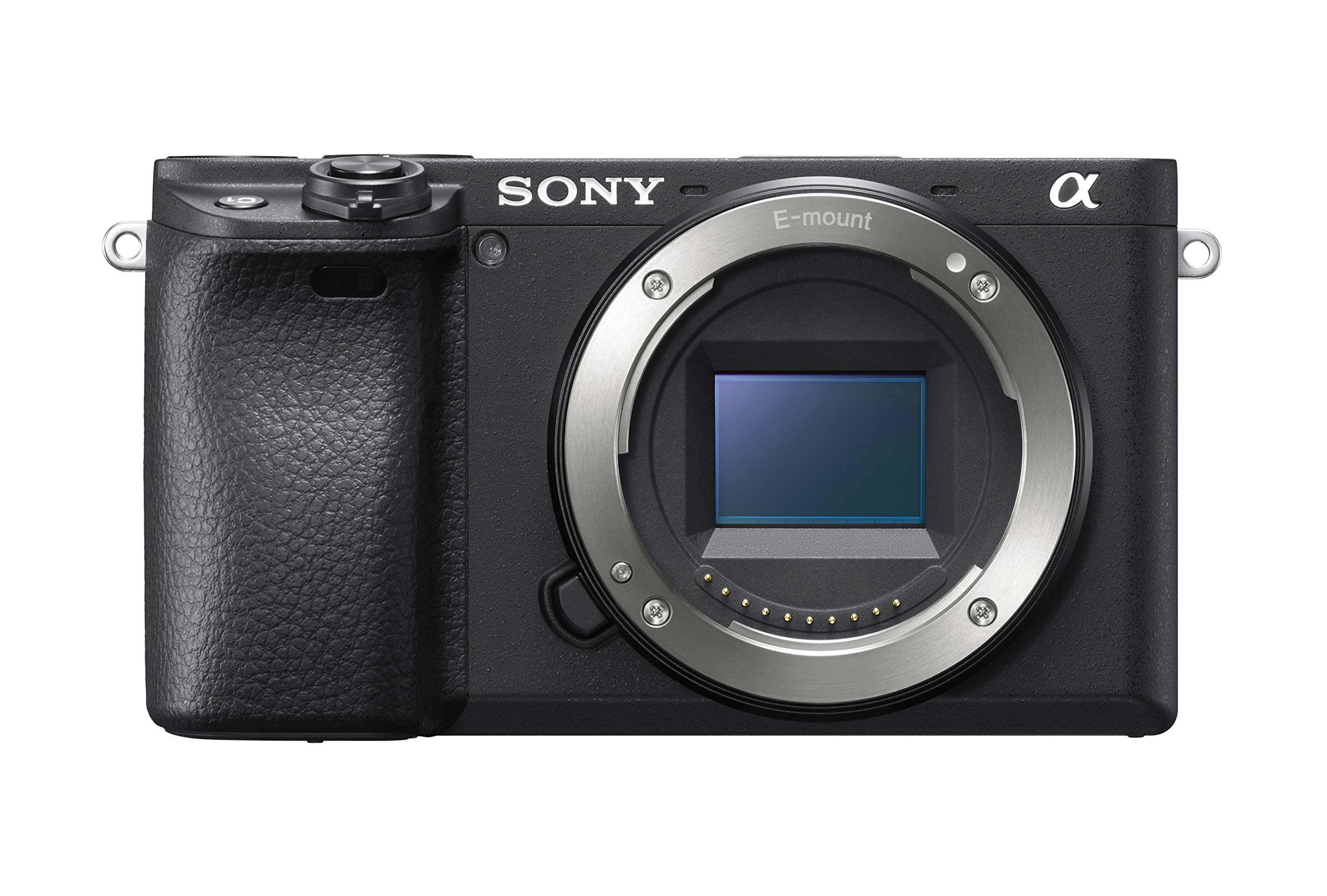
0.02-second autofocus lock with 425 phase-detection points across 84% of the sensor.
The number that defines the a6400 is 0.02 seconds — the claimed autofocus acquisition time, the moment it takes the camera to lock onto a subject. That is the fastest figure in this list, and it comes with 425 phase-detection and 425 contrast-detection points spread over 84% of the sensor. In plain terms, you can point this at a fast-moving subject almost anywhere in the frame and it grabs it. Continuous shooting runs at up to 11fps at 24.2MP in raw, which is why street photographers gravitate here rather than to a vlogging-first body. The screen tilts rather than fully swivels — good for shooting at odd angles, adequate for self-framing, but it will not face you from the front the way the side flip-out screens on the ZV-E10 and ZV-1 do.
This is a Renewed unit, and the owner feedback on condition is unusually consistent — buyers describe bodies arriving looking new, no scratches or gouges, lenses attaching cleanly, and the shutter count left unbothered. One owner specifically upgraded from the older a6000 and could feel the difference in both photo quality and usability, noting a level display in the viewfinder that the older body lacked. It also handles time-lapse and slow or quick motion clips without post processing, which is a genuinely useful shortcut for solo creators. If your work is half photos and half video, this is the most balanced body in the group.
The one thing to check: the listing body does not always come with a lens, and at least one buyer had to return a camera over that confusion. Read exactly what is in the box before you commit.
Suits you if: still photography matters as much as video, and you want the quickest focus lock in this lineup.
Look elsewhere if: you film yourself head-on — the tilting screen does not face forward.
5. Canon PowerShot SX740 with 40x Optical Zoom & 3 Inch Tilt LCD

A 40x optical zoom and 20.3MP sensor in a body that fits a jacket pocket.
Nothing else here reaches like this. A 40x optical zoom (optical means the lens physically moves, so you keep full resolution instead of the soft, smeared look of digital zoom) pulls graduations, distant wildlife and far-off stage performers right up to the frame. A 20.3-megapixel CMOS sensor backs it, paired with optical image stabilization and Zoom Framing Assist, which helps you re-find a subject after you zoom deep. Continuous shooting runs at up to 7.4fps, or up to 10.0fps with AF lock. Where the a6400 above is built for speed and this one is built for reach — two very different jobs in the same loose category.
The screen tilts up and down rather than swiveling sideways, which is the right compromise for a camera aimed at travel: frame the shot above a crowd, or drop it low for an angled perspective without kneeling. Video goes to 4K including 4K time-lapse, and built-in Wi-Fi and Bluetooth handle getting clips onto a phone. Picture quality is the strongest theme in owner feedback — the point-and-shoot simplicity gets called out as something you can hand to a family member with no instruction.
Two things to weigh. First, it is a bigger camera than the pocket vlogging bodies — it fits a larger jacket pocket, not a jeans pocket. Second, the flash draws the most divided feedback in the reviews, and more than one owner has had a unit stop working over time, so buy from a seller with a clean warranty path. A separate report described a European-market model sold in the US, which Canon USA would not support — worth checking the listing carefully.
Its whole case: 40x of real optical reach at up to 7.4fps in a body that still travels, with 4K video and time-lapse built in.
Best for: travel days, graduations and events where the subject is far away and you cannot walk closer.
Skip if: you want a camera that disappears into a pocket or a self-facing screen for talking-head video.
6. Sony ZV-E10 Mirrorless Camera Bundle (Renewed)

Body, 16-50mm lens, 64GB card, reader, case, tripod and cleaning kit in one box.
Most camera purchases involve a second, third and fourth order. Not this one. The box lands with the body, the 16-50mm lens, a 64GB SanDisk Extreme PRO memory card, a card reader, a soft case, a flexible tripod, a memory card wallet, a lens cap keeper and a cleaning kit. If you are buying your first real camera and do not want to research every accessory separately, that is the entire pitch — it is the only pick on this list that comes from the start shootable.
You get better low-light results and more background blur from the 24.2-megapixel APS-C Exmor CMOS sensor (APS-C is a sensor size, noticeably bigger than the 1-inch chips in the pocket cameras here). Video runs UHD 4K at 30p and Full HD at 120p, autofocus uses 425 points with real-time eye tracking, and ISO stretches from 100 to 32000. The 3.0-inch side flip-out touchscreen is the correct design for facing yourself with a tripod behind, and Sony built a directional 3-capsule microphone into the top plate with a windscreen included — plus headphone and mic ports for external audio later.
Reasons it earns a spot
- Arrives complete — card, reader, case, tripod and cleaning kit are already in the box.
- APS-C sensor and interchangeable Sony E mount, so lenses swap rather than the whole camera.
- Side flip-out screen plus 425-point eye-tracking autofocus, both aimed squarely at solo creators.
- Built-in directional mic and windscreen handle audio before you spend a cent on extras.
Fine print
- This is a Renewed unit, so condition varies by seller even though feedback here trends positive.
- No built-in flash, which limits fill light in harsh sun.
- A USB-only connectivity setup means file transfer runs the slow way unless you pull the card.
Built for: the first-time buyer who wants one order, one box and everything needed to start shooting today.
Not for: photographers who need a built-in flash or a viewfinder.
7. Sony ZV-1 Digital Camera for Content Creators

A 1-inch stacked sensor behind a bright F1.8 zoom, with a side flip-out screen for self-framing.
A 20.1-megapixel stacked back-illuminated 1-inch Exmor RS sensor sits at the heart of this one, and the word that matters in that phrase is the bright F1.8 lens it pairs with. A 24-70mm ZEISS Vario-Sonnar T zoom at F1.8 gathers far more light at the wide end than most pocket cameras, which is exactly what makes it strong after dark. It also shoots 4K HDR video, records in 10-bit depth, and packs HLG and S-Log3/2 — professional color profiles for grading footage later. In raw capability, this outruns the Canon PowerShot V10, which tops out at 8-bit 4K at 30fps.
You can frame a selfie from almost anywhere with the 3.0-inch side flip-out LCD that tilts up and down as well. Sony built this specifically for solo creators: a forward-directional on-board mic with a detachable windscreen for outdoor sound, a Product Showcase setting that shifts focus from your face to whatever you hold up, and Background Defocus for one-touch blur. Image stabilization suppresses shake while walking. If your goal is to start a channel without learning a mirrorless system, this is the shortcut.
Now the trade-offs, and they are the kind you plan around. There is no lens mount — what you buy is what you get, so it is not a camera you grow with. It also draws real heat on battery life: owners describe it running dry quickly during video and recommend spare packs and a separate charger, since the box includes only a USB cable. It can also overheat during long sessions. Stability and autofocus get more mixed feedback than the image quality, which is the thing that consistently satisfies.
Where it shines: picture quality is the aspect owners praise most, and the bright F1.8 zoom plus 10-bit 4K is why footage looks polished without heavy editing.
Budget for this: spare batteries and a charger — the battery is the trade-off you accept for the compact size.
Ideal for: beginners and solo vloggers who want broadcast-ready footage with zero lens decisions.
Not ideal for: anyone planning to grow into different lenses or shoot long, uninterrupted sessions without a power plan.
Understanding the Specs
Sensor Size and Low-Light Performance
Sensor size is the physical area that captures light, and it decides more about your final footage than any other number on the box. The pocket cameras here use 1-inch chips, the step-up bodies use APS-C sensors, which are physically larger. A larger sensor catches more light in the same exposure, which tends to mean cleaner footage in dim rooms and a more pronounced background blur when you want your subject to stand out. A high megapixel count alone does not buy you that — a 15.2MP 1-inch chip and a 9.4MP 1-inch chip are far closer in real output than the numbers suggest.
Stabilization Systems Explained
Two very different technologies fix shaky footage. A mechanical gimbal physically floats the lens on motorized arms and holds the frame steady as you walk — the Osmo Pocket 3 uses this. In-body stabilization moves the sensor itself to counteract hand tremor, which is common on mirrorless bodies. Software stabilization crops the frame and shifts pixels, which is the weakest of the three. If most of your footage is walking and talking, mechanical or in-body systems matter far more than resolution.
Bit Depth and Color Grading Headroom
Bit depth is how much color information each pixel stores. An 8-bit recording captures fewer shades than a 10-bit or 14-bit one, which matters when you brighten shadows or cool down a blown-out sky in editing — low bit depth bands and breaks apart, deeper bit depth holds. Cameras listing D-Log M, HLG or S-Log profiles are giving you a flatter, more flexible file on purpose, intended for grading afterward rather than posting straight from the card.
Screen Type: Tilt Versus Side Flip-Out
A tilt screen hinges upward and downward only, which is perfect for shooting over a crowd or low to the ground. A side flip-out screen swings away from the body and rotates, which is the only design that lets you watch yourself while a tripod, light or mic occupies the space behind the camera. A retractable front-facing screen achieves the same result differently, sliding out of the body without a protruding arm. For talking-head video, prioritize anything that can face forward.
FAQ
What is the difference between a tilt screen and a flip-out screen on a camera?
Can I use a flip screen camera as a webcam for streaming?
Is a 1-inch sensor good enough for low light video?
How long do these flip screen camera batteries actually last while filming?
Should I buy a Renewed camera instead of a new one?
Do these cameras have a microphone jack for better audio?
Which of these cameras is best for shooting vertical video for Reels and TikTok?
How much optical zoom do I actually need on a travel camera?
Will these cameras overheat during long recording sessions?
Final Thoughts: The Verdict
You can film yourself and have it look steady with the DJI Osmo Pocket 3 Creator Combo — a rotating screen, a 1-inch sensor and a 3-axis gimbal in one pocket-sized body. If streaming or growing into lenses matters more, the Nikon Z 30 is the one to reach for. And if you are starting from zero and want everything in a single box, the Sony ZV-E10 bundle gets you shooting the day it arrives.
How We Picked
We do not accept paid placement. Every pick is matched to a real buyer and a real use-case; we do not hands-on test units.
Sources & Methodology
Specifications: manufacturer listings and product documentation. Review insights: verified customer reviews, as of September 2026. Pricing: not shown on this page (it changes often); check the current price via the retailer link.
As an Amazon Associate, Gadgets Feed earns from qualifying purchases. This does not affect which products we feature.