
Event photography demands more than just a high megapixel count—it requires a camera that can lock focus instantly in chaotic lighting, handle rapid-fire burst shooting without buffering, and produce clean files at high ISOs when the reception hall lights go dim. A body that fumbles in these moments costs you the shot.
I’m Min — the co-founder and writer behind Gadgets Feed. I’ve spent countless hours dissecting sensor readout speeds, autofocus point coverage, buffer depths, and thermal management across the latest mirrorless and DSLR bodies to identify which cameras actually perform when the timeline is tight and the lighting is unpredictable.
Whether you are shooting a corporate gala, a wedding reception, or a live concert, the right body can mean the difference between a missed moment and a portfolio-grade frame. This guide breaks down the specs that matter most for the best camera for event photography so you can invest with confidence.
How To Choose The Right Camera For Event Photography
Event photography is a high-stakes game of anticipation and reaction. You cannot ask the bride to walk down the aisle again or call the keynote speaker back for a second take. Your gear must be predictable, fast, and forgiving. Focusing on the wrong set of specifications—like pixel count over autofocus reliability—is a common misstep that leads to a high keeper rate.
Autofocus Performance and Subject Tracking
The single most important factor for event work is autofocus (AF) speed and accuracy. Look for a camera with phase-detection AF pixels covering at least 90% of the frame. Systems that offer real-time eye, face, and head tracking for both humans and animals let you compose freely without worrying about critical focus. The ability to track a subject moving through a crowd or from shadow to spotlight separates pro-grade bodies from the rest.
Buffer Depth and Card Slot Configuration
During a first dance or a trophy lift, you will fire off bursts at 10 frames per second or more. A shallow buffer that locks up after 20 frames will cost you the decisive moment. Prioritize cameras with deep RAW buffer capacity and dual card slots. One slot should be a fast format like CFexpress or XQD paired with a UHS-II SD slot. This setup allows overflow recording and instant backup, which is mandatory for client work with no retakes.
Quick Comparison
On smaller screens, swipe sideways to see the full table.
| Model | Category | Best For | Key Spec | Amazon |
|---|---|---|---|---|
| Canon EOS R6 Mark II | Mirrorless | High-speed event coverage | 40 fps electronic shutter | Amazon |
| Sony Alpha 7 IV | Mirrorless | Hybrid stills & video | 33MP Exmor R sensor | Amazon |
| Canon EOS R5 | Mirrorless | High-resolution detail | 45MP sensor + 8K video | Amazon |
| Panasonic LUMIX S5II | Mirrorless | In-body stabilization | Phase Hybrid AF | Amazon |
| Nikon Z 6II | Mirrorless | Versatile hybrid event work | 24.5MP BSI sensor | Amazon |
| Sony a7 III | Mirrorless | Reliable entry-level full-frame | 693 AF points | Amazon |
| Nikon D850 | DSLR | Maximum resolution stills | 45.7MP BSI sensor | Amazon |
| Panasonic HC-X20 | Camcorder | Dedicated video events | 20x optical zoom | Amazon |
| Blackmagic Cinema 6K | Cinema | Cinematic color grading | Full-frame 6K sensor | Amazon |
| Canon RF100-400mm | Lens | Telephoto reach | 100-400mm zoom | Amazon |
| Insta360 X5 | Action 360 | 360-degree immersive capture | 8K 360° video | Amazon |
In‑Depth Reviews
1. Canon EOS R6 Mark II

The Canon EOS R6 Mark II is built for the fast pace of event photography. Its 24.2-megapixel full-frame sensor paired with the DIGIC X processor delivers blistering continuous shooting at up to 40 fps with the electronic shutter, ensuring you never miss a fleeting expression or key movement. The buffer depth is generous enough to handle extended RAW bursts without locking up mid-sequence.
Autofocus is where this body truly shines. The Dual Pixel CMOS AF II system covers the entire frame and intelligently tracks people, animals, and vehicles. In practice, the eye-detection locks onto a subject’s face even when they turn their head or move into shadow, making it incredibly reliable for dance floors and dimly lit stages. The 5-axis in-body stabilization provides up to 8 stops of correction, allowing handheld shooting at shutter speeds that would be impossible otherwise.
Video recording is equally capable, with 6K oversampled 4K60p output that retains excellent detail. The vari-angle touchscreen and robust weather-sealed build make it a dependable workhorse for long event days. Dual UHS-II SD card slots provide the redundancy that professional event shooters rely on.
Why it’s great
- Blazing 40 fps electronic burst with deep buffer
- Excellent subject tracking and eye-detection AF
- 8-stop IBIS for low-light handheld shots
- Dual UHS-II SD slots for backup
Good to know
- Relatively low 24.2MP resolution for heavy cropping
- No built-in flash
- Electronic viewfinder resolution is adequate but not class-leading
2. Sony Alpha 7 IV

The Sony Alpha 7 IV strikes an excellent balance between resolution and speed, making it a strong candidate for event photographers who also deliver cinematic video. Its 33-megapixel back-illuminated sensor offers more cropping flexibility than the 24MP class, while still maintaining respectable noise performance up to ISO 6400. The BIONZ XR processor provides 8x more processing power than its predecessor, enabling smoother AF tracking and faster burst rates.
The 759-point phase-detection AF system covers approximately 94% of the sensor area, and Real-time Eye Tracking for humans and animals is exceptionally sticky. In mixed lighting environments common at events, the camera maintains focus on moving subjects without hunting. The 10 fps continuous shooting with AF/AE tracking is adequate for most event scenarios, though it falls short of the Canon R6 Mark II’s speed for truly rapid sequences.
Video features are strong with 4K60p 10-bit 4:2:2 recording from a 7K oversampled readout, and the S-Cinetone profile delivers pleasing skin tones straight out of camera. The fully articulating screen and large grip make it comfortable for all-day shooting. Note that the buffer fills faster when shooting RAW bursts compared to some competitors.
Why it’s great
- 33MP resolution allows for significant cropping
- Fast and reliable Real-time Eye Tracking AF
- Excellent 4K60p 10-bit video with S-Cinetone
- Comfortable ergonomics with vari-angle screen
Good to know
- Only 10 fps burst rate
- Buffer depth is modest for RAW sequences
- Menu system can be complex despite improvements
3. Canon EOS R5

The Canon EOS R5 is a resolution powerhouse that delivers 45 megapixels of detail, making it ideal for large-format prints or heavy cropping of event portraits and wide-angle group shots. The stacked, back-illuminated sensor combined with the DIGIC X processor allows for 12 fps mechanical and 20 fps electronic continuous shooting, giving you speed alongside the high resolution.
Autofocus performance is top-tier, with 1,053 Dual Pixel CMOS AF points covering 100% of the frame. Eye Control AF is a unique feature that allows you to shift the focus point simply by looking at it through the viewfinder—a genuine advantage when composing fast-moving event sequences. The subject tracking, powered by deep learning, handles people, animals, and vehicles with very high reliability even in low contrast.
Video capabilities are unmatched with 8K RAW internal recording and 4K120p for high-impact slow motion. The 5-axis IBIS provides up to 8 stops of stabilization. However, the R5 is known for thermal management limitations with 8K recording, so extended video sessions may require cool-down periods. The dual card slot configuration (CFexpress + SD) gives you flexibility and redundancy.
Why it’s great
- 45MP sensor delivers extraordinary detail for cropping
- 20 fps electronic burst with reliable AF tracking
- Eye Control AF for intuitive focus selection
- 8K video and 4K120p recording
Good to know
- Significant investment compared to 24MP bodies
- 8K recording can overheat in hot environments
- Large file sizes require fast storage and heavy processing
4. Panasonic LUMIX S5II
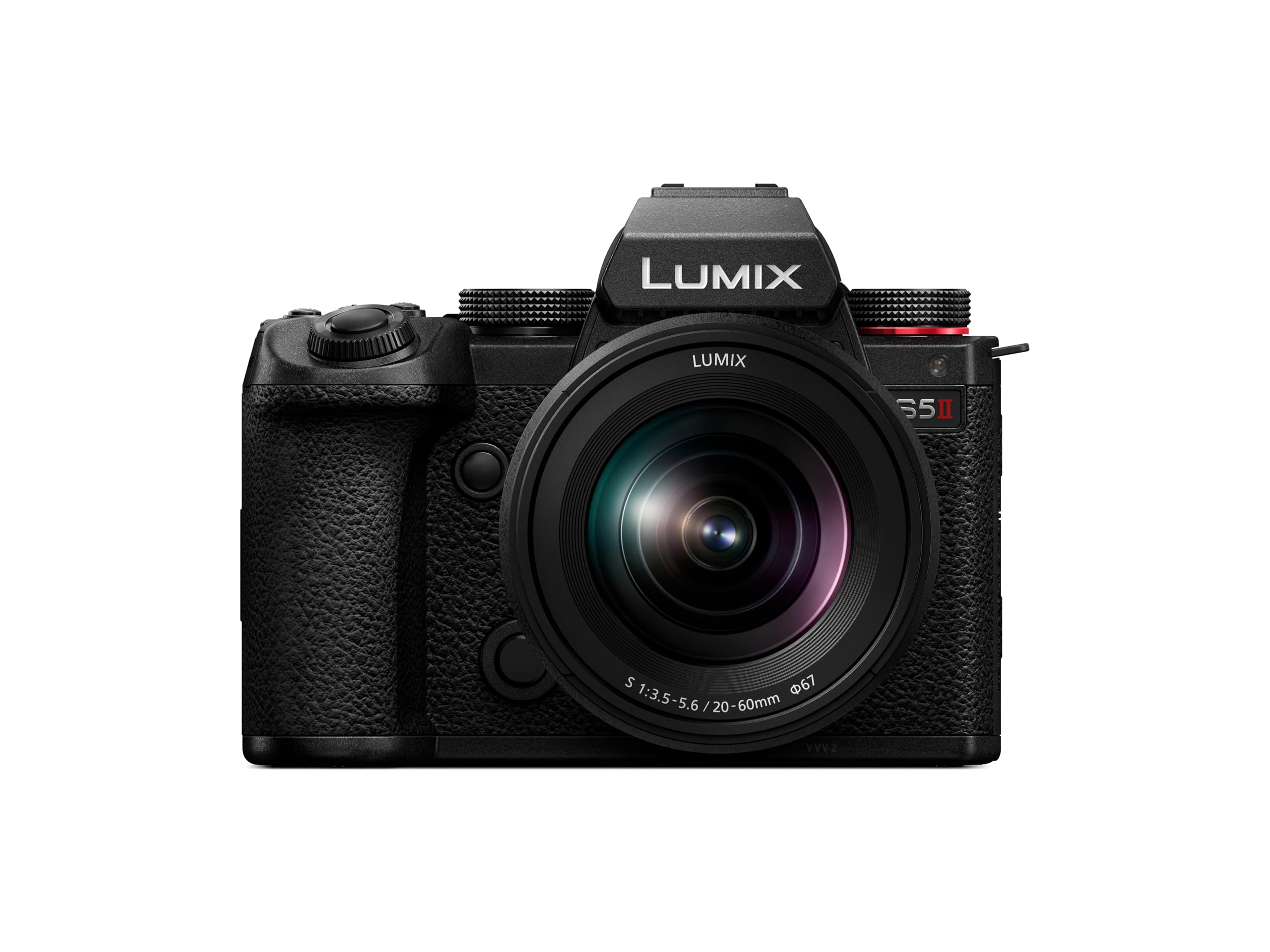
The Panasonic LUMIX S5II delivers impressive hybrid performance at a competitive price point. Its 24.2-megapixel full-frame CMOS sensor and L² image processor provide clean images up to ISO 6400, and the new Phase Hybrid Autofocus system is a major leap forward from previous Panasonic bodies, offering reliable continuous tracking for event subjects without the hunting that plagued earlier DFD-only systems.
The standout feature is the Active I.S. technology, which provides exceptional stabilization for handheld video shooting—a huge advantage when you are moving through a crowded event space without a gimbal. The camera can record unlimited 4:2:2 10-bit video internally due to a built-in cooling fan, and the 14+ stop V-Log/V-Gamut capture allows for extensive color grading in post-production.
Build quality is solid with weather sealing, and the L-mount ecosystem offers access to lenses from Sigma, Leica, and Panasonic. The 20-60mm kit lens provides a useful wide-to-standard range for event coverage. Battery life is moderate, so a battery grip is recommended for full-day shoots without access to charging.
Why it’s great
- Phase Hybrid AF delivers reliable subject tracking
- Class-leading Active I.S. for handheld video
- Unlimited 4:2:2 10-bit recording with internal fan
- Excellent value with versatile kit lens
Good to know
- Battery life is average; extra batteries are essential
- High ISO noise increases noticeably above 6400
- L-mount telephoto lens selection is still growing
5. Nikon Z 6II

The Nikon Z 6II is a balanced full-frame hybrid camera that excels in the event environment. Its 24.5-megapixel back-illuminated sensor offers excellent dynamic range, allowing you to recover shadow detail without introducing excessive noise. The native ISO range of 100-51200 is usable throughout, making it a strong performer in low-light reception settings.
Autofocus performance is improved over the original Z6, with faster subject acquisition and better eye-detection for both stills and video. While it may not match the speed of the Canon R6 Mark II for rapid sports-style tracking, it is reliable enough for most event scenarios such as processions, candid portraits, and stage presentations. The 14 fps burst rate with continuous AF is competitive for this class.
The dual card slot design (CFexpress/XQD plus UHS-II SD) provides flexibility and the backup security professionals require. Compatibility with both native Z-mount lenses and the vast selection of F-mount glass via the FTZ adapter gives you a huge lens ecosystem to choose from. The body is comfortable for extended use with a well-placed grip and intuitive controls.
Why it’s great
- Excellent dynamic range for shadow recovery
- Clean high-ISO performance up to 51200
- Dual card slots (XQD + SD) for backup
- Access to a vast F-mount lens library via adapter
Good to know
- AF tracking can lose subjects in fast, erratic motion
- Video capabilities are limited to 4K60p without oversampling
- XQD/CFexpress cards are more expensive than SD
6. Sony a7 III

The Sony a7 III remains a strong entry point into full-frame mirrorless for event photographers on a tighter budget. Its 24.2-megapixel back-illuminated sensor delivers impressive performance with 15 stops of dynamic range, and the native ISO range extends to 204800 for extreme low-light scenarios. The 693-point phase-detection AF system covers 93% of the frame and provides reliable general-purpose autofocus.
Battery life is a standout feature of the a7 III, rated for approximately 710 shots per charge. For a full-day event, you can often get through with one battery, which reduces the need to carry spares. The 10 fps continuous shooting with AF/AE tracking is adequate for most event paces, and the 5-axis in-body stabilization helps in dim environments.
The kit lens (28-70mm f/3.5-5.6) is decent for starting out, but upgrading to a faster zoom like a 24-70mm f/2.8 will dramatically improve low-light performance and image quality. Video capabilities are solid with 4K30p from the full sensor width, but limited to 8-bit internal recording. The menu system, while improved from earlier Sony bodies, still has a learning curve.
Why it’s great
- Excellent battery life for all-day events
- Great dynamic range and high-ISO performance
- 693-point phase-detection AF system
- Good value for entry-level event photographers
Good to know
- Menu system is complex and less intuitive
- Only single UHS-II SD card slot
- Video limited to 8-bit internal recording
7. Nikon D850

The Nikon D850 remains one of the finest DSLRs ever created for event photography, especially when resolution is paramount. Its 45.7-megapixel back-illuminated sensor delivers staggering detail and dynamic range, with no optical low-pass filter to soften the image. The native ISO 64 setting provides clean highlights and deep shadows that are ideal for printing large group portraits.
The 153-point phase-detection AF system is exceptionally fast and accurate, with 99 cross-type sensors providing reliable focus even on off-center subjects. The 9 fps continuous shooting (with the optional battery grip) is impressive for a 45MP body, and the deep buffer can capture over 50 RAW images in a single burst before slowing down. The optical viewfinder provides an unblinking view of the scene with no lag.
Other event-friendly features include dual card slots (XQD + SD), a tilting touchscreen, and excellent battery life. The D850 also records 4K UHD video and 8K time-lapses, though its video autofocus is not as smooth or reliable as modern mirrorless systems. For photographers who prefer an optical viewfinder and need maximum cropping flexibility, the D850 is still a formidable choice.
Why it’s great
- 45.7MP sensor for extreme detail and cropping
- Fast and reliable 153-point AF system
- Excellent native ISO 64 for clean images
- Dual card slots and deep buffer for professional workflow
Good to know
- DSLR body and lens system is significantly heavier than mirrorless
- Video autofocus is not as reliable as modern mirrorless cameras
- No built-in flash or Wi-Fi for quick transfer
8. Panasonic HC-X20

The Panasonic HC-X20 is a professional camcorder designed for event video coverage, not a stills camera. Its 1.0-inch 15-megapixel MOS sensor captures clean 4K60p 4:2:2 10-bit footage, and the built-in 24.5mm wide-angle lens with 20x optical zoom gives you enormous framing flexibility from wide group shots to tight close-ups of speakers—all without changing lenses.
The camcorder form factor offers distinct advantages for event videography. The excellent weight balance and ergonomic shoulder-friendly design allow for long recording sessions without fatigue. The triple manual ring control provides independent focus, zoom, and iris adjustments, which is ideal for precise manual control in predictable event sequences. Built-in XLR audio inputs and Wi-Fi/streaming capabilities make it a complete production tool straight out of the box.
The 5-axis Hybrid O.I.S. keeps footage steady even when recording handheld, and the face detection AF works well for interviews and keynote speakers. The camera also includes a real-time waveform monitor, peaking, and zebra patterns. It is less suitable for still photography, so you would need a separate camera for photo coverage.
Why it’s great
- Dedicated form factor designed for long event video shoots
- 20x optical zoom provides enormous reach
- Built-in XLR audio and streaming capabilities
- Excellent stabilization for handheld video
Good to know
- Completely unsuitable for still photography
- Smaller 1-inch sensor limits low-light performance compared to full-frame
- Image quality does not match a full-frame mirrorless for creative looks
9. Blackmagic Cinema Camera 6K

The Blackmagic Design Cinema Camera 6K is a pure cinema camera that produces image quality far beyond any hybrid mirrorless body. Its full-frame 6K sensor offers a stunning 13 stops of dynamic range and dual native ISO up to 25,600, capturing incredible highlight and shadow detail that is ideal for high-end event filmmaking where color grading is part of the workflow.
Recording in 12-bit Blackmagic RAW gives you immense editing flexibility, and the included DaVinci Resolve Studio license makes the color pipeline seamless. The L-mount provides access to Leica, Panasonic, Sigma glass. The camera also records H.264 proxies for quick editing. The bright 1500-nit 5-inch tilt LCD is usable even in direct sun, eliminating the need for an external monitor in many scenarios.
However, this is not a hybrid camera. It is built for planned, deliberate video capture rather run-and-gun event photography. It has no viewfinder, takes time to boot, and requires external power management for long shoots. The lack of a built-in webcam mode and complex audio routing also require external gear. It is best suited for a dedicated video shooter who prioritizes color science over convenience.
Why it’s great
- Full-frame 6K sensor with cinema-grade dynamic range
- 12-bit Blackmagic RAW with included DaVinci Resolve Studio
- Excellent color science for professional grading
- L-mount compatibility with high-end lenses
Good to know
- No still photography functionality
- Needs external power solutions for all-day events
- Complex setup and slower boot time
- Requires additional accessories for effective audio
10. Canon RF100-400mm F5.6-8 IS USM

For event photographers using Canon RF-mount bodies, the RF100-400mm f/5.6-8 IS USM is a cost-effective telephoto zoom that delivers useful reach for capturing speakers on stage, candids from across the room, or detail shots without interrupting the flow. Its lightweight construction (just 635 grams) and compact footprint make it feasible to carry as a secondary lens in a bag.
The Optical Image Stabilizer provides up to 5.5 stops of correction on its own, and up to 6 stops when paired with an EOS R body with IBIS. This stabilization makes handheld shooting at 400mm viable in moderate light, even with the relatively small aperture. The Nano USM autofocus motor is quiet and quick, ideal for discrete event shooting where you do not want to draw attention to your gear.
The minimum focusing distance of 2.89 feet at 200mm and 0.41x maximum magnification gives you the ability to capture close-up detail shots of table settings or event decor. The biggest limitation is the variable aperture, which darkens to f/8 at the long end. This requires good ambient lighting or higher ISO settings, which may impact image quality in dimly lit ballrooms or evening events.
Why it’s great
- Lightweight and portable telephoto zoom for event use
- Effective stabilization for handheld shooting at long focal lengths
- Quiet Nano USM AF motor for discreet operation
- Good macro capability for detail shots
Good to know
- Maximum aperture of f/8 at 400mm is slow for low light
- No weather sealing
- Zoom ring rotates opposite to standard Canon orientation
11. Insta360 X5

The Insta360 X5 is an action camera that captures 8K 360° video, allowing you to shoot an entire scene and reframe the perspective in post-production. For event photography and videography, this offers a unique advantage: you do not need to decide the perfect angle during the shoot. You can let the camera record everything around you and pull the best shots later.
The dual 1/1.28-inch sensors and triple AI chip design improve low-light performance compared to previous 360 cameras, making it more viable for indoor event environments like banquet halls and conference centers. The FlowState stabilization and 360° Horizon Lock keep footage level even on moving gimbals or rigs. The Invisible Selfie Stick effect allows you to capture third-person perspective shots that look like they were filmed by a drone or a second operator.
Battery life is generous at up to 208 minutes, and the IP68 waterproof rating down to 49 feet makes it rugged. However, the 360 format is fundamentally different from traditional photography and videography. It requires a learning curve in reframing and produces outputs that are lower resolution after cropping than a dedicated full-frame camera. It is best used as a secondary, creative camera to capture an immersive overview of an event.
Why it’s great
- Captures the entire scene so you choose the angle later
- Improved low-light performance for a 360° camera
- Excellent stabilization and invisible selfie stick effect
- Long battery life and rugged waterproof build
Good to know
- Lower effective resolution than traditional cameras after reframing
- Requires post-production app work to extract usable clips
- Not designed for traditional still photography
- Poor quality in very dark environments
FAQ
How many megapixels do I need for event photography?
Is a dual card slot necessary for event work?
Should I choose a DSLR or a mirrorless camera for events?
What lens is best for low-light event photography?
Can I use a camcorder alongside my stills camera for events?
Final Thoughts: The Verdict
For most event photographers, the best camera for event photography is the Canon EOS R6 Mark II because it combines class-leading autofocus speed, a deep buffer for demanding sequences, and excellent low-light performance in a robust, weather-sealed body. If you need a higher resolution for cropping, the Sony Alpha 7 IV delivers 33MP with great video features. And for those who prioritize a purely dedicated video workflow, the Panasonic HC-X20 is a purpose-built tool that will serve event videographers for years.