
Our readers keep the lights on and my morning glass full of iced black tea. As an Amazon Associate, I earn from qualifying purchases.
Specs are compiled from manufacturer listings and verified buyer reviews and can change over time — please confirm the key details on the product page before buying.
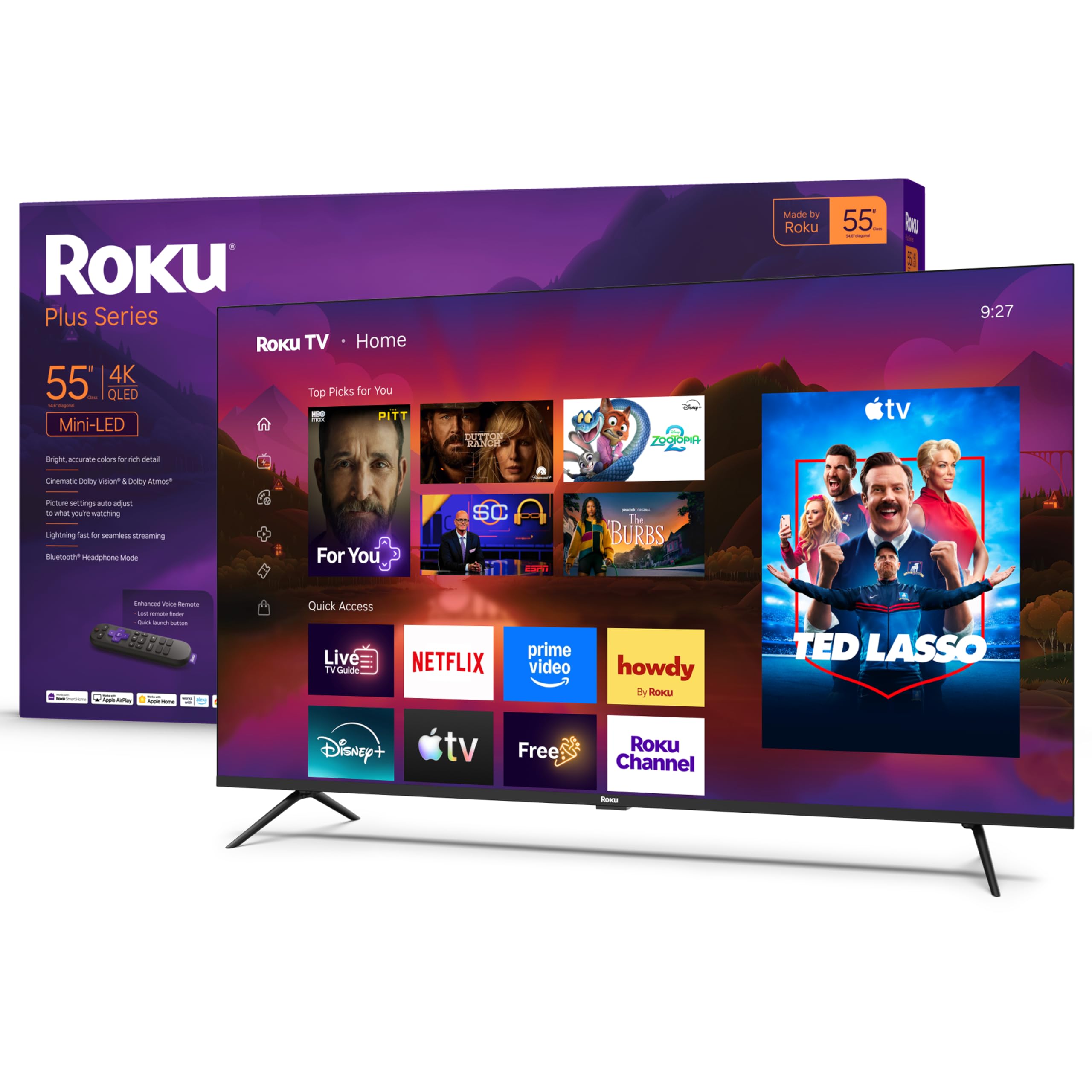
A 55-inch TV is the just-right size for most living rooms — big enough to feel like a real home theater, small enough to actually fit on a standard wall or console without swallowing the whole room. The tricky part is that almost every brand makes a 55-inch set, and the specs on the box barely tell you how the thing will look on a Sunday afternoon with the curtains open. The short answer: if you want the safest all-rounder, the Roku Plus Series QLED Mini-LED is the pick most living rooms will be happiest with — it nails the picture, the setup, and the everyday usability without asking you to learn a new operating system.
I’m Min — the founder and writer behind Gadgets Feed. This guide is built by comparing the manufacturers’ published specifications and the patterns across verified customer reviews, so you get each pick’s real strengths and trade-offs instead of marketing spin.
Below you will find eleven real 55-inch sets, ranked and explained in plain English, with the specs that actually change how your living room feels — panel type, brightness, refresh rate, ports, and what day-to-day ownership is really like. If you want the short version: match the panel to your room’s light, match the ports to your consoles, and let this round-up of the 55 inch tv for living room help you skip the guesswork.
Our Picks at a Glance
How To Choose The Best 55 Inch TV For Living Room
The living room is the hardest room in the house to buy a TV for, because it does everything: daytime sports with the blinds up, evening movies with the lights down, background cartoons for the kids, and maybe a console on the weekends. A set that shines in one of those situations is not automatically good at the others, so the goal here is to figure out what your living room actually asks of a screen before you commit.
Match the panel to the light in your room
Mini-LED panels use lots of small backlights behind the screen to hit high brightness, which is why they tend to look punchy in a sunlit room where reflections and glare are your enemies. OLED panels light each pixel on its own, so blacks go truly black and the picture looks richer in a darkened room — but they fight for every nit when the sun is streaming in. If your couch faces a window, you will feel this difference every afternoon.
Refresh rate and why it matters more than resolution
Every TV on this list is 4K — that is the baseline now, not a differentiator. What separates them is refresh rate, measured in hertz (Hz), which is how many times per second the picture redraws. A 60Hz panel is fine for sitcoms and news. A 120Hz or 144Hz panel keeps fast panning shots and sports from smearing into a blur, and pairs with VRR (variable refresh rate, which lets the TV match the frame rate your console is sending) so games feel smoother and more responsive.
HDR formats: the alphabet that actually matters
HDR stands for High Dynamic Range — it is the tech that makes highlights pop and shadows hold detail. Dolby Vision and HDR10+ are the two premium formats, and most streaming services now deliver one or the other. A TV that supports both gives you the best chance of getting the right picture from any source. Dolby Atmos is the matching audio standard, and a built-in subwoofer or a proper speaker system makes far more difference to how cinematic the room feels than a marginal bump in brightness.
Ports, stands, and the boring stuff that bites you later
Count your devices before you buy: a console, a streaming stick, a soundbar, and a cable box can eat four HDMI inputs in one evening. Look for eARC (Enhanced Audio Return Channel) on at least one of them, since that is the port that lets the TV control your soundbar’s volume. Also check the stand width — the legs are often wider than the console you planned to put the TV on, and a set that is too wide is a headache you discover on delivery day.
Quick Comparison
| Model | Best For | Panel | Refresh Rate | Key HDR | Amazon |
|---|---|---|---|---|---|
| Roku 55″ Plus Series QLED Mini-LED★ Best Overall | Best overall living-room pick | QLED Mini-LED | 60Hz | Dolby Vision | Amazon |
| Toshiba 55″ M450 Series QLEDBudget Champion | Budget-friendly QLED | QLED | 60Hz | Dolby Vision | Amazon |
| Samsung 55″ U8000H Crystal UHDMost Trusted Brand | Casual viewers and families | Crystal UHD LED | 60Hz | HDR | Amazon |
| Vizio 55″ M55Q6L4 Quantum QLED | Wide-viewing living rooms | QLED | 120Hz at 1080p | Dolby Vision | Amazon |
| Samsung 55″ M70H Series Mini LED | Sports and gaming in bright rooms | Mini LED | 120Hz (Motion Xcelerator + DLG) | Mini LED HDR | Amazon |
| TCL 55″ T7 QLED Google TV | Gamers who want four HDMI ports | QLED Direct LED | 120Hz panel | Dolby Vision | Amazon |
| TCL 55″ QM64L Mini LED QLED | Bright-room sports and movies | QD-Mini LED | 144Hz | Dolby Vision | Amazon |
| Hisense 55″ E7 Cinema Hi-QLED Mini-LED | Cinema-style movie nights | Hi-QLED Mini-LED | 144Hz | Dolby Vision IQ | Amazon |
| Hisense 55″ S7 CanvasTV | Art-mode display for a styled living room | Hi-QLED (Hi-Matte) | 144Hz | Dolby Vision | Amazon |
| Sony 55″ BRAVIA 5 Mini LED | Premium Mini-LED for PS5 owners | Mini LED | — | Dolby Vision | Amazon |
| Sony 55″ BRAVIA XR8B OLED | Premium OLED for dark rooms | OLED (self-lit) | 120Hz (two HDMI ports) | Dolby Vision | Amazon |
In‑Depth Reviews
1. Roku 55-Inch Plus Series Smart TV – 4K QLED Mini-LED TV – RokuTV
Our pick — 4.5★ from 700+ verified ratings; the strongest balance of quality and price.
The living-room all-rounder that gets the hard stuff right and stays out of your way.
The thing that sells this TV is how little you have to think about it. The picture quality is a combination of Mini-LED backlighting (lots of tiny lights behind the screen that brighten and darken in zones) and a QLED layer (a film that widens the colors, so reds stay red instead of drifting orange). Dolby Vision adds frame-by-frame brightness tuning so a dark basement scene does not turn into a murky grey mush. The result is a set that looks good whether you are watching a bright daytime game show or a moody evening thriller.
What wins people over across the review pages is the sheer breadth of approval — this is the best-rated television of the bunch, and the two things it consistently gets right are quality and picture quality, with ease of setup and value close behind. The Roku interface is the secret weapon: one Home Screen with every app in one place, an uncluttered remote, and search that actually finds what you asked for. Setup takes minutes rather than an afternoon. Couch-cushion excavators will also appreciate the lost-remote finder, which saves you pulling apart the sofa on a Sunday morning.
Sound is genuinely better than most TVs this size, because there is a built-in subwoofer and Dolby Atmos object-based audio (which moves sound around the room instead of just out of the front). Bluetooth Headphone Mode lets you watch without waking the house. A small reality check: this is a 60Hz panel, so it will not keep up with a competitive gaming setup chasing 120Hz or 144Hz, and a small share of owners have reported an early failure — the kind of occasional miss that happens to every brand. For a living room that mostly watches streaming, sports, and movies, that trade is not painful.
Where it wins the room
- The highest-rated pick in this round-up, with the crowd split hardest between picture quality and overall quality — both fully positive.
- Mini-LED plus QLED plus Dolby Vision together handle both bright and dark scenes convincingly.
- Setup is measured in minutes, not hours, and the Roku menu is the simplest here.
- Built-in subwoofer and Dolby Atmos mean the sound holds up without a soundbar for casual viewing.
- Works with Roku Voice, Siri, Alexa, and Google Assistant, plus Apple AirPlay from your phone.
What to know before you buy
- Refresh rate is 60Hz — fine for streaming and casual gaming, not for high-frame-rate console gaming.
- Interface setup can feel a little fiddly at the very start before you find your footing.
- The remote layout is deliberately minimal, so anyone who likes a full button grid will need to adjust.
Reach for this if: your living room is the shared family room — kids, sports, movie nights, streaming apps across four services, and you want an easy remote and a great picture without a learning curve.
Think twice if: you are building a serious gaming setup and want 120Hz or 144Hz, or you want an OLED’s perfect blacks in a fully blacked-out home theater.
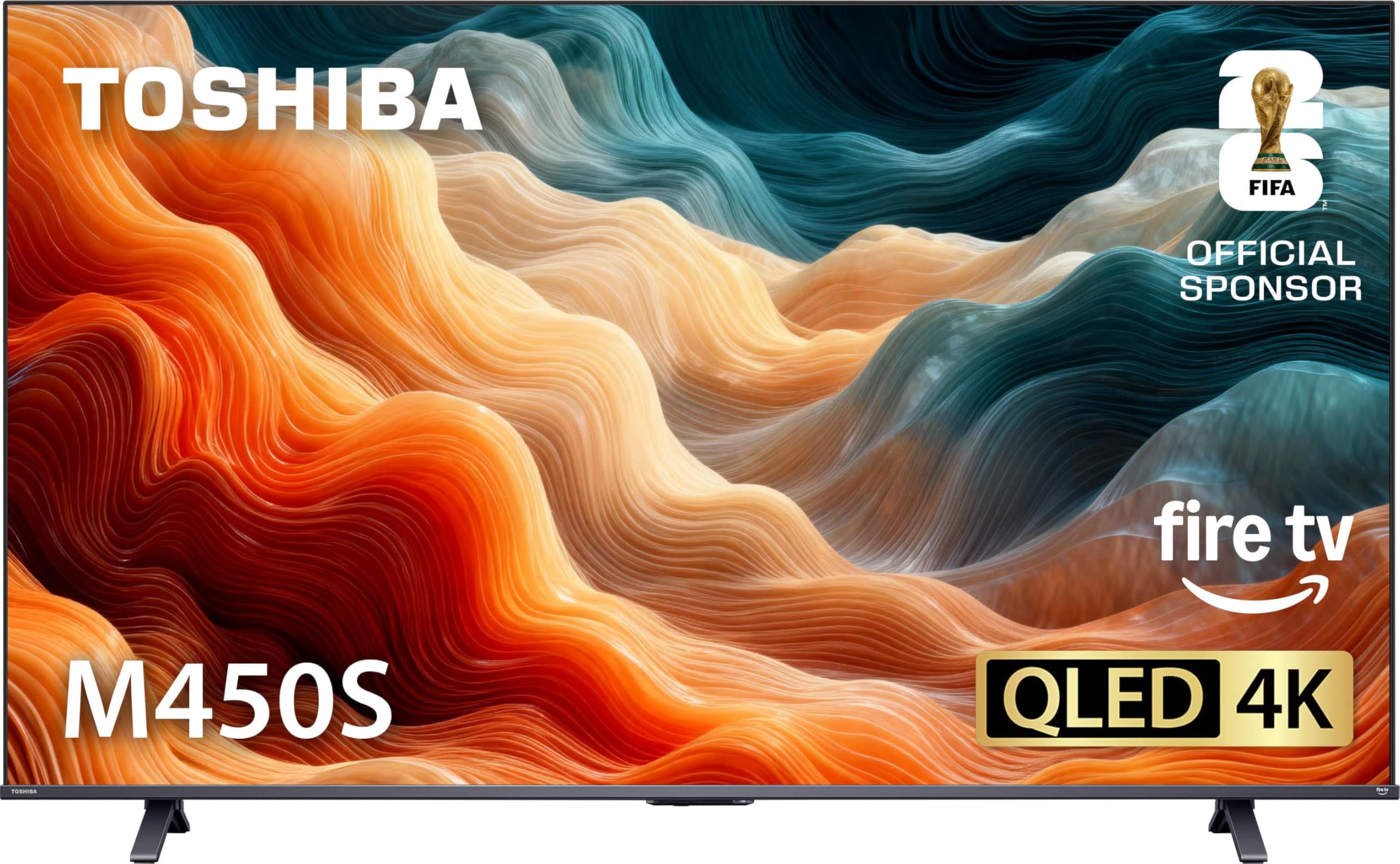
2. TOSHIBA 55″ Class M450 Series QLED 4K UHD Smart Fire TV with Voice Remote
QLED color and Fire TV smarts for the budget-conscious movie night.
If you want QLED without stretching your wallet, this Toshiba is the case study. QLED means the panel adds a quantum-dot layer so reds, greens, and blues stay saturated instead of washing out. The 55-inch panel pairs it with Dolby Vision HDR (dynamic brightness scene by scene) and Dolby Atmos sound, which is a lot of high-end labeling for a value-tier set. The REGZA Engine handles 4K upscaling, so older 1080p shows get sharpened to look closer to 4K rather than soft and blurry.
Where this TV has the clearest advantage over the Roku above is price-to-picture ratio — the QLED panel and the picture quality it delivers are what draw the strongest praise here, followed by value and a quick setup. Buyers report that flipping the factory energy-saving mode off makes a bigger visible difference than almost any other adjustment. Do that first. The voice remote with Alexa is a genuine convenience if you already live in Amazon’s world — press the button and ask for a show by name.
The Fire TV platform is where the trade-offs live. The interface can feel sluggish on this model, and a handful of owners noted a preference for a wired Ethernet connection rather than relying on Wi-Fi for stability. Sound quality divides opinions more than anything else here, and the front legs protrude enough that they can get in the way of a soundbar. Neither issue is a dealbreaker for a set aimed at budget-first buyers — it is just the reality of the price tier.
Best-value angle: QLED color and Dolby Vision at a value-tier price, which is why picture quality and value sit near the top of what buyers keep mentioning.
Honest note: tune off energy-saving mode on day one and consider an Ethernet cable — those two moves fix the most common frustrations.
balance: buyers who want QLED image quality and Alexa voice control and are happy to spend twenty minutes tuning picture settings instead of paying for a premium panel.
Not the one if: you want a wired-Ethernet-free setup that just works, or a console-first gaming TV with high refresh rates.
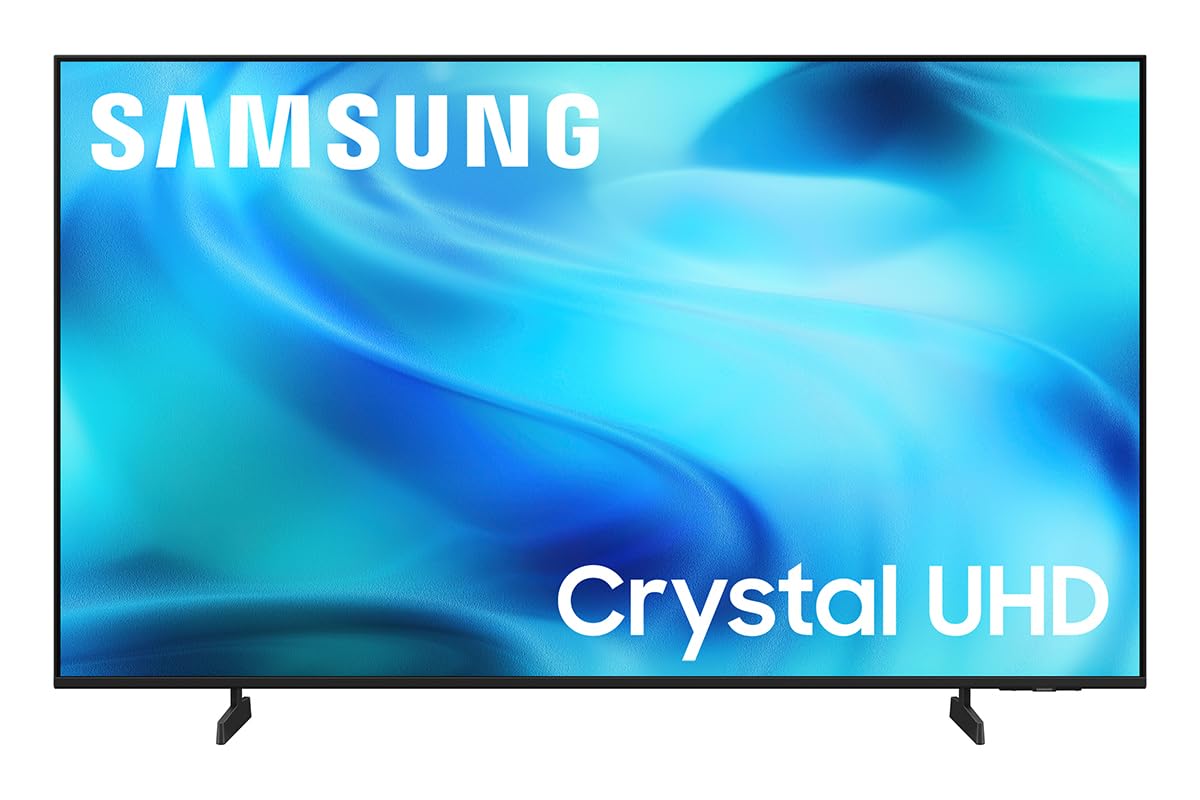
3. Samsung 55-Inch Class U8000H Series Crystal UHD 4K Smart TV
The name-brand default for casual viewers who mostly want reliable 4K for streaming.
Samsung’s Crystal UHD line is the safest gift-TV in the industry: everyone has seen the interface, everyone has heard of it, and the setup guide is short. This set uses a Crystal Processor to sharpen detail and boost color, plus a 4K upscaling engine that takes a 720p or 1080p stream and makes it look noticeably crisper on a 55-inch screen. Add Motion Xcelerator (which smooths the transition between frames) and your sports and action scenes hold up better than the spec sheet would suggest.
What buyers notice first is how good the picture looks without fiddling — the two most-flagged strengths are quality and picture quality, both firmly positive, and ease of setup sits right behind them. The 2,700+ free streaming options bundled through Samsung TV Plus are a real bonus for anyone who wants something on without opening a subscription. The design is clean, with slim bezels and simple feet rather than the spider-leg stands some brands use.
The honest caveats here are about ports and light. There are only two HDMI inputs, which is tight if you own a console, a soundbar, and a streaming stick at the same time. Space is also a consideration: the Samsung sibling above carries a bigger price tag because it adds Mini LED, and the trade-offs of this Crystal panel — washed-out color in bright daylight and buried picture settings — are worth knowing before you buy.
What it nails: a crisp 4K picture with no calibration work, easy Samsung UI, Bluetooth 5.3 (which helps if you want to pair wireless headphones), and a huge free-channel lineup through Samsung TV Plus.
The frustration to know about: the home button doubles as the source selector, so switching inputs takes more presses than you would expect, and there is no dedicated input button.
Right for: the everyday living room where the TV gets turned on for news, sitcoms, and movies and rarely sees a console controller.
Look past it if: you need more than two HDMI ports, or your living room faces a big window and the picture will spend hours in direct daylight.
4. VIZIO M55Q6L4 55″ Class Quantum 4K QLED HDR Smart TV

Built for a long couch and a lopsided seating plan — anywhere in the room.
The reason to pick the Vizio over the other mid-range sets here is the wide viewing angle. In most living rooms somebody ends up on the armchair at 45 degrees, and cheaper panels dim and wash out at that angle. The M55Q6L4 uses a Quantum Color layer to hold color across the full spread, plus Dolby Vision HDR and a Wide Viewing Angle spec. That is a genuinely useful feature, not a marketing line — if the layout of your room forces people to sit off-center, this is the one that keeps everyone’s picture consistent.
Gamers get an extra reason to look here. This is AMD FreeSync Premium certified, which means the panel can match frame rate to a console or PC and avoid screen tearing, and Vizio says you can hit up to 120fps at 1080p resolution. WiFi 6 gives it faster, more stable streaming when the whole household is online at once. The Roku Plus Series above delivers better-rated picture quality overall, but the Vizio is the sharper choice for a wide, awkwardly-shaped living room.
The consistent theme in reviews here is that this is a good-looking TV for the level of money spent — appearance and picture quality are what buyers mention most, and both are positive. The trade-offs worth knowing: the stand legs are narrow, so a soundbar sitting between them may not fit cleanly; and after about a week, some owners noticed the TV reverting to the Vizio home screen on power-on instead of jumping back to your last input, which adds roughly ten seconds to your startup every time.
Where it earns its keep: wide-angle viewing, FreeSync Premium gaming, WiFi 6 for busy households, plus a voice remote and full Dolby Vision HDR support.
Plan for this: measure your soundbar against the stand width before you set it up, and expect to press one extra button to reach your input of choice.
Choose this if: the couch stretches across the room and you want a picture that holds its color from the corner armchair as well as dead-center.
Not first choice if: you want the top-tier picture rating of the top pick, or a sizeable review history to lean on.
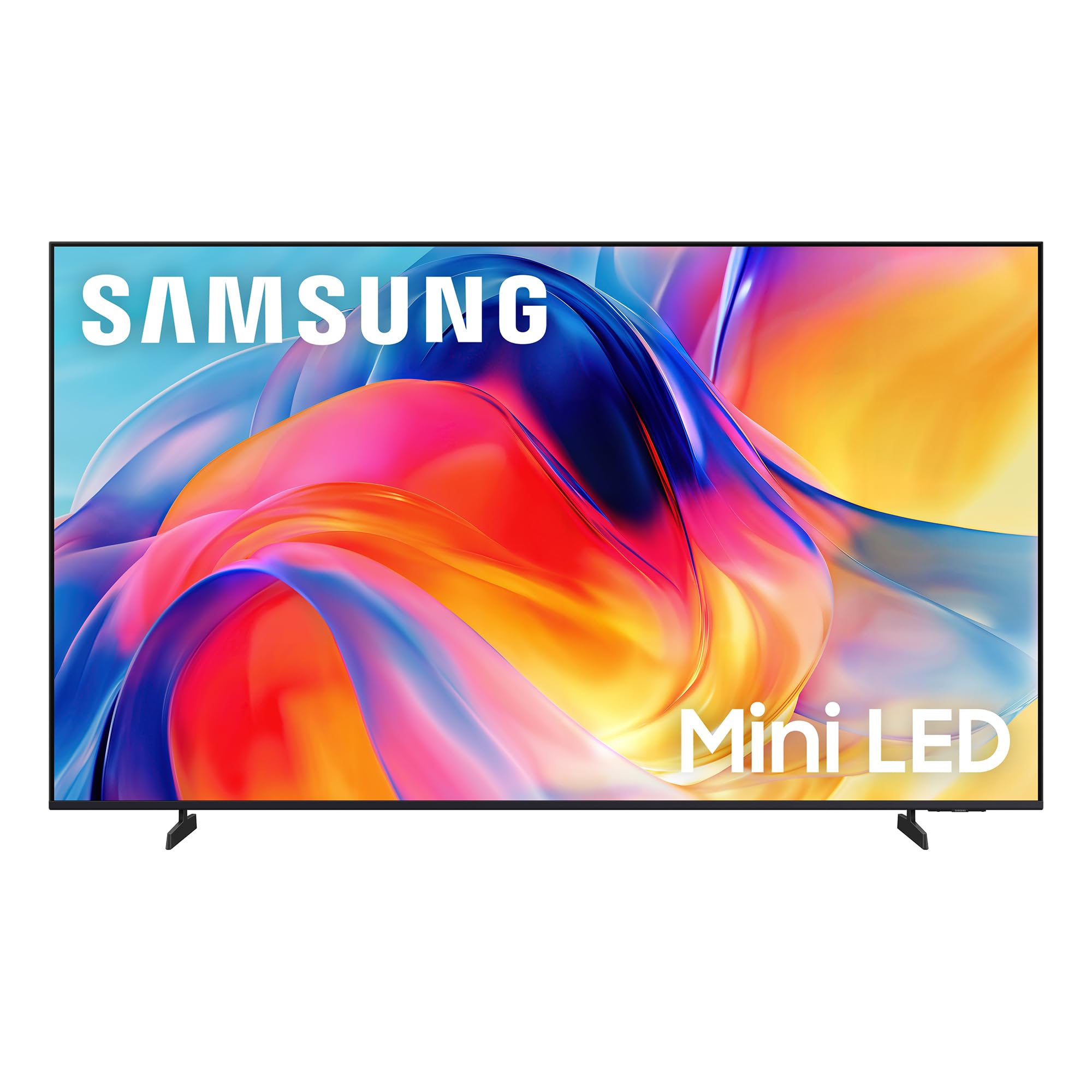
5. Samsung 55-Inch Class M70H Series Mini LED 4K Smart TV
Samsung’s Mini LED step-up — brighter, punchier, and built for the sports schedule.
This M70H is the sibling Samsung added above the Crystal UHD, and the Mini LED backlight (many small LEDs behind the panel instead of one big sheet) is what makes the difference. The result is visibly brighter highlights and deeper blacks in the brightest scenes — a huge deal when the game is on in the afternoon and the sun is coming through the window. Supreme Mini LED Dimming tightens those lights in dark scenes so the black bars around the movie stay black rather than grey.
Sports fans get an oddly specific advantage: Soccer Mode is tuned for fast action, with Samsung claiming 40% clearer motion and 30% more vibrant greens. Motion Xcelerator + DLG 120Hz keeps fast pans from smearing, and Gaming Hub brings cloud gaming (playing without a console, straight from the TV) into one place. Three HDMI ports also beat the two on the Crystal UHD above, so a console, soundbar, and streaming box can all stay plugged in at once.
Reviews here skew heavily toward satisfaction on picture quality and the setup process, with sound quality also landing solid. The honest complaint that keeps surfacing is the remote — it is small, thin, and some owners find the toggle-style volume control fussy. The user interface also produces mixed reactions, with some finding it easy and others finding it to have more layers than they want. These are navigation frustrations, not picture ones, and the screen itself earns its keep.
Strengths that earn the spot
- Mini LED backlighting gives visibly deeper blacks and brighter highlights than the Crystal UHD tier.
- Soccer Mode sharpens motion and boosts green saturation for fast live matches.
- Motion Xcelerator + DLG 120Hz for high-frame-rate sports and gaming.
- Three HDMI ports and a built-in Gaming Hub for console and cloud-game fans.
- 2,700+ free streaming options via Samsung TV Plus.
Friction to plan around
- The remote is compact and can feel fiddly, especially with the toggle-style volume.
- The on-screen interface splits opinion — some find it easy, others find it overly layered.
- Reaching peak picture quality means a settings pass rather than trusting the factory presets.
Right fit: a sports-forward living room that needs extra brightness for daytime viewing and wants a Mini LED punch above the Crystal UHD price tier.
Look elsewhere if: you insist on a full-size button remote, or you want the simplest possible menu with no layers to explore.
6. TCL 55″ T7 4K QLED Google TV with 144Hz Gaming (55T7)

The QLED gamer pick — four HDMI inputs, Dolby Vision, and a Google TV home base.
TCL has built this TV around two things: QLED color and gaming inputs. The quantum-dot layer covers nearly the entire DCI-P3 color space (the standard color range that movie studios use to master their films), and the AIPQ Pro processor handles the color, contrast, and clarity work behind the scenes. Dolby Vision and Dolby Atmos are both supported, along with HDR10+, HDR10, and HLG — the four core HDR formats, so almost any source finds a matching mode. It is a smart, well-rounded spec list for a mid-range set.
The headline for console owners is the four HDMI inputs including one with eARC (that is the port that lets the TV control a soundbar’s volume automatically). That is the most HDMI ports on this list, and it matters in a living room where a PS5, an Xbox, and a streaming box all want a slot. The panel is 120Hz with a Motion Rate 480 rating using MEMC frame insertion for smoothness. Voice control works with Amazon Alexa, Google Assistant, and Apple HomeKit, so whatever ecosystem your home runs on, this TV speaks it.
The TCL T7’s strength is summed up in what reviewers keep coming back to: quality and picture quality lead the pile, with gaming-friendly sitting comfortably in the positive column. Sound quality holds up well for a built-in speaker. The trade-offs: the Google TV interface has a habit of pushing suggested content you did not ask for, and it does not offer a traditional resume menu for every app. One owner also noted the volume varies noticeably between channels. Neither is a defect — it is the common rhythm of Google TV.
What this does better than most: four HDMI inputs, Dolby Vision with HDR10+ support, all three major voice assistants, and a 120Hz panel — a rare combination at this tier.
Downside to weigh: the smart interface is busy and pushes its own recommendations, so a separate streaming device may end up being the cleaner route for some owners.
The one for: console-heavy living rooms with a PS5, Xbox, or PC that want four inputs, Dolby Vision, and a 120Hz panel under one roof.
Reconsider if: you want a minimalist interface that stays out of the way, or you prefer Fire TV’s curated setup over Google’s recommendation-heavy layout.
7. TCL 55-Inch QM64L Series Mini LED QLED 4K HDR Gaming TV
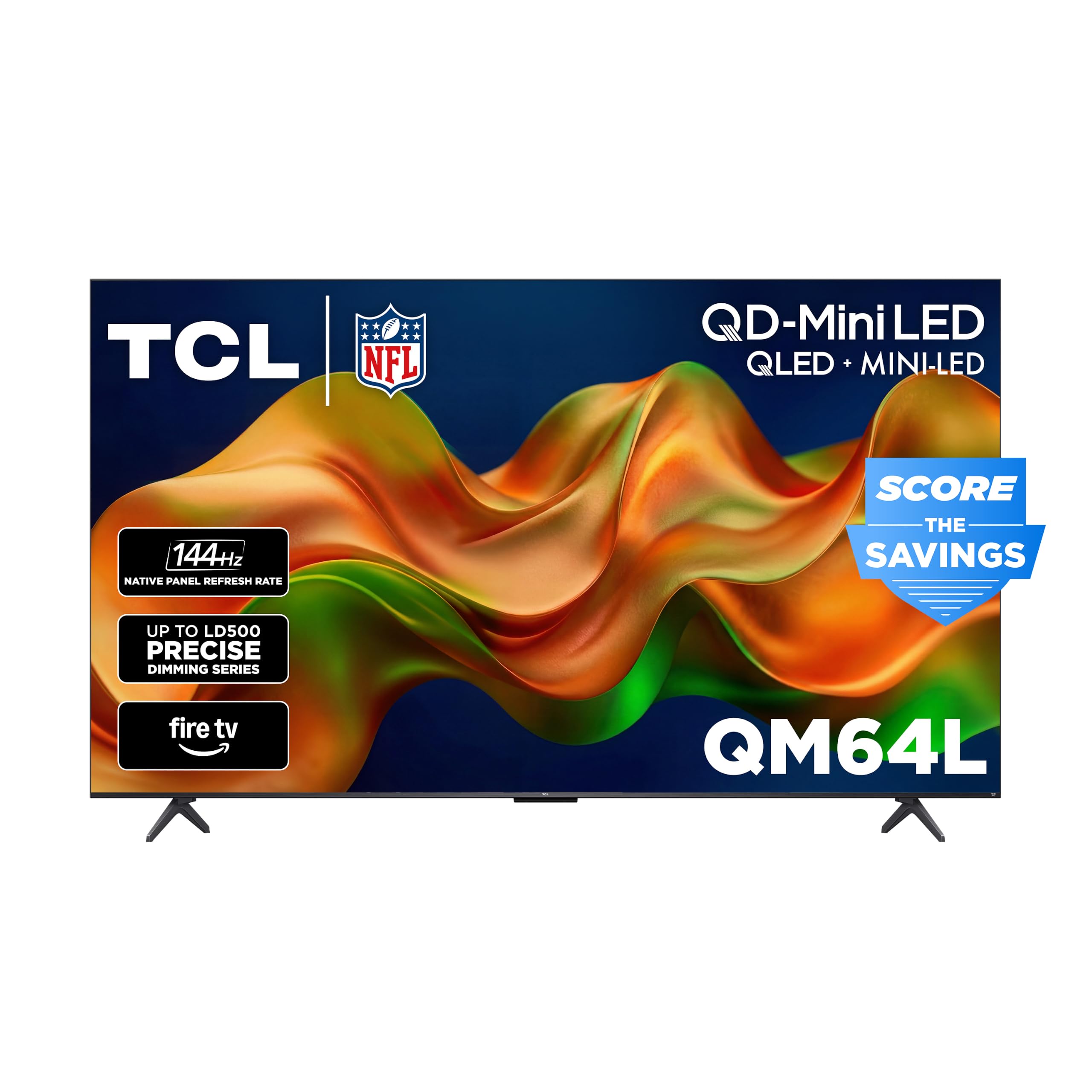
Mini LED with up to 500 dimming zones — the panel that fights back against a sunlit window.
The headline number on this QM64L is the Halo Control System: up to 500 local dimming zones, which are independently controlled patches of backlight that can be dimmed or brightened on their own. More zones means fewer halos glowing around bright objects on a dark background, and TCL says the panel gets virtually no blooming. It is the same technology direction as the Roku Plus Series, but pushed further. Combined with peak brightness tuned specifically for HDR content and Quantum Dot color covering 1.07 billion colors, this is a set specifically built for a room with a sun problem.
The gaming side is equally aggressive: a 144Hz native refresh rate with Motion Rate 480 and Game Accelerator 240, plus VRR (variable refresh rate) and ALLM (auto low latency mode — the TV switches into a low-lag picture profile the moment it detects a console). The HVA panel holds its color to a 178-degree viewing angle, so off-center seats get a consistent picture. Audio is a proper Onkyo 2.1 system — two 10-watt speakers plus a 20-watt subwoofer — with Dolby Atmos and DTS Virtual:X, meaning the sound is one of the few in this range where a soundbar is genuinely optional.
The value story here is what reviewers keep circling back to: premium-tier hardware (deep blacks, high brightness, rich color) at a much friendlier point on the shelf. Quality, picture quality, and value top the list of what gets praised, and brightness in particular stands out — a rare case of a mid-range TV holding up even in a well-lit room. The recurring caveat is the Fire TV operating system, which some owners find slow and a bit inconsistent, and the remote, which needs a fairly direct line of sight to the sensor. If you already own a streaming stick, you can sidestep the system entirely.
The case for this one
- Up to 500 local dimming zones deliver deep blacks and bright highlights with virtually no blooming.
- 144Hz native refresh plus VRR and ALLM for serious gaming.
- Onkyo 2.1 audio (2x10W + 20W) with Dolby Atmos and DTS Virtual:X.
- Brightness engineered for HDR means the picture holds up in a sunlit or well-lit room.
- 178-degree viewing angle keeps off-center seats clear.
Know before you hang it
- Fire TV is the slower, less consistent interface here — a streaming stick solves it.
- The remote needs to be aimed close to the sensor to register.
- Reviews on long-term reliability are mixed, so plan for the star-rating risk of any mid-range Mini LED.
Pick this when: your living room has real daylight and you want Mini-LED brightness with local dimming that actually keeps black bars black.
Cross it off if: the smart platform experience is the deciding factor for you and you would rather not bolt a streaming stick on.
8. Hisense 55″ E7 Cinema Series Hi-QLED Mini-LED 4K UHD Smart Fire TV (55E7SF)
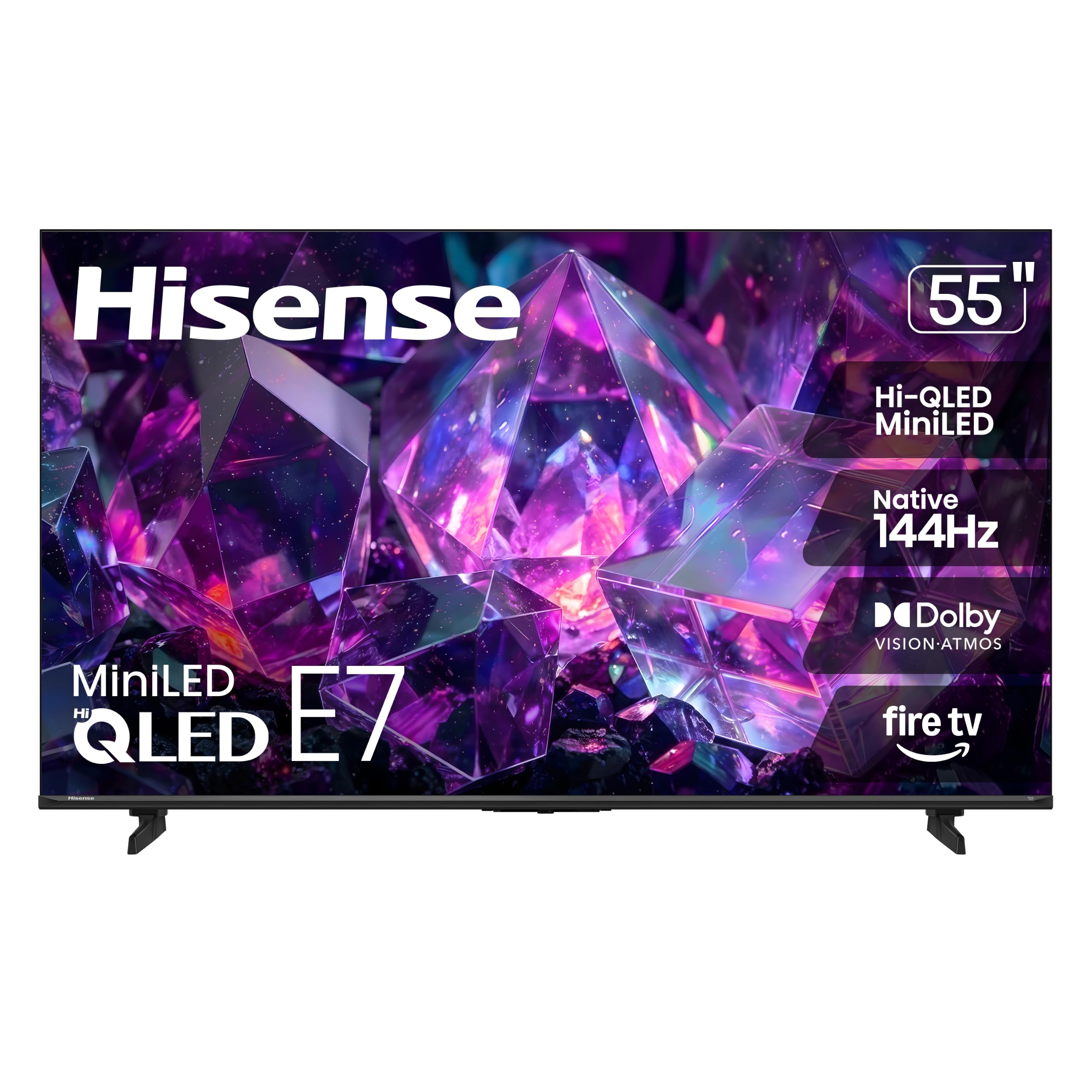
A movie-first Mini-LED built for watching films the way directors cut them.
Hisense built this E7 with two specific audiences in mind: film buffs who care about preserving the original picture, and gamers who want a fast panel without paying flagship money. The Filmmaker Mode turns off the processing tricks that make blockbusters look like soap operas — it preserves the original aspect ratio, color, frame rate, and sound, so a movie looks like it did in the editing suite. On the flip side, the AI Picture engine analyzes each scene and adjusts brightness, contrast, and color on the fly for viewers who would rather the TV did the work.
The panel is Mini-LED with thousands of precise light zones, which is why the blacks go genuinely deep and highlights stay bright — a point reviewers keep returning to when they talk about watching at night. Native 144Hz with AI Smooth Motion (MEMC) keeps sports and fast action clear. Support runs across Dolby Vision IQ, HDR10+ Adaptive, HDR10, and HLG, which is the full spread of modern HDR formats. The AI Light Sensor adjusts the backlight based on the room’s ambient light, and an AI Sports Mode detects when a game starts and tunes picture and sound for the action.
What buyers consistently praise here is the picture quality and value for what the set delivers — the phrase that keeps coming up is that the image rivals sets that cost considerably more. The honest caveats: the Fire TV operating system is fine but not the fastest, and one recurring note is that the built-in audio is not the strongest reason to buy this TV. A truly detail-obsessed viewer might notice motion blur in very fast scenes even at high refresh rates. For most film-first living rooms, none of that dents the experience.
Where it shines: Mini-LED with thousands of zones for deep blacks, the full HDR format spread including Dolby Vision IQ, a native 144Hz panel, and Filmmaker Mode for purists.
Trade-off to note: the built-in audio is not the star here — plan for a soundbar if movie sound quality is a priority.
Best fit for: the living room that watches a lot of movies with the lights down and cares about how a film is supposed to look.
Skip the upgrade if: you already own a very recent Mini-LED and mostly watch daytime TV, or you want a set where audio just works without extra gear.
9. Hisense 55″ Hi-QLED S7 CanvasTV Series 4K UHD Smart Art TV (55S7SG)

Half TV, half gallery — the one your guests will stare at before they realize it’s a screen.
The CanvasTV is the set for the living room where aesthetics matter as much as picture. It ships with a Teak Frame and an UltraSlim Wall Mount designed to sit flush against the wall — zero gap, all screen, the look of a framed piece of art rather than a lump of black plastic. The Art Mode displays more than 1,000 complimentary curated works across styles and eras, and you can swap collections or upload your own photos. A motion detector brings the art to life when you enter the room and fades it when you leave, which also saves energy when nobody is watching.
The Hi-Matte anti-glare display is the real functional advantage. It eliminates room reflections — the sunlight streaming through the window or the lamp behind the couch does not smear across the screen, so the picture stays rich and clear. Contrast ratio is rated at 3800:1, which is a strong number for a mid-tier QLED. Native 144Hz with AI Smooth Motion handles fast sports and games, and 2.0.2 multi-dimensional sound with DTS Virtual:X adds virtual height effects from up-firing audio, so a thrill-seeking scene really does push sound above the screen. Google TV rounds it out with curated recommendations across 10,000+ apps.
What owners keep mentioning is that this set looks better than any previous television in their living room — quality and picture quality earn the most praise, with easy installation, the artwork, and sound all close behind. The installation itself has a quirk warned about by multiple owners: this is a heavy TV and the wall mount typically takes two people. There is also a recurring note that the included power cord is thick and exits the bottom center, so getting it truly flat against the wall may need some taping or planning. Persistent problems from individual units have been the rare exception, not a pattern.
What makes it unlike the rest
- Art Mode with over 1,000 complimentary curated works and support for your own photos.
- Hi-Matte anti-glare display rated at a 3800:1 contrast ratio.
- UltraSlim wall mount and Teak Frame included — it hangs like a framed artwork.
- Motion detector wakes the display on entry and fades it when you leave.
- Native 144Hz plus 2.0.2 DTS Virtual:X sound for real-deal movie and game audio.
Plan for this before you mount it
- It is heavy — installation realistically needs two people.
- The power cord exits the bottom center and may need planning for a fully flush wall finish.
- Reliability is the mixed bag here; most units are fine, but a small share arrive with defects.
Choose it if: your living room design matters as much as the picture, you hate a blank black rectangle when the TV is off, and you want a screen that doubles as art above the fireplace.
Think twice if: you want a straightforward, no-fuss wall installation or a lower price point matters more than the art-mode finish.
10. Sony 55 Inch BRAVIA 5 Mini LED 4K HDR Smart Google TV (K-55XR50)

The Mini-LED that treats a PlayStation 5 as a first-class citizen.
Sony’s BRAVIA 5 is the one to consider when you own a PS5 and want the console and the television to speak the same language. Thousands of Mini LEDs are individually controlled by XR Backlight Master Drive, Sony’s zone-management system, to deliver the high brightness and contrast a Mini LED is capable of. XR Triluminos Pro expands the color range so reds and greens look natural rather than pumped, and the XR Processor uses AI to tune color, contrast, and clarity scene by scene. XR Clear Image upscales 1080p and sub-4K content to bring back detail the source lost.
The PlayStation story is the differentiator. Auto HDR Tone Mapping and Auto Genre Picture Mode kick in when a PS5 is connected — the TV reads what the console is doing and adjusts the picture automatically, without you diving into menus. A Game Menu brings the gaming-related settings into a single dashboard. Sony Pictures CORE adds access to movies plus support for the IMAX Enhanced collection, and Google TV handles the everyday streaming app lineup with Google Assistant voice search built in.
Reviews are dominated by picture quality praise, with sound quality and color quality also landing in the positive column. Owners who migrated from a lesser brand often say they will not go back. The honest counterpoints: only two of the four HDMI inputs are 2.1 spec, so if you have multiple high-bandwidth devices to plug in, plan the layout carefully; some owners find the panel brighter than they want at default settings and dial it back. Value-for-money assessments split both ways because this sits firmly in the premium tiers, not because the picture disappoints.
What the premium buys: Mini LED with XR Backlight Master Drive, AI-enhanced XR Processor, and exclusive PS5 features including Auto HDR Tone Mapping and Auto Genre Picture Mode.
Port reality: two of the four HDMI inputs are 2.1 — plenty for console plus soundbar, tight if you want to plug in three high-bandwidth sources.
Worth it for: PlayStation owners and anyone building a premium Mini-LED living room who wants Sony’s processing and Google TV in one package.
Consider the OLED below instead if: you mainly watch movies in a dim room and want the deepest possible blacks.
11. Sony 55 Inch BRAVIA XR8B OLED 4K HDR Smart Google TV (K-55XR8B)

Perfect blacks, over 8 million self-lit pixels, and the movie-night picture to match.
OLED is a different animal from every Mini LED here. Instead of a backlight shining through a panel, the XR8B lights each pixel on its own — over 8 million self-lit pixels, per Sony — which is why the blacks are truly black and not deep grey. In a darkened living room, a starfield looks like a starfield. The XR Processor runs the same AI scene-by-scene work as the BRAVIA 5 above, and XR OLED Motion keeps fast sports and action movies blur-free. If your evening routine is dim-the-lights-and-hit-play, this is the picture you are chasing.
Two features set it apart. Acoustic Surface Audio+ turns the screen itself into a speaker, so voices come from the character’s face rather than from below the display — owners mention directional voices, which is a sensation that no soundbar perfectly recreates. Studio Calibrated Modes specifically for Netflix and Prime Video let you watch those apps the way the creators tuned them. PS5 features, AirPlay 2, Google TV, and Dolby Vision and Atmos support round it out as a genuinely premium all-rounder. Two HDMI ports run 4K at 120Hz, and VRR works properly for console gaming.
Where reviewers push back on OLED, they push back consistently and for the same reason: the panel is glossy and reflects window light when the TV is off. In a bright daytime room, the picture quality can dip below what a Mini LED would deliver or, per reviews, feel less brilliant than the in-store demo. That is not a flaw in this specific model — it is the physics of an OLED panel in a sunny room. In a controlled-light media room, it is the best picture on this list by a comfortable margin.
Why OLED lovers pick this one
- Over 8 million self-lit pixels deliver pure blacks and high brightness together.
- Acoustic Surface Audio+ puts sound where the action is, including directional voices.
- Studio Calibrated Modes for Netflix and Prime Video plus support for Dolby Vision, Atmos, IMAX Enhanced, and DTS:X.
- Two HDMI ports running 4K at 120Hz, with VRR working properly for PS5 and Xbox.
- Google TV interface praised as responsive and intuitive for streaming.
The OLED reality check
- Glossy panel reflects window light when the display is off — a bright daytime room is not its natural habitat.
- Built-in audio is called just OK by owners who want cinematic weight; a soundbar is a common upgrade.
- Premium price tier — you are paying for the OLED picture, not for size or added features.
Perfect for: a spare-room or media-room setup where you can draw the curtains and watch movie after movie with the lights down and the picture tuned for it.
Not the right shape for: a sun-drenched daytime living room — the same money spent on the Mini-LED sets above will fight glare better every afternoon.
Understanding the Specs
Mini-LED vs OLED: what the panel type actually changes
Mini-LED uses lots of tiny backlights behind the screen, grouped into dimming zones — hundreds of zones in some of these sets — so the TV can brighten the moon and darken the night sky at the same time. That is why Mini-LED sets hold up in a sunlit room and stay bright when the game is on during the day. OLED takes the opposite route: each pixel makes its own light, so a black pixel is simply off. That gives OLED perfect blacks and a picture that looks deeply cinematic in a dark room, at the cost of glossy reflection and lower peak brightness. Neither is universally better — the right one depends on whether your living room is bright or dim.
Why refresh rate, VRR, and HDMI 2.1 matter for gaming
Refresh rate is measured in hertz — how many times per second the panel redraws the picture. A 60Hz TV updates 60 times a second, which is fine for streaming. A 120Hz or 144Hz TV updates faster, which keeps pans and fast sports from smearing and lets a console push more frames. VRR (variable refresh rate) lets the TV match what the console is sending frame-by-frame, which kills screen tearing. eARC on an HDMI port is the version that can send full-quality surround sound to a soundbar and let the TV control its volume. When you are counting ports, treat eARC as a must-have and count high-bandwidth HDMI 2.1 ports before you commit.
FAQ
Is 55 inches big enough for a living room?
Should I choose Mini-LED or OLED for a bright living room?
Do I need 120Hz or is 60Hz enough for TV and movies?
How many HDMI ports do I really need on a 55-inch TV?
What is HDR and does my living-room TV really need it?
Will a 55-inch TV’s stand fit on my media console?
Is a Fire TV, Roku, or Google TV interface a real difference?
Do 55-inch TVs come with a wall mount in the box?
How much do 55-inch TVs weigh and can I hang one myself?
Do 55-inch TVs have a headphone jack or analog audio output?
Final Thoughts: The Verdict
For most living rooms, the 55 inch tv for living room winner is the Roku 55-Inch Plus Series QLED Mini-LED because it gets the picture right in both bright and dark rooms, sets up in minutes, and stays simple to use season after season. It backs that up with 4.5 stars across 700+ ratings, led by quality and picture quality.
If your living room has real daylight and you want the biggest punch, the TCL 55″ QM64L with up to 500 local dimming zones is the Mini-LED that fights back against the sun. If movies are the point and you can control the light, the Sony BRAVIA XR8B OLED delivers the perfect blacks that no backlit panel can match. And if you’re a PS5 owner who wants the TV to feel like an extension of the console, the Sony BRAVIA 5 is the one that talks to your PlayStation automatically.
If your priority is the lowest-friction setup, the Samsung U8000H is the safe everyday pick for a family that mostly streams. And for a living room where design counts as much as picture, the Hisense CanvasTV turns the black rectangle into a piece of art on the wall. Whichever direction you go, match the panel type to the room’s light first, then the ports to your devices.
How We Picked
We do not accept paid placement. Every pick is matched to a real buyer and a real use-case; we do not hands-on test units.
Sources & Methodology
Specifications: manufacturer listings and product documentation. Review insights: verified customer reviews, as of September 2026. Pricing: not shown on this page (it changes often); check the current price via the retailer link.
As an Amazon Associate, Gadgets Feed earns from qualifying purchases. This does not affect which products we feature.