
Our readers keep the lights on and my morning glass full of iced black tea. As an Amazon Associate, I earn from qualifying purchases.
Specs are compiled from manufacturer listings and verified buyer reviews and can change over time — please confirm the key details on the product page before buying.
If bending over to strap in every run leaves your knees aching, a rear-entry or step-on binding can get you off the lift and onto the slope without a fight. This guide sorts eleven real bindings by how they behave on snow: entry speed, flex, strap comfort, and mounting compatibility.
I’m Min — the founder and writer behind Gadgets Feed. This guide is built by comparing the manufacturers’ published specifications and the patterns across verified customer reviews, so you get each pick’s real strengths and trade-offs instead of marketing spin.
Picking wrong here usually means one of two things: a flex rating too stiff for your level, or a mounting disc that will not fit your board’s insert pattern. This guide covers best snowboard bindings by matching those two specs to how you actually ride each day.
Our Picks at a Glance

How To Choose The Best Snowboard Bindings
A binding is the only piece of gear that touches both your boot and your board, so it controls how directly every movement reaches the edge. Get the flex and the mounting pattern right and the rest falls into place.
Match the flex rating to your riding, not your ambition
Flex is scored on a scale from soft (around 2 out of 10) to stiff (7 out of 10 and up). Soft bindings forgive sloppy landings and are easier on your ankles while you learn — the K2 Indy and the Rossignol Battle sit in friendly territory for newer riders. A stiff 7/10 binding like the Union Force transfers leg power into the edge instantly, which is exactly what you want at speed on hardpack, but it punishes you on lazy park laps. The honest rule: buy for the riding you do most weekends, not the best run of your season.
Check the mounting pattern before anything else
Bindings connect to the board through a disc and screws, and your board’s insert pattern has to match. A 4×4 board takes round discs; the Burton Channel system needs a channel-compatible disc; and the Union Force covers 4×2, 4×4, and Channel, so it fits nearly any board. Rear-entry models like the System MTN use a multidisc base plate that also mounts to Channel boards. If you are not sure which pattern your board uses, count the threaded holes next to the center channel — four holes usually means a 4×4 setup.
Rear entry versus traditional straps
Rear-entry bindings drop the highback (the tall back plate that supports your calf) backward so you can slide your boot in and lock it without touching a strap. Step-on systems go further and remove straps entirely, using toe and heel connection points instead. Traditional ratchet bindings are still the most adjustable and the easiest to fine-tune mid-season, but if you have knee or hip trouble, bending down to strap in on every run gets old fast — that is exactly the problem the rear-entry models here solve.
Quick Comparison
| Model | Best For | Entry Style | Flex / Feel | Size Coverage | Amazon |
|---|---|---|---|---|---|
| Nidecker OG Supermatic★ Best Overall | Fast laps with locked-in support | Rear-entry, hands-free | Rigid base, damped footbed | M: US Men’s 5.5–8.0 / W 7.0–9.5 | Amazon |
| Rossignol BattleBest Value | Budget all-mountain control | Buckle (Baselight) | Rigid heel spine with flex zones | X-Large | Amazon |
| Nitro StaxxBudget Friendly | Light, simple first setup | Buckle (Speedwheel) | Hammer highback, EVA dampening | Medium | Amazon |
| 5th Element Summit Stealth | Universal fit for odd boot sizes | Buckle (aluminum ratchet) | Reinforced toe caps, composite frame | S: 5–7 / M-L: 7–10 / XL: 10–13 | Amazon |
| XCMAN Rear Step In | Intermediate riders who hate strapping in | Rear entry, hi-back drops | Fusion one-piece strap, nylon base | X-Large | Amazon |
| System MTN | Beginners and intermediates doing lift laps | Rear entry, step-in style | Fiberglass, full EVA padding | M: 6–9 / L: 9–11 / XL: 11–14 | Amazon |
| K2 Indy | Tool-less tinkering, all-mountain | Buckle with 3D-canted footbed | Temperature-resistant nylon highback | Medium | Amazon |
| Union Flite Pro | Starter builds on a budget | Buckle, upgraded strap | Forgiving, aluminum heelcup | Small: US 5.5–7.5 | Amazon |
| Nidecker Flow Nexus | Progressing riders wanting quick entry | Reclining highback, Fusion strap | Flex 2/10, friendly | Large: US Men’s 8.5–10.5 / W 10.0–11.0 | Amazon |
| Burton Step On Re:Flex | Riders who never want to touch a strap | Step On, no straps | FullBED cushioning, Re:Flex mount | Large (11–13) | Amazon |
| Union Force | Aggressive all-mountain charging | Buckle, Molecular Bushing suspension | 7/10 flex, Camber Disk | Small: US 5.5–7.5 | Amazon |
In‑Depth Reviews
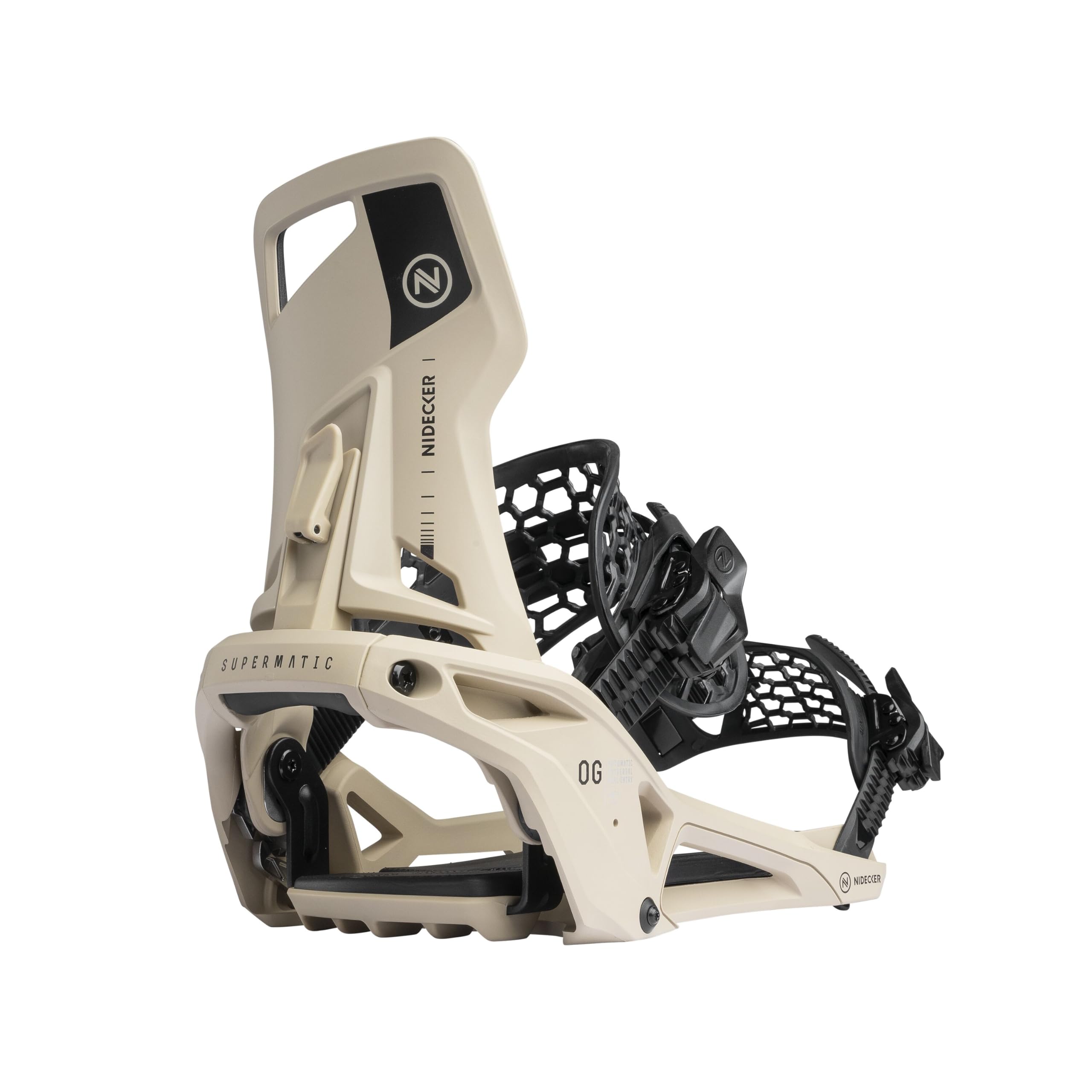
1. Nidecker OG Supermatic Men’s Rear-Entry Snowboard Bindings
Our pick — over 4.5★ from 200+ verified ratings; the strongest balance of quality and price.
A rear-entry binding with a flax-fiber highback and recycled-carbon hanger that carves like a strap binding.
If you want the fastest lap-to-lap turnaround without stepping into a boot-to-binding lock system, the OG Supermatic is the pick. The highback here is built from flax fiber and the hanger and post use recycled carbon, which keeps the whole assembly rigid enough to channel energy into a carve while still absorbing chatter through the shock-damping footbeds. That combination is why it takes the top spot over the cheaper rear-entry options on this list — the System MTN and XCMAN do the same hands-free trick, but this one holds a much firmer platform underneath you.
Step in, and the binding closes around the boot automatically — no strap tightening, no sitting down in the snow. Riders rave loudest about the speed of that entry. As one put it, using these over a strap-in system means “same feel as traditional bindings without all the hassle of strapping in.” Even a beginner trying the original Supermatics called them quick to click in for fast laps, with no strap loosening or lock issues and entry that got easier once the middle strap was loosened. And they ride the same on the resort pod as any conventional binding, no different technique required.
The catch: some break-in time. A rider with size 14 boots was initially frustrated because quick entry did not work until the material had broken in — about 5–6 runs later. Size 14 boots also limit how far the buckles adjust. Weight lands at 6 pounds, which is on the heavier side, and a couple of riders found the release lever needs a firm push. The size range is Medium (US Men’s 5.5–8.0 / US Women’s 7.0–9.5), so it is a poor fit for men above a size 8 boot.
Why riders keep them
- Hands-free entry click-in speeds up every lap
- Flax fiber highback with recycled carbon hanger and post for a rigid, precise base
- Shock-absorbing footbeds tame chatter and hard landings
- Plush straps and padded highback cut down hot spots on long days
The honest caveats
- Needs about 5–6 runs of break-in before quick entry loosens up
- Size 14 boots run out of buckle adjustment range
- Release lever takes deliberate force to depress for some riders
- 6 pounds of carry weight between runs
Grab them if: you ride resort laps hard, want locked-in response without strap work, and fall in the Medium size range.
Look elsewhere if: you wear boots above men’s size 8, or you expect instant out-of-the-box quick entry before break-in.
2. Rossignol Battle – Snowboard Binding for Men and Women
A beginner’s all-mountain binding with a rigid heel spine and a price that makes a first setup painless.
The defining feature is the MainFrame highback — a rigid spine on the heel-side edge paired with built-in flex zones that let the binding move side to side. Translated into your run: strong power transfer when you dig into a heel edge, but the flex zones keep the ride from feeling harsh on choppy snow. Dual-zone Puffy Pad footbeds with thermoformed EVA cushion every landing and soak up vibration, which matters most on the long, rattly runs late in the day. This is a beginner-skill binding, and Rossignol’s spec sheet says so plainly.
Cold weather is where this one earns its keep. Riders report taking these to Colorado in about 10 degrees of cold and finding no frozen components and zero strap issues in the freeze — a real-world edge over bindings that stiffen and lock up when the temperature drops. The Baselight buckles are made from anti-shock nylon, which is durable plastic that does not shatter on impact. Installation runs easy: one rider had them mounted and ready with plenty of time before a trip, and picked them up fast rather than a multi-week wait.
The trade-off is fit on wide boots. The heelcups can sit noticeably out to the side on some boot profiles, and the sizing runs specific — a rider between a Medium and a Small in a particular boot brand needed the Small instead. One unit failed within three uses while others held up well, so it is a slight lottery on long-term toughness rather than a consistent flaw. Installed and dialed in, the composite frame delivers solid heel-side response without the stiffness of a freeride binding.
Sizing note that matters: the X-Large shell seen here is the only size in this listing, so check your boot against an XL chart before ordering.
Value read: the anti-freeze performance in cold snaps plus the Puffy Pad comfort put this ahead of similarly-priced bindings for a first board.
Best matched to: newer riders building skills on an all-mountain board who ride in serious cold.
Pass if: your boots need narrower heelcup clearance or you fall between standard size bands.
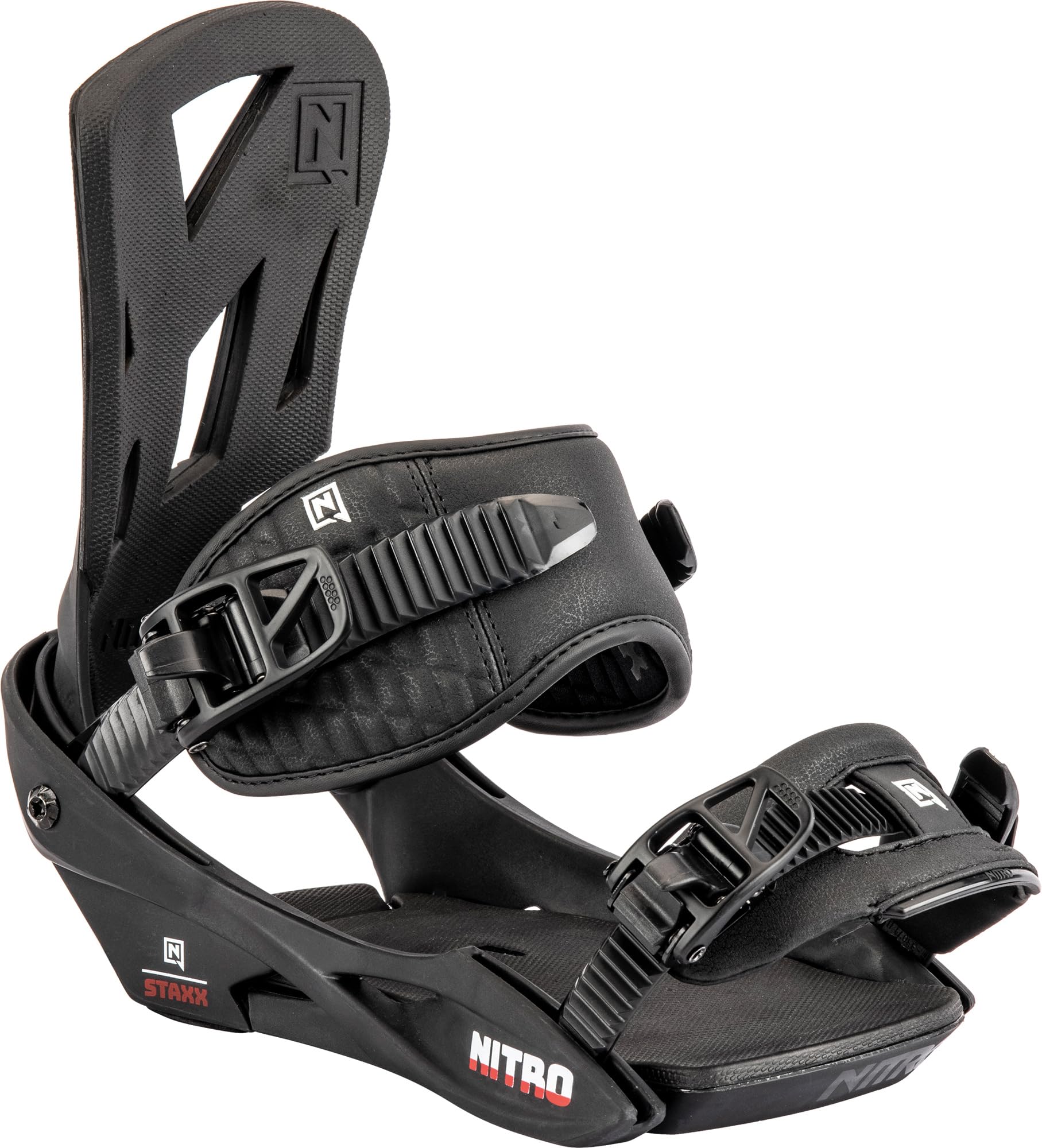
3. Nitro Staxx Men’s Snowboard Bindings
A 16-ounce binding with an aluminum speedwheel buckle and board-saver padding for a first real setup.
Nitro builds the Staxx around an aluminum buckle combined with a lightweight polymer speed wheel — the practical upside is a buckle that stays light on the hand and still locks down firmly. An A-frame base paired with EVA dampening handles the power transfer and cushions chop underneath. The hammer highback supports the backside of your boot, and the board-saver technology shields your top sheet from compression where the binding sits. At 16 ounces, it is one of the lightest pieces of hardware in this roundup.
Feedback from the trail leans two ways. A parent buying for a 16-year-old found the bindings strong, well made, and easy to get in and out of. Another rider came off Burton gear and described the switch as a return to early-2000s build quality, planning to stay with the brand. Both of those point to a binding that satisfies riders who just want simple, functional mounting without paying for race-tier engineering.
There is one hard limit worth knowing up front. A rider with size 9.5–10 boots needed a Large, not the Medium size chart recommends — so if you fall near that boundary, size up and save yourself the return. One unit lost a toe strap in powder on the second hour of the third day, which is the kind of rare failure that says less about the model’s design than about individual unit luck. The Medium shell in this listing does not cover larger boots, so verify before you commit.
What stands out: the aluminum speedwheel buckle delivers quick, positive release that holds up in cold, with a 16-ounce carry weight light enough for a pack.
Do not overlook: nitro sizes run snug near boot boundaries — a size 9.5–10 boot needs the Large shell, not the Medium.
Reach for this if: you want a light, no-nonsense binding with proven buckle tech for a growing teen or a first adult setup.
Skip over it if: you ride above size 10 boots or need firm, race-stiff power transfer.
4. 5th Element Summit Stealth Adult Snowboard Bindings for Men
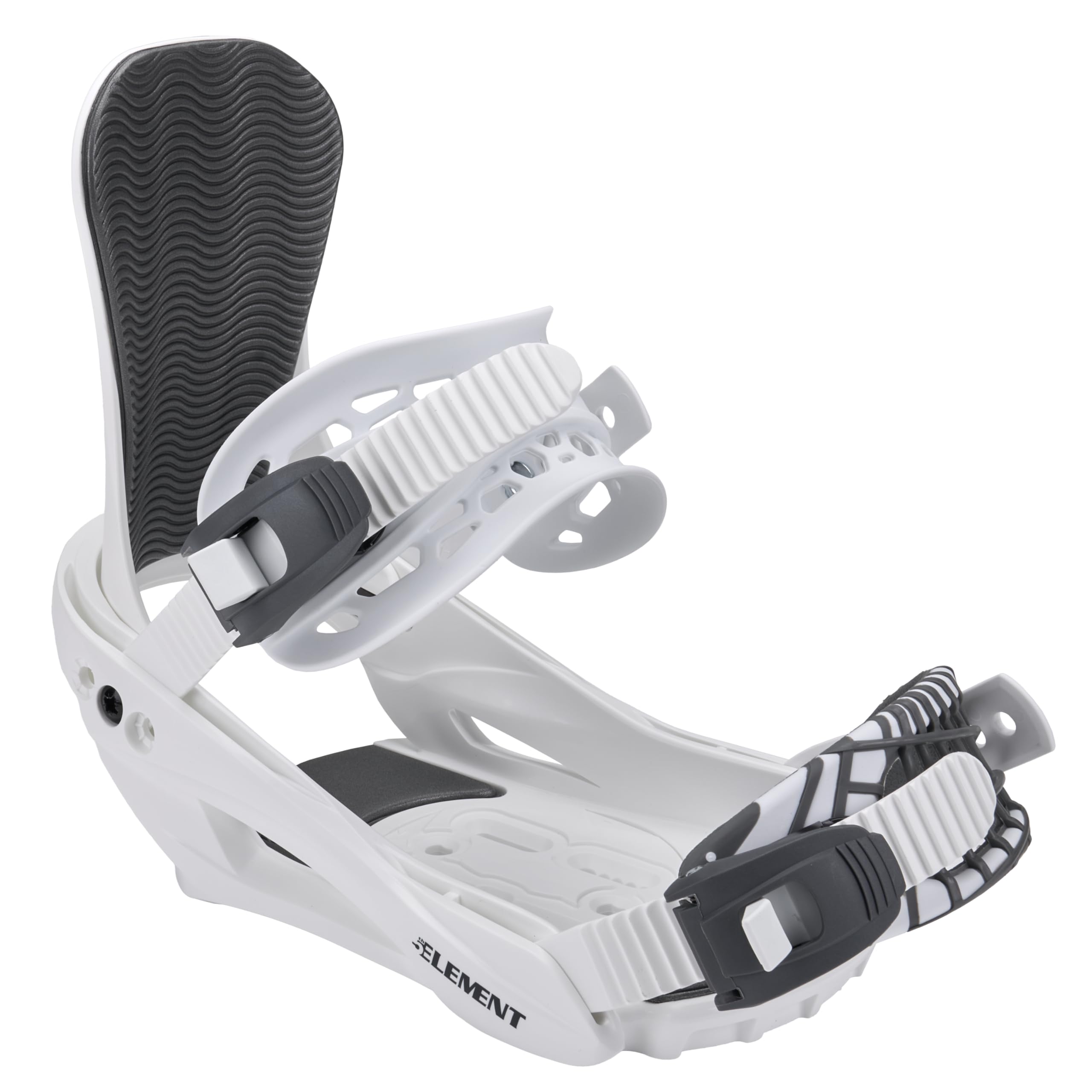
The universal-disc binding built for anyone whose boot size has made every other size chart a guessing game.
Here is the standout: this binding system fits all men’s snowboard boots from size 6 through 13, and the universal 4-hole mounting disc spins to set your stance angle wherever you want it. Sold in Small (5–7), Medium/Large (7–10), and Extra Large (10–13), it covers the widest boot range in this guide. That matters if you are buying for a growing teen or you own a board with a standard 4-hole pattern and just want something that bolts on without drama. A reinforced toe cap and aluminum ratchet straps connect your boot to the board for stronger carving.
What wins people over most is the price-to-quality balance — it is the cheapest full setup here and still earns praise for feeling well-made and solid from the start, with a clean design that looks the part. The second angle is fit: riders call it comfortable and well-fitting, and it handles a size 13 boot without complaint. Setup is straightforward, and one parent noted their son handled the install alone with no problems. The reinforced build earns a 2-year warranty against manufacturing defects, which is the only explicit warranty in this roundup.
The honest limit is long-term toughness. One rider reported a bolt popping after about 5 days of boarding. If you ride constantly or aggressively, the durability question is real. If you ride a handful of weekends a year, they will serve fine — and one family came back to buy a second pair for the same reason.
The universal-fit argument: size 6 through 13 coverage in one product line means you almost certainly will not guess wrong on sizing.
Weigh this against it: durability is a coin flip at heavy use rates — treat these as a value binding, not a forever binding.
Made for: occasional riders, growing teens, or anyone with an awkward boot size who wants an inexpensive, easy-to-install all-rounder.
Not for: aggressive riders logging many days per season who need a frame built to take a beating.
5. XCMAN Rear Step in Style Snowboard Bindings

A rear-entry binding whose strap tightens as you push harder — the design rewards aggressive riding.
Most rear-entry bindings ask you to accept compromise on responsiveness. This one takes a different angle: the rear cable locks the highback in place and tightens the strap with pressure, so the harder you ride the firmer the connection gets. The Fusion one-piece Power Strap is a 3D design that spreads across a wider area of the foot, cutting pressure points versus a standard two-strap arrangement. The highback drops flat so you slide your boot in and go — full rear-entry convenience in a shell sized X-Large and aimed at intermediate-to-advanced riders.
Underneath, a hybrid nylon fiber baseplate stabilizes the mount, and the cutout shape shaves weight while giving snow somewhere to go so it does not pile up behind the binding. Full EVA padding on both the highback and the footbed handles the comfort side, which is why riders call it smooth and easy to mount, adjust, and use. One put it plainly: much easier than a standard binding, especially for anyone over 40 who would rather not bend into a strap. The turntable rotates to multiple angles to dial in your stance.
Two honest points. Some owners note the binding system itself takes some dialing-in time before it feels right. And the fit is X-Large only, which locks this to riders with larger boots — check the size chart against your boot before you buy. There are also mentions of a toe strap coming loose once in heavy snow buildup, though owners describe it as a quick fix rather than a persistent problem.
The design edge: the self-tightening rear cable means the binding locks down harder under load instead of loosening, which is unusual for this style.
Know before ordering: the shell is X-Large only, so smaller-boot riders need to look at the other rear-entry picks.
Suits: intermediate-to-advanced riders with larger boots who want rear entry without giving up responsiveness.
Wrong choice for: smaller boots, or anyone who wants zero tune-in time before it feels dialed.
6. System MTN Men’s Rear Entry Step in Style Snowboard Bindings

A rear-entry binding whose dropping highback loosens the ankle strap in one motion.
The MTN’s defining trick is clever: dropping the highback automatically loosens the ankle strap, so you get in and out with one motion instead of fighting buckles. A multidisc base plate mounts to standard four-hole boards and Burton Channel EST boards, so it fits nearly anything you own. The 3D-molded ankle strap is wrapped in durable polyurethane for comfort backed by instant response, and the footbed carries high-density dampening to soften the ride. It runs Light and carries a 3-year warranty.
The size ladder is generous: Medium fits 6–9, Large fits 9–11, and XL fits 11–14. Riders using size 13 boots make the XL work, though one notes a wide board helps. The setup earns high marks for quality and ease of use, and riders describe it as a set-and-forget system — adjust it once and it stays. One owner put the benefit simply: the back lever makes strapping in fast without any bending. Another has run the same pair across two seasons through slush, ice, powder, and travel without trouble.
Two things to know. The XL barely fits larger boots — size 14 riders report it is tight, and the heel can catch the arc if the boot build is bulky. And the binding is not built for hard charging, park, or vert — it is an entry-level to intermediate system, so if you ride aggressively you want the Union Force above instead. One rider did note the low footbed padding and no side-to-side highback adjustment, worth knowing if you like to tune every angle.
Why the price lands: three-year warranty plus a compatibility-universal base plate make this one of the safest first-binding purchases here.
The honest cap: it is a comfort-first design — park riders and hard chargers will feel its limits quickly.
Right choice for: beginners and intermediates doing lift laps who want the fastest no-sit entry system.
Better to pass if: you ride park, vert, or aggressive lines, or your boots are at the very top of the XL range.
7. K2 Indy Men’s Snowboard Bindings

A tool-free forward-lean adjuster lets you change stance angle by hand on the slope.
The Indy is built on K2’s GF Profusion Chassis, which is fiberglass integrated into a classic binding shape for a light-but-rugged frame. The AT nylon highback is stiff, durable, and temperature resistant, giving good responsiveness — and it adjusts forward lean without tools. The Gap Eraser system eliminates the gap between your boot, highback, and heel cup for a tighter connection and quicker response. The 3° canted footbed angles the sole slightly inward, placing you in a natural riding position with more support on the outer edge of your foot and less fatigue over the day.
The CustomCaddi ankle strap is K2’s most padded and cushy option, with ladder covers and durable polyurethane laminate for comfort over long sessions. The Perfect Fit 2.0 toe strap uses flexible hinges and lock levers to match basically any boot silhouette. That boot-to-binding match is where the real connection lives, and the strap system handles it without special boots or inserts.
The honest caveat is durability on hard use. One owner had a left toe strap snap after fewer than ten rides, and another called the adjustments lame and the foam inadequate. Those are individual reports on a subset of units. For lighter trail use and casual riding, the tool-free tuning and cushioned straps make it a comfortable, adjustable choice that hides no tricks — this is simply not the binding to push hard on for seasons on end.
The tuning advantage: tool-free forward lean adjustment lets you swap stance by hand on the slope — no screwdriver, no screw block to carry.
One caveat to weigh: strap durability on long, hard seasons has drawn some criticism, so inspect them after heavy use.
Pick it up if: you like to tinker, want comfort-forward straps, and want a canted footbed that reduces fatigue while cruising.
Consider something else if: you are a hard-charging rider putting serious load on the straps every run.
8. Union Flite Pro Men’s Snowboard Bindings

A soft-flex first binding that mounts to 4×4, 4×2, or Channel boards without a special disc.
The Flite Pro pairs upgraded straps and a highback with aluminum in the heel cup and EVA padding in the frame. It is compatible with all mounting systems, so it drops onto a 4×4, 4×2, or Channel board without a special disc. What wins people over is how well it pairs with existing gear: riders found it matched specific boot-and-board combos perfectly, and one described the pairing as great work — bindings, boots, and board all clicking together. Another noted it fits a size 7K boot with a very light and well-made feel.
The flex is soft — Union’s own layout calls it a forgiving, forgiving-feeling setup that gives way under your boot instead of fighting back. That is ideal when you are still learning edge control, and several riders describe it as the perfect binding for a starter board. Installation is quick, and the aluminum heelcup gives the whole frame a solid, durable feel in the hand. This is Union, whose Force model is the higher-flex, all-mountain sibling if you decide you want more push later on.
The honest catch is where the flex eventually catches up to you. Riders note it gets noodly on blacks and bigger jumps by mid-season — it is not the binding for aggressive riding. Plastic in the baseplate is the other concern flagged by owners. This is a Small shell covering US 5.5–7.5, so confirm your size; larger riders need a different model entirely.
The compatibility win: all three mounting systems in one binding means this works on nearly any board without a disc swap.
Where it stops working: the soft flex will hold you back once you start hitting blacks and jumps at speed.
Buy this for: a first real binding on a starter board, especially if you already own a compatible boot and just want to get riding.
Not the pick for: advanced riders pushing speed on hard terrain, or anyone above the Small shell’s 5.5–7.5 boot size.
9. Nidecker Flow Nexus Men’s Quick-Entry Snowboard Bindings

A 2/10 flex quick-entry binding with a reclining highback and Fusion one-piece strap.
Flex 2/10 is the headline number — this is a soft, forgiving binding tuned for beginners and progressing riders. The reclining highback opens wide for fast in and out, then locks solid for reliable power and control. Nidecker uses the same materials as its more expensive Supermatic model — flax fiber highback with nylon buckles and recycled carbon hanger and post — but pairs it with a friendlier flex and a Fusion one-piece strap that wraps the boot evenly for fewer pressure points and direct energy transfer. Cushioned footbeds absorb chatter and impacts to keep fatigue down on long days.
Quick entry is the whole point. Riders describe getting in and out as fast and easy — one notes that after figuring out the technique it is quicker and more convenient than a traditional binding, with the strap spreading pressure across the foot instead of cutting into the toe or ankle. Another says it makes unbinding and getting back in the lift line easy. Nidecker’s tool-free setup means the strap and highback adjust without tools, which is one less thing to fuss with on a cold morning.
One caution: this is the right binding for a rider working up from beginner, not a seasoned rider who wants a stiff, aggressive platform — the 2/10 flex will feel vague to anyone charging hard. Like the Supermatic above, the technique has a learning curve — one rider found getting boots out difficult at first. Sizing here is Large (US Men’s 8.5–10.5 / US Women’s 10.0–11.0), so it is a locked range.
Who it is designed for: the Fusion strap and 2/10 flex combine to make this the friendliest ride for a rider finding their feet on the hill.
The tuning truth: every rider who owned one says the first few runs take adjustment — plan to spend a lap or two dialing the technique.
The one for: progressing riders who want the fastest entry with the softest ride, and who value tool-free setup.
A harder flex needed if: you already ride aggressively and want the binding to push back.
10. Men’s Burton Step On Re:Flex Snowboard Bindings

A strapless binding that locks to a Step On boot through two toe points and one heel point.
The Step On Re:Flex does not have straps at all. Instead, it locks to a Step On boot through two toe connection points and one heel point, so getting in is literally a step down onto the board. That system removes the ratchet-and-strap motion completely. FullBED cushioning runs the length of the footbed to soak up chatter and cut fatigue, with a trap-door design for reaching the mounting hardware. The single-component baseplate runs one material the whole way through for consistent response regardless of terrain, and the Re:Flex mount improves board flex while trimming weight. The FLAD system lets you micro-adjust the forward lean toward a relaxed or more aggressive stance.
The Step On boot connection is the detail that makes this work. Riders describe the boot-to-binding link as feeling locked in tight without pressure points, and one notes it holds up during intense sessions on the board. The FLAD lean adjustment means you can tune how much response you want without tools. This is the hassle-reduction binding — you never think about it on the hill, it just works.
The one thing to know before buying: this system requires Burton Step On compatible boots to function at all, and the fit is a specific size, so you must be within the compatible boot range. Feedback on pure riding performance is mixed — some riders find the board feel and edge response different from a traditional strap-in. If you demand the exact feel of a strap binding, this will feel unfamiliar, even if convenient. For riders who value getting off the lift fast, the trade is usually worth it.
The case for it: two toe points and one heel point lock the boot down the moment you step in — nothing to buckle, nothing to adjust on slope.
Buying requirement: this is useless without Burton-compatible Step On boots, so budget and size accordingly before committing.
Choose this when: you are willing to buy the matching boot system and want zero strap work and instant entry on every run.
Keep shopping if: you already own traditional boots, or you want the exact board feel of a strap-in binding.
11. Union Force Men’s Snowboard Bindings
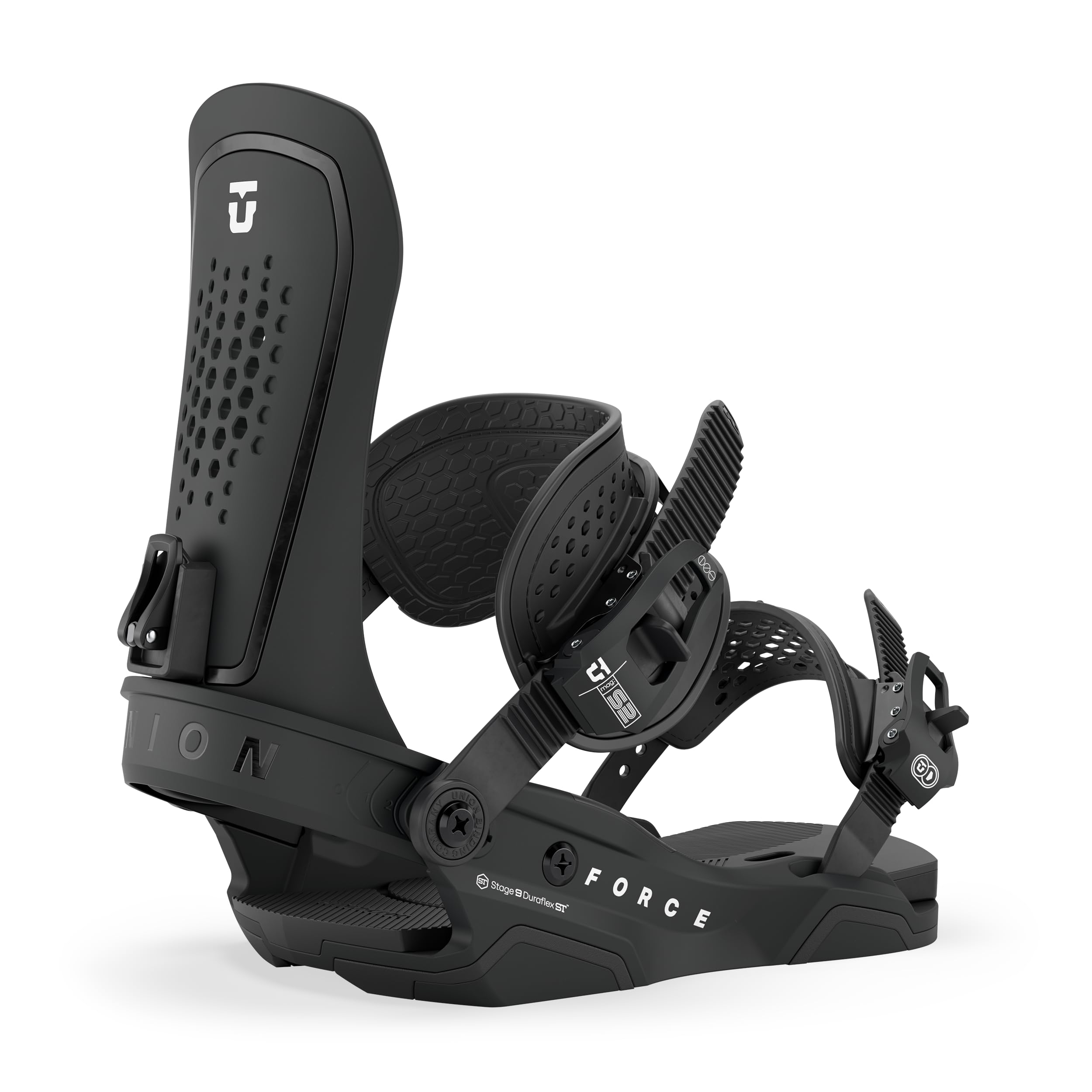
A 7/10 flex all-mountain binding with a Camber Disk and Molecular Bushing suspension.
Union calls the Force its number one binding, and the spec sheet backs the claim. Flex lands at 7/10 — stiff enough for real all-mountain performance, soft enough to stay lively in soft snow. The Camber Disk and Molecular Bushing Suspension System sit under your boot to smooth the ride while keeping direct board contact. Compatibility spans 4×2, 4×4, and Channel mounting, so it drops onto basically any board you own without a special disc. Aluminum in the frame plus EVA damping rounds out the build at 2.2 kg.
What riders notice first is the build quality — the ratchets and straps are consistently described as high-quality for this price bracket, giving rock-solid, fail-free clamping. The Force is a workhorse built for aggressive all-mountain riders who want to lean into every turn and still feel the board through their feet.
Two trade-offs. The toe strap runs long and flappy, so a few riders find it needs trimming or adjusting before it feels clean. And the fit runs tight for large boots — a size 14 boot does not go in easily, so anything above 13 needs a different model. This is a Small shell (US 5.5–7.5), so confirm your size before ordering.
Where it earns its place: camber disk plus molecular bushing suspension deliver a direct, planted feel without the chatter that usually comes with a stiff flex.
Watch the strap: the extended toe strap length is the most common fiddly note, but it is a trim-and-set adjustment, not a defect.
The right tool for: aggressive all-mountain riders with smaller boots who want a responsive, durable, versatile binding.
Not the fit for: boots above men’s size 13, or riders who want a soft flex for park sessions.
Understanding the Specs
Flex Rating
Flex is a score from 1 (noodle-soft) to 10 (rock-solid) that tells you how much the binding bends under your foot. A soft flex like the Nidecker Flow Nexus’s 2/10 or the Union Flite Pro’s forgiving tune gives way under you and forgives a bad landing — easier for a beginner learning edge control. A stiff flex like the Union Force’s 7/10 channels force into the edge immediately for precise turns at speed, but it can feel punishing on lazy park laps. Buy for the riding you do most weekends; a mismatched flex rating is the number one reason a binding feels wrong even though nothing is broken.
Mounting Compatibility
The disc under each binding connects to your board’s insert pattern, and the pattern has to match. 4×4 boards take round discs; Burton Channel boards need a channel-compatible disc; 4×2 falls between. Union products like the Force and Flite Pro advertise 4×2, 4×4, and Channel compatibility in one disc, so they bolt onto nearly anything. The System MTN and 5th Element Summit Stealth use universal multidisc base plates that also cover standard four-hole and Channel boards. If you are unsure which pattern your board uses, count the threaded holes around the center — four holes usually means 4×4, a single recessed channel means Burton Channel.
FAQ
Will rear-entry bindings like the Nidecker OG Supermatic fit my regular snowboard boots?
What size snowboard binding do I need for my boot size?
Are step-on bindings like the Burton Step On worth it over traditional straps?
What flex rating should a beginner snowboarder choose?
Which snowboard bindings fit the Burton Channel mounting system?
How long do snowboard bindings generally last?
Can I strap in while standing up on a snowboard?
Do I need special boots for rear-entry bindings?
What is the difference between 4×4 and 4×2 mounting on snowboard bindings?
Are expensive snowboard bindings better for advanced riders?
Final Thoughts: The Verdict
For most riders, the best snowboard bindings winner is the Nidecker OG Supermatic because it pairs hands-free rear entry with a rigid flax-fiber-and-recycled-carbon frame that still carves like a strap binding — and it earns the highest score in this roundup. If cold-weather reliability and a beginner-friendly feel matter most, the Rossignol Battle is the value pick, having held up in freezing conditions while staying under budget. And if you want the fastest, simplest entry of all and are ready to invest in the full system, the Burton Step On Re:Flex removes straps entirely for a step-down-and-go routine. The honest nudge: the system MTN carries a three-year warranty and the widest boot range of the rear-entry group, so a beginner building their first real setup would be well served starting there before moving up.
How We Picked
We do not accept paid placement. Every pick is matched to a real buyer and a real use-case; we do not hands-on test units.
Sources & Methodology
Specifications: manufacturer listings and product documentation. Review insights: verified customer reviews, as of September 2026. Pricing: not shown on this page (it changes often); check the current price via the retailer link.
As an Amazon Associate, Gadgets Feed earns from qualifying purchases. This does not affect which products we feature.