
Our readers keep the lights on and my morning glass full of iced black tea. As an Amazon Associate, I earn from qualifying purchases.
Specs are compiled from manufacturer listings and verified buyer reviews and can change over time — please confirm the key details on the product page before buying.
Your camera mount decides almost everything here — a Nikon Z body cannot take a Sony E lens, and an L-Mount body cannot take Canon RF glass. The 50mm focal length is the classic “nifty fifty” because it sees roughly the way your own eye sees, so portraits, street shots, and low-light photos all feel natural. The real split is simpler than the marketing: an f/1.8 prime gets you background blur for a modest outlay, while an f/1.2 prime gathers more light and stays sharp wide open for a much bigger spend. This guide sorts both ends of that range so you can match a lens to your camera mount and your budget.
I’m Min — the founder and writer behind Gadgets Feed. This guide is built by comparing the manufacturers’ published specifications and the patterns across verified customer reviews, so you get each pick’s real strengths and trade-offs instead of marketing spin.
Mount compatibility, aperture, and autofocus motor type are the three specs that actually change how a lens handles and how your photos look. Everything below is organized to make picking the right 50mm lens for your camera body and shooting style quick and painless.
Our Picks at a Glance


How To Choose The Best 50mm Lens
The first thing to settle is your mount, because a lens that will not physically attach to your camera is not a bargain at any tier. Canon DSLRs take the EF mount, Canon mirrorless bodies take RF, Sony mirrorless takes E, Nikon mirrorless takes Z, and Panasonic, Sigma, and Leica full-frame bodies share the Leica L mount. Get that one right and every other choice becomes a matter of how you like to shoot.
Start with the mount, not the price
A 50mm lens is a durable good you will keep for years, so buying the wrong mount to save a little now costs you the whole purchase. The two Canon lenses here sit on opposite mounts — one EF, one RF — and they are not interchangeable between a DSLR and a mirrorless body. Same story on the Sony side: the E-mount picks fit the A7 series and APS-C bodies alike, while the Nikon Z lens fits only Z bodies.
Aperture: the number that shapes your photos most
The maximum aperture — written as f/1.8 or f/1.2 — tells you how wide the lens opening can go. A smaller number means a bigger opening, which blurs backgrounds more and lets in more light for indoor and evening shots. An f/1.8 lens is the sweet entry point for portraits and everyday shooting; an f/1.2 lens like the Sony FE 50mm f/1.2 GM or the Canon RF50mm F1.2L pushes blur and low-light range further, in exchange for a much higher cost and a much heavier barrel.
Autofocus motor and manual control
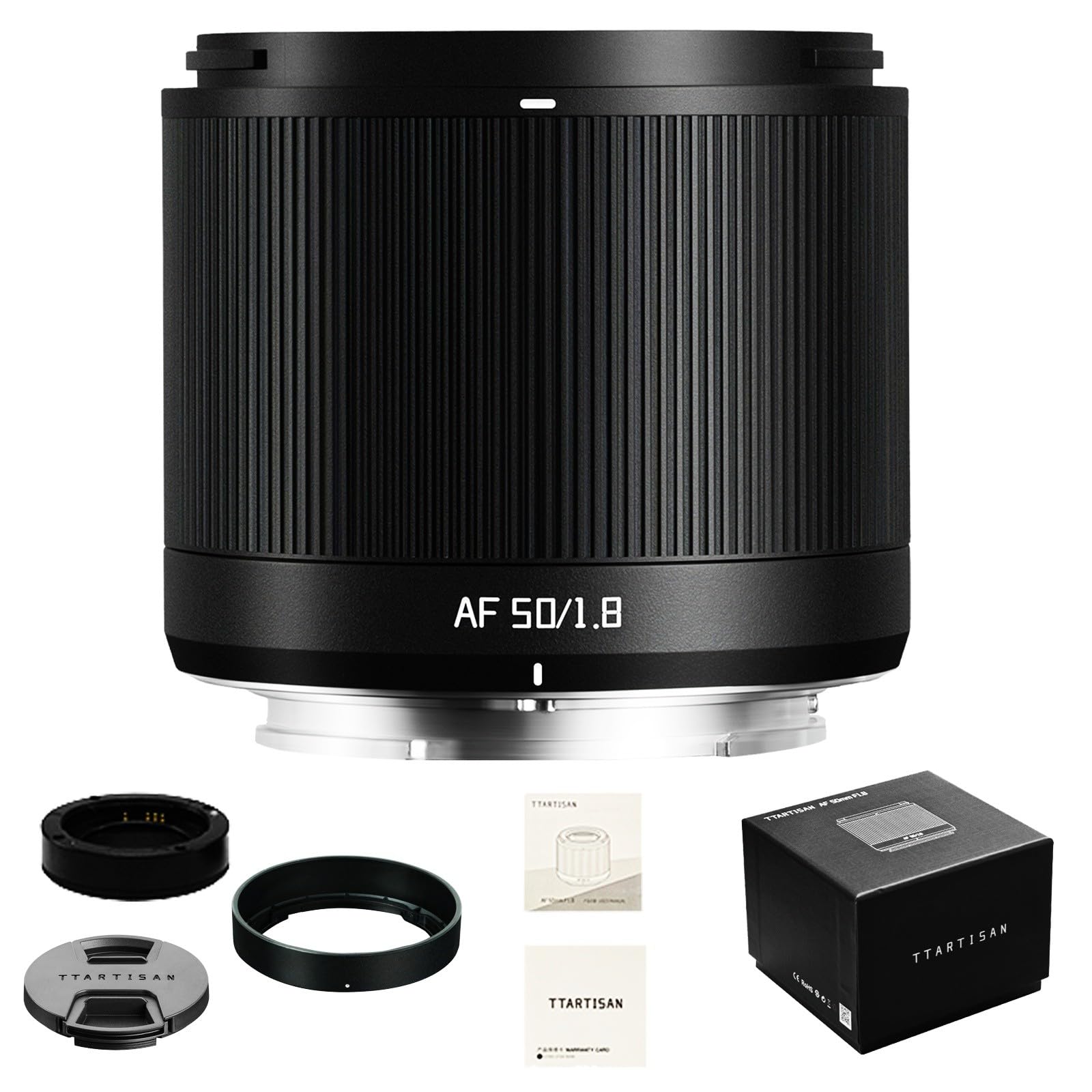
An STM stepping motor moves the glass quietly and smoothly, which matters most when you shoot video and do not want the lens whirring on the soundtrack. If you like to focus by hand, look for an AF/MF switch and a focus ring — the Meike 50mm F1.8 AF STM for Sony includes a dedicated AF/MF focus mode switch for quick switching, whereas the streamlined TTArtisan AF 50mm F1.8 Neo for Sony has no manual focus or aperture ring at all, so every adjustment happens on the camera body.
Quick Comparison
| Model | Best For | Mount | Max Aperture | Min Focus Distance | Amazon |
|---|---|---|---|---|---|
| Canon EF 50mm f/1.8 STM★ Best Overall | Canon DSLR all-rounder | Canon EF | f/1.8 | 1.15 ft (0.35 m) | Amazon |
| YONGNUO YN50mm F1.8Budget Champion | Shoestring Canon EF starter | Canon EF | f/1.8 | 0.45 m | Amazon |
| TTArtisan AF 50mm F1.8 NeoBest for Street | Sony street shooters | Sony E | f/1.8 | 0.48 m | Amazon |
| Meike 50mm F1.8 AF STM | Sony hobbyist portraits | Sony E | f/1.8 | 0.63 m | Amazon |
| VILTROX 50mm F2.0 FE | Sony stills and video mix | Sony E / FE | f/2.0 | — | Amazon |
| VILTROX AF 50mm F2.0 Air Z | Nikon Z travel and vlogging | Nikon Z | f/2.0 | 0.51 m | Amazon |
| Panasonic LUMIX S 50mm F1.8 | L-Mount hybrid shooters | Leica L | f/1.8 | — | Amazon |
| Nikon NIKKOR Z 50mm f/1.2 S | Z-mount wedding and studio | Nikon Z | f/1.2 | — | Amazon |
| Sony FE 50mm f/1.2 GM | Sony pro portrait work | Sony E | f/1.2 | — | Amazon |
| Canon RF50mm F1.2L USM | EOS R flagship glass | Canon RF | f/1.2 | 1.31 ft (0.40 m) | Amazon |
In‑Depth Reviews
1. Canon EF 50mm f/1.8 STM Lens
Our pick — over 4.5★ from 18,500+ verified ratings; the strongest balance of quality and price.
The classic starter prime that still outshoots kit zooms years later
If you own a Canon DSLR — a Rebel T7, a 5D, anything with an EF mount — this is the lens to buy first, and it holds the top spot here for a simple reason: it outshoots its tier on every front that matters. It is a 50mm fixed lens with a maximum aperture of f/1.8, so it opens wide enough to blur backgrounds and pull in light for evening and indoor shots. On an APS-C body that 50mm acts like an 80 millimetre effective focal length, which frames faces nicely for portraits, while on a full-frame camera it stays the natural 50mm your eye already knows. The 6 elements in 5 groups keep the barrel compact enough to leave on the camera.
What wins people over is the image quality — it is the single thing this lens is known for above all else, followed closely by how it renders portraits. The stepping motor, or STM for short, drives a nearly silent continuous autofocus that suits both stills and video. Sharpness holds up even after two years of steady use according to the owner feedback. For close work it focuses down to 1.15 feet (0.35 meter) with a maximum magnification of 0.21x, so small details and tight head shots are easy. Buyers report the short focus distance as a genuine advantage: “Min focus 35cm (vs 45cm).”
The catch is autofocus speed, which reads as mixed rather than universally loved — it is snappy for most shooting but not built for every fast-action scenario, and there is no image stabilization. The flip side of that honest limit is exactly why it stays the value pick: this is the lens most people should start with, and it is the crowd favourite at 4.8 stars across 18,000+ ratings.
What earns it the crown
- f/1.8 maximum aperture on a full-frame prime at a budget-friendly tier
- STM stepping motor gives near-silent continuous autofocus for video and stills
- Focuses to 1.15 feet (0.35 meter) with 0.21x magnification for close details
- 6 elements in 5 groups keeps the barrel compact and travel-ready
- Doubles as an 80mm effective focal length on APS-C bodies for portraits
Where it asks patience
- No image stabilization, so slow shutter speeds need a steady hand
- Autofocus speed divides opinion — reliable, but not tuned for every fast-motion scene
- An EF mount lens, so it will not fit Canon RF mirrorless bodies without an adapter
Buy it if: you shoot a Canon DSLR and want the sharpest, most versatile first prime for portraits, street, and low light.
Think twice if: you need stabilization or you are on a Canon RF mirrorless body — a native RF lens is the cleaner path.
2. YONGNUO YN50mm F1.8 Auto Focus Lens for Canon EF Mount Cameras
The cheapest way onto a Canon EF body with real f/1.8 light gathering
New photographers who want to try a fast prime before committing real money will find this the entry point. Yongnuo built its first prime lens around the same 50mm f/1.8 recipe as the Canon above, so you get the same light-gathering aperture and the same natural perspective on a full-frame body or a near-80mm portrait view on a crop sensor. It accepts 52mm filters, uses 6 elements in 5 groups, and offers both automatic and manual exposure control. At 120 grams it is genuinely easy to carry all day.
The trade-off is that the body is plastic and the build simply is not in the same league as the Canon alternative — that shows up most in the autofocus, which sits in mixed territory, and in the focus ring, which some users find loose. Autofocus noise is the recurring gripe, loud enough that video shooters notice it on the audio track. As owners mention, a used copy eventually seized after a prior drop: “lightweight build less durable than Canon equivalent.” That is a fair signal about handling it gently rather than a reason to avoid the lens — treat it as a starter you can risk scratching while you learn.
Where it redeems itself is the value, which is the second thing buyers talk about most, and the picture quality, which holds up in the positive column. For a beginner who wants clean foreground focus and faded bokeh for headshots without spending much, it delivers. Pair a small price with realistic expectations and it is a sensible first step.
Where it earns its keep: the value proposition here is the draw — a 50mm f/1.8 prime with the fast aperture and standard perspective that matter, at the entry tier of the market, and light at 120 grams.
Good fit for: beginners and hobbyists on a Canon EF body who want a low-risk lens to learn on.
Look elsewhere if: you shoot video and need quiet autofocus, or you plan to lean on the lens heavily for years.
3. TTArtisan AF 50mm F1.8 Neo Full Frame Lens for Sony E Mount
A metal-barrel Sony prime that carries a UV filter, hood, and case from the start
Sony shooters who want a compact everyday 50mm without paying flagship money should start here. It sits on the Sony E mount, covering full-frame bodies and APS-C cameras alike, with a bright F1.8 maximum aperture for background blur and indoor shooting. The optical design is unusually involved for the tier: 12 elements in 8 groups, including high-index and ED (extra-low dispersion) elements that pull colored fringing out of the picture and hold detail from center toward the edges. A minimum focusing distance of 0.48 meters lets you shoot food, flowers, and close accessories.
The autofocus runs on an STM stepping motor that works with Sony’s eye and face detection, so it tracks subjects for both stills and video. It comes bundled with a case, a UV filter, and a hood — owners are genuinely surprised by how much ships in the box. What stands out in use is the combination of low weight and a metal barrel, which feels more substantial than the tier usually delivers. As one happy owner put it: “This lens punches way above it’s price.”
The honest caveat is autofocus consistency — it can lose the subject sometimes, especially in low light or during video, and one or two shooters found it soft wide open at the focus point. Those are the kind of limits you would expect at this tier, and they are worth knowing before you rely on it for fast-moving subjects.
The standout spec: a 12-element-in-8-group design with high-index and ED elements is more glass engineering than the price tier usually carries, and it shows in the clarity across the frame.
Reach for this if: you want a light, well-built Sony E-mount 50mm with accessories included for street and travel shooting.
Skip this one if: your work leans hard on fast tracking autofocus for video or fast motion in dim conditions.
4. Meike 50mm F1.8 AF STM Full Frame Portrait Lens for Sony E Mount Cameras
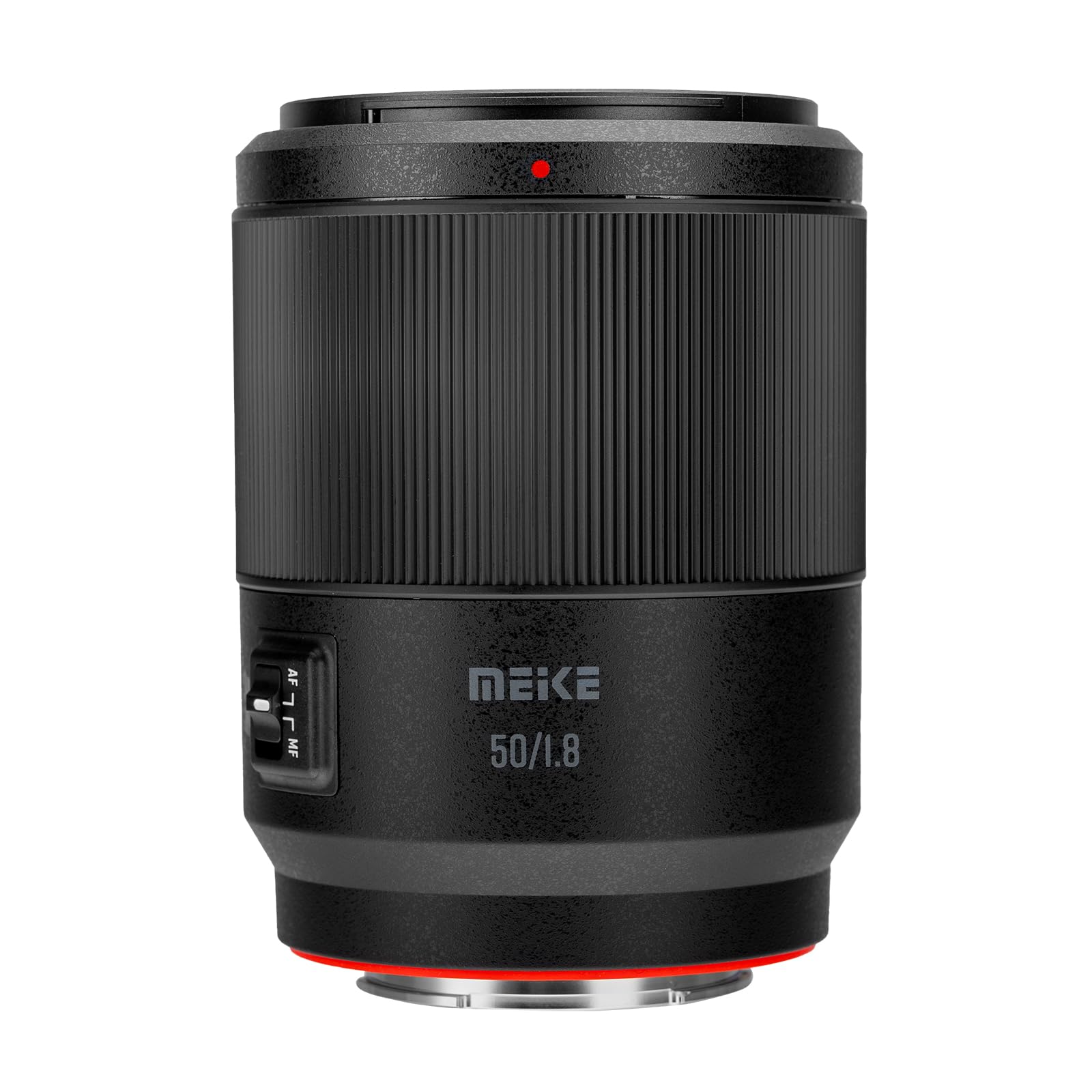
The budget Sony portrait prime with a dedicated AF/MF switch on the barrel
Portrait and low-light shooters on Sony E mount who still want hands-on control will like this one. It covers the E-mount range from the A7 through the A7R III, A7S III, and A9, and offers automatic exposure control with a focus mode switch right on the barrel for quick manual-to-auto changes. The F1.8 large aperture creates the shallow depth of field that isolates your subject — helped along by 9 aperture blades, which round out the out-of-focus highlights for smoother, more pleasing bokeh. That bright aperture also lets you use faster shutter speeds to freeze motion in equal light.
The optical structure is 7 groups and 11 elements with low-dispersion glass, including 1 ED lens and 1 high-refraction lens to suppress chromatic aberration, ghosting, and flare. A minimum focus distance of 0.63 meters gives you strong close-up capability for portraits, street, architecture, and landscape work alike. What buyers value most is the value itself, with autofocus and image quality close behind it — the AF earns particular praise for holding up in low light.
Two honest notes. Manual focusing on moving subjects takes patience, though focus peaking helps a lot. And the framing feels tight, since a 50mm on a crop body zooms you in more than you might expect — which some shooters count as a plus for portraits. It is not a dedicated video lens, so plan for that.
Why it lands here: value-for-money is the recurring theme in owner feedback, backed up by a very usable autofocus and image quality that together make this an easy recommendation for hobbyist portrait work.
A strong match for: Sony shooters who want creamy bokeh and reliable AF control on a budget.
Not the one if: your priority is dedicated video work or wider framing for tight spaces.
5. VILTROX 50mm F2.0 FE-Mount Auto Focus Lens for Sony E

A Sony E-mount fifty tuned for hybrid stills-and-video shooting
Shooters who split their time between photos and video on Sony E-mount cameras get the most from this one. It runs an optical structure of 13 elements in 9 groups — 3 ED low-dispersion lenses for more realistic, natural color reproduction, 4 high-refractive index lenses, and 1 aspherical lens. The 9 aperture blades produce the dreamy out-of-focus rendering that blurs distracting backgrounds and highlights your subject. The built-in STM stepping motor drives precise autofocus and tracking, with eye and face AF supported for better response and reduced vibration.
On the video side it supports in-body stabilization, with low distortion and minimal breathing effect — the seesawing focus that ruins rack shots — which is why it suits vlogging and everyday clips. It ships with a lens hood, front and back caps, a pouch case, and a clean cloth. The thing buyers call out most is overall quality, with value for money right behind it, followed by image quality and autofocus. As the audience sums it up, it is sharp and clear with quick, reliable autofocus.
Where it gets real is the bokeh, which draws a split verdict — some love the background separation and others find noticeable distortion. There is also mild lens distortion that cleans up in editing, which is a fair expectation at this tier. If you want consistent cinematic blur in every frame, adjust your expectations; if you want a versatile, well-built everyday prime, this delivers.
The defining pull: 13 elements in 9 groups with 3 ED and 4 high-refractive-index lenses is a serious optical build for an E-mount everyday prime, and it shows in the color and clarity.
The pick for you if: you want one Sony E-mount 50mm that handles stills and video without feeling compromised on either.
Consider another if: you shoot wide open in low light constantly and the mixed bokeh feedback gives you pause.
6. VILTROX AF 50mm F2.0 Air Z Lens for Nikon Z Mount
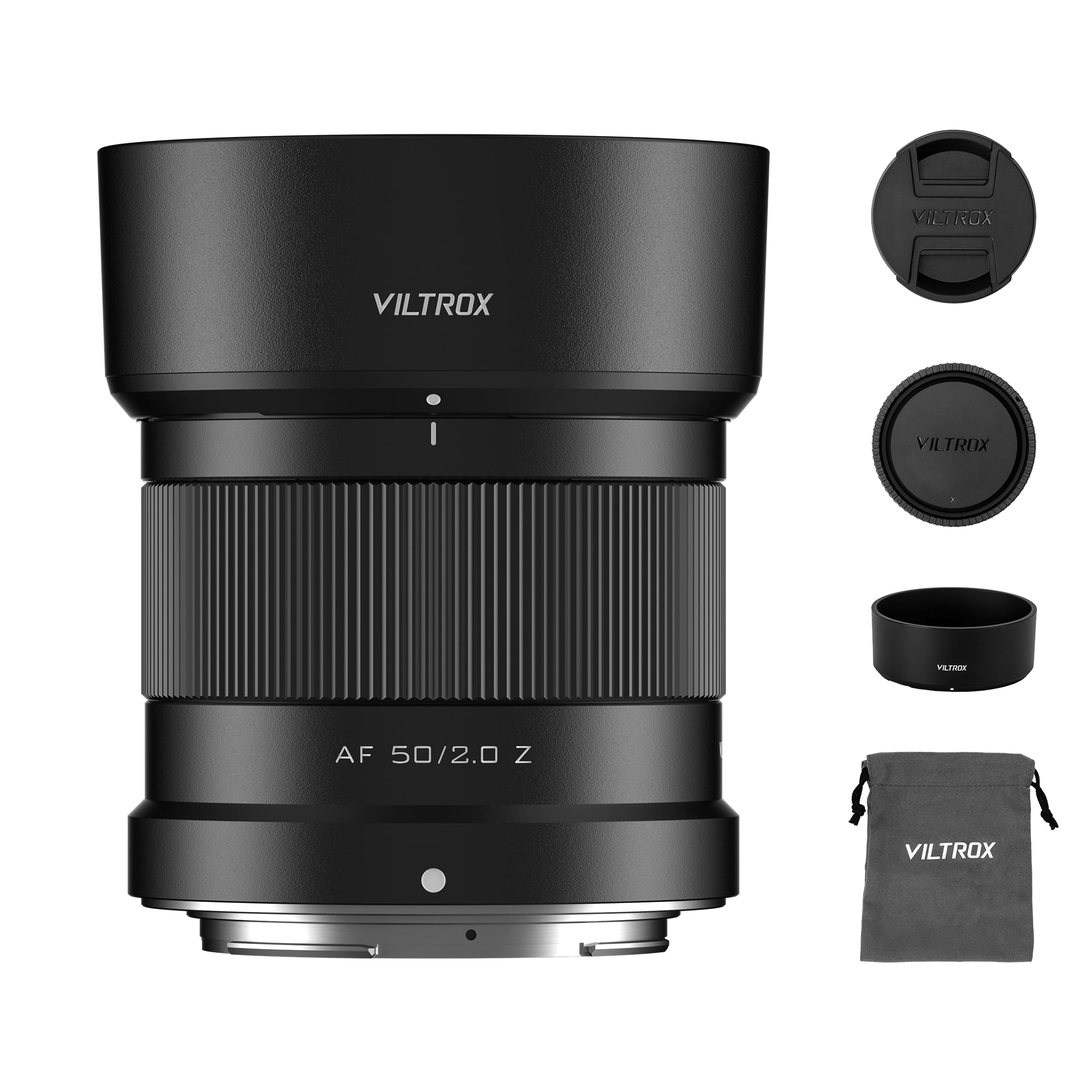
A featherweight Nikon Z prime built for bags, planes, and vlogs
Nikon Z shooters who pack light and shoot a lot of video will appreciate this lens most, and the reason is right there in the weight — at 220g it barely registers on the camera. It covers Nikon Z mount bodies from the Z5 and Z50 up through the Z6 II, Z7 II, Z8, Z9, and Zf, with an aperture range from F2.0 down to F16 and 9 aperture blades for smooth, dreamy background blur. The 50mm focal length delivers the natural, authentic perspective that works across portraits, street, landscapes, and everyday documentation.
The optical design packs 13 elements in 9 groups, including 3 ED lenses, 4 high-refractive elements, and 1 aspherical element with HD nano-coating for vivid, distortion-free images. An STM stepping motor paired with a lead screw drives precise autofocus and tracking, with eye and face AF support for faster response, lower latency, and reduced vibration. Video shooters get support for in-body stabilization plus minimal breathing effect, which keeps focus locked on a moving subject. The close focus lands at 0.51 meters, giving it moderate close-up reach for everyday subjects, and it takes 58mm filters.
Owners consistently describe it as a high-quality budget option that pairs well with the Z5, and the rendering gets special mention for its clarity. Autofocus reads as solid and quiet rather than lightning fast, and low-light autofocus can slow down when the light drops, which is a legitimate limit rather than a flaw. The build is plastic but sturdy enough for daily carry; long-term durability is simply unknown at this stage because the lens is still new on the market.
Where it shines: lens quality is the thing owners bring up most, with value for money close behind, and the 220g body makes it genuinely easy to carry all day.
A natural pick if: you shoot a Nikon Z body and want a light 50mm that travels easily and handles video smoothly.
Pass if: you shoot demanding low-light action and need autofocus to be the fastest part of your kit.
7. Panasonic LUMIX S Series 50mm F1.8 L-Mount Lens
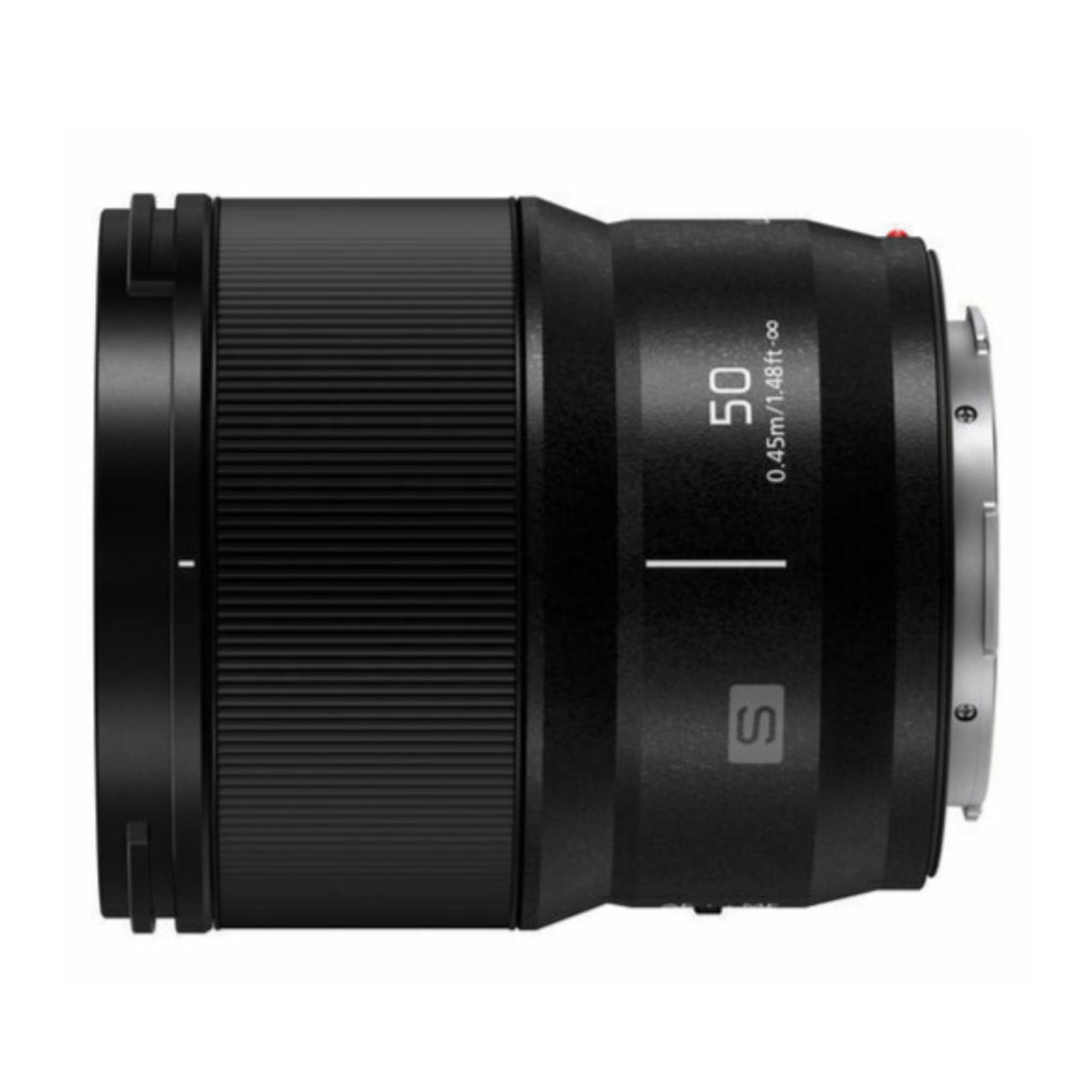
The gimbal-friendly fifty that stays balanced all day on L-Mount
Hybrid L-Mount shooters — especially those working on a gimbal — get the most from this lens. It mounts on Leica L-mount full-frame cameras including the LUMIX S series, with an F1.8 large aperture that provides a wide range of creative choices for portraiture, from beautiful bokeh to smooth defocus gradation. At 300 grams it stays light and portable for all-day carry, and every lens in the Panasonic f/1.8 prime family shares the same size and weight, which means you can swap between them without rebalancing your gimbal. Focus breathing is suppressed for video work, and aperture control is smooth, so you shoot clips with minimal rig adjustment.
In photos it is fast, quiet, and accurate, locking on with human-detect autofocus, and the build is sturdy and weather-sealed with a metal mount and a smooth focus ring. The lens quality is what owners rave about, with image quality and sharpness close behind it, and reviewers consistently place it above its price tier. On gimbal work especially, sharpness wide open at f/1.8 with smooth cinematic bokeh is exactly what owners want.
The honest caveats: autofocus reads as mixed rather than universally praised, and an integrated lens profile silently corrects chromatic aberration, distortion, and vignetting without the option to disable it. The lens is also physically larger than some competitors, and the ribbed grip will collect dust over time. Those are manageable quirks rather than dealbreakers for most shooters.
Where it delivers
- Suppressed focus breathing and smooth aperture control for clean video
- 300-gram build for all-day carry and easy gimbal work
- Shared size and weight across the Panasonic f/1.8 prime line for tool-free swaps
- Weather-sealed construction with metal mount and smooth focus ring
- F1.8 aperture for portraits with beautiful bokeh
Keep in mind
- Autofocus feedback reads as mixed rather than glowing
- Integrated lens profile corrects chromatic aberration, distortion, and vignetting with no off switch
- Larger than some competing 50mm primes, and the ribbed grip collects dust
A solid pick if: you shoot L-Mount on a gimbal or you swap between Panasonic f/1.8 primes and want a consistent balance.
Less ideal if: you demand the smallest possible barrel or prefer full manual control over in-camera lens corrections.
8. Nikon NIKKOR Z 50mm f/1.2 S Prime Lens

A vast f/1.2 aperture that reshapes what dim light can do
Wedding and studio photographers on Nikon Z bodies are the ones who justify this lens, because its huge f/1.2 maximum aperture is aimed squarely at working shooters. It renders with extraordinary power across the entire frame, carries Nano Crystal Coating to fight flare and ghosting, and it is weatherproof for location work. It mounts on all Nikon Z series mirrorless cameras. In the hands of the owners who love it, the images are described as milky and beautiful, and outdoors or at events, this is the kind of lens that stays glued to the camera for most of the shoot.
Where this lens stands apart is subject-background separation at f/1.2 — background elements fall away into a smooth blur that a smaller aperture cannot match. Low-light performance is exactly what a f/1.2 aperture is for; photographers describe shooting wide open without fear and coming away with sharp files. The build is substantial enough that a professional can trust it in the field.
The one thing every owner mentions is the weight — at 1090 grams, this is a hefty lens that some shooters simply cannot hold for long sessions. Customers note that the sheer mass becomes “very heavy” enough that one owner had to return it because it hurt the wrist, and there is a small amount of vignetting wide open, which is normal behavior at f/1.2 and correctable in editing. If you are shooting a Z body and care more about the light you can gather than the bulk you carry, this lens is built for you.
what separates it: the f/1.2 maximum aperture, held together with Nano Crystal Coating and a weatherproof build, is a combination aimed directly at demanding low-light work.
A great match for: Nikon Z wedding, event, and studio shooters who need every possible stop of light.
Not for everyone: casual shooters or anyone who struggles with a heavy lens in hand for long shoots.
9. Sony FE 50mm f/1.2 GM Full-Frame G Master Lens

Punches well above its price tier for tack-sharp f/1.2 images that barely miss focus
Sony photographers making their living from portraits and events are the natural home for this lens. It is a compact F1.2 prime carrying G Master resolution and rendering, built around three XA (extreme aspherical) elements for edge-to-edge sharpness and an 11-blade circular aperture that shapes gorgeous bokeh. That f/1.2 maximum aperture delivers an extraordinarily shallow depth of field, and the compact, lightweight body works on both full-frame and APS-C E-mount cameras. When photographers describe its character, the phrase that comes up is “tack sharp when needed” with real personality when you want softness.
The autofocus is fast and reliable in a way that changes what you can shoot — photographers say it rarely misses focus even wide open at f/1.2, and that the near-instant response is a huge leap over slower G Master options like the 85mm. It also gathers light so effectively that photographers who used to shoot at high ISO with slower lenses now find themselves dropping many stops lower. Lens quality is the thing owners rave about most, followed by image quality, and the value for money rating is genuinely remarkable given the tier — photographers describe buying the best option rather than settling.
The two honest trade-offs are price and weight. This is a premium lens with a corresponding cost, and it is heavy enough that photographers who value lightness above all will feel it — the construct here prioritizes glass and build over a saving-grams philosophy. Those are the right trade-offs for professional work and possibly the wrong ones for occasional shoots.
The thing photographers rave about: rarely missing focus at f/1.2 is a rare trait, and combined with 11-blade bokeh and three XA elements, it puts this lens in a class of its own on Sony E-mount.
Worth it if: you shoot Sony professionally and want the finest 50mm prime the mount offers.
Overkill if: you shoot occasionally and cannot justify the premium cost or the heavier barrel.
10. Canon RF50mm F1.2L USM Standard Lens

The L-series fifty that Canon EOS R owners describe as a lifetime lens
Advanced and professional Canon EOS R shooters are the ones this lens is built for, and it targets them directly. It is a fixed 50mm with a bright f/1.2 aperture for the EOS R system, made with three aspherical elements and one UD (ultra-low dispersion) element — the recipe that converts into incredibly sharp corner-to-corner results. There is a control ring for direct setting changes, a 12-pin communication system, and a minimum focusing distance of 1.31 feet (0.40 meter). The 77mm filter thread gives you plenty of room for common filters.
What owners consistently report is the sharpness across every aperture, with photographers calling it the best corner-to-corner result they have seen from any 50mm prime. Autofocus is fast, quiet, and accurate on the R5. The build quality is described as tank-like, and photographers say the lens stays on their camera for the vast majority of their shooting. One photographer put it plainly: this lens “lives on my R5 90% of the time.” Lens quality is the most-praised trait here, with image quality and sharpness close behind, and the lens carries a best-in-Canon’s-history reputation among the community.
The honest limitation is weight — at 2.1 pounds this is a substantial lens, and photographers note it becomes noticeable after about half an hour of use. It is also costly for a 50mm. But the trade-offs land exactly where advanced and professional shooters expect them to: the build is heavier because it is built more heavily, and the price is higher because the glass is denser. Beginners on an EOS R body are better served by a lighter, cheaper RF 50mm f/1.8 first and returning to this lens when their work demands it.
Where the L-series earns its name
- Three aspherical elements and one UD element for corner-to-corner sharpness
- Fast, quiet, and accurate autofocus on the R5
- Control ring for direct setting changes
- Minimum focusing distance of 1.31 feet (0.40 meter)
- Solidly built for professional use
What to expect going in
- 2.1 pounds gets noticeable after about 30 minutes in hand
- High price for a 50mm prime
- Not the best first lens for beginners on the EOS R system
The right call if: you shoot EOS R professionally or seriously and want the top of Canon’s 50mm lineup.
Different lens if: you are just starting out or you prize a light kit above all else.
Understanding the Specs
Focal length and field of view
A 50mm lens is called “standard” because it sits close to how your own eye sees the world — no stretching, no compression, just a natural perspective. That is why it works for portraits, street, and everyday shots alike. On a smaller APS-C sensor the same 50mm narrows to roughly what an 80mm lens would show, framing faces tighter; the Canon EF 50mm f/1.8 STM lists an 80mm effective focal length on APS-C bodies and 50mm on full frame, so it behaves like two lenses depending on your camera.
Maximum aperture
The aperture is the size of the opening letting light through, written as an f-number; a smaller number means a bigger opening. An f/1.8 prime is bright enough for most portraits and indoor shots, while an f/1.2 prime like the Sony FE 50mm f/1.2 GM or the Canon RF50mm F1.2L opens wider still for heavier blur and more light in dark rooms. Bigger apertures usually mean heavier glass — the numbers support that directly: the Nikon NIKKOR Z 50mm f/1.2 S weighs 1090 grams, and the Canon RF 50mm f/1.2L weighs 2.1 pounds, so carrying the extra speed is a genuine physical cost.
Aperture blades and bokeh
Bokeh is the character of the out-of-focus areas — the soft, blurred background behind your subject. The number of rounded blades inside the aperture shapes it: more blades mean rounder, smoother highlights. The Canon EF 50mm f/1.8 STM uses 7 rounded blades for smooth bokeh, the Meike 50mm F1.8 uses 9, and the Sony FE 50mm f/1.2 GM uses an 11-blade circular aperture. A bigger aperture also creates a shallower depth of field, which is what lets your subject pop away from the background.
Autofocus motors and focus distance
STM stands for stepping motor, a small motor that shifts the glass smoothly and quietly — good for video because it will not whir onto the soundtrack. Minimum focusing distance is how close you can get before the lens loses focus, and lower numbers mean you can shoot tighter on small subjects. The Canon EF 50mm f/1.8 STM gets down to 1.15 feet (0.35 meter), the TTArtisan AF 50mm F1.8 Neo to 0.48 meters, and the VILTROX 50mm F2.0 Air Z to 0.51 meters with 0.11X magnification — all workable for food, flowers, and close details.
FAQ
Will a Canon EF 50mm f/1.8 STM fit on a Canon EOS R mirrorNot directly, no. The Canon EF 50mm f/1.8 STM is built for the Canon EF mount used on DSLR bodies, while EOS R cameras use the Canon RF mount. You can still use it on an R body, but only through a mount adapter that converts the EF bayonet to RF — the lens itself will not click onto the camera without one. If you shoot RF natively and want the same 50mm look without an adapter in the path, look at the Canon RF50mm F1.2L USM instead.?
What is the difference between an f/1.8 and an f/1.2 50mm lens?
Is a 50mm lens good for portraits on an APS-C camera?
Which Sony E-mount 50mm has the fastest autofocus?
Do I need a stepping motor STM lens for video?
What is the minimum focusing distance and why does it matter for a 50mm lens?
How much does a 50mm prime weigh compared with a 50mm f/1.2?
Can I use a manual focus 50mm lens if my camera has eye autofocus?
Is an f/1.2 50mm lens worth it over an f/1.8 for wedding and event photography?
Which 50mm lens fits an L-Mount Panasonic or Leica body?
Final Thoughts: The Verdict
For most people shopping for the best 50mm lens, the Canon EF 50mm f/1.8 STM is the winner because it delivers f/1.8 light gathering, 1.15-foot (0.35-meter) close focus, and near-silent STM autofocus on Canon EF DSLR bodies at a price that almost anyone can afford — and it is the lens most photographers should start with. If you shoot Sony E-mount either the VILTROX 50mm F2.0 FE for hybrid stills-and-video work or the TTArtisan AF 50mm F1.8 Neo for a lighter street kit covers most needs. For Nikon Z travel shooting, the VILTROX AF 50mm F2.0 Air Z packs a 220g body and clean video behavior. If you shoot professionally and want maximum aperture without compromise, the Sony FE 50mm f/1.2 GM and the Canon RF50mm F1.2L USM are the two flagships that match that ambition. Buy for your mount first, your aperture second, and your budget third — that order solves almost every 50mm decision.
How We Picked
We do not accept paid placement. Every pick is matched to a real buyer and a real use-case; we do not hands-on test units.
Sources & Methodology
Specifications: manufacturer listings and product documentation. Review insights: verified customer reviews, as of September 2026. Pricing: not shown on this page (it changes often); check the current price via the retailer link.
As an Amazon Associate, Gadgets Feed earns from qualifying purchases. This does not affect which products we feature.