
Our readers keep the lights on and my morning glass full of iced black tea. As an Amazon Associate, I earn from qualifying purchases.
Specs are compiled from manufacturer listings and verified buyer reviews and can change over time — please confirm the key details on the product page before buying.
Setting a mailbox post used to mean hauling a heavy bag of concrete and waiting a day before you could hang the box. That whole job has changed. A new wave of fast-setting cements and expanding foam kits can lock a post in place in as little as 5 minutes, with no water, no mixing tub, and no mess on your driveway.
I’m Min — the founder and writer behind Gadgets Feed. This guide is built by comparing the manufacturers’ published specifications and the patterns across verified customer reviews, so you get each pick’s real strengths and trade-offs instead of marketing spin.
Here is what actually matters: match the mix to your hole depth, your post material, and how fast you need to walk away. This breakdown covers the strongest, fastest options in the best cement for mailbox post category.
Our Picks at a Glance


How To Choose The Best Cement For Mailbox Post
The mailbox post is the spot where a weak anchor shows up first. Wind hits it, a car door brushes it, and the ground freezes and thaws around it. A mix that wobbles after a season is not saving you anything. Start with how fast you want to walk away, then work backward to the product type.
Set time versus cure time
Set time is when the mix turns firm enough to hold the post upright. Cure time is when it reaches full hardness. A product that sets in 20 minutes may still take longer to reach full strength, so plan your own weight on the post with that in mind. If you are anchoring a mailbox on a weekend, a fast set time means you can hang the box and go inside the same afternoon.
Matching the mix to your post material
Wood, metal, and vinyl posts all behave differently. A foam kit that expands fills gaps around any of them without you worrying about the hole shape. A granular cement needs a hole you dug clean and roughly even. If you are resetting an old concrete base, a trowelable patch is the better tool because you can shape it into the void instead of pouring it in blind.
Quick Comparison
| Model | Best For | Set Time | Weight | Form | Amazon |
|---|---|---|---|---|---|
| 10 Post Kit – Commercial Grade★ Best Overall | Setting ten posts in one session | 20 minutes | 23 pounds | Two-part foam kit | Amazon |
| Akona Vinyl Cement Patch, 10 PoundsBest Value | Patching voids around an existing post | 60 minutes | 10 pounds | Powder cement | Amazon |
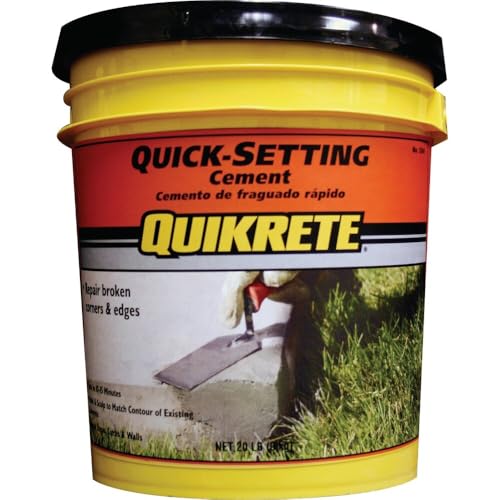
| Quick Setting Cement 20#Fastest Set | Replacing one post, fast | 10 minutes | — | Powder cement | Amazon |
| Instant Anchoring Cement, 10 Pound Bag | Anchoring bolts and small posts | 20 minutes | 10 pounds | Powder mix | Amazon |
| Rockite 10010 10 Lb | Small pours and craft molds | 15 minutes | 10.5 pounds | Hydraulic powder | Amazon |
| Postloc® – 1-Post Kit | Curb-side mailbox replacement | 5 minutes | — | Foam kit | Amazon |
| Rockite Cement, 50 Lb | Anchoring multiple posts at once | 60 minutes | 1.6 ounces | Powder cement | Amazon |
| SP (Shake & Pour) – Fence Post Kit | Mailbox posts on busy roads | 30 minutes | — | Two-part foam kit | Amazon |
| Stanley F996 Fence Post Mix | Fast work across a large yard | 3 to 5 minutes | 25 pounds | Liquid foam | Amazon |
In‑Depth Reviews
1. 10 Post Kit – Commercial Grade -2 Gallons. Fast, Secure & Safe Concrete Alternative for Easy Fence Post Installation.
Our pick — over 4.5★ from 150+ verified ratings; the strongest balance of quality and price.
A two-gallon, water-free foam kit that sets ten fence posts in about 20 minutes.
This is a two-gallon kit that mixes and pours without water, and the maker states it is designed to be 10x’s faster than traditional concrete for fence post installations. The 23-pound box ships as a ready-to-use system, so you are not hauling bags of mix and a bucket of water out to the fence line. The rating sits at 4.6 stars across 150 ratings, and the crowd favorite by a clear margin.
The property where this earns its money is a full run of posts. Buyers report setting eight posts in one go, with 4″x4″x8′ posts going into 6″ diameter holes 24″ deep, and zero looseness or lateral movement afterward. The full set time runs about 20 minutes, which is what makes a ten-post day possible at all. It also works around wood, metal, vinyl, PVC, concrete, and fiberglass posts, so you are not buying a different product per post type.
The catch is coil. The set expands rather than sits still, so you mix one batch, pour it, and stay ready — a small dented Part B bottle shipping without a leak is the kind of thing that shows up in transit, and the expanding action will not wait for you to find gloves. One honest note on scale: a full set covers about six holes at 18″ deep and 6″ diameter, so ten posts may need more than one kit. If you have a single mailbox post and nothing else to anchor, that size is more than you need.
Where it earns its keep
- No water, no mixing tub — mix, pour, and done
- Works with wood, metal, vinyl, PVC, concrete, and fiberglass posts
- About 20 minutes to a set, so a multi-post day is realistic
- Encases wood posts in plastic, which owners mention keeps water and rot out
What to know before you buy
- You mix the whole batch or none — there is no partial pour
- Durability and stability draw mixed feedback, with some posts moving 3-4 inches after set
- Sticky product that needs gloves and a pre-planned stir rod spot
Go with this if: you have a multi-post project and want one kit that handles every post material.
Look past it if: you only have one mailbox post to anchor — the batch format overshoots a single-hole job.
2. Akona Vinyl Cement Patch, 10 Pounds
A trowelable powder patch for packing into broken concrete around a post that is already set.
Concrete already cracked or a hole that is not a clean cylinder? This powder mixes with water and trowels into a repair, which is a different job than pouring a fresh anchor. It reaches more than 5,000 psi after 28 days, so it is genuinely structural rather than a cosmetic fill. Drying time runs about 60 minutes, and the whole bag weighs just 10 pounds — the second lightest in this group.
What it does better than the others here is vertical work. Customers note patching 2-6″ wide, 1-6″ deep holes on vertical surfaces with no cracking or flaking after six months, and the trowelable consistency handles repairs to a surface up to 1/2 inch. That makes it a strong pick for tightening a mailbox post where the concrete has crumbled rather than replacing the base.
The thing to flag honestly: this is not a finished-surface product. It contains large grain sand, and getting a smooth, precise finish out of it is close to impossible — you will end up with sand sitting on the top of your work. It also needs care around pets, since a torn bag spreads powder that is difficult to clean up. For the buyer already standing over a roughed-in post hole, those are manageable trade-offs.
The honest read: A dry, granular mix that locks in slowly but hard. It is the tool for repair work and awkward vertical pours, not for pouring a fresh clean anchor hole.
What that means for your post: Plan your patience window — the 60-minute dry time and the coarse texture mean you cannot rush or fuss over the finish.
Reach for this if: you are patching concrete around an existing post and can work it with a trowel.
Think twice if: you want a smooth, precise finish — the large grain sand works against you there.
3. Quick Setting Cement 20#
A 20-pound bucket of gray powder that reaches full cure in 10 minutes.
Twenty pounds of gray powder in a single bucket and nothing else to think about. The full cure time is 10 minutes, which is the fastest of any granular cement on this list — and half the 20-minute full cure of the Akona Instant Anchoring Cement. That number matters when you are anchoring a mailbox post on a 30-minute weekend window. It is meant for concrete-to-concrete contact.
What solidifies the case for most buyers is the bond. Owners describe it as easy to work with and never breaking, and the recurring line in the feedback is that the end result sets solid with an excellent bond once the mix is right. One reviewer praised its quality and value, and a second said it fares as well or better than the other crack fillers they had tried. For a mailbox post where accuracy of the mix matters more than speed of drying, that is exactly what you want to hear.
The honest caveat here is the label, not the cement. The address label frequently arrives stuck down over the instructions, and the instructions contain the water ratio — which is the single fail point for any cement mix. Several owners describe scraping the label off, then finding the print small enough to squint at. Read the ratio before you mix, or you will be guessing.
The 10-minute edge: Sure, the numbers are simple — 10 minutes to a full cure beats the 20-minute setting of the Akona Instant Anchoring Cement, so if you want the post standing up by lunch, this is the one.
The overlooked detail: The instructions are the whole game here. They arrive obscured often enough that owners call it out, and getting the water ratio wrong is the one real way to mess up a straightforward product.
Pick this one if: you want a classic bagged cement with the fastest full cure in the group.
Give it a miss if: you do not want to squint at small print — the water ratio is not optional.
4. Instant Anchoring Cement, 10 Pound Bag, Quick Setting, Anchoring Mix
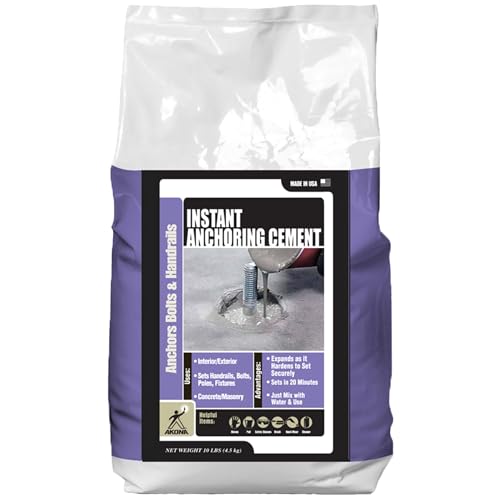
A 10-pound anchoring mix for small posts, handrails, bolts, and fixtures.
This is purpose-built for anchoring, not general building. The bag weighs 10 pounds, which the maker frames as a back-saver, and the 20-minute full cure time tracks with the others in the fast-set class. It handles handrails, bolts, poles, and fixtures in addition to posts, and works both indoors and outdoors. With 223 ratings behind it, it is the most-reviewed granular cement here.
The quality of the mix is what carries it. Owners describe it as an excellent mix with good adhesion that sets firmly within the timeframe listed on the bag, and the recurring theme is that it mixes and pours without fuss. A husband-and-wife review put it plainly: it sets fast, holds strong, and is reliable indoors or outdoors. The maker specifically designed it for small posts, which lines up with a mailbox install.
Now the honest piece — durability is mixed. Some owners find it holds strong; others find it not as sturdy as they hoped, and one notes it goes off in under 10 minutes and needs more water than the packet says. Treat that as a mix-ratio sensitivity rather than a defect. Stir thoroughly, follow the packet, and plan to have your post braced the moment you pour.
Why owners keep it on the shelf
- Purpose-built for anchoring, including small posts and fixtures
- 10-pound bag is much easier to handle than a haul bag
- Indoor and outdoor rated
- Mix and pour with no special equipment
Before you open the bag
- Durability reads mixed — some buyers want it stronger
- It dries faster than expected, and overshooting the water can dilute the hold
- Not the right pick for a large deep hole with a heavy post
Best for: a homeowner anchoring a single mailbox post or a set of handrails who wants a manageable bag.
Not the one for: heavy posts — the low water tolerance and mixed durability calls make large jobs a stretch.
5. HARTLINE Products CO INC Rockite 10010 10 Lb Rockite Fast-Setting Cement

A hydraulic cement that hardens in 15 minutes, hits 4,500 PSI in the first hour, and never shrinks.
Read the one-hour figure on this bag and it stops being a normal cement. In one hour it develops a compression strength of 4500 lbs. per square inch, it hardens in 15 minutes, and it never shrinks. Each pound yields 18-3/4 cubic inches, so a 10.5-pound pail gives you a real calculation instead of a guess. It is a hydraulic cement, which means it sets by chemical reaction rather than drying out — handy when the ground is damp.
Where it fails the mailbox test is the pure scale of the job. It is sold as a small-quantity product, and the reviews reflect that: people use it in silicone molds to cast pots and to pour small concrete figurines, praising how smoothly it captures fine detail and how dense it cures without crumbling. For a small tricky anchor in a tight spot, that same dense hold and shrink-free finish is exactly what you want. It just will not cover a full mailbox post hole in one pail.
One honest thing worth knowing: this is a water-based product, not a waterproof one. Buyers have asked the waterproof question directly and the answer from the label is that it mixes with water. If your post sits in a spot that stays wet, a product with a waterproof claim will serve you better. For a typical dry hole, this does the job.
The top-of-the-class pick: Highest strength in this group and the only one with a stated compression figure — 4500 lbs. per square inch inside the first hour. The 0.5-pound weight gap versus the lighter anchoring bag is over the small-quantity format, not a bad formula.
Tight quarters only: The pail is enough for a small pour, not a deep mailbox post hole. If your post needs volume, this is a finishing tool.
This is your pick if: you need a high-strength, shrink-free pour for small posts and tight anchors.
skip it if: your mailbox hole is deep and wide — the pail is sized for small pours.
6. Postloc® – 1-Post Kit – Easy to Use Concrete Alternative (1)

A single-post foam pack that needs no tools or water and firms up in 5 minutes.
One pack, one post. The single-post kit format is a foam alternative to concrete, and the maker lists no tools required. The set time is 5 minutes, and reviewers point out posts going firm enough to hold in 5 to 10 minutes. It works with all post types and, per the maker, protects posts from rot and rust. This is a commercial-grade item with 106 ratings behind it.
What wins people over is the simplicity. Owners say it is quick and simple to use and that it keeps whatever you set in place under most weather conditions. A 4×4 fence post set into a 2-foot-deep, 8-inch-wide hole had the foam rise about 3 inches above the hole, which was easy to trim back. And the feedback that matters most for a mailbox post: foam held a 12-gauge flag pole through 70 mph winds with zero damage and no deformation, and the pole broke before the foam did.
Two fair warnings. Foam kits of this type are single-use — mix the whole pouch and pour it, or the reaction keeps oozing until it is empty. The second is that the reaction is forceful: shake the container for the full time listed and open it away from your face, because a fast-opening can release pressure at once. Follow the instructions and it behaves; ignore them and the mess is on you.
What owners praise
- Single-post format — buy exactly what a mailbox needs
- No tools, no water, and a 5-minute set
- Works with all post types and protects against rot and rust
- Trims easily with a saw once set
The catches
- Single-use pack — mix the whole thing or none
- The reaction can build pressure; open with care
- Sturdiness reads mixed for heavier loads
Pick this if: you are resetting one mailbox post and want no tools, no water, and a five-minute hold.
Leave it if: you need to set many posts at once — one kit does one post.
7. Rockite Cement, 50 Lb, White/Off-White/Gray (10051)
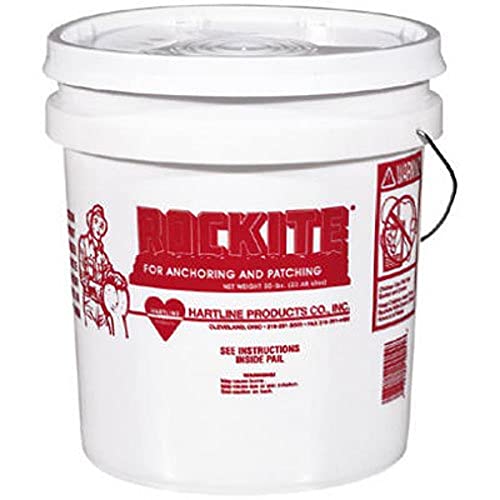
A 50-pound pail of pourable hydraulic cement for anchoring wobbly fence posts in bulk.
This is the large-format version of the Rockite line — a 50-pound pail from Hartline with a 60-minute full cure time and a smooth, pourable consistency. The reviews for this size are not about tiny craft pours, they are about posts: buyers use it as a go-to for anchoring wobbly wooden fence posts, and describe the result as a durable repair. It mixes well and sets fast.
The case for buying the 50-pound size is the same as any bulk product: one bag covers a lot of ground and you are not rationing powder on a big fence run. The consistency is the standout. Owners say it mixes to a fairly liquid consistency that pours cleanly into molds and holes, then dries hard in about 30 minutes thanks to the heat reaction. Versatility shows up too — the same pail gets used for flower bed borders, candle vessels, planters, and small stands.
The trade-off is the volume, in both senses. Pour the whole batch and you have more product than a single mailbox post needs. And because it sets fast once mixed, you have to work in small batches if you plan to use it for anything fine or decorative — mix big and pour slow is the failure mode.
What it is good at: Bulk repair work and posts needing volume. A liquid consistency that pours cleanly into odd-shaped holes, then hardens in about 30 minutes.
The one thing to plan for: Heat and set speed mean you mix in small batches and move — a full bucket poured slowly is a full bucket wasted.
Right for: people anchoring multiple posts or working a run of fence repairs who want one big pail.
Overkill for: a single mailbox post — the batch size dwarfs the job.
8. SP (Shake & Pour) – Fence Post Kit – Commercial Grade. Fast, Secure & Safe Concrete Alternative for Easy Fence Post Installation (4)

A four-kit foam box pre-measured for 4″x4″ or 4″ round posts in 8″ x 24″ holes.
Four kits in one box, each pre-measured for a 4″x4″ square or 4″ round post set into an 8″ diameter by 24″ deep hole. No water, no heavy bags — mix, pour, done. The set time runs about 30 minutes, and the maker describes it as designed to give way on impact while staying intact. For a post next to a road, that behavior is the whole point.
The roadside use case is where this beats everything else here. Owners living on a busy street describe mixing and pouring around a mailbox post in under 2 minutes, and the key advantage is rework: because the foam gives way on impact, you can re-pour into the same hole in the future instead of breaking out a concrete base. Owners also note it can be mixed and poured around a mailbox post in less than 2 minutes, and it was described by one as hard as a rock once set.
Foam kits ask more of your prep work than a bag of cement does. Several shoppers say the expansion reading as uneven — in rocky New England soil, the shape of the hole affects retention, and tree roots can tilt the rising foam. A more pointed account came from rocky, dry soil where the foam rose only about half the hole. Dig a clean, pear-shaped hole and the results are steadier.
Built for the street
- Foam gives way on impact so you can re-pour the same hole
- Mix and pour in under 2 minutes per post
- Pre-measured for a 4″x4″ or 4″ round post, 8″ x 24″ hole
- Hard as a rock once set, per owners
Where it can fall short
- Expansion varies with soil and temperature
- Rising foam can be tilted by roots in rocky ground
- In cold rocky soil the foam may not fill the whole hole
Pick it for: a mailbox post on a busy road, where the foam’s impact-give lets you re-pour instead of rebuild.
Wrong tool if: your ground is rocky and uneven — the foam follows the hole shape closely.
9. Stanley F996 Fence Post Mix | Concrete Alternative Expanding Foam | Easy to Use, Fast Installation 12x (Component A,B) 12.7 fl oz and 10.1 fl oz | 12 Pack
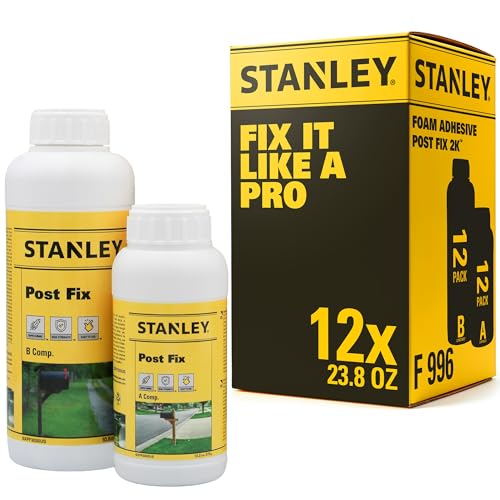
A twelve-pack of two-bottle foam kits that sets in three to five minutes.
Twelve separate kits, each a small bottle and a large bottle. Pour the small into the large, shake for 20 seconds, and pour. The mix sets in 3 to 5 minutes, the fastest here, and the maker lists the product as commercial grade and waterproof. It can be used both inside and outside in summer and winter. At 25 pounds total for the box, it is a whole season of post setting in one delivery.
The format is the reason to buy this one over the single-post kits. It uses two plastic bottles instead of a two-compartment bag, which owners describe as much cleaner to mix, and each kit is self-contained with no extra mixing equipment or water needed. Buyers report it flows nicely around posts, anchors them firmly once set, and handles everything from a new 4×4 mailbox post to a volleyball post setup where cement was the original plan. The twelve-pack makes a full fence line practical.
Expansion is the honest variable. Several owners mention the foam does not rise as much as expected, and temperature matters — one buyer working in roughly 70°F conditions saw significant expansion, while a colder day produced far less rise. Pour some on the sides of the post rather than only into the hole for better grip, and experiment on a test hole to get your volume right before committing.
The workhorse: Twelve kits, fastest set in this group at 3 to 5 minutes, and two bottles instead of a messy two-compartment bag. It is the practical choice for anyone doing a whole fence line.
The variable: Expansion depends on temperature and how you dug the hole — factor in cold days and pour generously against the post.
Suits you if: you have a dozen posts to set and want the fastest set time and cleanest mixing format.
Overkill if: you have a single mailbox post — one kit covers one post, and this box holds twelve.
Understanding the Specs
Set Time and Cure Time
Set time is how long before the mix is firm enough to hold your post upright without bracing. Cure time is when it hits full hardness. These are two different numbers, and the products here range from a 3-to-5-minute set on a fast foam kit to a 60-minute cure on a hydraulic cement. Fast set is great for a quick post install but demands you pour immediately once mixed. Slower set gives you more working time in the hole.
Powder Mix versus Expanding Foam
A powder mix like the Akona Vinyl Cement Patch needs water and careful measuring, and it sets to a hard, concrete-like finish that you can trowel smooth. Expanding foam kits come pre-measured and simply rise to fill the hole around the post. Foam is lighter to carry and messier to measure, while powder is heavier but gives you more control over the finish and the volume. Your choice really depends on whether you are pouring a fresh hole or patching around something already in the ground.
FAQ
How long does it take for mailbox post cement to set?
Do I need to use a full kit for one post?
What size hole works best for a mailbox post?
Will expanding foam hold a metal mailbox post?
Which is stronger, a cement mix or an expanding foam kit?
Can I use a cement patch on a post that’s already set?
What happens if I add too much water to the cement mix?
Is expanding foam safe to use near pets?
Can I re-pour a mailbox post hole after using foam?
How much cement do I need for one mailbox post?
Final Thoughts: The Verdict
For most people setting a mailbox post, the cement for mailbox post winner is the 10 Post Kit – Commercial Grade because it mixes and pours without water, sets around every post material, and clears the whole job in about 20 minutes. If speed is your priority on a single post, grab the Quick Setting Cement 20# with its 10-minute cure. And for a post beside a busy road where impact is the real enemy, the SP (Shake & Pour) Fence Post Kit is the one to reach for. Whichever you pick, follow the water ratio to the letter — that single step separates a rock-solid post from a wobbly one.
How We Picked
We do not accept paid placement. Every pick is matched to a real buyer and a real use-case; we do not hands-on test units.
Sources & Methodology
Specifications: manufacturer listings and product documentation. Review insights: verified customer reviews, as of September 2026. Pricing: not shown on this page (it changes often); check the current price via the retailer link.
As an Amazon Associate, Gadgets Feed earns from qualifying purchases. This does not affect which products we feature.