
Our readers keep the lights on and my morning glass full of iced black tea. As an Amazon Associate, I earn from qualifying purchases.
Specs are compiled from manufacturer listings and verified buyer reviews and can change over time — please confirm the key details on the product page before buying.
Buying live plants online is a gamble, and the losing outcome is ugly: a bag of brown mush that turns your tank water cloudy overnight. The gamble is winnable if you know which plants ship well, which melt on arrival, and which your fish will shred before they root. That is what this guide sorts out for you.
I’m Min — the founder and writer behind Gadgets Feed. This guide is built by comparing the manufacturers’ published specifications and the patterns across verified customer reviews, so you get each pick’s real strengths and trade-offs instead of marketing spin.
Some picks here ship as floating mats, some as potted carpet starters, and some as full multi-species bundles — and each one rewards a different kind of tank. This breakdown of the best aquarium plants covers how each pack actually arrives and what it takes to keep it alive.
Our Picks at a Glance


How To Choose The Best Aquarium Plants
A plant that dies in your tank is usually the wrong plant for your water, your light, or your fish — not a bad plant. Live aquarium plants (real aquatic species that grow submerged or floating in your tank, not plastic or silk decorations) ship to you as a living organism in a sealed bag, and the first week after arrival decides whether it takes.
Match the plant to the position it will grow in
Floaters sit on the surface and pull nutrients straight out of the water column, so they need almost no substrate. Rooted bundles and potted plants push roots into sand or gravel and draw most of their food from the substrate. Carpet plants like Monte Carlo are meant to spread low and wide across the floor of the tank. Decide where you want green before you decide what to buy.
Check the species count, not just the stem count
A listing that promises 25 stems can mean six species or one species cut into 25 pieces. Read whether the plants arrive as separate species bunches or as a single mass. If variety matters to you, look for a listing that names each species individually rather than describing a generic mix.
Plan around transit and temperature
Every seller here warns about the same thing: extreme heat or cold damages live plants in transit. Several listings specifically tell you not to order when temperatures drop below freezing or climb well past 90°F. If your area is in a heatwave or a cold snap, waiting a week genuinely protects your order.
Quick Comparison
| Model | Best For | Plant Type | Quantity Included | Light Needs | Amazon |
|---|---|---|---|---|---|
| Red Root Floater (Phyllanthus Fluitans)★ Best Overall | Surface cover and fry shelter | Floating | 70+ leaves in a 4oz cup | Moderate to high | Amazon |
| 15x Dwarf Sagittaria SubulataBest Value | Fast green carpet on a budget | Rooted carpet | 15 plants, 2–3 inches | Full sun to partial shade | Amazon |
| 3X Micranthemum Monte Carlo PotsTop Performer | Low carpet in small tanks | Potted carpet | 3 pots, 2 inches each | Good lighting | Amazon |
| Swimming Creatures Java Moss | Moss walls and shrimp cover | Moss | 25 sq inch portion | Partial sun | Amazon |
| California Bundle — 6 Species | Filling a mid-size tank at once | Stem bundle | 25+ stems across 6 species | Moderate | Amazon |
| 6 Species Java Fern and Amazon Bundle | Beginner-proof variety | Stem bundle | 6 bunches, 1 per species | Moderate | Amazon |
| Rooted Bundle — 6 Easy Species | Rooted plants with no melting | Rooted bundle | 6 rooted plants, 6–8 inches | Full shade | Amazon |
| 4 Potted Bundle — Anubia and Swords | Set-and-plant permanence | Potted | 4 potted plants, 1 per species | Full shade | Amazon |
| Texas Bundle — 20 Species | Large tanks, maximum variety | Stem bundle | 20 plants, 6–12 inches | Moderate | Amazon |
In‑Depth Reviews
1. Red Root Floater Live Aquarium Plants, Phyllanthus Fluitans (70+ Leaves)
Our pick — over 4.5★ from 200+ verified ratings; the strongest balance of quality and price.
A floating mat of red-undersided leaves that shades your tank and shelters fry — if you keep the lid off the water.
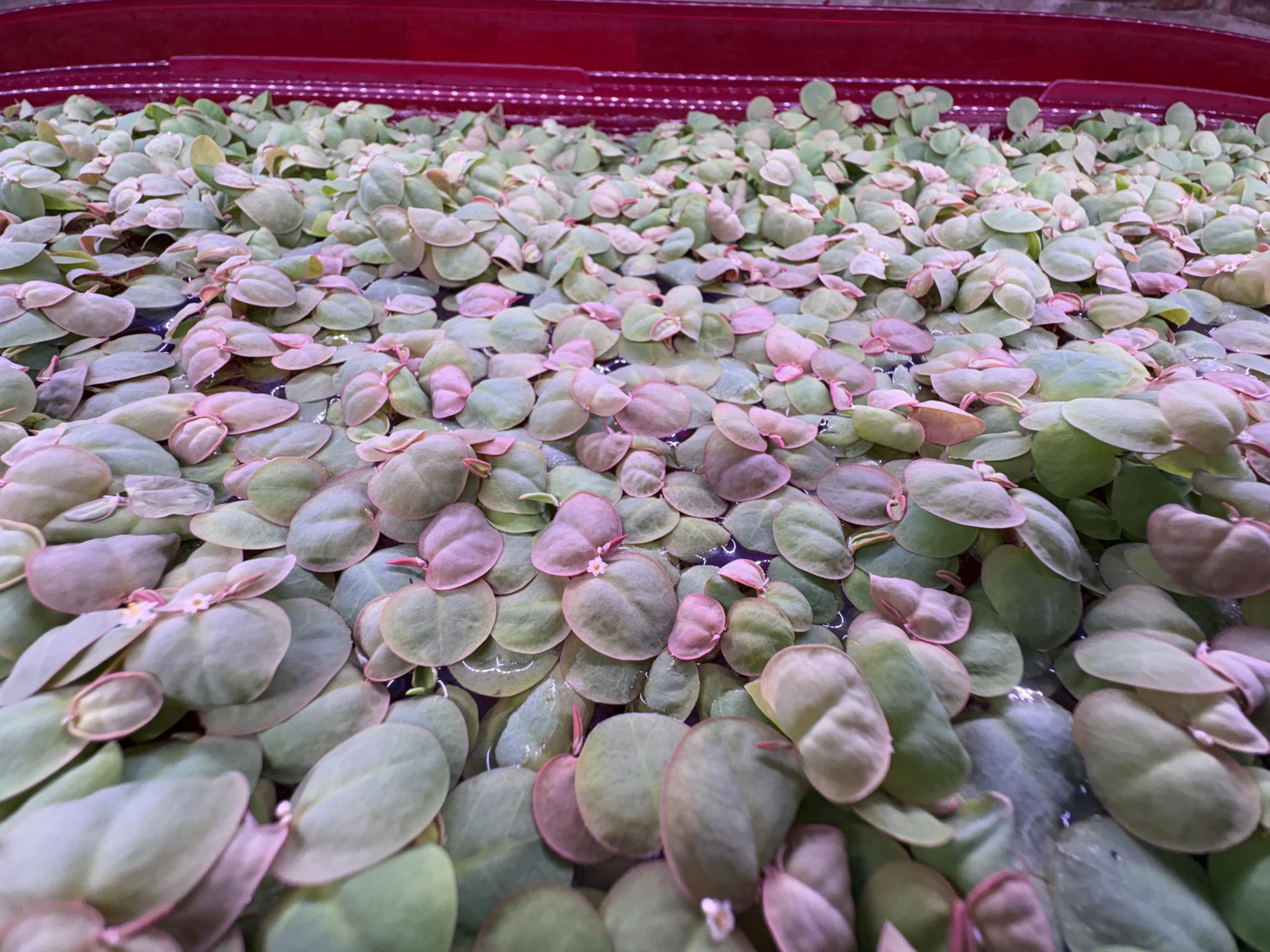
Start with what actually shows up on your doorstep: a 4oz cup packed with at least 70+ healthy Red Root Floater leaves. Red Root Floater — sold under its botanical name Phyllanthus Fluitans — is a floating plant, meaning it sits on the surface with no roots in the gravel, and it earns its name from the red-purple undersides that show through the green top leaves. For buyers compared side by side, that leaf count is the real headline: the Dwarf Sagittaria pick at number two ships 15 plants in total, so you are getting a far denser starting mat here.
Once it is in the water, this plant keeps giving. It spreads naturally through runners — horizontal shoots that push out new plants — and the resulting floating network helps shade out algae in tanks that catch too much light. Tropical freshwater keepers get a second win: the tangles give small fish and fry somewhere to hide. Its looks win people over most: the red roots glow under a light, which is why this plant gets photographed so much. Buyers report receiving “a generous portion with healthy leaves and red roots,” and the review pages repeatedly describe this as the best online aquatic plant purchase they have made.
Here is the honest trade-off, and it is a specific one. This plant hates water sitting on top of its leaves, so it does poorly under a closed lid with condensation dripping back down, and it wants gentle flow rather than a filter outlet churning the surface. Getting the deep red requires high light and limiting nitrogen (nitrate) in the water column by cutting back fertilization or using a low-nitrogen fertilizer — but the same conditions that turn it red also make it spread slowly. A few keepers have found unwelcome trumpet snails riding along, so a rinse before it goes in is worth the two minutes.
What lands well in the tank
- 70+ leaves in a single 4oz cup — enough to fill three-quarters of a 10-gallon tank, as owners describe it
- Red-purple undersides against green tops give a striking two-tone look on the surface
- Spreads through runners, so one cup becomes a full floating network
- Shelter for small fish and fry, plus natural algae shading
Where it tests your patience
- Leaves sit above water and rot if a closed lid drips condensation onto them
- Needs moderate to high light, and it dislikes heavy surface agitation
- Turning the leaves deep red means limiting nitrate — which also slows the spread
Reach for this if: you run an open-top or lidded tank with a modest filter flow and want instant surface coverage that shades algae and hides fry.
Think twice if: your filter pushes a strong current across the surface or your lid drips condensation straight back onto floating leaves.
2. 15x Dwarf Sagittaria Subulata Dwarf Sag Live Aquarium Plants Aquatic Carpet Plant
Fifteen separate green starts that fill a tank floor fast — and survive fish that dig them up.
Fifteen plants, each typically 2–3 inches, all the same species. That species uniformity is the point with Dwarf Sagittaria Subulata: it is a grass-like carpet plant, so a full tray of one species gives you a repeated texture that reads as a lawn once the runners fill in. Compare that to the multi-species bundles later in this list, where you get one plant of six different kinds and no repeating pattern. If the look you want is a green floor rather than a scrapbook of shapes, this is the straightest route to it.
Hardiness is where this pick quietly wins. It plants happily into sand substrate, and owners have run it outdoors in a goldfish pond where larger fish were actively uprooting things — most of the plants kept going anyway. What buyers praise most is quality: green arrival and strong roots are the two things reviews keep returning to, with stems sometimes arriving beyond count. The standout review fact is worth repeating plainly: owners mention ordering 15 and receiving 17.
Sizing is the one place expectations need calibrating. A 2–3 inch start is small on purpose — this is a carpet plant that is meant to spread sideways, not a tall feature plant — and buyers who expected instant height have been disappointed. The seller pairs the order with a live arrival guarantee, which covers plants that show up dead provided you post a photo of the plant in the unopened bag and did not order during temperatures below 20F. Expedited shipping is worth the upgrade; slow transit is the single most common complaint about ordering live plants in general.
Why carpet buyers like it: one species, fifteen starts, sand-tolerant, and a seller who answers messages quickly and reships when a delivery goes wrong.
Sizing reality check: arrivals run to the small end of the 2–3 inch range, so give the plants weeks to run and spread before judging the effect.
Suits: someone who wants a matching green carpet across the front of a tank and does not mind starting from small plants.
Look elsewhere if: you need a plant that looks full and tall the day it arrives.
3. Marcus Fish Tanks – 3X Micranthemum Monte Carlo Pots
Three potted carpets of tiny round leaves — the classic aquascape floor, in a 2-inch pot form.
Micranthemum Monte Carlo is what aquascapers reach for when they want a dense, low green carpet of small round leaves across the front of a tank, and these arrive as three separate potted plants with the pots measuring 2 inches across. Potted means the roots are already anchored in a small growing medium inside the pot, so you can place the pot and let the plant run outward rather than waiting for loose stems to establish. Monte Carlo is also happy in sandy soil, which makes it one of the more forgiving carpet choices.
Colour and quality are the two things this plant gets consistently right. It arrives bright green with a good root system, and after a week in the tank new growth typically starts showing. Owners describe it thriving at 76°F with good lighting and stable water parameters, and both Betta fish and shrimp take to it quickly once it settles. One review sums up the appeal: “Amazing carpet plant good amount came and very lively.”
The catch with potted carpet plants is variance between pots, and here it is worth naming honestly. The plants are grown emersed — that means grown above water, in air, on a nursery — so some melting back and regrowth is normal when you submerge them, and a few keepers have found individual plants smaller than the pot they came in. Give the pots a week of good light before you decide how they have landed.
Where it earns its place: three separately potted plants, bright green arrivals, sandy-soil tolerance, and a low-growing habit that suits shrimp tanks and Betta set-ups alike.
Before you judge it: emersed-grown carpet plants commonly melt and regrow after submersion, and pot-to-pot size varies.
Best for: aquascapers and small-tank keepers who want a proper Monte Carlo carpet and will wait out the melt-back phase.
Less ideal if: you want an instant, uniformly sized floor the day the box opens.
4. Swimming Creatures Live Aquarium Plants (Java Moss, 25 sq inch Portion)

A single 25-square-inch sheet of moss that turns driftwood and rock into a soft green carpet.
Java moss has no roots worth planting and no stems worth trimming into the substrate — it is a moss, and it grows by clinging to a surface you tie or glue it to. That makes this 25-square-inch portion the most flexible thing on this list: it works on driftwood, on river rocks, in a mesh mat, or simply as loose cover for shrimp and fry. Owners describe it as enough material to fill a 12″ x 8″ mesh mat, which gives you a real sense of the coverage a single portion buys.
Where it shines over time is growth rate and shrimp appeal. Tied to driftwood with fishing line, it holds its shape and then fills in fast — customers note it growing rapidly enough to need pruning after about two months, with shrimp picking through it constantly. The quality of the moss is the thing buyers praise most, and it is priced well enough that the value is a close second in their estimation. It also sinks once rehydrated, which matters if you want it to stay where you put it.
Expect some browning on arrival. Moss ships in a dark bag, and light deprivation turns portions of it brown before it reaches you; most keepers find that it recovers and greens back up with light and patience. It is also worth deciding upfront how you want to contain it — loose moss that drifts into a filter intake or a wave maker can end up clogging it, so a tie-down or a mesh wrap solves the one real hassle this plant brings.
The case for one portion: a 25-square-inch sheet covers a mesh mat, grows fast enough to need pruning in around two months, and gives shrimp a place to graze constantly.
Decide this first: moor it to wood or rock rather than floating it loose, or stray strands will find your intake.
Pick this if: you want to cover hardscape — wood, rock, a mesh wall — and you have shrimp or fry that need cover.
skip it if: you expect a moss portion to drop straight into gravel and root by itself.
5. California Bundle – 25+ Stems / 6 Species Live Aquarium Plants Package

Six species in one box, sized for a 10-gallon tank and up — but this one plays the odds.
Six grown plant bunches, one of each species, with several stems or stalks per bunch. It is built for aquariums of 10 gallons and larger, which makes it the most economical way to get a mixed planted look into a medium tank in one order. The species mix itself gives you hornwort and other easy freshwater plants that create resting and hiding spots for small fish and invertebrates.
The pattern across buyer experiences here is genuinely split, and the listing does you the favour of being honest about why: plants are living things, and shipping conditions hit them unevenly. Plenty of keepers get a bag brimming with moist, green plants and watch crypts and broad-leaf species take off with healthy roots. Others open the box to plants that have already shed their leaves, and hornwort in particular has a habit of dropping needle-like foliage that can find its way into a filter intake. The seller’s response is a bright spot — reshipping missing or failed plants is well documented, and the customer service gets praised consistently.
One improvement would make a real difference: the species are not individually labelled, so buyers who are new to aquascaping have to identify what they received on their own. If you know your plants, the bundle is a strong value; if you are still learning to tell a crypt from a moneywort, expect a little research on arrival.
What you are buying: 6 species and 25+ stems in one shot, aimed at tanks of 10 gallons and up, with a seller that replaces plants that do not make it.
One practical note: unlabelled species mean identifying what you got is on you — helpful if you know the plants, a homework assignment if you do not.
A good fit for: a 10-gallon-plus tank that needs filling with six different species at once, backed by a seller who reships failures.
Not the safest bet if: you want every species named and labelled before you plant.
6. 6 Plant Species Live Aquatic Plants Package – Microsorum Java Fern, Amazon, Moneywort and More
The bundle that turns a bare 10-gallon tank into a planted one in a single afternoon.
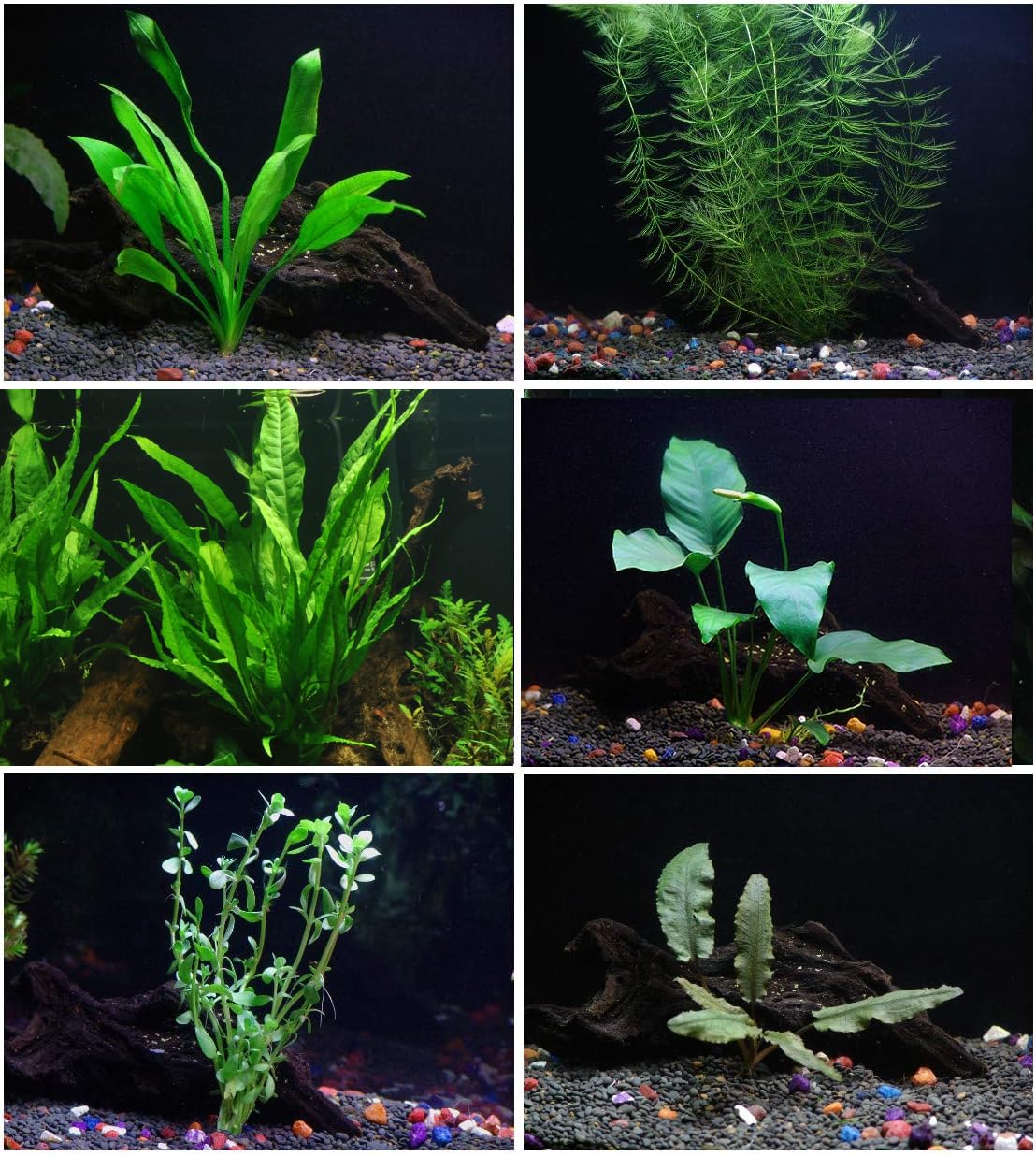
This is the easiest bundle to recommend to a first-time planted-tank owner, and the reason is the species list: Java Fern, Amazon Sword, Moneywort and more, all named freshwater plants that tolerate low-tech setups without CO2 injection. You get six grown bunches, one of each species, and the collection is aimed at tanks of 10 gallons and up. The listing also flags something useful — if you live in California or another state that restricts importing Anacharis, there is a separate California-legal bundle to look for instead.
Value is where this package separates itself: the value-for-money count on this listing is the highest of any positive measure attached to it. A tank of this size planted from a local store costs a multiple of what this bundle runs, and buyers who took a chance report the plants exploding in size within a month of planting under a stock light with a bit of plant food. Sizes vary by species, with the listing noting a maximum expected height of 65 centimetres for the tallest plants, so mid-tank and background planting is covered.
The two things to go in knowing: this bundle has the possibility of snails, which the listing states outright, and shipping stress can leave plants looking limp or dropping leaves for the first week before they turn around. The fix is a rinse before planting and a little patience — growth usually shows within days, not months. If a snail-free bundle is a hard requirement for you, the next pick on this list is the one built for that.
Reasons this is the smart first bundle
- Java Fern, Amazon Sword and Moneywort are all easy species that do not demand CO2 or high-end lighting
- Reviewers point out dramatic growth within about a month under a stock light with basic plant food
- Sized for 10-gallon tanks and up, with a California-legal alternative bundle available
What to plan for
- The listing states outright that snails are possible — rinse plants before they go in
- Transit stress can leave plants limp and shedding leaves for the first week
The right call if: you are stocking your first planted tank and want six named, forgiving species with room to grow.
Consider a different bundle if: a snail hitchhike in your tank would be a real problem.
7. Rooted Live Aquarium Plant Bundle – 6 Easy Species, Snail Free Guaranteed

Six plants that arrive already rooted and 6 to 8 inches tall — the no-guesswork option.
Rooted means the plant has an established root system before it ever reaches you, so you are not gambling on loose cuttings pushing new roots in your substrate. Six plants, one of each species, each shipping at 6 to 8 inches in height, and the bundle is sized down to 5-gallon tanks. The seller also explains a detail most listings skip: sword plants and echinodorus species are grown emersed, so they ship green and will change colour and shape as they adapt to life underwater. That is normal, not a sign of a sick plant.
Buyer feedback stresses health: these plants arrive in good condition and stay that way, with several owners reporting no melting during acclimation and even red swords producing underwater red leaves. Java Ferns and Anubias hold up over weeks, and the size and quality both run ahead of expectations for a mail-order bundle. It is also note the value here: six rooted plants of this height cover a small tank from the waterline to the substrate without needing months of spreading.
On the snail-free guarantee, the honest summary is that it holds for most buyers — several batches arrive clean with no pests — but snail and hydra hitchhikers have turned up for some, so a short quarantine before planting is a sensible habit with any live plant order. One more gap worth knowing: the plants arrive without an identification insert, so if you are new to these species you may want to look up each one before deciding where to plant it.
Where the value sits: rooted plants do not need to establish from cuttings, shipping at 6 to 8 inches for tanks as small as 5 gallons, with red swords colouring up underwater.
Do this on arrival: quarantine briefly before planting, and look up the species if you are not already familiar with them.
Best for: small-tank owners who want plants with roots already established and size on arrival, not loose cuttings to nurse.
Not for you if: you want the seller to tell you exactly which plant is which in the box.
8. 4 Potted Live Aquarium Plants Bundle – Anubia, Amazon Sword, Kleiner Bar, Narrow Leaf

Four potted show plants — Anubias, Amazon Sword and two more — built to sit and stay.
Where the rooted bundle above spreads across a small tank, this one is about four substantial individual plants: Anubia (a slow-growing, shade-tolerant favourite), Amazon Sword, Kleiner Bar and Narrow Leaf, one pot of each. Potted plants arrive with their root ball contained, which means you can place them exactly where you want them and they tend to stay put rather than drifting. Anubias and sword species also tolerate full shade, so this bundle works in a low-light tank where most carpet plants would sulk.
Longevity is the standout: buyers who planted this bundle months ago report the plants still thriving. Buyers who planted this bundle months ago report the plants still thriving in their aquariums, with the Amazon Sword even throwing baby daughter plants on runners — small new plants that grow off the main one, which is effectively free stock. Arrivals come in green and large, with new growth visible on several plants within about a week and a half. Owners who had previously watched chain-store plants die within days describe this bundle very differently.
Size is the one variable to accept going in. Potted plants change with the season and with the grow-out cycle, so some buyers open a box of plants larger than they expected while others find them modest. If you want a particular placement, the pots let you move things around later without uprooting, which is a real advantage when a plant turns out bigger than the spot you had in mind.
Why it lasts: potted root balls hold their position, four named species cover foreground and background, and Amazon Swords have been known to produce daughter plants on runners.
Set expectations on: pot size varies by batch — large arrivals surprise some buyers, small ones disappoint others.
Choose this if: you want four established feature plants that will not drift, in a tank that runs on the dim side.
Prefer a bundle instead if: you would rather have many small stems to spread across a wide footprint than four larger individual plants.
9. Texas Aquarium Plant Bundle – 20 Species Live Aquarium Plants Package
Twenty plants across twenty species — the widest species spread here, for a large tank and a patient keeper.
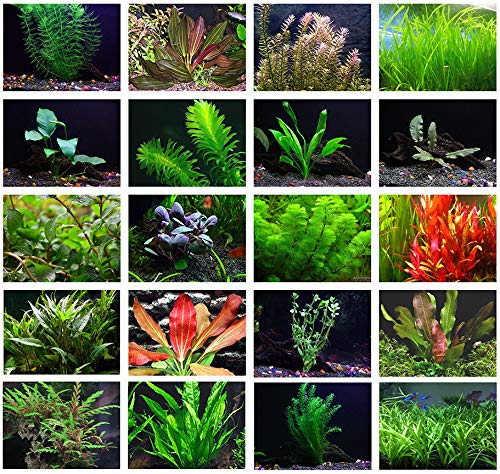
Twenty plants, one of each species, with bunch heights ranging from 6 to 12 inches — except the Lobelia Cardinalis, which arrives at around 3 inches. That range matters when you are planting a large tank: you get tall background material and shorter foreground material in the same box, enough for a tank of 10 gallons and up without ordering twice. The plants are grown in the US, and the bundle leans on species that need little beyond a normal light cycle.
Buyers are most impressed by the material — thick, well-grown plants rather than tiny clippings — and an aquascaper with twenty years of experience called this bundle the best mail-order plant order they had ever received. Growth is fast once established, and the plants do the work of cycling a new tank by pulling waste out of the water. Bundles arrive well packaged and air-sealed, and they typically beat the advertised delivery window.
Two things to plan for. The listing promises 20 species, and while most shoppers say a generous spread of plants, some have counted fewer distinct species than advertised along with gap-filling substitutions. The other is the standard live-plant caveat: shipments can carry tiny snails, several keepers mention them, and a rinse plus a short quarantine before planting is the standard precaution. Neither issue is unusual for a bundle of this size.
Why large tanks get more out of it
- 20 plants spanning 6 to 12 inches covers background and foreground planting in one order
- Fast growth and healthy material — an experienced aquascaper called it the best mail-order order they had received
- US-grown plants and careful air-sealed packaging that arrives intact
Worth knowing before you order
- Species counts have come in under the advertised 20, with substitutions filling the gaps
- Small snails can ride along with shipments — rinse and quarantine before planting
The pick for: a large tank that needs a broad, varied planting in one delivery, from a grower whose quality earns the price.
Not the one for: a buyer who needs every species to arrive exactly as named and counted.
Understanding the Specs
Plant Position — Floating, Rooted, Potted or Carpet
Position tells you where a plant lives and what it eats. Floating plants sit on the surface and draw nutrients straight from the water column, so they need no substrate at all. Rooted and potted plants feed mainly through their roots in sand or gravel and benefit from root tabs or a nutrient-rich substrate. Carpet plants like Monte Carlo and Dwarf Sagittaria spread low and wide across the tank floor and take the longest to fill in, which is why their starter sizes are small.
Species Count and Bunches Versus Stems
A “bunch” is several stems or stalks banded together — one bunch of one species. A listing that advertises 25 stems and 6 species gives you six bunches, one per species, not 25 separate plants. Conversely, a single-species pack of 15 plants gives you 15 individual plants of the same kind, which is better for creating a repeating pattern. Read which format the listing uses before you compare it to another.
Light and Nutrient Demands
Light is the single biggest driver of whether a plant thrives, and it also drives colour. Red hues in plants like Red Root Floater deepen under high light with limited nitrate in the water. Low-light plants such as Anubias and Java Fern tolerate full shade and stay healthy without CO2 injection. Carpet plants sit at the demanding end and want good lighting to spread properly.
Emersed Growth and the Melt Phase
Many aquatic plants are grown emersed — above water, in air, on a nursery — because it is faster and cheaper to produce them that way. When you submerge an emersed plant, it often drops its aerial leaves and grows new underwater ones, a transition called melt. Expecting this saves a lot of worry: a plant that looks worse in week one is frequently fine by week three.
FAQ
Will live aquarium plants arrive dead if it is very hot or cold outside?
What does a live arrival guarantee actually cover?
Why do some plants look worse the first week after planting?
Do floating plants need a substrate?
How do I stop plants drifting into my filter intake?
Why do my red plants turn green in the tank?
Should I quarantine new plants before they go in the tank?
Why is the plant I received smaller than the pot it came in?
Will a bundle labelled 20 species really contain 20 different species?
Do carpet plants like Monte Carlo and Dwarf Sagittaria need special care?
Final Thoughts: The Verdict
For most people building a planted tank, the aquarium plants pick to start with is the Red Root Floater — a floating mat that needs no substrate, shades out algae, shelters fry, and gives you something worth looking at within days rather than months. If you want a green carpet across the tank floor instead, the 15x Dwarf Sagittaria Subulata gives you fifteen matching starts that survive in sand and tolerate fish that dig. And if your tank is large and you want the widest possible species spread in a single delivery, reach for the Texas Aquarium Plant Bundle. Whichever you pick, rinse it on arrival, quarantine it briefly, and give any plant a full week before you decide it has failed.
How We Picked
We do not accept paid placement. Every pick is matched to a real buyer and a real use-case; we do not hands-on test units.
Sources & Methodology
Specifications: manufacturer listings and product documentation. Review insights: verified customer reviews, as of September 2026. Pricing: not shown on this page (it changes often); check the current price via the retailer link.
As an Amazon Associate, Gadgets Feed earns from qualifying purchases. This does not affect which products we feature.