
Our readers keep the lights on and my morning glass full of iced black tea. As an Amazon Associate, I earn from qualifying purchases.
Specs are compiled from manufacturer listings and verified buyer reviews and can change over time — please confirm the key details on the product page before buying.
If your legs ache by mid-afternoon and your ankles look puffy at the end of the day, the fix is almost always the same: a pair of graduated compression stockings rated 15-20 mmHg (millimeters of mercury, the standard unit for how much gentle squeeze a sock puts on your leg). The catch is that most listings bury the two numbers that actually decide whether you will wear them — the pressure rating and the calf size — under a wall of buzzwords. Get those two right and everything else, from fabric to zipper, is just preference.
I’m Min — the founder and writer behind Gadgets Feed. This guide is built by comparing the manufacturers’ published specifications and the patterns across verified customer reviews, so you get each pick’s real strengths and trade-offs instead of marketing spin.
Below you will find nine genuine 15-20 mmHg options separated into mid-range picks and premium picks — including wide-calf cuts, zippered styles, and a bamboo-blend fabric — so you can match the sock to your calf and your day. The crowd favorite among them wears the highest score with the deepest review history of any 15-20 mmHg compression stockings on this list.
Our Picks at a Glance
How To Choose The Best 15-20 mmHg Compression Stockings
Buying a compression sock is really two decisions: what squeeze you want and what shape your leg is. Get both right and the morning routine stops being a fight.
Lock the pressure class first
15-20 mmHg is the mildest true graduated rating sold. It is the tier most people reach for when they want a light, wearable squeeze rather than a firm medical hold. If your legs feel heavy after a long day on your feet, this is typically the class to start with. Note that mmHg (millimeters of mercury) is just the measuring stick — a smaller number means a lighter squeeze.
Anything listed as 8-15 mmHg is lighter still, and 20-30 mmHg is a firmer hold. Every pick below is a true 15-20 mmHg sock, so you can compare them on fit and fabric instead of chasing the pressure rating.
Measure your calf, not your shoe size
The most common reason a compression sock gets returned is the wrong calf circumference. Two sizes can share a shoe size and still fit wildly different legs. Measure the widest part of your calf and the narrowest point of your ankle, then match those to the brand’s own chart.
If you fall between sizes, most makers advise going up rather than down, because a sock that is too tight around the calf is the one you will stop wearing. A wide-calf or plus-size cut is the better route if standard sizing pinches at the top.
Then pick the features your day needs
Graduated construction does the real work here — tighter at the ankle, gradually looser as it climbs, which is what supports the flow back up your leg. Beyond that, a zipper helps anyone who struggles to pull a sock on, a cushioned sole softens long hours on hard floors, and a bamboo viscose blend feels closest to an ordinary sock against the skin.
Quick Comparison
| Model | Best For | Compression | Pairs / Count | Fabric | Amazon |
|---|---|---|---|---|---|
| Copper Compression Socks 8 Pairs★ Best Overall | All-day wear on your feet | 15-20 mmHg | 8 Pairs | 85% Nylon / 15% Polyester | Amazon |
| CHARMKING Compression Socks (8 Pairs)Best Value | Everyday circulation support | 15-20 mmHg | 8 Pairs | Unisex knit (per listing) | Amazon |
| Pembrook 3 Pairs CopperCopper Blend Pick | Graduated copper support | 15-20 mmHg | 3 Pairs | Copper blend (per listing) | Amazon |
| BBFREY Easy On/Off 3 Pairs | Easy on, cushioned sole | 15-20 mmHg | 3 Pairs | Microfiber nylon, cotton cuff | Amazon |
| SONORAN Bamboo Viscose | Softest feel against skin | 15-20 mmHg | Per listing | 80% Bamboo Viscose / 15% Cotton / 5% Spandex | Amazon |
| LEVSOX Plus Size Wide Calf | Wide and plus-size calves | 15-20 mmHg | Per listing | Wide-calf knit (per listing) | Amazon |
| +MD Cotton Compression Socks | Soft everyday support | 15-20 mmHg | 4/6 Pairs | Cotton blend (per listing) | Amazon |
| Ailaka Zipper Compression Socks | Hard-to-pull-on legs, zipper entry | 15-20 mmHg | Per listing | 25% Spandex / 75% Nylon | Amazon |
| JOBST Relief Knee High | Firm, clinical-style support | 15-20 mmHg | Per listing | Air-covered spandex yarn, latex free | Amazon |
In‑Depth Reviews
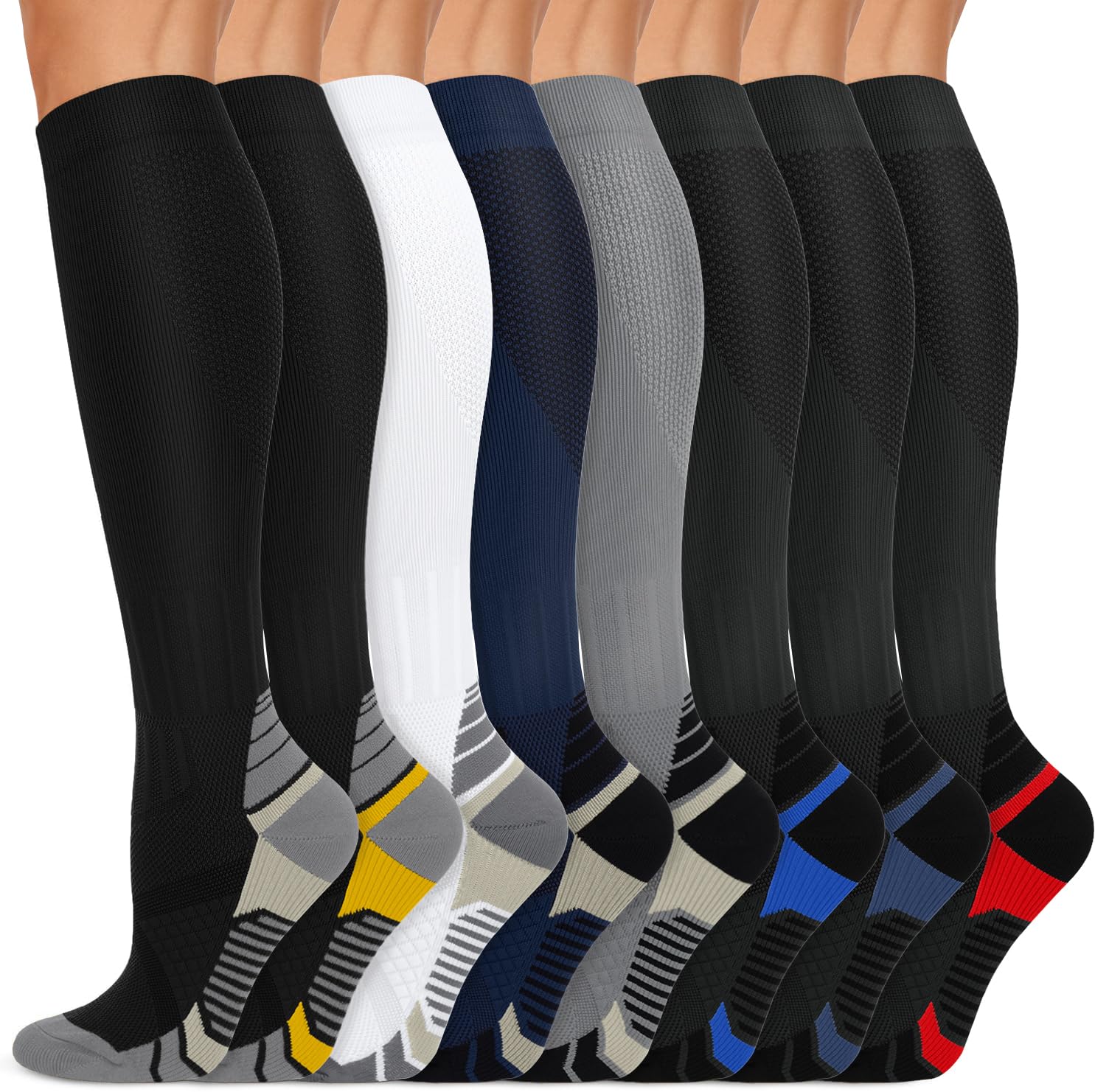
1. Copper Compression Socks 15-20 mmHg for Men & Women 8 Pairs
Our pick — over 4.5★ from 36,000+ verified ratings; the strongest balance of quality and price.
Eight pairs, one pack, and a full week of wear before laundry day rolls around again
This is the pack that solves the real math of compression wear: you need several pairs, because nobody washes a compression sock after one use. Eight pairs at once means a fresh sock every workday without scrambling. That alone is why it holds the strongest score and the deepest owner history here at 4.6 stars across 36,000+ ratings.
The 15-20 mmHg squeeze is the mild, wearable tier — snug enough to notice, not tight enough to dread. Buyers report: “They reduced swelling in my feet and stayed comfortable through a full shift.” The recurring note is that they are firm to pull on, which is expected at this pressure and is a fair trade for a sock that stays put all shift.
Copper-infused, moisture-wicking fabric keeps skin dry through a summer shift, and copper’s role here is to keep odor down so you get more wears between washes. The L/XL sizing covers a women’s shoe size 8.5 cleanly, and caregivers and cyclists alike say they simply stopped thinking about their legs. The one honest quirk: the fabric runs long enough that a shorter wearer may find the top sitting above the knee, which is a non-issue if you fold the cuff.
What earns its keep
- Eight pairs in one order — a fresh sock for every workday
- 15-20 mmHg graduated squeeze that stays put without pinching
- Copper-infused, moisture-wicking fabric keeps feet dry and odor down
- Great for nurses, travelers, and anyone standing or sitting for long hours
What to plan around
- Firm to pull on at this pressure — that is the point, but it takes a tug
- Long in the leg; a 5’3″ wearer may see the cuff reach above the knee
- Slippery fabric can shift unless you layer a regular sock over it
Reach for this if: you want a full week of everyday compression support in one order and your day keeps you on your feet.
Look elsewhere if: you need a single pair to test the waters, or a wide-calf cut — the LEVSOX below is the better shape for that.
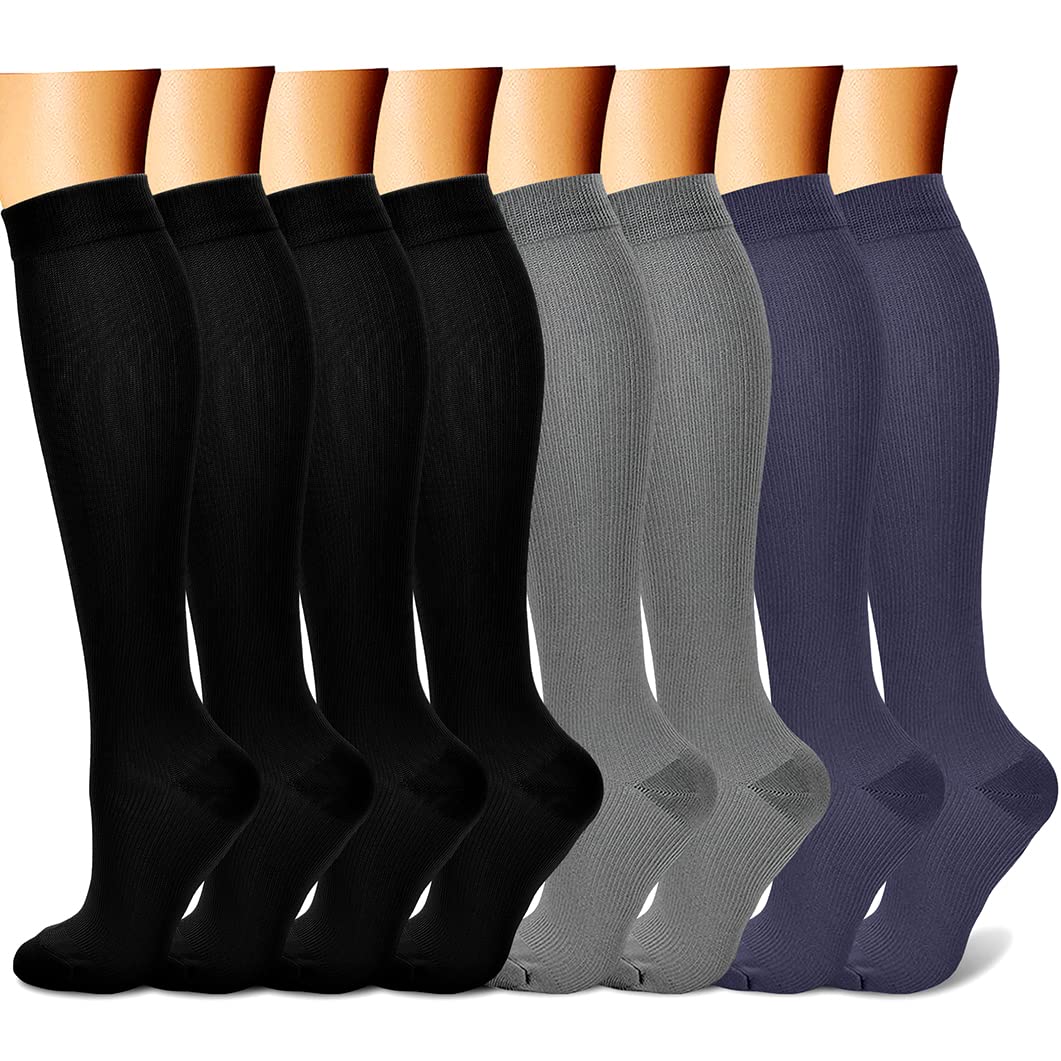
2. CHARMKING Compression Socks for Women & Men Circulation (8 Pairs) 15-20 mmHg
The eight-pair workhorse that lets you stock a whole drawer for the price of a few singles
This is the highest-volume compression sock on the list, and the reason is simple: it delivers eight pairs of 15-20 mmHg knee-highs at the lowest entry point here. What wins people over is how easy they are to live with. They stay put through a long day, they feel like ordinary socks rather than medical gear, and the smooth fit means no bunching under shoes.
If you have ever worn a compression sock that was so tight you could barely pull it on, this one was built to dodge that — one buyer was glad these are “so easy to pull up unlike other compression socks.” The pressure runs light and even rather than concentrated, which suits a tired-leg day more than a firm hold.
Where it asks for a little care is variety. Solid colors hold up better over time — the patterned pairs shrink more, can itch, and tend to leave indentations, and the same goes for the interior threads on the patterned styles, which occasionally snag. One caveat worth knowing: sizing is not perfectly uniform across a multi-pack, so check the chart rather than assuming your usual size from a previous order. The 8-pack compares against the Pembrook 3 Pairs (a 2.7x gap in pair count between those two packs), so this is the pick when you want to swap daily and wash weekly.
Where it shines
- Eight pairs at the lowest entry point on the list
- Light, even 15-20 mmHg that is genuinely easy to pull on
- Looks like a regular sock — solid colorways especially
- Holds up over months of near-daily wear
The honest caveats
- Patterned pairs shrink more and can itch or leave marks
- Sizing can vary between packs — check the chart before reordering
- Light pressure may feel too mild if you want a firm hold
Pick it for: stocking a whole drawer of circulation-friendly socks without spending much, and getting a pair you don’t have to fight to put on.
Leave it on the shelf if: you want a firm, clinical-style hold — the JOBST Relief gives a more anchored fit.
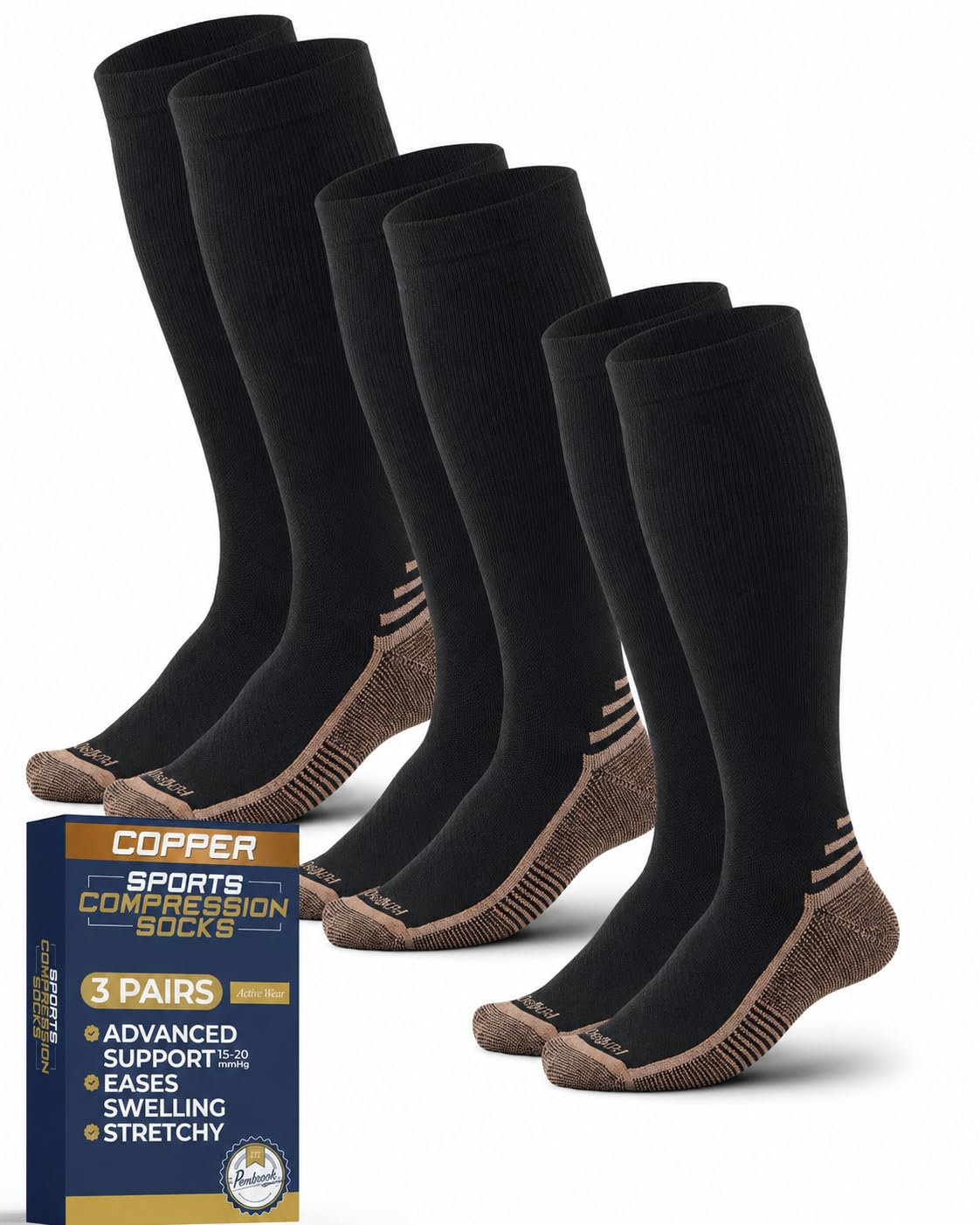
3. Pembrook 3 Pairs Copper Compression Socks 15-20 mmHg
A three-pair copper option that leans into fit rather than bulk
Three pairs is a tester pack — enough to cycle through a work week without committing to a drawerful. What this one does best is fit: it sits snug without pinching around the calf, which is why owners describe it as noticing the squeeze without the squeeze noticing them. Owners mention: “Snug without pinching, with the graduated 15-20 mmHg hold the listing promises..”
Three pairs here versus eight in the Copper Compression pack above is a 2.7x gap, so this is the smaller-commitment choice. It keeps the same graduated 15-20 mmHg profile that gets tighter at the ankle and eases up the calf, and a warehouse-floor wearer found it kept their legs from getting heavy across a full shift.
Two things to watch. Calf fit is snug to the point where one 5’3″ wearer found the top reaching above the knee, so measure rather than guess, and a few customers note sizing issues on reorders — the right size can come back as an extra-wide or a different color. Washing is where durability is unproven, so treat these as a lighter-duty pair rather than a workhorse you thrash for years.
Fit that behaves: the calf cut is the reason to choose this over the eight-pair options — it hugs without digging in, which matters when you wear compression daily.
Where it is lighter: as a three-pair pack with unproven long-term durability and reorder sizing that is not perfectly consistent, it is the tester, not the stocking-up pick.
Best pick if: you want to try copper graduated compression across a few days without buying a full week’s worth.
Better to look on if: you already know you love 15-20 mmHg and want to fill a drawer — the eight-pair copper pack is the smarter long-haul buy.
4. BBFREY Easy On/Off Compression Socks 15-20 mmHg, 3 Pairs
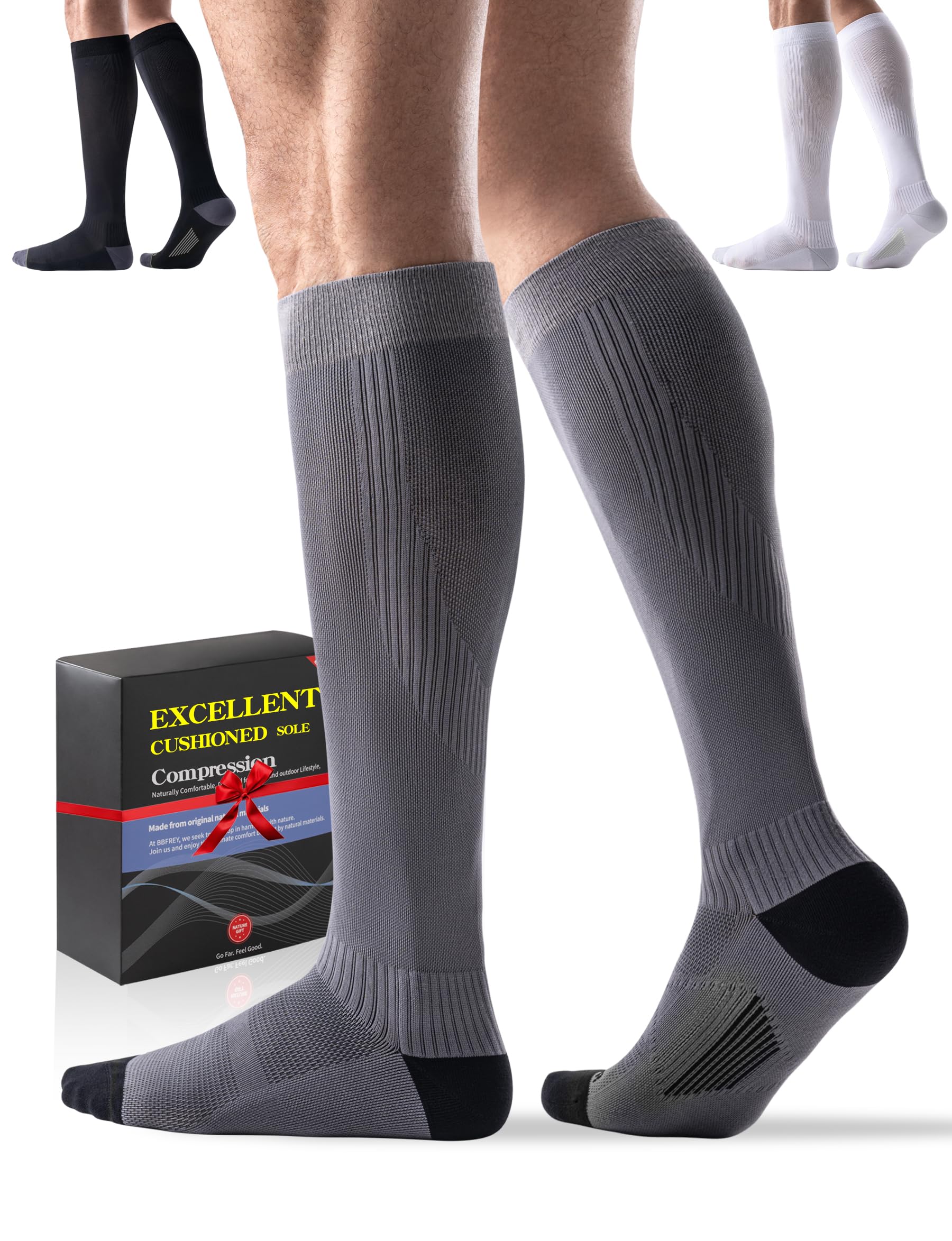
Cushioned underfoot and knitted on hospital-grade machinery
The detail that separates this pair from the copper and bamboo options is the sole. A terry-looped knit across the bottom of the foot adds a soft layer under your heel and ball, which matters if you stand on concrete or tile for hours. Under the hood, these are knitted on Italy LONATI medical sock machines with pressure testing and a unique inlay knitting method for long-lasting pressure.
Breathability gets the same treatment — dense mesh panels on the back of the calf and the instep let heat escape, and the smoothly stitched toe with a left-right fit sits differently from the flat knit of a standard sock. The cotton cuff up top is the quiet comfort touch that keeps the band from grating. One 6’2″ wearer found the sock sits lower on the calf than the photos suggest, so check the size chart image before ordering.
The trade-off is fit range. Sizing runs to a chart rather than a universal number, and a couple of reviewers point out it is not a one-size-fits-everyone shape. Cushion also means a touch of pilling is normal over time, and the maker recommends hand washing or a cold machine wash with air drying — skip the dryer if you want the pressure to hold.
What stands out
- Terry cushion across the sole eases impact under long shifts
- LONATI-knitted for a pressure hold meant to last
- Mesh panels on calf and instep for real breathability
- Left-right anatomical fit with a smooth toe
What to factor in
- Fit follows the chart closely — sizing runs specific rather than universal
- Slight pilling on the cushioned areas is normal
- Hand wash or cold machine wash and air dry to protect the pressure
Ideal for: anyone who spends the day on hard floors and wants a bit of padding underfoot without giving up graduated support.
Less ideal if: you want the lightest possible sock for travel — the cushion adds a touch of bulk.
5. SONORAN Bamboo Viscose Compression Socks for Women & Men, 15-20 mmHg
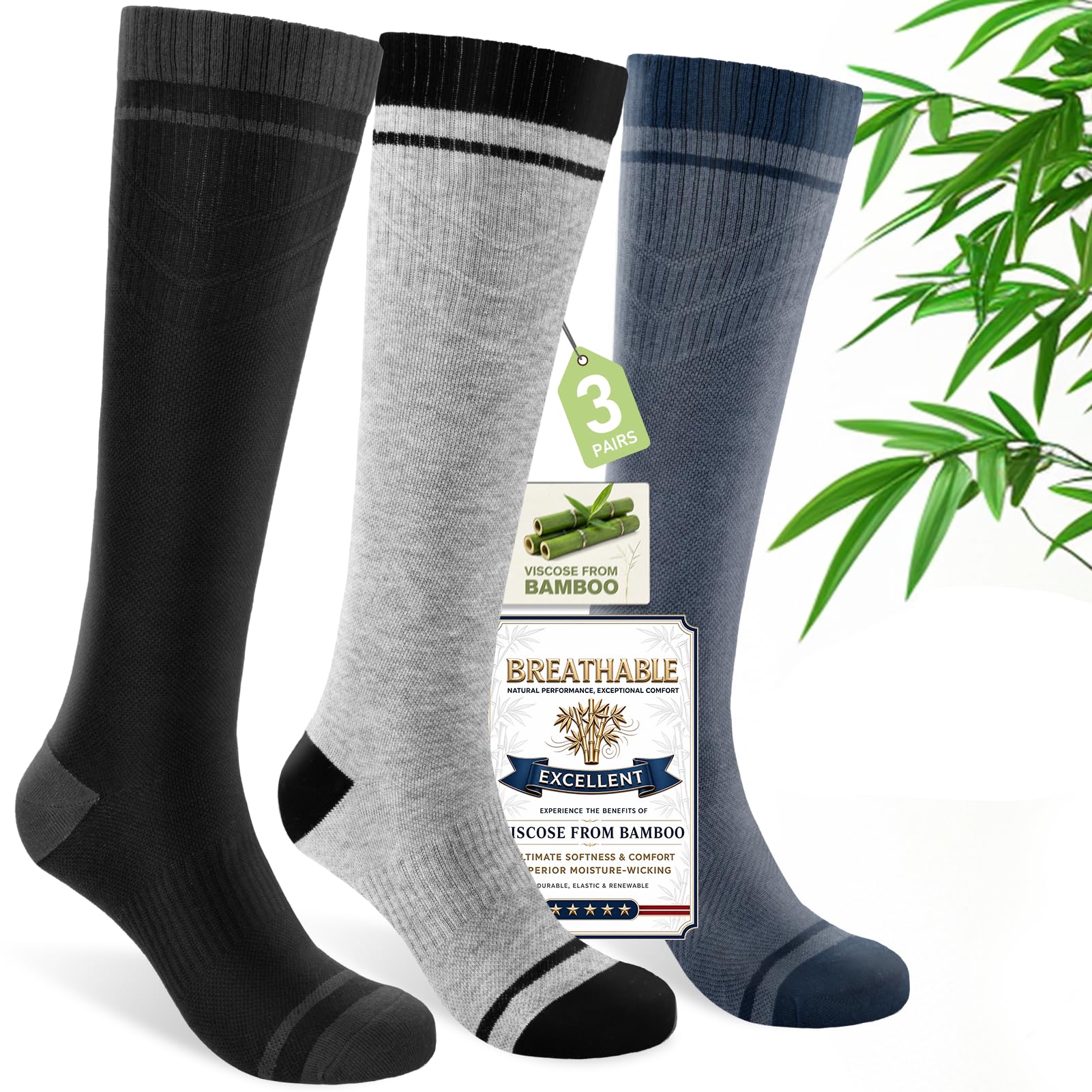
The one you would wear even if your legs did not need it
Most compression socks announce themselves with a synthetic, elastic feel. This one is knit from 80% viscose derived from Bamboo, 15% cotton, and 5% spandex — so it feels like a soft everyday sock rather than a piece of medical gear. A post-surgery wearer was so comfortable in them that a second three-pair order went in, and the reason depends on that bamboo blend.
The fit is the part to think about. The calf band sits firmer than the rest of the sock, and a taller wearer or a wider calf will feel it more at the top — the fit aspect here is genuinely a mixed bag rather than a one-note win. Sizing does not get looser with wash either, so get the calf measurement right before you commit.
Compression runs toward the lighter end of the 15-20 mmHg class — gentle and gradual rather than a firm, anchoring squeeze. That is a plus for travel and around the house, and a bit mild if you want the squeeze to be quite noticeable. Two owners did find the toes wore through with heavy use, so if your commute or shifts are long and sweaty, rotate these with a more durable pair.
The comfort case: 80% bamboo viscose over a spandex core gives it a softness most synthetic compression socks cannot match, which is exactly what makes people wear it consistently.
Where it asks for care: light graduated pressure, a toe that can wear through under heavy use, and a calf band that is tighter than the rest. Measure the calf, wash in mild soap, and air dry.
Made for: travelers, home wearers, and anyone who wants gentle graduated support in a truly soft sock.
Reconsider if: you need firm pressure or something that survives daily heavy use for years.
6. LEVSOX Plus Size Compression Socks for Women Men Wide Calf Extra Large 15-20 mmHg

Built for a calf that standard sizing pinches
If you have ever put on a supposed large and looked for where it digs in, this is the sock that stops that. LEVSOX designs from its own wide-calf size chart — the maker says to ignore your usual size and match the chart instead. That single decision is why owners with an 18″ calf describe it slipping on without a fight and staying up through a full day without leaving marks.
What the label makes clear is where the firmest hold lands: the gripping in this pair runs strongest through the foot and ankle, easing up toward the calf. That lower-leg emphasis is worth knowing if your calf is the source of heaviness — the support is present but lighter up top than an ankle-first sock.
The wide fit carries through everything else too. A nurse practitioner in her second trimester wore them through a full shift without slipping, and a 12-hour-shift wearer pulled the cuff down and back up through the day for a fresh blood-flow reset. Colors lean pretty and comfortable rather than clinical, so they pair with leggings as easily as with a uniform.
The wide-calf edge
- Genuine wide-calf sizing designed around its own chart
- Slips on easily and stays up without digging or marks
- Comfortable through long shifts and travel stretches
- Pretty, non-clinical colorways that work with everyday wear
What to keep in mind
- Not your usual size — you must measure the calf and use the wide-calf chart
- Ankle and foot compression is firmer than the calf area
- Some wearers find the top edge a little snug for very large calves
The right call for: wide or plus-size calves that standard 15-20 mmHg sizing skimps on, especially through pregnancy or long shifts.
Not the pick if: your calf is narrow — the extra room the wide fit provides would be wasted on standard legs.
7. +MD Cotton Compression Socks for Women & Men 4/6 Pairs 15-20mmHg
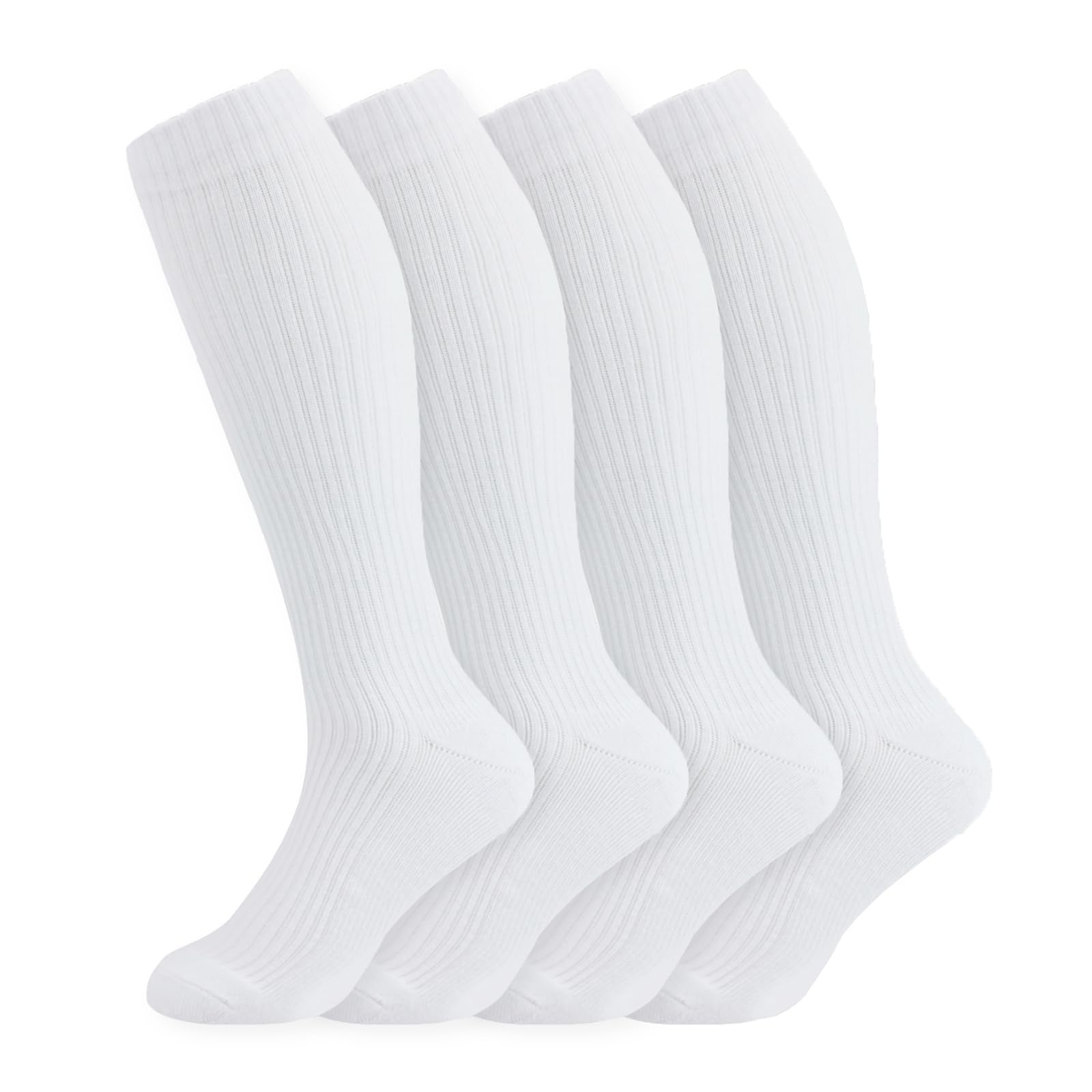
A firmer hold that does its job on tired, swollen legs
This one trades softness for a firmer, anchoring hold. The firm 15-20 mmHg hold eases swelling and the leg fatigue that builds through a long day., and the fit is snug without the too-tight feel that makes people abandon compression wear entirely. It works best for people who find lighter socks too mild.
Where +MD earns loyalty is the shape retention — it holds its structure and pressure even after repeated washes, and around the foot it stays cooler than a lot of compression socks that trap heat on walks. The trade-off to plan for is sizing: the pairing of pressure and fit means you will likely want to go up rather than down, and a few wearers found it takes a genuine tug to pull on.
One thing to know before you buy — despite the cotton label, the fabric sits closer to a synthetic blend than a pure cotton touch, and it can feel a little warm at the end of a long spring day. A 4/6-pair format gives you the flexibility to try a couple of pairs before committing to the full set.
What it delivers
- Firm 15-20 mmHg support for tired, swollen legs
- Holds shape and pressure through repeated washing
- Breathable through the day without heat friction
- Available in a 4/6-pair set for a flexible buy-in
Worth knowing
- Sizing runs small — going up a size is a common buy
- Genuine pull to get them on — this is a firm-compression sock
- Fabric leans toward a synthetic blend rather than pure cotton
Pick it when: you want a firmer, anchoring hold for swollen legs and long standing days, and you will size up a touch.
Pass if: sensory softness is your priority — the SONORAN bamboo option feels gentler on the skin.
8. Ailaka Zipper Compression Socks Medical, 15-20 mmHg, Full Length, Close Toe
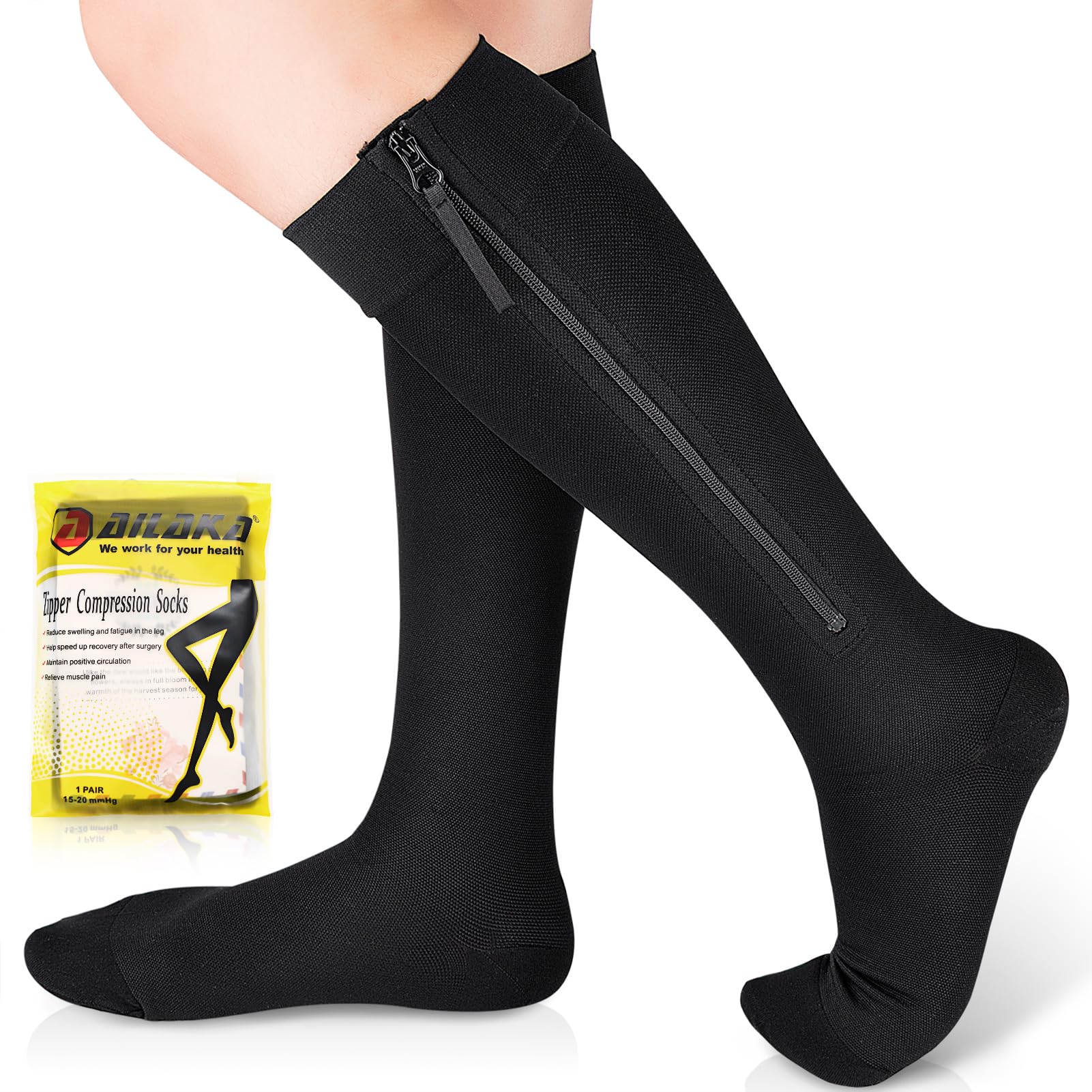
The compression sock you do not have to wrestle on
Most 15-20 mmHg socks ask you to fight them onto your leg. This one asks you to zip. A YKK zipper runs the length of the sock with an extended handle, so you can put it on one-handed, and the fabric under the zip keeps the teeth from rubbing your skin. The ankle-to-calf graduated profile is knit from 25% spandex and 75% nylon for a firm hold at the ankle.
The zipper is not a gimmick — it lets people who cannot pull on a sock wear compression at all. Someone whose hands or shoulders make a pull-on sock impossible now has a pair that works, and the width handling stretches comfortably over a larger calf, aided by the closed-toe roomy fit that gives toes somewhere to go. Caregivers ordering for an older parent will recognize how much this matters.
It is still a compression sock, so expect a firm fit — the zipper helps with application, not with how the sock feels once on. Wear the zipper on the inside of the leg to avoid chafing against pants, and check the size chart first; Ailaka advises stepping up a size if your measurements fall between two. Colors are limited to the tonal sheers, so if a bright or printed option is what you want, look elsewhere.
The zipper advantage
- YKK zipper with an extended handle means easy on and easy off
- Fabric shield under the zip prevents skin chafing
- Firm 15-20 mmHg ankle-to-calf graduated hold
- Nurses, travelers, and post-surgery users can zip it on one-handed without help.
Good to know
- Still a firm compression fit once zipped — the zip is about application, not softness
- Measure carefully; the maker says to size up between sizes
- Colorways are limited compared with printed multi-packs
The answer for: anyone who cannot pull a standard compression sock on, or who wants a clean on-and-off routine without a fight.
Probably not for you if: you want bright patterns or a printed novelty sock — this is the plain-sheer pick.
9. JOBST Relief Knee High Graduated Compression Socks, 15-20 mmHg, Closed Toe, Black, X-Large

The firm, clinical-feeling sock for legs that need real anchoring, not a light nudge
This is the most established name on the list, and its rep is built on that firm, accurate gradient hold. The 3-D knit structure uses air-covered spandex yarn that stays soft to the touch while delivering an even 15-20 mmHg squeeze from ankle to calf, and the fabric is latex free — useful if you have a latex sensitivity.
Compared with the softer bamboo and copper picks above, this sock feels more clinical: thick, sturdy, and built to hold its shape through daily wear. A plus-size wearer with large calves found it fit cleanly with no problem, and the closed-toe design leaves a roomy toe box with wiggle room so your toes are not compressed.
The trade-off is comfort of application. This is one of the firmer socks to pull on, and a smooth surface does help donning, but expect most of your effort at the start of the day. The top hem is designed to stay put without rolling down, though a few wearers still find it slips on very smooth or hot skin. Size is also a known variable — some owners go up a size, so check the chart and err larger rather than smaller.
Why it costs more: you are paying for an accurate, durable gradient and a construction that a stronger, firmer sock needs — softness takes a back seat to support here.
What to watch: application takes effort on a thick sock, the top can slip on some skin types, and sizing runs firm — size up if you are between.
Best suited to: anyone wanting a firm, durable, clinical-style hold with plenty of calf room, especially larger calves.
Not the one for: someone who wants a light, barely-there everyday sock or a bright printed look.
Understanding the Specs
mmHg pressure rating
mmHg (millimeters of mercury) is simply the unit that measures how much gentle squeeze a compression sock applies to your leg. The number matters because it tells you the hold: a lower number like 15-20 mmHg is the mild, wearable tier designed for tired, heavy legs and light swelling, while a higher number like 20-30 mmHg is a firmer hold. Every sock on this list sits in the 15-20 mmHg class, so you can compare them on fit and fabric instead of the pressure rating itself.
Graduated vs. uniform compression
Graduated means the sock is tighter at the ankle and gradually looser as it climbs the calf — that gradual release is what helps move blood back up your leg. Uniform compression applies the same squeeze everywhere, which is less effective for leg fatigue. Every pick here uses a graduated design, which is why the ankle is the firmest point on your leg when you put them on.
Calf circumference and sizing
Compression socks are sized by the width of your calf, not your shoe size. Two people who both wear a size 8 shoe can need completely different sock sizes. Measure the widest part of the calf, match it to the brand’s own chart, and remember that a between-sizes measurement usually means going up — a loose sock is easy to adjust, but a too-tight calf band is the reason people stop wearing compression socks.
Fabric and the moisture question
Compression fabric balances stretch, durability, and how the sock feels against skin. Nylon and spandex blends stretch the most and hold up longest; copper-infused and moisture-wicking fabrics help keep feet dry and odor down so you can wear them longer between washes; viscose derived from bamboo delivers the softest feel of the group. Cotton blends feel familiar but can run warmer, so match the fabric to how much time you spend on your feet.
FAQ
What is the difference between 15-20 mmHg and 20-30 mmHg compression?
How do I measure my calf for 15-20 mmHg compression stockings?
Can I wear 15-20 mmHg compression socks all day?
Are zipper compression socks as effective as pull-on ones?
How long do 15-20 mmHg compression socks last?
Do I need wide-calf compression socks?
Are compression socks for flying worth it?
Should I wash compression socks in a machine?
Can I sleep in 15-20 mmHg compression socks?
Is copper-infused compression fabric different from regular fabric?
Final Thoughts: The Verdict
For most people, the best 15-20 mmHg compression stockings are the Copper Compression Socks 8 Pairs — eight pairs lets you wear a fresh sock every workday, the copper-infused fabric keeps feet dry across long shifts, and the crowd has backed it with the deepest review history here. If softness is what you are after, grab the SONORAN Bamboo Viscose for its 80% bamboo blend feel. And if putting a compression sock on is the real obstacle, the Ailaka Zipper Compression Socks is the one to reach for — a YKK zipper turns a daily struggle into two seconds.
How We Picked
We do not accept paid placement. Every pick is matched to a real buyer and a real use-case; we do not hands-on test units.
Sources & Methodology
Specifications: manufacturer listings and product documentation. Review insights: verified customer reviews, as of September 2026. Pricing: not shown on this page (it changes often); check the current price via the retailer link.
As an Amazon Associate, Gadgets Feed earns from qualifying purchases. This does not affect which products we feature.