
Our readers keep the lights on and my morning glass full of iced black tea. As an Amazon Associate, I earn from qualifying purchases.
Specs are compiled from manufacturer listings and verified buyer reviews and can change over time — please confirm the key details on the product page before buying.
Here is the short answer: the insole you want is the one that holds your heel steady on hard cuts without turning your shoe into a brick. Everything on this list does that job, and the difference between a good pick and a wasted one depends on three things — heel lock (how well the insole grips your heel so it doesn’t slide), arch height that matches your own foot, and whether it fits the shoe you already own.
I’m Min — the founder and writer behind Gadgets Feed. This guide is built by comparing the manufacturers’ published specifications and the patterns across verified customer reviews, so you get each pick’s real strengths and trade-offs instead of marketing spin.
Below you get nine insoles ranked by what they actually fix on the court, from featherweight carbon plates to deep heel cradles. What follows is a straight read on the basketball insoles worth your money and the ones that fit a narrower foot than yours.
Our Picks at a Glance

How To Choose The Best Basketball Insoles
Your stock insoles were built to be cheap, not to hold your foot on a hard stop. Replacing them is the single fastest upgrade you can make to any pair of court shoes. Here is what actually matters when you shop.
Heel lock before everything else
A deep heel cup (a raised, U-shaped wall around the back of the foot) is what stops your heel from sliding sideways when you plant and cut. An insole with a shallow cup will feel fine walking and betray you on a crossover. Look for a cup that wraps the heel, not one that just sits under it.
Match the arch profile to your own foot
Insoles come in low, medium, and high arch profiles. A high-arch pick forced under a flat foot pushes pressure into the middle of your sole, which is what makes people say an insole “jabs” their arch. Buy for the foot you have, not the foot you want.
Carbon plate or soft foam
Carbon fiber cores are stiff and spring your foot forward on push-off. Foam and gel builds absorb landing shock and stay comfortable on tired feet. On the court you often want a plate for the first step and cushioning for the landing — the picks below split into both camps.
Quick Comparison
| Model | Best For | Build | Heel & Arch | Weight | Amazon |
|---|---|---|---|---|---|
| MOVE Game Day Pro★ Best Overall | Guards and wings who cut and jump | Foam + X-Frame plate | Active Heel + X-Frame midfoot | 3.21 oz | Amazon |
| Protalus M-100 LitePremium Pick | Players who want body-wide alignment | Premium dual-layer | Deepest heel cup listed | 9.59 oz | Amazon |
| CURREX ActiveProCustom-Like Fit | High-arch players, activity-specific fit | Dynamic arch foam | Decoupled heel cup, 3 profiles | 4.64 oz | Amazon |
| VKTRY Silver | Athletes chasing energy return | Carbon fiber composite | Deep heel cradle + ergonomic arch | 8.15 oz | Amazon |
| Carbon Fiber Insole (XEPXEP) | Sprint and jump energy transfer | Carbon fiber + PU foam | Full arch conforming support | 5.29 oz | Amazon |
| CRUVHEAL Sport Running | Multi-sport players on a budget | Gel pads + foam | Deep curved gel heel cup | 9.14 oz | Amazon |
| Carbon Fiber Sports Insoles (Pefuair) | Casual court and gym sessions | Rigid carbon core + EVA | Full-length arch support | 5.61 oz | Amazon |
| SOF SOLE ATHLETE Performance | Everyday comfort and moisture control | PU foam + gel | Neutral arch support | 5.61 oz | Amazon |
| Welnove Sports Insoles | Roomier sneakers and trail shoes | Triple-layer foam + PU | Padded heel + gel traction strips | 6.74 oz | Amazon |
In‑Depth Reviews
1. MOVE Game Day Pro Insole
Our pick — 4.5★ from 900+ verified ratings; the strongest balance of quality and price.
The court insole that made a whole generation of guards stop blaming their shoes.
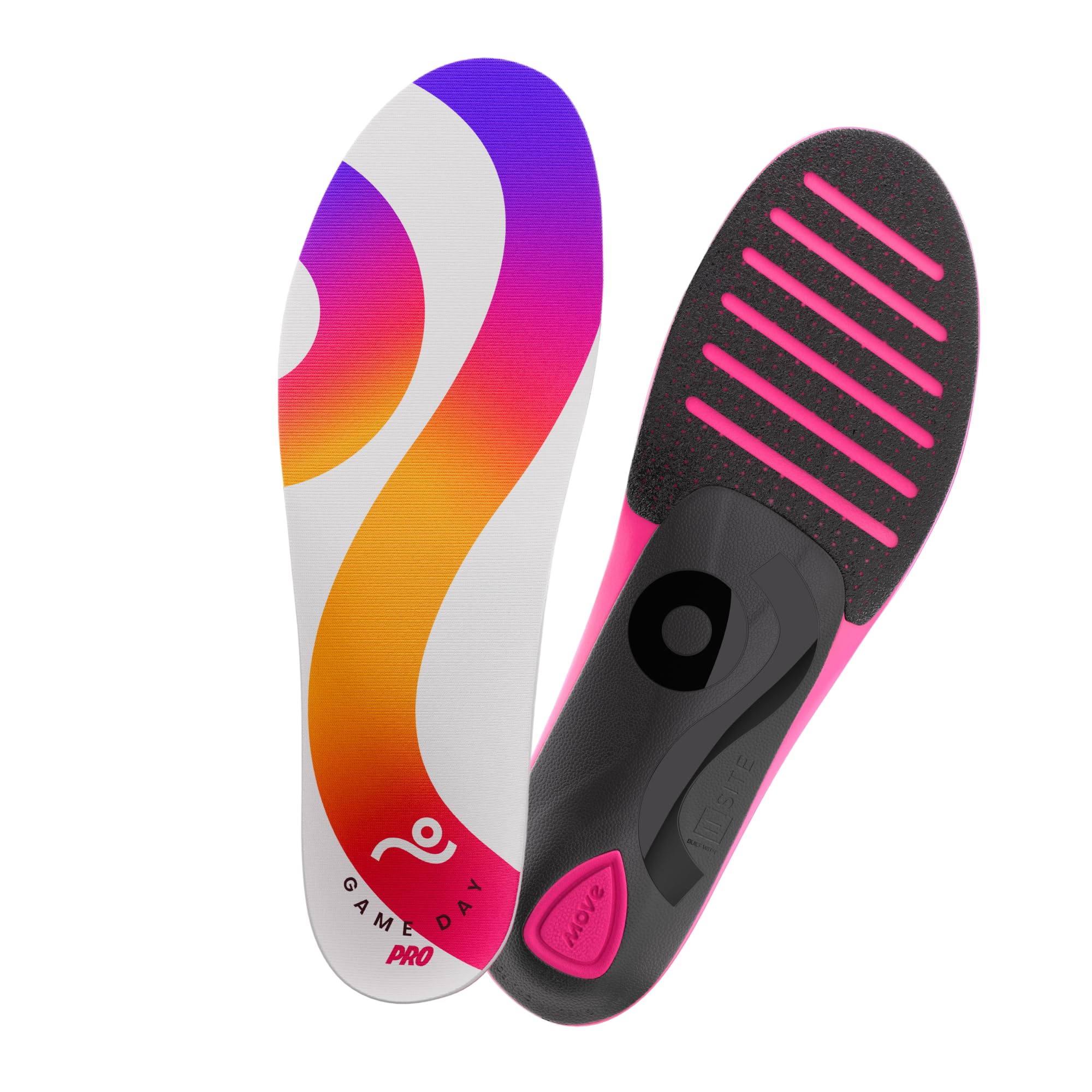
Co-founded by NBA All-Pro Damian Lillard, this is the insole built for the two things basketball actually asks of your feet: a hard plant, and a soft landing. The X-Frame torsional support stiffens the midfoot so your foot does not fold sideways on a cut, and the Active Heel Technology spreads pressure around the heel instead of letting it spike in one spot.
At 3.21 ounces it is the featherweight of this lineup — the VKTRY Silver below carries 8.15 ounces, so the MOVE is the one you forget you are wearing. It also drops straight into basketball shoes without trimming, which matters when you are swapping between two pairs in a season.
What wins people over is the build quality and the cushioning underneath it. Owners talk about landing after long practices without the usual ache, and parents re-buying for kids who play year-round. As one buying duo put it: “2nd time purchasing these for my son who plays basketball. He loves them for the support, comfort and durability.” The one recurring grumble is cost — plenty of buyers think the price stings for a pair of insoles.
What Earns Its Spot
- Torsional midfoot frame keeps the foot steady through hard cuts
- 3.21 oz — the lightest in this roundup by a wide margin
- Fits basketball shoes without trimming for most buyers
Where It Asks Patience
- The firm arch takes a session or two to feel normal
- Value-for-money is the one split verdict in an otherwise glowing set of buyer notes
Reach for this if: you play regularly, cut hard, and want a light plate that disappears into your game shoe.
Think twice if: you need a plush pillow of a footbed — this leans firm and responsive by design.
2. Protalus M-100 Lite Insoles
The heaviest heel cradle here, built to correct the whole chain from the ankle up.
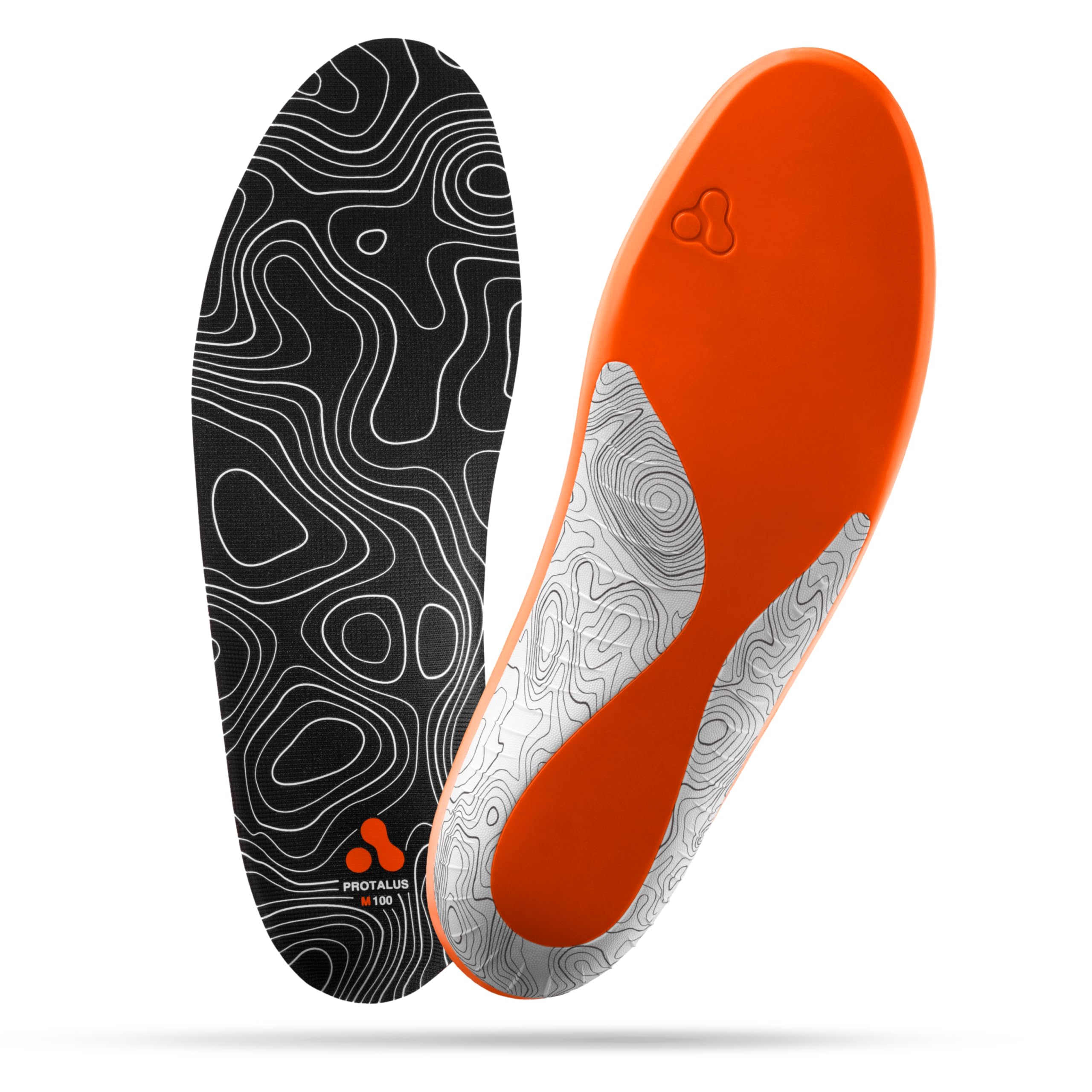
If your knee or hip hurts after a session more than your foot does, this is the pick to look at. Protalus uses what it calls the deepest heel cup on the market, which holds the heel in place and stops the inward and outward roll that sends stress up into your ankles, knees, and hips.
Weight is the trade-off you feel first — 9.59 ounces, versus 3.21 ounces for the MOVE at the top of this list. That mass buys a rigid structure meant to hold its shape for up to a year. The maker also claims the design is based on 50+ years of medical research and third-party lab testing — a manufacturer statement, not a verified result.
The comfort and support reports are strong, and the wide-arch crowd is the one this really serves. Note the recurring gripe before you buy: a squeak that shows up in some shoes and is hard to silence. A few also call it pricey — and at this tier, that is fair.
The build that lasts: buyers consistently describe these as high quality and long-lasting, often reordering after their first pair wears out.
What to expect: a short break-in where the stiff heel softens, then a supportive ride that many say outlasts cheap custom orthotics.
Pick these for: high arches and joint pain that travels up past the ankle.
Not your fit if: squeaks in a quiet gym would drive you up the wall, or you want the lightest option on the shelf.
3. CURREX ActivePro Insoles
Three arch profiles in one line, so your foot type actually gets a say.
Most insoles are one shape for everyone. CURREX makes the ActivePro in low, medium, and high arch support profiles, and the deep decoupled heel cup is designed to wrap and lock the foot so it stops sliding on direction changes. That arch choice is the part that decides whether these feel custom or punishing.
Targeted cushioning sits in the heel and toe — the two spots that take the punishment on a court. The foam is built to manage moisture too, so your shoes stay fresher through back-to-back sessions. Weight comes in at 4.64 ounces, a middle ground between the MOVE up top and the Protalus above it.
The catch is real and documented: an insole with a lot of arch support is the wrong purchase if your arch is low. One buyer found it too thick and too firm for their shoe and wound up with heel pain instead of relief. Everyone else in the same pile reports the opposite — the kind of split that tells you this is a fit issue, not a quality one.
What buyers report: significant relief from foot and morning soreness for people on their feet all day, and one buyer who came off a metatarsal stress fracture found the cushioning soft without feeling rigid or constrictive.
The maker’s note: CURREX recommends replacing these after 500+ miles or 12 months, whichever comes first — a useful reminder that any insole is a wear item.
Best matched to: high arches and anyone who wants to choose their support level rather than accept one.
Look elsewhere if: you have a low arch or a shallow shoe, where all that support becomes pressure.
4. VKTRY Silver Carbon Fiber Composite Insoles
A carbon plate marketed on rebound — and the most split verdict in this whole lineup.
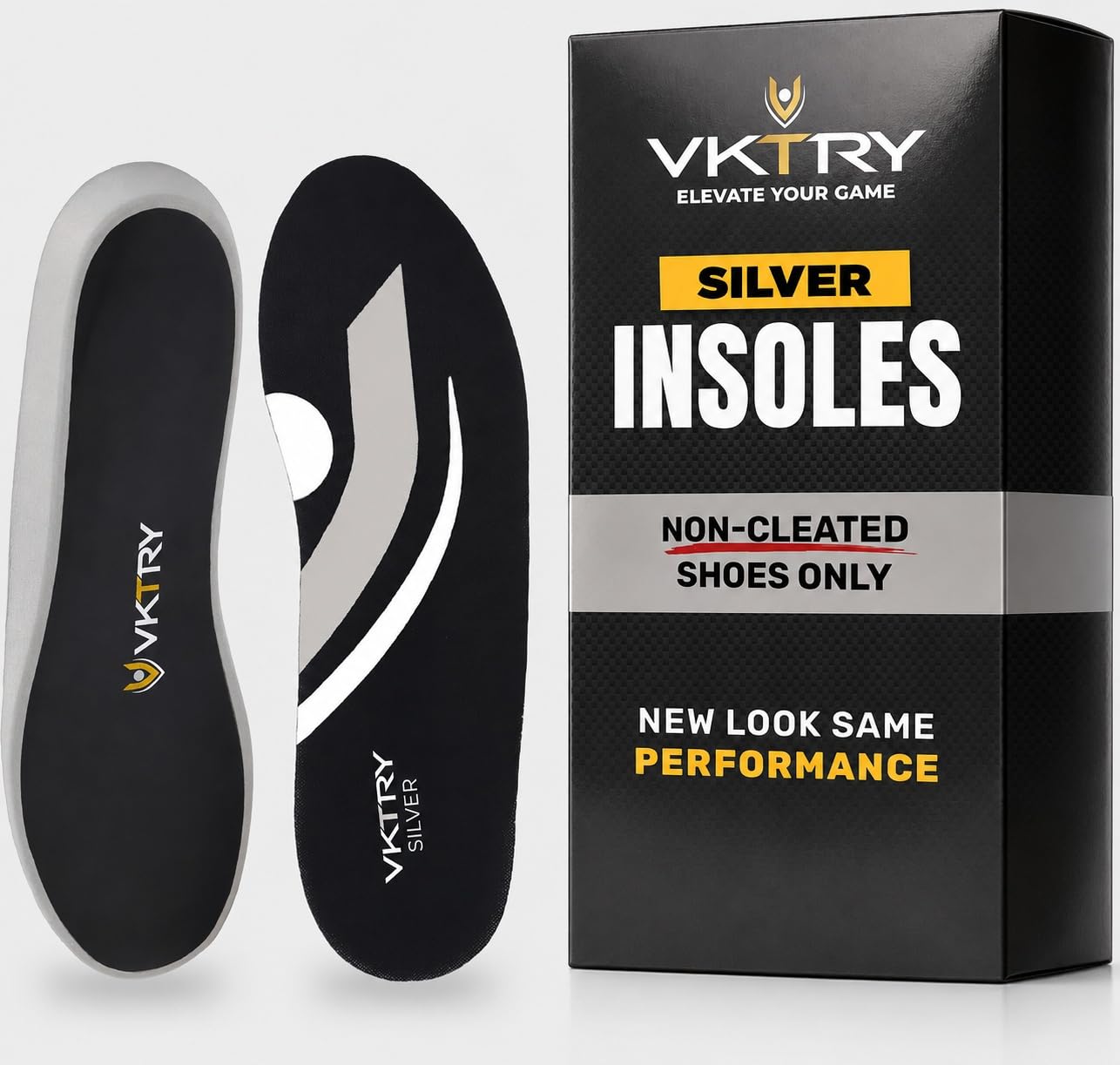
VKTRY builds the Silver as a multi-layer carbon fiber composite engineered to return energy on every step and absorb the impact of running, cutting, and jumping. An ergonomic arch and deep heel cradle round out the design, and the whole thing slides into non-cleated trainers for basketball, volleyball, tennis, and pickleball.
Supporting that plate takes mass: 8.15 ounces, versus the 3.21-ounce MOVE at the top of this list. If you are chasing every gram, this is not the light option — it is the stiff, springy one.
Here is the honest read. Buyers who love it rave about the quality and the support — one notes it helping with balance on deadlifts, and people who stand all day describe lasting relief. Others report no improvement at all, and some find them plain uncomfortable. That is a genuinely mixed picture, and the fit is the likely culprit: these run narrow and will not go into a wide-toe-box shoe such as a Topo or an Altra at all.
Where It Shines
- Carbon composite plate designed for rebound on push-off
- Deep heel cradle helps stabilize landings
- Drops into most non-cleated athletic shoes
Where It Can Disappoint
- Narrow cut — wide shoes and flat feet are a poor match
- 8.15 oz adds real weight underfoot
- Effectiveness and comfort are the most divided points in buyer feedback
Worth it when: you have a narrow, athletic foot and want that springy carbon feel under a normal-width trainer.
Give it a pass when: your shoes run wide or your arches are flat — this shape fights you.
5. Carbon Fiber Insole Performance Shoe Insert (XEPXEP)

The one that comes with its own jump numbers printed on the box.
XEPXEP pairs an aerospace-grade carbon fiber core (a stiff, lightweight plate that returns energy) with PU foam (a cushioning layer that absorbs impact), then publishes specific athletic claims — the maker claims the Kinetic Feedback System adds 1.6 inches to your vertical jump, cuts 0.12 seconds off a 40-yard dash, and lifts overall explosiveness by 9.3%, along with a 40% reduction in muscle fatigue. Those are manufacturer figures rather than independent test results, so take them as marketing copy.
What you can count on is the shape. The carbon fiber plate fits the curve of your foot and holds its flat profile, so your foot gets a firm platform instead of a mushy one. It also fits basketball and running shoes including models like the Kobe 6, Jordan 5, Nike AlphaFly, and Nike Elite.
The relevant gripe is the arch. One buyer loved the carbon concept but wanted more arch support than the insole delivered. If you need serious arch correction, the CURREX or Protalus above is the better purchase. If you want a flat, fast, springy plate, this is exactly that.
Why it stands out: buyers call out the quality and the fit most — the plate is easy to trim to size and sits well without crowding the toe box in non-cleated shoes.
What you get: a firm, flat platform that keeps its shape, plus a thin foam cover so you can pull your stock insoles out entirely.
Choose it for: a flat, energetic carbon platform that suits sprinting and jumping.
Skip it for: arch correction — this one supports the foot evenly, not deeply.
6. CRUVHEAL Sport Running Insoles

Gel pads and a locked heel for players who split their week across several sports.
CRUVHEAL puts strategically placed gel pads under the strike zones and a deep curved heel cup plus non-slip gel heel pads at the back. In plain terms, the gel softens impact and the heel pads keep the whole insert from sliding during fast breaks and sprints.
It also carries the longest stated coverage in this roundup: a 3–7 day break-in with 2–5 hours of wear a day, and a full year of coverage even after trimming. Weight is on the heavier side at 9.14 ounces, roughly matching the Protalus above it.
What people love most is the comfort. A 68-year-old referee and runner has logged a 5k pain-free and calls them springy enough to outlast the shoes themselves, and multiple buyers trimmed them to size without trouble. The caveat is sizing at the top end of the range — the XL has been reported as not fitting some feet, so check before you commit.
The fit story: comfort and quality dominate the buyer verdict, with support and effectiveness close behind.
One to watch: the mixed signals cluster around the largest size, so measure before ordering XL.
Great for: players who move between basketball, running, tennis, and pickleball and want one insole for all of it.
Look at the size chart first if: you sit at the very top of the sizing range.
7. Carbon Fiber Sports Insoles (Pefuair)
A rigid carbon core aimed at the gym session and the commute, not just the court.
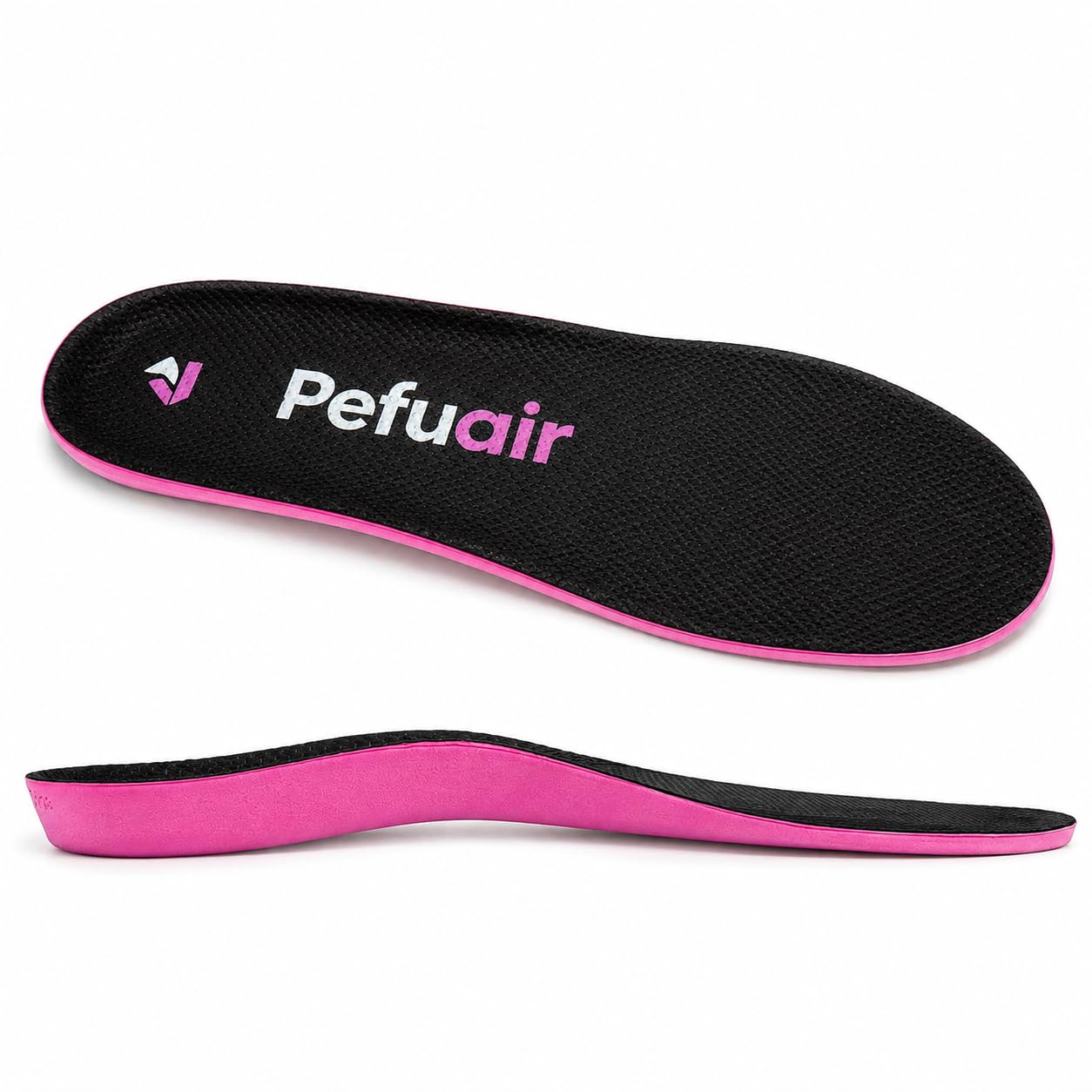
Pefuair’s plate is pitched at adult athletes who want push-off power in the shoe without a race-day price. The core is an ultra-rigid carbon fiber layer meant to spread plantar pressure, and the top is breathable mesh that wicks sweat so your feet stay dry through high-intensity work or a long commute.
The zero-drop design (meaning the heel and forefoot sit at the same height) fits most running shoes and is tuned for different foot strike patterns. Weight lands at 5.61 ounces — noticeably lighter on paper than the 6.74-ounce Welnove below. Edges are reinforced with flexible, wear-resistant EVA for bending resistance.
Quality and arch support are the standout points buyers mention. One owner reported that the breathable surface cut down foot odor noticeably compared to ordinary inserts. A minority pushback is arch depth — a buyer who loved the carbon idea still wanted more arch lift than they got.
The pitch, plainly: a stiff carbon base for energetic strides plus a mesh top for dryness, sized for running shoes and casual sneakers.
The honest limit: the arch is supportive rather than deep, so high-arch feet may want a more sculpted option.
Suits you if: you want carbon response for weekday training and all-day walking in the same pair.
Look further if: your arches need pronounced support — this one favors a flatter platform.
8. SOF SOLE ATHLETE Performance Insoles

The couch-to-court all-rounder that trades stiffness for all-day comfort.
SOF SOLE runs gel cushioning through the full length of the heel and forefoot, adds a foam insert that keeps the shoe feeling light, and finishes with Hydrologix moisture control plus midfoot ventilation. Neutral arch support means it is built to suit most foot types rather than to correct one.
The dimensions tell you how much room this wants — 8 x 4 x 7 inches versus 16.4 x 6.3 x 1 inches for the MOVE up top — and the cut-back shape sits lower underfoot. At 5.61 ounces it matches the Pefuair above.
Comfort is what people rave about, with heel-pain relief a close second. The trade-off tracks with that long life: some buyers find the foam thinner than expected, which is the honest cost of a low-profile pad.
Why It Wins People Over
- Full-length gel in the heel and forefoot for landing shock
- Hydrologix moisture control plus midfoot ventilation keeps feet dry
- Neutral arch suits most foot types without a firm break-in
The Trade-off
- The foam runs thinner than some expected, so it cushions less than a thick gel build
- No carbon plate, so no springy push-off
Buy it for: general court and gym use where comfort and dryness matter most.
Don’t expect: the snappy carbon feel of the plates listed above — this is softness first.
9. Welnove Sports Insoles
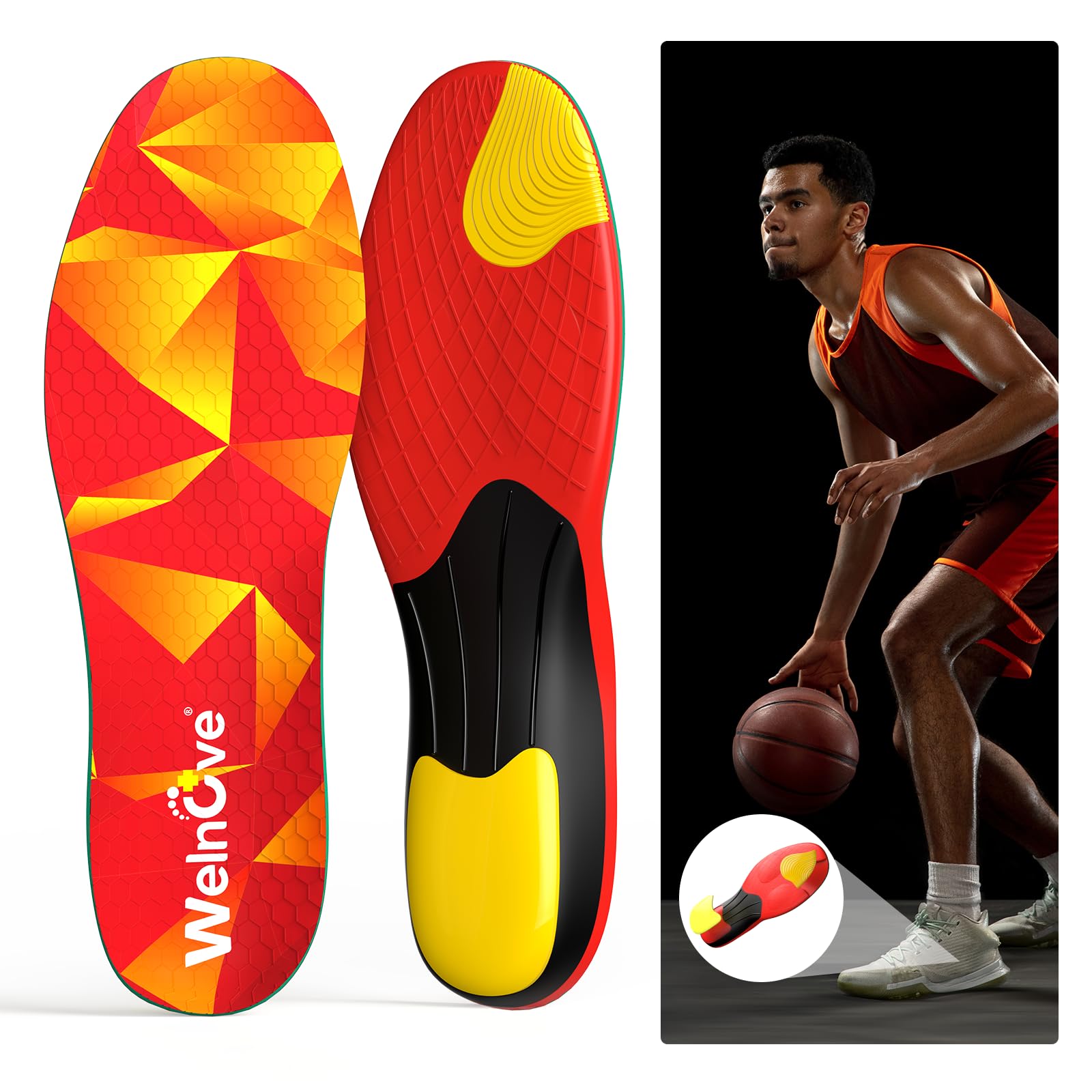
The biggest stack of shock-absorbing foam on this list, for the price of a cheap pair.
Welnove builds this as a three-layer sandwich — soft foam over bouncy PU — designed to soak up impact during running, hiking, and court sports. A padded heel zone targets pressure around the Achilles, and gel traction strips lock the insert onto your foot when you cut or pivot.
It is the heaviest option in this roundup at 6.74 ounces, versus 3.21 ounces for the MOVE winner — over double the weight, which is exactly what you would expect from a thick triple-layer build. That bulk is the whole reason it cushions so much; you are trading lightness for a pillowy ride.
Pair it with a roomy sneaker or basketball shoe — Welnove explicitly says not to force it into a tight soccer cleat, and smaller sizes may need a trim. That wider fit suits some feet and excludes others: narrow-footed buyers have returned these because the insole felt too slim, so match the shoe before you match the sport.
What you notice first: the cushioning and the reinforced bottom, which hold up on long walks.
Where it lands: best in hiking boots, athletic sneakers, and flats that take a removable insole — not in tight cleats.
Bring it home if: you want maximum shock absorption and a roomier shoe to pair it with.
Hold off if: your game needs a slim, racing-fit footbed — you’ll trim away the feature that makes it work.
Understanding the Specs
Carbon Fiber vs Foam Core
A carbon fiber core (a stiff woven plate that runs through the insole) returns energy on push-off. That makes it a fit for sprinting and jumping, and a poor match if you want a soft landing under every step. Foam and gel builds absorb impact and cushion the strike, which is what most casual players notice first. Neither is better — match the material to the motion you repeat most.
Heel Cup Depth
The heel cup is the raised wall at the back of the insole. A deep cup wraps the heel and keeps it from shifting sideways when you plant and cut — the stability piece that matters most on the court. A shallow cup lets the heel move, which shows up as soreness after lateral work. Deep cups also take up more room in the shoe, so pair them with a roomy fit.
Weight and Stack Height
Insoles here run from 3.21 ounces up. Lighter builds feel invisible underfoot and suit quick, shifty players; heavier triple-layer builds bring more cushioning but add real mass. Stack height — how thick the insole is — decides both how much shock it absorbs and how much room it leaves for your toes. A thicker stack wants a roomier shoe.
Arch Profile
Insoles come shaped for low, medium, and high arches, and some brands let you pick the profile. Buying the right one is the difference between a custom feel and a sharp jab into the middle of your foot. When in doubt, favor the profile that matches your natural arch rather than the deepest one on the shelf — support you do not need becomes pressure.
FAQ
Will basketball insoles fit my existing court shoes?
Do I remove my old insoles first?
How do I know if I need a high or low arch insole?
Are carbon fiber insoles worth it for basketball?
How long does a pair of basketball insoles last?
Can I wear basketball insoles in running shoes or work boots?
What should I do if the insole jabs my arch?
Are basketball insoles better than custom orthotics?
Do trimmed insoles void the warranty?
Final Thoughts: The Verdict
For most players shopping for basketball insoles, the MOVE Game Day Pro is the pick that does the most at once — a 3.21-ounce plate that locks the midfoot for hard cuts, cushions the landing, and drops into court shoes without trimming. From there, match the pick to your foot: grab the CURREX ActivePro if you run high arches, or the Protalus M-100 if your soreness travels up to your knees and hips. And for a cheap, comfortable everyday pair, the SOF SOLE ATHLETE is the one to reach for. Whichever direction you go, buying for your arch profile is the difference between a custom feel and a week of wasted break-in.
How We Picked
We do not accept paid placement. Every pick is matched to a real buyer and a real use-case; we do not hands-on test units.
Sources & Methodology
Specifications: manufacturer listings and product documentation. Review insights: verified customer reviews, as of September 2026. Pricing: not shown on this page (it changes often); check the current price via the retailer link.
As an Amazon Associate, Gadgets Feed earns from qualifying purchases. This does not affect which products we feature.