
Our readers keep the lights on and my morning glass full of iced black tea. As an Amazon Associate, I earn from qualifying purchases.
Specs are compiled from manufacturer listings and verified buyer reviews and can change over time — please confirm the key details on the product page before buying.
Your baby deserves food that is safe, tasty, and easy to serve — but the baby puree aisle is crowded with claims about organic, non-GMO, and stage labels that all start to sound the same. This guide cuts through that noise. It breaks down nine real baby purees parents actually buy, explains what each stage and pouch size means for your baby’s age, and shows you exactly which ones are worth bringing home.
I’m Min — the founder and writer behind Gadgets Feed. This guide is built by comparing the manufacturers’ published specifications and the patterns across verified customer reviews, so you get each pick’s real strengths and trade-offs instead of marketing spin.
The best pick for most families is the Beech-Nut variety pack — it holds 4.9 stars across 400+ ratings and delivers smooth, veggie-rich blends babies genuinely eat. These are the baby purees that parents reorder again and again.
Our Picks at a Glance


How To Choose The Best Baby Purees
Your baby’s stage, what is inside the pouch, and how you plan to use it decide which baby puree is worth buying. Get those three right and the rest is just packaging.
Stage labels tell you the texture and age range
Stage 2 purees are blended for babies who are around 6 months and up, ready to explore new textures and flavors beyond thin single-ingredient purees. Stage 4 pouches are built for toddlers learning to self-feed from a squeezable pouch. If your baby is just starting solids, a starter kit with tiny 2-ounce tubs lets you test single fruits and vegetables one at a time and check for sensitivities without wasting a full pouch.
Read the ingredient list before the front of the package
Look for pouches that list real fruits and vegetables first and skip artificial preservatives, colors, flavours, and added sweeteners. Organic and non-GMO certifications confirm how ingredients were grown, while dairy-free, gluten-free, and nut-free labels matter if your baby has known sensitivities. If a fruit blend is built mostly on apple or pear puree, the flavor variety is real but the nutrient range is narrower than the label suggests.
Match the format to how you actually feed
Squeezable pouches win for diaper bags, stroller walks, and travel because there is no bowl, no spoon, and no refrigeration needed. Small tubs suit sit-down meals at home and let you portion out exactly what your baby eats. Bulk packs lower the per-pouch cost and mean fewer repeat trips, which matters most once you know which flavors your baby will actually finish.
Quick Comparison
| Model | Best For | Stage | Pouch Size | Unit Count | Amazon |
|---|---|---|---|---|---|
| Beech-Nut Fruit & Root Veggies, 18 Pouches★ Best Overall | Everyday feeding and variety | Stage 4 | 3.5 oz | 18 | Amazon |
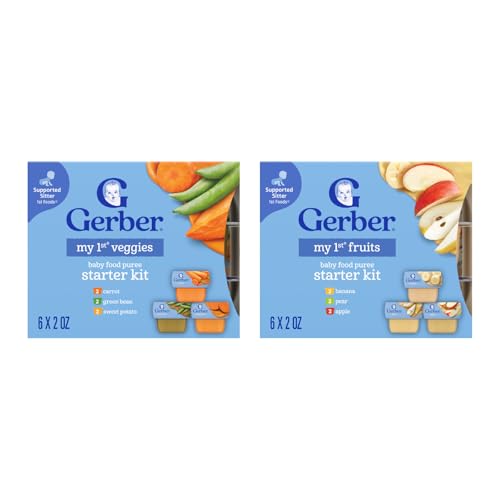
| Gerber My First Fruits and Veggies Starter KitTop Performer | First tastes and sensitivity checks | Starter (single-ingredient) | 2 oz tubs | 12 oz total | Amazon |
| Plum Organics Stage 2 Pear, Purple Carrot & BlueberryBest Organic | Organic Stage 2 with fiber | Stage 2 | 4 oz | 12 | Amazon |
| Beech-Nut Stage 4 Fruit & Veggie, 18 Pouches | Picky toddlers and travel | Stage 4 | 3.5 oz | 18 | Amazon |
| Plum Organics +12 Months Variety Pack | Toddlers who avoid vegetables | 12+ months | 4 oz | 12 | Amazon |
| Happy Baby Clearly Crafted Stage 2 Variety Pack | Clear-pouch organic shoppers | Stage 2 | 4 oz | 16 | Amazon |
| Gerber Stage 2 Fruit and Cereal Variety Pack | Iron-rich breakfasts on the go | Stage 2 | 4 oz | 32 | Amazon |
| Cerebelly Organic Pouches Variety Pack | Nutrient-dense ingredient-first buyers | Baby & toddler | 4 oz | 8 | Amazon |
| Peter Rabbit Organics Fruit Snack Pouches | Fruit-only snacks for older kids | 6 months and up | 4 oz | 18 | Amazon |
In‑Depth Reviews
1. Beech-Nut Baby Food Pouch Variety Pack, Fruit & Root Veggies, 18 Pouches
Our pick — over 4.5★ from 450+ verified ratings; the strongest balance of quality and price.
Eighteen pouches, three vegetable-forward blends, and a flavor lineup that even the pickiest toddler finishes.
If your toddler has started turning down vegetables, this is the pack that quietly fixes dinner. You get six Banana Pear Sweet Potato, six Apple Sweet Potato Pineapple, and six Carrot Zucchini Pear pouches — each one delivering a full serving of fruit or veg in a single 3.5-ounce squeeze. Every blend is made without artificial preservatives, colors, or flavors, and with no added sweeteners, so the sweetness comes from the produce itself.
What wins people over is the taste. It is the aspect buyers single out most — parents describe toddlers who go through pouches so fast they restock on rotation, and one mother admitted she eats them herself. The full lineup is non-GMO and free of dairy, gluten, nuts, and soy, which makes it a straightforward pick for babies with common sensitivities. The smooth, blended texture works for babies just starting solids and for toddlers already self-feeding from the pouch.
You get more puree for your money here than with the Plum Organics Stage 2 pack: this Beech-Nut box holds 18 pouches to that one’s 12 — a 50% larger count — and totals 63 ounces against 48, which works out to 31% more puree by volume. Each Beech-Nut pouch is 3.5 ounces versus the Plum Organics 4 ounces, so you trade a slightly smaller pouch for more of them. Buyers report the value holds up against store-bought singles. The recurring note in the reviews is that variety is mixed — the three flavors run out fast if your toddler has a favorite, so it suits a child who eats whatever is offered.
What Parents Keep Coming Back For
- Three vegetable-forward blends — Banana Pear Sweet Potato, Apple Sweet Potato Pineapple, and Carrot Zucchini Pear
- Each 3.5 oz pouch delivers one full serving of fruit or vegetables
- No artificial preservatives, colors, or flavors, and no added sweeteners
- Non-GMO and free of dairy, gluten, nuts, and soy
- Smooth texture suits both first-spoon babies and self-feeding toddlers
Worth Knowing Before You Buy
- Only three flavor blends in the box, so picky toddlers can burn through their favorite fast
- 3.5 oz pouches run smaller than the 4 oz pouches some competing packs use
- Once opened, pouches need refrigeration and should be finished within a day or two
Reach for this if: you want one box that covers fruit and veggie servings across the snack drawer, the diaper bag, and the high chair.
Look elsewhere if: your toddler has locked onto a single flavor and will refuse the other two blends in the pack.
2. Gerber My First Fruits and Veggies Starter Kit Variety Pack
The spoon-first sampler that lets you test one fruit at a time before committing to a full pouch habit.
This kit is built for the part of starting solids that is really about checking for sensitivities. You get single-ingredient 2-ounce tubs — banana, pear, and apple on the fruit side, carrot, green bean, and sweet potato on the veggie side — so you can introduce one flavor at a time and watch for any reaction. A step-by-step feeding guide and a coupon toward Gerber 1st Foods are tucked in the box, which gives a first-time parent a clear next step once the sampler runs out.
Parents talk about the quality most, then how the food tastes. Reviews describe it as a genuine confidence booster for a nervous first-time mom, one noting it made starting solids “a little less scary.” The small tubs mean very little waste if your baby rejects a flavor, which is the real reason to start here rather than with a 12-pack of pouches. The 12-ounce total is compact, so this is a trial box, not a bulk staple.
The honest catch is value. Buyers split on the price — some call it a great buy and others find it pricier than they expected for the volume. A couple also note the purees lean thin and runny compared with thicker blends, and there is no pull tab on the tubs, so you open them by hand. If you already know your baby’s safe foods and just want volume, this is not the box for you.
Trial-by-trial design: Six single-ingredient tubs and a printed feeding guide turn the messy first week of solids into a clear, one-food-at-a-time process.
The sizing reality: 2-ounce tubs keep waste low, but the 12-ounce total means you will be reordering before the month is out once your baby starts eating full portions.
Start here when: this is your first baby entering solids and you want to isolate flavors while watching for sensitivities.
Skip the sampler stage if: you have already cleared single fruits and vegetables and need bulk feeding volume instead.
3. Plum Organics Stage 2 Organic Baby Food, Pear, Purple Carrot & Blueberry, 4 Ounce Pouch, Pack of 12
Three grams of fiber and a deep purple swirl that turns fruit-avoiding babies into very willing eaters.
Three grams of fiber per pouch is what separates this blend from fruit-only pouches. That fiber comes from pear, purple carrot, and blueberry in a certified organic, Non-GMO Project Verified recipe that is unsweetened, unsalted, and Kosher Parve. It is built for 6 months and up, and the resealable pouches are non-BPA, so a baby can eat half now and finish the rest later without a bowl in sight. Each 4-ounce pouch measures up slightly larger than the 3.5-ounce Beech-Nut pouches elsewhere on this list.
Flavor is what owners praise most, and the pear-purple carrot-blueberry combination earns a following unusual for a single-flavor-focused pack — some families stock it on subscription because the adults snack on it too. Nutrition draws the next wave of praise, with parents treating it as a reliable way to get fruit and vegetable servings into the day. It travels well; the pouch shape slides into a diaper bag, gets packed for zoo trips, and kids will eat two or three in one sitting.
The trade-offs are worth naming. The color is intense — a mixed reaction that some toddlers love and others eye suspiciously. More importantly, the base is apple puree, so this is closer to flavored applesauce than a true vegetable-forward blend, which means it is not the pouch to lean on if you are counting on variety for nutrient range. Caps also pose a choking hazard and need to stay out of a baby’s reach.
Why It Earns a Following
- Certified Organic and Non-GMO Project Verified with 3 grams of fiber per pouch
- Unsweetened, unsalted, and Kosher Parve for Stage 2 eaters 6 months and up
- Non-BPA, resealable 4 oz pouches — no bowl, no spoon, no refrigeration needed
- Smooth enough for babies learning to self-feed but textured enough to hold attention
Details to Weigh First
- Apple puree is the base ingredient, so the flavor variety is real but the veggie content is not the headline
- The deep purple color divides younger eaters — some love it, some refuse it
- Removable caps are small enough to be a choking hazard and must be kept away from babies
Best fit for: organic-focused parents who want a fiber-rich, self-feeding-friendly pouch that doubles as a kid snack.
Think twice if: your baby is veggie-shy and you are counting on the pouch to deliver vegetable variety rather than fruit-based sweetness.
4. Beech-Nut Stage 4 Fruit & Veggie Baby Food Pouch Variety Pack, 18 Pouches

No food dyes, no added sugar, and a protein-plus-fiber lineup built to keep a hungry toddler full until the next meal.
Toddler stomachs need more than fruit sugar, and the Beech-Nut Stage 4 pack is structured around that reality. The box holds three functionally different blends: six Protein & Fiber pouches (apple, yogurt, raspberry, purple carrot, oat), six Iron & Zinc pouches (apple, blueberry, spinach), and six Prebiotic Fiber pouches (carrot, apple, sweet potato). Every one is a 3.5-ounce squeezable pouch with a smooth, blended texture that works whether your toddler is a self-feeding pro or still figuring it out.
Taste leads the praise here, with flavor selection close behind — the range of fruit-vegetable combinations gets called out as one reason the box never gets boring. The recipe is non-GMO and free of nuts and soy, with no food dyes, which removes a common worry for parents reading labels. Value for money is strong given the 18-pouch count, and parents describe it as a staple in the baby world — the kind of box that gets reordered before it runs out.
That said, this one asks more of you than the cleaner pouches above. The puree must be stored properly, and labels warning of mold make it clear that once a pouch is opened, it goes into the fridge and gets eaten soon after. Marking the open date on the pouch is the workaround parents quietly adopt. Compared with the Happy Baby Clearly Crafted pack, the Beech-Nut box leans harder on protein-and-fiber blends versus fruit-forward variety.
Built for real toddler appetites: Protein and fiber appear across all three blends rather than just in the fruit lineup, so pouches can stand in for a snack without triggering a hunger spike twenty minutes later.
Storage is part of the deal: The mold warnings are not a defect — they are a sign the pouches use no preservatives, and they mean you need a fridge routine when boxes get opened.
Pick this when: you have a toddler at Stage 4 who needs protein and fiber from a pouch, not just fruit.
Choose lighter blends instead if: you want fruit-only pouches that need less refrigeration discipline once opened.
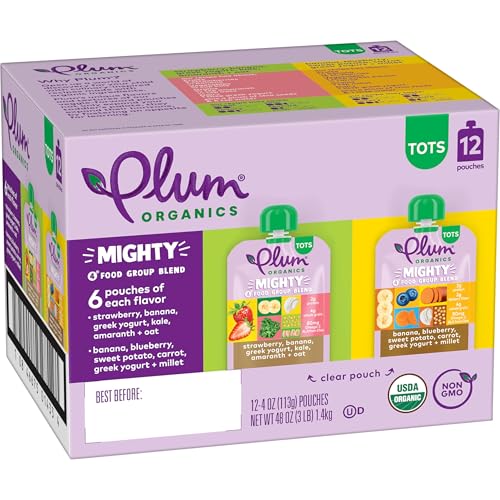
5. Plum Organics – +12 Months Organic Baby Food – Variety Pack – Non-GMO – On-The-Go Pouches
Greek yogurt and grains turn twelve pouches into meal replacements, not just fruit snacks.
Once a toddler crosses twelve months, fruit-only purees stop landing as meals. This pack answers that with blends that fold dairy and grains into the mix: Strawberry, Banana, Greek Yogurt, Kale, Amaranth, and Oat, plus Banana, Blueberry, Sweet Potato, Carrot, Greek Yogurt, and Millet. Every pouch is USDA Organic Certified and Non-GMO, unsalted and unsweetened, and comes in a 4-ounce resealable format. Twelve pouches total 48 ounces, which is a real month of daycare mornings for a toddler eating one per day.
Flavor is the winning trait, with ingredient quality close behind. Parents describe the pouches as filling and fast enough for rushed mornings before daycare, and the 4-ounce size works equally well as a meal or a snack. For toddlers who flat-out refuse vegetables, the label lists exactly how much veggie is in each pouch — enough reassurance that some parents buy these specifically as a vegetable substitute. Older toddlers who are over baby food still accept these because the flavor profile reads more like a smoothie than a puree.
The consistent complaint is the pouch itself rather than the contents. Owners mention that these spill easily if squeezed hard, and one disappointed parent called it out bluntly in the reviews: “These spill everywhere so easily I can’t do them anymore.” The puree is fine and the taste lands with kids; the problem is how freely it flows once the cap comes off, so a toddler squeezing with both hands can paint the stroller.
Meal-worthy blends: Greek yogurt and grains give each 4-ounce pouch enough substance to stand in for breakfast or lunch, not just hold a snack line until dinner.
Talk to your toddler about the squeeze: If a child grips the pouch hard, this is the one that will flow fast — it holds a lot for its size and rewards a gentle hand.
Go with this if: you have a toddler who is past simple fruit purees and needs something with yogurt and grains to call a meal.
Pass if: your child squeezes pouches with both hands — the free-flowing consistency makes cleanups frequent.
6. Happy Baby Clearly Crafted, Stage 2, Fruit & Veggie Variety Pack, 4oz (16)
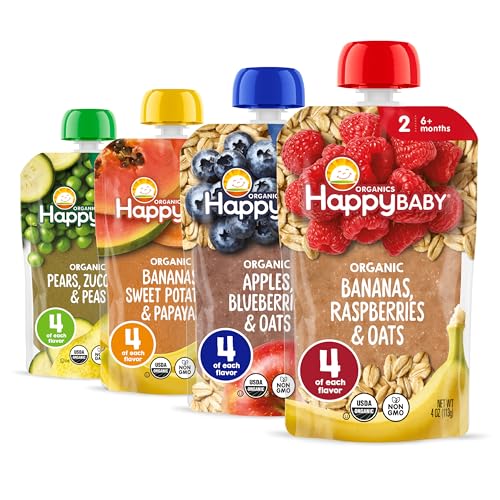
A clear pouch so you can actually see the food before your baby eats it — transparency that goes beyond the label.
Seeing the puree through the packaging is the whole point of Clearly Crafted. The clear pouch shows the color and consistency of the food inside before you open it, which is a small but real confidence booster for parents who want to know what they are feeding. Sixteen 4-ounce pouches in the Stage 2 variety pack introduce a smooth fruit-and-veggie blend built for babies around 6 months and up. Every recipe is certified USDA organic and made with non-GMO ingredients grown without persistent pesticides.
Taste is what this brand is known for, and flavor variety follows close behind. Parents describe the pouches as a favorite across multiple kids, with a smooth, consistent texture and a lineup that claims no artificial flavors or preservatives. The Stage 2 texture hits a useful range — smooth enough for a baby just learning to eat from a spoon, structured enough that it does not turn watery. For toddlers who refuse vegetables, the pouches let you slip fruit-vegetable blends in without a fight.
One thing to note: value for money splits. Some buyers call these a great deal, while others find 16 pouches thinner on the wallet than comparable multi-flavor boxes. There is no dairy or added protein, so this is not the pack to reach for if your toddler needs more than fruits and vegetables in a meal. Compared with the Beech-Nut Stage 4 pack above, the Happy Baby leans on variety of fruit-veggie combos rather than protein and fiber content.
Why Parents Trust the Pouch
- Clear packaging lets you see the puree before your baby does
- USDA Certified Organic and made with non-GMO ingredients
- No artificial flavors or preservatives in the recipes
- Smooth Stage 2 texture works for new eaters and older toddlers alike
What to Consider
- Value for money divides buyers — some see a deal, others see a premium price for 16 pouches
- No dairy or added protein, so these will not replace a full meal for a hungry toddler
- Fruit-forward lineup rather than veggie-led blends for babies who need more vegetables
This is your pick if: seeing the food through the pouch matters to you and you want organic Stage 2 blends with real variety.
Consider something else if: your toddler needs protein-heavy or dairy-included meals rather than fruit and vegetable blends.
7. Gerber Stage 2 Fruit and Cereal Variety Pack, 4 Oz, 32 Pack
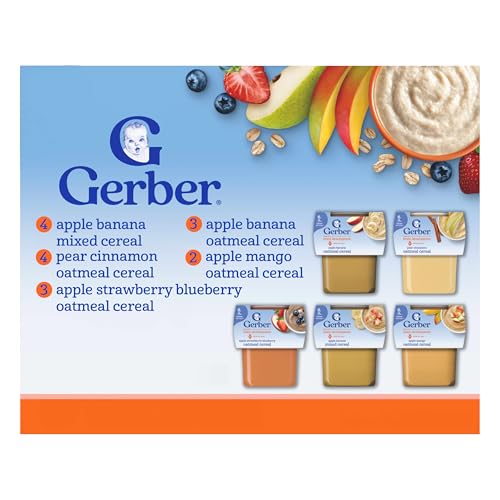
Thirty-two tubs of iron-fortified fruit-and-cereal purees that turn frantic daycare mornings into a five-minute feed.
Iron is the nutrient that matters most at Stage 2, and this 32-tub pack is built around it. Each tub supplies 60% of the daily value of iron for babies 6 months and up, plus 45% vitamin C, 30% zinc, 10% vitamin E, and 8 grams of whole grains. Five flavors cover the lineup — apple banana oatmeal cereal, pear cinnamon oatmeal cereal, apple strawberry blueberry oatmeal cereal, apple banana mixed cereal, and apple mango oatmeal cereal — and with 16 two-packs, you have a month of breakfasts before reordering.
Parents call it a genuinely convenient on-the-go option and a solid value, with the bulk count doing the heavy lifting. The thicker consistency gets specific praise because it does not run off the spoon, which means less mess on the bib and more of the food actually getting eaten. No artificial flavors and no added sweeteners keep the ingredient list clean. The texture is smooth but hearty, so the purees can carry a baby from an early Stage 2 morning into a more substantial breakfast habit.
This is the largest pack on the list by count, and it targets a very specific feeding pattern — the oatmeal-and-fruit breakfast a Stage 2 baby eats almost daily. If your baby prefers single-ingredient fruit purees or pouches over tubs, look at the sampler kit in position two instead. If your toddler has moved past purees entirely, the Beech-Nut Stage 4 pack a few rows up will fit better.
Fortified for more than fruit: Iron, zinc, vitamin C, whole grains — this is cereal-with-fruit territory, richer per serving than straight puree pouches.
Built for bulk, built for tubs: 32 tubs stretch over a month of daily use, but if your baby has already graduated to pouches, the format will feel wrong.
Best when: your Stage 2 baby eats fruit-and-oatmeal breakfast nearly every morning and you want the pack to cover it without mid-week top-ups.
Not the right format if: your baby prefers squeezable pouches over tubs, or has moved past purees entirely.
8. Cerebelly Organic Baby Food Pouches Variety Pack, Veggie & Fruit Purees, 16 Nutrients, 8 Pack
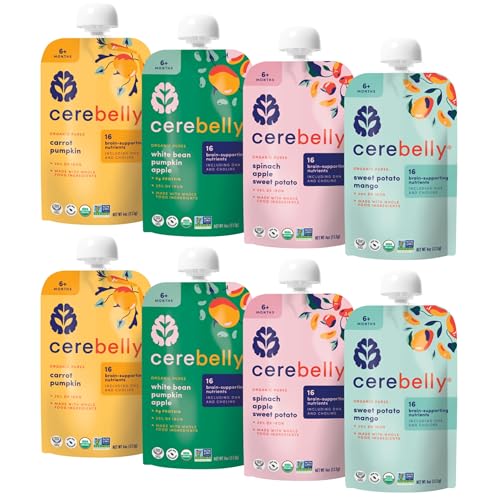
Sixteen nutrients in one pouch, tested for heavy metals, and built by a neurosurgeon mom around brain and body development.
If nutrition density is what you are buying for, this pouch leads the category. Each Cerebelly pouch carries 16 nutrients for development — including potassium, iron, and vitamin D — in a veggie-first recipe built on pumpkin, mango, and apple. The formula is made with organic whole food ingredients, contains no added sugar, gluten, dairy, or nuts, and stays shelf-stable without refrigeration, which means you can leave a pack in the car or the daycare cubby for weeks without worrying about it spoiling. The brand holds a Clean Label Purity Award and says its shelf-stable baby food was the first tested for heavy metals and toxins.
Taste is the most-praised aspect, though flavor itself lands more mixed — kids love some pouches and refuse others. Ingredients draw the strongest consistent praise alongside the nutrient list, and the safety testing matters to parents who are specifically worried about what is in baby food. Pouches are large for the category at 4 ounces, they can be refrigerated once opened, and parents note that serving them cold helps soothe a teething baby. Reviewers also mention the resealable tops hold up to repeat trips, which makes them easy on the go.
The honest friction is twofold. First, value splits — some parents find the price fairly reflects the nutrient density and testing; others feel it pushes the budget for eight pouches. Second, babies can be picky about specific flavors: sweet potato and mango go down easily, while carrot and spinach can lose a feeding. The 8-pack is the smallest count on this list, so it works as a targeted choice for nutrient-first buying rather than a bulk staple.
Why Nutrition-First Parents Choose It
- 16 nutrients per pouch including potassium, iron, and vitamin D
- Veggie-first organic blends with no added sugar, gluten, dairy, or nuts
- Shelf-stable and refrigeration-free until opened — travel and daycare friendly
- Tested for heavy metals and toxins; Clean Label Purity Award winner
Trade-Offs to Consider First
- Only 8 pouches per box, so this is a targeted buy rather than a bulk monthly order
- Flavor-by-flavor acceptance varies — some blends land far better than others with a given baby
- Price per pouch runs above most competing organic pouches
Built for: parents whose number-one criterion is what is inside the pouch — tested, organic, and nutrient-dense — and who will pay for the difference.
Rethink if: you want 18+ pouches per order at a lower per-pouch cost or your toddler refuses vegetable-forward flavor blends.
9. Peter Rabbit Organics Fruit Snack Pouches 3 Flavor Variety Pack, 18 CT, 4oz
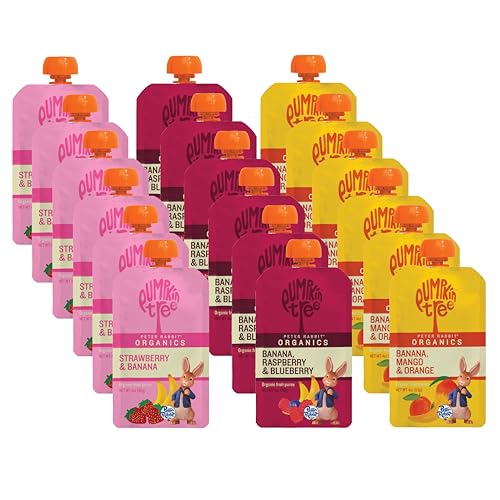
Fruit and only fruit — organic bananas, mango, orange, raspberry, blueberry, and a squeeze of lemon, nothing more.
This one makes no attempt to be a meal. It is fruit in a pouch, USDA certified organic and non-GMO, with the ingredient list reading like a smoothie order: organic bananas, organic mango, organic orange, organic raspberry, organic blueberry, and organic lemon juice concentrate. Eighteen 4-ounce pouches span three flavor combinations, all in squeezable BPA-free packaging that needs no chilling. The brand recommends it for 6 months and up but markets it as suitable for the whole family, and the honest strength here is that it does exactly one thing without additives or fillers.
Taste is the entire pitch, and it delivers — parents describe the fruit blends as lush and consistent, and the pouches get packed as school snacks for kids well past the toddler stage. The 4-ounce size is generous among fruit-only competitors and hides real fruit content rather than cutting it with apple-base filler. For families who want a clean fruit pouch and nothing more, this is a straightforward yes.
Worth flagging: because it is fruit only with no grains or dairy, this pouch cannot stand in for a meal the way the Gerber Stage 2 cereal pack or the Plum Organics 12+ month pack can. And value for money divides — some buy these by the box specifically because bulk pricing beats the grocery store, while others find them outright expensive for what is essentially blended fruit. Neither is wrong; it depends on whether you treat the pouch as a snack or a meal.
Pure fruit, no fillers: Six organic fruits and a lemon juice squeeze — that is the whole recipe, which makes this the cleanest-label option on the list.
Snack, not a meal: Fruit-only content cannot replace protein or grain-based pouches for a hungry toddler at mealtime.
Choose it for: school lunches, fruit-on-the-go cravings, and any family who wants an organic fruit pouch without fillers or additives.
Not the right pick if: you need a pouch that can act as a full breakfast or lunch rather than a fruit snack.
Understanding the Specs
Stage Numbers — What They Really Signal
A stage label tells you who the puree is blended for and how thick it should feel. Stage 1 purees are typically single-ingredient and thin, built for the first week of solids. Stage 2 adds fruit or vegetable combinations at a slightly thicker texture and is aimed at babies around 6 months and older. Stage 4 and 12+ month blends lean into self-feeding, with textures and protein sources built for toddlers who can hold their own pouch. Buy closer to your baby’s actual feeding skills than their birthday — a baby who has mastered spoon-feeding will often handle Stage 2 comfortably at 7 months, while a toddler with strong self-feeding instincts will take to Stage 4 pouches earlier than the age label suggests.
Pouch Size, Unit Count, and Total Volume
Three numbers tell you what a box really contains: the size of each pouch, the number of pouches in the pack, and the total ounce count when they are added together. A box of eighteen 3.5-ounce pouches gives you 63 total ounces of food; a box of twelve 4-ounce pouches gives you 48. Larger pouches mean fewer trips to the pantry per feeding, while larger pouch counts mean fewer mid-week reorders. Match the format to your habits — single-pouch size suits on-the-go snacking, and unit count matters far more once you know which flavors your baby will finish. Starter kits built around small tubs trade total volume for variety, which is worth the trade only if you are still testing new foods.
FAQ
What does stage 2 baby food mean and when should I switch to it?
Are squeezable pouches or tubs better for starting solids?
How can I tell if a baby puree has added sugar or artificial ingredients?
Do organic and non-GMO labels actually matter for baby food?
How do I store baby puree pouches once they are opened?
Are baby food pouches safe for self-feeding toddlers?
Is the 3.5 ounce pouch big enough for a toddler or should I buy 4 ounce pouches?
What is the difference between fruit-only baby purees and fruit-and-vegetable blends?
Should I pick baby purees with dairy or added protein for a toddler over twelve months?
How long does an unopened baby food pouch stay safe without refrigeration?
Final Thoughts: The Verdict
For most families, the best pick in baby purees is the Beech-Nut Fruit & Root Veggies 18-Pouch Variety Pack. It wins on the combination that matters most at Stage 4: taste kids finish, three veggie-forward blends, no artificial preservatives or added sweeteners, and 18 pouches in one box. If your baby is just starting solids and you want to test single ingredients one at a time, the Gerber My First Fruits and Veggies Starter Kit gives you 12 ounces of single-fruit and single-veggie tubs with a printed feeding guide — the safest place to begin. And for the ingredient-first parent who wants 16 nutrients per pouch, heavy-metal testing, and shelf stability for travel, the Cerebelly Organic Variety Pack is the one to reach for.
If your toddler is stuck in a vegetable standoff, the Plum Organics +12 Months pack puts Greek yogurt and grains into pouches your kid will take without a fight. That is the honest nudge: a pouch that gets eaten beats a pouch that sits on the shelf, and the boxes that earn repeat orders here are the ones where the contents match the way your family actually feeds.
How We Picked
We do not accept paid placement. Every pick is matched to a real buyer and a real use-case; we do not hands-on test units.
Sources & Methodology
Specifications: manufacturer listings and product documentation. Review insights: verified customer reviews, as of September 2026. Pricing: not shown on this page (it changes often); check the current price via the retailer link.
As an Amazon Associate, Gadgets Feed earns from qualifying purchases. This does not affect which products we feature.