
Our readers keep the lights on and my morning glass full of iced black tea. As an Amazon Associate, I earn from qualifying purchases.
Specs are compiled from manufacturer listings and verified buyer reviews and can change over time — please confirm the key details on the product page before buying.
When the power dies, your freezer is on a clock — and a full freezer of thawing food is the most expensive thing in the house. The fix is a battery backup power station sized to keep that compressor running, and the picks below cover every budget and every freezer size. The Jackery Explorer 1000 v2 takes the top spot: 1,070Wh of capacity (watt-hours, the size of the battery tank), a 1,500W output (watts, the power it can push continuously), and 3,000W of surge (a short burst of extra power) to kick a compressor on. That combination is what actually matters when your fridge and deep freezer need to ride out an outage.
I’m Min — the founder and writer behind Gadgets Feed. This guide is built by comparing the manufacturers’ published specifications and the patterns across verified customer reviews, so you get each pick’s real strengths and trade-offs instead of marketing spin.
You will see capacity (measured in watt-hours), output (watts), and surge power compared side by side so you can match a station to your appliance. The crowd favorite here holds 4.7 stars across 3,000+ ratings, and it earns that spot the hard way. If you want the short version of the best backup battery for freezer, start with the first pick and read down from there.
Our Picks at a Glance

How To Choose The Best Backup Battery For Freezer
Buying a backup battery for a freezer is not like buying a phone charger. A freezer compressor is a motor, and motors are fussy about two things: how much power they need to start, and how much energy they sip while running. Get those two numbers right and your food stays frozen. Get them wrong and you have an expensive brick.
Match surge power to your compressor, not just running watts
Every freezer has a running wattage — the steady draw while the compressor hums. But when the compressor first kicks on, it pulls a much bigger burst called surge. That is why you see stations listed with two output numbers, like 1,500W rated and 3,000W surge. The surge figure is the one that decides whether your freezer actually starts or just clicks and trips the station into overload protection.
Watt-hours decide how many hours you get
Watt-hours (Wh) are the total energy tank. A 1,000Wh station stores roughly a thousand watts for one hour, or a hundred watts for ten hours. A typical freezer draws a modest trickle once running, so a bigger watt-hour number buys you more hours before you are scrambling. This is the single number to compare between picks.
LiFePO4 chemistry is the long-life option
The best freezer backups now use LiFePO4 (lithium iron phosphate) cells instead of older lithium-ion. The practical upside is cycle life — these cells are rated for thousands of charge cycles and hold their capacity far longer, so the unit you buy this year is still useful years from now.
UPS mode keeps the freezer cold through the switch
A UPS (uninterruptible power supply) mode means the station senses the outage and switches to battery in milliseconds, so the compressor never even notices. If your freezer runs on a fast switch, there is no thaw-and-refreeze cycle when the grid blinks.
Quick Comparison
| Model | Best For | Capacity | Rated Output | Battery Type | Amazon |
|---|---|---|---|---|---|
| Jackery Explorer 1000 v2★ Best Overall | Best Overall | 1,070Wh | 1,500W (3,000W surge) | LiFePO4 | Amazon |
| PECRON F1000 LFPBest Value | Budget Value | 960Wh | 1,500W | LiFePO4 | Amazon |
| BLAVOR S1600Built-In Solar | Built-In Solar | 1,024Wh | 1,600W (3,200W peak) | LiFePO4 | Amazon |
| BROWEY S1600 | Rugged Design | 1,024Wh | 1,600W (3,200W peak) | LiFePO4 | Amazon |
| Anker SOLIX C2000 Gen 2 | Fastest Recharge | 2,048Wh | 2,400W (4,000W peak) | LiFePO4 | Amazon |
| BLUETTI FridgePower | Fridge-Specific UPS | 2,016Wh | 1,800W (3,600W surge) | LFP | Amazon |
| Jackery Explorer 2000 v2 | Small & Light | 2,042Wh | 2,200W | LiFePO4 | Amazon |
| BLUETTI Elite 300 | RV-Ready Power | 3,014Wh | 2,400W (4,800W surge) | LiFePO4 | Amazon |
| EcoFlow DELTA 3 Max | App Control | 2,048Wh | 3,400W X-Boost | LiFePO4 | Amazon |
| Anker SOLIX F3000 | Whole-Home Backup | 3,072Wh | 3,600W pass-through | LiFePO4 | Amazon |
| EcoFlow DELTA Pro | Max Capacity | 3,600Wh | 3,600W AC | LFP | Amazon |
In‑Depth Reviews
1. Jackery Explorer 1000 v2 Portable Power Station
Our pick — over 4.5★ from 3,500+ verified ratings; the strongest balance of quality and price.
The fridge-and-freezer specialist that quietly rides out multi-day blackouts on one charge.
This is the station to buy if your freezer is the priority and you want the least fuss. Inside sits a 1,070Wh LiFePO4 battery paired to a 1,500W AC output with a 3,000W surge peak — that surge headroom is what lets a compressor kick on without the station stalling. And it stays cold-proof for real: owners running a fridge plus a mini deep freezer report it always lasting until the power returns, which is the whole point of a freezer backup.
Charging is where it pulls ahead of the pack. From a wall outlet you get 0% to 100% in about one hour with emergency charging enabled through the Jackery App, and it defaults to a gentler 1.7-hour fill to protect battery health. The app also gives you a 30 dB quiet overnight charging mode (roughly the level of a soft whisper) so you can top it up while you sleep. Solar is tied to Jackery’s own panels only, so factor that in if you already own another brand of panel.
Against the PECRON F1000 above, the Jackery carries the bigger tank — 1,070Wh versus 960Wh — and it shows up in longer freezer runtime. It is also the deeper, more proven unit, holding 4.7 stars across 3,000+ ratings. On the honest side, a few owners note the AC output runs lower when the station is plugged into a wall (pass-through mode trims the output), so plan your biggest loads around battery-only use. What wins people over is the sheer dependability — it is the one people trust for a CPAP on a camping trip and a freezer at home.
What makes it the pick
- 1,070Wh LiFePO4 battery with a 1,500W output and 3,000W surge to start compressors
- One-hour emergency recharge via the Jackery App; 1.7-hour default for battery health
- Quiet 30 dB overnight charging mode for topping up while you sleep
- Proven fridge-and-freezer service with a genuine multi-day track record
Real-world trade-offs
- Solar charging works only with Jackery’s own solar panels
- AC output dips when running as pass-through while plugged into the wall
- At 23.8 pounds it is a carry-two-hands unit, not a pocketable one
The everyday winner: the right call if a freezer or fridge is your main outage worry and you want proven reliability with a fast wall recharge.
Worth knowing: if you already own solar panels from another brand, look at the BLAVOR or BLUETTI picks below instead.
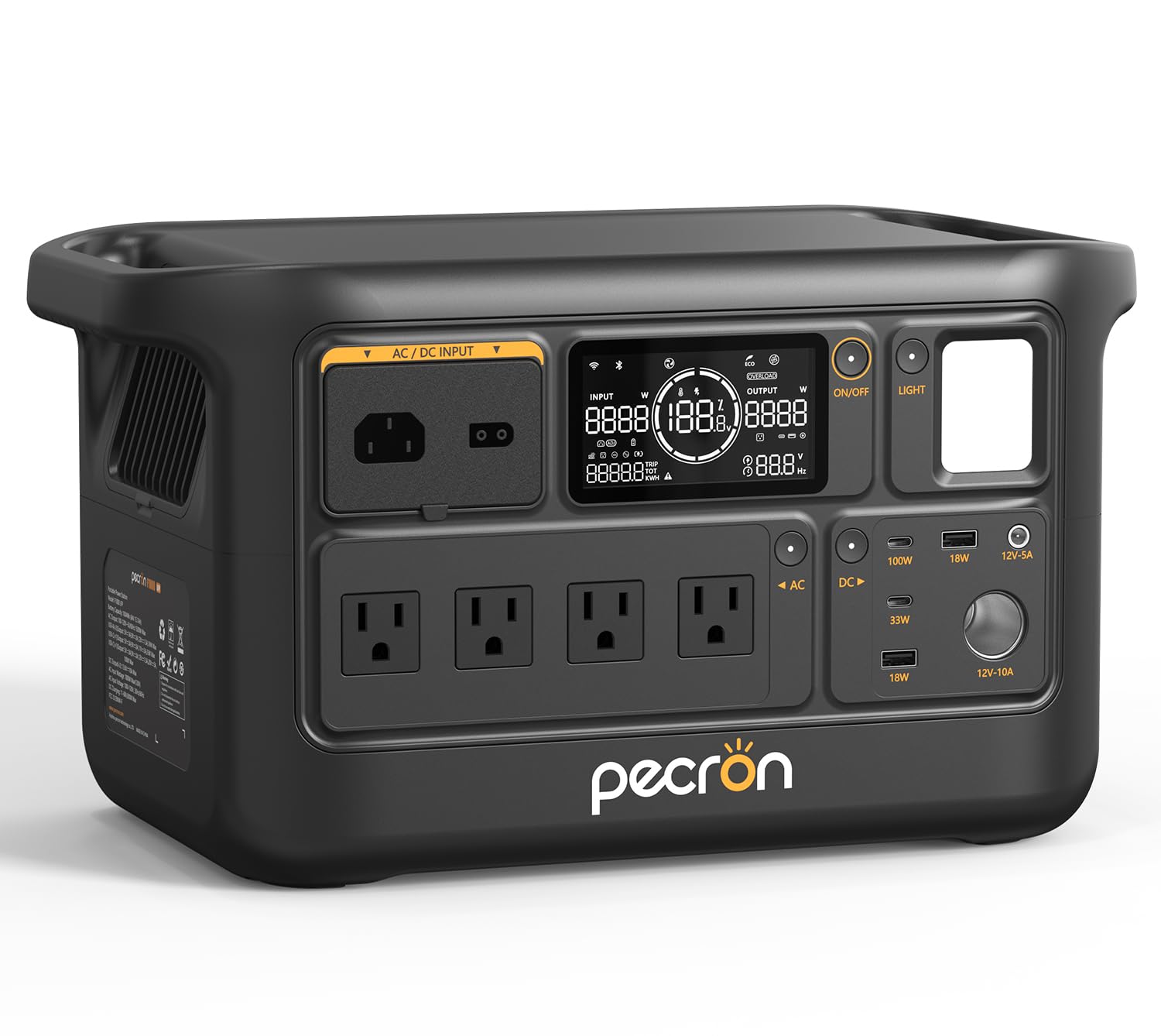
2. PECRON F1000 LFP Portable Power Station
A lighter, cheaper freezer backup that folds into ten ports and a UPS switch.
For a more budget-friendly freezer backup that still runs a compressor, the F1000 LFP is the balance. It packs a 960Wh LiFePO4 battery (lithium iron phosphate, a long-life battery chemistry) and a 1,500W pure sine wave AC output — that “pure sine wave” part matters because it is the clean, motor-friendly power a freezer compressor wants, not the choppy waveform that makes motors run hot. Ten output ports means the freezer plus your router, fridge, and a lamp can all stay alive at once.
The standout here is the 20ms UPS (uninterruptible power supply) switch, so during a blackout the freezer transfers to battery almost instantly and the food never begins to soften. There is also a genuinely quiet 25 dB running mode — barely a hum — plus a 5W LED light for outage nights. Recharge is quick: from the included AC charger it reaches a full LiFePO4 charge in about 70 minutes.
Here is the honest sizing note. The 960Wh tank trails the Jackery Explorer 1000 v2’s 1,070Wh, so on the same freezer you get a bit less runtime before a recharge. And it is the newer, smaller brand of the two — a couple of owners ran into an inverter fault and had to go through warranty, though PECRON resolved those with a replacement part. What the review pages sum up is a station that handles a storage locker full of tools, an RV fridge, and a home backup without complaint. Weighing 23.9 pounds, it is a touch lighter than the Jackery and easier to lift down off a shelf.
Where it shines: ten ports, a 1,500W pure sine output, and a true 20ms UPS switch for near-instant freezer transfer — a serious feature set for the value tier.
Where it gives ground: 960Wh is less than the Jackery’s 1,070Wh, and the brand is newer, so a few units arrive needing warranty support.
Reach for this if: you want UPS-grade freezer protection and lots of ports without paying the top-pick premium.
Look elsewhere if: you prioritize the longest possible runtime between recharges or a long-proven brand track record.
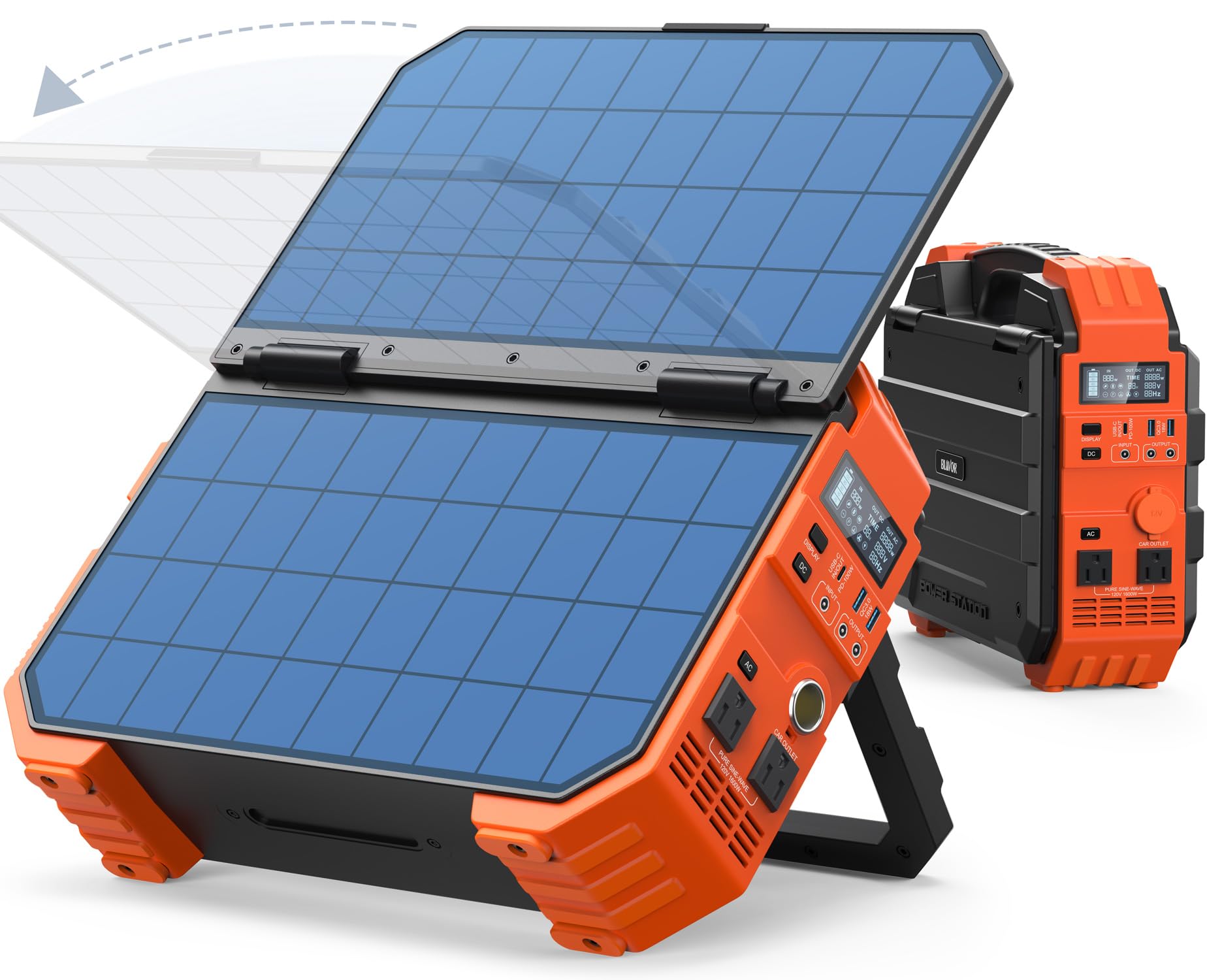
3. BLAVOR 1600W Solar Generator, 1024Wh
A freezer backup with its own solar panel hiding in the lid, for outages that outlast the battery.
A fold-out 40W solar panel built into the body is the defining move here. It stores 1,024Wh and pushes a 1,600W rated output with a 3,200W peak, enough to run a mini fridge or freezer plus a few other essentials.
The battery is the long-life kind you want: LiFePO4 cells rated for more than 4,000 charge cycles, with a smart battery management system (a chip that guards against overheating, overload, and short circuits). Eight output ports, including a bidirectional 100W USB-C that fast-charges laptops and phones, keep the whole family supplied. You can also add a compatible external panel for up to 200W of solar input if you want faster top-ups.
Pound for pound it is the easier unit to move at 26 pounds, and the built-in panel is what keeps it self-sufficient. The fair caveat is the ceiling: bare solar topping up on cloudy days is limited by that 40W panel, and a few owners mention the port labels are low-contrast and hard to read in dim light. Reliability is the recurring theme on the review pages — this is the pick to hand someone who wants the solar backup taken care of from the start.
The built-in-panel edge: a fold-out 40W solar panel and a 1,600W rated output with 3,200W peak in a 26-pound body you can actually lift.
One thing to know: the onboard solar alone is slow on gray days, and the port labels fade in low light — worth a glance before you plug in the freezer.
Suits you if: you want a freezer backup that can recharge itself from the sun without extra gear attached.
Think twice if: you need the fastest possible solar refill or the crispest labeling on a dark shelf.
4. BROWEY 1600W Portable Power Station
An award-styled solar generator with a 1,600W output that shrugs off heavy draws.
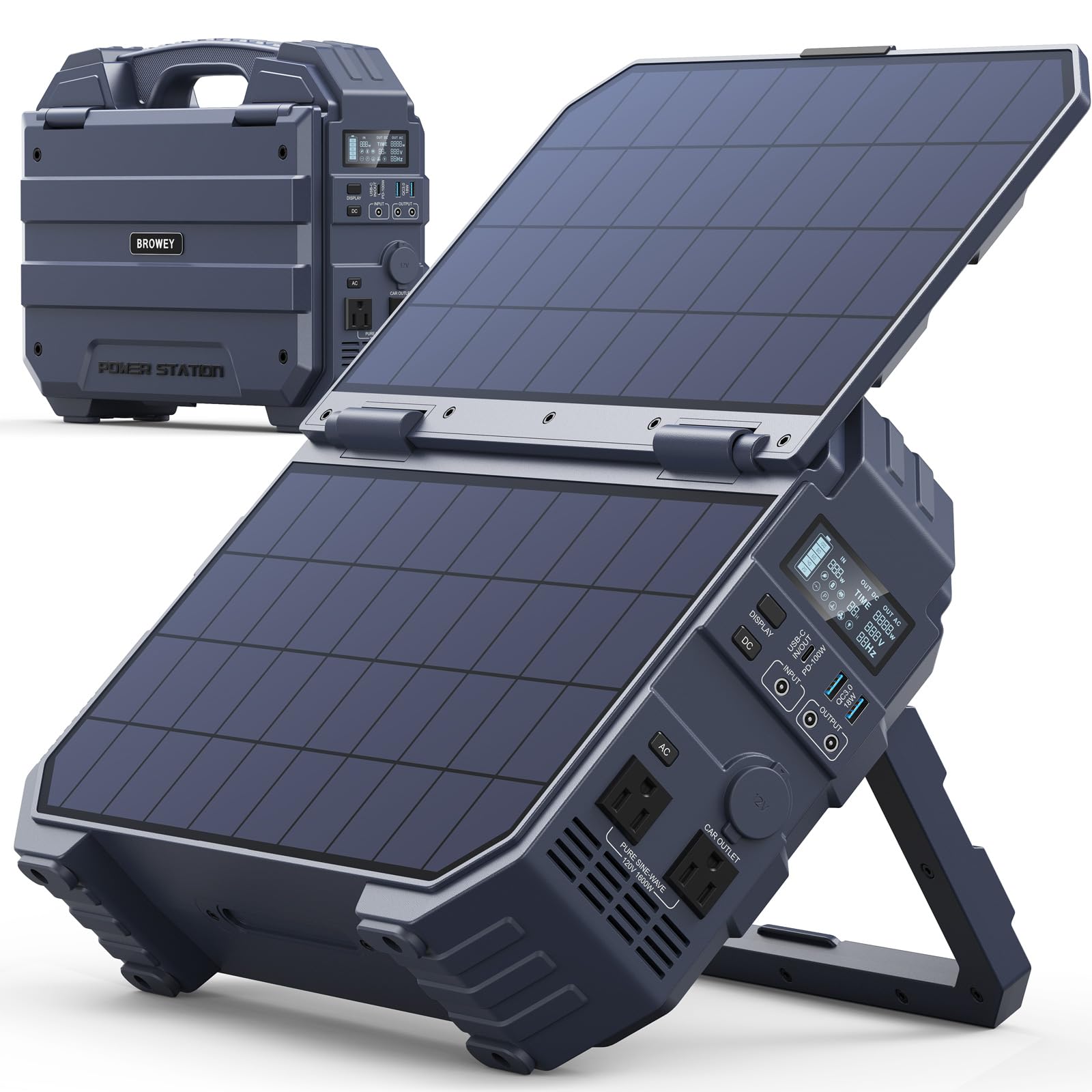
The rare freezer backup that wears its design credentials on its sleeve — this one is an iF Design Award 2022 winner, and it hides a 40W solar panel in its body with an MPPT controller (a chip that squeezes the most power out of a panel). The number that decides freezer duty, though, is the output: a 1,600W pure sine wave with a 3,200W peak (the highest burst it can deliver), enough to start a compressor and still run a coffee maker beside it.
Storage is 1,024Wh on LiFePO4 cells the maker rates for 3,000+ cycles to 80% capacity. That cell life matters for a freezer backup you plan to own for years. There are eight ports including a 100W USB-C PD, and you can charge it four ways — wall, car, the onboard panel, or an external solar panel. Owners who push it hard report it holding high-draw appliances like an electric grill without quitting.
The honest limit is the onboard solar: the built-in 40W panel is small for a battery this size, and owners agree it needs an external panel if you want solar to be your main recharge. Wall charging from dead runs about three hours. On the plus side, this is a station people buy two of for hurricane season — one owner literally had it run a refrigerator, a washing machine, and a window AC together. Compact at 26.5 pounds with a fold-out panel, it stores small between outages.
Why it earns a spot
- 1,600W pure sine output with a 3,200W peak for high-draw starts
- 1,024Wh LiFePO4 rated for 3,000+ cycles to 80%
- Built-in 40W solar panel plus four-way recharging
- Compact 26.5-pound body that stores easily between storms
Points to weigh
- The onboard 40W solar is slow for a battery this size — an external panel helps
- Owners who want fast solar must add a panel that is not included
Pick this when: you want a rugged, high-output freezer backup to run big appliances and you are willing to pair it with an external solar panel for fast top-ups.
Pass if: you expect the built-in panel alone to keep this 1,024Wh battery topped up quickly.
5. Anker SOLIX C2000 Gen 2 Portable Power Station
A big-capacity freezer backup that refills to full before your coffee gets cold.
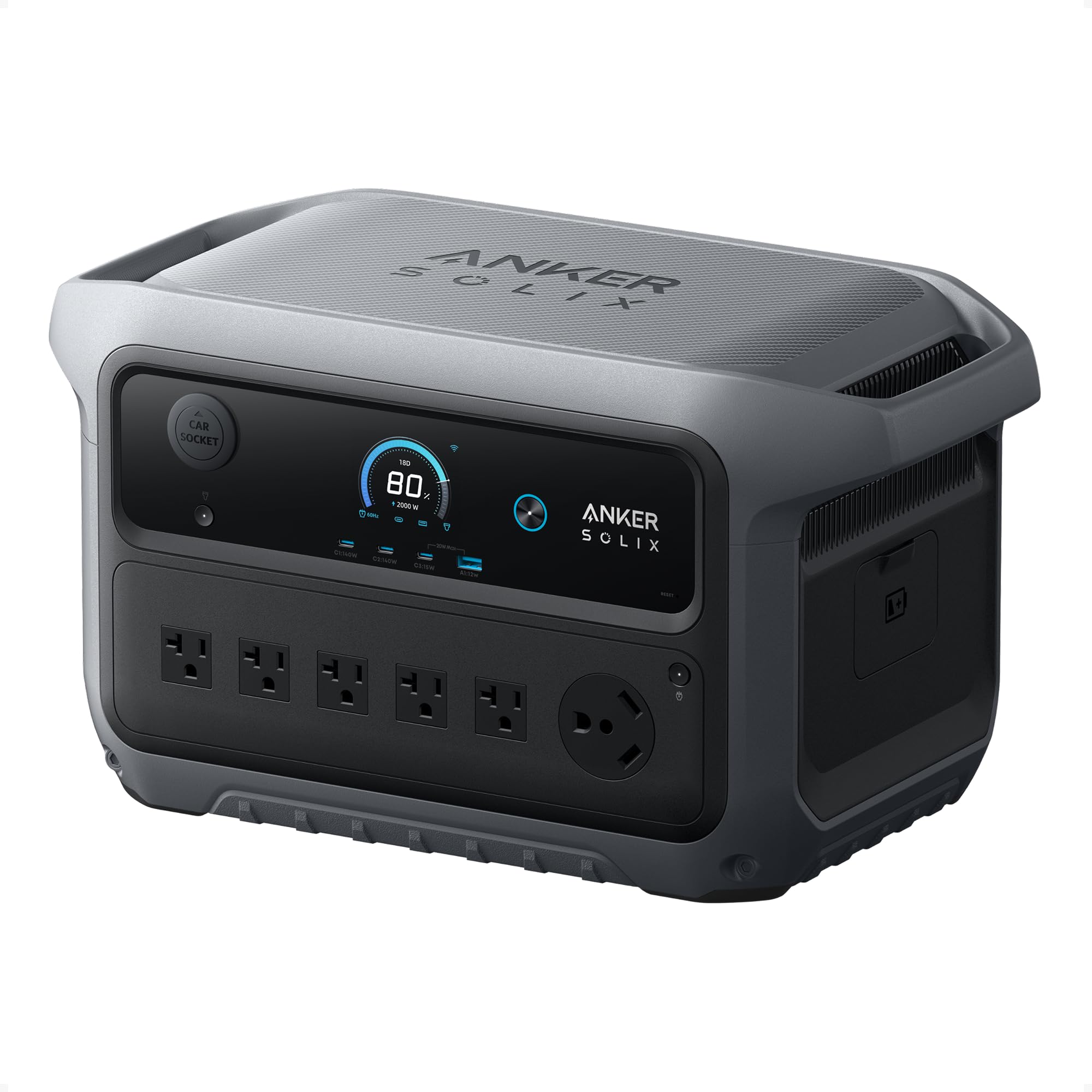
Double the tank of the value picks and roughly double the runtime. The C2000 Gen 2 carries a 2,048Wh LiFePO4 battery feeding a 2,400W rated output with a 4,000W peak, and it runs a dual-door fridge for up to 32 hours on a single charge — expand it with a battery and that figure climbs to 64 hours, so a full freezer can ride out a very long outage. If you add the expansion battery you can push capacity to 4kWh (4,000Wh).
The headliner is recharge speed: a full 0% to 100% in 58 minutes, which makes it easy to top up before a storm or between long outages. It sips only 9W on standby, so it is not slowly draining itself on the shelf. At 41.7 pounds with a handy footprint, Anker notes it is 25% lighter and 29% smaller than similar units. The five three-prong outlets are a small but real win in an older house with fewer grounded sockets.
The recurring gripe is weight — several owners pack it on a case with wheels rather than carry it. Running a full-size window AC on battery is short by design (around two hours), so this is a freezer-and-fridge unit first, an AC runner second. The thing everyone raves about is the capacity and the lightning recharge, and the 4.7-star rating reflects a unit that does what the spec sheet promises.
The recharge story: 2,048W of capacity is not the point here — the 0% to 100% in 58 minutes is, plus an expandable path to 4kWh for marathon outages.
The weight reality: 41.7 pounds is manageable but not light, and it will only run a full air conditioner for a short stretch.
Best for: households that want a large freezer tank and the fastest possible wall recharge to be ready for the next storm.
Not for: anyone who plans to carry it up stairs often, or who needs long air-conditioner runtime off battery alone.
6. BLUETTI FridgePower Portable Power Station
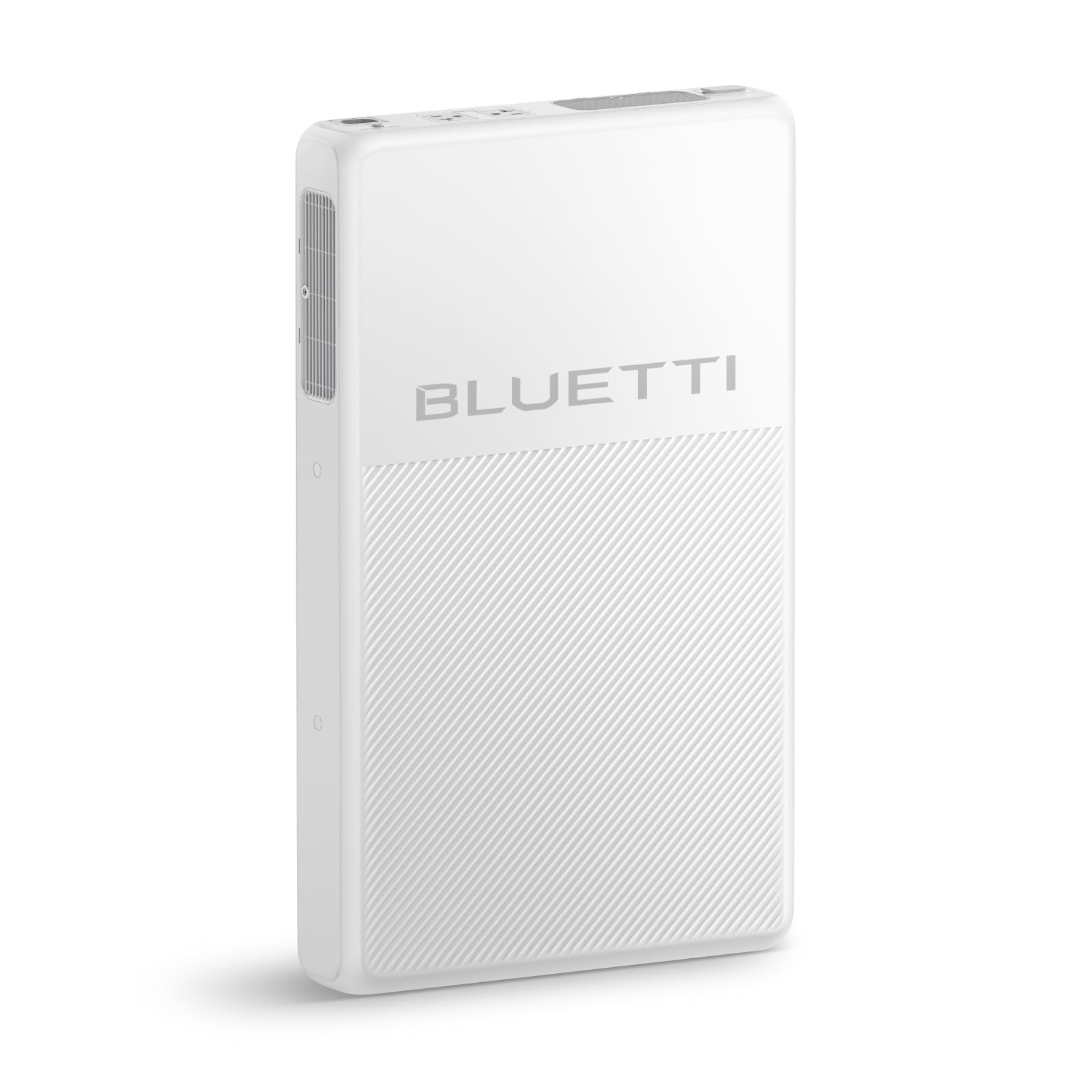
Purpose-built to sit behind your fridge and keep it cold through every blackout.
Most stations are boxes you plug a freezer into. This one is engineered the other way around — it is designed to live behind your refrigerator as permanent backup. A 75mm ultra-slim body (just under three inches) is made to fit the gap behind the fridge, on a wall, or beside a cabinet, so you do not lose floor space. It holds 2,016Wh with an 1,800W output and a 3,600W surge for compressor starts.
The engineering bet here is efficiency. A 4W standby draw means it barely touches its own charge sitting idle, and BLUETTI claims about 26% longer runtime (roughly 4.5 hours more) than same-capacity rivals. The 10ms UPS switch is the headline feature for a freezer: when the grid drops, the unit takes over in a blink so the compressor never cycles off. You can expand it to 8,064Wh with BLUETTI expansion batteries to stretch fridge runtime to as long as four days. It also works with Alexa and Google Home for voice battery checks.
The one practical caveat owners flag is weight and mounting — the 41.9-pound body is awkward to lift up onto the fridge top, so think about where it will live before it arrives. There is also a mild hum while it runs, a touch louder when charging overnight. For someone who wants a set-and-forget freezer guardian rather than a portable box, this is the most purpose-built option on the list.
The purpose-built angle: a 75mm ultra-slim body, a 4W standby draw, and a 10ms UPS switch make this the closest thing to dedicated fridge backup you can buy.
The catch: at 41.9 pounds it is heavy and awkward to hoist into place, and it emits a low hum while operating.
Made for: buyers who want a permanent, slim backup hidden behind the fridge and expandable to 8,064Wh for multi-day protection.
Skip if: you need a station you can carry room to room, since this one is built to stay put.
7. Jackery Explorer 2000 v2 Portable Power Station

Two thousand watt-hours you can actually lift, with a freezer-duty output behind it.
If you want serious freezer capacity without a unit that needs a dolly, this is the one. The Explorer 2000 v2 stores 2,042Wh and puts out 2,200W across three AC ports, and it does it at 39.5 pounds — Jackery says it is 41% lighter and 34% smaller than typical 2kWh LiFePO4 stations, thanks to the same Cell-to-Body (CTB) construction used in EVs. A full freezer can run for days, and the 100W USB-C PD port fast-charges laptops and phones alongside.
The recharge is quick and flexible: 0% to 80% in about 66 minutes on AC fast charging, or a full charge in 102 minutes using the app’s Emergency Super Charging mode. Solar charging takes as few as six hours with 400W panels. For a freezer backup, the 20ms UPS transfer (a 20-millisecond switch to battery power, certified under the UL1778 standard for uninterruptible power supplies) means the compressor never notices a blackout, and there is a Silent Charging mode that runs at just 30dB (about as quiet as a whisper) for nighttime top-ups.
One owner ran a fridge for over 21 hours on a single charge, and the pass-through switch is flicker-free on outage. The fair caution: a small handful of buyers hit idle drain that eats into runtime on a light, steady load — treat it as an efficient freezer station, not magic. It also needs a free software update (v1.1) for smooth solar charging, which Jackery provides. Crisp performance and a genuinely carryable weight make this the pick for someone who wants big capacity but moves it now and then.
Strengths that matter
- 2,042Wh and 2,200W AC output in a surprising 39.5-pound body
- 0% to 80% in 66 minutes; full charge in 102 minutes on Emergency Super Charging
- 20ms UPS transfer certified to the UL1778 standard for freezer protection
- 30dB Silent Charging mode for overnight recharge
Honest caveats
- Needs the v1.1 software update for smooth solar charging — Jackery provides it free
- Idle draw can reduce runtime on very light, steady loads
The strongest fit: you want the longest freezer runtime at a weight you can still carry, and you value a fast AC recharge.
Consider another pick if: you plan to run it near-empty on light loads and want every watt-hour to count.
8. BLUETTI Elite 300 Portable Power Station

Three kilowatt-hours of freezer backup, packed into the smallest 3kWh body around.
Capacity is the star here: 3,014Wh of LiFePO4 storage feeding a 2,400W output with a 4,800W surge for starting bigger loads. The trick is the packaging — BLUETTI calls it the world’s smallest 3kWh portable power station, nearly 59% smaller than traditional large stations, and it holds that shape without a wheelbarrow footprint. For a freezer plus fridge plus a few essentials, this runs a whole day on one charge.
It is built with RV owners in mind too, with a TT-30 RV outlet and a high-current 12V/30A DC output for 12V fridges, water pumps, and diesel heaters. The 10ms UPS switch protects critical devices during outages, and it recharges from 0% to 80% in as fast as 78 minutes. The LiFePO4 battery is rated for 6,000+ cycles, far beyond what most buyers will ever use.
The honest trade-off is solar and expandability. This model caps solar input low (60V/20A), and exceeding that open-circuit voltage can damage the MPPT controller — so it wants compatible portable panels, not just any array on the roof. It also cannot be expanded beyond its fixed 3,014Wh, unlike the Jackery and EcoFlow units above it. Owners lean on its build quality and app control, and one ran a fridge, fans, and a phone for a full day on a single charge. At 58 pounds it stays put once placed.
The value proposition: the most capacity per inch of any pick, with a TT-30 RV port and 6,000-cycle LiFePO4 cells.
What to plan for: solar input is capped at 60V/20A and the battery is not expandable — pair it with compatible panels and accept the fixed ceiling.
Ideal for: RV owners and home-backup buyers who want maximum capacity in the smallest possible footprint and value a 10ms UPS switch.
Look at alternatives if: you plan to run a large rooftop solar array or want the option to add batteries later.
9. EF ECOFLOW DELTA 3 Max Portable Power Station

A freezer backup with the muscle to run almost anything on your counter.
The headline spec is X-Boost, a mode that lets this 2,048Wh station push up to 3,400W of output to run appliances its base rating might not — EcoFlow says X-Boost powers 99% of household appliances, including your freezer. The LiFePO4 battery is built for a decade of daily use, and the unit is lighter than its 2,048Wh capacity suggests.
Recharge is fast: 0% to 80% in about 1.13 hours on EcoFlow’s X-Stream technology. For freezer duty the important number is the 10ms transfer time — under a hundredth of a second — so it slips into backup the instant the grid fails, keeping sensitive electronics and compressors safe. Ultra-quiet operation keeps it from being a nuisance overnight, and you can schedule charging and discharging through the EcoFlow app to cut your electricity costs.
Owners trust it for real food protection — one family described it keeping a refrigerator, meals, and basics alive through frequent outages — and its value-for-money reputation leads its review data. The honest note is that the app’s advanced modes take some exploring to master, and a few buyers find the backlit buttons dim in a dark room. It also arrives as a somewhat heavy unit once loaded up, so pick a permanent spot near the freezer if you can. A five-year service plan sweetens the long haul.
What it brings
- 2,048Wh LiFePO4 capacity with 3,400W X-Boost output
- 0% to 80% recharge in about 1.13 hours via X-Stream
- 10ms transfer time for near-instant freezer and electronics backup
- EcoFlow app scheduling to target lower-cost charging windows
Small catches
- The app’s advanced modes take time to learn
- Control buttons are dim to read in a dark room
The right call: you want X-Boost headroom to run a broad mix of appliances plus app control over your energy schedule.
Bear in mind: if you prefer simple physical controls, the app-first design here takes some getting used to.
10. Anker SOLIX F3000 Portable Power Station
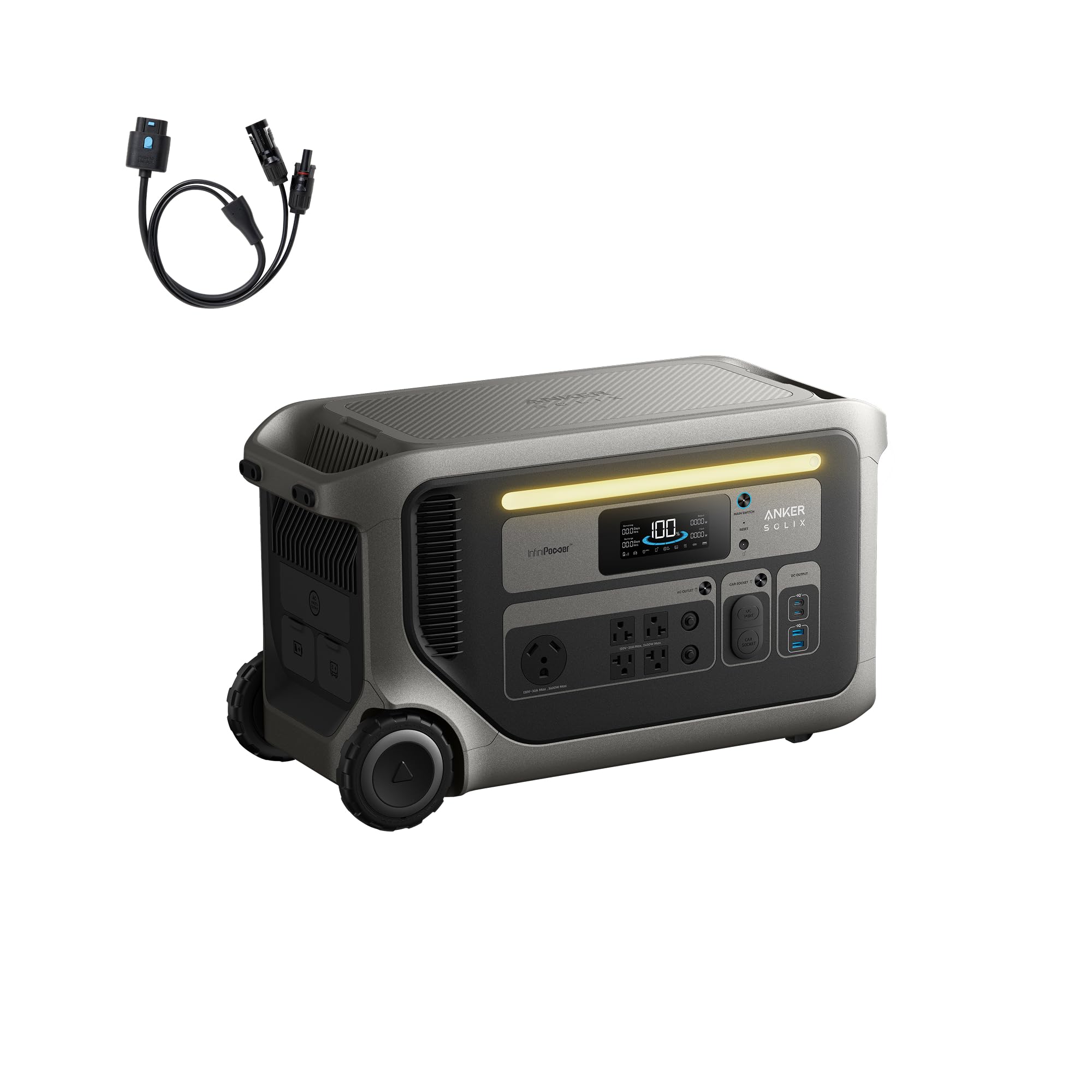
Home-scale freezer backup with room to shut up the whole kitchen when the grid goes dark.
This is a different class of machine. The F3000 stores 3,072Wh of LiFePO4 with an expansion path to 24kWh, and its low standby draw lets it run a 190W fridge for 42 hours or hold AC standby for 125 hours. For freezer protection during a serious outage, the numbers are exactly what you want: it keeps running long after smaller stations have quit. Anker says 3kWh covers essential appliances for 10 hours, and the expansion battery pushes that toward 80 hours.
Recharging is genuinely fast — up to 6,000W input when you combine a fuel generator with solar, and a 3,600W pass-through charging mode means you can run appliances at full power while refilling, so the freezer never waits. It supports 120V output or 240V when you pair two stations for heavier appliances. The 3,072Wh starting capacity and 2,400W of clean output cover a fridge, freezer, router, and lights with margin.
Weight is the honest sticking point — at 91.5 pounds this is a station you wheel, not carry, and owners appreciate the built-in 6-inch wheels for exactly that. It needs the app for port memory and charge-rate limits, which not everyone loves, and a few owners note occasional Wi-Fi dropouts. But when people simulate an outage, the F3000 runs most of the house, and the support team is legendary for fast replies. This is the pick for whole-home confidence, not camping trips.
Home-scale engineering: 3,072Wh expandable to 24kWh, 6,000W recharge input, and 3,600W pass-through so nothing stops while you refill.
The reality check: 91.5 pounds makes it a wheel-it-into-place unit, and the app is required for key settings.
Built for: homeowners who want to keep the fridge, freezer, and core circuits running for days and can dedicate a floor spot to a wheeled station.
Not the pick if: you need portability or want a station that works fully without a phone app.
11. EF ECOFLOW Portable Power Station 3600Wh DELTA Pro
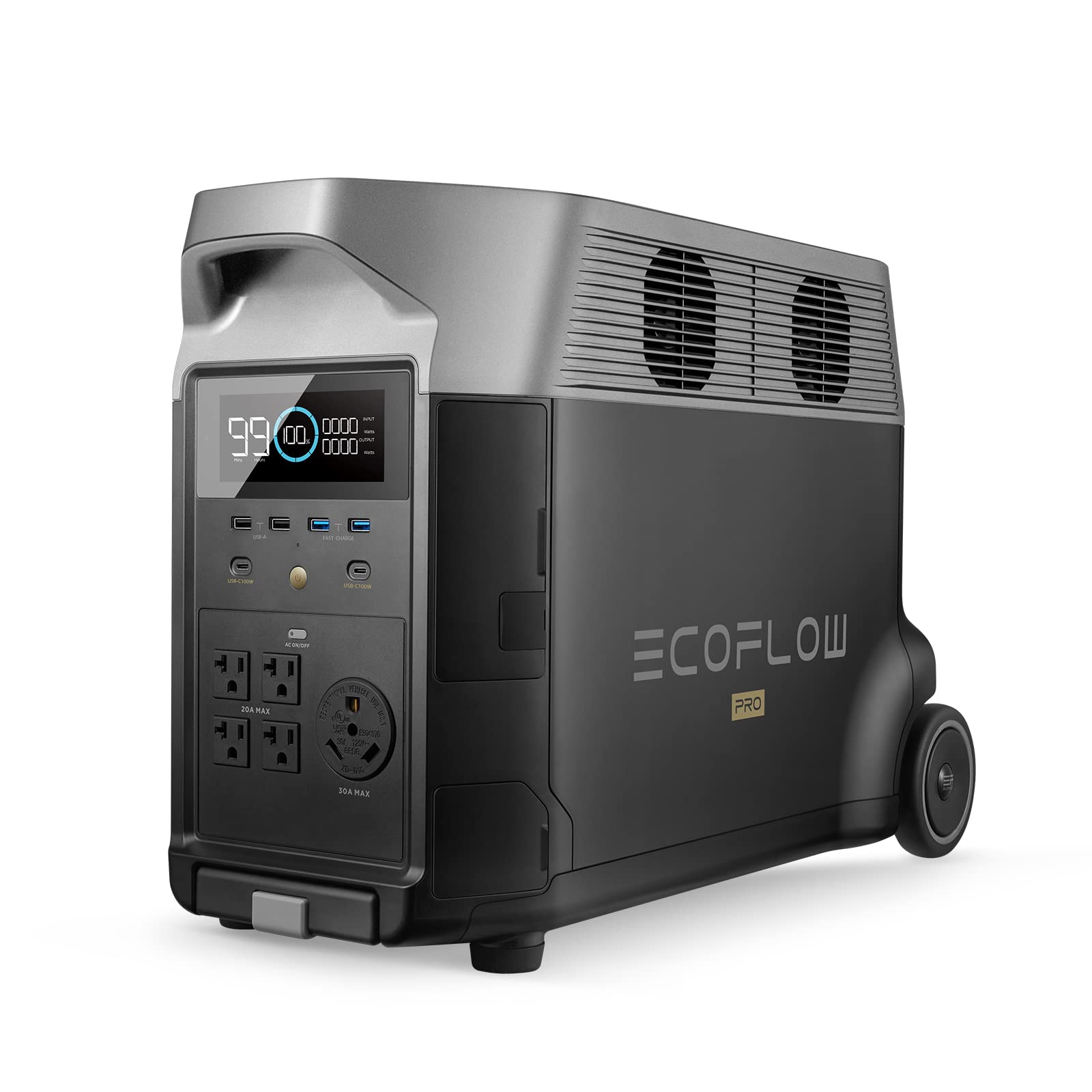
The biggest tank on the list, with fifteen ports and capacity that scales to whole-home scale.
If you want maximum stored energy, start here. The DELTA Pro packs a 3,600Wh LFP battery and a 3,600W AC output that climbs to 4,500W with X-Boost, and you can pair two units for 7,200W — EcoFlow says it powers 99.99% of heavy-duty devices. For freezer duty that means a compressor starts easily and a big deep freeze keeps running for an extended outage. Capacity expands from 3.6kWh up to 25kWh with add-on batteries, so it grows with your needs.
Charging is comprehensive: a full recharge in about 1.8 hours on a 240V outlet, 2.7 hours on a standard wall outlet, or solar in about 2.8 hours with four 400W panels. Fifteen output ports (two USB-A, two USB-A fast charge, two USB-C at 100W, five AC outlets, two DC outlets, a car power output, and an Anderson port) mean you can run the freezer and everything around it at once. The app monitors charge level, temperature, and input/output, and lets you customize settings.
It is the heaviest unit here at 99 pounds, so it is a wheel-it-in-and-leave-it station — plan its resting spot near the freezer and treat it as fixed equipment. The review consensus is performance-led: it runs a refrigerator, propane furnace blowers, lights, internet, and computers for around 15 hours on a charge, and it recharges in about two hours off a gas generator. One caveat owners note is that solar input is capped at 15A (amps, the rate of electrical flow), which limits how fast big solar arrays can refill it. For a household that wants the largest single-battery tank and the most ports to match, this is the pick.
Where it wins
- 3,600Wh LFP battery with 3,600W AC output (4,500W X-Boost, 7,200W paired)
- Capacity expandable from 3.6kWh up to 25kWh with add-on batteries
- 15 output ports including five AC outlets and two 100W USB-C ports
- Full recharge in about 1.8 hours on 240V or 2.7 hours on a standard outlet
What to accept
- 99 pounds makes it a stationary, wheel-it-into-place unit
- Solar input is capped at 15A, which slows large-array recharges
Choose it when: you want the largest single battery on the list, a broad port lineup, and an expansion path toward whole-home scale.
Think again if: you need to move the station around or plan to solar-charge it from a large array at full speed.
Understanding the Specs
Watt-Hours (Wh) — your runtime tank
Watt-hours are the total amount of energy a station can store, so a bigger Wh number means more hours before you have to recharge. To estimate freezer time, look at your freezer’s running draw (often a modest trickle once the compressor is humming) and divide the station’s Wh by it — but expect some energy loss, so give yourself a healthy margin. A 1,000Wh station and a 2,000Wh station on the same freezer will not run the same number of hours; the larger one roughly doubles your window.
Rated Output vs Surge (watts)
The rated output (the steady wattage number, like 1,500W) is what the station supplies continuously. The surge or peak number (like 3,000W) is the short burst that starts a motor. A freezer compressor needs that surge to kick on, so the peak figure is the one that decides whether your freezer actually starts or trips into overload protection. Always leave headroom between your appliance’s startup draw and the station’s peak.
LiFePO4 vs LFP — the long-life cells
LiFePO4 (lithium iron phosphate, often shortened to LFP) is the battery chemistry used across the best freezer backups here. Its advantage is cycle life: these cells are rated for thousands of charge cycles while holding most of their capacity, so a unit bought today stays useful for years. That matters far more for a backup you keep in a closet waiting for a storm than for a device you drain daily.
UPS Transfer Time (milliseconds)
A UPS (uninterruptible power supply) mode means the station senses an outage and switches to battery automatically. The transfer time in milliseconds is how fast that switch happens — the smaller the number, the less your compressor and electronics notice the blink. A 10ms or 20ms switch keeps a freezer running without a thaw cycle, while a plain station you plug in yourself has no automatic switch at all.
FAQ
How many watt-hours do I need to run a freezer overnight?
Will a 1,000W station start my freezer compressor?
What is the difference between a power station and a UPS for a freezer?
How long does a LiFePO4 freezer backup last?
Can I recharge a freezer backup battery with solar panels?
How fast do these stations recharge from a wall outlet?
Is it safe to run a freezer backup battery indoors?
Can I expand the capacity of a freezer backup battery later?
Do I need a pure sine wave output for a freezer?
How much should I weigh portability versus capacity?
Final Thoughts: The Verdict
For most people, the backup battery for freezer winner is the Jackery Explorer 1000 v2 because its 1,070Wh LiFePO4 tank, 1,500W output with a 3,000W surge, and one-hour recharge hit the exact combination a freezer needs — and it carries the strongest track record of the group. If you want the most capacity in the smallest footprint, grab the BLUETTI Elite 300 with its 3,014Wh and TT-30 RV port. And for whole-home protection that runs the fridge, freezer, and core circuits for days, the Anker SOLIX F3000 is the one to reach for. Pick the tank size that matches your longest likely outage, confirm the surge covers your compressor, and you will never watch a freezer full of food thaw again.
How We Picked
We do not accept paid placement. Every pick is matched to a real buyer and a real use-case; we do not hands-on test units.
Sources & Methodology
Specifications: manufacturer listings and product documentation. Review insights: verified customer reviews, as of September 2026. Pricing: not shown on this page (it changes often); check the current price via the retailer link.
As an Amazon Associate, Gadgets Feed earns from qualifying purchases. This does not affect which products we feature.