
Our readers keep the lights on and my morning glass full of iced black tea. As an Amazon Associate, I earn from qualifying purchases.
Specs are compiled from manufacturer listings and verified buyer reviews and can change over time — please confirm the key details on the product page before buying.
If you and one other person want a game where you win together or lose together, the pick that fits almost every table is Trogdor!! The Board Game — a 30-to-45-minute co-op with variable difficulty that players of any experience level can enjoy. The rest of this list covers eight more co-ops that genuinely support exactly two players, from a 20-minute silent card game to a 90-minute island defense.
I’m Min — the founder and writer behind Gadgets Feed. This guide is built by comparing the manufacturers’ published specifications and the patterns across verified customer reviews, so you get each pick’s real strengths and trade-offs instead of marketing spin.
Two-player co-op is its own shelf, and the games here are chosen for how they actually behave with one partner rather than a full group. Reading this will show you which of these 2 player co-op board games fits your table best.
Our Picks at a Glance


How To Choose The Best 2 Player Co-Op Board Games
The fastest way to waste money in this hobby is buying a game that says “2-6 players” and discovering the two-player version is a watered-down slog. Co-op games need to be checked against your table before your wallet, because the difference between a great pair game and a shelf-warmer is usually in the numbers on the box.
Check the supported player count first
Every pick here supports a two-player count, but “supports” and “shines” are different things. Some co-ops are tuned for a full group and ask two people to run multiple characters each. Others, like Tranquility, list a starting count of 1 and scale smoothly upward.
Match playtime to when you actually play
A 20-minute game is a weeknight habit; a 90-minute game is a planned evening. Playtime on the box usually assumes everyone already knows the rules, so your first session runs longer. If you play after work, the shorter box wins more often than the better box.
Table footprint matters more than box size
A small box does not mean a small play area. Tranquility ships in a compact box but players consistently note it needs serious table space once island cards spread out. Measure your table before you commit.
Look for adjustable difficulty
Co-op games live or die on their threat track. Trogdor!! lets players set variable difficulty, Forbidden Jungle offers an adjustable starting threat level, and Mists Over Carcassonne builds six escalating levels into the rulebook. A tunable game stays at your table far longer than a fixed one.
Decide how much replay you need
Some co-ops, like Bedlam in Neverwinter, are built as one-time campaigns with fixed puzzles and mysteries. That is fine if you want a shared story night and are happy to pass the box along afterward, but if you want 50 sessions from one purchase, look for variable setups instead.
Quick Comparison
| Model | Best For | Players | Playtime | Mechanic | Amazon |
|---|---|---|---|---|---|
| Greater Than Games Trogdor!! The Board Game★ Best Overall | Two players who want replayable laughs | 2 to 6 | 45 minutes | Area control, puzzle | Amazon |
| Gamewright Forbidden JungleBest Value | Pairs and small family groups | 2 to 5 | 45 minutes | Tile shifting, survival | Amazon |
| Lucky Duck Games TranquilityCompact Pick | Quiet, quick card sessions | 1 to 5 | 20 minutes | Silent card placement | Amazon |
| Ravensburger Horrified: Greek Monsters | Couples who love monster themes | 1 to 5 | 60 minutes | Monster hunting, pickup and deliver | Amazon |
| Greater Than Games Horizons of Spirit Island | Experienced pairs wanting deep strategy | Solo supported (base game 1-4) | 90 minutes | Spirit powers, area defense | Amazon |
| Hasbro Gaming D&D: Bedlam in Neverwinter | Pairs who want a one-time story campaign | 2 to 6 | 90 minutes | Escape room, puzzle solving | Amazon |
| Z-Man Games Mists Over Carcassonne | Carcassonne fans who want to team up | 1 to 5 | 45 minutes | Tile laying, ghost control | Amazon |
| Indie Boards and Cards Aeon’s End 2nd Edition | Deck-builder fans who want boss fights | 1 to 4 | 60 minutes | Deck building, boss battle | Amazon |
| Contention Games Slay The Spire: The Board Game | Committed pairs ready for long runs | 1 to 4 | 45 minutes | Deck building, combat | Amazon |
In‑Depth Reviews
1. Greater Than Games Trogdor!! The Board Game
Our pick — over 4.5★ from 650+ verified ratings; the strongest balance of quality and price.
The parody co-op that plays best with exactly the two of you in the room.
Two players who want one box to carry weeks of game nights should start here. Trogdor!! is a cooperative puzzle and area-control game for 2 to 6 players, with a 30-to-45 minute playing time and variable difficulty levels the players set themselves. That adjustable difficulty is the quiet reason it stays on the table: you can dial a session up or down depending on how sharp you both feel that night.
What wins people over is the gameplay itself — it is the runaway favorite in owner feedback, with difficulty a clear second. The humor lands too, and it works because the whole thing is built from the Brothers Chaps and James Ernest on a Homestar Runner foundation. One buyer sums up the range neatly: “It plays very well and is one of the few co-op games that anyone from beginner to advanced can enjoy.”
Here is the honest two-player read. While the box goes to 6, buyers report that co-op turn-taking feels pointless past two players and that the game is best with 1-2 — which is exactly your table. The one recurring gripe is the included accessories: the wooden meeples are not in the box, so you are playing with what ships. Compare its 12.5 x 9 x 3 inch box to the far smaller Tranquility and you get a sense of how much shelf it wants. At 4.8 stars across 600+ ratings, this is the crowd favorite on the list.
What keeps it in rotation
- Adjustable difficulty levels let two players set their own challenge
- A 30-to-45 minute playtime that fits a weeknight
- Replayable map setups across multiple game modes
- Polished, character-driven humor from the Homestar Runner universe
Where it stumbles
- The wooden meeples are not included in the box
- Turn-taking thins out once you add more than two players
Made for this: two players who want a funny, replayable co-op that scales its own difficulty.
Think twice if: you want a game that stays tight with a large group — that is not what the turn structure rewards.
2. Gamewright Forbidden Jungle
The team-escape co-op that asks two players to run one or two characters each.
Forbidden Jungle is the entry point for a pair who wants a proper adventure night without a rulebook marathon. It seats 2 to 5 players aged 10 and up for a 45-minute session, and the whole thing is co-designed by Matt Leacock, the mind behind the Forbidden series. You shift tiles to power up the portal, dodge threats, and get your team out before the jungle wins.
The gameplay is what carries it — it is the top positive aspect in owner feedback by a wide margin, with cooperative play a strong second. It is simple to learn and quick to set up, which is why it works with kids and entry-level players. Replayability holds up because the board plays out differently each run, so a pair can come back to it without memorizing a fixed puzzle.
Two players who want to split the load get exactly that: every character has different skills, so one person can run a single hero or double up. That structure is why it works so well at two. Stepping back to pure numbers, it runs 45 minutes against Tranquility’s 20 — a noticeably longer sit — and seats 2 to 5 against Tranquility’s 1 to 5. It outranks the Forbidden series it followed, with owners saying it is more challenging than Forbidden Island or Forbidden Desert and about the same level as Forbidden Sky.
The teamwork payoff: character roles with distinct abilities mean two players can genuinely divide the work rather than one running the whole board.
The honest catch: it ships with a lot of small parts, so plan your storage — owners warn to keep the box for that reason.
The fit: a pair or a small family who wants a tactical escape game that teaches fast.
Skip if: sprawl bothers you — with 44 cards and 47 miniatures, the footprint is real.
3. Lucky Duck Games Tranquility
Twenty minutes, no talking, one shared goal — the quietest co-op on the list.
If you want a co-op you can finish before the kettle cools, this is the one. Tranquility is a cooperative card game for 1 to 5 players aged 8 and up, with a 20-minute playing time and a rule that flips the whole experience: you communicate non-verbally. You and your partner fill the sea with numbered island cards and guide the ship home before anyone runs out of cards — in complete silence.
You can slip this box into a jacket pocket. It measures 3.35 x 3.35 x 3.35 inches, while Trogdor!! measures 12.5 x 9 x 3 inches — so it takes up far less shelf or bag space. New players learn it in a round or two. Inside you get 80 island cards, 25 border cards, 10 start and finish cards, 2 reference cards, and a rulebook. Mini-expansions add difficulty once the base rules feel easy.
Now the trade-off buyers need to hear up front: small box, big table. Owners repeatedly note that filling the grid eats up a large play area, and removing the outer guide row helps reclaim some of it. That is the thing to plan for. Play it solo, play it silent as a pair, or play it as a low-key group game — but clear the whole table first. It plays in 20 minutes against Forbidden Jungle’s 45, so it is the quick-session pick by a wide margin.
Where it shines: the silent, non-verbal rule makes it feel like a different kind of team puzzle instead of a standard co-op with a theme pasted on.
What to watch: the large footprint for such a small box — that is the recurring gripe, and it is worth measuring your table before committing.
Best with: couples who want a fast, meditative card puzzle with almost no setup.
Think twice if: your table is small — this one wants room to spread out.
4. Ravensburger Horrified: Greek Monsters
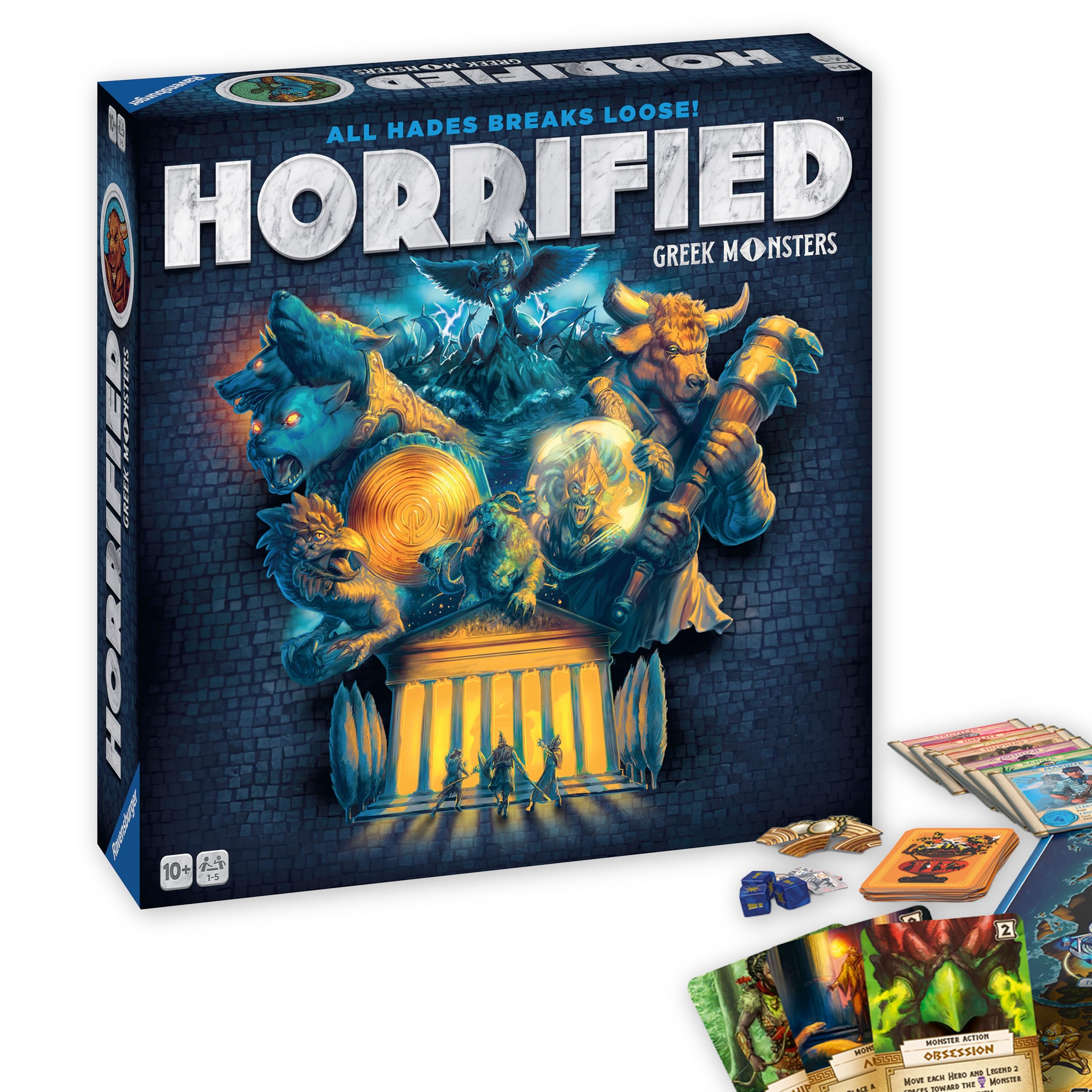
Defend Elysium from six Greek monsters that each demand their own plan.
If you and your partner want to feel like heroes instead of just moving pieces, this is your game. Horrified: Greek Monsters is a cooperative strategy game for 1 to 5 players aged 10 and up, and it runs 60 minutes. You work together to defeat up to six monsters — including Medusa, Cerberus, and Chimera — using critical thinking and teamwork. The pickup-and-deliver loop with puzzle solving keeps both of you busy, so no one sits around waiting for a turn.
Gameplay is what owners rave about most, with cooperative play a strong second and variety close behind. Each monster offers a unique challenge, so the matchup changes every session, and the components hold up — a gameboard, 6 monster mats, 6 monster figures, 7 hero tiles, 7 hero standees, 19 bases, and more. The art and theme carry it, and the adjustable mix of monsters lets a pair ramp the difficulty up or down.
Fair warning on complexity: the game is loved for being easy to learn but the difficulty is genuinely mixed in feedback — some find it quick to teach, others note a steep learning curve, especially with younger kids. It is a 60-minute sit, longer than Tranquility’s brisk 20, so budget a real chunk of an evening. For two players it works cleanly; you each take a hero and split the map. At 4.8 stars, this is a polished, well-loved entry in a popular line.
The theme win: six distinct monsters with their own abilities mean every game plays differently and the puzzle never feels copy-pasted.
Where it asks more: the rulebook can read dense on the first pass, so expect a learning round before the real game clicks.
The right table: couples or pairs who like monster themes and want a shared hero fantasy.
Not for you if: you want a rulebook you can absorb in five minutes flat.
5. Greater Than Games Horizons of Spirit Island

A streamlined, portable entry into the brain-burning Spirit Island co-op.
Pairs who already love heavy strategy and want a cooperative defense game should look here. Horizons of Spirit Island is a cooperative game where you play as Spirits defending your home from invaders, and it comes with five new beginner-friendly spirits and a guide to help you learn. It runs about 90 minutes and describes itself as a “portable alternative” — a smaller, low-cost version of Spirit Island that uses cardboard tokens instead of plastic minis.
The strongest praise is for the gameplay, with the broader Spirit Island experience a clear second and the value a strong third. Owners describe it as an affordable entry point that is fully compatible with the base game — the new spirits can slot into the full game, and its cards can replace progression cards. Setup is quick and the rules are streamlined, which makes it genuinely easier to learn and teach than the original.
Learning this game splits opinion. Some players find it a smooth start, while others say it is a bit complicated. One owner notes that if you are brand new to board games, it is “a bit more daunting to tackle than the base game.” That is the trade-off to weigh. If it clearly looks like your kind of game, some owners suggest skipping straight to the base game. If you want a smaller, portable version to test the water, this is the smarter first step.
Why it draws people in: five beginner-friendly spirits make a famously deep co-op approachable without losing its teeth.
The trade to know: it is still a Spirit Island game, so the learning curve is real even in this streamlined form.
For: experienced pairs who want a co-op that rewards planning and replay.
Not the starter: absolute board-game beginners should expect a steeper climb here.
6. Hasbro Gaming D&D: Bedlam in Neverwinter

A three-act escape room that plays like a Dungeons & Dragons night.
If you and a partner want one big shared story rather than an endlessly replayable box, this is the pick. Bedlam in Neverwinter is an escape-room-style cooperative mystery for 2 to 6 players aged 12 and up, split into three Acts of roughly 90 minutes each. You build characters by choosing a race, class, and starting weapon, then hunt an evil mage and his cult across a dynamic board that changes as you solve puzzles.
Buyers rate the game quality highest, with simplicity a close second. You do not need D&D experience — owners say the rules are easy to pick up. One player describes it as “It plays like the Clue escape room games but longer, with more gameplay elements, and still accessible.” Two players can comfortably split the puzzles, and the cooperative design keeps the table friendly.
Come in knowing the shape of it: the puzzles are fixed, so once you have solved the mystery there is very little reason to re-run the same story — replayability is the recurring knock on this one. It is a one-and-done campaign, not a permanent fixture, though plenty of owners pass their copy on to friends afterward. If you want a box you can beat once and pass along, that is the whole appeal; if you want years of replays, look elsewhere on this list.
What lands: the mix of combat and brain-teasers, plus the quality of the minis and boards, gives the campaign real weight.
The trade to know: it is a single-playthrough story — great for the journey, not built for repeated table time.
Reach for this if: you want a first-time friendly, story-driven adventure to share once with your partner.
Look elsewhere if: you need a box that rewards playing it over and over.
7. Z-Man Games Mists Over Carcassonne
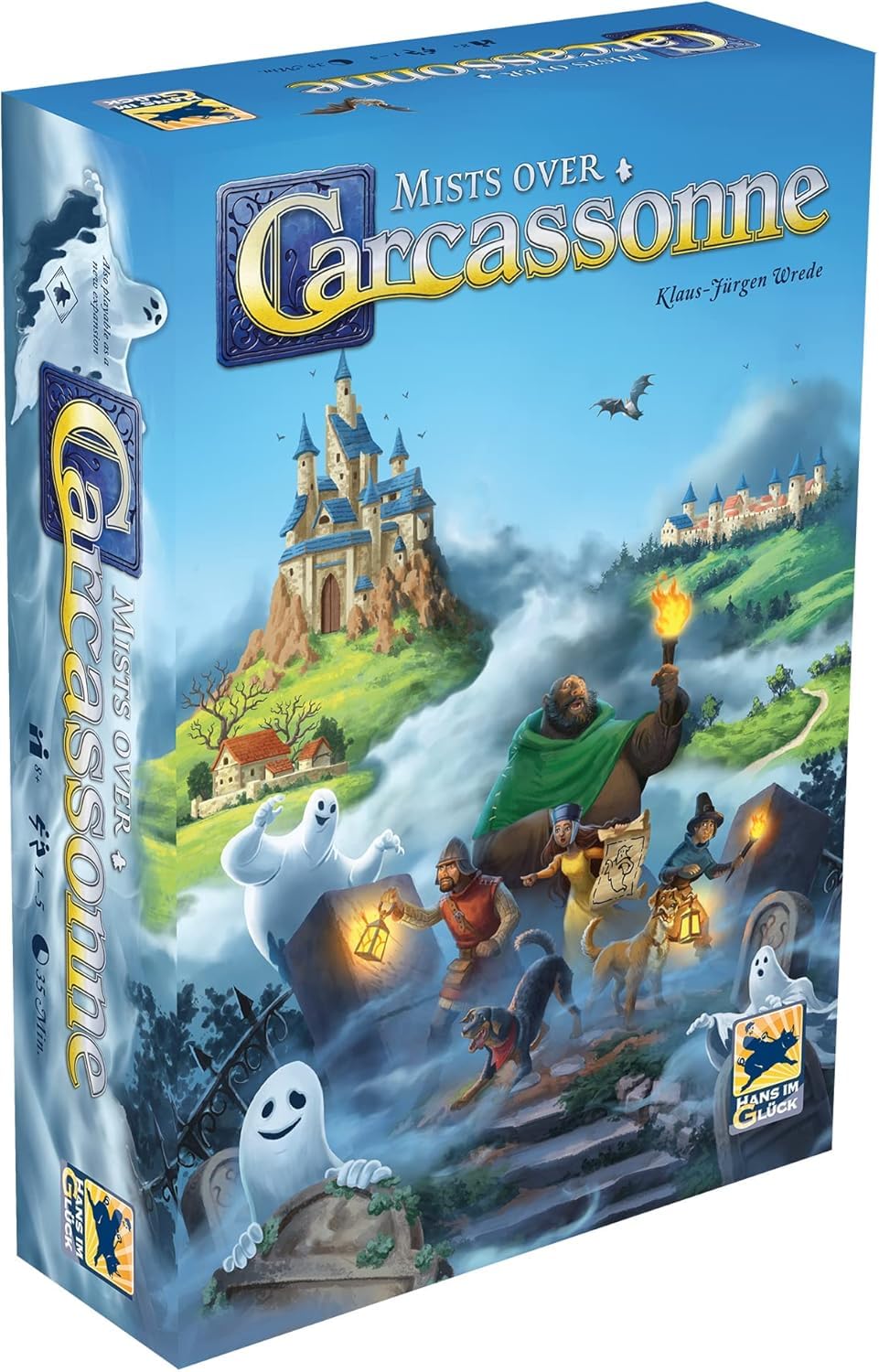
The classic tile-laying game rebuilt as a ghost-fighting team effort.
Two players who already know and like Carcassonne will slide straight into this co-op version. Mists Over Carcassonne is a cooperative territory-building game for 1 to 5 players, ages 10 and up, averaging 45 minutes. You place tiles, score points, and work together to keep ghosts in check — containing haunted ground in cemeteries and turning haunted castles to your advantage before the tiles run out.
What owners love most is the gameplay, with difficulty a close second — and the difficulty is the hook. Six escalating levels guide a pair through the mechanics step by step, so you can start simple and add ghosts, rules, and pressure as you go. It ships with 60 tiles, 1 big start-tile, a scoreboard, 30 meeples, 15 ghost-meeples, and 2 dog markers. Tile quality is solid and the art is excellent.
One honest note: the rulebook is wordy. Owners mention missing a mechanic or two on the first read, so read it carefully before your first game rather than mid-play. It plays as a standalone co-op or as a Carcassonne expansion — owners tend to prefer it standalone. For a pair, it is a clean two-player tile puzzle, and the six difficulty levels keep it from going stale after a single win.
The draw: six levels of escalating difficulty let two players grow into the game instead of drowning in it on day one.
The trade to know: the rulebook reads dense, so give yourself a full read-through before the first play.
Made for: Carcassonne fans who want to team up and keep the tile-laying they already love.
Skip if you: want zero rulebook homework — this one wants a careful first read.
8. Indie Boards and Cards Aeon’s End 2nd Edition

Boss-battle deck building where two players genuinely need each other to win.
Aeon’s End is the pick for a pair who wants cooperative deck building that plays like a video game boss fight on the table. It is a 1-4 player cooperative card game with a 60-minute playtime, and the hook is a no-shuffle system — you never shuffle your deck, so what you buy, play, and discard stays in a trackable order. Your job is to defend the underground city of Gravehold by turning gems into spells and weapons.
The gameplay leads the praise by a large margin, with difficulty and cooperative play close behind. The real edge for two players is the teamwork requirement: this is a game where no single player can carry the table, so a pair has to plan every purchase and cast together. One owner runs two games a week with a partner, drawn by the intense, thinky loop and the near-losses that luck sometimes rescues.
Come in expecting a learning curve. The instructions are not the clearest, and complexity is genuinely mixed in feedback — owners describe needing outside help to get going before it clicks. But once it does, the variety of mages, markets, and Nemeses gives it deep replay value. Setup runs 3 to 5 minutes once cards are pre-packaged. This is the one that turns hesitant partners into weekly players.
Why the team play sings: the no-shuffle mechanic keeps both players tracking the same order, so every decision is a shared one.
The trade to know: the first playthrough can frustrate before it clicks — some find the rulebook needs supplementing with a video walkthrough.
Right for: deck-builder fans who want a co-op demanding constant communication and planning.
Not first: total newcomers to deck building should expect a stiff opening learning curve.
9. Contention Games Slay The Spire: The Board Game
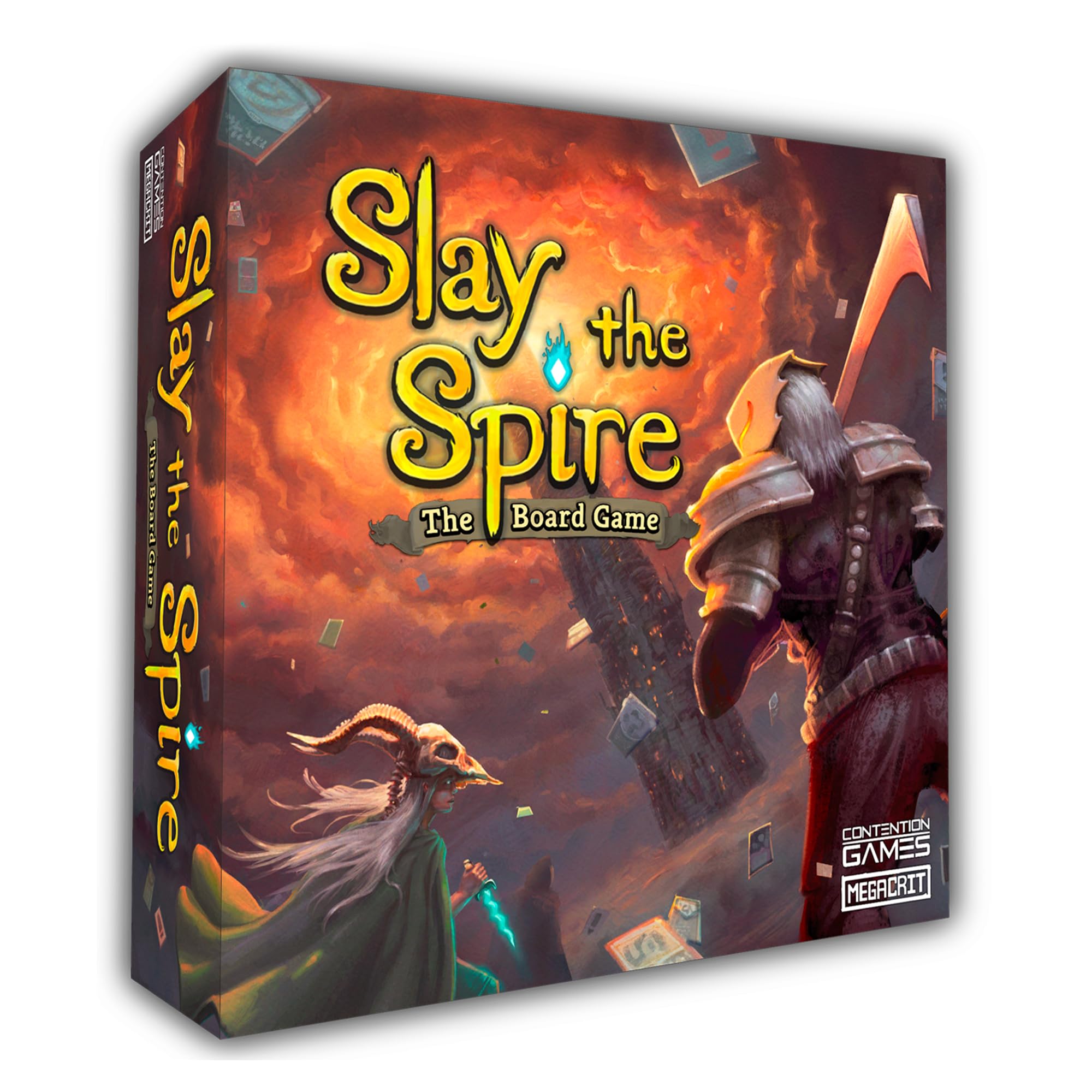
The video-game deck builder that turns two players into one relentless team.
This is the premium pick — the one for a pair who wants a long, meaty cooperative deck-builder and does not mind clearing the evening for it. Slay The Spire: The Board Game is a 1-4 player cooperative fantasy game with a 45-minute learning time and an ages-12-plus recommendation. You craft unique decks from over 650 cards and fight your way through a fantasy world of strange creatures and powerful relics.
Owners rave about the gameplay above everything, with quality a close second and ease of learning and multiplayer tied right behind. The physical package is a big part of the appeal — 4 miniatures, 4 player boards, 2 main boards, plus 112 small cards and 26 large cards, many of them pre-sleeved. Its box even lets you save a run mid-session, so a long campaign does not have to be finished in one sitting.
The honest caveat is time. Replayability is mixed in feedback, and the recurring note is that a full run can run very long — some customers note a first playthrough stretching to around five hours, and setup and teardown take real effort. It is also a game that rewards knowing what you are doing: without a plan, you will not beat even the easiest difficulty. For a committed pair who loves deck-builders, that length is the feature, not the flaw.
The headline appeal: a faithful adaptation of the video game with over 650 cards and pre-sleeved components ready to play.
The trade to know: a first run can eat an entire afternoon — this is not a light weeknight game.
For: dedicated pairs who want a long, deep cooperative deck-builder they can return to.
Think twice if: you want a quick session — the time commitment here is the deal you are making.
Understanding the Specs
Player Count
Player count is the number on the box that says how many people a game seats, and for a co-op it decides whether the game is tuned for your exact table. A box that lists “2 to 6” supports two players but may play very differently at two than at four — turn-taking in a co-op can thin out with more heads. Read the count as a range, then check whether two is a natural fit or a squeezed-in minimum.
Playtime
Playtime is the average length of one session, usually measured with experienced players who already know the rules. The trade is simple: a 20-minute game becomes a weeknight habit, while a 90-minute game becomes a planned evening. When you are picking for two people with busy schedules, the playtime number often matters more than any clever mechanic.
Table Footprint
Footprint is how much physical space a game claims once it is set up, and it has nothing to do with box size. A compact box can still demand a big table once its cards, tiles, or boards spread out. For a two-player game you can play anywhere, footprint is the spec that decides whether the game actually leaves the shelf.
Replayability
Replayability means how many different sessions a co-op game gives you before you have seen everything. Games with fixed puzzles and one-time mysteries are designed to be played through once. Games with variable setups and multiple difficulty levels keep rewarding return visits. Decide if you want one great story night or a box that pays off over many evenings, because that choice points to entirely different games.
FAQ
Do these games work with exactly two players?
What does “cooperative” actually mean in these games?
Which of these is best for a short weeknight session?
Can you play these games solo?
Which of these has the most replayability?
How long does it take to learn these co-op games?
Which pick is best for a couple who plays mostly as a pair?
Do any of these need a big table?
Are any of these games one-time experiences?
Can two players still enjoy a game that seats up to five?
Final Thoughts: The Verdict
For most pairs, the 2 player co-op board games winner is the Trogdor!! The Board Game because it plays best with two, sets its own difficulty, and gives you a 30-to-45 minute session with laughs built in. If you would rather have a quiet, twenty-minute card puzzle, reach for Tranquility. And if you and your partner want one epic story night to share, the campaign-style Bedlam in Neverwinter is the one to grab. For the pair who wants depth, the two heavyweights here — Horizons of Spirit Island and Slay The Spire — are worth the extra table time, and the crowd favorite at 4.8 stars across 600+ ratings earns its top spot.
How We Picked
We do not accept paid placement. Every pick is matched to a real buyer and a real use-case; we do not hands-on test units.
Sources & Methodology
Specifications: manufacturer listings and product documentation. Review insights: verified customer reviews, as of September 2026. Pricing: not shown on this page (it changes often); check the current price via the retailer link.
As an Amazon Associate, Gadgets Feed earns from qualifying purchases. This does not affect which products we feature.