
Our readers keep the lights on and my morning glass full of iced black tea. As an Amazon Associate, I earn from qualifying purchases.
Specs are compiled from manufacturer listings and verified buyer reviews and can change over time — please confirm the key details on the product page before buying.
If you are still grabbing a scuffed alley house ball off the rack every Friday night, the fix is a ball that actually fits your hand. A ball drilled to your own fingers stops the death grip and lets your arm swing free, which is the single fastest way a beginner’s score climbs. The picks below cover both jobs a new bowler needs done: rolling straight at spares and, later, learning to curve the ball into the pocket. Some are built to go dead straight, some are built to hook, and buying the wrong one is the most common first-bowler mistake there is.
I’m Min — the founder and writer behind Gadgets Feed. This guide is built by comparing the manufacturers’ published specifications and the patterns across verified customer reviews, so you get each pick’s real strengths and trade-offs instead of marketing spin.
You will see what each weight and shell actually does on the lane, so your first ball keeps its place in the bag. Here is what to know before you buy the bowling balls for beginners.
Our Picks at a Glance


How To Choose The Best Bowling Balls For Beginners
The first decision is not the brand or the color. It is which job you want the ball to do: knock down spares in a straight line, or teach your hand to curve the ball into the pocket. Those two jobs want different shells, and almost every wrong first purchase comes from mixing them up.
Straight or Hook — Pick Your Shell First
A polyester shell is slick plastic, so the ball skids rather than bites, and it rolls straight. That makes it forgiving for a new bowler who is still building a repeatable release. A reactive shell grabs the lane and turns, so it is the ball you graduate to once your straight game is consistent. Urethane sits between the two — it reads the lane earlier and holds the line with less sideways snap. Beginners who skip straight to reactive shells usually fight their own ball all night.
Start Lighter Than You Think
House balls feel lighter than they are because they do not fit. The old rule was roughly a tenth of your body weight, but a drilled ball rolls lighter because your fingers are not squeezing it. If your standard ball is 12 pounds, many new bowlers do fine in the 10 to 12 pound range while their wrist builds up. If a ball comes undrilled, you choose the weight at order, so pick one you can carry through a full three-game set without your forearm burning.
Undrilled Means a Pro Shop Bill
Many beginner balls ship with no finger holes so the shop can match your span and punch them to your hand. That is a good thing — a custom fit is the whole point. Just budget for the drilling service on top of the ball, and expect a shop to grip the ball off its own measurements. A couple of brands here offer custom drilling and name engraving straight at checkout, which saves you the extra trip.
Core Shape and Fun Details
The core is the weight block hidden inside the ball, and its shape decides how the ball behaves as it rolls. A symmetrical core like the time-tested light bulb shape gives a smooth, even reaction that is easy to read. A basic three-piece build trades that punch for predictability, which is exactly what a beginner wants while learning. And a scent-additive ball smells like birthday cake every time you pull it from the bag — a feature some bowlers love and others could not care less about.
Quick Comparison
| Model | Best For | Weight (lb) | Coverstock | Core | Amazon |
|---|---|---|---|---|---|
| Hammer Raw Bowling Ball★ Best Overall | First hook ball | 12 | Juiced reactive | Raw Hammer symmetrical | Amazon |
| Brunswick T Zone Bowling BallBest Value | Spare shooting | 10 | Polyester | 3-piece | Amazon |
| Columbia 300 White Dot Wild OrchidBest Straight Shooter | Straight-line beginners | 10 | Polyester | Bullet | Amazon |
| ELITE Star Polyester Bowling Ball | Custom drilling and engraving | 14 | Polyester | Plastic construction | Amazon |
| Bowlerstore Columbia 300 White Dot | Senior and lighter bowlers | 10 | Polyester | Bullet | Amazon |
| KR Strikeforce Polyester Undrilled Ball | USBC league newcomers | 8 | Polyester | Undrilled | Amazon |
| Brunswick Rhino Bowling Ball | Light-oil league nights | 14 | R-16 reactive | Light Bulb symmetrical | Amazon |
| Storm Mix Urethane Bowling Ball | Dry lanes and spares | 10 | U1S urethane | Traditional 3-piece | Amazon |
| Storm Tropical Surge | Novice to amateur hook | 12 | Reactor Pearl Reactive | Surge | Amazon |
In‑Depth Reviews
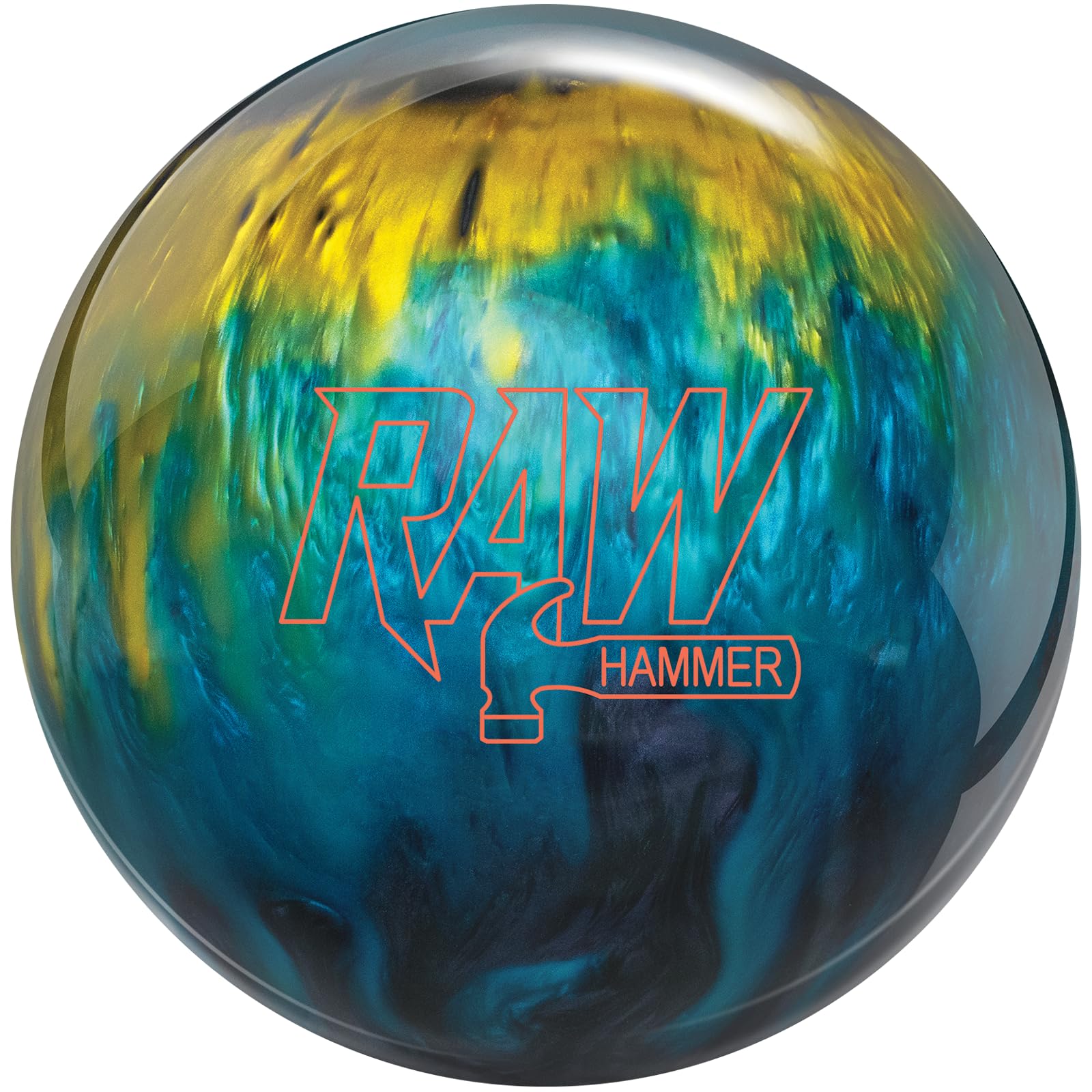
1. Hammer Raw Bowling Ball
Our pick — over 4.5★ from 300+ verified ratings; the strongest balance of quality and price.
The 12-pounder that teaches your first hook without punishing a stray release.
This is the pick for the beginner who already throws a straight house ball and wants to learn curve. The Raw Hammer carries the Juiced coverstock (a reactive shell that grips the lane and turns toward the pocket) and the Raw Hammer symmetrical core (a hidden weight block shaped to roll evenly rather than snap hard). The 12-pound version is a sensible middle weight — enough to carry some momentum into the pins without tiring out a new wrist. Its 3-piece construction keeps the reaction calm and readable, which is exactly what a first performance ball should do.
What buyers rave about most is how beginner-friendly the reaction is. It hooks, but gently — one reviewer sums the ownership experience up nicely: “Got into bowling in the last couple of years and this was the first ball I bought.” The same voice notes it stays in the bag even after a bowler moves on to more aggressive equipment, because it is reliable when the lanes demand a straighter look. It is honest about its limits too: the reaction fades on heavy oil, so it shines on light to medium conditions and dry or broken-down lanes, not a flooded tournament shot. Against the ELITE Star’s 14 pounds, this 12-pound build is noticeably easier to swing through a long set.
The drill-in detail that matters: like every serious first ball, it ships undrilled, so the pro shop punches the finger holes to your hand. That fit, not the shell, is what tightens your release. The colors draw compliments on the rack. If you bowl league on light or medium oil, this is the smoothest path from straight bowling to a genuine hook game.
Where it earns its keep
- Juiced reactive shell gives a controlled, learnable hook
- Symmetrical core rolls smooth and predictable for a beginner
- 2-year limited manufacturer’s warranty backs the build
- 12 lbs keeps the swing easy while still driving through pins
What to plan around
- Ships undrilled, so budget for a pro shop fitting
- Reaction thins out on heavy oil — best on light to medium conditions
Best for: the new bowler ready to move past a house ball and learn a curve.
Think twice if: your lanes are usually heavy oil, where this ball’s reaction fades and you would want more ball.
2. Brunswick T Zone Bowling Ball
The sparkly straight-roller that turns a new bowler’s spare game into a lock.
Here is the ball you buy when you want your first ball to go straight and stay straight. The T Zone runs Brunswick’s polyester blend (a hard plastic shell that skids over the oil and never breaks) at a light 10 pounds, with an 8.5-inch diameter that sits squarely in standard tenpin territory. Because it does not hook, it takes the guesswork out of spares: you aim, you throw, it goes. New bowlers learning a repeatable release get their form cleaned up far faster with a ball that never surprises them.
Parents buying a first ball for a kid tend to land here, and the results speak for themselves. Buyers report it rolls straight and true from the first frame. The shell is durable enough to survive a young bowler dragging it off the rack, and the “Berry Blast” look gets plenty of love — described more than once as reminding owners of a night sky. It performs exactly as expected on old wood lanes and shoots dead straight at the corner pins, which is precisely the job.
The one practical wrinkle: the ball arrives without holes, so you pay a shop to fit it to your hand. More than one owner notes that fitting bill can run close to the ball itself, so factor that in — it is not a defect, just the reality of buying undrilled. Some also report occasional cover durability questions, though the vast majority bowl on without issue. If your priority is a cheap, no-drama straight ball to build a foundation, this is it.
Reach for this if: you want maximum forgiveness and a ball that never fights your aim.
Look elsewhere if: you are chasing hook out of the gate — polyester will not give it to you.
3. Columbia 300 White Dot Wild Orchid Bowling Ball
A 10-pounder built to roll dead straight and clean up every spare you leave standing.
If the word “beginner” describes your game and you do not want a hook to manage yet, this White Dot Wild Orchid was made for you. It pairs a polyester shell with the Bullet core — a simple weight block that does nothing fancy, by Columbia 300’s own description, just a straight shooter. A Crown Factory Polish finish leaves the surface super shiny, so the ball glides the lane’s front end and stays true on the back. At 10 pounds it is easy to carry through a full series while you rebuild your confidence.
What wins people over is the build quality and the look. Buyers call it “10lb ball true to size, vibrant color, great value, well-made quality.” The pink, white, and silver colorway earns genuine compliments, and a story circulating in the reviews involves a daughter racking up more strikes with this ball than any other. It is equally at home as a spare ball for someone whose main ball already hooks — pull it out for the corner pins and let it go straight.
Set expectations honestly on two points. It ships with no holes, so a pro shop has to drill it, and the ball carries a 1-year limited manufacturer’s warranty rather than a longer one. Neither is a strike against it for a first ball. If you like a bright, polished straight-roller that flatters a developing throw, this is a smart starter.
The bottom line: top-tier fit for a new bowler who wants a durable, good-looking ball that never hooks off the lane.
The fine print: undrilled from the start and backed by a 1-year limited warranty, so add a pro shop fitting before first league night.
Holds up when: your goals are consistency and spare percentages, not curve.
Not the one when: you have already decided you want a reactive hook ball — the polished polyester here will not turn.
4. ELITE Star Polyester Bowling Ball – Customizable with Basic Drilling & Engraving Options
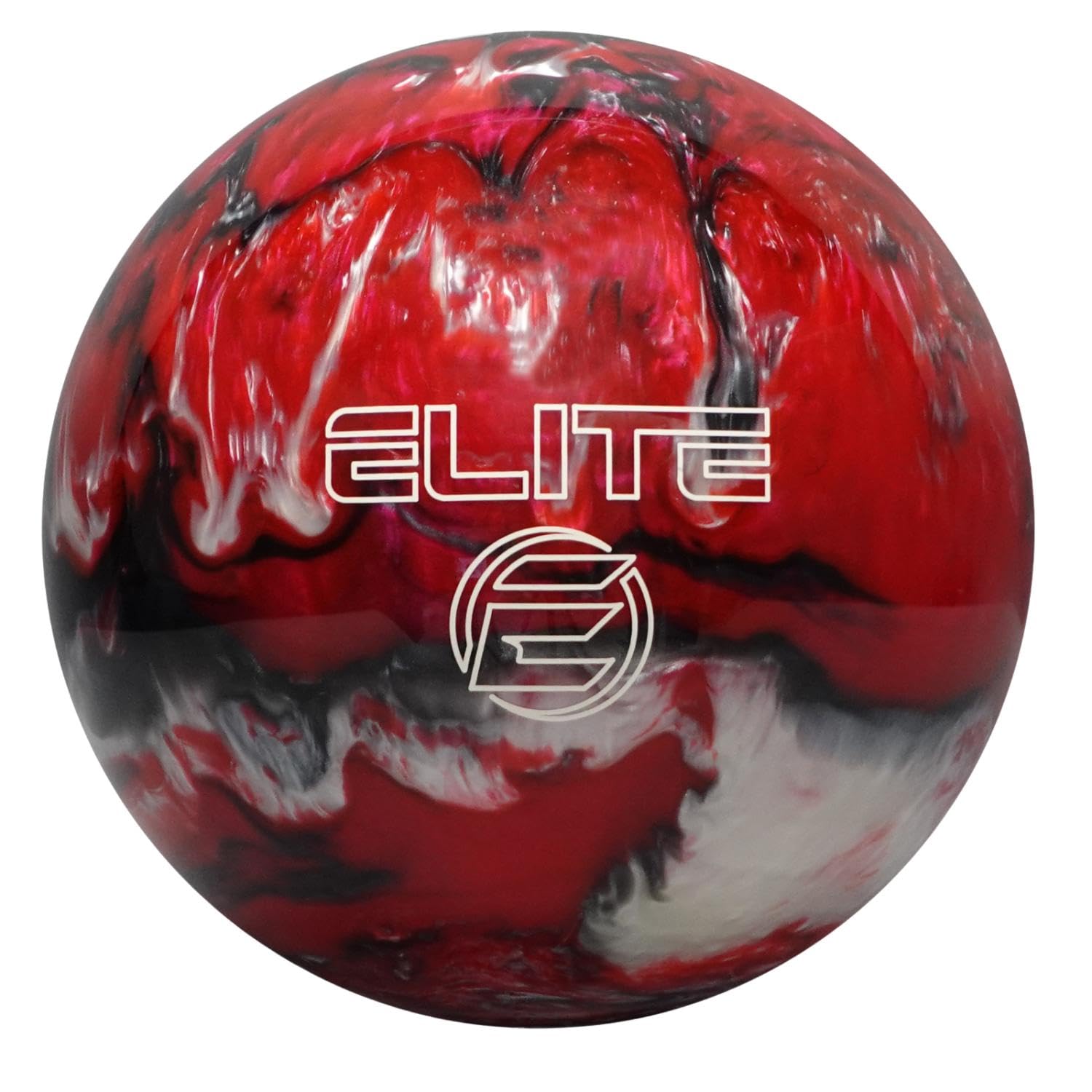
The straight shooter that lets you add your own name before it ever hits the lane.
The draw here is choice. This 14-pound ELITE Star lets you pick color and weight, add custom drilling to fit your hand, and even add a name engraving — all before it ships. Its polyester build is designed not to hook, so it is a genuine straight ball for beginners, spare shooting, and league play. Its 9-inch diameter is fractionally larger than the Hammer Raw’s 8.5 inches, and that extra size is the kind of thing a pro shop works around when drilling. One buyer turned to it simply because the local alley had stopped carrying 6-pound balls, and it worked out beautifully.
What the reviews keep circling back to is the surface and the personalization. One owner sums up the custom fit: “Color design is awesome, the size and placement of the finger holes is perfect, along with the name and the low cost.” Full sets of families have tried it and loved it, and a parent notes a daughter’s first league ball works and looks the part. That custom-drilling option is the value play — it takes the guesswork out of the pro shop visit.
Weigh it honestly. Like every ball on this list, it ships undrilled unless you select the drilling add-on, and a small number of owners mention the surface cracking in spots over time — a durability note worth knowing without overstating it, since the overwhelming majority bowl on without a problem. It also carries a 1-year limited warranty, and the fine print warns that a ball under 10 lbs with adult-size drillings is not covered. Pick your weight with that in mind.
What makes it stand out
- Custom drilling and name engraving available at checkout
- Straight polyester roll is perfect for spare and beginner play
- Wide range of vibrant colors and weight options
- Fans report improved confidence and consistency once fitted
Worth knowing before you buy
- A handful of customers note the surface cracking in spots over time
- Balls under 10 lbs with adult drilling sizes fall outside the warranty
Made for: the bowler who wants one ball, fitted and personalized to their own hand.
Skip if: you would rather grab something off the shelf today — the custom options add a step before it ships.
5. Bowlerstore Products Columbia 300 White Dot

A light, polished straight ball that suits a newer senior bowler learning the lane.
Weight and simplicity are the whole pitch on this one. At 10 pounds, this White Dot in Black/Purple/Silver shares the same Bullet core and polyester coverstock as the Wild Orchid, with the same Crown Factory Polish finish — a smooth, shiny surface that rolls straight and predictable. That combination is tailor-made for a new bowler who wants the ball to stay out of the way while they work on aim. The lighter heft makes it comfortable for someone easing back into the sport or bowling their first full season.
Owners highlight two things: size and looks. Owners call the colorway beautiful, and the 10-pound build suits a bowler who wants control. One buyer writes that it is a “nice ball for a new senior bowler” with a good finish, and notes time will tell as they settle into it — an honest read on any first ball. Another simply calls it the “perfect first time ball.”
Two things to know. It ships undrilled, so the pro shop does the fitting, and it is over half a decade into its production run — one owner bought a “sold as used” unit that arrived brand new in the original box because it was being phased out. That does not hurt performance in the slightest: drilled for a 12-pound spare shot, it does exactly what it was made for. If you want a light, honest straight ball to build form, this is a dependable route.
Who it suits: newer bowlers, and especially seniors, who want a 10-pound straight ball that is easy on the body and simple to aim.
Keep in mind: it still ships undrilled and carries no glossy feature set — it is a plain, proven straight roller.
Pick this one when: control and a comfortable weight matter more than curve.
Pass when: you want a modern reactive hook ball and do not need the lighter 10-pound heft.
6. KR Strikeforce Polyester Undrilled Bowling Ball
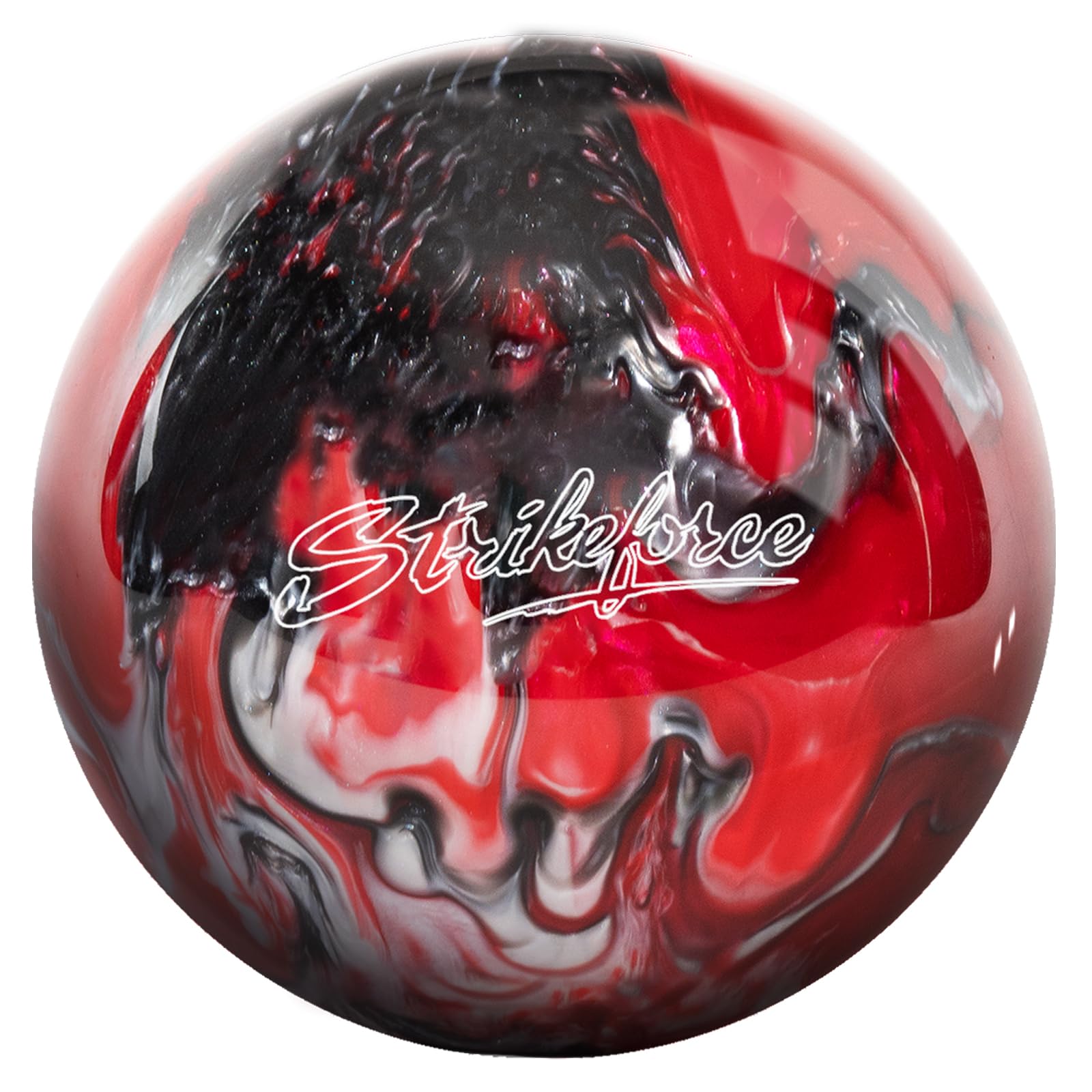
An 8-pound polyester ball that is legal for league and gentle on a new bowler.
Buy this if you want your first league-legal ball to be as light as possible. At 8 pounds, the KR Strikeforce is the smallest option on this list, and its polyester shell rolls straight by design — perfect for spares and for a beginner still finding a consistent release. Its biggest practical advantage is the USBC competition approval, which means you can bowl it in leagues and tournaments without a rules issue. It also comes in a range of colors and weights, so you can size up later as your game grows. Compared with the heavier Brunswick Rhino at 14 pounds, this one is far easier to throw through a long night.
The straight, controlled roll is exactly what reviewers single out. Reviewers point out the polyester cover rolls straight and controlled, ideal for spare shooting and dependable frame to frame. A bowler who had not touched a lane in 40 years picked a black model for the retro look and found it “easy to control and goes exactly where I send it” — a ringing endorsement for anyone coming back after a long break. Others had it drilled to fit and could not be happier with the hand feel and the color scheme.
The catch is minor. It ships undrilled, so you still pay for the pro shop fit, and at 8 pounds it is light enough that a stronger adult might outgrow it quickly and want a heavier version. For a younger bowler, a returning casual player, or anyone who wants the lightest league-legal straight ball available, it is a straightforward, low-cost win.
Great fit for: young bowlers and returning casual players who want the lightest USBC-approved straight ball.
Skip if: you are a strong adult who will want more weight and reaction within a few months.
7. Brunswick Rhino Bowling Ball, Red/Black/Gold, 14 lb

A reactive hook ball that rides the light-oil lanes a beginner actually bowls on.
This is the ball for the beginner who is ready to add hook without buying a tournament weapon. The Rhino runs the R-16 reactive coverstock (a shell that grabs the lane and turns) over a Light Bulb symmetrical core — a time-tested weight block that Brunswick says provides a smooth, consistent reaction. Its finish is built for lighter oil conditions, so it gets real movement on the house shots most new bowlers see without over-reading the lane. At 14 pounds it has enough mass to drive through the pins, making it the heaviest pick here.
Owners describe it as a genuine starter ball that punches above its weight. Owners praise its hook, reporting strong movement and a clean, consistent roll from the finished surface. On short-oil lanes it is exactly what owners need — the ball reads early and holds the line. It even earns its keep for corner-pin spares when drilled fingertip, since the earlier motion keeps a right-hander’s 10-pin shot from sliding into the gutter. Owners say the red, black, and gold finish makes them look like they know what they are doing.
Be honest about the weight. At 14 pounds, this is not the ball for a young or slight-framed bowler — you want to work up to it. Start a beginner on a lighter straight ball first, then graduate here once the release is consistent. For an adult moving into hook bowling on light oil, it is a fine step up.
Why movers pick it
- R-16 reactive shell gives real hook on light oil
- Light Bulb symmetrical core rolls smooth and even
- Reliable for corner-pin spares when drilled fingertip
- Finished surface keeps the reaction clean and consistent
Before you commit
- At 14 lbs it is the heaviest pick here — not for young or slight bowlers
- Tuned for light oil, so it loses punch on heavy tournament shots
Ideal for: an adult ready to add hook on standard light-oil house conditions.
Steer clear if: you are brand new and still building an arm swing — a lighter, straighter ball teaches form first.
8. Storm Mix Urethane Bowling Ball

A urethane ball built for dry lanes and spares, with a dependable straight-ish roll.
What sets the Storm Mix apart is its U1S urethane coverstock — a shell that sits between slick polyester and grabby reactive, so it reads the lane early and holds a smooth line without snapping sideways. Storm pairs it with a traditional 3-piece core, which the brand says enhances predictability, and lists its recommended uses as dry lanes and spare shooting. At 10 pounds, it is manageable for a new bowler and comfortable across a full series. If your house lanes tend to get dry and fast, a urethane ball like this keeps your shot controllable when reactive balls start overreacting.
Owners reach for it for exactly those jobs. One writes they would “totally recommend this ball for beginners,” and another got it as a gift for a husband who took up bowling with friends and found it a perfect size with real style. That makes it a natural pick for someone joining a casual weekly league or a couples’ night out. The black and white colorway is clean and understated.
One honest limitation from the reviews: since urethane reacts less aggressively than a full reactive shell, a bowler looking for dramatic hook should know it is not as reactive as a dedicated hook ball — that is the trade-off for its control and predictability. It also ships undrilled, so a pro shop fits it. For a new bowler on dry or tricky lanes who wants a stable, forgiving roll, this is a smart, sensible choice.
Where it shines: dry lanes and spare shooting, where its U1S urethane cover and 3-piece core keep the roll predictable.
The trade-off: it will not give the big hook a reactive ball does — control over curve is the whole deal here.
Choose this if: your lanes run dry and you want a steady, easy-to-read roll for spares and starter play.
Look past it if: your main goal is learning to hook the ball hard — you would want a reactive shell instead.
9. Storm Tropical Surge Bi-colored Recreational Bowling Ball

The scented starter ball famous enough that half the lanes already know its roll.
Here is a fun, functional first hook ball with a memorable quirk: the Storm Tropical Surge carries a birthday-cake fragrance baked into the shell, so it smells like dessert every time it comes out of the bag. Under the novelty, it is a serious beginner option. It uses a Reactor Pearl Reactive coverstock (an active shell that turns as it rolls) over the Surge weight block, in a 2-piece build. At 12 pounds and 9 inches in diameter, it sits in a comfortable, versatile middle range for a new bowler learning to curve into the pocket. It holds a 4.6-star average across 500+ owners.
What the reviews lean into is the scent and the smooth hooking action, on top of the ball quality itself. A beginner who had not bowled in years calls it a “very good starter to learning the curve,” while an experienced bowler reports it hooks very nicely for a girlfriend just learning. Another is happiest about visible progress — after using it, they feel they have improved a bit. The 2-piece construction keeps the roll lively, and the pink and purple colorway is a genuine looker on the rack.
Two honest notes. The color and shine do not match every product photo — some owners find it less sparkly in person than pictured, and the color draw is genuinely mixed. And like most balls here it ships undrilled, so factor in a pro shop fitting. But for a first hook ball that gives real movement, a sweet smell, and a strong track record, it is easy to recommend — it is the one most beginners are likeliest to recognize at the alley.
Best suited to: a new bowler who wants a colorful, scented first hook ball with a strong following behind it.
Think again if: an exact photo-match color matters to you — the in-person finish reads less glossy than the listing images.
Understanding the Specs
Weight (in pounds)
The number stamped on a bowling ball is its weight in pounds, and it is the first spec a beginner should settle. Lighter balls like an 8 or 10 pound build are easier to throw and control across three games, which helps a new bowler keep a repeatable swing. Heavier balls, like a 14 pound model, carry more momentum into the pins but demand more strength and timing. Most beginners do best starting lighter than they expect and stepping up as their arm and wrist adapt.
Coverstock (the shell)
The coverstock is the outer shell of the ball, and it decides how the ball behaves on the lane. Polyester is hard plastic that rolls straight and barely hooks, which is why it is the classic beginner and spare-ball shell. Reactive coverstocks grip the lane and curve toward the pocket, so they suit a bowler ready to learn hook. Urethane sits between the two, reading the lane early with a smooth, controlled reaction. On this list, the polyester balls go straight, the reactive balls hook, and the one urethane ball splits the difference.
Core Type
The core is the weight block inside the ball, and its shape steers the roll. A symmetrical core, like Brunswick’s Light Bulb shape or Hammer’s Raw Hammer core, gives a smooth, even reaction that is easy to read — ideal for a first performance ball. A traditional 3-piece or Bullet core favors predictability over punch, which is exactly what a beginner learning a consistent release wants. Simpler cores and plastic builds trade flare for repeatability.
Drilling and Fit
Many beginner balls ship undrilled — no finger holes — so a pro shop can match the span and pitch to your hand. That custom fit is the biggest single upgrade a new bowler can make, because a ball that fits stops the squeeze and frees the swing. Expect a drilling charge on top of the ball itself, and confirm your ball’s warranty terms, since some makers exclude sub-10-pound balls drilled with adult size holes. Balls that offer custom drilling at checkout save you a separate shop visit.
FAQ
What weight bowling ball should a beginner start with?
Should a beginner get a polyester or a reactive bowling ball?
Do these bowling balls come with finger holes already drilled?
What is the difference between a straight ball and a hook ball for beginners?
Can I use these beginner bowling balls in USBC league play?
Are lighter bowling balls better for kids and seniors?
Do I need more than one bowling ball as a beginner?
Does a bowling ball’s finish or polish affect how it rolls?
How long should a beginner’s first bowling ball last?
Final Thoughts: The Verdict
For most new bowlers, the bowling balls for beginners winner is the Hammer Raw Bowling Ball because its Juiced reactive shell and symmetrical core turn a straight-house-ball thrower into a genuine hook bowler with control. If your priority is a dependable straight ball to clean up spares, the Brunswick T Zone at 10 pounds is the forgiving choice, and the harder-driving Brunswick Rhino at 14 pounds is the one to reach for once you are ready to bowl league on light oil. And for a lighter, USBC-approved starter ball, the KR Strikeforce at 8 pounds is ideal. Whatever you choose, buying the correct weight and having it drilled to your hand is what makes a first ball worth keeping.
How We Picked
We do not accept paid placement. Every pick is matched to a real buyer and a real use-case; we do not hands-on test units.
Sources & Methodology
Specifications: manufacturer listings and product documentation. Review insights: verified customer reviews, as of September 2026. Pricing: not shown on this page (it changes often); check the current price via the retailer link.
As an Amazon Associate, Gadgets Feed earns from qualifying purchases. This does not affect which products we feature.