
Our readers keep the lights on and my morning glass full of iced black tea. As an Amazon Associate, I earn from qualifying purchases.
Specs are compiled from manufacturer listings and verified buyer reviews and can change over time — please confirm the key details on the product page before buying.
Dirty coils are why your AC runs longer, cools weaker, and smells musty when it kicks on. Spraying in the right cleaner breaks that grime loose yourself, without paying a technician to do it. This guide sorts the foam sprays from the concentrates so you can pick the one that matches your unit.
I’m Min — the founder and writer behind Gadgets Feed. This guide is built by comparing the manufacturers’ published specifications and the patterns across verified customer reviews, so you get each pick’s real strengths and trade-offs instead of marketing spin.
You’ll see which formulas rinse themselves clean, which ones foam on contact, and which are strong enough to strip heavy buildup. Below is a straight comparison of the Best AC Cleaner options, ranked by how they handle real coil grime. ac cleaner shopping starts with picking your coil type and your preferred spraying method.
Our Picks at a Glance


How To Choose The Best AC Cleaner
You can buy a coil cleaner in one of two forms: a spray-and-go aerosol can, or a concentrate you mix with water yourself. Pick the aerosol when you want speed, and the concentrate when you want more cleaning liquid per dollar.
No-rinse sprays versus rinse-required concentrates
A no-rinse formula does the work as it foams and the condensation carries the loosened dirt away, so you spray and walk off. A rinse-required concentrate mixes with water and needs a hose or sprayer pass afterward, but usually covers far more coil for the money.
Matching the cleaner to your coil metal
Aluminum fins bend and corrode easily, so a non-acid cleaner that won’t harm aluminum, copper, or steel keeps your equipment safe. A caustic or alkaline cleaner cuts heavier grease and scale but demands gloves and eye protection and a solid rinse.
Quick Comparison
| Model | Best For | Format | Volume / Weight | Rinse Needed | Amazon |
|---|---|---|---|---|---|
| 46822 Foaming Coil Cleaner – 18 oz.★ Best Overall | Large outdoor units, indoor coil refresh | Aerosol foam | 18 oz / 1.1 lb | No-rinse | Amazon |
| Rectorseal Clean-N-Safe 83780 Coil CleanerPremium Pick | Microchannel and mini-split coils | Aerosol foam | 20 oz / 1.25 lb | No-rinse | Amazon |
| QwikProducts Foaming Coil CleanerCompact Pick | Window units, fridges, auto radiators | Aerosol foam | 6 x 2.6 x 9.5 in | Self-rinsing | Amazon |
| Nu-Calgon 417175 Evap Foam | Home HVAC maintenance, RV coils | Aerosol foam | 1.4 lb | Rinse often advised | Amazon |
| Coil King 1 qt Condenser Cleaner & Brightener | Heavy outdoor condenser grime | Concentrate, 3:1 to 10:1 | 1 qt / 2.89 lb | Required | Amazon |
| Nu-Calgon 4168-08 Evap Pow’r | Mini-splits, pans, no-rinse indoor work | Liquid concentrate | 1 gallon / 128 fl oz | No-rinse | Amazon |
| Leak Saver AC Coil Cleaner | All coils, year-round condenser care | Concentrate, 4:1 to 10:1 | 1 gallon | Rinse after outdoor use | Amazon |
| Quality Chemical Nu-Coil | Aluminum parts, dirty condensers | Foam concentrate | 1 gallon / 8 lb | Required | Amazon |
| DiversiTech PRO-GREEN 880591 | Micro-channel and mini-split no-rinse | Concentrate, 2:1 to 3:1 | 1 gallon / 2.05 lb | No-rinse | Amazon |
In‑Depth Reviews
1. 46822 Foaming Coil Cleaner – 18 oz.
Our pick — over 4.5★ from 400+ verified ratings; the strongest balance of quality and price.
The unscented aerosol that quietly stripped decades of grime off wall units and coils
Homeowners fighting musty-smelling wall units and dusty coils land on this 18-ounce (about a pound) aerosol first. You spray it straight onto the coil, it foams, and it self-rinses so you don’t have to drag out a hose. As owners put it: “One can did a large A/C outdoor unit.”
What wins people over is how thoroughly it eats grime. Grey coils come back silver, and the runoff still runs black after a surface wipe. It handles grease and gum-like buildup with almost no scrubbing, and reviewers have used it well beyond AC coils.
Foam clings to fins
- Foaming aerosol self-rinses — spray on and let condensation do the work
- Breaks down deep grease and grime with minimal scrubbing
- Unscented, easier on the nose than many alternatives
18 oz runs out
- One can may not cover a large unit in one go
- Concentrate on very dirty coils can corrode aluminum if left too long
- Tight reach behind tight filter slots can be awkward
grab it if: you want one aerosol can for a large outdoor unit or a musty wall AC you can revive yourself.
skip if: you’re working inside a cramped filter bay — the spray reach struggles in tight spots.
2. Rectorseal Clean-N-Safe 83780 Coil Cleaner, Non- Acid Deep Cleaning Foam, Easy Application for HVAC Cleaning and Corrosion Protection, Aerosol Spray, HVAC, 20 oz.
The lighter, safer-canister pick for you with newer microchannel coils
At 1.25 pounds and 3 x 3 x 9.5 inches, this can holds its ground next to the larger 46822 — the container is a familiar handheld run, so long jobs still mean more than one can. It’s a non-acid foam, which is the reason owners say it works on microchannel and mini-split coils where stronger cleaners worry them.
The cleaning performance is where owners keep coming back. Thirty-year-old gunk on RV and dash AC condensers came off after a 12-15 minute soak and a fan-spray rinse. On smaller jobs it left coils looking practically new.
Two things to weigh before you commit. The foam needs a solid shake before it sprays full, and one can sometimes isn’t enough for a large square unit — heavier jobs call for a second can. Some people pick up a faint scent they don’t love, so if you’re sensitive to spray odors, test on a small area first.
Non acid formula: owners of newer microchannel or mini-split systems who want the gentlest safe formula they can find.
Rinsing still needed: because one can sometimes doesn’t finish a large unit, plan for two on big jobs.
reach for this if: you want non-acid protection for microchannel coils and you’d rather spray, wait, then rinse.
look elsewhere if: you need a single can to clean one big condenser in a single pass.
3. QwikProducts Foaming Coil Cleaner for AC Unit, Heating, Refrigerator, Air Conditioner No Rinse Coil Cleaner Spray
A small-but-mighty foam that claims fridge, radiator, and window-unit duty
The appeal here is reach. This industrial-strength foam targets a wide grid: refrigerator coils, whole-house ACs, rooftop HVAC, auto radiators, and even air-cooled equipment. That’s a whole season of odd jobs from one label.
What owners describe is a foam that expands, loosens deposits, and doesn’t chew through copper or cause leaks. Window units that smelled old and musky came back fresh. One buyer used the whole can on a badly neglected unit with several passes and got near-new airflow back.
The catch: the scent you actually notice isn’t the lemon on the label. Owners flag a chemical smell, and on severely grimed coils you may burn through the entire can and still need multiple passes. Foaming is a bit inconsistent — some cans foam generously, some less. It’s also reportedly good on CPU heatsink fins, if you have an odd job on your hands.
its balance: you do your own AC upkeep and want one aerosol can that handles window units, mini-splits (wall-mounted units with two parts), car evaporators (the coil that cools your car’s air), and fridge coils.
one thing to know: the smell leans chemical rather than lemon, so ventilate the space.
4. Nu-Calgon 417175 Evap Foam
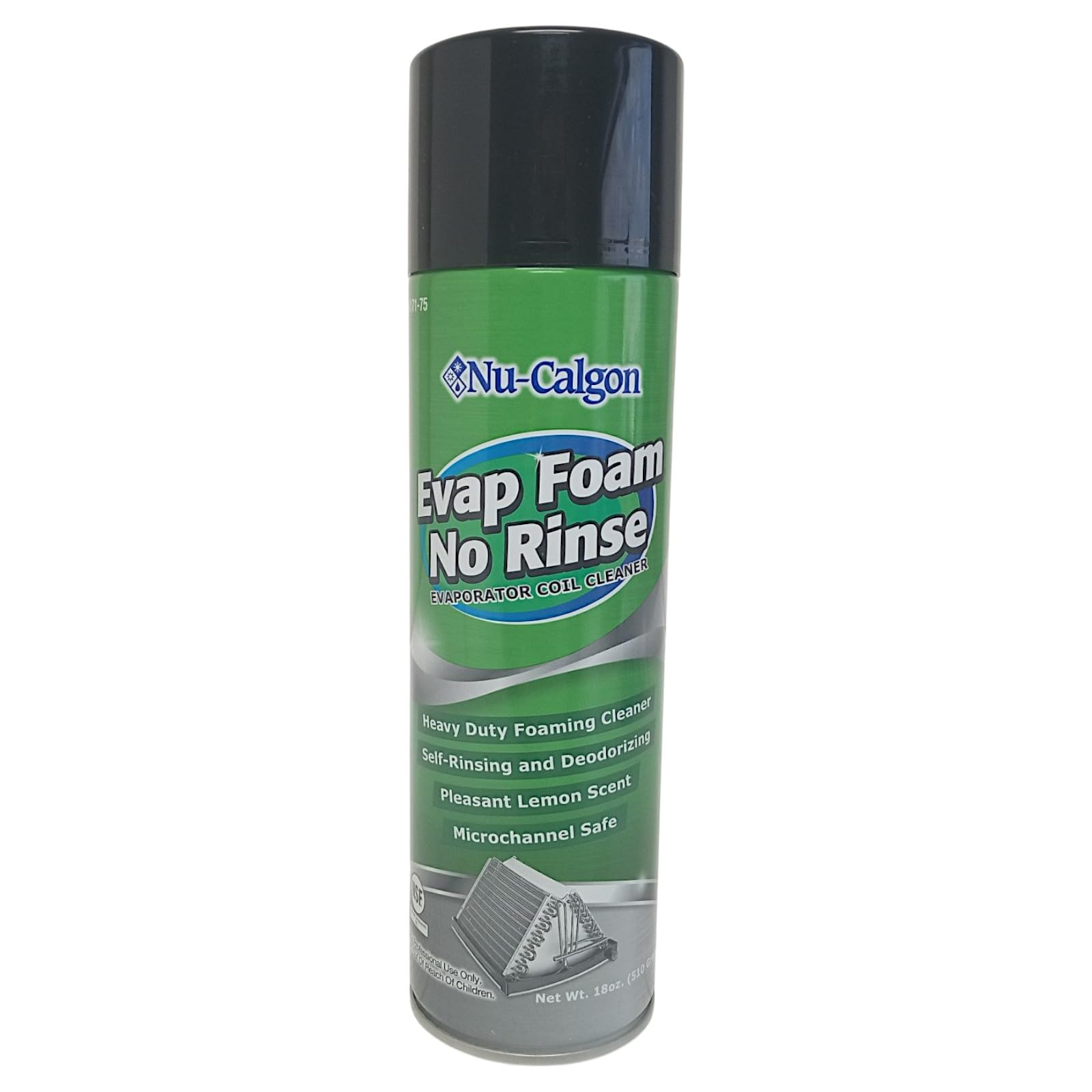
The name homeowners already trust, favored for routine maintenance you can repeat each season
When a coil cleaner has been around long enough to have its own fan base, it’s usually for a reason. This Nu-Calgon aerosol is a mainstay of HVAC upkeep — the one people buy on repeat for yearly service rather than one-and-done rescue jobs.
The formula is fortified with corrosion inhibitors, so it’s safe on metals and other materials, and its fast-breaking foam is completely self-rinsing. It’s also NSF registered for use as a coil cleaner around food processing areas, and it leaves the area deodorized with a light lemon note. Owners keep this on a recurring maintenance calendar for the cooling boost after a good clean.
What owners do raise as an issue: the sprayer can quit early. Some cans stop working properly after roughly half a minute of use, and foaming is inconsistent — plenty of cans spray a rich foam, others fizzle out. If you get a bad can, that’s a nuisance on a job you’ve already started.
it’s built for: the homeowner doing seasonal preventive maintenance who wants a familiar self-rinsing foam.
worth knowing: the spray mechanism has been inconsistent for some, so have a backup on hand.
5. Coil King 1 qt Condenser Cleaner & Brightener for HVAC
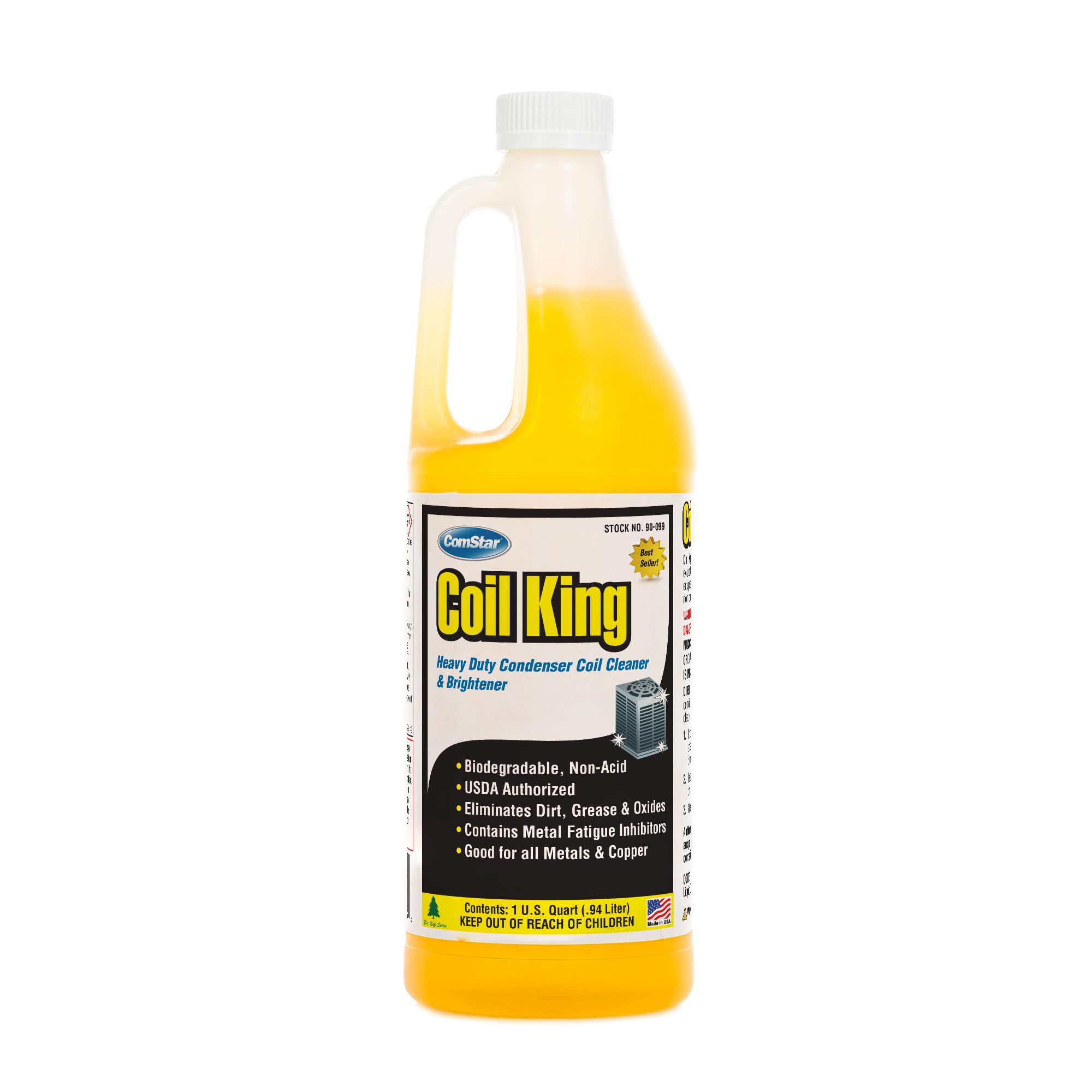
A quart of concentrate that outlasts every can in this lineup when you dilute it
Points for anyone who wants a single bottle to carry them through several seasons. This quart of concentrate dilutes anywhere from 3:1 to 10:1, so the half-bottle it takes to clean a heavy condenser is a real stretch — far more cleanings than an 18- or 20-ounce aerosol gets you.
The heavy-duty formula is built for stubborn dirt, lint, and grease on outdoor condenser units, and it’s non-acidic and safe on aluminum, copper, and other metals. Foam penetrates between the fins and flushes contaminants out, which is exactly the gap a surface spray can’t reach.
This is where the strong stuff gets serious. At higher concentrations it can irritate skin and burn on contact, so gloves, arm coverage, and eye protection are non-negotiable, and the vapors when you’re leaning over a unit call for a respirator at full strength. Diluting to the higher end (10:1) tames the fumes. It’s a good match for outdoor condensers; for indoor coils, hold off and pick a gentler no-rinse option.
made for: the DIYer with a dirty outdoor condenser and a pump sprayer who doesn’t mind mixing concentrate.
think twice if: you’re working indoors or without gloves and eye protection — this mix is potent at full strength.
6. Nu-Calgon 4168-08 Evap Pow’r No Rinse Coil Cleaner

A full gallon of no-rinse liquid that owners use to nurse frozen coils back to health
This is the heavy hitter of the no-rinse group. A gallon of liquid concentrate, chlorine free and rated no-rinse, it’s the pick for someone servicing multiple units over a season. Mix it, spray it against the airflow, let it sit, and the no-rinse formula carries the loosened grime away.
The standout moments are the rescues. Coils choked with smoke and tar buildup came back bright, with freeze-ups and airflow blockage gone. Airflow and heat exchange returned to normal, and its gentleness on plastic condensate pans is why some owners chose it.
A couple of details matter. Prep work counts — clear heavy dirt and hair off first so the foam can reach the fins. And the scent splits opinion: many find it mild and pleasant and it fades within about an hour, but a few find it strong. Cost is on the higher end for the category, though a gallon goes a long way across several cleanings.
No rinse needed: reviving neglected or frozen evaporator coils, and safe cleaning around plastic pans.
Strong fumes: this is the priciest per-label gallon of the no-rinse group, so it suits multi-unit owners best.
best fit for: landlords and multi-unit owners who want a full gallon of no-rinse liquid for recurring maintenance.
cheaper route: single-unit owners may not get their money’s worth from a whole gallon over one season.
7. Leak Saver AC Coil Cleaner for All Condensers & Evaporators | No Rinse Evaporator Coil Cleaner | 4:1 to 10:1 Dilution Ratio – 1 Gallon
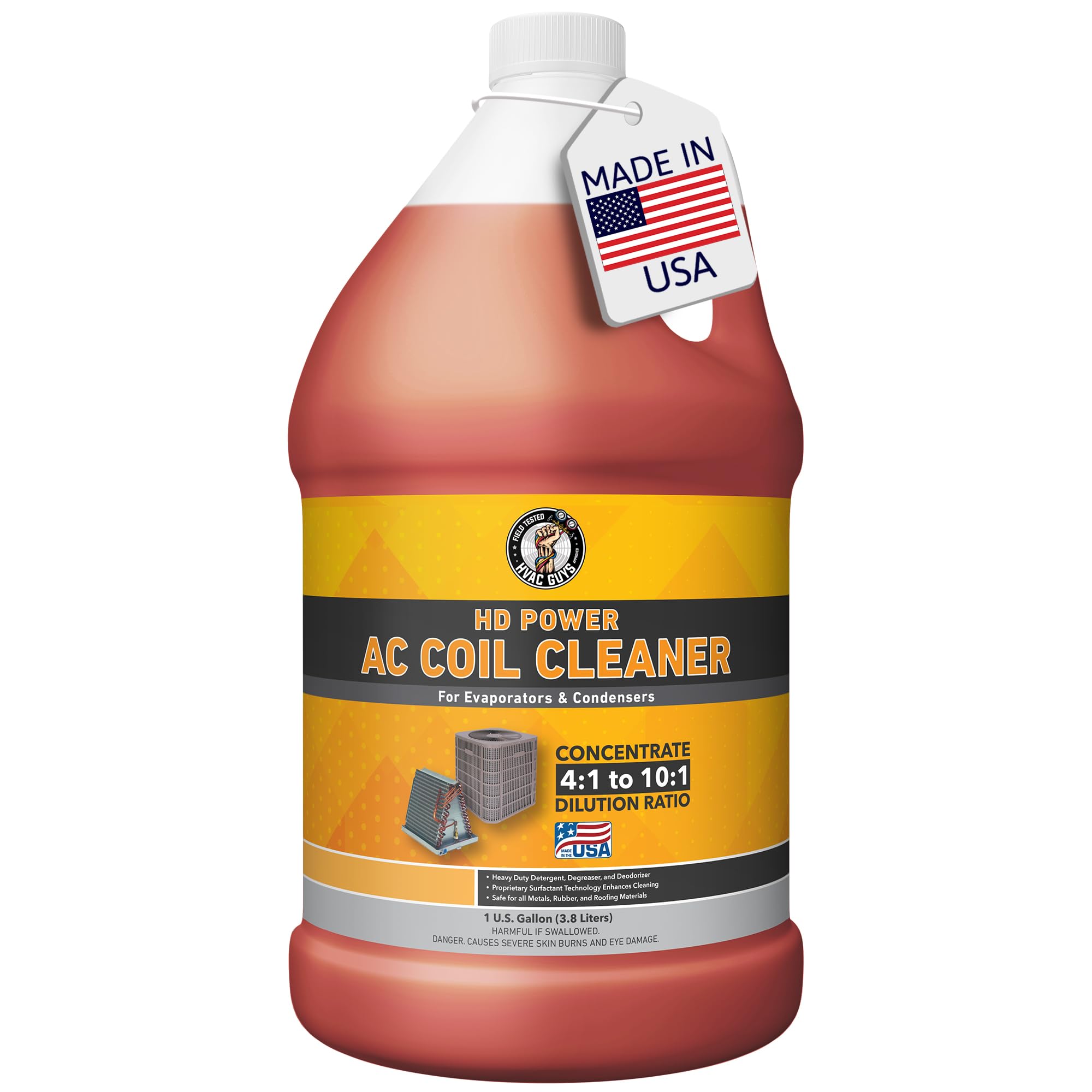
A technician-formulated gallon built to dilute down for cheap, repeatable condenser care
If you clean coils on a schedule, the math on this concentrate is what sells it. A gallon diluted from 4:1 up to 10:1 stretches across many cleanings, and clean the same large system repeatedly through a year and the per-job cost drops fast compared to buying cans one at a time.
The triple-action formula works as a detergent, degreaser, and deodorizer for evaporators, condensers, and permanent filters, and it’s built to destroy grime while staying metal-safe on microchannel coils, mini-splits, and RVs. It’s non-foaming alkaline, so you get cleaning power without relying on bubbles. This is the formula technicians in heavy cooling climates reach for.
The trade-off is that it’s a concentrate, not a spray-and-forget can. For a no-rinse pass you dilute to 10:1, and the system needs enough moisture in the air for condensation to self-rinse the coil. Outdoor condensers work well at the stronger mixes, but owners note it’s really an outdoor-coil cleaner — for indoor evaporators, a gentler no-rinse product is the safer call.
the pick for: anyone maintaining several coils on a regular schedule who wants the lowest cost-per-clean.
not for: a one-time light clean — you’d barely make a dent in a gallon.
8. Quality Chemical Nu-Coil Professional Grade Concentrated/Air Conditioner Alkaline Condenser Coil Cleaner for AC Unit/AC Coil Cleaner 1 Gallon (128 oz)

A gallon of foaming concentrate that does the heavy lifting on stubborn condenser grime
Spray on the foam, wait ten minutes, rinse off with water. That simple rhythm is what this gallon delivers for anyone who wants a foaming concentrate for a dirty condenser rather than a small aerosol can. The non-corrosive formula is safe on aluminum, copper, and steel.
What it’s built for is heavy removal. It breaks down dirt, dust, grease, and oil, and it’s a solid match for aluminum parts like auto, motorcycle, and marine components, wheels, and radiators. On coils that were overdue, the grime came off and the foam did real work with a hose-attached coil sprayer.
This one carries a real caution. The formula is a strong alkaline, so it can irritate skin and burn on contact, and you’ll want chemical gloves, eye protection, and good ventilation. Foaming is inconsistent between cans, and some owners find the foaming doesn’t reach the lather the label promises. Dilution directions vary by the label and even the language version, so follow one and stick with it.
right for: cleaning up an aluminum radiator, auto part, or heavily grimed condenser where you’ve got protective gear.
caution first: keep it off thin HVAC coil fins — a caustic residue can eat them over time.
9. DiversiTech PRO-GREEN 880591 Professional Strength No Rinse Coil Cleaner for Evaporator, Condenser, 1 Gallon Cleaning Concentrate, Green

The no-rinse concentrate that owners reach for when they want a gentle, non-toxic option
What you get here is wide coverage plus confidence. This no-rinse concentrate (you spray it on and skip the rinsing step) works on aluminum micro-channels (the thin fins inside modern coils), mini-splits, air-cooled condensers (the outdoor coil that releases heat), evaporators (the indoor coil that absorbs heat), electronic and permanent filters, fan blades, and grilles. It also comes labeled non-toxic and NSF approved (NSF is a public health safety certifier). That range is why owners keep finding new jobs for one jug.
Buyers describe the cleaning results as thorough. On a 5-year-old outdoor unit, buyers report the coils came back clear of buildup. On two condo condensers dusted by nearby construction, owners say the coils returned to original condition. And the evaporator condensate (the water that drains off the indoor coil) ran black as it washed loosened grime away.
Two things to check before you buy. The product foams best when you shake the sprayer, and some owners find the recommended 3:1 dilution doesn’t clean or foam as strongly as a richer 2:1 mix in a small batch. The bigger caution: several listings and labels disagree on whether it’s for indoor-only or indoor/outdoor and whether or not rinsing is required — so read the jug label, not just the listing, if outdoor coils are your target.
pick it for: a no-rinse jug that spans evaporators, condensers, filters, and fan blades with a non-toxic claim.
read closely: indoor versus outdoor guidance varies between the listing and the jug label.
Understanding the Specs
Aerosol cans versus liquid concentrates
An aerosol can is a ready-to-use spray that foams and self-rinses, so you point and go with no mixing. A liquid concentrate is a stronger formula you dilute with water — anywhere from 2:1 up to 10:1 depending on the job — so one jug covers far more coil than a single can. Cans suit one or two sudden jobs; concentrates suit anyone cleaning coils on a schedule.
No-rinse, self-rinsing, and rinse-required formulas
A no-rinse or self-rinsing cleaner is designed so the system’s own condensation carries the loosened dirt away after you spray and wait. A rinse-required concentrate needs a hose or water pass afterward to flush the residue. Rinsing matters most with strong alkaline cleaners, which can leave a caustic film on thin aluminum fins if you skip it.
FAQ
Can I use a coil cleaner on an indoor evaporator coil?
Is a non-acid coil cleaner safe for microchannel coils?
How long should I let coil cleaner sit before rinsing?
Do I need to rinse after using a no-rinse coil cleaner?
What dilution ratio should I use for a condenser coil cleaner?
Is coil cleaner harmful to aluminum or copper fins?
How many AC units will one can of coil cleaner cover?
Can I use a coil cleaner for refrigerator or car AC coils?
What protective gear do I need when cleaning AC coils?
Will cleaning my AC coils make the unit cool better?
Final Thoughts: The Verdict
For most people, the best ac cleaner is the 46822 Foaming Coil Cleaner. It is a true no-rinse aerosol, so you spray it onto a large outdoor unit or a musty wall AC and let the foam do the work. If you have a newer microchannel or mini-split system, the Rectorseal Clean-N-Safe 83780 is the safer non-acid pick. And if you clean several coils on a schedule, the Leak Saver AC Coil Cleaner gallon is the one to reach for, because a low-cost concentrate stretches the farthest. Pick by your coil type and your spraying setup, and the grime comes off with less fuss than you’d expect.
How We Picked
We do not accept paid placement. Every pick is matched to a real buyer and a real use-case; we do not hands-on test units.
Sources & Methodology
Specifications: manufacturer listings and product documentation. Review insights: verified customer reviews, as of September 2026. Pricing: not shown on this page (it changes often); check the current price via the retailer link.
As an Amazon Associate, Gadgets Feed earns from qualifying purchases. This does not affect which products we feature.