
Our readers keep the lights on and my morning glass full of iced black tea. As an Amazon Associate, I earn from qualifying purchases.
Specs are compiled from manufacturer listings and verified buyer reviews and can change over time — please confirm the key details on the product page before buying.
The short answer: if you want one game that works for almost any 8-10 year old, start with SEQUENCE. It takes about two minutes to teach, plays with 2 to 12 people, and it hits that balance where a nine year old can win one round and a grandparent can win the next. Everything else on this list is a good pick for a more specific kid — a puzzle brain, a detective, a history buff, or a kid who wants sound effects and explosions.
I’m Min — the founder and writer behind Gadgets Feed. This guide is built by comparing the manufacturers’ published specifications and the patterns across verified customer reviews, so you get each pick’s real strengths and trade-offs instead of marketing spin.
Every game here is rated for ages eight and up by its maker, and every one of them is built around rules simple enough that a child can hold the whole thing in their head. Every pick here is rated 8+ by its maker and has rules a child can hold in their head.
Our Picks at a Glance
How To Choose The Best Board Games For 8-10 Year Olds
Your eight to ten year old can read cards and rule cards on their own, wants to win by skill instead of luck, and tunes out of any game that drags past an hour. Three things decide whether a game actually gets played in your house: player count, play time, and how much the game changes each time you open it.
Player count decides who actually gets to play
A two-player game is perfect for one kid and one parent on a quiet evening, but it dies during a sleepover. A game that seats 5 or more keeps the whole table in the round, which is the single fastest way to keep a birthday party moving. Check the box’s player range before you buy — SEQUENCE seats 2 to 12, while Electronic Battleship Reloaded is built for 1 to 2, so they solve completely different problems.
Play time is a real constraint, not a detail
Focus is a muscle. A game that plays in 15 minutes gets pulled off the shelf on a school night; a game that runs 60 minutes gets played on a weekend and needs an adult to keep it moving. Spin Master’s Tetris lists a 20-minute playing time and Battle Sheep lists 20 minutes as well, while Ticket to Ride lists a 30-60 minute playtime and 7 Wonders Architects lists 25 minutes. Match that number to your kid’s patience when it’s already 7:30 p.m.
Replayability comes from a changing board or changing plans
The games that last years on the shelf share one trait: the setup is different every time. A modular board, a shuffled set of objective cards, or a hidden role all do the same job — they stop the game from becoming a memorized script by the third play. Look for “drafting,” “route building,” “modular board,” or “hidden clue” in the description, because those are the mechanics that keep growing with the kid.
Quick Comparison
| Model | Best For | Player Count | Play Time | Maker Age Rating | Amazon |
|---|---|---|---|---|---|
| SEQUENCE Original★ Best Overall | Wide-open family nights and mixed ages | 2-12 players | Not listed | 7 and up | Amazon |
| Buffalo Games Junior DetectiveTop Co-op Pick | Kids who love clue-solving as a team | 2-6 players | About an hour | 8-12 years | Amazon |
| Spin Master Games TetrisScreen-to-Table Pick | Puzzle-style play that translates from screens | 2-4 players | 20 minutes | 8 years and up | Amazon |
| Mattel Blokus | A pure-thinking game with no luck involved | 2 or 4 players | Not listed | 7 years and up | Amazon |
| Blue Orange Battle Sheep | Quick head-to-head matches with real strategy | 2-4 players | 20 minutes | 8+ (listed), 7 and up (recommended) | Amazon |
| Quokka USA Map Card Game | Geography practice that feels like a game | 2-8 players | About 45 minutes | 6 years and up | Amazon |
| Hasbro Electronic Battleship Reloaded | Solo play or one-on-one with lights and sound | 1-2 players | Not listed | 8 years and up | Amazon |
| Asmodee 7 Wonders Architects | Bigger groups that want real strategy | 2-7 players | 25 minutes | 8 years and up | Amazon |
| Asmodee Ticket to Ride | Families who want a full evening game | 2-5 players | 30-60 minutes | 8 years and up | Amazon |
In‑Depth Reviews
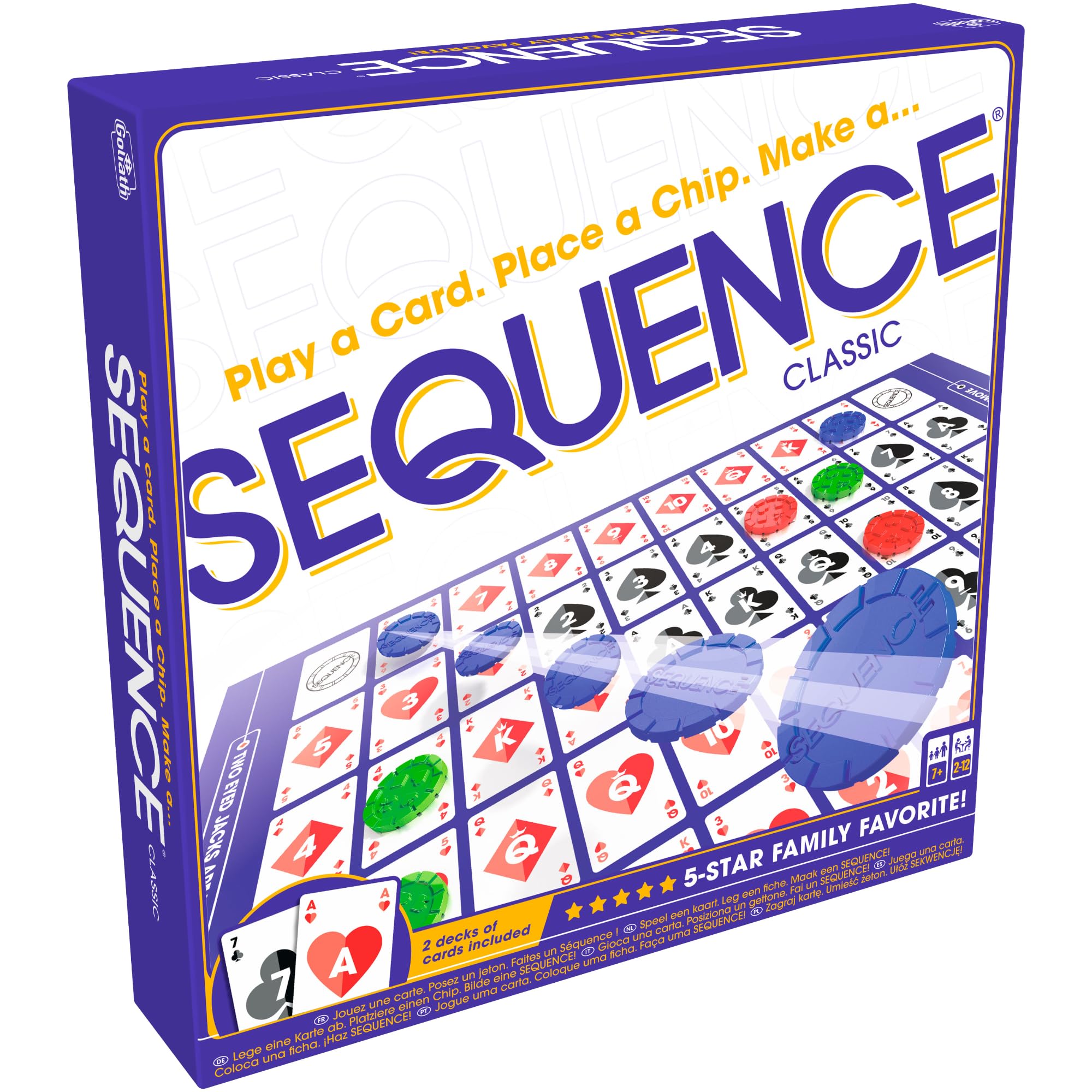
1. SEQUENCE- Original SEQUENCE Game with Folding Board, Cards and Chips by Jax
Our pick — over 4.5★ from 45,500+ verified ratings; the strongest balance of quality and price.
The rare game where a nine year old and a grandparent can both win on the same night.
This is the pick that solves the hardest problem in family gaming: nobody wants to sit out. The box says 2-12 players, ages 7 and up, which means an eight year old gets dealt in without an adult translating the rules. The whole game is one sentence — play a card, put a chip on the matching square, get five in a row — and that simplicity is exactly why it survives the hundredth play.
The gameplay wins people over, and its shape is clever: you can play one-on-one, in two teams of two, or three teams of two, so the same box handles a quiet evening and a full party. Each player holds seven cards, and the folding board runs 19.75″ by 15.25″ — small enough to play on a coffee table — and the whole thing folds down to 8.08 x 2.18 x 10.38 inches for the shelf. It also packs away smaller than the Buffalo Games Junior Detective box at 10.5 x 10.5 x 2 inches.
One honest caveat: the 135 playing chips (50 green, 50 blue, 35 red) are small round pieces, and the box carries a choking-hazard warning for that reason. That’s a “keep it away from the toddler” note, not a problem for the eight-and-up crowd this guide is for. It also sits in the family-friendly balance where luck and planning trade off, so a younger kid isn’t automatically crushed by the adult at the table.
Where Sequence Delivers
- Seats 2 to 12 players, so it works for a duo or a whole birthday party without buying anything else
- Two decks of Sequence playing cards and 135 chips included, so no add-ons to buy on day one
- The folding board runs 19.75″ by 15.25″ — a real tabletop board that still folds to 8.08 x 2.18 x 10.38 inches
- Team play means an eight year old can be paired with an adult instead of losing repeatedly
What To Keep In Mind
- The 135 round chips trigger a small-parts choking warning, so storage matters if there’s a baby or toddler in the house
- Packaging varies between batches, so the box you receive may not look identical to the listing photo
Get it if: you want one box that covers a two-player evening and a ten-person gathering in the same week.
Reason to pause: you need a game with adjustable difficulty — Sequence plays at one speed, and a child who wants a harder puzzle each time will want something like Blokus instead.
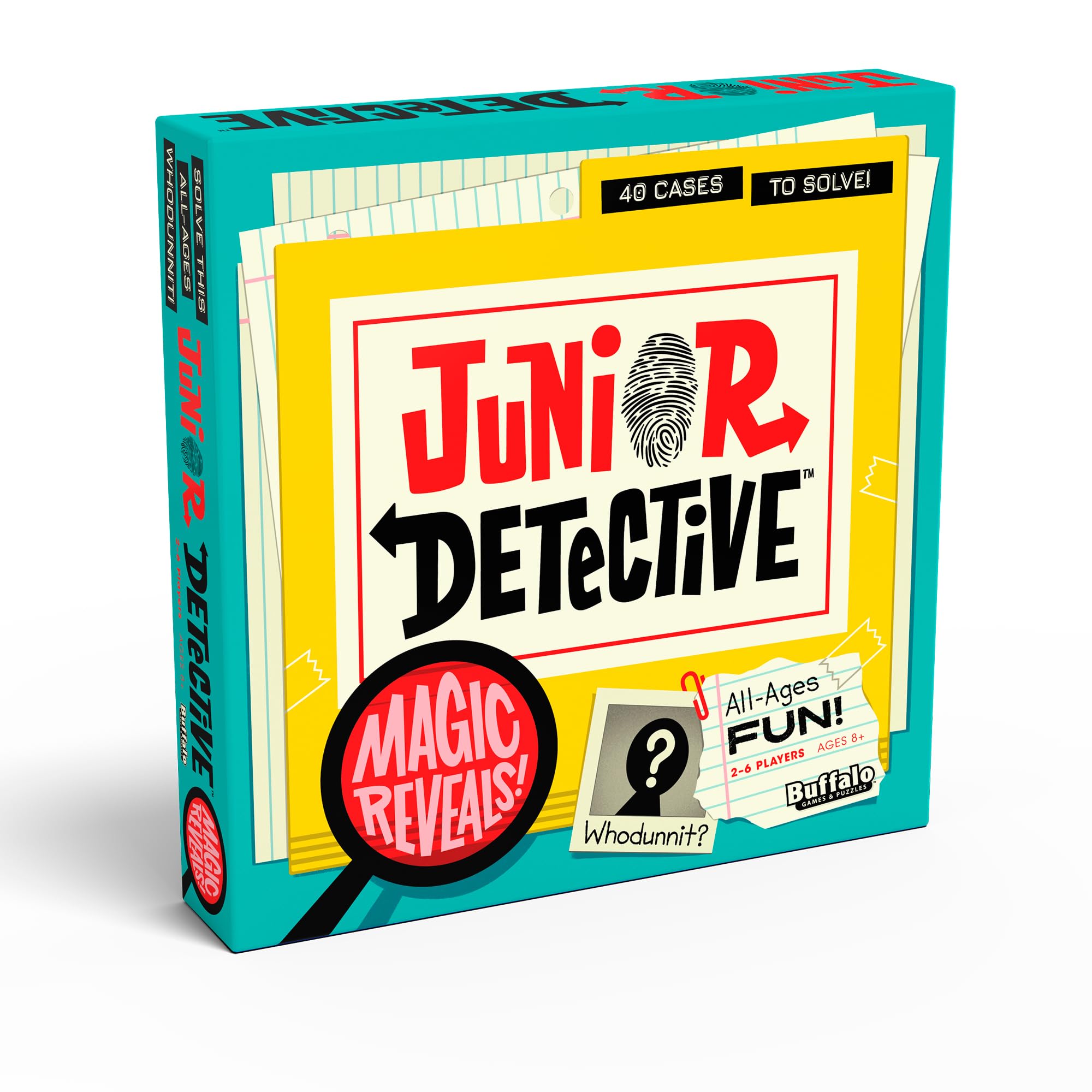
2. Buffalo Games Junior Detective Board Games for Kids 6-8, Family Board Games
A mystery you solve together, so nobody has to lose to feel the game work.
Most family games set the kids against each other, which is fine until someone storms off. This one flips that: 2 to 6 players work as a team against the mystery, using a hidden clue decoder that turns a red card reader into the tool that reveals each clue. It plays on a 10.5 x 10.5 x 2 inch board, and Buffalo Games rates the set for kids 8 through 12.
The sense of discovery is what everyone raves about. Because the clues come out of a decoder rather than a rulebook, kids get a hands-on “aha” moment each turn instead of just moving a pawn. Buyers report that one family’s 6-year-old and 9-year-old solved a full case with a little adult help, and that the whole scenario runs about an hour — long enough to feel like a real event, short enough to finish before bedtime.
The recurring complaint is organization: several small components live loose in the box, so rubber bands or a small bag help keep the pieces together and ready to replay. Everything else about the build and the pacing lands well, and the setup is quick enough that you’re playing within minutes of opening the lid.
Where it shines: the cooperative format means an eight year old can lead the investigation, and a mixed-age group can play without one kid dominating the table. This is the one to reach for if your child already perks up at detective stories.
Where it takes care: the small detective components need a home between plays. Once they have a bag or a tin, replaying is simple.
Reach for this if: your kid likes to solve things instead of just win them, and you want a game that keeps everyone on the same side.
Consider something else if: your group wants head-to-head competition — try Blokus or Battle Sheep for that instead.
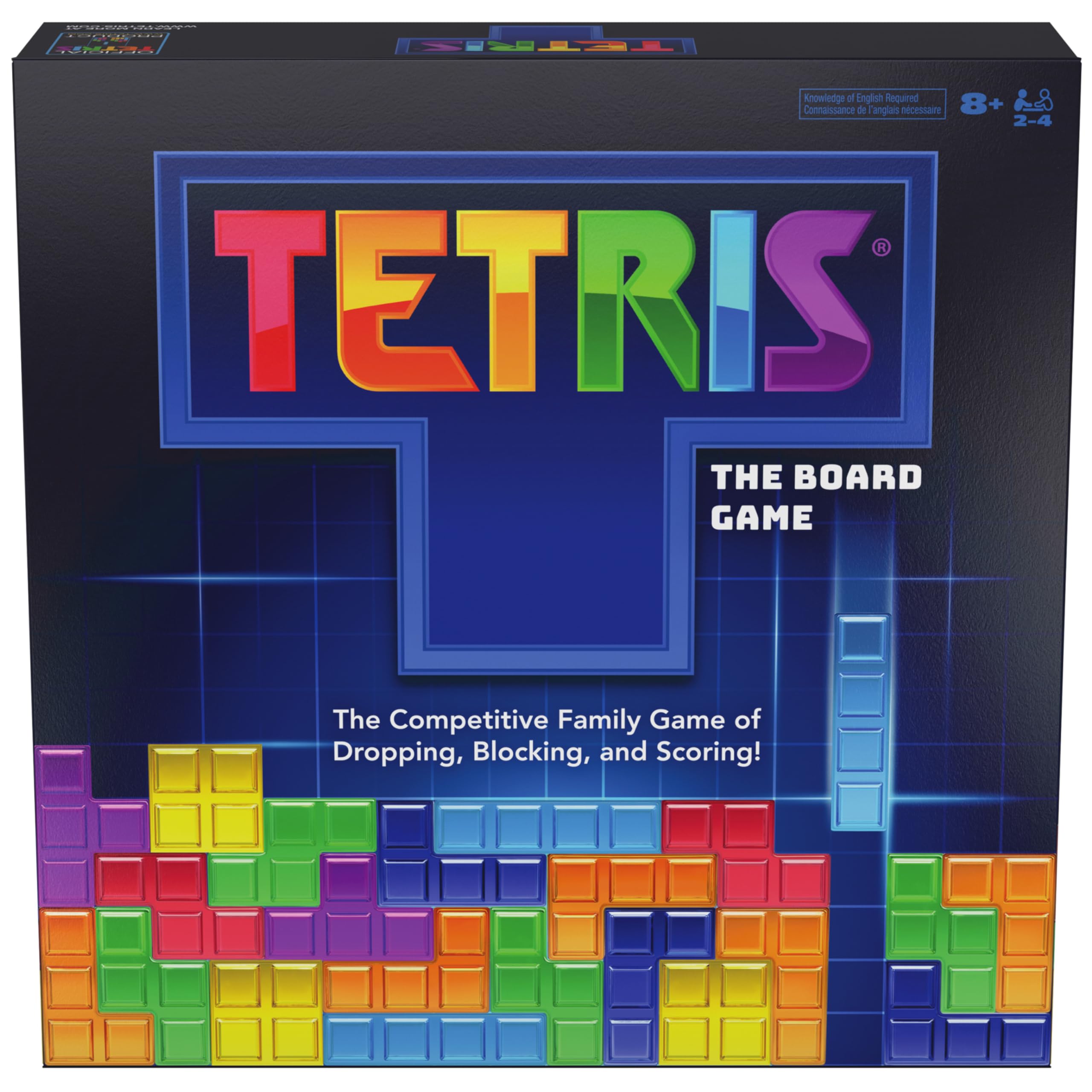
3. Spin Master Games Tetris: The Board Game
Turns the game kids already know into a table game they have to think about.
Any eight year old who has tapped a screen to rotate a Tetrimino already understands the goal here — the trick is that they now have to do it against three other people. The box rates it for ages 8 and up, seats 2 to 4 players, and lists a 20-minute play time, which is short enough for a school night. The setup ships with 4 Tetris Grids, 4 Grid Bases, 4 Player Cards, 1 Gameboard, 24 Tetrimino Cards, 128 Tetriminos, and 8 Minos.
The best part of the design is the Garbage Drop Icon, which lets you dump a piece onto an opponent’s grid to block their line. That single mechanic is what lifts this above a solo puzzle: it’s competitive, not quiet. The pieces are the semi-translucent kind that echo the digital version, and the game earns positive marks for value for money alongside playability.
The honest trade-off is cleanup. With 128 Tetriminos in the box, packing everything back precisely takes a minute or two of patience, and the smaller kids will need help lining the pieces back into their slots. One helpful detail: the age rating here is 8+, versus the 7+ on the SEQUENCE box, which confirms this one sits squarely in the eight-and-up range.
What stands out: difficulty scales with the table, so one kid who knows Tetris and one who has never played can share the same round without the rules changing.
Sizing note: it’s a 2-to-4 player game, so it does not fit a larger group. Buy this for close play, not a party.
Pick this one if: your child loves the puzzle feel of the video game and you’d like a version they play with faces across the table.
Pass if: the family needs a game that plays with five or more people — look at SEQUENCE or 7 Wonders Architects instead.
4. Mattel Blokus Game

Every move is yours to own — no dice, no cards, no excuses.
This is the pick for the kid who wants to win on thinking alone. Each player gets 21 pieces in red, blue, green, or yellow and places them on the board under one core rule: your piece must touch another of your own color, but only at the corners. The game ends when nobody can place another piece, and the player with the lowest number of pieces left over wins.
Because there is no dice roll and no card draw, skill is the whole story — and kids who feel unlucky elsewhere tend to love that. It plays with 2 or 4 people, so it’s a natural fit for two siblings or a two-on-two family game, and Mattel rates it for 7 years and up. The box runs 10.6 x 10.6 x 1.7 inches and weighs 1.1 pounds, which means an eight year old can carry it to a friend’s house without help.
The catch is the packaging. The game itself gets high marks, but the box has a known weak point — a handful of owners found theirs arrived with a crushed corner, and one long-term player says the box simply isn’t designed to store the pieces tidily. Consider a small zip bag for the 21-piece sets if you plan to travel with it.
Why kids stay with it
- 21 pieces per player and a single rule, so the first game takes under a minute to teach
- No luck at all — the better planner wins, which is exactly what a competitive nine year old wants
- Plays with 2 or 4 people, so it works for siblings, parents, or a small playdate
- Weighs 1.1 pounds in a 10.6 x 10.6 x 1.7 inch box, small enough to slot into a backpack
Small gripes to expect
- The box stores loosely — a zip bag keeps the four color sets separate
- One reviewer found the box arrived with a cracked corner, which is a shipping issue, not a game issue
- With only 2 or 4 seats, it can’t host a larger group on its own
Ideal for: a child who hates losing to luck and wants every point to be earned.
Not the fit if: your table needs five or more players, or the group prefers a game with hidden information and bluffing.
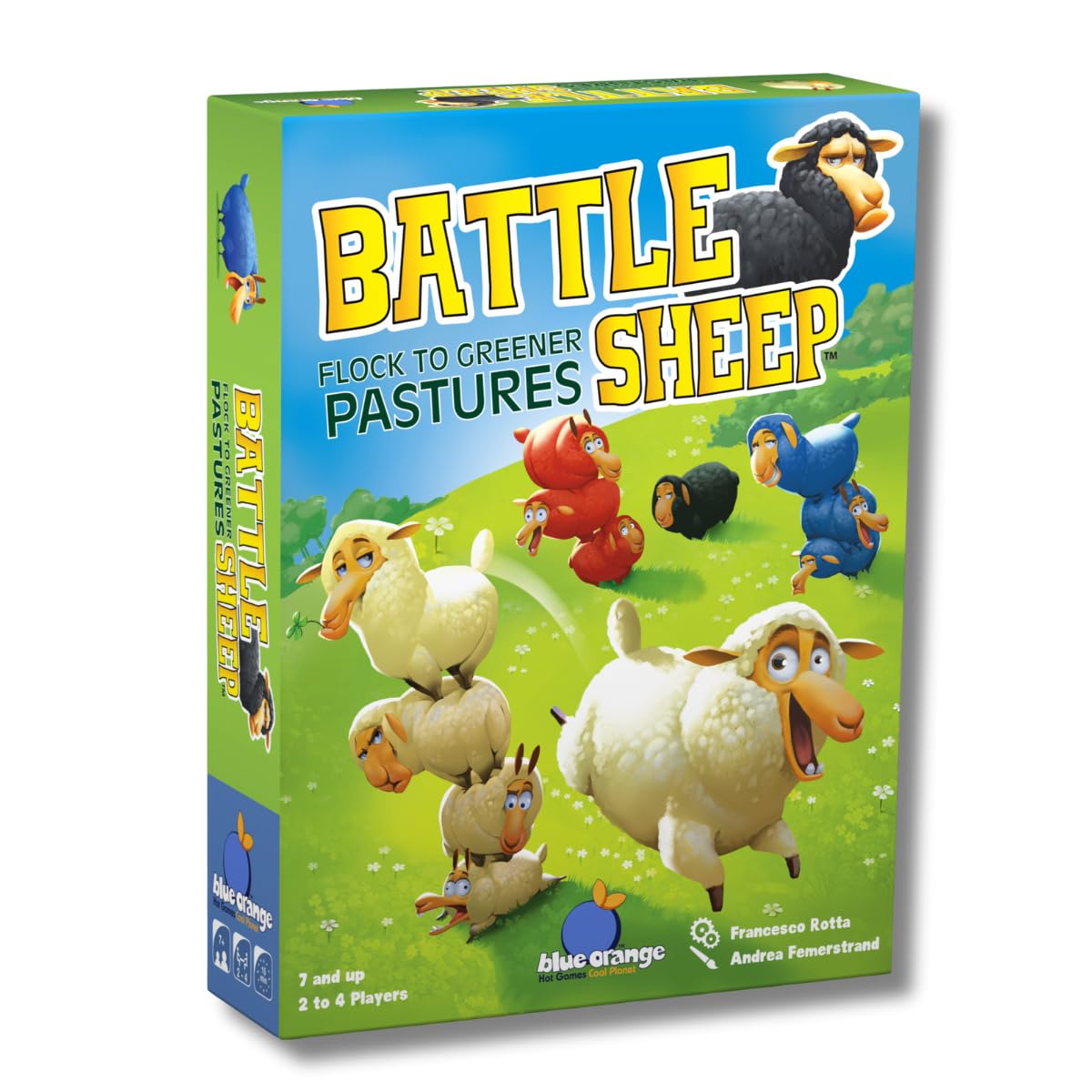
5. Battle Sheep Abstract Strategy Board Game by Blue Orange Games
Ten-minute matches that leave you saying “one more” every single time.
The rules take about two minutes: build the board out of the 16 pasture tiles, stack your sheep on a border hex, then send your stack as far as it will slide in a straight line. You must leave at least one sheep behind, so the board fills up fast and the space to move dries up. Whoever occupies the most spaces wins, and Blue Orange lists a 20-minute playtime for 2 to 4 players.
The build is what earns loyalty here — 64 high-quality sheep chips and a board that rearranges into a different shape every time, so no two games follow the same path. The strategy is deeper than the silly sheep art suggests, and since the board size changes with the number of players, it plays just as well with two as it does with four. Rated 8 and up on the listing and recommended by the maker for ages 7 and up, it lands right in the target range.
Worth knowing: the game has a high skill ceiling, so a nine year old who plays against a sharp adult will lose a few in a row before they learn to block. That’s the point, but it’s a real adjustment period. The upside is that a round ends in a short burst, so a loss never feels like an hour of her life gone.
The deep strategy angle: the board is different every game, and the move-a-stack mechanic makes every turn a trade between position and mobility.
Age-fit note: the listing says 8 and up while the maker recommends 7 and up — a useful signal that a bright seven or eight year old can hold the rules with an adult nearby.
Worth grabbing if: you want a game that fits a school-night window and still rewards thinking.
Look elsewhere if: your child prefers a big social table with five or more people — Battle Sheep tops out at 4 players.
6. Quokka Board Game for Kids 8-12 – United States Card Games

A giant US map that tricks a kid into practicing their state capitals.
If the goal is to get an eight to ten year old learning geography without it feeling like homework, this is the box to open. The game spreads out a 47-inch by 28-inch floor map of the United States and gives you two ways to play: roll and move for a fast round, or grab the 120 educational question cards when you want knowledge to decide the win instead of luck. It handles 2 up to 8 players, which is one of the widest ranges on this list.
What lands with families is the way the questions stack — each card gives three clues about a state, one of them the capital, so a child who knows the shape of the map can still score without memorizing a list. That multi-clue format is why it doubles as a school and classroom resource, and why owners mention kids asking for it again after the first playthrough.
Be honest about the production quality, though: the cards and the chipped wooden pieces have received mixed feedback, and the accuracy of a handful of cards has been flagged as an issue by more than one reviewer. Read the questions together until you spot the errors, and keep the box organized — the pieces have a habit of arriving loose in the packaging. The 45-minute average play time is best suited to a weekend afternoon rather than a hurried evening.
The standout feature: the 47″ x 28″ floor map turns any living room into a board, and the 120 question cards scale from “learn the state names” all the way to “naming capitals” as the kid grows.
The catch: with mixed durability and a handful of flagged card errors, treat this as a learning tool you play together — not a game you hand over and walk away from.
Buy this for: a child who is studying US geography this year and needs the map to feel like a game rather than a worksheet.
Skip it for: the household that wants a fast, low-setup competition game — the floor map takes real living-room space.
7. Hasbro Gaming Electronic Battleship Reloaded Board Game

The classic naval game, now with a talking control panel and a solo mode built in.
Hasbro rates this version for ages 8 and up, and the setup here is noticeably easier than the older electronic versions. You get a folding command unit, 10 ships, 12 advanced weapon pegs, 8 layout cards, 170 “miss” pegs, and 75 “hit” pegs. Two players can go head to head across the table, or a single kid can practice solo against the computer, which makes it the most flexible pick for an only child.
The draw is the feeling of the console — voice commands, sound effects, and lights when you enter coordinates and press fire. The game ships with a Classic Mode and an Advanced Mode that adds the special weapon pegs, so the game grows with the kid after they’ve mastered calling out shots. The package also includes a reinforced box and a folding unit for storing it all back together.
Two things to plan around. First, setup is the recurring gripe — placing the fleet takes a few minutes longer than the paper version, so budget that time before a quick round. Second, the electronic board means batteries are part of the cost, and a few owners found their unit needed replacement, so treat the electronics gently and store it somewhere dry. Neither issue stops it being a strong pick — it’s the best version of Battleship for a kid who wants atmosphere.
Where it earns its place
- Plays with 1 to 2 people — a solo session against the computer is a real option for a kid home alone
- Classic and Advanced modes offer two levels of difficulty in one box
- Ship and weapon data (10 ships, 12 advanced weapon pegs, 8 layout cards) give plenty of firepower to vary the setup
- A folding command unit and reinforced packaging keep the pieces together for storage
Points of friction
- Setting up the fleet takes longer than the classic paper version, which slows the first shot
- It needs batteries to run, and a small number of units have needed replacement after a fault
- Only 1-2 players, so this is not a family group game for four or more
This one’s for: a kid who wants atmosphere — sound, lights, voice commands — and doesn’t mind setup time.
Not for: a family that wants a game ready in 60 seconds; the analog version wins that race.
8. Asmodee 7 Wonders Architects
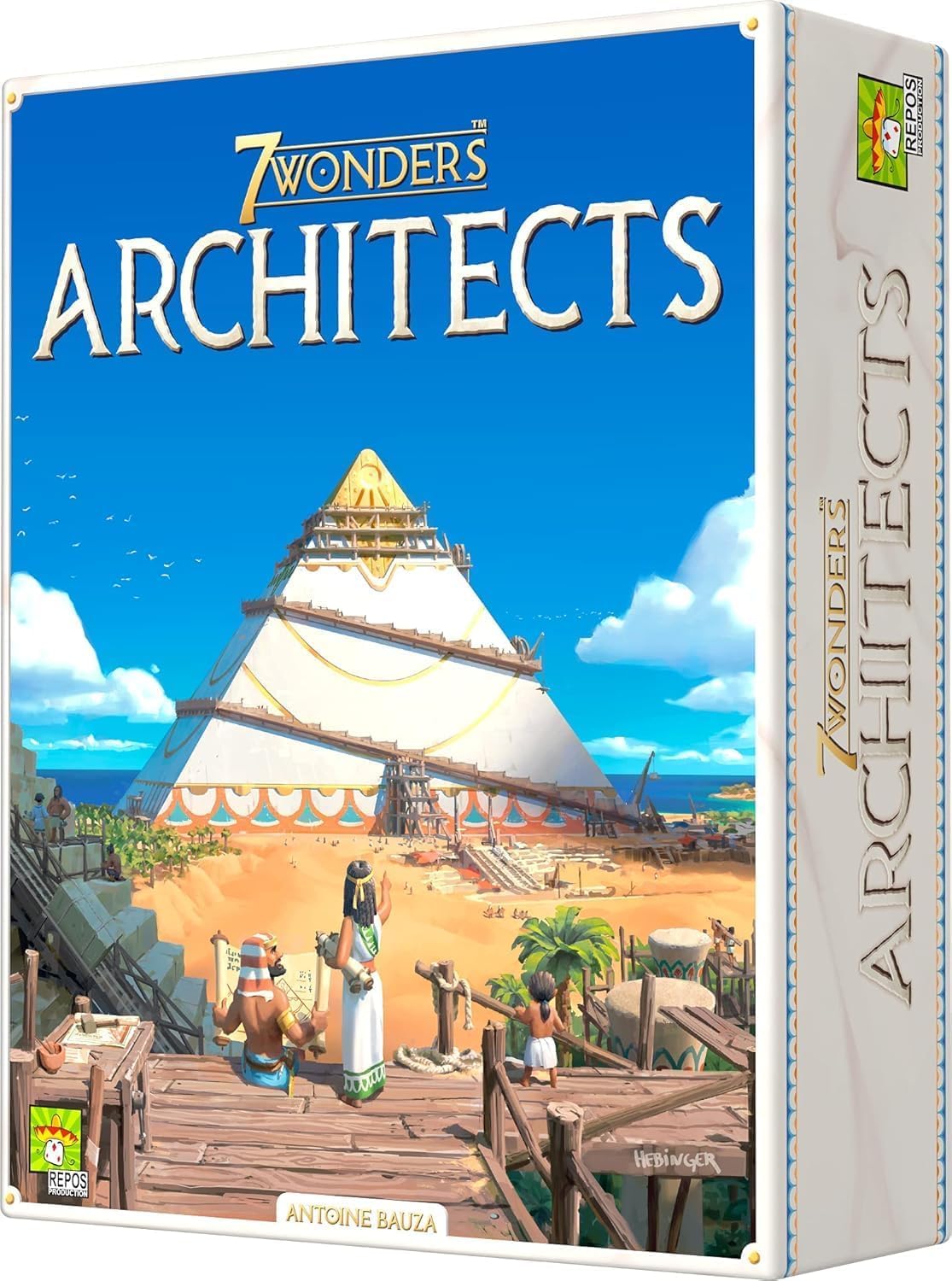
Seats seven people, teaches in one round, and still has real strategy underneath.
This is the pick for the family where everybody wants in — Asmodee rates it for ages 8 and up and seats 2 to 7 players with a 25-minute listed play time. The rules are simple: on your turn, take a card from the face-up deck to your left or your right, and use it to build your wonder, boost your academics, or strengthen your military. Materials build the wonder, academics score victory points, and military can score when war breaks out.
What makes it work for a mixed group is that the decks to each side are open and shared, so you can see what the player next to you wants — and sometimes take the card they need just to deny them. That creates a friendly balancing act instead of pure luck, which is why it lands as a step-up from the simplest games here without being too hard for an eight year old to follow. The box also earns praise for organization, with built-in trays that make setup quick and protect the pieces between games.
The honest caveat: this one needs real table space. It’s not a compact little box, and it ships with 235 cards, 7 card holders, and 8 component trays, so a dining table is the right venue rather than a lap tray or a car seat. Plan for the space and it delivers where the two-player-only games on this list can’t.
Standout spec: 235 cards and component trays built into the box mean the game plays in 25 minutes with minimal resetting between rounds.
Space note: the spread of 235 cards and 7 holders needs a clear tabletop — think dining table, not a coffee table.
Best if: your game night has five or more people and you want one box that teaches everyone in a round.
Not ideal if: the family plays on a small table, or the child prefers a fast, short game after school — the 25-minute run and bigger setup suit a weekend play.
9. Asmodee Ticket to Ride Board Game – A Cross-Country Train Adventure
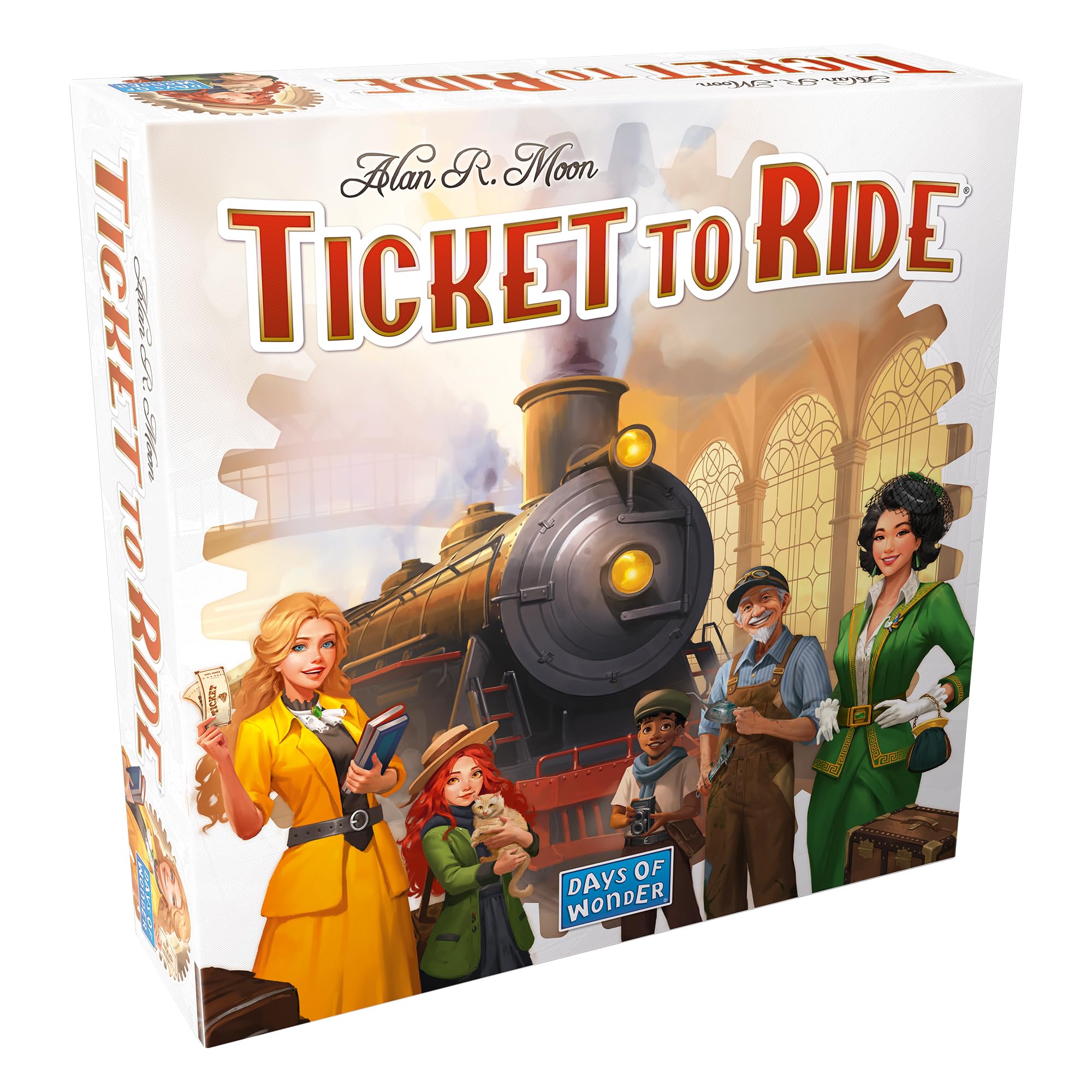
The one that turns a spare hour into a cross-country railway race.
Ticket to Ride is the deep-end pick: it rates for ages 8 and up, seats 2 to 5 players, and lists a 30-to-60-minute playtime, which makes it the right choice for a weekend evening rather than a school-night squeeze. You collect colored train cards and claim routes across a giant map of North America, running 225 plastic miniatures in five colors, 110 train cards, and 33 tickets. Build the longest route and complete your tickets to win.
The rules are picture-driven and light on reading, which is why it works for an eight year old who is a strong visual thinker even if they stumble over a rulebook. The map itself does the teaching — most turns are a choice between two colors rather than a paragraph of text. The strategy, though, keeps adults engaged: the route you take changes the routes everyone else can take, and the tickets create a target to chase across the whole board.
Compared with the 20-minute options here like Tetris or Battle Sheep, this is the biggest time commitment on the list and the biggest box. It’s worth it for the evening that becomes a tradition, but if your family wants a 15-minute filler before dinner, this isn’t the game that gets picked. The box also has a large footprint; clear the whole table for it.
Why it stays on the shelf: with 110 train cards and 33 tickets in the box, the routes and partnerships change every play, so the same map never plays the same way twice.
When to hold off: it lists 30-60 minutes, so a quick post-dinner window is not realistic. Save it for a slower night.
Worth the shelf space if: your family likes the feeling of a long, building campaign game that ends with a winner decided by the whole route.
Skip if: your kid’s attention span runs shorter than half an hour, or your table is already crowded.
Understanding the Specs
Player Count
The player count on the box tells you the size of the table the game is designed for. A game rated 2-4 players, like Battle Sheep, is fine for siblings but not for a five-child birthday party. A game rated 2-7 or 2-12 can absorb extra guests without a rulebook rewrite. When you buy, match the number on the box to the number of people actually sitting down at once — that single number predicts how often the game leaves the shelf.
Play Time
The listed play time is not an exaggeration — it’s the average length of a completed game with the table set. A 20-minute listing (Tetris, Battle Sheep) is a weeknight game; a 25-minute listing (7 Wonders Architects) fits after dinner; a 30-60 minute listing (Ticket to Ride) is an evening. Buy the time you actually have, not the time you wish you had.
Age Rating and Reading Level
The maker’s age suggestion reflects two things: how well a child must read to follow a card, and how much forward planning the rules demand. A “7 and up” rating usually means picture-based play, while “8 and up” often signals a rule card or two. The rating is a guide, not a gate — a six year old can often play a rated-eight game with an adult sitting alongside, and that’s the reason a game like Blokus is rated for 7 and up rather than 8.
Replayability Mechanics
Some mechanics make a game feel new every time you open it — a modular board you rebuild each round (Battle Sheep), a shuffled deck of objective cards (Ticket to Ride), a drafting system with open information (7 Wonders Architects), or hidden clues (Junior Detective). Games without these mechanics can get solved, because a sharp kid can memorize the setup. If you want a game to last multiple years, look for one of these in the description before you buy.
FAQ
What board games work best for an 8-year-old who is new to table games?
Can a 10-year-old handle a longer strategy game like Ticket to Ride?
How many players should a game for ages 8-10 support?
Which games build strategy skills without relying on luck?
What is the difference between a cooperative game and a competitive one for this age?
How long should a board game for an 8-10 year old last?
Are there board games for this age that play well with adults too?
Do these games need batteries or extra parts?
How do I choose between a map-based game and a board-based strategy game?
Can a game rated for ages 7 and up still be right for a 10-year-old?
Final Thoughts: The Verdict
For most families, the winner is the SEQUENCE Original SEQUENCE Game because it covers the widest range of situations — 2 to 12 players means one box handles a two-player evening and a full birthday party, and the one-sentence rule means an eight year old can join the first game without a translator.
If strategy without luck is the priority, the Mattel Blokus Game is the better fit, and its 1.1-pound box makes it the easiest one to carry to a friend’s house. If the group is larger than four and you want a card-drafting game that still teaches in a single round, reach for Asmodee 7 Wonders Architects, which seats up to seven players in a 25-minute listed playtime.
And if your child prefers solving a mystery as a team rather than competing for the win, the Buffalo Games Junior Detective Board Games is the pick that keeps everyone working on the same side. Whichever one you choose, buy for the number of players you actually have at your table — that single number decides how often the box comes off the shelf.
How We Picked
We do not accept paid placement. Every pick is matched to a real buyer and a real use-case; we do not hands-on test units.
Sources & Methodology
Specifications: manufacturer listings and product documentation. Review insights: verified customer reviews, as of September 2026. Pricing: not shown on this page (it changes often); check the current price via the retailer link.
As an Amazon Associate, Gadgets Feed earns from qualifying purchases. This does not affect which products we feature.