
Our readers keep the lights on and my morning glass full of iced black tea. As an Amazon Associate, I earn from qualifying purchases.
Specs are compiled from manufacturer listings and verified buyer reviews and can change over time — please confirm the key details on the product page before buying.
If you have ever slept in a hot truck cab because idling the engine all night felt like throwing money out the window, a 12V AC setup is the fix. These systems run the compressor off your battery instead of your engine, so you get cold air while parked. The trick is matching the unit to your battery bank and your roof opening before you click buy — get that wrong and even a good unit will disappoint you.
I’m Min — the founder and writer behind Gadgets Feed. This guide is built by comparing the manufacturers’ published specifications and the patterns across verified customer reviews, so you get each pick’s real strengths and trade-offs instead of marketing spin.
Cooling capacity is the number that decides everything else, because it tells you how much space a unit can actually chill. Battery draw and roof fit come next, since those decide whether the thing runs all night or dies by ten. This breakdown of the 12v ac compressor market covers capacity, current draw, fit, and the install headaches that trip people up.
Our Picks at a Glance


How To Choose The Best 12V AC Compressor
Three numbers separate a setup you love from one you resell in a month: cooling capacity, current draw, and physical fit. Get all three right and you can sleep cool at a truck stop with the engine off. Get one wrong and the unit either can’t keep up with the heat or drains your battery before midnight.
Cooling capacity is where every decision starts
Cooling capacity is measured in BTU (British Thermal Units) — think of it as how much heat the unit can pull out of the air per hour. A truck sleeper or a small van needs less than a full-size camper. If you buy smaller than you need, the compressor runs flat out forever and never catches up.
Match the current draw to your battery bank
Rated current, measured in amps (A), tells you how hard the unit pulls from your battery while running. A unit drawing 60-80A empties a small battery fast, while one pulling far less will last much longer. That is why owners who boondock overnight look at amps first and cooling power second.
Rooftop versus mini-split, and your roof opening
A rooftop unit is a single all-in-one box that drops into a standard roof cutout — often the 14″x14″ vent opening already in most RVs. A mini-split separates the indoor and outdoor halves, which lets you place the noisy part outside the cab. Rooftop keeps the install simple; split units cool better but ask more of you at fitting time.
Refrigerant and compressor displacement for retrofits
If you are replacing an engine-driven compressor rather than adding a whole air conditioner, you care about refrigerant type — R134a is the common one — and displacement in cubic centimeters per revolution (cc/r). Those decide whether the compressor can bolt onto your existing bracket and loop.
Quick Comparison
Every column below uses the same measurement so you can scan straight down and compare like for like.
| Model | Best For | Cooling Power | Current Draw | Form Factor | Amazon |
|---|---|---|---|---|---|
| Universal A/C Compressor 6PK Clutch SD 508★ Best Overall | Retrofitting an LS swap or vintage car | — | — | Compressor only | Amazon |
| Aspligo 12v RV Rooftop DC Air Conditioner 8000BTUBest Value | Budget rooftop cooling for small campers | 7000 BTU | 30-62A | Rooftop | Amazon |
| Treeligo 12V Truck Cab Air Conditioner 12000BTU | Big rigs needing a split system | 10000 BTU | 60-80A | Mini-Split | Amazon |
| Treeligo Universal 12V DC Air Conditioner 12000 BTU | Quiet overnight van and semi cooling | 9500 BTU | — | Mini-Split | Amazon |
| NEKPOKKA 12V Automobile Air Conditioner Electric Compressor | Ambitious engine-off conversions | 8875 BTU | 75A startup | Exterior kit | Amazon |
| Gidrox 10000 BTU 12V DC RV Air Conditioner | App-controlled all-night RV cooling | 10000 BTU | — | Rooftop | Amazon |
| ICECOSMOS Ultra-Slim Low-Profile 12V RV Air Conditioner | Off-grid boondocking with heat too | 10000 BTU | — | Rooftop | Amazon |
In‑Depth Reviews
1. Universal A/C Compressor 6PK Clutch SD 508 5H14 R134A Serpentine Belt 12V
Our pick — over 4★ from 100+ verified ratings; the strongest balance of quality and price.
The classic Sanden-style swap compressor that makes an LS build ice cold.
This is the pick for anyone bolting a compressor onto a swap or a vintage car rather than adding a whole air conditioner. The housing is built from aluminum alloy, steel, and copper, it weighs 8 kg, and it ships with 180 ml of PAG 100 oil already inside. The clutch has 6 grooves, which is what the 6PK belt name refers to — that groove count has to match your belt setup or the belt will not sit right.
The output side is modest on paper: 0.2 hp and 77 dB of running noise. Owners put these on LS swaps, LS1 builds, and Vintage Air systems in a 1970 C10, and the repeated theme is that it blows cold for what a parts-house replacement costs. If you have ever priced a genuine Sanden 508, you know why so many builders keep coming back here. The knock against it — and it is a real one — is that a bad unit can fail early. A seal leak right after the first R134a charge does happen on the occasional dud, so buy from a seller with a return window you trust.
Compare it to the Aspligo rooftop above and the difference is clear: this is a component, not a cabin appliance. The Aspligo moves 7000 BTU of cooling for your living space while this just pressurizes refrigerant for the system you already have. If you want the finished, self-contained route, skip this and look at the mini-splits; if you are mid-project and need the heart of the system, this is the workhorse.
Where it earns its keep
- 180 ml of PAG 100 oil pre-filled, so it is ready to charge after you drain and match your system oil
- 6-groove 6PK clutch matches loads of serpentine belt swaps
- 7/8 inch —14 UNF suction and 3/4 inch —16 UNF exhaust ports, the standard sizes most vintage kits expect
- Runs at 77 dB, which is normal for a belt-driven unit working under a hood
What to know before you order
- A seal leak on an early charge is the recurring failure story — test before you button everything up
- Weighs 8 kg, so it is not a part you install one-handed over a radiator
- Match the oil already in your system or drain this one first, per the maker’s own guidance
Buy it if: you are building or repairing an engine-driven A/C loop and want a Sanden 508-style compressor with the oil already in it.
Look elsewhere if: you want a plug-in rooftop appliance that cools a cab by itself — this needs a full system around it.
2. Aspligo 12v RV Rooftop DC air conditioner 8000BTU 12 Volt Ultra-thin Electric Parking Air Conditioner 12V A/C Unit Fit for Motorhome Camper Van Truck Excavator Off-road Vehicle SUV Bus New Energy
The rooftop unit that turns a bare work truck into a cooled cab without a belt-driven system.
If your vehicle never had A/C at all — a work van, a skidsteer, a stripped-out truck — this is the entry point. It drops into a standard roof opening, and owners describe the fan swap as straightforward as long as you already have a 14″ opening to work with. The rating sits at 4.5 stars, and the pitch is simple: cooling without a compressor tied to your engine.
The published cooling power is 7000 BTU, and the real-world note that keeps coming up is that it handles a 200 sq ft space well enough on a 90-degree day. It draws less current than the bigger Treeligo split — 30-62A against the Treeligo’s 60-80A — which is why budget builders lean this way. It also weighs 59 pounds, so getting it onto the roof is a two-person job, and the unit is a full 27 kilograms, not a lightweight shell.
The honest catch is the paperwork that comes in the box. Installation guidance has been called close to unusable on the harder installs, and there are no model-specific videos to bail you out. If you are comfortable improvising a rooftop cutout, you will be fine; if you want an instruction booklet that holds your hand, budget extra time or a helper.
The real trade-off: you save money by giving up documentation — the cooling is there, the guidance is not.
The right call for: budget-minded van and skidsteer owners adding cooling to a vehicle that never had it.
Think twice if: you want step-by-step instructions and clear YouTube walkthroughs — this one expects you to figure out the routing yourself.
3. Treeligo 12V Truck Cab Air Conditioner 12000BTU, Mini Split 12 Volt DC Electric Split ac Unit, 45dB Low Noise, Fast Cooling AC Unit Universal dc Air Conditioning for semi trucks RV Camper
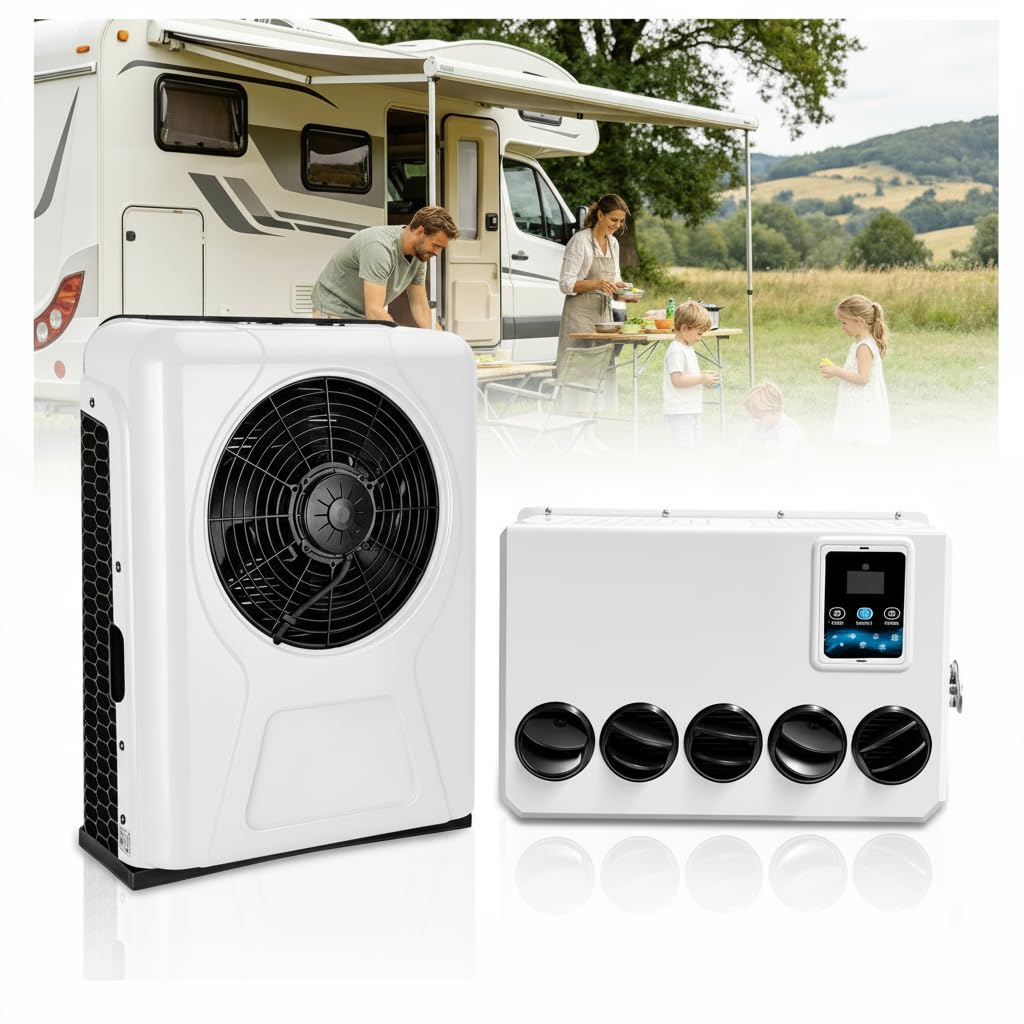
A split system for the semi-truck crowd that cools hard but asks for real battery power.
The headline on this one is cooling power: 10000 BTU from a 20CC variable-frequency scroll compressor. That is more muscle than the Aspligo rooftop above, which tops out at 7000 BTU. It also runs quieter at 45 dB — well below the 77 dB of the Universal compressor up top. On a hot afternoon, that means the cab cools faster and the noise stays low enough to sleep through.
Here is the number that matters for planning: 60-80A rated current versus the Aspligo’s 30-62A. That roughly doubled appetite is the reason Treeligo recommends a 480AH battery bank, which is a serious electrical commitment. Buyers report 10-11 hours a night on a 314Ah battery in a Freightliner cabover, so the 60-80A draw needs a big bank behind it. The 250-450 cubic meters per hour of airflow keeps the cabin from going stale on long hauls.
What holds it back is a mixed reliability picture. The installation feedback is warm, but the compressor is the recurring weak point, with early failures showing up often enough that it reads as a pattern rather than bad luck. If you want the cooling power and the split layout, this delivers — just go in with a clear-eyed plan for a possible warranty call.
Why the cooling stands out
- 10000 BTU from a 20CC scroll compressor beats the 7000 BTU Aspligo above it
- 45 dB is quiet enough for sleeper-cab sleep, versus 77 dB on the Universal compressor
- Adsorption-style split layout keeps the noisy half outside the cab
- Owners mention 10-11 hour overnight runs in real semi-truck installations
The catch you should weigh
- 60-80A draw means you need a big battery bank — the maker points to 480AH
- Compressor reliability is the recurring gripe, so a warranty path matters
- Two-piece install takes up real space inside the cab
Pick this for: semi-truck drivers with a serious battery bank who want fast, quiet cooling and don’t mind the split layout.
Pass if: you are running a small amp-hour battery — the current draw will drain it faster than the cooling justifies.
4. Treeligo Universal 12V DC Air Conditioner 12 Volt Mini Split AC Unit 12000 BTU 960W Fast Cooling System with Remote Control for Semi Truck RV Camper Van UTV Off-Road Vehicles
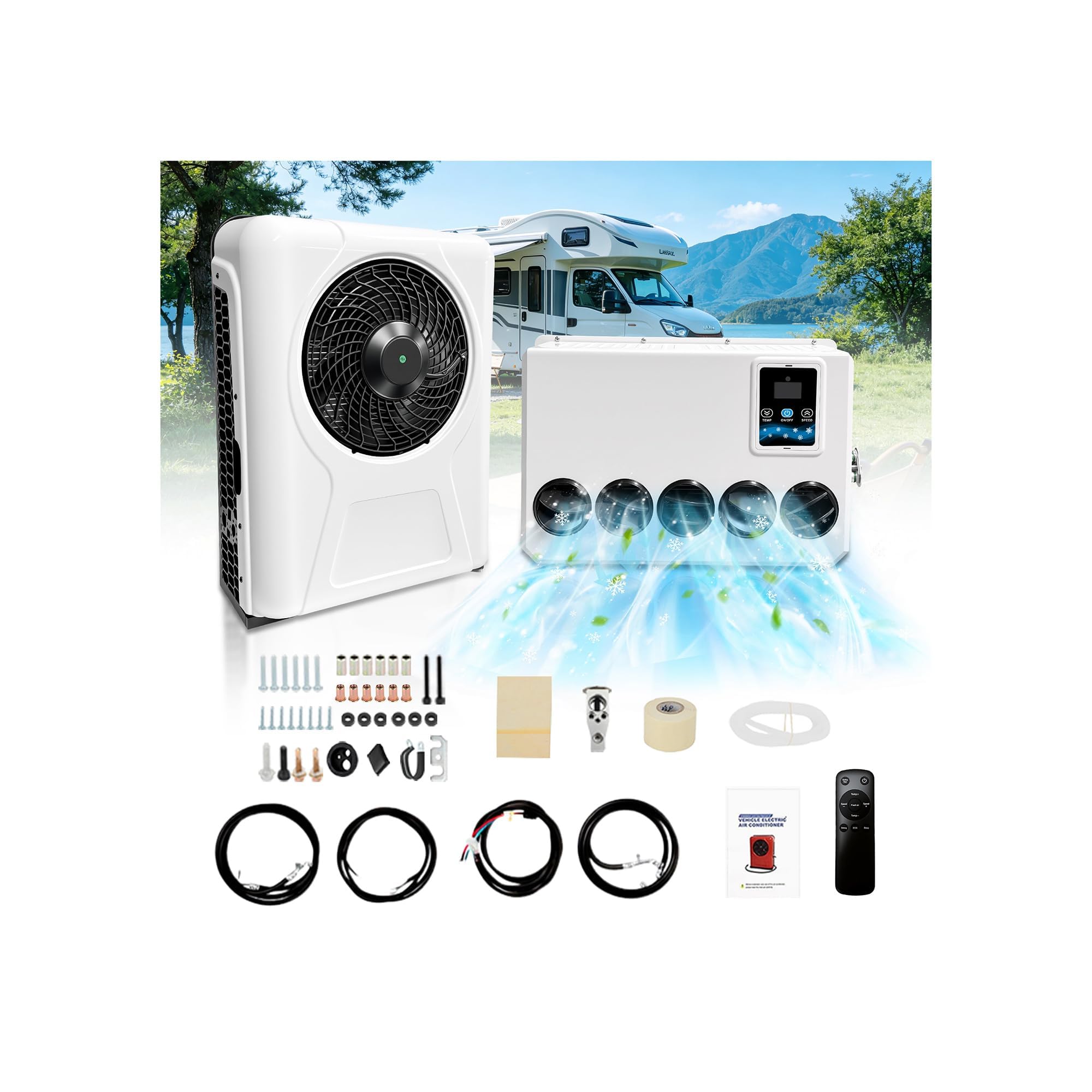
Built for van-lifers who need to run the air all night without hearing it.
Four operating modes — Fan Only, Manual, Eco, and Turbo — let you dial the rig down when you are sleeping and crank it when you first climb into a hot cab. The inverter compressor adjusts its own speed instead of switching hard on and off, which keeps noise under 45 dB and stretches the runtime. Treeligo rates it for up to 12 hours of continuous runtime on a 480Ah battery, depending on mode.
Cooling output lands at 9500 BTU with 350 CFM of airflow across the cabin. That puts it above the Aspligo’s 7000 BTU for about the same money, so if you are cross-shopping rooftop units and split systems, the extra capacity here is real. Customers note it blows very cold, and one thing to plan for is that the display reads in Celsius only, so get used to converting. The icing that shows up on the expansion valve and indoor condenser coil is worth watching for during the first hot-day run.
The build is sturdy ABS with the fittings exiting to the right — a left-exit install needs a workaround. That right-hand orientation is the single detail that trips up the most owners, so measure your mounting position before you commit. Vendor support drew notes about tunnel vision on the diagnosis side, so come prepared to work through issues yourself.
Reach for this if: quiet overnight use is your priority and you have the battery to back the 12-hour runtime.
Choose another if: your hose routing needs a left exit or you want strong troubleshooting support from the seller.
5. 12V automobile air conditioner electric compressor, applicable to refitting automobile air conditioning system, no oil consumption air conditioning compressor kit 12V DC air conditioning unit

A full electric A/C kit for the driver whose engine can’t spare the horsepower.
Classic-car owners face a specific problem: a stock ’40 Ford flathead or a tired vintage engine can’t drive a belt compressor without losing power it doesn’t have. This kit sidesteps that by using a 12V DC horizontal scroll compressor instead. It produces 1.688KW / 8875 BTU of cooling from 550W rated power, and the maker notes it won’t rob the engine of horsepower.
The install profile is the honest story here, and the maker does not sugarcoat it — no wiring instructions, no mounting bolts in the box, and a confusing control panel. Owners describe needing an AC tech to help crimp BH13 hoses and rewire relays, with the fan harness polarity wired backwards from the factory on at least one build. A 75A startup current is the other number you need to verify your battery against before ordering. The quality split is real: some builds run great, others seize within a year. Come in with realistic expectations and this kit works — come in expecting a weekend bolt-on and it will frustrate you.
The verdict in one line: a capable electric A/C conversion that hands you the engineering homework along with the hardware.
Best fit for: vintage and resto-mod builders with a helper, a hose crimper, and a battery that can feed 75A at startup.
Not the pick if: you are hoping for a documented weekend install — this kit assumes you already know your way around vehicle A/C plumbing.
6. 10000 BTU 12V DC RV Air Conditioner – Battery Powered, Low Power Consumption, Ultra Quiet & Fast Cooling Upgraded Rooftop AC Unit with APP Remote for Camper Van and Truck (Cooling Only)
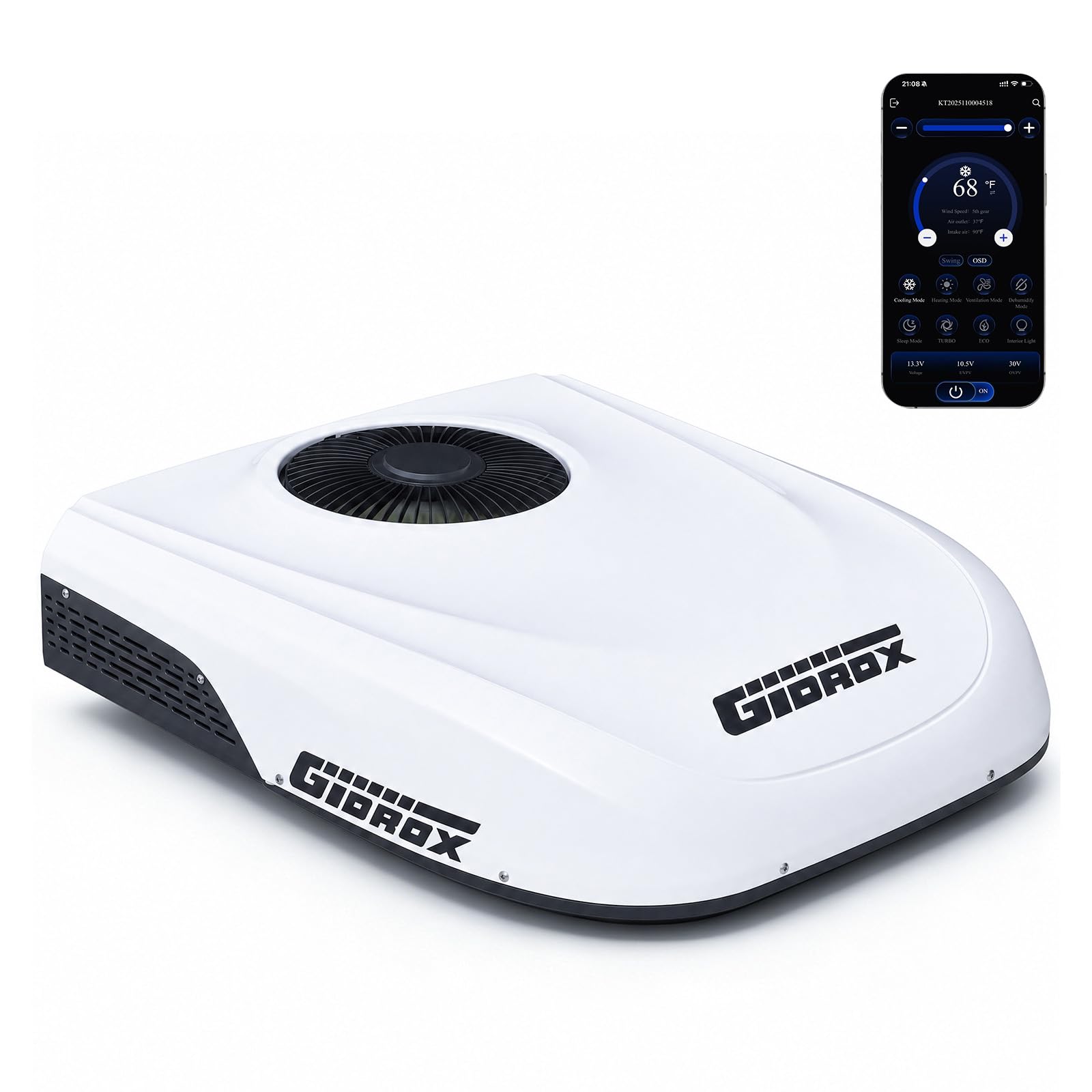
App control, three ways to tweak settings, and a sleep mode quiet enough for a nursery.
If you want to set the temperature from your phone without leaving the pillow, this is the rooftop unit that does it. You get three control paths — Bluetooth smartphone app, infrared remote, and physical buttons on the unit itself. Its 10,000 BTU rating matches the ICECOSMOS below, but this one adds °C/°F switching and timer programming.
The ultra-quiet claim holds up at 40dB in Sleep mode, the number that matters for overnight camping. Three modes — Turbo, ECO, and Sleep — let the compressor scale back when you are not actively demanding maximum chill. Owner-reported draw runs about 250W in dehumidifier mode, 350W in eco, 420W cooling, and 650-700W in turbo. A 400Ah battery supports all-night use, and the unit weighs 54 pounds, making it light enough for one strong person to hoist onto the roof.
The catch is the controls themselves. Eco mode locks the temperature at 79°F, so any adjustment bumps you out of eco and back into manual — a quirk that surprises new owners. Wire routing through camper walls is fiddly, and the manual is vague on the thread and wiring detail. There is also no battery cutoff voltage adjustment, so you manage the low-voltage side yourself.
Best for: RV owners who want app control, sleep-quiet operation, and a unit that fits the standard 14″x14″ rooftop cutout.
Skip if: you want eco mode to be fully adjustable or need tight documentation on the wiring path.
7. Ultra-Slim Low-Profile 12V RV Air Conditioner with PTC Heating
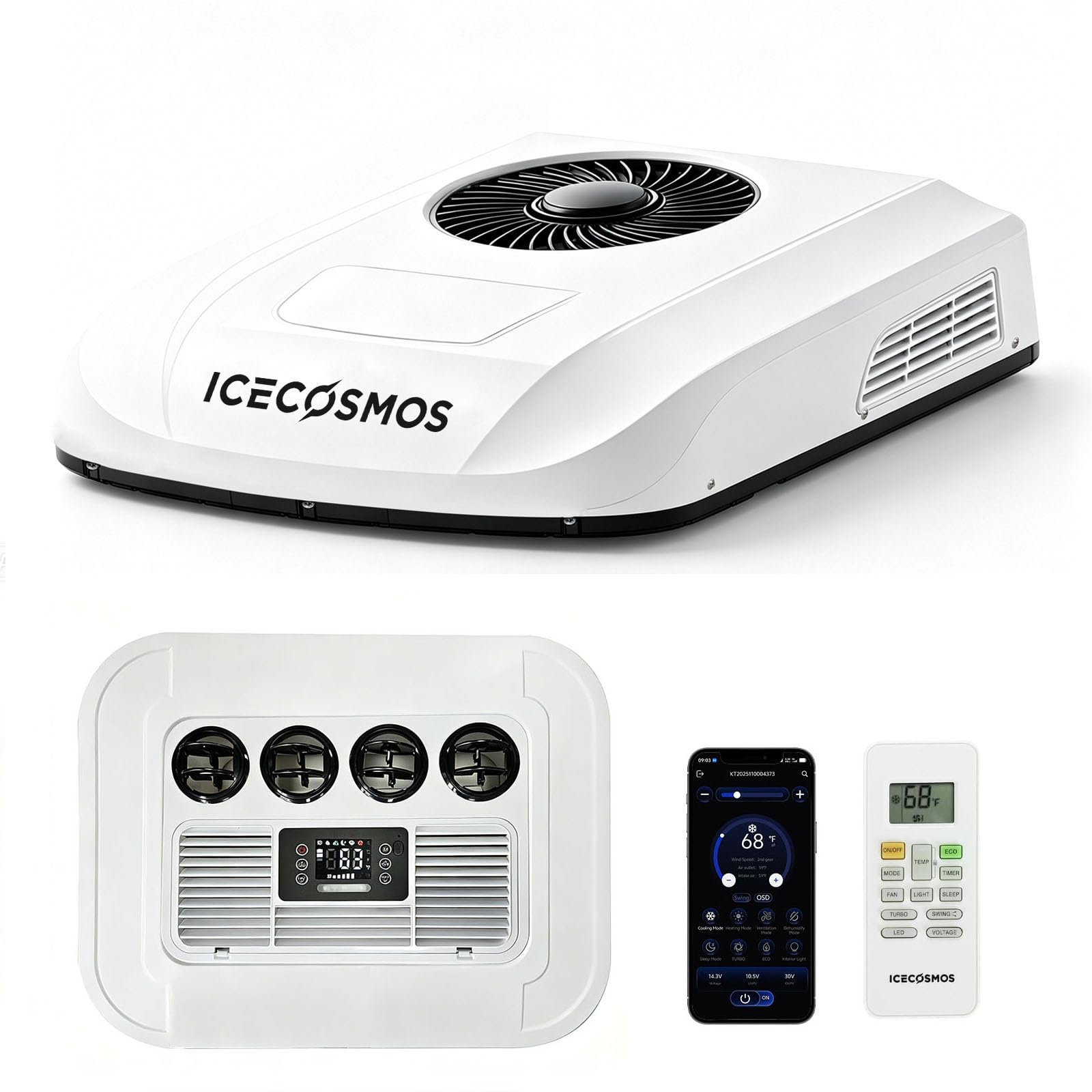
Cooling and heating in one slim roof unit that runs on the battery alone.
Most of the units on this list only cool. This one adds 4500 BTU of PTC heating, so you get a cool-and-warm rooftop unit in a single box. It matches the standard 14.1″x14.1″ roof opening, sits 5.5 inches tall to keep the profile low, and has an IPX6 waterproof fan design. The reinforced ABS shell is built to take rough-road punishment.
The cooling spec is 10000 BTU, matching the Gidrox above, but the endurance story below it is the real differentiator. The maker rates it for over 12 hours in ECO mode on a 12V 400AH LFP battery. Owners echo that on the boondocking side, reporting the unit runs quiet, low-profile, and very cold even when replacing a 110V Coleman in a 2020 Rockwood GeoPro. It pulls under 500W in eco and roughly 700-800W at full load, which is a far gentler draw than a traditional 110V rooftop setup.
The honest caveat: while most owners love the cooling, a handful report units that struggled in extreme heat or failed early. Tech support reachability has been called out as a weak point, so if you get a bad unit, you may need to be persistent. The 14×14 opening also needs a little filing and notching to fit in some rigs — tape the bolts to protect the wires during install.
Why owners rave: the combination of cooling, heat, and genuine off-grid endurance in one slim unit.
What to plan around: you may need to file the roof opening for fit and lean on the maker directly if issues arise.
Pick this if: you want a do-it-all rooftop unit with heat, cooling, and long boondocking runtime on a 400AH battery.
Consider alternatives if: you need a drop-in fit with zero trimming, or warranty service is important to you.
Understanding the Specs
BTU (Cooling Capacity)
BTU stands for British Thermal Units — the amount of heat a unit can remove in an hour. Higher BTU means more cooling muscle, but it also tends to mean more current draw. A small sleeper cab can often get away with around 7000 BTU, while a full-size camper or semi cab benefits from 9000-10000 BTU or more. If your unit’s BTU rating is smaller than your space demands, the compressor runs flat out and never quite wins against the heat.
Rated Current and Battery Runtime
Rated current, measured in amps (A), is how much power the unit pulls from your battery while it runs. A unit drawing 30-62A is far easier on a small bank than one drawing 60-80A. Pair that draw with your battery capacity in amp-hours (Ah) and you get a rough sense of runtime. That is why the same unit can run all night on a large battery and die by midnight on a small one — the battery bank, not the compressor, is usually the real limiter.
Form Factor: Rooftop vs Mini-Split
A rooftop unit is a single all-in-one box that drops into a roof opening, often the standard 14″x14″ cutout. A mini-split separates the indoor evaporator from the outdoor condenser, which lets you route the noisy end outside the cab. Rooftop is simpler and leaves the interior free; split systems are more powerful but require more planning and space.
Refrigerant and Compressor Displacement
R134a is the common refrigerant in these systems, and it needs to be charged correctly for the compressor to run safely. Displacement, measured in cubic centimeters per revolution (cc/r), tells you how much refrigerant the compressor moves per turn. Larger displacement generally means more cooling capacity per hour at a given speed, which is why a 21cm³/r compressor delivers more output than a 20CC one on paper. Match refrigerant and displacement to your existing loop before buying.
FAQ
Can a 12V AC unit really cool a truck cab with the engine off?
How many BTU do I need for my RV or truck cab?
What size roof opening do I need for a rooftop unit?
Is R134a the right refrigerant for a 12V compressor kit?
How loud is a 12V AC unit at night?
What is the difference between a mini-split and a rooftop 12V AC?
Can I run a 12V AC unit off a 200Ah battery bank?
How do I charge the battery that runs the 12V AC?
Do these units heat as well as cool?
Are these easy to install for someone with no HVAC background?
Final Thoughts: The Verdict
For most 12V A/C builds, the 12v ac compressor winner is the Universal A/C Compressor 6PK Clutch SD 508 because it puts a Sanden-style workhorse into your project with the oil already in it — a perfect pick for swaps, vintage cars, and repairs. If you want a rooftop unit that cools a cab on battery alone and offers a bit more cooling capacity, grab the Aspligo 12v RV Rooftop DC Air Conditioner 8000BTU. And for a split system that runs quiet overnight on a big battery bank, the Treeligo 12V Truck Cab Air Conditioner 12000BTU is the one to reach for.
Whichever way you go, buy the unit that matches your battery bank and your roof opening — that is the decision that decides whether you sleep cool or wake up to a dead battery.
How We Picked
We do not accept paid placement. Every pick is matched to a real buyer and a real use-case; we do not hands-on test units.
Sources & Methodology
Specifications: manufacturer listings and product documentation. Review insights: verified customer reviews, as of September 2026. Pricing: not shown on this page (it changes often); check the current price via the retailer link.
As an Amazon Associate, Gadgets Feed earns from qualifying purchases. This does not affect which products we feature.