
Our readers keep the lights on and my morning glass full of iced black tea. As an Amazon Associate, I earn from qualifying purchases.
Specs are compiled from manufacturer listings and verified buyer reviews and can change over time — please confirm the key details on the product page before buying.
You measure the hole in your ceiling. You buy a vent cover that says it fits that size. Then it arrives and it is either too small, or it is bigger than the opening and the screws land in drywall dust. That mismatch is the most common complaint about ceiling vent covers, and it comes from two measurements printed on the same box: the duct opening size and the outside face size. Confirm both numbers before you order and the install is a ten-minute job. This guide walks you through seven covers that people actually buy for ceilings, and tells you which one fits which situation.
I’m Min — the founder and writer behind Gadgets Feed. This guide is built by comparing the manufacturers’ published specifications and the patterns across verified customer reviews, so you get each pick’s real strengths and trade-offs instead of marketing spin.
Most of the work happens before you order, so start with a tape measure and the actual duct hole rather than the old grille. What follows is a plain-English breakdown of the air conditioner vent covers for ceiling that get the fit right the first time.
Our Picks at a Glance
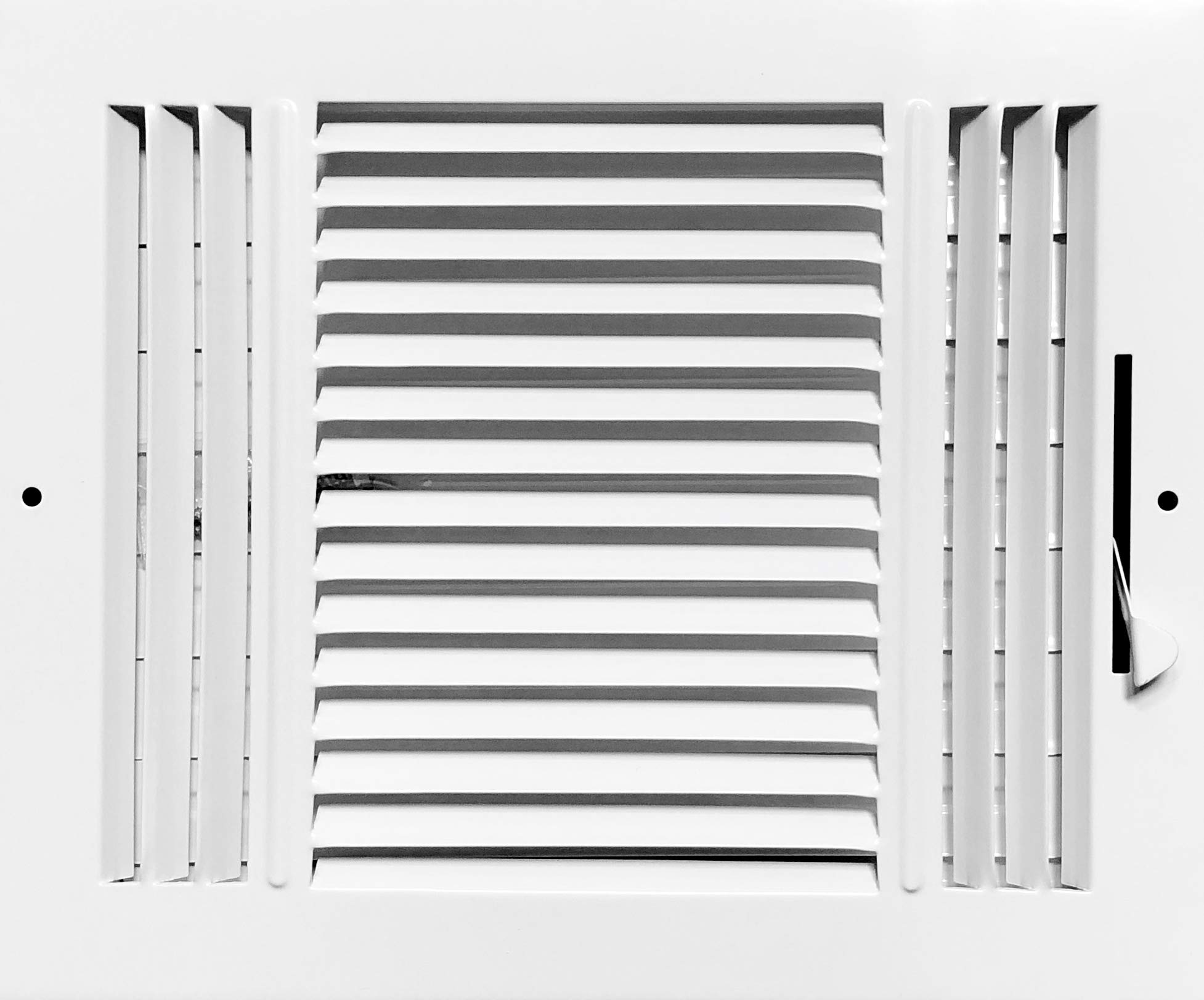

How To Choose The Best Air Conditioner Vent Covers For Ceiling
The single biggest decision here is the duct opening measurement, not the brand. A ceiling vent cover that is even a quarter inch off in the wrong direction either drops through the opening or hangs over drywall where there is nothing to screw into.
Measure the duct hole, not the old grille
Pull the old cover down and measure the rectangular or round hole in the ceiling itself. That is your duct opening size, and it is the number every listing on this page is organized around. The outside face size — the visible plate that rests against your ceiling — is always larger, usually by an inch or more on each side.
A cover built for a 10 x 6 inch opening, for example, typically shows an outside face around 11-3/4 x 7-3/4 inches. Both numbers are correct — they just describe different parts of the cover. They just answer different questions, and a listing that only gives you one will trip you up if your ceiling cut is tight.
Match the airflow direction to the room
A one-way register throws air in a single direction, which suits a room where you want the cold air pushed toward one zone. Two-way spreads it along two sides, three-way along three, and four-way sends air out on all sides — the right call when the vent sits in the middle of a room rather than near a wall.
Decide between a damper and a manual adjuster
A multi-shutter damper is a set of blades behind the face that you open or close with a small handle, letting you dial back the airflow to a room that runs cold. A simpler manual adjuster, common on plastic registers, does much the same job with a push-up or push-down button on the side.
Think about the room’s moisture before you pick a material
A bathroom ceiling vent sees condensation that a hallway vent never does. Plastic registers resist rust outright, while steel covers depend on their coating to survive — powder-coated and rustproof finishes are the ones built for that job.
Quick Comparison
| Model | Best For | Duct Opening Size | Material | Airflow Ways | Amazon |
|---|---|---|---|---|---|
| HBW 10″x 8″ Stamped Face Steel Register★ Best Overall | Best Overall | 10″ x 8″ | Stamped face steel | 3-way | Amazon |
| FanGoFast 10×6 Ceiling RegisterHumid Rooms | Humid Bathrooms | 10″ x 6″ | ABS plastic | 3-way | Amazon |
| Howeall 10 x 6 Steel Vent Cover | Quiet High Airflow | 10″ x 6″ | Powder-coated steel | 2-way | Amazon |
| Therwen Round Ceiling Vent Cover | Round Ducts | 6″ round | Steel | Round diffuser | Amazon |
| Laminaire 8×12 Aluminum Ceiling Vent Cover | Airflow Control | 8″ x 12″ | Extruded aluminum | 1-way | Amazon |
| HBW 12″x 12″ Stamped Face Steel Register | Large Ceiling Openings | 12″ x 12″ | Steel | 4-way | Amazon |
| HVAC Premium 10″ Round Steel Ceiling Diffuser | Best Finish | 10″ round neck | Steel, powder-coated | Round diffuser | Amazon |
In‑Depth Reviews
1. HBW 10″x 8″ (Duct Opening Size) 3-Way Stamped Face Steel Ceiling/sidewall Air Supply Register
Our pick — 4.5+★ from 300+ verified ratings; the strongest balance of quality and price.
Steel fins half an inch apart that push cold air three directions without choking the flow.
If your ceiling cut is 10 x 8 inches, this is the one to start with. The 1/2″ fin spacing is the detail that earns it: those fins sit half an inch apart, which is what lets a high volume of air pass through instead of getting squeezed into a thin stream. You get three-way deflection too, so the air spreads out across the room rather than blasting straight down onto the sofa.
The damper is the second thing worth your attention. A multi-shutter blade sits behind the face, and a handle lets you close it down when a room is running cold. That handle gives you real range: throttle the airflow down or shut the vent off completely. Compare that with the FanGoFast below, which relies on a side button adjuster instead of a handle.
The finish is stamped face steel, and the thing people notice most after installing it is how cleanly it takes paint and blends in. Fit and build quality are the two qualities that come up again and again in the feedback, and the complaints are thin on the ground. The one thing to know before you order: the listed 10″ x 8″ is the duct opening, while the actual outside dimension is 11.75″ x 9.75″. Measure your drywall cutout with that larger number in mind, because a tight cut leaves you little room for the screws to bite.
What earns it top spot
- 1/2″ fin spacing keeps the airflow high rather than muffling it
- Three-way deflection spreads cold air across the room
- Multi-shutter damper with a handle lets you throttle or fully close the vent
- Stamped face steel takes paint and matches a ceiling cleanly
- Shrink wrapped with a cardboard pad behind the face for delivery protection
The measuring catch
- Outside face is 11.75″ x 9.75″, noticeably bigger than the 10″ x 8″ opening
- Only worth buying if your cut is genuinely 10 x 8 — no other size option here
Reach for this if: your ceiling opening measures 10 x 8 inches and you want steel, three-way spread, and a real damper handle.
Look elsewhere if: your cut is a round hole or a different rectangle — the fixed sizing leaves no wiggle room.
2. FanGoFast 10×6 Inch (Duct Opening) Ceiling Register 3-Way Plastic Sidewall Ceiling Air Vent
The bathroom ceiling vent that won’t rust when the steam hits it every morning.
Steam is the killer of steel ceiling vents, and this one sidesteps the problem entirely by being made of ABS plastic. There is no coating to chip and no metal edge to rust through, which is exactly why it keeps turning up in bathrooms and toilets with heavy condensation. The surface is smooth enough to wipe down, and it stays that way.
The fit story is where this cover builds its case. Owners consistently report it dropping into a 10 x 6 inch opening properly and doing its job, and the rust resistance gets the same kind of notice in damp rooms. Installation is a short job with the two screws that come in the box. The manual adjuster sits on the right side — you push the button up or down to control how much air comes through, which is a simpler mechanism than a damper blade but does the same core job.
Now the honest part. The colour draws more criticism than anything else here, so set your expectations if your ceiling is a warm white rather than a cool one. Durability also splits opinion — some find it sturdy, others less so. Treat it as a solid choice for a humid secondary room rather than a heavy-duty register for a main living space, and it will serve you well.
Where it fits best: Bathrooms, toilets, and laundry ceilings where condensation would eat a steel cover alive. The ABS build is the whole point.
Where it won’t win: A bright white ceiling in a main room, where the off-white tone is more likely to stand out against your paint.
Suits you if: your ceiling vent lives in a wet room and you would rather never think about rust again.
Think twice if: the colour match to your ceiling matters as much as the material — this one leans off-white.
3. Howeall 10 x 6 Inch (Duct Opening) Air Vent Cover for Wall or Ceiling, 2-Way Steel Register

A white powder-coated steel plate with blades that cut the noise as well as the air.
Here is where the build quality conversation starts in earnest. The steel is coated with a white powder finish that resists heat and cold without warping, and the listing describes it as rustproof. That matters on a ceiling, where a warped register never sits flush again and you end up staring at a gap every time you look up. Owners point to the quality first, and the fit second, more than anything else on this cover.
The airflow is the standout spec. A two-way deflection design with adjustable blades pushes a lot of air through, and the blades are sized to keep the noise down while doing it. The multi-shutter damper lets you adjust the blades and block the flow completely when a room is running cold. The round Therwen below has no damper at all, so it can’t match that control.
One thing worth flagging: the adjustability does divide opinion. Some find the blade control intuitive, others less so on first use, so give yourself a minute with it before you screw the cover down. The larger perimeter around the duct opening is a genuine plus for anyone whose drywall cut is a little ragged — it covers the mess. The listing also helps with sizing if you are unsure, which is rare in this category.
Reasons it ranks this high
- Powder-coated steel resists heat, cold, and warping over time
- Two-way adjustable blades move a lot of air quietly
- Multi-shutter damper can throttle or fully block the flow
- Larger perimeter hides a slightly ragged duct cut
What to keep in mind
- The blade adjuster takes a moment to get the hang of
- Only in the 10″W x 6″H duct opening size
Pick this when: you want a warping-resistant steel cover with real air control in a 10 x 6 opening.
Skip it when: you need a round cover or a different rectangle — this one is fixed to 10 x 6.
4. Therwen Round Ceiling Vent Cover, 9-15/16″ Overall Fit for 6 in. Duct Opening

A round steel diffuser that tidies up an ugly ceiling hole and comes with the screws.
Round duct openings need a round cover, and this is the pick for a 6 inch hole. The duct opening measures about 6 inch, while the full outer diameter of the plate is about 10 inch — that extra circle of steel is what gives you something solid to screw into and hides the rough edge of the cut.
The package is worth a mention because it saves a second trip. You get two complete cover sets, each with three screws, six screws in total. The steel is designed to resist breaking and fading, so it holds its look rather than dulling. The people who buy it tend to notice the finish first — it reads as a clean, modern detail against a plain ceiling rather than a plain utilitarian disc. Installation is straightforward with the included hardware and nothing else to buy.
The one adjustment to your plan: this is a diffuser, not a damper-controlled register. There is no shutter to throttle the flow, so if you need to cut air to a room, a register like the Howeall above is the better tool. What this does instead is spread air evenly from a round opening and look good while doing it. For a large round cut where a plain grille would look unfinished, that is exactly the job.
Why it made the list: The two-cover pack with six screws included means one purchase finishes two ceiling vents, and the sturdy steel keeps its finish.
The trade-off to weigh: No damper. Airflow is what it is, so pair it with a room that is already balanced rather than one that runs cold.
Best matched to: round 6 inch openings where you want two covers and all the hardware in one box.
Not the right fit if: you need to control how much air comes out — there is no damper here.
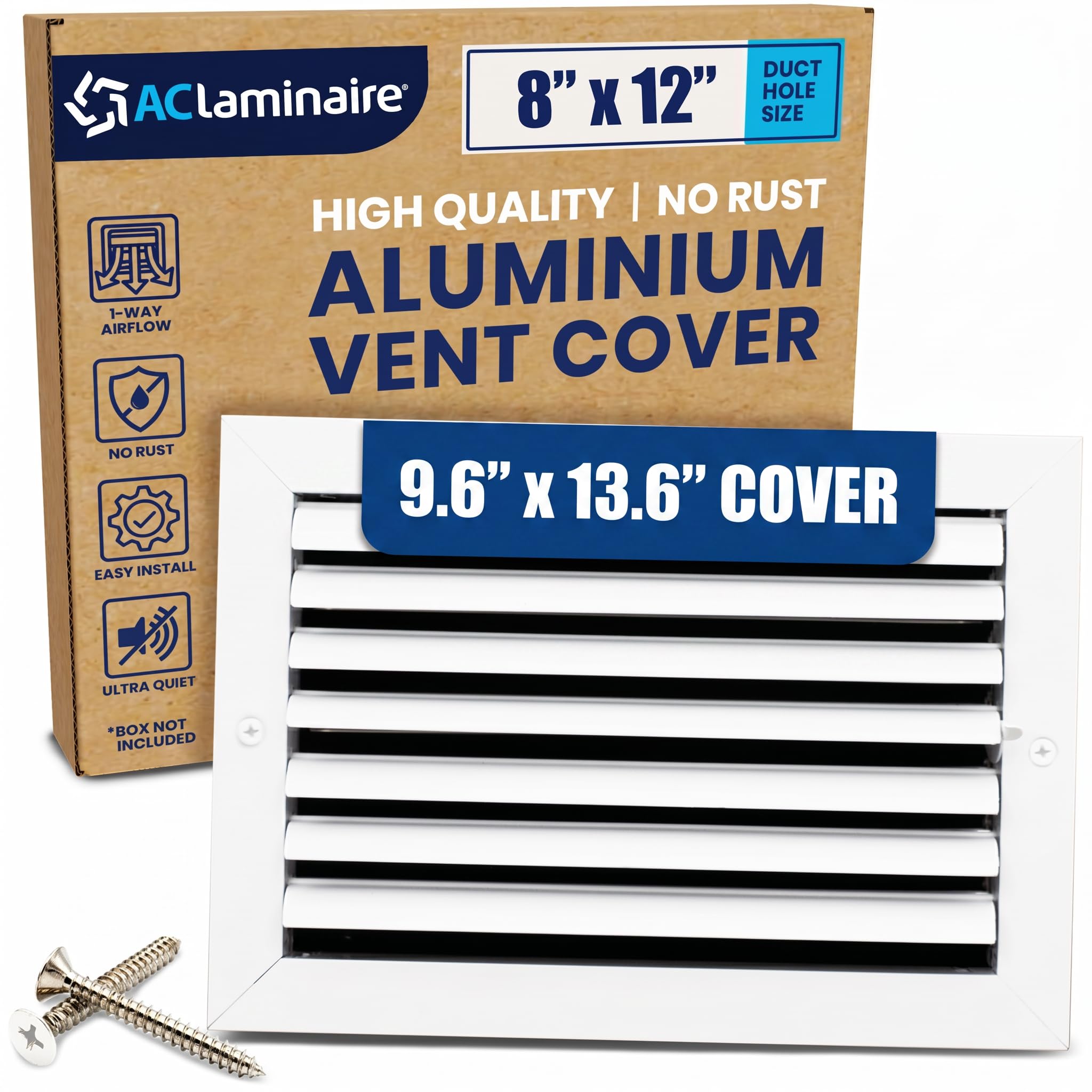
5. Laminaire 8×12 Duct Hole Aluminum Ceiling Vent Cover, 1-Way HVAC Register
Curved aluminum blades that aim cold air exactly where you point them, by hand.
This is the cover for a big rectangular opening — an 8 x 12 inch duct hole, with a visible face of 9.6 x 13.6 inches. Compared with the 10 x 6 FanGoFast above, which is a compact 10 x 6 opening, this is the one you reach for when the ceiling cut is wide. The extruded aluminum body keeps its shape and, per the listing, resists rust while staying light enough to handle easily.
The real draw is the airflow control. The adjustable curved blades are set by hand from the external slats, so you can direct a one-way stream of cold air toward the part of the room that needs it. A plastic seal runs around the edge to close the gap between the vent and the ceiling surface, which is what gives it that finished, professional look instead of a drafty seam.
Two things to know. First, this is genuinely fussy about sizing — it is built to fit an 8 x 12 opening, so verify your cut before you order. Second, sturdiness is mixed: some owners find it solid, others find it light. It is not the heavyweight register of the group, but for a one-way directed flow in a large opening it does the work. Measure the 8 x 12 cut before ordering, and the fit is right the first time.
The strong points
- Curved blades aim a one-way stream where you want it
- Extruded aluminum resists rust and stays light to handle
- Integrated plastic seal closes the gap for a clean finish
- Fits a generous 8 x 12 inch duct opening with 9.6 x 13.6 face
Where it asks more of you
- Sturdiness is mixed — it feels lighter than a stamped steel register
- Requires you to confirm an 8 x 12 cut; no other size works
For you if: you have a wide 8 x 12 opening and want to aim a one-way stream precisely.
Keep looking if: you prefer the heft of heavier steel or need a size other than 8 x 12.
6. HBW 12″x 12″ (Duct Opening Size) 4-Way Stamped Face Steel Ceiling Air Supply Register

Four-way steel spread for a large opening that needs to feed the whole room.
When the vent sits in the middle of a ceiling, four-way deflection is the smarter geometry. Air leaves on all four sides rather than dropping in one direction, so the cold reaches the corners instead of pooling under the register. This cover does exactly that through a 12 x 12 inch opening, with the same 1/2″ fin spacing as the 10 x 8 model above — that spacing is what keeps the air moving at volume.
Build follows the same stamped face steel recipe, and the multi-shutter damper with its handle lets you dial the flow down when a room is already comfortable. It also arrives shrink wrapped with a cardboard pad backing the face, so it lands on your doorstep without dents in the grillwork. The visible plate measures 13.75″ x 13.75″, so plan your ceiling cut with that width in mind.
The honest caveat on this one is durability of the fins. Some buyers report bent fins and blades, which is the nature of thin stamped steel — it is not a structural problem, more a sign to handle it gently during the install and keep boxes off it in storage. Keep the box and padding until install day, and handle the fins gently so they stay straight.
The case for four-way: Center-ceiling placement gets even coverage, and the 1/2″ fin spacing keeps the volume high, with an adjustable damper to trim it back.
Handle with care: The stamped steel fins can bend, so keep pressure even around the frame during install.
The right call for: a 12 x 12 ceiling opening in the middle of a room that needs air spread on all sides.
Consider another size if: your cut is smaller — the 13.75″ face needs the ceiling room to sit flat.
7. HVAC Premium 10″ Round Steel Ceiling Diffuser, 14″ Outer Diameter

The powder-coat shine that makes your ceiling vent look like it was just waxed.
Finish is the headline here. The powder-coat surface is smooth, shiny, and described as scratch-resistant, and it reads like a freshly waxed car rather than a utility grille bolted to drywall. Owners notice it. If your ceiling vent is in a hallway or a room where people actually look up, that finish does the work.
The sizing needs a second look, because this is the number that trips people up. The listed 10″ diameter is the neck — the size of the round duct opening it fits. The full grille measures 14″ across, which gives a wide ring of steel around the hole and hides a rough cut. Several owners do find it larger than expected, so measure the duct neck, not the old grille face, and you will land right.
On build, the steel is heavier gauge than the job requires, which is why it holds up and still feels light in the hand at 1.28 pounds. Screws are included. The mixed report worth knowing is the hardware: some receive the right screws, others find none in the box. Check the package before you climb the ladder. For a hallway or a bedroom where the grille is visible, though, this is the best-looking cover of the group.
What you are paying for: A heavier-gauge steel grille with a powder-coat finish that resists scratching and stays shiny, sized for a 10″ duct neck.
Double-check on arrival: The mounting screws are inconsistent — verify they are in the box before installation day.
Choose it for: a highly visible round ceiling vent where finish and a scratch-resistant look matter most.
Look elsewhere if: your opening is rectangular, or you need the exact hardware confirmed before installation.
Understanding the Specs
Duct Opening Size vs. Outside Face Size
The duct opening is the hole in your ceiling that the air travels through. The outside face is the visible plate that rests against the drywall, always larger than the opening. A 10 x 8 opening, for example, pairs with an outside face around 11.75 x 9.75. Measure the hole, then order a cover whose outside face fits the ceiling around it.
Airflow Ways (1-Way to 4-Way)
The number of sides the air exits from. A 1-way register pushes air in one direction, good for aiming flow at a specific zone. Two-way and three-way spread it further, and four-way sends it out on all sides — the right pick when the vent sits in the middle of a room and needs to feed all four corners.
Multi-Shutter Damper vs. Manual Adjuster
A multi-shutter damper is a set of blades behind the face with a handle that opens or closes them, letting you throttle or fully stop the airflow. A manual adjuster does the same job with a side button or slider, and is common on plastic registers. Both let you cut flow to a room that runs cold.
Steel vs. ABS Plastic
Steel, especially powder-coated, holds its shape and resists warping from heat and cold. ABS plastic resists rust outright, which makes it a fit for bathrooms and toilets with heavy condensation. Choose steel for durability in dry rooms, plastic for wet rooms where rust is the real threat.
FAQ
How do I know my ceiling vent cover will fit?
Can I use a wall vent cover on a ceiling?
Which is better for a bathroom ceiling vent, steel or plastic?
What is the difference between a 1-way and a 4-way ceiling vent cover?
Do I need a damper on a ceiling vent cover?
How do I install a ceiling vent cover?
Why is the outside dimension larger than the size I measured?
Will a round diffuser fit my rectangular ceiling opening?
How do I stop a ceiling vent cover from rattling?
Can a new ceiling vent cover improve airflow?
Final Thoughts: The Verdict
For the most people, the air conditioner vent covers for ceiling winner is the HBW 10″x 8″ 3-Way Stamped Face Steel Register because it nails the essentials — 1/2″ fin spacing for real airflow, three-way spread for the whole room, and a damper handle that lets you dial the flow down without losing the fit. If you want a steel cover with even quieter spread and a warping-resistant powder coat, grab the Howeall 10 x 6. And for a bathroom ceiling where condensation is a real threat, the FanGoFast 10 x 6 ABS register is the one to reach for.
The one thing worth saying clearly: measure the duct opening first, not the old grille. Every good outcome in this category starts with that number, and a cover that matches it on the first try saves you a return trip up the ladder.
How We Picked
We do not accept paid placement. Every pick is matched to a real buyer and a real use-case; we do not hands-on test units.
Sources & Methodology
Specifications: manufacturer listings and product documentation. Review insights: verified customer reviews, as of November 2026. Pricing: not shown on this page (it changes often); check the current price via the retailer link.
As an Amazon Associate, Gadgets Feed earns from qualifying purchases. This does not affect which products we feature.