
Our readers keep the lights on and my morning glass full of iced black tea. As an Amazon Associate, I earn from qualifying purchases.
Specs are compiled from manufacturer listings and verified buyer reviews and can change over time — please confirm the key details on the product page before buying.
Two numbers on the jug decide the right washer fluid: the freeze point it protects down to, and whether it is pre-mixed or a concentrate you dilute. Pick by the coldest night your car actually sees. A summer-only jug turns to slush in a hard freeze and can crack the reservoir; a deep-winter jug poured in July is money burned. Below, the picks are grouped so you can match one to your climate and your patience for mixing.
I’m Min — the founder and writer behind Gadgets Feed. This guide is built by comparing the manufacturers’ published specifications and the patterns across verified customer reviews, so you get each pick’s real strengths and trade-offs instead of marketing spin.
The temperature rating is the first thing to read, and the second is the jug size. A gallon that protects to -20°F keeps your nozzles spraying on a morning when the road salt is still wet. A one-gallon summer jug at +32°F saves your reservoir in a warm-weather bug season. Either way, the label tells you what you are pouring before you pour it, and the picks below sort cleanly into cold-climate and warm-climate jobs — this is the shortlist for best car washer fluid.
Our Picks at a Glance


How To Choose The Best Car Washer Fluid
Skip the fragrance and the brand logo. You are shopping for a freeze point and a pour method. Get the freeze point and the pour method right and the rest barely matters. Here is how the choice actually breaks down.
Read the freeze point before the brand name
The number on the jug — +32°F, 0 degree, -20°F, -27°F — is the temperature the formula is built to keep flowing at. A +32°F summer blend is meant for warm-weather driving, and pouring it into a reservoir in a hard freeze is how you end up with a solid block of slush instead of a spray. If your mornings drop below freezing with any regularity, buy for the cold number and accept that you are paying for methanol and de-icer you only use part of the year.
Decide if you want to mix or just pour
A ready-to-use gallon goes straight from the jug into the reservoir — no measuring, no second container. A concentrate is a small bottle you cut with water, and the Maplefield bottle is 8 fluid ounces that makes 40 gallons. That is a big difference in storage and shelf life. The trade-off is that a concentrate puts the mixing ratio in your hands, and if you eyeball it wrong on a cold night, the freeze protection you paid for is not there. Buy ready-to-use if you want to pour and forget it; buy concentrate if you have shelf space for one small bottle instead of a rack of gallons.
Match the fluid to your windshield, not just the weather
Modern cars bring glass that not every fluid suits. Rain-sensing windshields rely on a clean sensor patch, and some fluids are explicitly stated as safe for them. Plastic and plexiglass windshields, common on some trailers and older vehicles, also need a formula that says it is safe for those materials. If your vehicle has either, check the label for the wording before you buy, because a fluid that beads water beautifully on glass can fog a plastic panel.
Treat “streak-free” as a claim, not a guarantee
Nearly every jug here promises no streaks. Owners split on that promise across several of these fluids, and the split usually tracks how dirty the glass was, how much fluid they sprayed, and how old the wiper blades were. A fresh wiper blade and clean glass make any of these fluids streak less. If your glass is hazed with old road film, no washer fluid is going to fix that in one spray — clean the glass first, then judge the fluid.
Quick Comparison
| Model | Best For | Freeze Protection | Format | Jug Size | Amazon |
|---|---|---|---|---|---|
| Prime Guard Power Blast Blue★ Best Overall | Warm-weather bug season | +32°F | Ready-to-use | 1 Gallon | Amazon |
| Prestone AS658 All Season 2-in-1Most Established | Year-round mixed-climate driving | 0 Degree | Ready-to-use | 1 Gallon | Amazon |
| Clean Revolution Advanced All SeasonDeep-Freeze Pick | Deep-freeze winters and clean-air states | -27°F | Ready-to-use | 1 Gallon | Amazon |
| PEAK PWN0H3 De-Icer | Cold winters on a tighter budget | -20°F | Ready-to-use | 1 Gallon | Amazon |
| UltraVision Windshield Washer Fluid | Warm-weather rain beading | +32°F | Ready-to-use | 1 Gallon | Amazon |
| Prestone 2-in-1 All Season 0 Degree | Simple year-round top-ups | 0 Degree | Ready-to-use | 1 Gallon | Amazon |
| Maplefield Concentrate | Storage-light bulk supply | All-season (mix-dependent) | Concentrate | 8 Fl Oz (makes 40 gal) | Amazon |
| MWC Windshield Washer Fluid | Eco-minded ready-to-pour | +32°F | Ready-to-use | 1 Gallon | Amazon |
In‑Depth Reviews
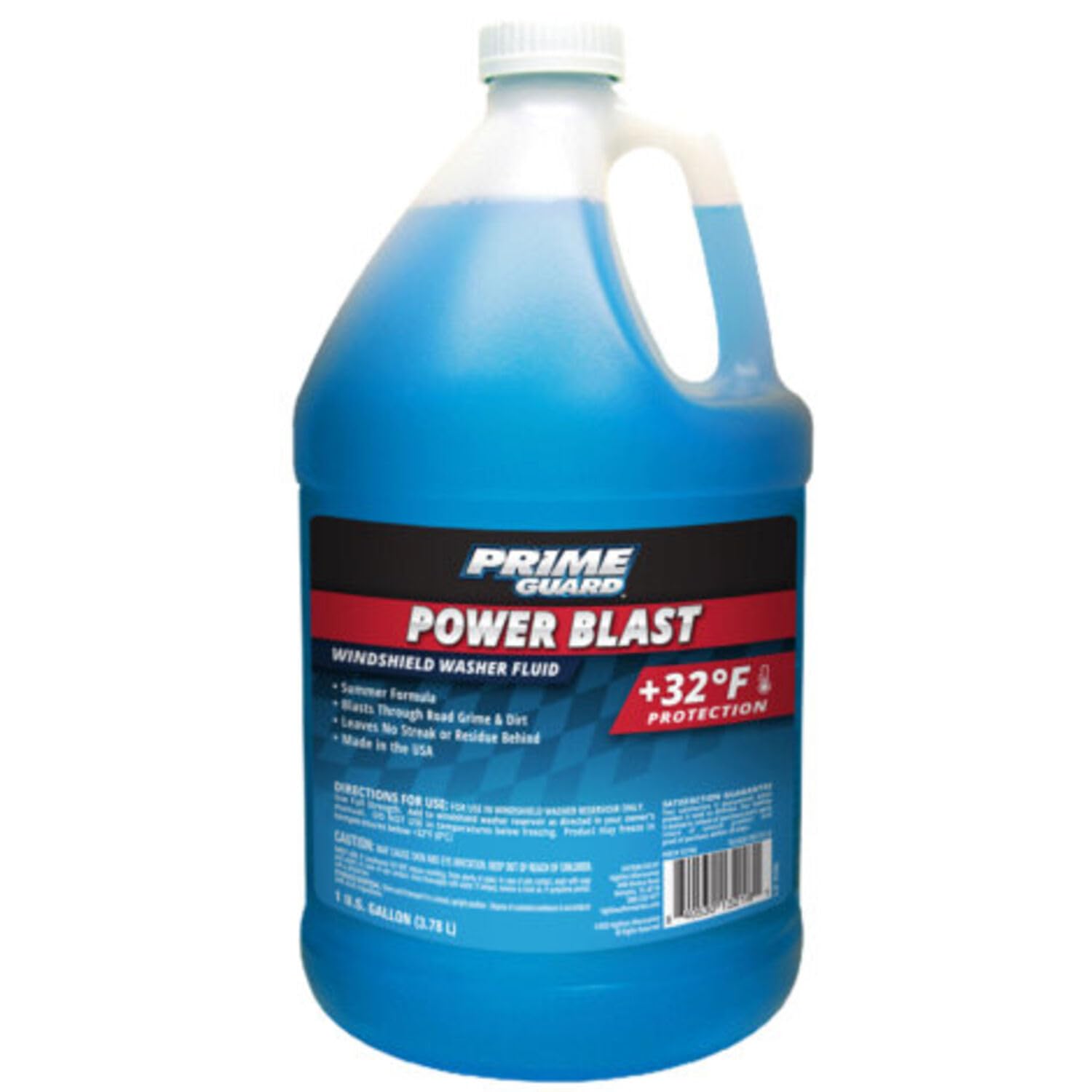
1. Prime Guard +32°F Power Blast Blue Windshield Washer Fluid | 1 Gallon
Our pick — 4.5+★ from 550+ verified ratings; the strongest balance of quality and price.
The warm-weather jug that shrugs off bug splatter and road film without you touching a bottle of water.
If your windshield problem is baked-on June bugs and highway film rather than ice, this is the pick to start with. It is a +32°F summer blend, which means it is mixed for warm-weather driving and not for a hard freeze. What you get for that trade-off is a formula that goes after road grime, bugs, dirt, film, and light frost in one spray, and a ready-to-use jug you pour straight into the reservoir with no measuring at all.
Where this Prime Guard earns its place at the top is plain effectiveness — cutting through the mess that actually blocks your view. The formula is built to leave no streaks or residue behind, so the glass clears rather than smears. It is safe for standard washer systems in cars, trucks, and EVs, so there is no compatibility homework to do. One owner with Florida driving put it well: it handled the bug layer the Everglades throws at a windshield. That is the job this jug was made for.
The honest limit is right on the label. At +32°F it is not a winter fluid, and pouring it into a reservoir in a freezing snap is not what it is built for. It is also a full gallon jug — the package dimensions run 12.44 x 5.87 x 5.83 inches and it weighs about 8 pounds — so plan shelf space for it. This is the fluid to buy when you live somewhere warm and drive through a lot of insect season, not the jug to keep in the garage for January.
Why Owners Stick With It
- Goes after bugs, road grime, film, and light frost in one spray, so you are not scrubbing the glass yourself.
- Pre-mixed and ready to pour — no dilution step, no second container.
- Stated as safe across cars, trucks, and EVs with standard washer systems.
- Built to finish streak-free and residue-free rather than leaving a haze.
Where It Stops Short
- The +32°F summer blend is a warm-weather fluid only — cold-climate drivers need a different jug.
- Owners split on whether it is worth the money, so value depends on how heavy your bug season is.
- A full 8-pound gallon means real shelf space.
Made for: warm-climate drivers fighting insect season and highway film who want to pour and go.
Steer away: if your overnight temperatures drop near or below freezing — you need a sub-zero jug instead.
2. Prestone AS658 All Season 2-in-1 Windshield Washer Fluid, Year Round, De-Icer + Bugwash, 1 Gallon
The one that has been on shelves since 2015, doing de-icer and bug wash duty in the same jug.
This is the fluid most people picture when they think of a year-round jug, and the appeal is simple: one bottle covers both the frosty morning and the summer bug run. Prestone builds it as a 2-in-1, with de-icer and bugwash in the same formula. The water beading technology is meant to push water off the glass rather than leave it sitting there, and the stated result is no streaks and no glare.
What wins people over is the all-weather behavior — it works in the cold and the heat without you swapping jugs in the garage. Effectiveness and quality are the two things this fluid is praised for most, and the streak-free finish gets its own share of the credit. The one wrinkle to know about is anti-freeze: some drivers say it never freezes up on them, and others report it freezing under 20 degrees Fahrenheit. Scent gets a split reaction too. Treat the freeze protection as real but not bottomless, and pick a deeper-rated jug if your winters go hard.
The one-jug argument: if you want to stop thinking about washer fluid entirely, a 2-in-1 that handles de-icing and bug removal in the same bottle is the lowest-effort way to get there.
The glass-half-empty read: beading and no-glare performance are the selling points, but a split on freeze behavior under 20°F means cold-climate drivers should read their forecast before trusting it alone.
Reach for it: when you want one jug in the garage that covers most of the year and you are not chasing record cold.
Look elsewhere: if your commute regularly starts below 20°F and you want a deeper freeze rating on the label.
3. Clean Revolution Advanced All Season Windshield Washer Fluid Ultra Low VOC Formula – Extreme -27°F Winter Protection – Made in USA
Built for the morning that reads minus twenty-seven on the dash and you still need to see.
Start with the number that matters: this jug is rated to melt ice and frost down to -27°F, which is -33°C. That is the deepest protection on this list, and it is the reason to pay premium money for a gallon of washer fluid. It is a 2-in-1, pairing winter de-icer duty with summer bug wash, so the same jug earns its shelf space in July as well as January.
You also breathe less solvent with this formula. The maker states it cuts VOC levels (volatile organic compounds — the solvents that evaporate and get regulated) by 40% compared to traditional windshield fluids. The maker also states it exceeds clean air standards nationwide, including California Type A and Texas. If your car reads the glass to trigger the wipers, the maker states it is safe for today’s newest rain-sensing windshields. Cleaning power earns the most praise: the maker states it leaves a streak-free finish and repels water with water beading, so rain rolls off instead of smearing.
Weigh the jug itself, though. At 8.3 pounds versus the Prime Guard gallon at 8 pounds, it is a two-hand carry to the reservoir. Streak-free results split — some drivers see a clean glass, others report staining — and value gets a mixed reaction because this is the premium side of the shelf. The deep freeze rating is the whole point; if you do not need it, you are paying for protection your weather never asks for.
The case for it: the only jug here rated to -27°F, with a 40% cut in VOCs and stated safety for rain-sensing glass.
The caveat: you are paying premium money, and the streak result is not unanimous — clean the glass first and expect the best from it.
4. PEAK (PWN0H3) -20°F DE-ICER Windshield Washer Fluid – 1 Gallon

Twenty below protection without the premium jug price, and it pours ready to use.
In genuinely cold country, you want protection to -20°F with no mixing. That is what this PEAK jug gives you: a ready-to-use de-icer rated to -20 degrees Fahrenheit. It keeps the washer system from freezing up in winter, so the pump and the nozzles keep working when you need the spray most. The stated job is simply keeping your windshield clean while it does it.
The package runs 12.17 x 7.83 x 7.24 inches at 8.18 pounds. It earns the most praise for effectiveness, with frost resistance the next thing drivers point to — the de-icing duty is the whole reason this jug is in the garage. Against the Clean Revolution pick above, it gives up the deepest rating — -20°F versus -27°F — but it asks less of your wallet for protection that covers most hard winters. That trade is the reason it sits where it does on this list.
Cold-Morning Strengths
- -20°F protection keeps the pump and nozzles from freezing up in real winter weather.
- Ready to pour with no mixing, so a top-up takes seconds in a cold parking lot.
- De-icing performance is the leading reason buyers keep coming back to it.
Trade-Offs To Weigh
- Value splits — some drivers see a bargain, others think it is priced high for a gallon.
- -20°F is deep, but the Clean Revolution jug goes further down to -27°F.
Match it to: a cold-climate garage that wants real sub-zero protection without the top-tier price.
Think twice: if your winters regularly undercut -20°F — step up to a deeper-rated fluid.
5. UltraVision Windshield Washer Fluid +32F 1 Gallon Wiper Fluid

Rain beads and rolls instead of smearing, and it is stated safe on plexiglass and plastic windshields.
Most washer fluids are happy enough on glass. This one goes a step further with an explicit materials claim: it is stated safe for glass, plexiglass, and plastic windshields, and listed for cars, trucks, SUVs, and RVs. If you own a vehicle with a plastic panel, that wording is the reason to look here rather than at a generic gallon. The rain technology beads water so it drives off the windshield, which is the useful part in warm weather — water leaves instead of sitting and smearing under the blade.
Cleaning power is its other strength: dirt, bugs, and grime come off, and it states removal of road film, bird droppings, and tough residues. Clarity is the thing this fluid is praised for most — the glass comes out clear enough to see through properly. Set against the Prime Guard jug, it adds that plexiglass and plastic compatibility, which the Prime Guard label does not state, so it is the safer pick if your windshield is not plain glass.
Know the two soft spots. First, it is a +32°F fluid, stated for above 32°F cleaning, so it is a warm-weather jug. Second, the streak result splits — some drivers see a clean glass, and others report blue spots left on the windshield. Value also divides, with some seeing a good buy and others not. Priced toward the premium end of the +32°F group, it is asking for the materials flexibility it offers.
Fits best: warm-weather drivers, RV owners, or anyone with a plexiglass or plastic windshield that needs a stated-safe formula.
Less compelling: on plain glass in a cold climate — you can get the same summer duty for less, and this jug will not protect you in a freeze.
6. Prestone 2-in-1 All Season Year Round Windshield Washer Fluid 0 Degree (1 Gallon), Orange

An orange all-season gallon that handles everyday grime and surprises you on frost.
This is the straightforward all-season jug: a 0 degree 2-in-1, sold by the gallon in orange. There is no mixing and no complicated claim stack — you pour it in and it cleans general grime off the windshield. Where it earns extra credit is frost.
What it will not do is pretend to be a deep-winter de-icer. Zero degrees is the rated number, and that is the floor to respect.
The honest complaint about this jug is pricing — it is considered pricey for what it is, and buyers mention that more than once. Still, it is a proven formula, and for someone who wants one bottle for the whole year rather than two, the simplicity is worth something. Keep it in the garage as the baseline jug for everyday grime and light frost.
What it quietly does well: that frost and light-ice melting goes beyond what a 0 degree label suggests, which makes it more useful in shoulder seasons than the rating implies.
The fair knock: price. It sits above the plain summer jugs, and the value conversation is not unanimous.
Pick it when: you want one all-season jug and light frost duty, not record-cold performance.
Leave it on the shelf: if you are chasing the lowest price per gallon for warm-weather cleaning alone.
7. Maplefield Windshield Washer Fluid Concentrate – 8 Fl Oz, Makes 40 gal – All-Season Streak-Free Windshield Wiper & Window Washer Fluid

An 8-ounce bottle that turns into 40 gallons, if you are willing to do the mixing.
Here is the storage math that sells this bottle. It measures 1.5 x 3 x 4.5 inches and makes 40 gallons, against the Prime Guard gallon at 12.44 x 5.87 x 5.83 inches — a much larger jug that produces far more fluid. If your garage is already full of jugs, one small bottle on a shelf is a real advantage. There is a capful measuring system built in, and you mix with water, methanol, or use it as windshield washer, with the ratio set by the season.
It is a concentrate, so the claim to trust is dilution, and that is the part drivers praise — the bottle is genuinely concentrated. The transparent container lets you see what is left, so you are not caught short. Where the picture gets less flattering is effectiveness and freeze behavior: results split, and some report the fluid freezing in cold temperatures. The rated protection depends on the ratio you mix, so a weak batch on a cold night will not save you. The bottle also gets called small — accurately, because it is 8 fluid ounces, and that is the trade for the gallon yield.
The Case For Concentrate
- 8 fluid ounces yields 40 gallons — a fraction of the shelf space of gallon jugs.
- Clear bottle shows the level so you restock before you run dry.
- Made in the USA, and the capful system gives you a repeatable mix.
What You Take On
- Cold-weather protection is mix-dependent, and some drivers report freezing.
- The 8-ounce bottle reads as tiny next to a gallon — the yield comes only after you dilute it.
Best fit: a space-tight garage, a fleet, or a driver who wants to mix a batch to the season and store a bottle instead of a rack of gallons.
Not for you: if you would rather pour and go, or you live where a misjudged dilution could freeze in the reservoir.
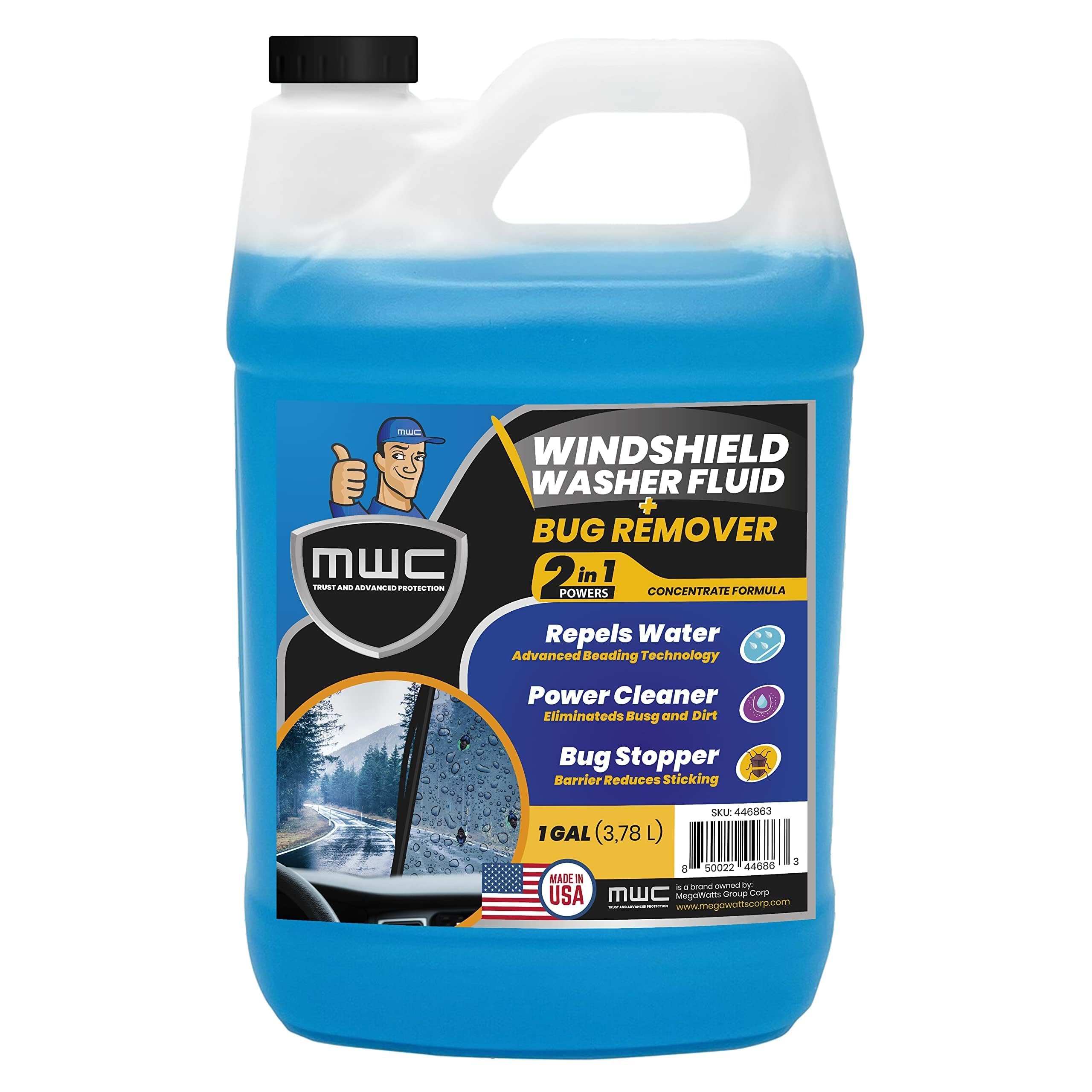
8. MWC Windshield Washer Fluid, Ready to Use, Removes dirt, Safe for the environment, Removes grime, Streak Free Glass Cleaner, +32°F, 1 Gallon (3.78 Liters)
The biodegradable pour-and-go gallon for drivers who care what runs off the glass.
For a ready-to-use jug, this one carries an environmental story. It is biodegradable and stated as safe for the environment, which is the reason some drivers choose it over a generic gallon. There is no tablet to dissolve and no 20-minute wait — the jug is pre-mixed, so you pour from bottle to reservoir and you are done. It is listed for cars, trucks, and SUVs, and it is a +32°F formula, so it is a warmer-temperature jug.
Cleaning is where it earns its keep. It removes dirt and gunk off windshields, and drivers note it makes the wipers work better in the rain — the glass stays clear enough that the blade does its job. Quality and cleaning performance are the two strengths buyers point to. Streaks split as well, so a clean glass is not a sure result every time.
What you are buying: a pre-mixed, biodegradable gallon you pour straight in — no measuring, no tablet, no cleaning step beyond the spray.
The price of principle: the environmental angle and the ready-to-pour convenience come attached to the top price on this shelf.
Choose it if: the biodegradable formula and pour-and-go convenience are worth the premium to you, and your winters stay above freezing.
Pass if: you want the best cleaning value per gallon, or you need sub-zero freeze protection.
Understanding the Specs
Freeze Point (The Most Important Label Number)
Freeze point is the temperature a fluid is built to keep flowing at, shown as +32°F, 0 degree, -20°F, or -27°F. It is the number that decides whether your nozzles spray on a January morning or leave you with a frozen pump. A +32°F summer blend is warm-weather only; a -20°F or -27°F de-icer carries methanol to keep working in the cold. Buy by your coldest realistic night, not by the brand name on the jug.
Ready-to-Use vs Concentrate
A ready-to-use gallon goes from bottle to reservoir with no dilution. A concentrate is a small bottle you cut with water, and the Maplefield bottle is 8 fluid ounces that makes 40 gallons. Concentrate wins on shelf space and lasts for seasons; ready-to-use wins on convenience and on not leaving the mix up to you. If a cold night is coming and you are not sure you will measure right, buy ready-to-use.
VOC Level and Clean-Air Compliance
VOC stands for volatile organic compounds — the solvents in washer fluid that evaporate into the air and are regulated in some regions. Some fluids cut VOC content to meet clean-air standards, and the Clean Revolution jug is stated to exceed nationwide clean air standards including California Type A and Texas, with a 40% reduction against traditional fluids. If you live in a regulated state or just want less solvent evaporating in your garage, the label will say so.
Streak and Residue Behavior
Streak-free is a promise nearly every jug makes, and it is the claim that splits most across owners. Streaks come from a dirty windshield, worn blades, or too little spray — not only from the fluid. A water-beading formula pushes water off the glass so it does not smear, and a formula stated safe on plexiglass and plastic matters if your windshield is not glass. Clean the glass and replace a worn blade before blaming the fluid.
FAQ
Can I use a +32°F summer washer fluid in winter?
Is a -27°F washer fluid worth the extra money over -20°F?
How much fluid does the Maplefield concentrate actually make?
Will washer fluid damage a rain-sensing windshield?
Can I use washer fluid on a plexiglass or plastic windshield?
Why does my washer fluid leave streaks?
Is it safe to mix two different washer fluids in the reservoir?
How does a 2-in-1 washer fluid differ from a plain summer blend?
Does washer fluid have to be disposed of in a special way?
Final Thoughts: The Verdict
If your winters stay mild, the car washer fluid winner is the Prime Guard Power Blast Blue. Its +32°F summer blend attacks bugs, grime, and light frost in one ready-to-pour gallon, with no second container or measuring cap needed. If your winters run deep, step up to the Clean Revolution Advanced All Season — the only jug here rated to -27°F, with stated safety for rain-sensing glass. For a space-tight garage or a fleet, reach for the Maplefield Concentrate: 8 fluid ounces makes 40 gallons. Buy by the freeze point on the label, matched to your coldest realistic morning.
How We Picked
We do not accept paid placement. Every pick is matched to a real buyer and a real use-case; we do not hands-on test units.
Sources & Methodology
Specifications: manufacturer listings and product documentation. Review insights: verified customer reviews, as of November 2026. Pricing: not shown on this page (it changes often); check the current price via the retailer link.
As an Amazon Associate, Gadgets Feed earns from qualifying purchases. This does not affect which products we feature.