
Our readers keep the lights on and my morning glass full of iced black tea. As an Amazon Associate, I earn from qualifying purchases.
Specs are compiled from manufacturer listings and verified buyer reviews and can change over time — please confirm the key details on the product page before buying.
Buying a berry bush online is a gamble on a living thing, so the smartest move is to pick a variety that matches your winter cold, your sun, and whether it needs a second bush beside it to set fruit. Getting that match right matters far more than the size of the box on arrival.
I’m Min — the founder and writer behind Gadgets Feed. This guide is built by comparing the manufacturers’ published specifications and the patterns across verified customer reviews, so you get each pick’s real strengths and trade-offs instead of marketing spin.
Below you will find the varieties that arrive rooted and ready, the ones that need a pollinator partner, and the ones that stay compact enough for a patio pot — everything you need to sort through the berry bush plant options without wasting a season on the wrong one.
Our Picks at a Glance

How To Choose The Best Berry Bush Plant
Most failed berry plant orders are not bad plants — they are good plants sent to the wrong garden. Match these four things before you buy and the plant handles the rest.
Start with your grow zone and chill hours
Your USDA hardiness zone tells you the coldest winter your garden reaches, and every bush in this list names a zone range it tolerates. Blueberries and blackberries also count chill hours — the total hours between freezing and about 45°F that a plant needs to break dormancy and flower properly. Arapaho blackberry needs roughly 450 chill hours, which an ordinary southern winter usually delivers.
Check whether it fruits alone
Some berry bushes pollinate themselves and will crop from a single plant. Others need a second, different variety nearby so bees can move pollen between them. A Rabbiteye blueberry is the classic example of a bush that needs a partner — plant two varieties and both reward you.
Measure the mature plant, not the shipped plant
A one-gallon pot looks small on the doorstep, but the label tells the real story. Bushes here range from a 3-to-4-foot patio-sized blueberry to a blueberry that can reach 15 feet at maturity. Decide the final footprint before you buy, and remember blueberries respond well to pruning if you want to hold them smaller.
Expect a leafless box in winter
Most of these plants ship dormant — alive and rooted but with no leaves — from late fall through winter. That is normal, not a dead plant. It will leaf out in spring once the soil warms.
Quick Comparison
| Model | Best For | Mature Height | Grow Zones | Pollination | Amazon |
|---|---|---|---|---|---|
| Green Promise Farms Patriot HighBush Blueberry (#3)★ Best Overall | Best overall edible shrub | 4–5 ft | 3–8 | — | Amazon |
| Bushel and Berry Pink Icing Blueberry (#2)Best Color | Colorful patio blueberry | 3–4 ft | 5–10 | — | Amazon |
| Serviceberry / Juneberry (2 Plants)Four-Season Pick | Four-season landscape shrub | — | — | — | Amazon |
| Perfect Plants Rabbiteye Blueberry (1 Gallon) | Heavy blueberry harvests | 3–15 ft | — | Needs another variety | Amazon |
| Perfect Plants Arapaho Thornless Blackberry (1 Gallon) | Easy self-fertile blackberries | 5 ft | 4–9 | Self fertile | Amazon |
| Black Currant Live Plant (5–9 in) | Cold-hardy tart berries | 5 ft | — | — | Amazon |
| American Elderberry Bush Live Plant | Low-maintenance native shrub | — | 3–8 | — | Amazon |
| Dwarf Everbearing Mulberry (4 Pack) | Small-space mulberries | 6–10 ft | 5–10 | Self-pollinating | Amazon |
| 6 Pack Berry Grower Starter Bundle | Beginners wanting variety | — | — | — | Amazon |
In‑Depth Reviews
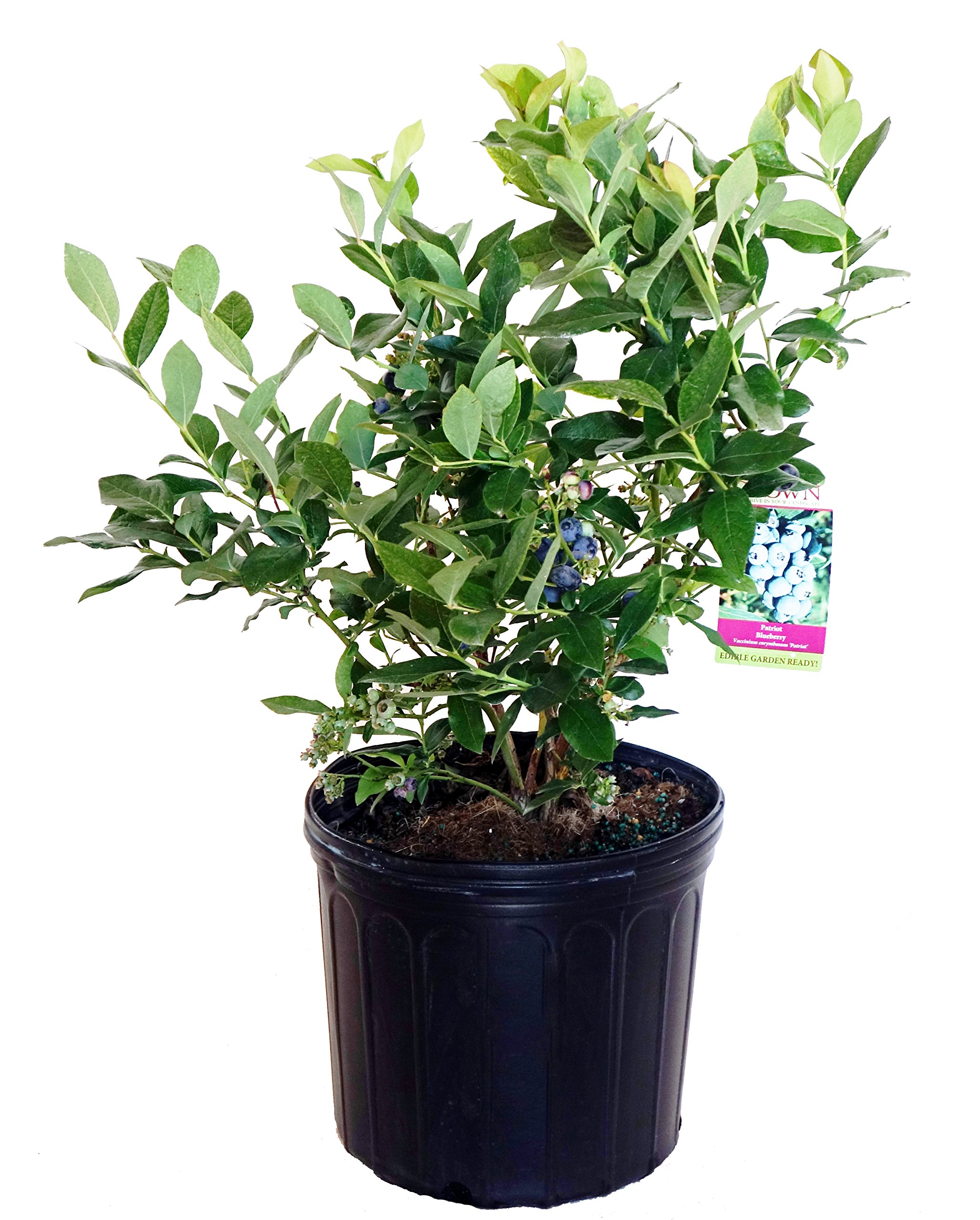
1. Vaccinium corymbosum ‘Patriot’ HighBush Blueberry, #3 Container
Our pick — 4.5+★ from 100+ verified ratings; the strongest balance of quality and price.
A blueberry built to shrug off winter, then bury itself in fruit by midsummer.
Patriot is the pick when you want a blueberry that handles cold — it grows in zones 3 through 8 — and stays a sensible size. It tops out at 4 to 5 feet tall with a matching 4 to 5 foot spread, so it works as a garden shrub rather than a tree-sized project. The plant arrives fully rooted in soil and can go straight into the ground on a decent day, with planting and care instructions in the box.
What wins people over is how much life shows up in the first season. The bushes come with pink and white flowers opening in May ahead of the fruit, and plenty of owners get berries rather than just greenery in year one. Plants that size up well, leaf out strongly, and actually crop earn their place in a garden, and this one does all three. Reviewers praise the plant quality above all — with live plants, a bush that arrives healthy is the whole game.
The honest catch: fruit is not guaranteed on arrival, and from late fall through winter the plant ships dormant with no leaves at all. If you order in December, expect a bare twig in a pot that looks alarming and is completely normal. It leafs out again in spring. Skip it only if your garden lives in zone 9 or warmer — this blueberry wants a real winter.
Where Patriot Earns Its Keep
- Cold-hardy down to zone 3, so northern gardens still get fruit
- Holds a compact 4–5 ft height and 4–5 ft spread instead of sprawling
- Ships fully rooted in soil and plantable the day it lands, weather permitting
- Pink and white blooms open in May before the berries form
Set Your Expectations Here
- Arrives dormant and leafless from late fall through winter
- No fruit guarantee on delivery — blooms and berries come with the season
Buy this if: your winters get properly cold and you want a blueberry that stays shrub-sized in zones 3 through 8.
Order in spring instead of winter if: you want to see leaves the day it arrives.
2. Bushel and Berry Pink Icing Blueberry, #2 Container
A blueberry you would plant for the leaves alone — the fruit is a bonus.
Pink Icing is the blueberry for a patio pot. It matures to 3 to 4 feet tall with a recommended 4 to 5 foot spread, so it fits a deck corner without swallowing it. The foliage does the real work: pink in spring, shifting to deeper blue-green through winter. You get a plant that looks purposeful in every season, not just the six weeks it carries berries.
Growth is the standout — buyers report these shrubs thriving and sizing up well after planting. Large sweet berries do arrive, and some plants fruit the same season they are planted. For a container blueberry, that is a fast return.
Where it differs sharply from the Patriot above: Pink Icing is a warm-climate blueberry rated for zones 5 through 10, so it suits the southern gardens that Patriot cannot handle. It comes in a 2-gallon, #2 container, which is smaller than the Patriot’s #3 pot — the trade for a bush that stays deliberately compact. Do note that a few plants show tired leaves from the start, so give it shade for a few days before moving it into full sun.
The container argument: 3 to 4 feet tall and content in a pot, with pink-to-blue-green foliage that earns its space year-round.
Worth knowing: the #2 pot is genuinely small, so expect to up-pot it if you want a full-sized bush faster.
The match: deck, balcony, or zone 5–10 garden where you want color first and berries second.
Look elsewhere if: you are gardening in zone 3 or 4 — this one is not rated that cold.
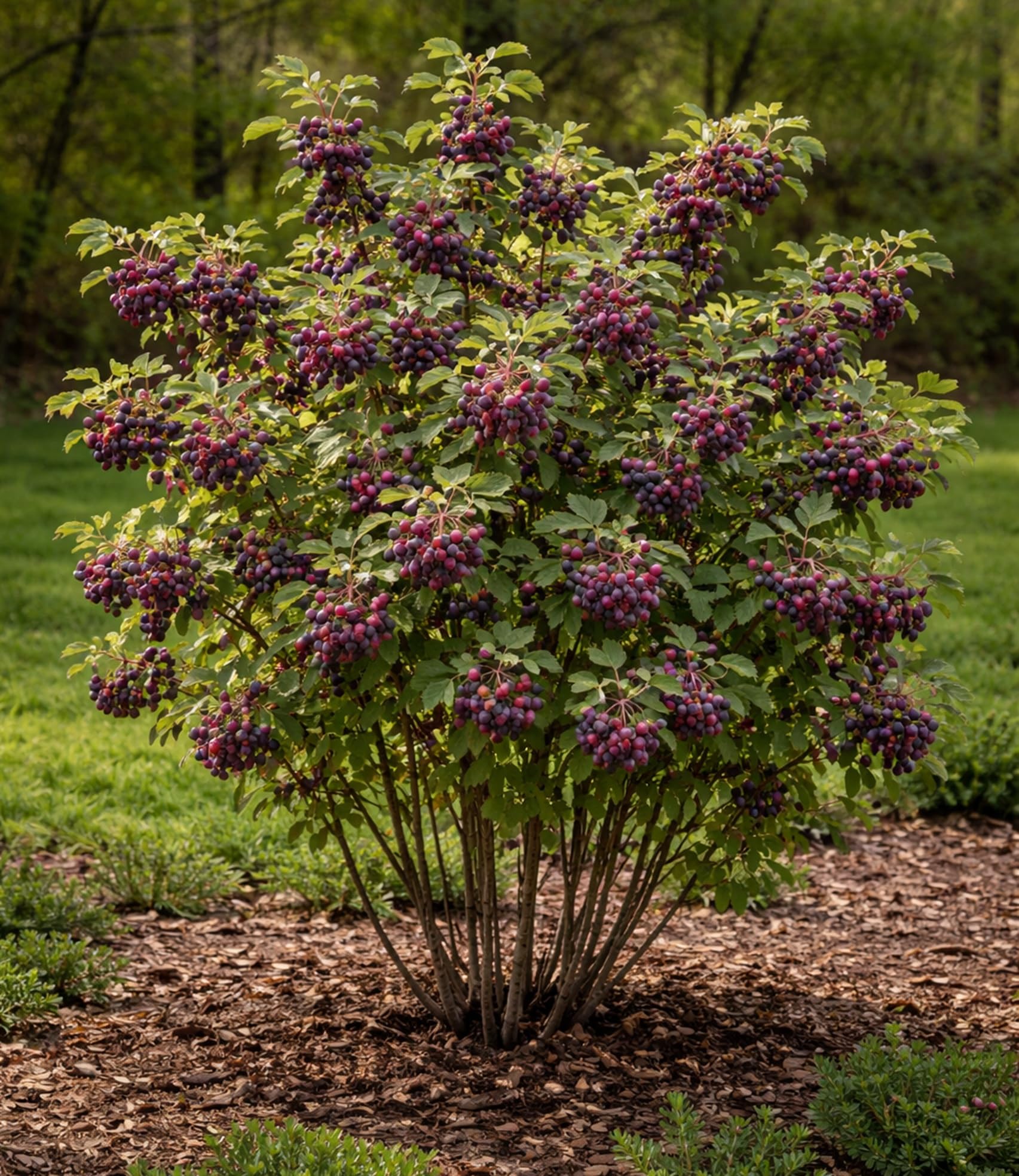
3. Serviceberry / Juneberry Bush, 2 Plants
The landscape shrub that keeps paying you back in three seasons out of four.
Serviceberry, also sold as Juneberry, is the pick if your berry bush is going in the front yard where it needs to look good when it is not fruiting. White flowers open in early spring, sweet blueberry-like berries follow in summer, and the foliage turns red-orange in fall before interesting branching carries the winter view. Two plants come in this order, so you can set a natural screen, a hedge line, or two accents.
What surprised the buyers most is how quickly these settle in. The plants are reported growing well and leafing out healthily — the practical sign that roots took hold rather than sulked. It leafs out evenly and fills in without sprawling, exactly what a low-maintenance shrub should do.
It takes full sun to partial shade, which is more forgiving than the blueberries in this list that want all-day sun. Wildlife benefit comes built in: the berries feed birds, and the spring flowers draw pollinators. Learn from the other picks here — those that drew birds may have drawn them for the fruit, but here the draw is the flowers as well.
Why it stands out: flowers, fruit, fall color, and winter structure from a single shrub — and this order ships two plants.
Know this going in: this is a landscape shrub, not a heavy-cropping berry machine, so plant it for the whole picture.
Reach for it when: you want a front-yard shrub that feeds birds, feeds you, and looks composed in January.
Pass if: you are shopping strictly for jam-volume harvests — go with a fruiting blueberry or blackberry instead.
4. Perfect Plants Rabbiteye Tifblue Blueberry, 1 Gallon

A blueberry that can grow into a small tree if you let it.
Here is the biggest height range in this whole list. Rabbiteye Tifblue is listed with a mature height anywhere from 3 to 15 feet and a width of 3 to 10 feet, and that spread is real — it loves full sun and responds well to pruning if you want to hold it to a manageable size. If you have a back fence that needs filling, this is the plant. If you have a small patio, plan to prune.
The draw is production. Tifblue is described as a heavy blueberry producer compared to other varieties, with round ripe berries landing every June and July. Those berries hold a tart edge until fully ripe, then turn juicy-sweet — so harvest timing genuinely changes what you taste. The 1-gallon plant ships with blueberry food included, which saves you a trip on planting day.
The critical detail for anyone buying a Rabbiteye: it needs another variety nearby to pollinate and produce fruit. Plant Tifblue beside a different blueberry and both crop; plant it alone and you get foliage. Growth and size both draw mixed reactions — some bushes thrive and some are smaller than expected — so buy it with the understanding that a 1-gallon start needs a season to show you what it will be. skip it if you live in California, Arizona, or Washington; state restrictions block this item there.
- Comes with: easy-to-use blueberry food and a 1-gallon rooted Tifblue bush
- Wants: full sun all day and a pollinator variety beside it
- Delivers: berries in June and July once pollinated
- Blocked in: California, Arizona, and Washington
Pick it for: a sunny back-garden spot with room for a second blueberry nearby.
Do not pick it for: a solo planting or a patio — one plant will not set fruit alone and the height is open-ended.
5. Perfect Plants Arapaho Thornless Blackberry, 1 Gallon

One plant, no partner needed, no thorns to fight at harvest.
The Arapaho blackberry makes the pollination maths easy: it is self fertile, so a single plant sets fruit without a second variety beside it. Compare that with the Tifblue blueberry above, which cannot crop alone, and you see why blackberries are the friendlier first plant for many gardens. It grows in zones 4 through 9, which covers most of the country, and it wants roughly 450 chill hours to break dormancy and flower — an ordinary winter even in the South typically delivers that.
An expected height of 5 feet keeps it manageable, where the Rabbiteye Tifblue can stretch to 15 feet. A 5-foot bush against a 15-foot one is the difference between a border plant and a shade project. The berries ripen in summer around early June and arrive on a thornless vine, so picking them does not cost you skin. They are built for jams and syrups, and keeping water on the plant while the fruit develops is the main bit of care it asks for.
The recurring gripe is growth rate — some plants leap, and some spend their first weeks settling instead of pushing new canes. It is the one thing to watch, not something to fear. Give a slow starter a full season before you judge it; a healthy root system behind a quiet plant usually wakes up.
Reasons This One Sells Itself
- Self fertile — one plant crops without a pollinator variety
- Thornless, so harvest is a comfortable job rather than a battle
- Holds around 5 feet tall instead of sprawling into a thicket
- Grows across zones 4–9 and needs about 450 chill hours
The Trade-Off to Bank On
- Growth pace varies between plants, and slower ones test your patience
- Wants steady water while the fruit swells — skimp and the berries show it
Best starting point for: a first berry planting where you want one plant to do the whole job.
Give it a full season before judging: a slow first month is common and rarely the final word.
6. Black Currant Live Plant, 5–9 Inch Tall

Tiny on arrival, tart at harvest, and built for the coldest gardens.
You are buying patience here: the plant ships 5 to 9 inches tall, well rooted, and grows into a shrub that reaches 5 feet. Currants are a cold-hardy variety, which is the whole reason to plant them — they take the sort of winter that stops most fruit. The payoff is deep purple-black berries with a rich, tart flavor that makes them better for jams, cordials, and baking than for eating straight off the bush.
Timing matters. The listing notes the plant should fruit next year, so the first season is about establishing roots and putting on height rather than filling a bowl. It wants full sun and moderate watering and is dormant and leafless through late fall and winter, so a winter order looks like a bare stick in soil.
Currants are a different crop from everything else here — not a blueberry, not a blackberry, and priced as a seedling rather than a fruiting-size plant. That is the honest trade: smaller start, later first harvest, and a flavor you simply cannot buy as a blueberry. Grow it where you have sun and can leave it alone for a year.
What you are buying: a rooted 5–9 inch seedling that reaches 5 feet and holds up to hard winters.
The honest pace: fruit is expected next year, not this one — plant it with a winter’s patience attached.
For the gardener who: wants tart currants for the kitchen and has a cold winter to work with.
Not for the impatient: a seedling this size needs a season of root-building first.
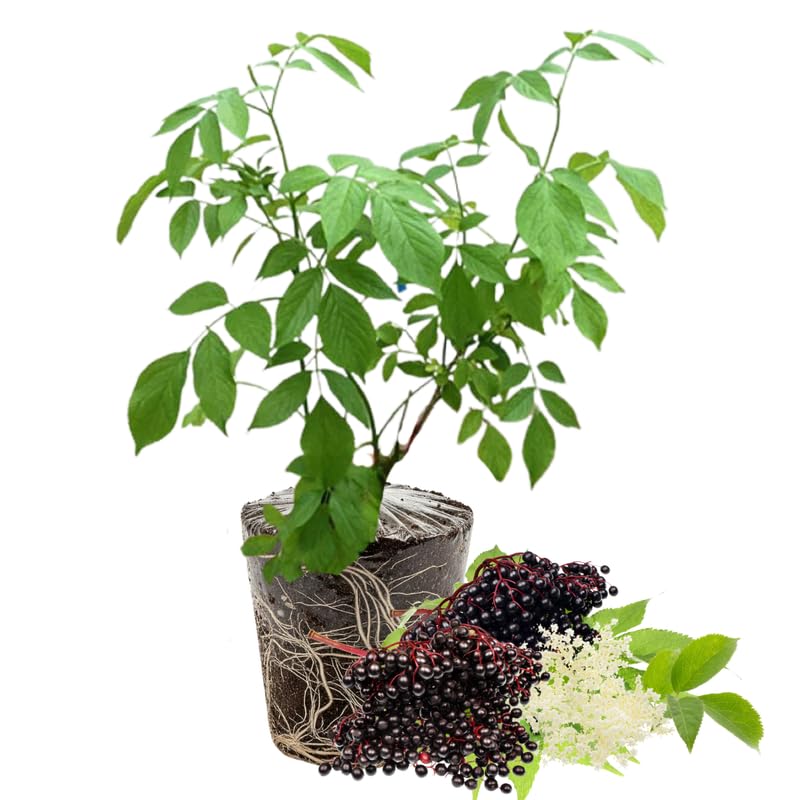
7. American Elderberry Bush Live Plant, 6–12 Inch Tall
A tough native bush for the corner of the yard you never get to.
Elderberry is the low-attention shrub of the group. It grows in USDA zones 3 through 8, takes full sun or partial shade, and wants only moderate watering. That combination makes it a sensible pick for a spot that gets hot and dry in August and where you would rather not be dragging a hose. It ships 6 to 12 inches tall and goes dormant and leafless in winter, as the others do.
The sign owners talk about is health — these arrive green and sturdy rather than sulking. Beyond that, the plant is what it is: an easy native shrub, not a heavy-cropping fruit bush. Plant it for the birds, the flowers, and the tolerance for conditions other berries would complain about.
Where the others in this list want your attention during fruiting — steady water, a pollinator nearby, careful pruning — elderberry asks for the least. It is the right pick if your berry bush is part of a broader garden plan rather than the centerpiece.
The match: a low-effort native planting in zones 3 through 8, sun or partial shade, that mostly looks after itself.
Not the one if: you are chasing a heavy harvest — this is a landscape shrub more than a crop.
8. Dwarf Everbearing Mulberry Tree, 4 Pack

Four berry trees that fruit harder than their size suggests, and pollinate themselves.
This order ships four separate plants, and each one is self-pollinating — no partner variety required. That is the friction-free version of berry planting. The Dwarf Everbearing mulberry matures at 6 to 10 feet, which keeps it within reach for picking and small enough for a large container. It grows in zones 5 through 10 and is described as drought tolerant, a useful trait when August gets ugly.
The fruit runs sweet and blackberry-like from late spring through summer, and it is rich in vitamins, antioxidants, and fiber. Owners mention plants putting on real growth quickly — 8 inches of leafy stem is the kind of start that tells you the roots are working. Mulberries are also fast to fruit compared with the seedling-sized currant and elderberry in this list, which spend a season establishing first.
The honest part: plant health and plant size both draw a mixed reaction, and the seller’s own care note explains why. These ship as starter plants, so they need a week in bright shade to acclimate before they go into full sun with well-drained soil. Skip that step and a good plant looks bad fast. Water regularly the first season and prune in winter to hold the shape.
Ticks the Right Boxes
- Self-pollinating, so four plants means four independent croppers
- Tops out at 6–10 feet and adapts to a large container
- Rated drought tolerant and hardy in zones 5 through 10
- Ships as four plants, giving you a hedge for the price of one bush elsewhere
Plant It Right or It Sulks
- Starter plants need a week in bright shade before full sun
- Size on arrival varies, and some arrive smaller than the photo suggests
Good fit for: a gardener who wants several fruiting plants at once and will follow the acclimation step.
pass on it if: you want one big established bush from the start rather than four small starters.
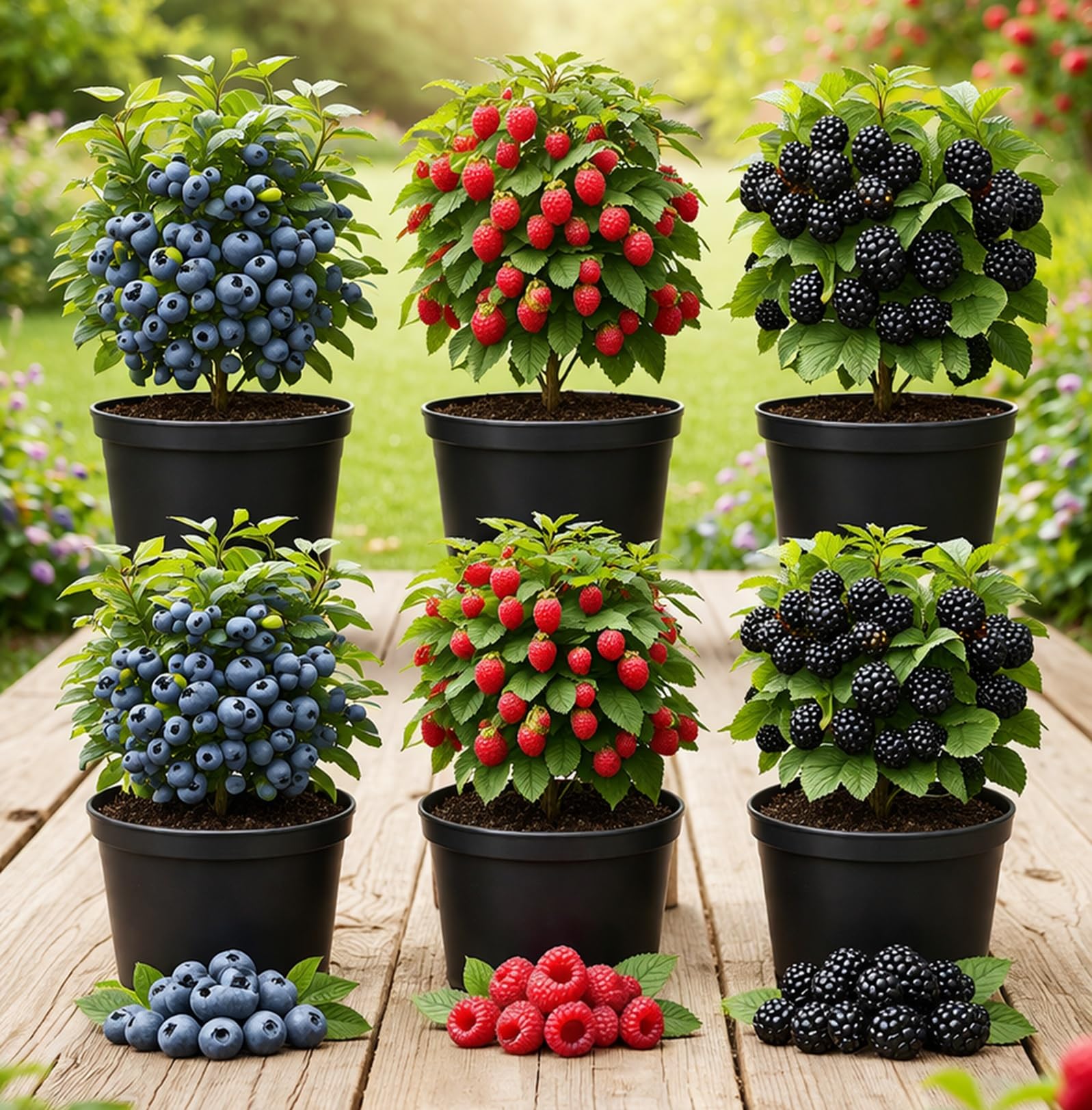
9. 6 Pack Berry Grower Live Plants Bundle
Six berry plants in one box if you would rather try three kinds than commit to one.
The appeal here is variety: two blueberry, two raspberry, and two blackberry plants ship together. Three of America’s favorite backyard fruits in a single order, which is handy if you have not yet decided what your garden does well. Everything ships bare root and dormant, and each plant comes packed with strong roots ready to go in the ground or a container.
Bare root is the part to understand before you buy. There is no pot of soil around the roots — they arrive in damp packing, leafless, and looking like sticks. That is how dormant plants travel cheaply, and it works, but you need to get them planted promptly and keep them watered. These are promoted as beginner-friendly and suited to containers or in-ground beds with minimal maintenance.
Set expectations honestly: the rating here sits noticeably below every other pick in this list, and the gaps are ones a lot of bare-root bundle buyers hit. Six plants means six chances for one to arrive weak, and the smaller starter size means a slower first season than a potted bush. If you want a single reliable blueberry and nothing else, buy a potted plant instead — this bundle is for the gardener who wants to experiment across three fruits.
What you get: six bare-root, dormant plants split across blueberry, raspberry, and blackberry.
Read this before ordering: leafless sticks on arrival are expected, and the bundle as a whole rates lower than the single-variety picks here.
Choose the bundle when: you want to sample three berry types in one go and you are fine planting bare root plants right away.
Choose a potted bush instead if: your goal is one dependable cropper rather than a mixed experiment.
Understanding the Specs
Chill Hours
Chill hours count the cold hours a bush needs — roughly between freezing and 45°F — before it wakes up and flowers properly. A blackberry needing about 450 chill hours will break dormancy in an ordinary winter even in the South. Buy a bush rated for your winter and it fruits; buy one that wants more cold than you get and you may get leaves but no berries.
Self-Fertile vs Needs a Partner
Self-fertile bushes crop from a single plant, so one Arapaho blackberry is enough. Other varieties, like a Rabbiteye blueberry, need a second and different variety nearby so bees can move pollen between them. The label usually tells you; if it says a pollinator is required, plan for two plants before you order.
Mature Height and Spread
The height on the label is the plant’s final size, not the size in the box. A blueberry listed at 3 to 15 feet may become a hedge filler or a patio bush depending on how you prune it. Measure the space you are giving it, then choose a variety whose mature size fits — and remember blueberries respond well to pruning if you want to hold them smaller.
Bare Root and Dormant
Bare root means the plant ships without soil around its roots, packed damp and leafless. Dormant means the plant is alive but resting, with no leaves, which is normal from late fall through winter. Both are fine, but plant promptly and water well. A leafless stick in a box is not dead — it is dormant.
FAQ
Will a Rabbiteye blueberry produce fruit if I only plant one?
How many chill hours does an Arapaho blackberry need?
Why did my berry bush arrive with no leaves?
Can I grow a blueberry bush in a container on a deck?
Which grow zones does the Patriot blueberry handle?
Can I order a Rabbiteye blueberry if I live in California or Arizona?
Is a serviceberry the same fruit as a blueberry?
What does bare root mean on a berry plant order?
How long until a black currant seedling produces fruit?
Should I prune a Rabbiteye blueberry to keep it small?
Final Thoughts: The Verdict
The pick that suits most gardens is the Green Promise Farms Patriot HighBush Blueberry, because it holds a manageable 4 to 5 foot size, handles zones 3 through 8, and ships rooted and ready to plant. If your garden runs warm or you want color on a patio, the Bushel and Berry Pink Icing is the blueberry for zones 5 through 10. For a first planting where one plant must do everything itself, reach for the Arapaho Thornless Blackberry — self fertile, thornless, and around 5 feet tall at maturity.
One last nudge: the Patriot is the highest-scoring blueberry bush in this list, rated by well over a hundred gardeners, so if you are buying a single plant, start there.
How We Picked
We do not accept paid placement. Every pick is matched to a real buyer and a real use-case; we do not hands-on test units.
Sources & Methodology
Specifications: manufacturer listings and product documentation. Review insights: verified customer reviews, as of November 2026. Pricing: not shown on this page (it changes often); check the current price via the retailer link.
As an Amazon Associate, Gadgets Feed earns from qualifying purchases. This does not affect which products we feature.