
Our readers keep the lights on and my morning glass full of iced black tea. As an Amazon Associate, I earn from qualifying purchases.
Specs are compiled from manufacturer listings and verified buyer reviews and can change over time — please confirm the key details on the product page before buying.
If your drawer is full of rechargeable batteries and you have no idea which ones are still good, the fix is a charger that shows you real numbers instead of a blinking light. The difference between the two is a display that reports numbers. A basic charger just pushes power in and hopes. A charger with a display tells you capacity, voltage, and whether a cell is actually worth keeping.
I’m Min — the founder and writer behind Gadgets Feed. This guide is built by comparing the manufacturers’ published specifications and the patterns across verified customer reviews, so you get each pick’s real strengths and trade-offs instead of marketing spin.
You will see chargers built for standard AA and AAA cells, chargers built for lithium cells like 18650 and 21700, and universal models that handle both. Each one below earns its place for a different reason, so the right pick depends on what is in your battery drawer right now. The right battery charger turns a pile of mystery cells into a set you can actually trust before a trip.
Our Picks at a Glance


How To Choose The Best Battery Charger
The first thing to settle is which batteries you actually own. A charger tuned for standard NiMH cells (the rechargeable AA and AAA type sold in most stores) will not safely handle a bare lithium cell like an 18650. Match the chemistry list to the cells you own today.
Match the charger to your battery type first
NiMH and NiCd cells are the everyday rechargeables — the ones in remotes, toys, and wireless mice. Lithium cells like 18650 and 21700 are the fatter, higher-voltage cells used in flashlights and certain power tools. Some chargers handle both families; many handle only one. Check the compatibility list before anything else, because no feature on earth saves a charger that refuses your cells.
Decide if you need analyzing or just charging
A plain charger fills batteries. An analyzing charger measures them — capacity, internal resistance, and true health. If your goal is to find out which of your old cells are still strong and which are dead weight, you want analyzing. If you just need four AA cells ready for tomorrow morning, a simpler unit does the job.
Count your channels and your current
Channels are the individual slots, and independent channels mean each slot charges on its own schedule. A four-channel charger with independent control is like having four chargers in one. Current matters too — measured in milliamps or amps — because higher current charges faster but treats the cell harder, so adjustable current gives you the choice.
Quick Comparison
| Model | Best For | Battery Chemistry | Channels | Max Current | Amazon |
|---|---|---|---|---|---|
| BT-C2400 Analyzer Tester★ Best Overall | Testing and reviving a whole drawer | NiMH / NiCd | 4 | 1400 milliamps | Amazon |
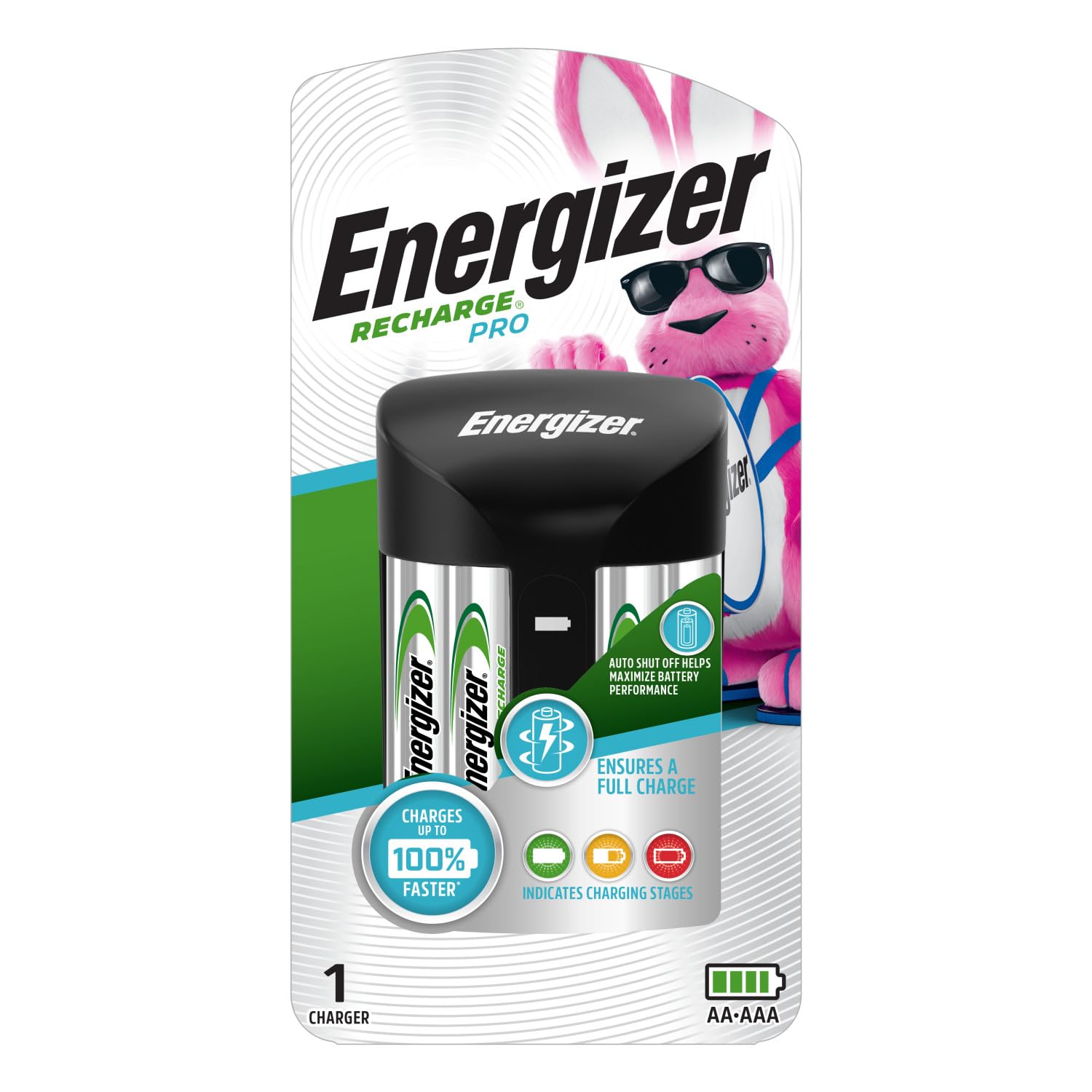
| Energizer Recharge ProEasiest to Live With | Simple AA and AAA top-ups | NiMH | 4 | 500 milliamps | Amazon |
| Nitecore UMS2Best for Travel | Travel and mixed battery kits | Li-ion / IMR / LiFePO4 / NiMH / NiCd | 2 | 2 A | Amazon |
| Tenergy TN480U | Charging a lot of AAs at once | NiMH / NiCd | 8 | 2 A | Amazon |
| Tenergy T9688 Smart | Universal household charging | NiMH / NiCd (AA/AAA/C/D/9V) | 6 | 1300 milliamps | Amazon |
| Nitecore UMS4 | Fast four-slot lithium charging | Li-ion / IMR / LiFePO4 / NiMH / NiCd | 4 | 4000 milliamps | Amazon |
| XTAR VC8 | Large mixed lithium and NiMH loads | Li-ion / NiMH | 8 | 3 A | Amazon |
| ISDT N8 | Fine-tuned AA and AAA management | NiMH / NiCd / NiZn | 8 | 1.5 A | Amazon |
| Panasonic BQ-CC65 | eneloop owners who want a readout | NiMH (eneloop / eneloop pro) | 4 | 4 A | Amazon |
In‑Depth Reviews
1. BT-C2400 Battery Charger Analyzer Tester
Our pick — 4.5+★ from 700+ verified ratings; the strongest balance of quality and price.
The one that tells you which batteries are dead weight and which are still fine.
This is the pick for anyone who has ever wondered whether a battery is genuinely weak or just badly charged. It runs four independent channels, each able to charge, discharge, refresh, or test a cell on its own schedule — effectively four chargers in one box. What wins people over is what the display shows: capacity, voltage, time elapsed, and current for every channel at once, plus internal resistance and a 20,000 mAh capacity ceiling so even big cells register accurately.
That testing ability is the real product. A refresh cycle can bring a sluggish NiMH cell back toward its normal behavior, and the reading afterwards tells you whether it worked. Owners consistently single out the capacity readout as the feature they value most, because it turns “I think this battery is bad” into an actual number you can act on.
Compare it against the Energizer Recharge Pro and the difference is stark on one axis: this unit runs at 1400 milliamps versus that charger’s 500 milliamps. Speed is not the whole story, though. The honest catch is the pace — some owners find the charge rate on the slower side for everyday top-ups. Treat it as a bench tool for sorting a NiMH collection, not a fast top-up charger.
What earns it first place
- Four channels run independently, so one weak cell never stalls the others.
- Backlit LCD reports capacity, voltage, elapsed time, and current per channel.
- Handles charge, discharge, refresh, and test modes plus internal resistance.
- 20,000 mAh ceiling covers large-capacity NiMH cells without under-reading.
Where it asks for patience
- Charging pace draws mixed notes — fine for testing, slower for quick refills.
- NiMH and NiCd only, so lithium cells are not part of the job.
Made for you if: you want to know exactly how much life is left in every AA and AAA you own.
Wrong tool if: your drawer is full of 18650 lithium cells — this one will not take them.
2. Energizer Recharge Pro with 4 NiMH AA Batteries
Four batteries in the box and a full charge in three hours — no separate purchase needed.
Open the box and you can start charging immediately, because four NiMH AA batteries come with it. Two or four AAA or AA cells reach a full charge in about three hours, and the company states it charges up to 100% faster than its own Recharge Basic charger. For a household that just wants remote and toy batteries ready by morning, that is the whole job handled.
The interface is built for people who do not want a manual. Red, yellow, and green lights track progress, and audible beeps mark the start and finish of a charge. There is a bad-battery detector too — a red X and repeated beeps flag a cell that will not take a charge, so you stop wasting cycles on it. Auto shutoff and overcharge protection mean you can leave it plugged in without hovering.
One thing worth knowing before you buy: this is a fixed 500 milliamp charge rate, and it only takes NiMH AA and AAA cells. The much cheaper slow-charge and lithium workflows live with other picks on this list. For NiMH AA and AAA cells, the light-only interface is the appeal, and the large base of owner reviews backs that up.
Where the value sits: bundled batteries plus a three-hour full charge means a complete, working setup from one purchase, with a bad-cell warning that saves you from troubleshooting blindly.
The trade to accept: 500 milliamps is not fast, and the charger cannot test a battery’s real capacity — it tells you it is full, not how much life it has left.
Reach for this if: your rechargeable life is all AA and AAA and you want zero learning curve.
Look elsewhere if: you own 18650 cells or want to measure battery health rather than just refill it.
3. Nitecore UMS2 Dual-Slot USB-C Charger
Two slots, USB-C power, and a battery organizer that lives in your bag.
Charging a lithium cell away from home usually means carrying a wall brick. This one runs off a USB-C source, so a power bank or laptop port does the job. Paired with a 9V QC2.0+ output source it can reach a maximum total of 4000mA across two slots or 3000mA in a single slot. On a plain 5V/2A USB source it tops out at 1000mA per slot — still quick enough that a full 18650 can land in under an hour, as the buyer feedback around it points out.
What wins people over is the breadth of fit. It takes lithium-ion, IMR, LiFePO4, Ni-Cd, and Ni-MH families, across sizes from 10440 and 14500 up through 16340, 18650, 21700, and 26650, plus rechargeable AA and AAA. The LCD reports battery health, charging mode, and live status, and the charger picks the right current and voltage automatically to protect the cell. Note the input voltage here is 5 volts — that is the USB-C side talking, not a limitation to worry about.
The recurring gripe is durability, and USB connectivity draws some criticism too — the port is the part to treat gently, especially when it is bouncing around a bag. Two slots is also a real ceiling if you shoot through four 18650s in a session.
Why it travels well: USB-C input plus the bundled organizer means one cable charges your phone and your flashlight cells, and nothing gets lost in transit.
The honest limit: two slots and some reports of USB-port fragility — buy it as a compact travel charger, not a bench workhorse.
Packs down well for: campers, flashlight carriers, and anyone charging lithium cells from a power bank.
Not the one if: you regularly cycle through more than two cells at a time.
4. Tenergy TN480U 8-Bay LCD Fast Charger

Eight bays and eight 2500mAh AAs in one box — a whole household’s worth at once.
If the charger is for a family, a toy box, or a small army of wireless controllers, slots beat speed. This unit carries 8 ports — double the BT-C2400’s 4 — and ships with eight 2500mAh AA rechargeable batteries, so a batch goes in and a batch comes out. Tenergy’s AA battery quality is what earns the most praise from owners, backed by the value of getting the cells bundled rather than bought separately.
The LCD shows each battery’s status, which matters once you have eight going at once. Fast charging and clear per-cell readouts are the two things that come up again and again in positive feedback. It runs at 2 A and accepts AA and AAA NiMH cells, with 1.2 volts output.
The caveat worth planning around is battery life: while some owners find the included cells last a long time, others note they give out after only a couple of charge cycles. That is a note on the bundled batteries, not the charger, and it is exactly why buying a charger with a capacity display pays off — you find out which cells are underperforming fast. Charging options also draw mixed feedback.
Why households like it
- 8 bays charge a large batch in one sitting.
- Eight 2500mAh AA rechargeables come in the box.
- Per-battery LCD status keeps you from guessing.
- 2 A charging is quick relative to basic slot chargers.
What to keep in mind
- Bundled batteries draw mixed longevity notes — plan on eventual replacements.
- AA and AAA NiMH only; no lithium support.
The batch-charger answer: a controller-heavy or kid-heavy household that burns through AAs.
Keep looking if: you need to test cell health or charge lithium cells.
5. Tenergy T9688 Smart Universal Charger

Charges the oddballs — C, D, and 9V cells alongside your standard AAs.
Most chargers handle AA and AAA and call it a day. This one takes up to four batteries of differing sizes at once — AA, AAA, C, or D — plus two individual channels for 9V batteries, across 6 ports total. That size coverage makes it the pick for a drawer holding a lantern, a smoke detector battery, and a D-cell toy.
It self-adjusts: automatic charging current selection matches the battery size, and an automatic charge and discharge function means you can leave the decisions to the charger. The backlit LCD shows battery icons for capacity level and whether a cell is charging, discharging, or full. There is also a USB port on the back, rated 5V DC 500mA, for topping up a small device.
The catch shows up on the display. Reading it from directly above is hard, and that is a repeated frustration. Charging speed is split — some fixtures charge quickly, others drag. At 1300 milliamps with a 0.5 A current rating, do not expect it to race through a set of D cells. It covers many cell sizes rather than charging any of them quickly.
Its whole reason to exist: broad size coverage — AA, AAA, C, D, and 9V in one unit with automatic current matching, so size-specific guesswork disappears.
The daily annoyance: the LCD is hard to read straight on, and pace varies by cell type.
Ideal for mixed drawers: homes with 9V, C, or D cells that other chargers simply will not take.
Skip if: you only own AA and AAA and want a clean, readable screen.
6. NITECORE UMS4 Intelligent QC 4-Slot Charger

Four slots, 4000mA total output, and a screen that grades each cell good or poor.
Speed is the headline. This charger reaches a total maximum output of 4000 mA, with up to 3000 mA in a single slot, and the company says it takes 55 minutes to charge 80% of a 3500mAh battery. Each of the four slots is controlled independently, so a nearly-full cell and an empty one can run side by side without compromise.
The screen is where the real value sits. It reports battery health as “Good” or “Poor,” internal resistance, charging current, voltage, charged volume, and charging time. Every charge doubles as a capacity and resistance test. It auto-detects power level and picks the appropriate voltage and mode, and it handles 3.6V/3.7V and 3.8V Li-ion, 1.2V Ni-MH/Ni-Cd, and 3.2V LiFePO4 cells. Quality is what owners praise most, and performance follows close behind.
Safety engineering is thorough here — anti-short-circuit, reverse polarity protection, overtime protection, over-discharged battery activation, fire-retardant PC construction, and built-in temperature regulation. The USB-C port takes power from adaptors, solar panels, or power banks. With 4 ports to fill, it is a serious bench charger rather than a pocket accessory.
A clear match for: flashlight and vape users who want four cells racing at once with a health verdict on each.
Think twice if: you only charge AA and AAA and do not need lithium-size coverage.
7. XTAR VC8 8-Slot USB-C Fast Charger

Eight slots of mixed sizes at once, with a grading mode that catches overrated cells.
You can refill eight batteries at once here, which is rare in one charger. All eight slots work at the same time, so you can mix sizes and types in a single session. It takes protected 21700, 18650 and 20700 lithium cells (rechargeable lithium-ion sizes), plus 1.2V Ni-MH AA, AAA and C cells (nickel-metal-hydride, the common rechargeable kind). That means one batch can cover your camera cells and your kid’s toys together. Next to the BT-C2400’s 4 slots, you get double the batteries per round.
Grading mode is the standout feature. It tests a battery’s real capacity by charging, discharging, and charging again, so you learn whether a claimed rating is overstated and which cells are genuinely good. Current is adjustable across five settings — 3A, 2A, 1A, 0.5A, and 0.25A — giving you a speed-versus-care dial per slot. A QC3.0 wall charger and USB-C cable come in the box, and a real-time temperature control system guards against over-current, over-charge, over-voltage, and short circuits.
Two honest notes. Charging speed gets mixed feedback — some find it fast, others find it slower than advertised. And accuracy in grading draws some skepticism, so treat the numbers as a useful guide rather than a lab result. What owners do agree on is that it is easy to run, even with eight slots in play.
What the eight slots buy you
- 8 ports handle a large mixed-chemistry batch in one session.
- Grading mode exposes overrated capacity claims.
- Five selectable currents from 0.25A to 3A per slot.
- QC3.0 wall charger and USB-C cable included.
What tempers the pitch
- Speed reports split — not every slot runs as fast as the label implies.
- Grading accuracy gets some pushback from owners.
Built for volume: anyone with a deep collection of mixed lithium and NiMH cells to sort at once.
Probably overkill if: you charge two or three AAs a week.
8. ISDT N8 Smart AA/AAA Charger

Eight AA/AAA slots with per-slot current you can dial from 0.1A to 1.5A.
This is for the person who treats rechargeable AAs like a managed fleet. Eight slots each charge independently, and charge current adjusts from 0.1A to 1.5A per slot, with discharge current adjustable from 0.1A to 1.0A per slot. That range is the appeal: you can balance a fast session against gentler treatment of older cells instead of accepting one fixed rate.
Modes cover charge, cycle, activation, and discharge, so routine refresh and recovery support sit alongside daily charging in one device. A smart LCD feeds real-time battery data so you can watch performance across cells at a glance. The stated battery charge time is 90 minutes; it works with NiMH, NiCd, and NiZn rechargeables through a USB Type-C connection.
The thing to weigh is chemistry. This is AA and AAA NiMH territory — no 18650 or 21700 support at all, unlike the Nitecore and XTAR picks above. Its compatibility is exactly what draws praise, if your batteries are the standard sizes. Charging performance gets more mixed notes. If your cells are lithium, this is the wrong shelf entirely.
Where the control pays off: adjustable per-slot current plus cycle and activation modes make this a genuine battery-management station, not just a filler.
What rules it out for some: AA/AAA only, and charging performance draws split feedback.
Suits the tinkerer: anyone who wants to cycle, activate, and carefully current-limit standard NiMH cells.
Not for lithium owners: 18650 and 21700 cells need a different charger.
9. Panasonic BQ-CC65 eneloop 4-Position Quick Charger

Four separate LCDs, one per battery, and charging that ends the moment a cell is full.
Built for eneloop and eneloop pro cells, this charger analyses each battery as it is installed and stops that individual slot when it is done — no waiting for the slowest cell in the row. There are four LCD indicators, each showing charge or discharge time, cell voltage, and mAh discharge levels. Owners like the refresh function, which runs a few cycles of full charging and depleting to wake up tired cells.
For NiMH cells (the standard rechargeable type), charging is quick. Four fully drained eneloop pro cells fill in up to 4 hours, or two in 2 hours. Standard eneloop cells take up to 3 hours for four, or 1.5 hours for two. One owner reported bringing 4 AA’s back from the dead in about 4 hours without the charger getting hot. That cool running matters with eneloop pro cells, and buyers praise battery life most. A 5V 1A USB port on the side (a standard low-power USB outlet) tops up a phone or small device while the batteries charge.
Not everyone loves the value equation, and the port is USB rather than USB-C, so you may need to fish out an old cable. It is also happiest with eneloop cells — the charger is tune for them, and generic NiMH works but the tuning is clearly aimed at Panasonic’s own.
The eneloop advantage
- Four independent LCDs show voltage, time, and mAh per cell.
- Charging stops per-slot as each battery finishes.
- Fast for NiMH — four eneloop pro cells in up to 4 hours.
- Built-in 5V 1A USB port charges another device.
Note first
- Value draws mixed feelings versus simpler chargers.
- Tuned for eneloop; other NiMH brands are supported but not the target.
The natural fit: eneloop and eneloop pro owners who want per-cell feedback and no heat buildup.
Not the bargain pick: if you mainly run generic NiMH AAs and want the cheapest path to a full charge.
Understanding the Specs
Chemistry and size compatibility
Chemistry is which family of battery the charger supports — NiMH and NiCd for everyday rechargeables, Li-ion, IMR, and LiFePO4 for the lithium cells used in flashlights and higher-drain devices. Size is the physical cell, from AA and AAA up to C, D, 9V, and the numbered lithium sizes like 18650 and 21700. These two lists are the first thing to check, because a charger that does not list your cells cannot help you, no matter what else it does.
Current, channels, and analysis
Current, measured in milliamps or amps, is how fast power flows into a cell — higher is faster but harder on the battery. Channels are the independent slots; independent channels mean each battery is handled on its own. Analysis is the ability to measure capacity and health rather than just fill a cell, and that is what separates a tester from a plain charger.
FAQ
Can I charge normal alkaline batteries in a rechargeable charger?
What is the difference between a charger and an analyzer?
Will an 18650 charger also charge AA batteries?
What does an independent channel actually mean?
Is a higher charge current always better?
How do I know if a rechargeable battery is still good?
Why does my charger beep or flash a warning light?
Can I leave a rechargeable battery charger plugged in overnight?
Do I need USB-C or will a standard USB charger work?
What does refresh or cycle mode do to a battery?
Final Thoughts: The Verdict
To find out what every AA and AAA in your house can actually hold, pick the BT-C2400. It has four independent channels (each slot charges on its own), shows capacity and resistance testing on the display, and has a 20,000 mAh ceiling (milliamp-hours, a measure of stored charge) that handles big cells. That capacity readout tells you which cells to keep and which to recycle. For lithium cells on the go, the Nitecore UMS2 runs off USB-C (the small reversible connector) and comes with a bundled organizer. The UMS4 gives four slots at 4000 mA total (milliamps, the current it pushes) for bench work. And if you just want four AAs ready by morning with batteries in the box, the Energizer Recharge Pro does it in three hours with no learning curve.
How We Picked
We do not accept paid placement. Every pick is matched to a real buyer and a real use-case; we do not hands-on test units.
Sources & Methodology
Specifications: manufacturer listings and product documentation. Review insights: verified customer reviews, as of November 2026. Pricing: not shown on this page (it changes often); check the current price via the retailer link.
As an Amazon Associate, Gadgets Feed earns from qualifying purchases. This does not affect which products we feature.