
Our readers keep the lights on and my morning glass full of iced black tea. As an Amazon Associate, I earn from qualifying purchases.
Specs are compiled from manufacturer listings and verified buyer reviews and can change over time — please confirm the key details on the product page before buying.
You want a clean, flat-bottomed 2-inch hole in wood — the kind a hinge or a plug drops into without splintering the rim. The quick answer: the Freud PB-015 is the safest all-round pick, the Vouyar triple-flute carbide is the best carbide value, and the Fisch Black Shark is what you buy when dense hardwood has to come out clean. One thing to know up front: this list uses flexible, human-like matching on that 2-inch diameter, so a pick may land on the nearest sold size rather than the exact number you typed. A 51mm bit bores the same hinge and plug holes as a true 2-inch bit.
I’m Min — the founder and writer behind Gadgets Feed. This guide is built by comparing the manufacturers’ published specifications and the patterns across verified customer reviews, so you get each pick’s real strengths and trade-offs instead of marketing spin.
Forstner bits are not interchangeable lumps of steel — flute count, tip style, and carbide versus high-speed steel decide whether you get a clean rim or a torn one. Below is the honest shortlist of the 2″ drill bit for wood worth putting in your chuck.
Our Picks at a Glance

How To Choose The Best 2″ Drill Bit For Wood
A 2-inch forstner bit (a flat-bottomed bit that bores wide, clean holes) hog out a lot of wood in one pass. That means small differences between bits matter far more than they do on a 1/4-inch twist drill. Your choice depends on four things: what the cutters are made of, how many flutes (the grooves that clear chips) carry the waste away, how the point locates the hole, and whether the shank (the smooth end that grips your chuck) fits your drill.
Carbide versus high-speed steel
High-speed steel (HSS) is a hardened steel alloy that holds a sharp edge and costs less. Carbide is a much harder cutting material welded onto the tips, so it stays sharp longer in abrasive stock. If you drill plywood, MDF, or chipboard regularly, carbide tolerates the glue and filler that dull steel quickly.
How many flutes you actually want
Flutes are the cutting blades around the rim. A 3-flute design clears chips faster and, per the maker’s own description, improves durability over a 2-flute counterpart. Single-flute bits cut slower but tend to leave a smoother wall in softer wood.
The point is what stops the wander
A brad point is a small centering spike at the tip. It bites into the wood before the rim touches down, so a 2-inch bit does not skate across your board and ruin the layout line. A guide point does the same job with a shorter centering tip.
Shank fit and drill type
Most of these bits use a reduced 3/8-inch shank, which fits 3/8-inch and larger chucks on both handheld drills and drill presses. A wide bit in a handheld drill can grab hard in dense wood, so a drill press gives you a steadier, safer cut. Eye protection is worth wearing every time.
Quick Comparison
| Model | Best For | Cutting Diameter | Number of Flutes | Material | Amazon |
|---|---|---|---|---|---|
| Freud PB-015★ Best Overall | All-round clean hinge holes | 2 inches | 1 | Blend | Amazon |
| HPHOPE 2″ Forstner BitBest Value | Budget-friendly smooth holes | 2 inches | 2 | High Speed Carbon Steel | Amazon |
| Greycore Tools 2 InchBest for Handheld Drills | Handheld drilling | 2 inches | 3 | High Speed Steel (HSS) | Amazon |
| Vouyar Triple-Flute Carbide | Best value carbide | 5.1 centimeters | 3 | Carbide | Amazon |
| Fisch Black Shark | Dense hardwood | 2 inches | 2 | High Speed Steel (HSS) | Amazon |
| Irwin Marples 1966938 | Fine cabinet work | 2 inches | 1 | Blend | Amazon |
| Bosch FB032 | End-grain and knots | 5.1 centimeters | 2 | Alloy Steel | Amazon |
| WOBLLMX 51mm Triple Flute | Multi-material drilling | 2 inches | 3 | Carbide | Amazon |
| Yonico 43031S | Standard-chuck compatibility | 2 inches | 1 | High Speed Steel (HSS) | Amazon |
In‑Depth Reviews
1. Freud PB-015: 2″ (Dia.) Forstner Bit
Our pick — 4.5+★ from 400+ verified ratings; the strongest balance of quality and price.
One serrated single flute that slices clean through hardwood without tearing the rim.
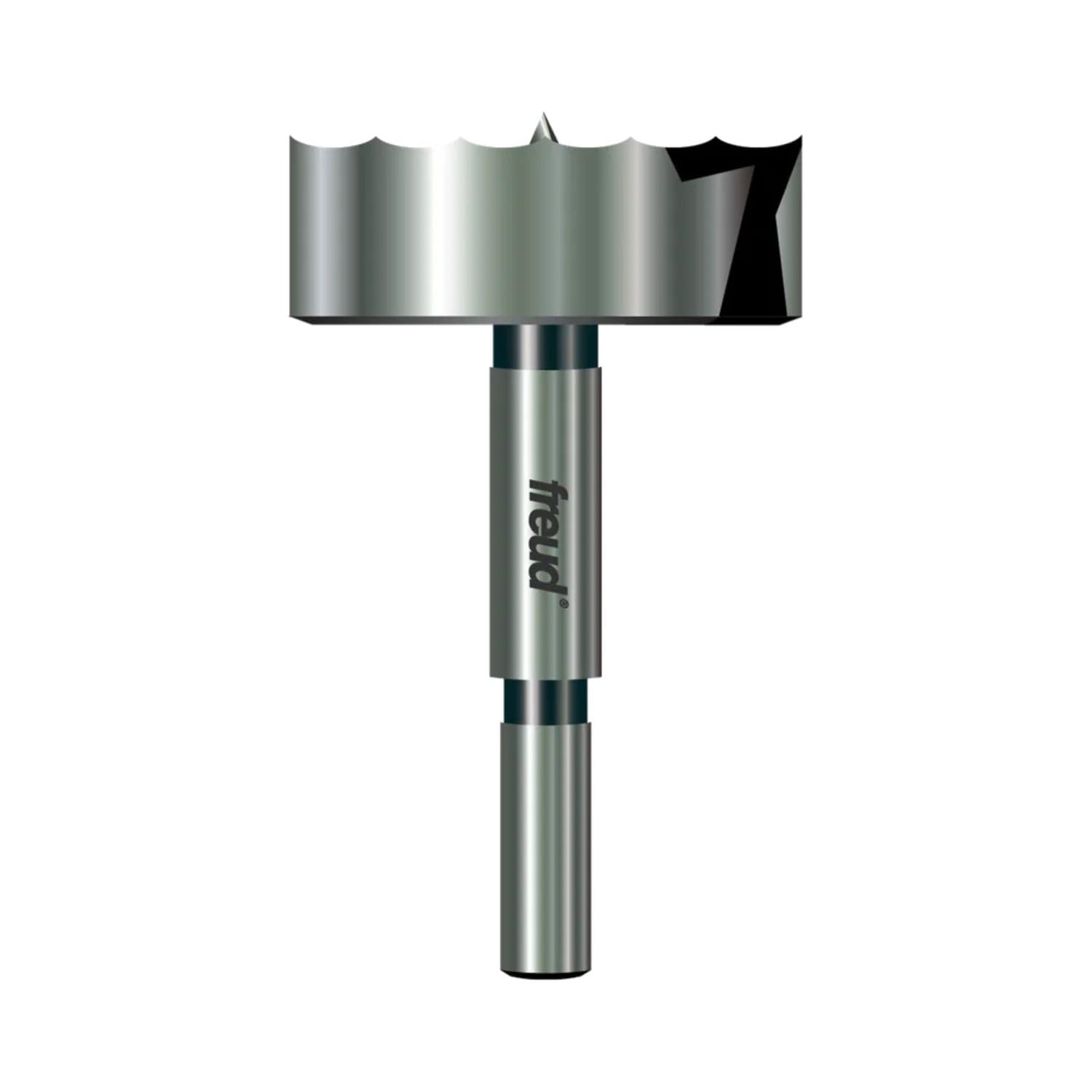
The Freud PB-015 is a 2-inch forstner bit with a single flute — one serrated cutting edge that spins around the whole hole. A double-ground, razor-sharp serrated edge slices through the full rotation, so you get less splintering at the rim and a flat bottom instead of a torn one. For hinge boring or a plug that has to sit flush, that flat floor is the whole point.
Where this bit earns its keep is chip removal. Steep angled cutting edges curl the waste into chisel-like shavings, so the bit clears itself instead of packing sawdust into the hole and burning. The body is forged rather than cast, which the maker says strengthens it for a longer life and a sharper cutting edge. An ultra-sharp spur bites down and resists walking, so your layout line survives the plunge.
The catch is the single-flute speed. Against the Vouyar triple-flute carbide in this list, the flute count is 1 versus 3, so the Freud feeds slower through a long run of hinge holes. The serration also leaves tiny marks that need a light sanding if the hole is going to stay visible. What wins people over, though, is quality — it is the aspect buyers praise most wherever this bit gets reviewed — and on a 4.5+ star record across 400+ ratings the consensus is that it simply works.
What you get in the cut
- Serrated single flute slices through the whole rotation for less splintering and chipping.
- Steep cutting edges curl chips into chisel-like curls so the bit clears fast.
- Ultra-sharp spur locates the hole and resists walking on the material.
- Forged construction, not cast, for a stronger bit that survives extended use.
Where it slows you down
- One flute is slower than a 3-flute design across a long batch of holes.
- Serrated edge leaves fine marks that may need sanding on exposed holes.
Buy it for: hinge boring, plug cutting, and any flat-bottomed hole where a clean rim is the goal.
Look elsewhere if: you are drilling dozens of holes a day and want the faster chip clearance of a 3-flute bit.
2. 2″ Forstner Bit for Wood, High-Speed Steel, Round Shank
The budget entry point that still drills a clean, flat-bottomed hole in oak or walnut.
Two flutes, a 2-inch cutting diameter, and a center point that keeps the bit from skating — the HPHOPE covers the basics a beginner needs. It drills soft or hard wood, veneered wood, and non-laminated chipboard, so it handles most furniture-building jobs. The tooth-shaped cutter design is built to cut friction and heat while clearing chips better, which is what keeps the hole smooth instead of scorched.
What actually stands out here is cutting performance, the aspect owners praise most about this bit. It slices through oak and walnut with less effort than the single-flute designs above, and the 3/8-inch cylindrical shank with a 3-9/16-inch overall length fits all drill drivers and drill presses with a 3/8-inch chuck. For a first 2-inch forstner, that compatibility matters more than any spec sheet.
The honest caveat is edge quality. Reports on sharpness and overall quality split both ways — some find it excellent from the start, others find the edge dull and the output rough. It is a fair trade for a bit this cheap, and it decides who this is for: hobbyists drilling the occasional hole, not a cabinet shop running a hundred a day. Expect to touch up the edge with a file if you hit a knot.
Fit check: the 3/8″ shank drops straight into almost any drill you already own, which is why it makes a sensible starter.
Set expectations: budget steel dulls faster than carbide in abrasive plywood, so keep it for solid wood and veneered stock.
Right for: the hobbyist drilling a few flat-bottom holes who wants to spend as little as possible while learning.
Not your bit if: you need a razor edge straight from the package every single time.
3. Greycore Tools 2 Inch x 3-1/2 Inch Forstner Drill Bit
A brad point, a reduced shank, and three flutes — built for the drill you already own.
Greycore’s 2-inch forstner is a 2″ x 3-1/2″ bit in forged, hardened high-speed steel, and it is aimed squarely at handheld work. The 3/8-inch round reduced shank fits 3/8-inch and larger chucks on both handheld drills and drill presses, so you are not stuck to one setup. It handles hardwood, softwood, plywood, and composites — the everyday stock in a home shop.
The centering brad point and edge grind keep the bit from walking, which is the whole game when you are holding the drill by hand and cannot clamp a guide. Performance and sharpness are what owners praise most here, and cutting out a stubborn oak stump comes up as a real-world test it passed. The double-ground cutting edge holds its sharpness longer across repeated holes.
The one thing to watch: edge quality drew a few complaints about visible chipping. That is a real trade at this size, though not the pattern for most units shipped. Treat it as a bit to keep out of nail-riddled reclaimed stock and it will serve you well — this one scores 4.5+ stars.
The real benefit: a reduced shank that fits a standard handheld chuck means you do not have to buy a drill press to use a 2-inch bit.
Honest limit: high-speed steel, not carbide, so abrasive composites will wear it faster than the carbide options above.
Pick it when: your drilling happens with a handheld drill and you want a bit that locates cleanly without a jig.
Skip it for: heavy production runs in abrasive MDF where a carbide-tipped edge would last longer.
4. 2 Inch Forstner Drill Bit, Triple-Flute Carbide Tipped

Three carbide-tipped flutes that clear chips fast and hold an edge far longer than plain steel.
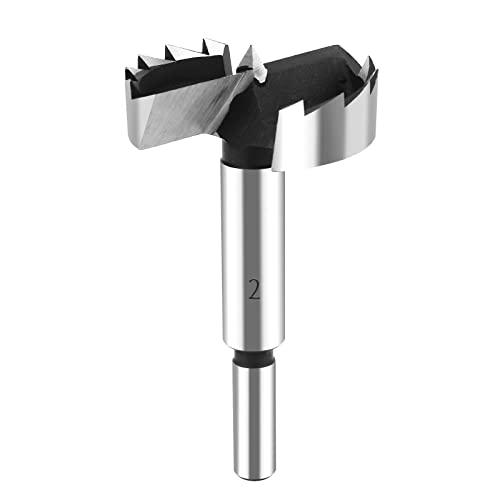
This is the bit to reach for if you drill plywood or composites and are tired of steel going dull. Thick micro-grain carbide tips sit on the cutting edges of this 2-inch bit, and carbide stays sharp far longer than high-speed steel in abrasive stock. The solid hardened steel body underneath keeps it rigid, and the 3-blade design feeds fast with smooth chip removal while improving durability over 2-flute counterparts.
One centering tip with three peripheral cutting edges locates the hole and stops wandering, so consistent, accurate placement is the default. It drills hardwood, softwood, composites, veneered plywood, and plastic, and works for pocket holes, angled holes, overlapping holes, and flat-bottom holes. Quality and performance are the two things owners praise most about this bit, and it has the score to back it — 4.5+ stars.
Here is the honest bit: the maker says to run it in a bench drill, not an impact driver or handheld, for stability. That makes it a poor fit if your setup is all handheld work — the Greycore or the HPHOPE above suit that better. Durability feedback also splits, with some noticing tearout. Keep it in a drill press and it behaves.
Why woodworkers rate it
- Micro-grain carbide tips stay sharper longer than steel in plywood and composites.
- Three flutes clear chips fast for a smooth, quick cut.
- Centering tip with three peripheral edges stops the bit wandering.
- Cuts hardwood, softwood, composites, veneered plywood, and plastic.
Before you commit
- Maker recommends a bench drill — not for impact drivers or handheld use.
- Durability reports split, with some noticing tearout on the rim.
Go with it: you own a drill press and drill a mix of plywood and hardwood for cabinet work.
Rule it out: your only drill is handheld — this one wants a bench machine.
5. 2″ | 51mm Forstner Drill Bit, Triple Flute Tungsten Carbide Tipped

Cuts wood, plywood, MDF, chipboard, plastic, rubber, and fiberglass with one 2-inch bit.
Most 2-inch forstner bits stop at wood. This one is spec’d for wood, plywood, MDF, chipboard, plastic, rubber, and fiberglass, which makes it the bit to pack when you do not know what the next job holds. The number that matters is the flute count — 3 cutters against the Freud’s 1, so it clears chips much faster and, per the maker, wears better than a 2-flute bit. C2 carbide-tipped cutters hold a clean knife edge in the hard and soft woods this bit was engineered for.
Its 2/5-inch (10mm) round shank and 3-3/5-inch (92mm) total length are sized for control on flat-bottomed and pocket holes. The three-cutter layout cuts without wobble or burning the wood, which is exactly what you want when the hole will stay visible. The values it earns its keep on are quality and performance — the two owners rate highest — and the sharpness on maple comes up as a genuine highlight.
Two things to weigh. Sharpness and size feedback both split, with a few finding the edge less keen than expected, and durability is the one weak spot flagged most often. Nothing about that is unusual for a carbide bit that also takes fiberglass and rubber hits. But it means this is a tool for the mixed-material shop, not the bit you save for a single pristine maple panel.
The draw: one bit that crosses from hardwood into plastic, rubber, and fiberglass saves you a second purchase.
Know the limit: the flagged weak spot is durability, so keep it away from nail-riddled recycled timber.
Worth it if: your projects mix wood with plastics or composites and you want one bit for all of them.
Think twice if: wood is your only material — a dedicated carbide wood bit above will last you longer.
6. YONICO 43031S 2-Inch Diameter Steel Forstner Drill Bit 3/8-Inch Shank

A plain, honest high-speed steel bit that fits any standard chuck you own.
Yonico keeps it simple: a 2-inch cutting diameter, a 3/8-inch shank that fits all standard drill and drill press chucks, and hardened high-speed steel construction. It drills clean, accurate holes in solid wood, plywood, and MDF. The hardened build adds rigidity so the bit stays true under load, and there is no setup session needed — it drops into whatever chuck you already have.
What owners value most is straightforward: value for money, with quality close behind. For the occasional MDF or plywood hole, that combination is all a home woodworker really needs. It is a one-flute bit, so feed it deliberately and let the cutter work rather than forcing it.
Be honest with yourself about the trade-offs. Functionality feedback splits — it works great for some and can stall a drill press in dense hardwood for a few. Sharpness splits the same way, with a handful calling it less than sharp from the start. This bit is at its best in the softer end of the stock list, and for that habit it is the cheapest sensible 2-inch bit in the group.
What it delivers: a hardened 2-inch bit in a standard 3/8-inch shank with no adapter needed.
The real caveat: dense hardwood can bog down a lighter drill press, so let the bit cut at its own pace.
Choose this if: your cutting stays in pine, plywood, or MDF and you want the lowest-cost way in.
Better elsewhere if: hard maple and oak fill your workbench — the carbide picks above clear them easier.
7. Irwin Tools 1966938 Marples Wood Drilling Forstner Bit, 2″
An ultra-sharp knife edge and reduced shank tuned for cabinet-grade flat bottoms.
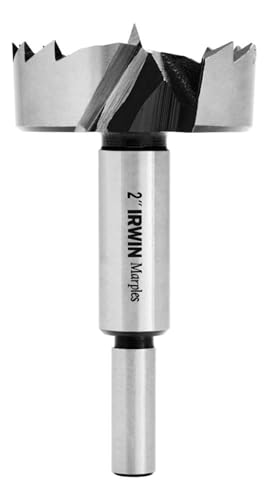
Irwin’s Marples bit uses an tune ultra-sharp knife-edge design to cut flat-bottomed and pocket holes in hard and soft woods with a fine, smooth finish. The 2-inch cutting diameter and 90-degree cutting angle put it in fine-woodworking territory — cabinet-making, hinge work, and decorative holes. A 2.25 x 3.75 x 6.75-inch body keeps it a manageable bit for the shop bench.
The reduced shank fits 3/8-inch and larger drills and drill presses, so it slots into the standard kit without an adapter. The knife edge is what sells it for detail work: it drills high-quality flat-bottomed and pocket holes with a smooth finish instead of a rough floor. For a face frame or a drawer front that will stay visible, that finish is the reason to buy this one over a cheaper bit.
One thing to weigh honestly. Sharpness feedback splits at this price — some find the edge sharp as advertised, others say it arrives dull from the start. It scores 4.5+ stars and does its best work in softwood and clean hardwood where the knife edge can shine. A bit that needs a quick touch-up on arrival is not a deal-breaker, just know it before you reach for it on a rush job.
Where it shines
- Ultra-sharp knife edge engineered for clean cutting in hard and soft woods.
- Flat-bottomed and pocket holes with a fine, smooth finish.
- Reduced shank fits 3/8″ and larger drills and drill presses.
- Tuned for fine woodworking and cabinet-making.
The honest trade
- Sharpness reports split — a few units arrive dull straight from the box.
- Finest results come in softer stock, not the densest hardwoods.
Built for: cabinet and trim work where the hole will stay on show.
Not for: rough jobs where a sharp edge from the box is not worth a touch-up.
8. BOSCH FB032 2 In. Forstner Bit

Chrome-steel that shrugs off drilling heat — built for end-grain and knotty stock.
Bosch’s FB032 is a 2-flute 2-inch forstner in chrome-steel alloy, a construction chosen so the bit can withstand the high temperatures of drilling and reduce the risk of burning the wood. It is designed for smooth, flat-bottomed, splinter-free holes even in end-grain and through knots — the two places most forstner bits struggle. A 120-degree cutting angle and brad point center the bit for easy positioning.
Chrome-steel alloy also means the bit resists the heat that builds up in a long drill press run, so the cut stays consistent rather than scorching the rim. You can run it in a portable drill or a stationary machine, which fits both the shop bench and the jobsite. Functionality is the strongest consensus it has, and it holds 4.0+ stars.
The trade-off is sharpness and durability. Both split in feedback — some find it super sharp and long-lasting, others think it needs a keener edge and can lose temper quickly under hot use. If you push a wide bit hard through wet oak or knotty pine, temper loss is the risk. Feed it steadily and let the chrome-steel do the cooling and it will hold a clean rim.
Best use case: drilling into end-grain and around knots where a plain bit tends to tear.
The caution: heat is what dulls it, so keep the feed rate steady instead of forcing a wide bit.
Right call when: your stock is knotty or you are boring into end-grain and need a splinter-free rim.
Look elsewhere if: you want a bit that holds its hardest edge through hours of high-heat drilling.
9. Forstner Drill Bit – Black Shark Forged Steel for Woodworking Size: 2 inch
Forged in Austria and wave-edged — the bit that eats dense maple for breakfast.
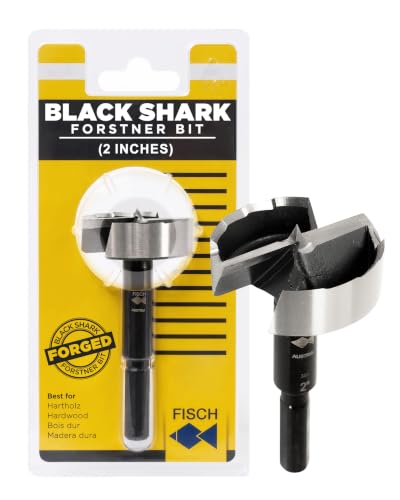
The Black Shark earns its spot on one number: a 2-flute wave design, with patented wave-style cutting edges the maker says cut faster and leave smoother finishes than a straight cutting edge. It is a 2-inch forstner forged in Austria from high-speed steel (a steel grade built to hold an edge when hot), a process the maker says adds durability, heat resistance, and long life. In dense oak or maple, that wave geometry is the whole reason to spend more. If you mostly drill softwood or plywood, the extra cost buys you little.
A sharp center point keeps the hole placement exact and stops the bit wandering, and the reduced cylindrical shank carries three flat clamping surfaces for grip and torque control. That bracing matters in hand use — a 2-inch bit that cannot resist spinning is a liability, and these flats help. It leaves clean holes in softwood, hardwood, MDF, plywood, and composites, and holds a good edge in dense stock. What owners praise most is quality, followed closely by sharpness, and the score sits at 4.5+ stars.
The main thing to weigh is price — this is the most expensive bit in the group by a clear margin, and value feedback on it splits for exactly that reason. It is also a two-flute design, so against the Vouyar and WOBLLMX triple-flutes it clears chips a touch slower in a production run. If you need a clean hole in fine hardwood and want it right the first time, the premium buys a calmer, more controlled cut.
The standout spec: wave-style cutting edges, a geometry you will not find on the cheaper bits, for a smoother finish in tough grain.
The honest trade: you pay a premium for the forged steel, and the chip clearance trails the 3-flute designs.
Worth the premium if: you bore dense hardwood for furniture and want a smooth finish with the first pass.
Not worth it if: your stock is pine and plywood and a mid-priced steel bit would do just as well.
Understanding the Specs
Number of flutes
Flutes are the cutting blades around the rim that shave wood and carry chips up and away. A single flute cuts slower but leaves a smoother wall, which suits visible hinge holes. A 3-flute design clears chips faster and, per the maker, improves durability over a 2-flute bit — better for long production runs in plywood and composites.
Tip and point style
A brad point is a small centering spike at the tip, and a guide point is a shorter centering tip. Both bite into the wood before the rim touches down, so a wide 2-inch bit stays on your layout line instead of skating across the board. The sharper the point, the easier the bit locates on smooth or veneered stock.
Cutting material
High-speed steel holds a sharp edge and costs less. Carbide tips are far harder and hold their edge longer in abrasive stock like MDF, plywood, and chipboard, where glue and filler dull steel quickly. A steel bit also stays cooler than a badly sharpened carbide edge, which matters for burn-free holes.
Shank fit
The shank is the part your chuck grips. Most 2-inch bits use a reduced 3/8-inch shank that fits 3/8-inch and larger chucks on handheld drills and drill presses. Some carry flat clamping surfaces to stop rotation. Always confirm your chuck size and wear eye protection, since a wide bit in a handheld drill can grab hard in dense grain.
FAQ
Will a 2-inch forstner bit fit my standard drill?
Can I use a 2-inch forstner bit in a handheld drill?
What is the difference between a forstner bit and a spade bit?
Is a carbide-tipped forstner bit better than high-speed steel?
How deep can a 2-inch forstner bit drill?
Why does my forstner bit burn the wood?
Can a forstner bit drill through knots and end-grain?
Do I need a drill press for a 3-flute forstner bit?
How do I keep a 2-inch forstner bit sharp?
Can I use one 2-inch bit for wood, plastic, and MDF?
Final Thoughts: The Verdict
For most woodworkers, the safest starting point among these 2″ drill bit for wood picks is the Freud PB-015. Its serrated single flute (one cutting edge with a saw-tooth rim) slices splinter-free through hardwood and holds a flat bottom, and it carries the strongest overall working record of the group. If you drill plywood or composites and want carbide value, reach for the Vouyar triple-flute carbide. And when dense maple or oak has to come out clean and you are happy to pay for forged steel, the Fisch Black Shark is the one to reach for.
How We Picked
We do not accept paid placement. Every pick is matched to a real buyer and a real use-case; we do not hands-on test units.
Sources & Methodology
Specifications: manufacturer listings and product documentation. Review insights: verified customer reviews, as of November 2026. Pricing: not shown on this page (it changes often); check the current price via the retailer link.
As an Amazon Associate, Gadgets Feed earns from qualifying purchases. This does not affect which products we feature.