
A hiking belt is not an afterthought — it’s the silent partner that keeps your waistline secure under a loaded pack, during scrambling climbs, and across unpredictable terrain. The wrong belt digs into your hips when your hip belt cinches down, or it slowly loosens until you’re hitching up your pants every quarter mile. A proper hiking belt manages flex without sag, dries fast after stream crossings, and disappears under your pack’s waist strap without adding bulk.
I’m Min — the co-founder and writer behind Gadgets Feed. I’ve combed through hundreds of reviews and spec sheets specifically for webbing-based hiking belts, isolating the ones that balance stretch recovery, hardware corrosion resistance, and trim-to-fit adjustability for the trail.
Whether you are a day-hiker tired of leather belts soaking up sweat or a thru-hiker who needs a belt that weighs nothing and lasts everything, this guide to the best belt for hiking breaks down seven contenders that actually earn a spot on your hip loops.
How To Choose The Best Belt For Hiking
A hiking belt lives in a friction zone between your torso, your pack’s hip belt, and the elements. Prioritize three traits: material recovery so the belt doesn’t droop after miles of movement, a buckle that can be adjusted without unbuckling, and a profile slim enough to slide under a hip belt without creating a pressure point.
Stretch Webbing vs. Static Nylon
Static nylon webbing (like the Huk Fishing or Carhartt belts) offers high tensile strength and zero give — great for carrying heavy tools or sidearms, but unforgiving under a pack’s hip belt. Stretch webbing (Arcade belts) absorbs shock and expands slightly when you bend or sit, reducing waistline pinching. For pure hiking, a belt that recovers its shape after 1-2 inches of stretch usually feels best over an 8-hour day.
Buckle Ergonomics and Materials
Look for a buckle you can adjust one-handed while wearing the belt — ratchet or slide-to-tighten designs (EZL, TECEUM) win here. Metal-free buckles (Arcade) save grams and pass through airport metal detectors without beeping. Avoid steel buckles with protruding corners that dig into your stomach when you lean over a water fountain.
Trim-to-Fit and Waist Range
Most hiking belts ship long (42-50 inches) and require cutting to your exact waist measurement. Confirm that the belt allows at least 6 inches of adjustment after trimming. A belt that fits perfectly today should still accommodate a heavy base-layer layer or a winter puffy jacket without feeling restrictive.
Quick Comparison
On smaller screens, swipe sideways to see the full table.
| Model | Category | Best For | Key Spec | Amazon |
|---|---|---|---|---|
| Arcade Explore | Stretch Webbing | All-day pack wear | 1.5 in stretch webbing, metal-free buckle | Amazon |
| Arcade Original Slim | Slim Stretch | Minimal bulk under hip belt | 1.25 in slimmer webbing, micro-adjust buckle | Amazon |
| Fjällräven Keb | Fixed Webbing | Scandinavian trekking, wet conditions | 25 mm woven webbing, brass-look buckle | Amazon |
| Carhartt Rugged Flex | Elastic Nylon | Work-to-trail crossover | 1.5 in elastic webbing, quick-release buckle | Amazon |
| EZL Ratchet | Rigid Nylon | Rigid duty carry on trail | 1.5 in nylon web, automatic slide buckle | Amazon |
| TECEUM Tactical | Elastic Vinyl | Light day hikes, gym to trail | 1.5 in elastic vinyl, plastic quick-release | Amazon |
| Huk Nylon Webbing | Saltwater Nylon | Coastal trails, corrosion-prone gear | 1.5 in nylon, two-step locking buckle | Amazon |
In‑Depth Reviews
1. Arcade Belts Mens Explore Belt
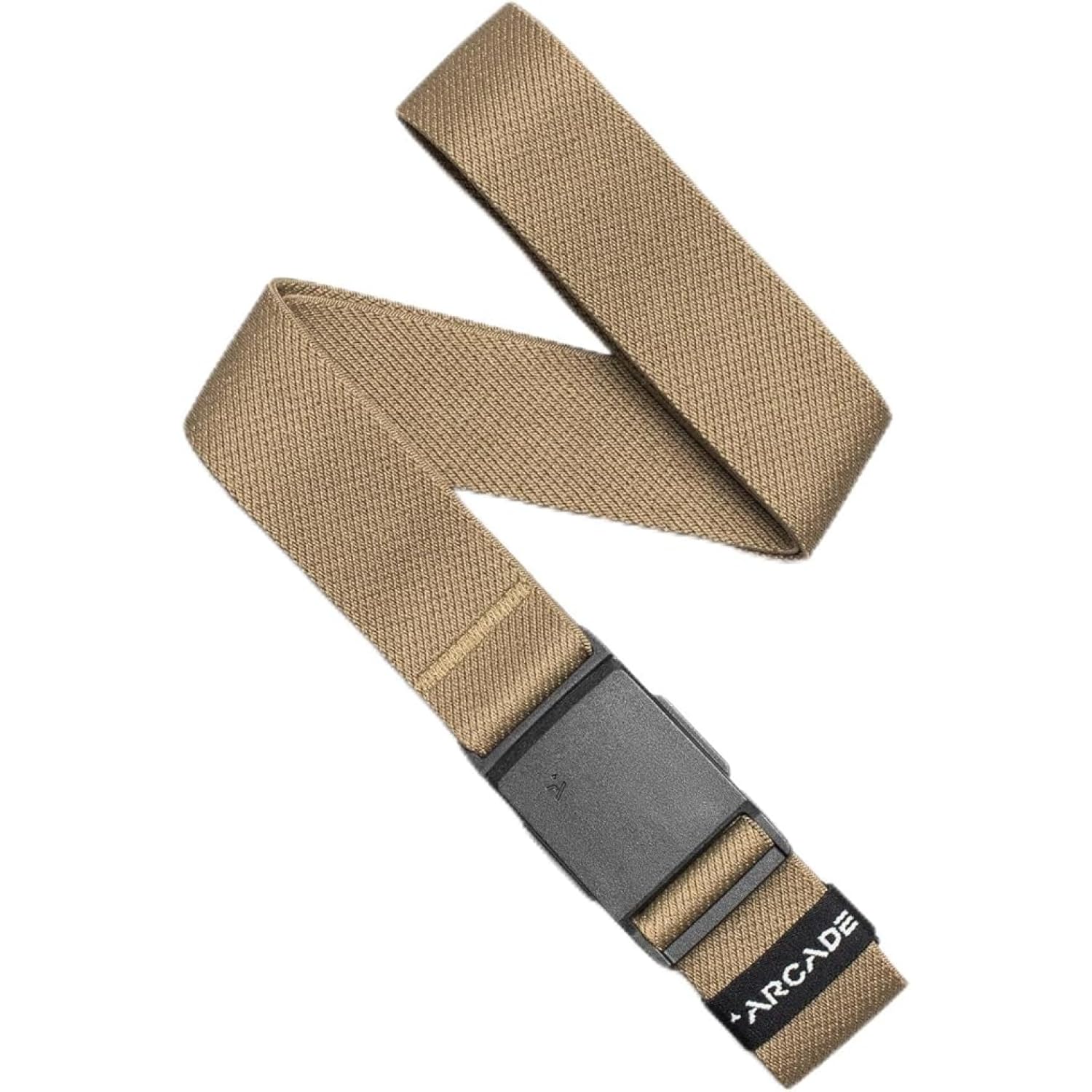
The Arcade Explore belt uses a 1.5-inch stretch webbing that recovers cleanly after your hip belt tightens, so you never feel pinched at the trailhead or saggy three miles in. Its metal-free, low-profile buckle weighs almost nothing and won’t trigger airport metal detectors — a real perk for fly-in hiking destinations. The strap adjusts in micro increments via the friction buckle, giving you a dialed fit that no leather hole pattern can match.
Customer accounts confirm this belt works with scrubs, casual pants, and hiking shorts alike, and several reviewers note it remains comfortable under a backpack hip belt without digging. The stretch is firm enough to hold heavy side pockets but compliant enough to accommodate a post-meal waistline expansion. Arcade builds these with a sewn-in tri-glide keeper that prevents the tail from flapping.
The one drawback is that the micro-adjust buckle requires a bit of manual dexterity to loosen on the fly — you can’t just yank it open like a plastic side-release. Some users found the initial length trimming fiddly, though the instructions (once deciphered) make it simple. If you want a single belt that transitions from a summit push to a casual dinner, this is it.
Why it’s great
- Stretch webbing moves with you under a pack hip belt
- Metal-free buckle is ultralight and TSA-friendly
- Micro-adjust fit eliminates hole gap
Good to know
- Buckle adjustment takes practice to loosen quickly
- Stretch makes it unsuitable for holstering heavy equipment
2. Arcade The Original Slim Unisex Adventure Belt

The Arcade Original Slim brings the same stretch-webbing technology as the Explore but in a narrower 1.25-inch width that slides effortlessly through the belt loops on hiking shorts and technical pants. The fully adjustable buckle lays flat against your stomach, which matters when you’re leaning against a rock or lying on a sleeping pad. Reviewers consistently report the belt lasting 6–10 years of daily wear before the elastic loses tension.
Because the buckle contains zero metal, this belt won’t conduct cold or corrode after a rainstorm. The micro-adjust mechanism lets you dial in quarter-inch increments, so you never have to choose between “too loose” and “too tight” on a long day. Many users wear this belt for uniform, restaurant, and retail work, which speaks to its all-condition durability.
The slim width is a double-edged sword: it fits narrower loops, but some users report that the buckle end is just slightly too wide for certain Columbia and Patagonia pant loops, requiring a quick sanding pass on the corners. The adjustment system is also slightly more finicky than a flip-top friction buckle, and the price sits near the premium end of the stretch belt segment. If you own mostly slim-loop hiking pants, check loop width before buying.
Why it’s great
- Narrow 1.25in width fits technical pant loops
- Flat metal-free buckle is comfortable under a pack
- Proven to last 6+ years with daily abuse
Good to know
- Buckle end may require sanding for tight loops
- Not as easy to micro-adjust as a ratchet buckle
3. Fjällräven Keb Trekking Belt
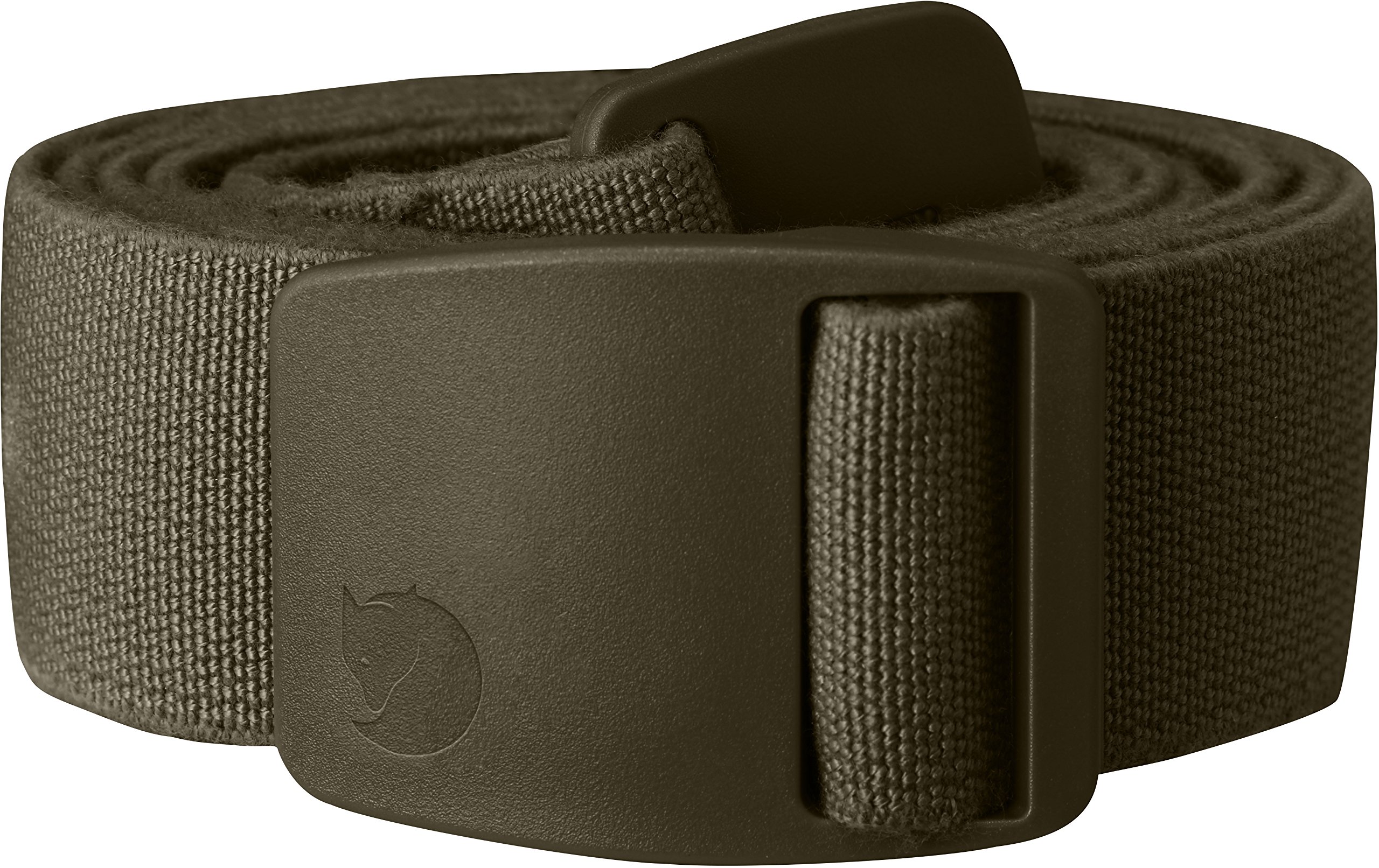
Fjällräven’s Keb Trekking Belt is a no-nonsense fixed-webbing belt built for wet Scandinavian trails where leather turns to mush. The woven polyester webbing is 25 millimeters wide — a narrow profile that fits through most trekking pants — and it dries in minutes after a river crossing. The buckle is a classic two-bar design with a hooked tang; it’s simple, corrosion-resistant, and unlikely to fail in the backcountry.
Reviewers consistently call this the best belt for wet conditions and appreciate that it doesn’t loosen during a day of bushwhacking. The material has zero stretch, which some hikers prefer for a predictable, solid hold when their pack’s hip belt is cranked down. The webbing is tough enough to double as an emergency gear strap in a pinch.
The main complaint is the lack of a belt loop to secure the tail after you thread the excess webbing through. Without a loop, the extra length flops around or gets caught on brush, and one reviewer noted it can be annoying enough to detract from the belt’s otherwise excellent functionality. It also lacks micro-adjustability — you set it at a specific hole and live with it. For hikers who want a lightweight, reliable, fixed belt for wet environments, this is a strong contender.
Why it’s great
- Dries rapidly after submersion
- Zero-stretch webbing for a secure, predictable hold
- Classic design will last years of off-trail abuse
Good to know
- No keeper loop for the excess tail
- Fixed holes mean no fine-tuned fit
4. Carhartt Men’s Rugged Flex Nylon Webbing Belt
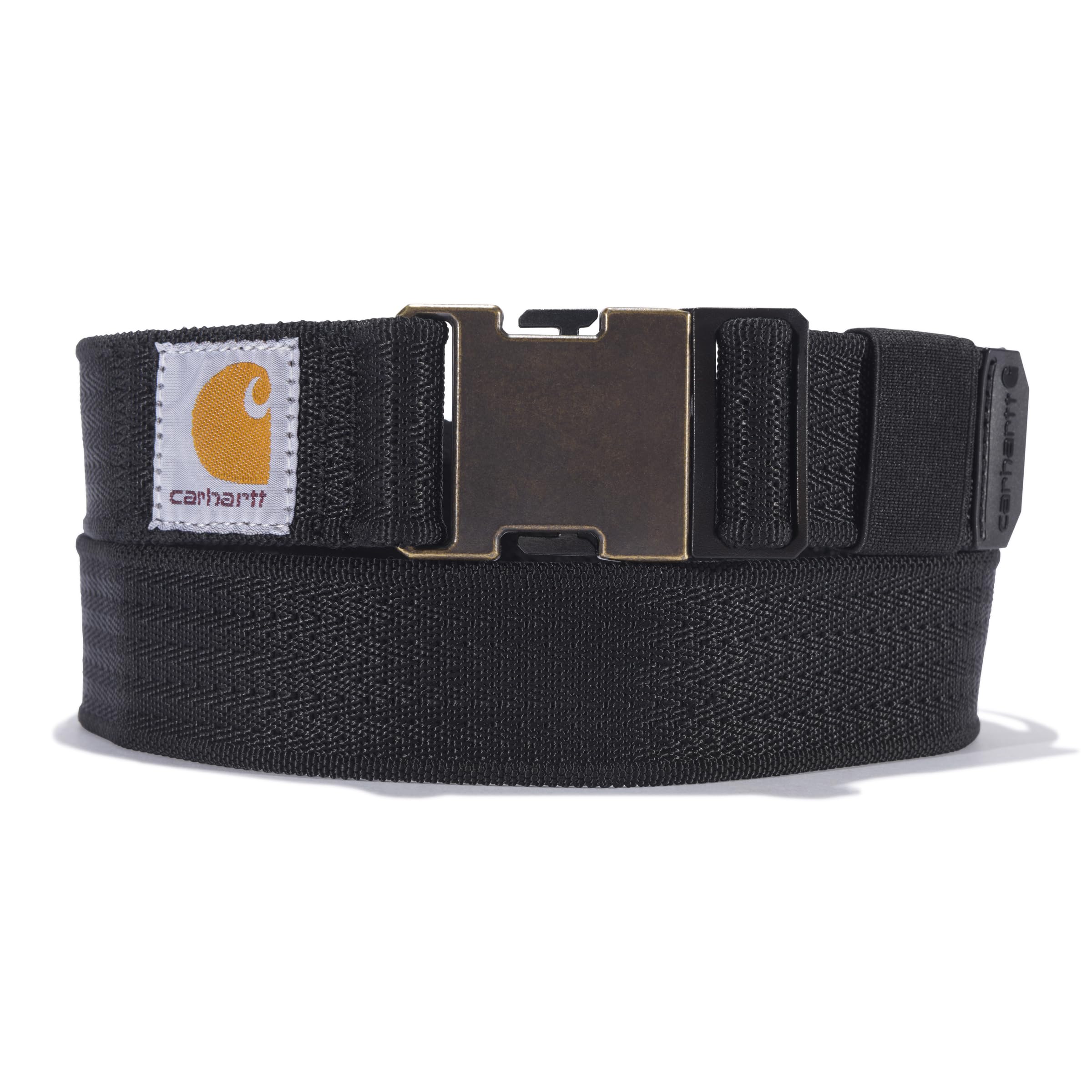
The Carhartt Rugged Flex belt bridges the gap between a construction worksite and a Saturday summit attempt. Its 1.5-inch nylon webbing has a modest amount of elastic stretch built in, so it gives slightly when you bend but never feels loose. The quick-release plastic buckle clicks in and out with authority and includes an elastic end-loop that tucks the tail away — a simple feature that the Fjällräven belt sorely misses.
Multiple reviews highlight the belt’s comfort for everyday carry and in-waistband holstering after a short break-in period. The buckle is tough enough to withstand daily use, and the stretch webbing helps absorb shock when you’re crouching to tie boots or hoisting a pack onto your back. Several blue-collar users report wearing this belt for 8+ hours without discomfort.
The quality control inconsistency is the main red flag. A few reviewers report the buckle failing to clip shut after a sneeze or minor movement, which is a deal-breaker on the trail. Additionally, the buckle’s square edges can be difficult to pull through small belt loops — some users had to reverse the strap direction to get a clean fit. At its price, it’s a gamble; if you get a good unit, it’s a solid mid-range option.
Why it’s great
- Elastic end-loop tucks the tail out of the way
- Comfortable for EDC and light hiking, even with a holster
- Strong quick-release buckle for easy on/off
Good to know
- Some units have a buckle that fails to stay clipped
- Square buckle edges struggle with small belt loops
5. EZL Ratchet Tactical Belt for Men
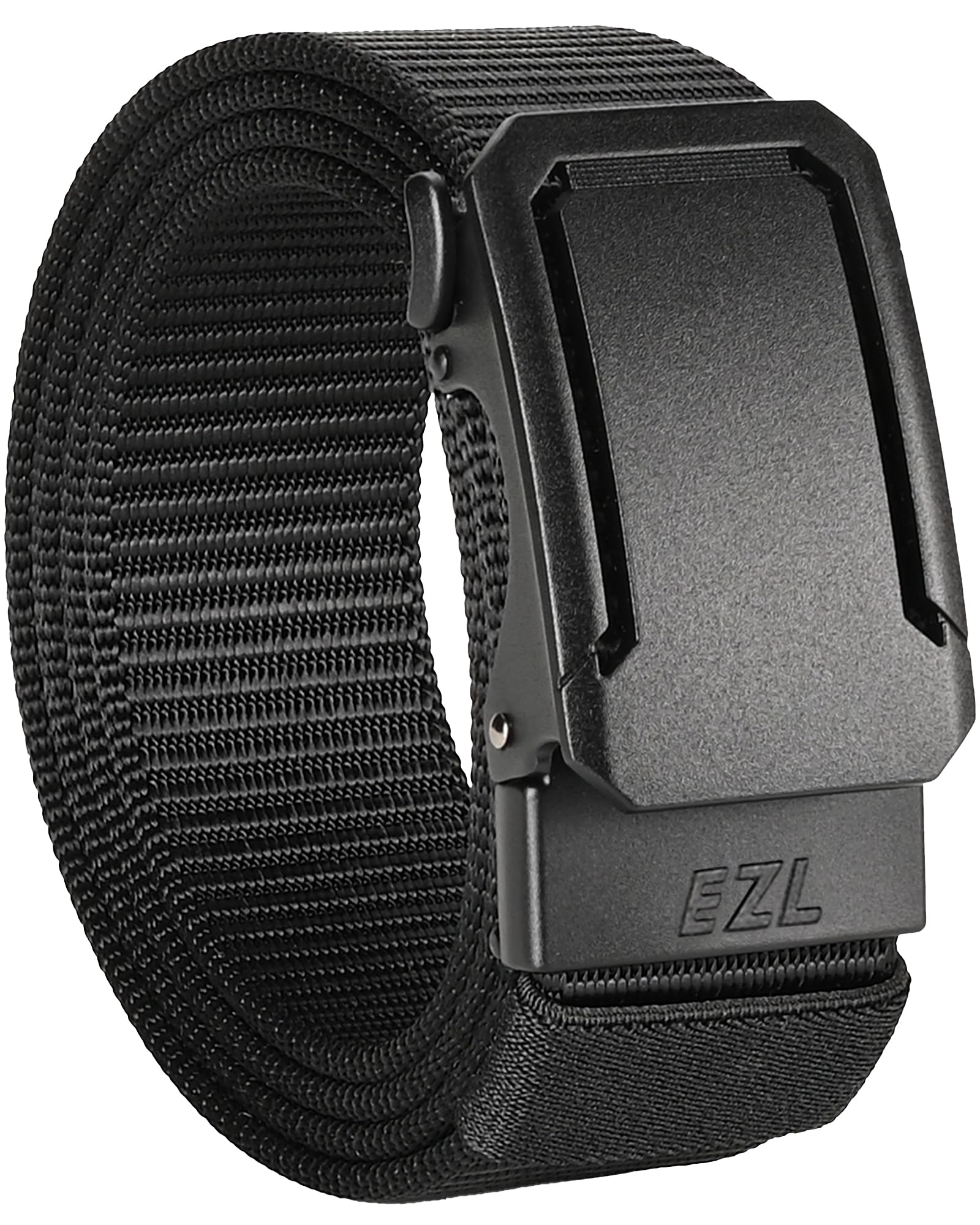
The EZL Ratchet belt brings a rigid nylon web with an automatic slide buckle that locks in precise adjustments without holes. The 1.5-inch nylon material has no stretch, making it ideal for hikers who need a belt that stays exactly where it’s set, mile after mile. The buckle mechanism clicks a ratchet into place as you tighten and releases with a small tab press, so you can fine-tune the tension while wearing a pack.
Reviewers praise the belt’s ability to hold heavy pockets and secure pants even after a 20-pound weight loss. The webbing feels quality and looks good enough for casual wear after the hike. Several users note it is one of their best Amazon purchases for daily use, and the hold is steady throughout a full workday.
The rigidity that makes this belt great for duty carry also makes it less comfortable under a backpack hip belt — it doesn’t compress like stretch webbing does. The instructions for trimming are confusing, with one reviewer warning not to cut the wrong end of the webbing. It also lacks the flexibility needed for a truly comfortable long-distance hike. This is a belt for the trail-to-table crowd who value a rock-solid hold above all else.
Why it’s great
- Ratchet system offers micro-adjustable, hole-free fit
- Rigid nylon webbing won’t stretch or sag
- Holds heavy pocket loads without drooping
Good to know
- Rigidity can be uncomfortable under a pack hip belt
- Trimming instructions are confusing
6. TECEUM Tactical Belt – Heavy-Duty & Quick Release
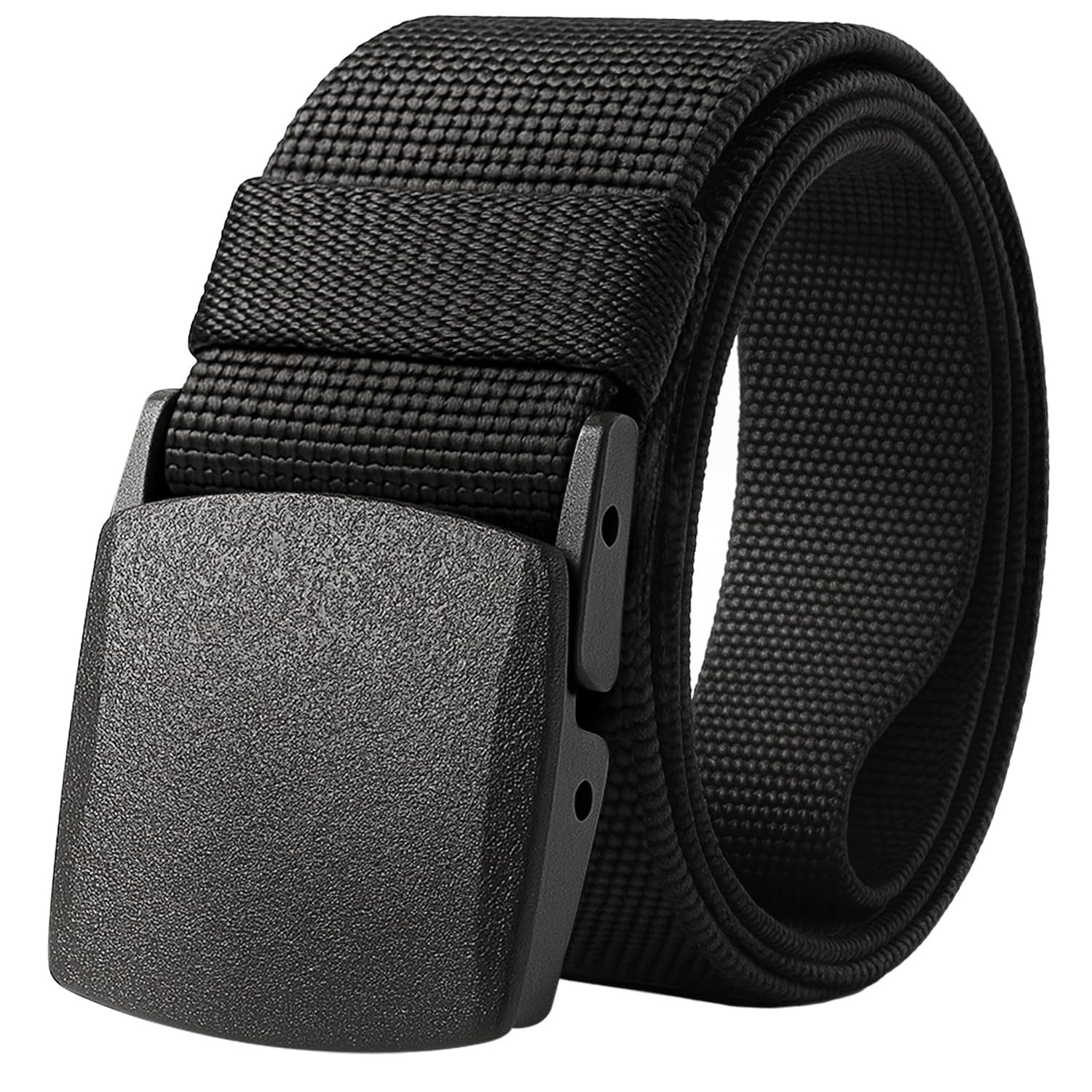
The TECEUM Tactical belt uses an elastic vinyl material that stretches just enough to conform to your waist without the bulk of nylon webbing. The plastic quick-release buckle is lightweight and eliminates the need for belt holes — you pull the strap to tighten and release with a tab. This is a budget-friendly entry point for hikers who want a stretchy belt for short day hikes or travel.
Reviewers who wear this belt daily report it holds pants up better than leather, with a snug fit that adapts to weight fluctuations. The slight stretch is comfortable for sitting around a campfire or bending to adjust boots. Several users have worn it for three weeks straight with no signs of wear and note the buckle holds securely without accidental release.
The elastic vinyl is not durable enough for heavy loadouts — one reviewer noted it will sag under a .44, and the same applies to a loaded pack with side pockets. The stretch can also cause the belt to loosen over several hours, requiring periodic readjustment. For ultralight day hikes or as a packable backup belt, this is a decent option, but it lacks the long-haul reliability of stretch-webbing belts.
Why it’s great
- Lightweight and packable for a backup belt
- Elastic material conforms to your waist naturally
- Simple quick-release buckle for easy on/off
Good to know
- Not durable enough for heavy pack loads
- Elastic can loosen over long hiking days
7. Huk Fishing Nylon Webbing Belt

The Huk Fishing belt is a pure nylon webbing belt designed for saltwater anglers, which means it’s built to resist corrosion and dry fast after getting soaked. The two-step locking buckle requires you to feed the webbing loosely, snug it to your waist, then pull to lock — a system that creates a very secure hold once engaged. The 44-inch max length accommodates larger waists or over-layer wearing.
Real-world saltwater use on the Texas coast confirms the buckle shows no rust or corrosion even after daily submersion. The material is comfortable against the skin and can be cut to size easily. Several reviewers note it’s simply a “good belt” with quality construction at a budget-friendly price point.
The two-step buckle is less intuitive than a standard slide release, and multiple reviewers report the belt slowly loosening throughout the day — requiring retightening about once an hour. The nylon webbing has no stretch, so it won’t give under a pack hip belt. For coastal hikes or wet-weather day trips where corrosion resistance is the top priority, this belt works; for multi-day treks with heavy packs, look elsewhere.
Why it’s great
- Zero corrosion after months of saltwater exposure
- Quick-dry nylon for wet conditions
- Very affordable entry point
Good to know
- Slowly loosens during wear, needs retightening
- Two-step buckle is less intuitive than standard designs
FAQ
Can I wear a stretch webbing belt with a backpack hip belt?
How do I trim a hiking belt to the right size?
Final Thoughts: The Verdict
For most hikers, the best belt for hiking is the Arcade Explore because its stretch webbing and metal-free buckle deliver all-day comfort under a pack without the bulk or corrosion worries of traditional belts. If you want a slim, travel-friendly belt that fits skinny loops and lasts a decade, grab the Arcade Original Slim. And for wet-weather treks where a rugged, zero-stretch hold is non-negotiable, nothing beats the Fjällräven Keb.