
Our readers keep the lights on and my morning glass full of iced black tea. As an Amazon Associate, I earn from qualifying purchases.
Specs are compiled from manufacturer listings and verified buyer reviews and can change over time — please confirm the key details on the product page before buying.
You want a shooting chronograph that reads your muzzle velocity honestly, without spending a fortune on lab gear. The short answer: the ProChrono DLX is the one to buy for most people, because it pairs proven accuracy with Bluetooth that pushes every shot to your phone. Below are nine chronographs that actually measure projectile speed — no golf swing radars, no stopwatches dressed up as speed meters.
I’m Min — the founder and writer behind Gadgets Feed. This guide is built by comparing the manufacturers’ published specifications and the patterns across verified customer reviews, so you get each pick’s real strengths and trade-offs instead of marketing spin.
A chronograph is only worth owning if it reads the same shot the same way twice. That is the filter used here, and it is what separates a useful budget shooting chronograph from a gadget that lies to you.
Our Picks at a Glance


How To Choose The Best Budget Shooting Chronograph
Every chronograph on this list does the same core job: it times a projectile as it passes two sensors and turns that into a speed reading. The differences that matter are how forgiving those sensors are, how much data the unit remembers, and whether it talks to your phone.
Light Is The Enemy You Can Actually Fix
Optical chronographs work by watching a shadow cross a sensor. Bright, low-angle sun can blind the sensors, which is why sun screens exist. The Caldwell kit ships oversized sun screens plus an LED light kit for indoor or shaded testing, while the simpler units expect you to test on a bright, overcast day or build your own shade.
Match The Speed Range To Your Projectile
Airsoft replicas, pellet rifles, bows and centerfire rifles do not live in the same speed window. The AC6000 MKIII is built around a 36mm shot tube with a 36mm diameter that catches BBs, while the QKVCX meter claims a test error of ±1% across a speed range of 1-2000 M/S (4-6500 FPS). Buy for the projectile you actually shoot, not the widest number on the box.
Decide if you need Memory And Bluetooth
A single speed reading helps you pass a field safety check. A logged string of shots helps you tune a load. If you reload or fine-tune an airsoft build, a shot memory log and an app that records every reading saves you writing numbers in a notebook with a pencil between strings.
Quick Comparison
| Model | Best For | Speed Range | Power Source | Weight | Amazon |
|---|---|---|---|---|---|
| ProChrono DLX★ Best Overall | Most shooters | — | — | 2.7 lb | Amazon |
| XCORTECH X310 MiniPocket Pick | Pocket carry | 31-400+ m/s (90-1200+ fps) | 1 AA | 60 g | Amazon |
| QKVCX Ballistic Slingshot MeterBudget Champion | Multi-projectile testing | — | — | 0.91 kg package | Amazon |
| XCortech X3200 MK3 | Airsoft tuning | — | 2 AA | 205 g | Amazon |
| ZSHJGJR Speed Tester | Wide-range rifle work | 1-2000 M/S (4-6500 FPS) | 4 AA | — | Amazon |
| ACETECH AC6000 MKIII | App-based data logging | — | 4 AA or USB-C | 0.57 kg package | Amazon |
| Prochrono LTD | Repeatable accuracy | — | — | 2.5 lb | Amazon |
| Paintball Radarchron | Paintball field checks | 150-450 FPS | Pre-installed 3V battery | 0.12 kg package | Amazon |
| Caldwell Chronograph 2.0 | Full kit, bright days | — | — | 1 kg | Amazon |
In‑Depth Reviews
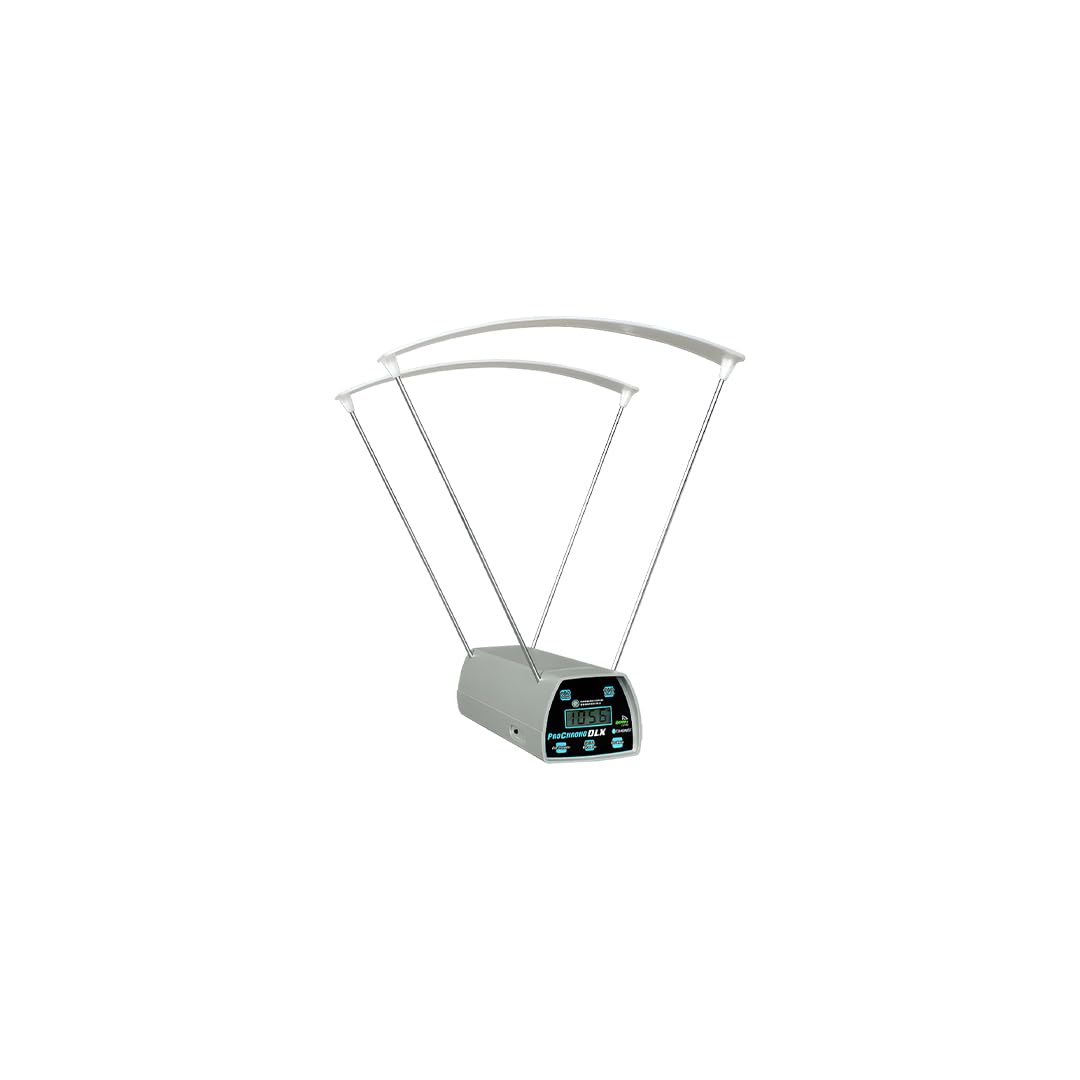
1. ProChrono DLX Chronograph White
Our pick — 4.5+★ from 750+ verified ratings; the strongest balance of quality and price.
The one that sends every shot straight to your phone instead of your notebook.
Competition Electronics built the ProChrono DLX around a simple promise: read the shot, show the number, do the math for you. That is what makes it the pick for anyone who shoots a rifle string and wants the average and spread without a calculator app in the other hand. It weighs 2.7 pounds, so it sits on a bench or tripod without chasing the wind.
The Bluetooth link is the headline. Pair it to the phone app and velocity tracking logs each speed as you shoot, so a full string of shots lands on your screen in order. The data is not just a single reading you have to remember — the app keeps the record, and the unit runs the standard calculations for each string of shots automatically.
The catch is durability, which buyers treat as a mixed bag. The housing is plastic, so it wants a padded bag and a gentle hand between range trips rather than riding loose in a truck bed. Keep it in a padded bag between range trips and the plastic housing holds up.
Setup is pair-once: after the first Bluetooth pairing, each session is power on, shoot, read the app. The crowd on this one sits at 4.5+ stars, and the sheer volume behind it makes it the safest bet on the list.
What Earns Its Place
- Bluetooth pushes each shot to the phone app for live velocity tracking
- Full string statistics handled for you — averages without pencil work
- 2.7-pound body stays put on a bench or tripod
Where It Asks For Care
- Plastic housing means a padded bag is not optional
- App pairing adds one setup step before your first shot
Reach for this if: you want the most proven all-round chronograph and you value phone-logged shot strings over squeezing every dollar.
Look elsewhere if: you only need a single field-check reading and never plan to use an app.
2. XCORTECH X310 Mini Pocket Chronograph
Sixty grams of chronograph that disappears into a pouch until you need a reading.
At 60 grams, this thing is closer to a matchbox than a range instrument. The XCortech X3200 MK3 in the premium tier weighs 205 g, while the X310 comes in at 60 g — a gap big enough that you will forget it is in the bag. Clip it to a tripod screw or set it on a rail bag and it is ready.
The readings cover more ground than the size suggests. Muzzle velocity runs from 31-400+ m/s (90-1200+ fps), rate of fire runs 75-6000 RPM, and muzzle energy is calculated from 0.01-800 joule. You get three memory slots for different ammo weights and calibers plus a 25-shot memory log, so you can compare a string of BBs or pellets without resetting between tests.
Power is one AA battery or an external micro-USB input, though the micro-USB does not charge the battery — it just runs the unit. That is a small quirk worth knowing before you assume a dead cell will top up over a cable.
The DOT matrix backlit LCD is the detail that makes it usable in a dim shed or under a tarp. The high-density IR detector handles fired projectiles reliably, and the tripod screw is the standard camera thread, so any spare tripod in the house works.
Best fit for: airsoft and pellet shooters who want a chronograph in a pocket and a tripod in the truck, with no bulk to haul.
Know before you buy: the micro-USB port is a power input only — pack a spare AA rather than a charger.
Suits: the shooter who values a 60-gram kit over a big screen and full statistics.
Think twice if: you need a wide sun screen setup for bright-day rifle testing.
3. QKVCX High-Precision Shooting Speed Meter
An aluminum-bodied speed meter that also reads arrows, pellets and even table tennis balls.
The spec sheet claims the thing serious buyers check first: accuracy within ±1% of measured velocity, or better. At this price, a ±1% spec is the reason to shortlist it over the plastic-bodied meters. The body is aluminum with stainless steel parts, so it feels less toy-like than the price tier suggests, and it ships in a package measuring 14.8 x 4.88 x 4.69 inches.
The package weight is 0.91 kg, against the AC6000 MKIII at 0.57 kg — noticeably heftier at the door, which tells you there is real metal in the box. You get a support rod and tripod mounting, so it can stand on its own or sit flat on a bench.
Honest note: functionality is the most-discussed topic in the reviews and it cuts both ways. Some units work exactly as hoped; others arrive not working, and there is a learning curve to the menus. The tripod is the other recurring complaint — described as short and flimsy. Treat the included tripod as a starter and plan on a sturdier one if you test often.
For pellet guns, bows and slingshots, the ±1% claim is the strongest accuracy spec in this price tier. For pellet guns, bows and slingshot work, the ±1% claim is the reason to consider it.
Points In Its Favor
- ±1% accuracy spec punches well above the price tier
- Aluminum and stainless steel construction in a 0.91 kg package
- Handles pellets, arrows, bullets and even soft projectiles
What To Watch
- Functionality splits the reviews — some units arrive dead
- Included tripod is short and flimsy; budget for a better one
Good for: pellet, bow and slingshot shooters who want a metal-bodied meter with a ±1% accuracy claim.
skip it if: you need a chronograph you can trust straight from the start with zero fiddling.
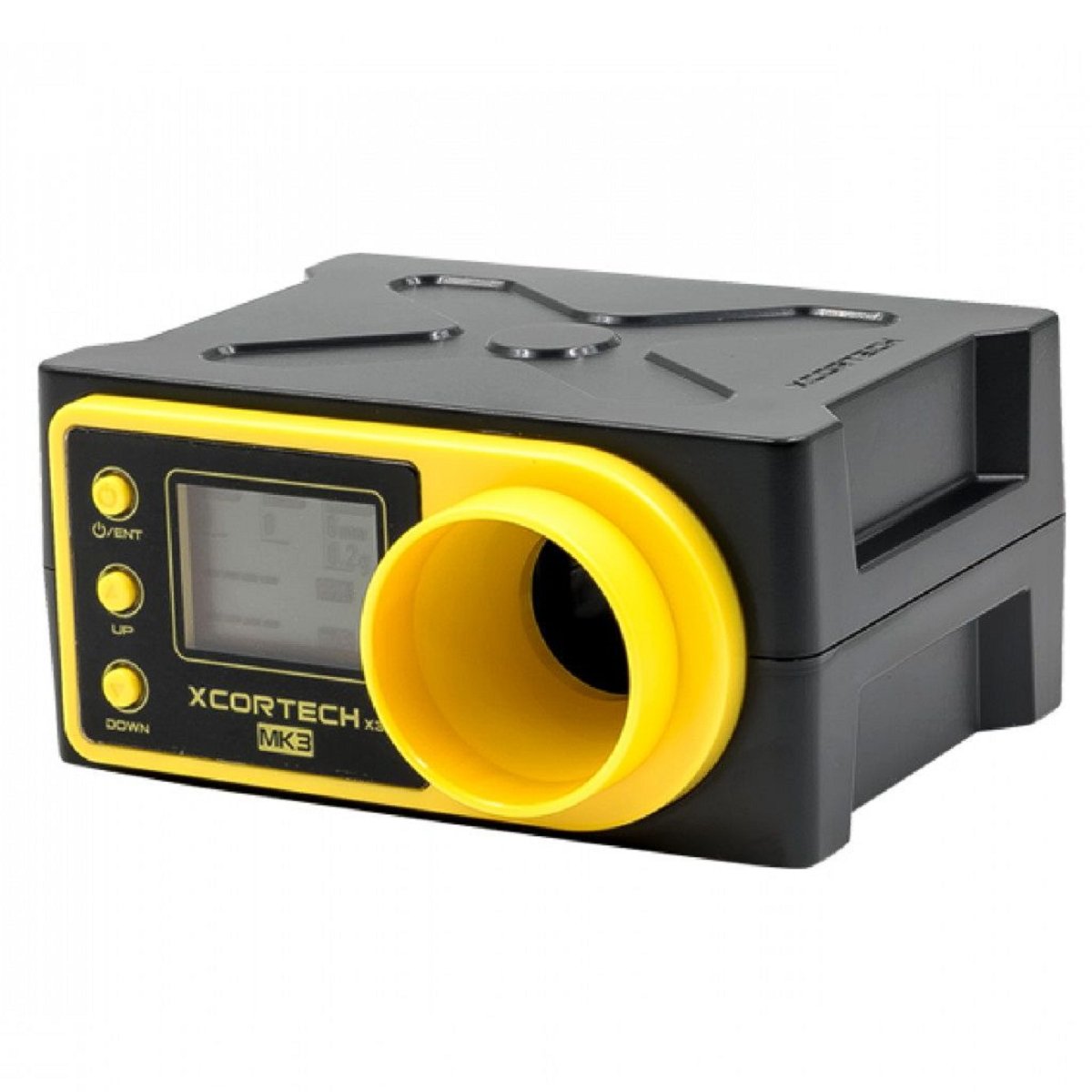
4. XCortech X3200 MK3 Airsoft Chronograph
The airsoft workhorse with fourteen IR sensors watching every BB go by.
If you run an airsoft replica and want to know its muzzle energy before a field check, this is the model that keeps showing up. The MK3 version carries 14 sensors — a high-sensitivity IR array — which is more sensing coverage than the pocket X310. It reads velocity in m/s or fps, rate of fire in bb/sec or bb/min, joule energy based on BB diameter and weight, and impact power in joule/cm².
You get a unit built to sit on a bench, not ride in a pocket: it weighs 205 g. That is heavier than the 60 g pocket X310, so plan to keep it in a range bag or on a rest. It still fits in a range bag, and it runs on 2 AA batteries. Low power draw means one set of batteries lasts through a full tuning session.
Menu navigation is on-screen button-driven, and you can set the units to rpm, rps, mps or fps, toggle the backlight between on, off and auto, and reset the unit without a manual. The BB weight and diameter fields are configurable, which is what makes the joule calculation line up with your actual ammo.
Where it asks a little of you is the setup — you configure the BB weight and diameter for accurate energy figures, so the first use takes a minute of button work. After that it is a press-and-read tool. For airsoft, that combination of 14 sensors, joule math and a compact body is the reason it holds the field-standard spot.
Why it earns its spot: 14 IR sensors plus joule and rate-of-fire readouts make it an airsoft tuning essential.
Trade-off worth knowing: at 205 g it is a bag item, not a pocket item — plan for a bench or pouch.
Made for: airsoft players who want joule compliance checks and rate-of-fire numbers in one unit.
Less suited if: you shoot rifles and need sun screens for bright-day velocity testing.
5. ZSHJGJR Shooting Speed Tester

Reads from a slow pellet to a fast rifle round in the same large-LCD frame.
The published range is the reason to look: 1-2000 M/S, which is 4-6500 FPS, with a stated test error of ≤1%. That is a velocity window wide enough to cover rifles, pistols, arrows, shotguns and slower projectiles like pellets and even badminton shuttlecocks in an experiment. Energy measurement runs 0.1-6000 J, so the joule math is in the same unit.
The body is aluminum alloy with stainless steel parts and a support rod, and the large LCD switches between MPS, FPS and kinetic-energy readouts. Sun screens are included — the seller notes strong adaptability to ambient light, so it is intended to work indoors and outdoors, day or night. The tripod screw is the standard camera thread, so your camera tripod works.
Power is 4 AA batteries, which are not included — a detail worth knowing before your first range session. It is a tripod-or-bench tool: mount it or set it flat, and it does not carry a shot-memory log, so each reading needs to be written down if you are building a string.
The widest-range claim is the standout. If you own a chronograph to test several calibers on the same bench, this frame covers more ground than the airsoft-focused meters. The catch is the lack of memory — a 25-shot log and 5 memory slots exist on the AC6000 and X310, but not here.
Why It Stood Out
- 1-2000 M/S (4-6500 FPS) covers slow pellets to fast rifle rounds
- Sun screens and wide ambient-light tolerance for outdoor testing
- Large LCD with FPS, MPS and kinetic-energy modes
Real Limits
- 4 AA batteries are not included — pack your own
- No shot-memory log, so strings need a notebook
Suit this to: the multi-caliber shooter who wants one frame for rifles, pistols and arrows with sun screens for bright days.
Reconsider if: you need logged shot strings and app-tracking rather than single readings.
6. ACETECH AC6000 MKIII Chronograph

A 36mm shot tube, a Bluetooth app, and a screen that turns red when you overspeed.
The AC6000 MKIII is an airsoft chronograph that solves the two problems airsoft shooters actually have: BBs smashing the sensor and no easy way to log data. The aluminum alloy inner shot tube is 36mm in diameter and catches BBs instead of letting them hit the sensor. The full package measures 7.09 x 5.91 x 3.54 inches and weighs 0.57 kg — noticeably smaller and lighter than the QKVCX at 0.91 kg.
Bluetooth pairs to the official AceSoft app, which stores up to 25 groups of velocity and ROF data and calculates Max, Min and Average values for you. That is the tuning loop: shoot a string, glance at the app, adjust the replica, repeat.
The color LCD has a genuinely useful trick — it turns the text red when muzzle velocity or energy exceeds your preset limits. At a field check, that is an instant pass/fail display. Power is 4 AA alkaline batteries or USB Type-C from a power bank or wall charger, so you can run it at a bench all day on a cable.
The catch is the material — the outer body is listed as plastic even though the inner shot tube is aluminum. Plan on the tactical storage bag it ships with, and treat the shell like a precision tool. The 5 custom memory slots for BB weights and calibers save time each session.
What stands out: the 36mm aluminum shot tube plus the red-text overspeed alert make field compliance a glance instead of a calculation.
Stay aware: outer housing is plastic — use the included storage bag between sessions.
Right for: airsoft tuners who want app-logged 25-group strings and instant overspeed warnings.
Not for: rifle and bow shooters — the 36mm tube is sized for BBs, not full-power projectiles.
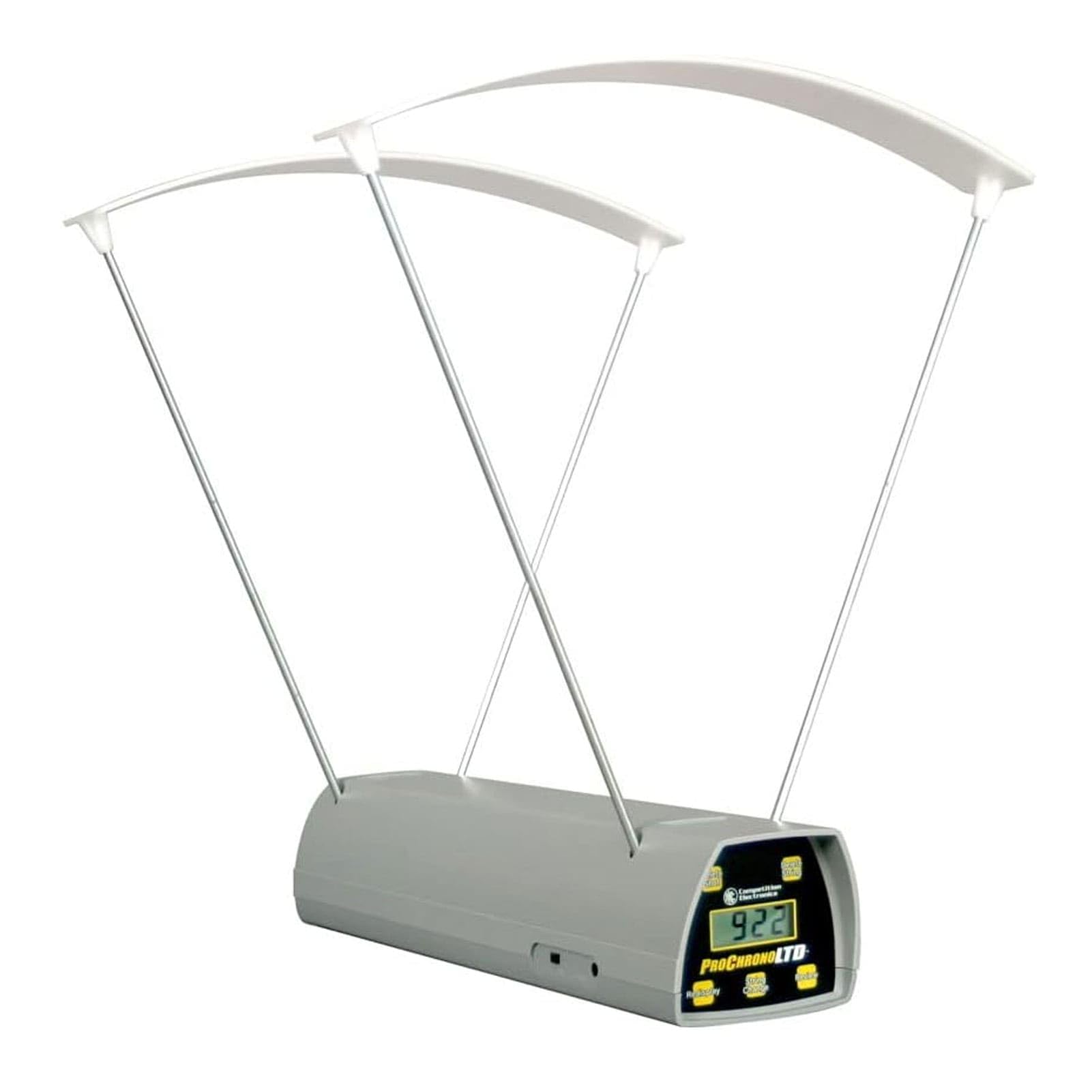
7. Prochrono LTD Chronograph (CEI-3825)
Tighter accuracy spec than the DLX, and a warranty that assumes you will use it hard.
Competition Electronics lists an accuracy figure for the LTD that is tighter than most on this list: plus or minus.5% or better, driven by a faster internal shot clock and updated circuitry. For rifle load development, that number matters more than any screen feature. A 2.5-pound body and a plastic housing keep it in the same bench-friendly class as the DLX.
The operating system is built in with multiple shot string memory and statistics, so the unit keeps the string, not you. The five settings cover the standard measurement configuration, and the sensing system is described as compatible with a wide variety of light conditions and projectiles.
Backing matters here — a two-year warranty against defects in material and workmanship, plus a half-price repair guarantee. A two-year warranty and half-price repair guarantee are what the cheaper meters leave out.
Buyers report it is reliable, with.22 air rifle readings landing accurately, and they call it outstanding for the money. Quality ratings are more mixed, so treat the enclosure with the same padded-bag care the DLX wants. what separates it is repeatability — the same shot reads the same way each time — and that is what you are buying.
The Case For The LTD
- ±0.5% or better accuracy from a faster internal shot clock
- Built-in string memory and statistics for reload development
- Two-year warranty plus a half-price repair guarantee
The Honest Caveats
- Plastic housing and mixed quality feedback — pad it between sessions
- No Bluetooth, so no app-based logging like the DLX
Best for: reloaders and rifle shooters whose priority is repeatable ±0.5% readings with a real warranty behind them.
Not worth it if: you want app-synced shot logging — the DLX covers that instead.
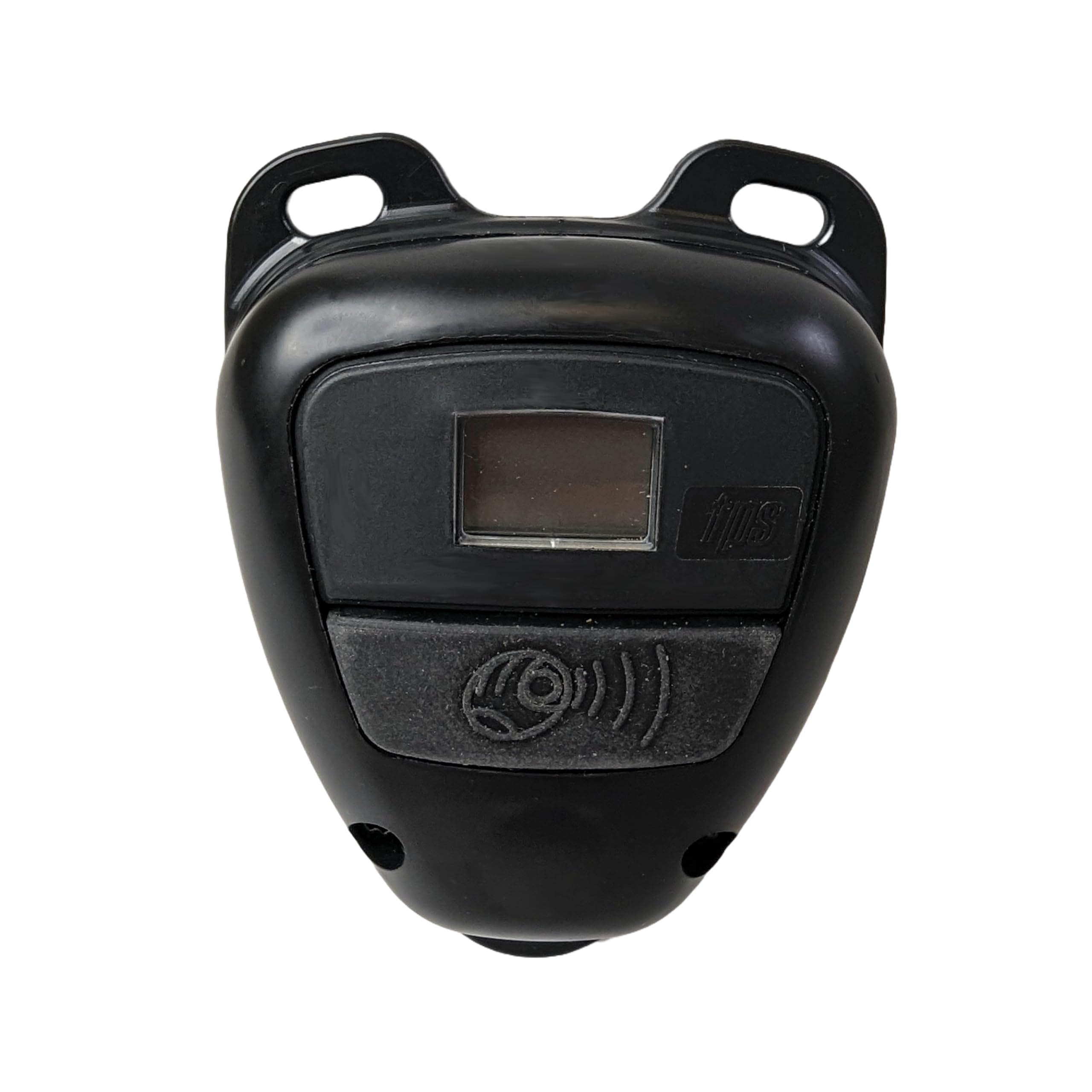
8. Sports Sensors Paintball Radarchron
One button, Doppler radar, and a pocket-sized answer to whether your marker is legal.
This is not an optical chronograph — it is Doppler radar, and that changes how you use it. Point it at the marker, press the button, read the speed. The measured range is 150 to 450 FPS with a stated ±2% accuracy, which is designed around paintball markers rather than rifles.
The package weight is 0.12 kg and the housing is rugged plastic built for field wear, so it clips to a gear bag or straps to the marker with the included Velcro strap. A pre-installed 3V battery is in the box, so it works out of the bag.
The honest limit: the seller ships a small radar unit, and readings can miss. Some sessions land every shot; others drop readings. That is the nature of a pocket radar at a field check, and it is why this is a complement to a proper chronograph rather than a replacement for load development.
At 0.12 kg with a pre-installed battery, it goes from gear bag to reading in seconds with no tripod or sun screens. Tuning a marker before a match, verifying velocity between games, or settling a bet with a friend about whether a marker needs adjusting — this is the tool you grab because it takes seconds. No tripod, no sun screens, no setup.
Best use: a quick field-side velocity check on a paintball marker before a game — 150 to 450 FPS with ±2% accuracy.
Real limitation: readings can drop in some sessions, so treat it as a field tool rather than a load-development instrument.
For you if: you play paintball and want a one-button marker check that fits in a pocket.
Not the one if: you need logged, repeated shots for load development or precision tuning.
9. Caldwell Ballistic Precision Chronograph 2.0
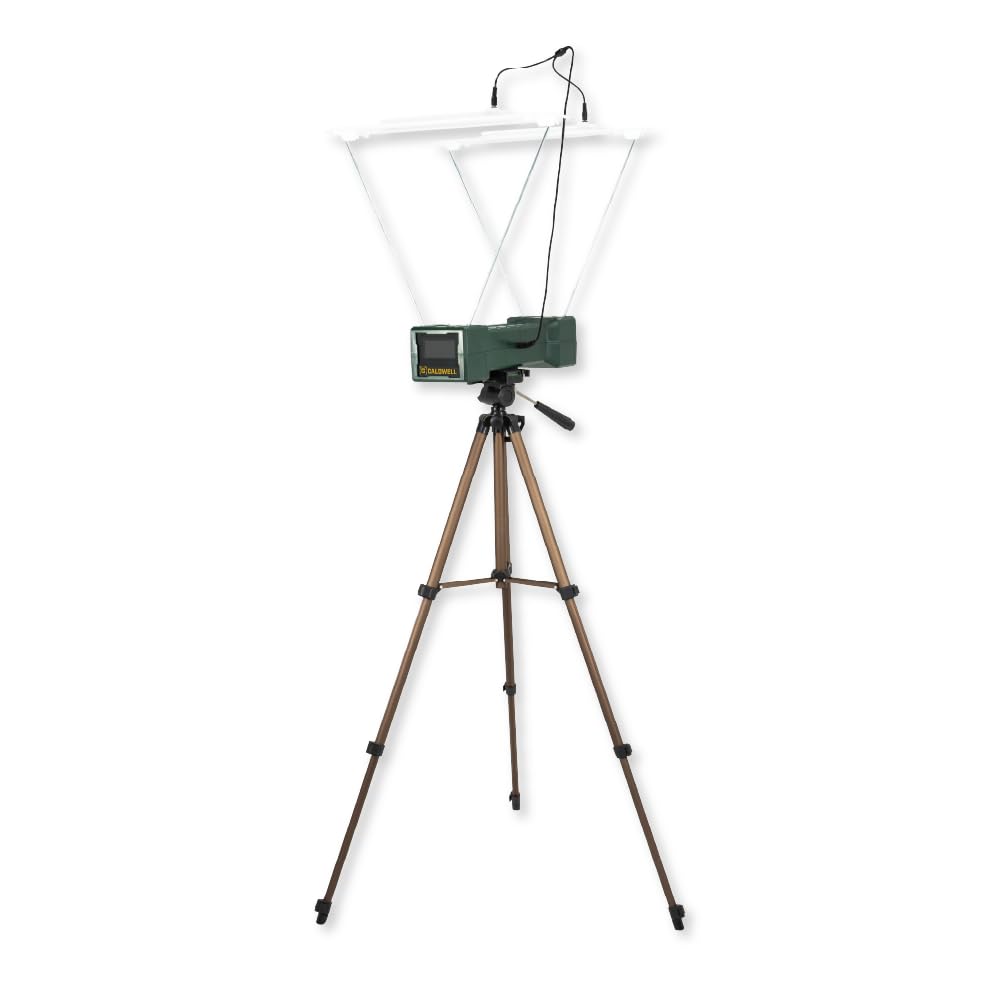
The kit that ships with sun screens, a tripod and a light kit so nothing is missing.
The headline spec is the one reloaders will focus on: factory calibrated to within ±0.10% accuracy. That is the tightest claim on this list, tighter than the Prochrono LTD at ±0.5%. The kit is built around a complete field setup — the chronograph, oversized sun screens, a tripod, a light kit and a carry case — so the box arrives ready to shoot.
The oversized sun screens are the practical fix for bright-day readings, and the light kit handles indoor or shaded benches where optical sensors struggle. Bluetooth pairs to the Caldwell Chronograph Mobile Application to capture shot data and log environmental conditions, which is the difference between a single number and a string you can study.
The package weight is 2.45 kg and the item weight is 1 kg, so this is the biggest box on the list — plan for trunk space. The honest caveat is sturdiness: owners mention the included tripod is flimsy, and functionality is split in the reviews, with some units refusing to power on. Budget for a sturdier tripod and buy where returns are easy, since some units arrive dead.
For serious PCP rifle target shooters, the wide sun screens plus app logging is a strong combination. The one number to keep in view is ±0.10% — if your load development depends on repeatability, it is the spec that justifies the kit.
Where The Kit Delivers
- ±0.10% factory-calibrated accuracy — the tightest claim here
- Oversized sun screens plus a light kit cover bright and shaded testing
- Bluetooth app logs shot data and environmental conditions
Where It Falls Short
- Bundled tripod is reported as flimsy — expect to upgrade
- Some units ship unable to turn on; buy where returns are easy
Worth it for: serious rifle and PCP shooters who want a complete kit with sun screens, app logging and a ±0.10% accuracy claim.
Pass if: you want something compact that slips into a range bag.
Understanding the Specs
Muzzle Velocity (FPS and MPS)
Feet per second and meters per second are the two units you will see on every screen. A chronograph times the projectile across a fixed gap and converts that to speed, and some units let you switch between the two units. That matters at a field check where a limit is written in one unit and your reading is in the other. The XCORTECH X3200 MK3 lets you set the units to rpm, rps, mps or fps, and the ZSHJGJR tester switches between MPS, FPS and kinetic energy on its large LCD.
Joule Energy
Joule energy is the number fields use for compliance because it combines speed with projectile weight. A light, fast BB can carry the same energy as a heavier, slower one, so a speed reading alone does not tell the whole story. The XCORTECH X3200 MK3 calculates joules from the configured BB diameter and weight, and the X310 adds three memory slots for different ammo weights and calibers. Set the weight wrong and the joule figure is wrong with it.
Accuracy Rating
The percentage figure tells you how far off a single reading might sit. The QKVCX claims ±1% or better, the Prochrono LTD claims ±0.5% or better, and the Caldwell kit claims ±0.10%. The smaller the number, the tighter the read — which is what a reloader wants when comparing a half-grain change in a load. A wider error window is fine for a field safety check and not fine for load development.
Sensor Type And Sun Screens
Optical sensors watch a projectile pass two points, and they suffer in harsh, low-angle sunlight. Sun screens shade the sensor bay so the shadow reads cleanly — the Caldwell kit includes oversized versions, and the ZSHJGJR kit includes its own. Doppler radar works differently and does not need a bay at all, which is why the Paintball Radarchron is a one-button handheld with a 150-450 FPS range.
FAQ
Will a shooting chronograph work indoors or only at the range?
What FPS range do I need for airsoft versus rifles?
Does a chronograph calculate joule energy or just FPS?
Can I mount a chronograph on a normal camera tripod?
Why do my chronograph readings change from shot to shot?
Do these chronographs need batteries or a plug?
What does the accuracy percentage actually mean?
Is Bluetooth worth having on a chronograph?
Can I use an airsoft chronograph on a rifle?
Final Thoughts: The Verdict
For most shooters, the winner is the ProChrono DLX because it pairs proven accuracy with Bluetooth (a wireless link that sends each shot to your phone) that logs every shot to your phone — the least friction of anything here. If you need the tightest accuracy claim for load work, the Caldwell Chronograph 2.0 at ±0.10% and a full kit is the serious tool. If you tune airsoft replicas, the ACETECH AC6000 MKIII with its 36mm shot tube and overspeed alert is the natural pick. Match the speed range to your projectile — 90-1200+ fps for airsoft, 4-6500 FPS for rifles — and the readings stay honest.
How We Picked
We do not accept paid placement. Every pick is matched to a real buyer and a real use-case; we do not hands-on test units.
Sources & Methodology
Specifications: manufacturer listings and product documentation. Review insights: verified customer reviews, as of November 2026. Pricing: not shown on this page (it changes often); check the current price via the retailer link.
As an Amazon Associate, Gadgets Feed earns from qualifying purchases. This does not affect which products we feature.