
Our readers keep the lights on and my morning glass full of iced black tea. As an Amazon Associate, I earn from qualifying purchases.
Specs are compiled from manufacturer listings and verified buyer reviews and can change over time — please confirm the key details on the product page before buying.
New England throws four different road surfaces at you in a single year — black ice on a March morning, road salt crust in February, heat-softened asphalt in July, and slick spring rain that hides every lane line. Your tires have to handle all of it without a seasonal swap every six months. The short answer: the Goodyear Fortera HL is the safest all-around pick for most drivers here, while the Michelin CrossClimate 2 is the one to grab if true winter bite matters more than anything else.
I’m Min — the founder and writer behind Gadgets Feed. This guide is built by comparing the manufacturers’ published specifications and the patterns across verified customer reviews, so you get each pick’s real strengths and trade-offs instead of marketing spin.
Below you get nine all-season tires that hold up in the Northeast mix, ranked by real-world fit rather than by sticker tier. The right pick depends on how much snow and ice your driveway throws at you each February. These are the all season tires for new england that make that choice easier.
Our Picks at a Glance


How To Choose The Best All Season Tires For New England
New England roads punish tires in ways that a Texas highway never will. Six months of freeze-thaw cycles, salt brine, and frost heaves demand a tread that still grips when the thermometer drops below freezing. And then June arrives with 90-degree humidity and sticky asphalt. Your tire has to shift between those extremes without giving up grip or tread life.
Snow and ice grip beats dry-road speed every time
Look for siping — the small slits cut into tread blocks that open up like tiny biting edges when you brake on ice. A tire with 3D Canyon sipes or Locking 3-D sipes gives you hundreds of those extra edges. The Falken Ziex ZE950 uses 3D Canyon sipes to increase edges for ice braking. The Michelin Defender2 uses Locking 3-D Sipes to deliver better stopping distances than three leading competitive tires in their own test. Those edges are what stop you at a stop sign on a February morning.
Load index and load range matter more than you think
Load index is a number that tells you how much weight a single tire can safely carry. The higher the number, the more weight it holds. The Michelin Defender2 carries a 102 load index, which translates to a vehicle packed with people and gear without the sidewall flexing under pressure. The Goodyear Fortera HL carries a 110 load index — a meaningfully higher figure for a bigger SUV or truck. If you haul kayaks to the White Mountains every weekend, that number has real consequences.
Treadwear warranties are a real signal, but read the exclusions
A 60,000-mile tread life warranty tells you the manufacturer expects the rubber to last that long under normal driving. The Goodyear Fortera HL carries a 60,000-mile warranty. The Cooper Endeavor carries a 65,000-mile warranty. The Michelin Defender2 tops the list with an 80,000-mile limited warranty. But those warranties typically require documented rotations and exclude uneven wear from misalignment. Treat them as a confidence benchmark, not a guarantee.
Quiet ride is not a luxury in New England
You spend hours on I-95 and I-93 with the window up and the radio on. A tire that howls at 65 mph will wear you down faster than any pothole. Tread pattern design directly controls noise. The Hankook Ventus V2 concept 2 uses five-pitch tread variation to reduce road noise and vibrations. The Continental ProContact TX is engineered for low road noise. That quiet matters on the four-hour run up I-95 to Acadia.
Quick Comparison
| Model | Best For | Load Index | Tire Diameter | Weight | Amazon |
|---|---|---|---|---|---|
| Goodyear Fortera HL★ Best Overall | All-around SUV and truck traction | 110 | 30.5 inches | — | Amazon |
| Falken Ziex ZE950Best Value | Budget wet and ice confidence | 94 | 26.3 inches | 22 pounds | Amazon |
| Cooper EndeavorBudget Champion | Quiet everyday touring rides | 94 | 26.3 inches | 21.6 pounds | Amazon |
| Hankook Ventus V2 concept 2 | Sporty handling and wet grip | 94 | 25 inches | 21.5 pounds | Amazon |
| Kelly Edge Touring Plus | Value touring for SUVs and crossovers | 100 | 28.62 inches | 36 pounds | Amazon |
| Continental ProContact TX | Premium quiet highway cruising | 95 | 27.3 inches | 23.2 pounds | Amazon |
| Pirelli Scorpion STR | Sport-tech SUV handling | 102 | 29.6 inches | 28 pounds | Amazon |
| Michelin Defender2 | Longest-lasting family SUV tire | 102 | 28.5 inches | 27.5 pounds | Amazon |
| Michelin CrossClimate 2 | True all-weather winter bite | 95 | 27.28 inches | 24.4 pounds | Amazon |
In‑Depth Reviews
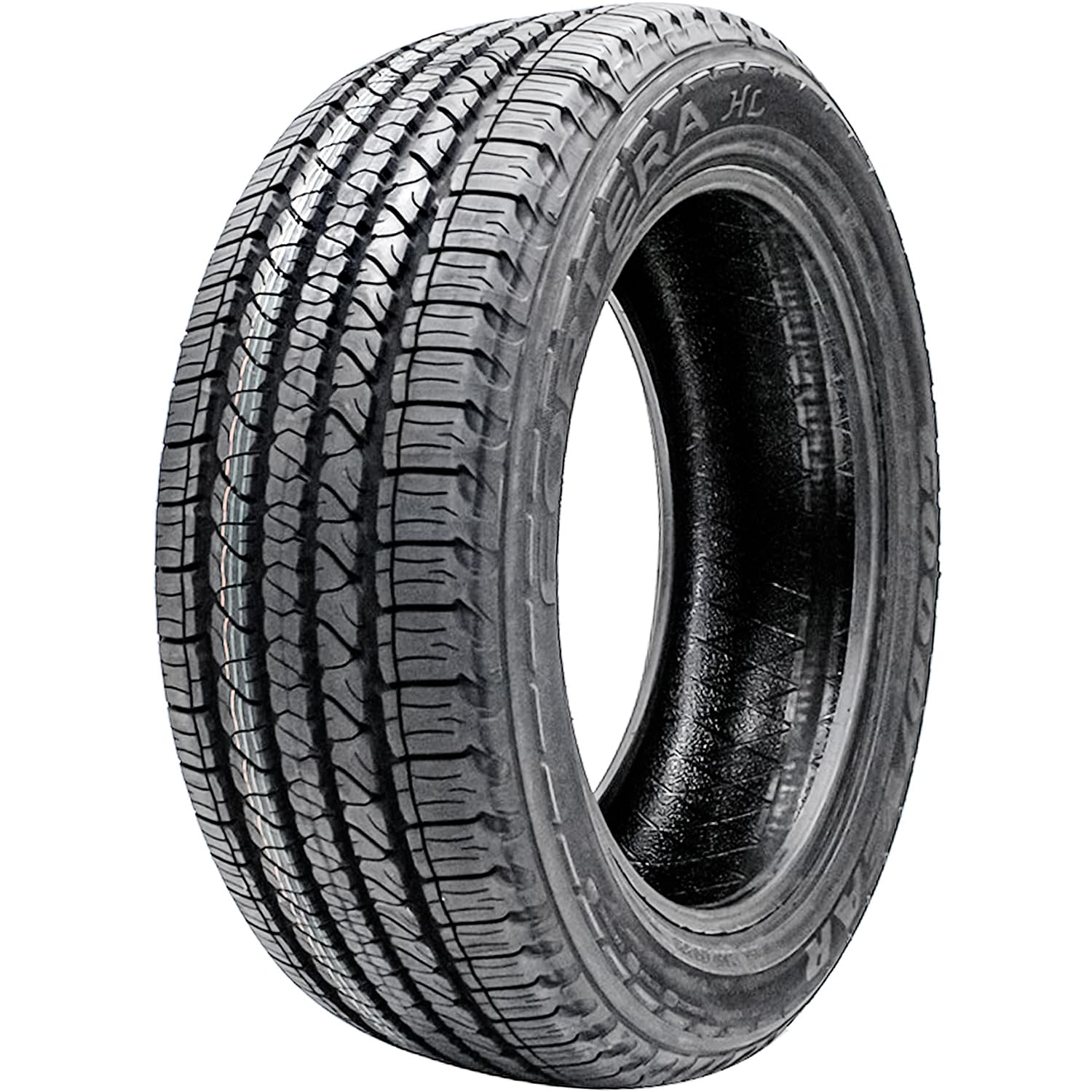
1. Goodyear Fortera HL All-Season Radial Tire, 265/50R20, Set of 1
Our pick — 4.5+★ from 900+ verified ratings; the strongest balance of quality and price.
A 110 load index and staggered grooves built to carry a loaded SUV through a Maine February without drama.
For most New England drivers, this is the tire to buy. The Goodyear Fortera HL handles the full four-season mix — rain, snow, freezing rain, and dry summer highway — without a seasonal swap. What makes it work is a tread pattern with staggered circumferential grooves, curvilinear blades, and see-through grooves. In plain terms, those shapes push water and slush away from the contact patch while the small blade edges still bite on cold pavement. The manufacturer calls this enhancement of forward and lateral traction — and that lateral part matters when you are merging onto a snow-slicked on-ramp at 40 mph.
What earns it the top spot is that it simply holds up. The tire carries a 60,000-mile tread life limited warranty — a real signal that the manufacturer expects long life under normal driving. Its 110 load index means it can carry more weight than most of the tires on this list, which is why it suits a full-size SUV or a truck bed loaded with firewood. And the intricate blading in the centerline helps reduce road noise on the highway. It also holds a 30.5-inch diameter, so it fills a 20-inch wheel well properly for a confident stance.
The honest trade-off is tread durability, which comes up as the most-discussed mixed note among its owners — some report premature wear. Treat that as a reminder to keep tire pressures even and rotate on schedule. That said, it remains the safest all-around choice for most New England drivers, whether you are commuting on Route 128 or hauling gear to a ski house.
The case for this Goodyear
- 110 load index — one of the highest on this list, so loaded SUVs stay stable
- 60,000-mile tread life limited warranty backed by the manufacturer
- Staggered grooves and blades are specifically designed for rain and snow grip
- 30.5-inch diameter with a quiet, tune tread pattern
Where it asks for care
- Tread durability is the mixed note in owner feedback — rotate on schedule
- Larger diameter and higher load rating suit SUVs and trucks, not compact cars
Buy it if: you drive a truck or SUV across four seasons and want one tire that covers snow, rain, and dry highway.
skip it if: you have a compact sedan — this 110 load index and 30.5-inch diameter are built for heavier vehicles.
2. Falken Ziex ZE950 All-Season Radial Tire – 215/55R17 94W
The entry-level ticket to genuine ice braking, thanks to 3D Canyon sipes and a snow-trapping tread slot.
Here is the one number that matters: this tire weighs 22 pounds, versus the Kelly Edge Touring Plus at 36 pounds. If you are a sedan owner swapping between wheels seasonally, that lower weight matters. And at a 26.3-inch diameter, it suits a 215/55R17 fitment on a compact sedan or a small crossover — exactly the vehicle many New England commuters drive.
What sets this Falken apart is the 3D Canyon sipe technology. Sipes are the tiny slits cut into the tread blocks, and here they increase the number of biting edges specifically for ice braking. Under load, they interlock — which helps handling and improves wear. There is also a wide angled tread slot that lets snow pack into the center of the tire so it grips the snow beneath. And the wide circumferential grooves evacuate water quickly, pushing back against hydroplaning in a Route 2 downpour.
The one thing to weigh is tread life. Durability is the mixed note in owner feedback, with some reporting wear within two months. That may be a fit or alignment issue on an individual vehicle rather than a design flaw, but get an alignment check when you mount them. For a sedan or compact crossover on a tight budget, this is the cheapest route to real ice-braking sipes.
Low curb weight: at 22 pounds, the ZE950 makes seasonal wheel swaps easier and reduces unsprung mass.
Rain confidence: the wide angled tread slot packs snow for grip, and the sculptured groove walls eliminate the wobble some tires develop in wet lanes.
Reach for it if: you want ice-braking sipes on a budget and drive a sedan or compact crossover.
Look elsewhere if: you need a 60,000-mile warranty — this tire does not carry one.
3. Cooper Endeavor All-Season 215/55R17 94V Tire
A 65,000-mile warranty on a light 21.6-pound tire — the quiet commuter choice for a wet New England spring.
The Cooper Endeavor carries a 65,000-mile treadwear warranty, and that number is your best sign this tire is built for the long haul. At 21.6 pounds and 26.3 inches in diameter, it slots onto a 215/55R17 wheel — a common size for mid-size sedans and small SUVs. That light weight helps fuel economy on the daily Route 3 crawl.
Where it shines is water control. The tread combines water evacuation grooves with checkmark-shaped channels to flush out water. In practice, that puts more rubber on the road when you hit a spring downpour on the Pike. The contemporary tread pattern also cuts highway noise, which you notice on a long turnpike commute. And the 94 load index supports 1477 pounds per tire, so a loaded family sedan still feels planted.
The thing buyers open their wallets for here is value — it is the most-raved-about trait. If you want a quiet 65,000-mile tire for a compact or mid-size commuter car, this is the one. The catch is that it offers no specific snow certification, so for deep unplowed snow you will want the CrossClimate 2 instead.
The daily-driver math: a 65,000-mile treadwear warranty at a budget-friendly price means the cost per mile is hard to argue with.
Quiet and light: 21.6 pounds and a noise-reducing tread pattern keep highway hours calm.
Pair this with: your commuter sedan or small crossover if quiet rain grip is the priority.
Leave it on the shelf if: you regularly plow through deep snow — it lacks a specific snow rating.
4. Hankook Ventus V2 concept 2 All-Season Radial Tire – 225/45R17 V

An alignment indicator and an aqua jet in the tread — this is the tire for a driver who likes to actually feel the road.
At 21.5 pounds versus the Kelly Edge Touring Plus at 36 pounds, this is the lightest tire in this review. It also runs a 25-inch diameter, which is the smallest here. Those numbers together make it a sporty, responsive choice for a 225/45R17 fitment on a sport sedan or hatchback — the kind of car that feels different 10 pounds at a time.
You get steadier cornering from a wide belt inside the tire, which stiffens the tread. The 94 load index and V speed rating mean it holds up under load too. An equilibrium carcass line strengthens the tire and sidewall, while a sturdy bead wire keeps the tire uniform at speed. There is even an alignment indicator in the shoulder — a quick visual check to see if the car is misaligned before you wear out the inner edge of the tire. And an aqua jet within the tread drains water away to reduce hydroplaning (skidding on a film of water) on wet roads.
Road noise is reduced by a five-pitch tread variation, which breaks up the rhythmic hum that tires can develop at highway speed. That makes a I-90 road trip quieter than a pure sport tire would. The honest caveat: a 25-inch diameter and an extra-load construction suit sporty passenger cars, not heavy SUVs — so a full-size crossover should look up the list.
Driver feedback: the wide belt and equilibrium carcass line make the car feel planted, with quick steering response.
Wet-road safety: the aqua jet and five-pitch tread fight hydroplaning while staying quiet.
Fits your garage if: you drive a sport sedan or hatchback and want light, responsive handling with strong wet grip.
Not for you if: you need a tall sidewall for a heavy SUV or truck — this is a 25-inch passenger-car fit.
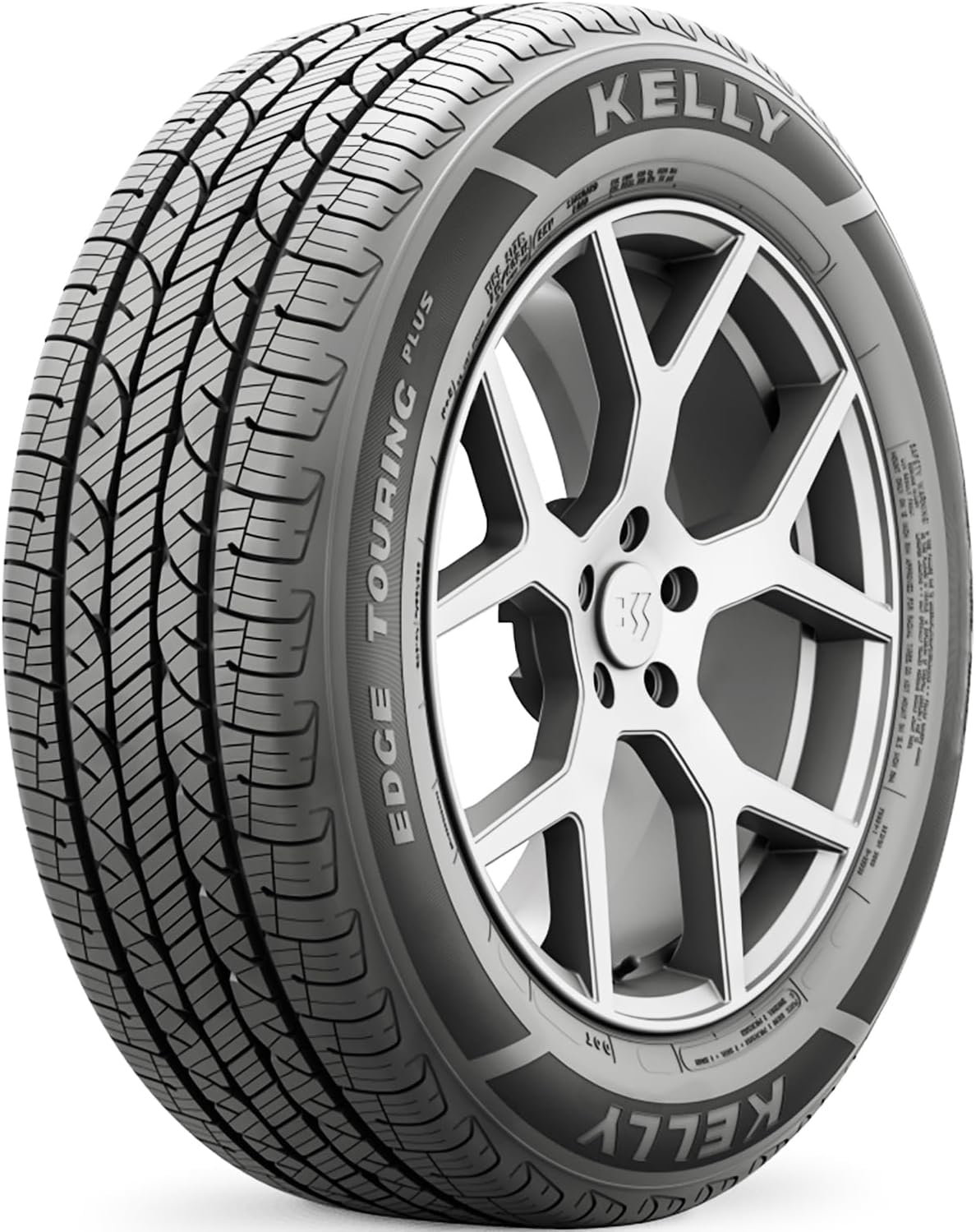
5. Kelly Edge Touring Plus All-Season 225/60R18 SL 100 V Tire
A 100 load index and a heavy 36-pound build — built to keep a loaded crossover stable through slush and snow.
The number to notice here is 36 pounds. That is heavier than any other tire in this review, and that weight is a clue that this Kelly is built for larger vehicles. Its 100 load index supports 1764 pounds per tire. In real terms, that is a mid-size crossover loaded with kids, skis, and groceries — exactly the New England family-hauler scenario.
The tire uses a silica tread compound, which helps improve both treadwear and wet traction. That means you are not trading long life for wet grip — you get both. Sweeping grooves evacuate water and slush from the tread, which is what keeps you tracking straight through the half-melted winter slush that lingers well into April. And the symmetrical tread pattern encourages even wear and predictable handling. Biting tread block edges are designed to provide traction in wet, dry, and snowy conditions.
Owners find it smooth and quiet, and value for money comes up often. That said, with 100+ ratings, this is a less-reviewed option than the big names. For the money, it is a solid SUV touring pick — just ensure your vehicle can handle a 28.62-inch diameter and 36-pound weight.
Worth the weight: the 36-pound build and 100 load index keep a loaded crossover planted on rough pavement.
Slush season: sweeping grooves clear slush and water, while the silica compound holds up over miles.
Your match if: you drive a mid-size crossover and want max stability under load.
Best to avoid if: you have a compact sedan — this tire is heavy and sized for bigger vehicles.
6. Continental ProContact TX All Season 235/45R19 95H Passenger Tire

The highway cruiser with 65,000-mile coverage and a tread pattern tuned to keep cabin noise low.
The Continental ProContact TX carries up to 65,000-mile limited treadwear coverage, and that warranty pairs with a 95 load index that supports 1521 pounds per tire. That is a comfortable margin for a mid-size sedan or a small crossover. At 23.2 pounds and 27.3 inches in diameter, it fits a 235/45R19 wheel with a ride that stays compliant on frost-heaved back roads.
Wet braking and handling are where this tire makes its case. The tread is engineered for confident wet-weather performance, which is exactly what you need when a March rainstorm turns the Mass Pike into a mirror. The tire also delivers optimal traction in light snow — enough for a dusting, not a blizzard. And the low road noise is a real comfort on a long highway run. Owners describe it as one of the better tires they have bought, and it keeps performing well past the 15,000-mile mark.
The flip side is that it is a touring tire, not a dedicated snow tire. If you face unplowed roads regularly, the CrossClimate 2 is the safer choice. For cleared highways and plowed suburban streets, the ProContact TX is the quiet, long-warranty pick for a passenger car.
Quiet and composed: the low-noise tread pattern makes long highway drives calmer.
Wet braking confidence: engineered for confident handling in the rain, with just enough light-snow traction for a cold snap.
A good fit for: highway commuters in a sedan or small crossover who want a quiet, long-coverage tire.
Consider the CrossClimate instead if: your driveway goes unplowed through February.
7. Pirelli Scorpion STR 245/50R 20 102H SUV/Crossover Tire

Quick View indicators and X-Sipe braking tech — the premium SUV tire that tells you when it is wearing low.
What stands out here is a 102 load index (a load rating) that supports 1874 pounds per tire, paired with a 29.6-inch diameter and 28-pound weight. That combination suits a full-size SUV or a heavier crossover — the kind of vehicle that needs a tall tire to fill the wheel well and carry the load. This is also the tire with the most visual feedback built in: Quick View Indicators tell you at a glance how the tire is performing in dry, wet, and snow conditions and whether the vehicle needs an alignment check.
Under that is X-Sipe technology, which improves braking, cornering, and acceleration in wet, snow, and ice. Traction Grooves increase the pattern edges for better snow performance. And the Sport Plus Technology construction delivers precise handling with security on wet, slippery roads. The 50,000-mile limited mileage warranty backs it up. For a driver who wants a premium SUV tire with sharp steering feedback on wet pavement, this is the one.
The honest trade-off is tread life, which is the mixed note among its owners. Some find it wears faster than hoped. Treat that as an argument for keeping alignment in check — the Quick View Indicators make that easy. For a premium pick, it is still a strong choice for a driver-focused SUV.
Why it earns a premium spot
- 102 load index supports 1874 pounds per tire
- Quick View Indicators simplify wear monitoring
- X-Sipe technology improves braking on snow and ice
- 50,000-mile limited mileage warranty
A note for the buyer
- Tread life is the mixed point — watch alignment with the built-in indicators
- 29.6-inch diameter and 28-pound weight suit SUVs, not small sedans
Pick this one for: a premium SUV that wants sporty, connected handling and clear wear indicators.
Pass if: you drive a compact car — the 29.6-inch diameter is sized for bigger vehicles.
8. MICHELIN Defender2 All-Season Tire, CUV, SUV, Cars and Minivans – 225/65R17 102H

The 80,000-mile warranty tire that keeps a family SUV stopping short on wet pavement.
Now look at the warranty: 80,000 miles. That is the longest limited treadwear warranty in this whole review, and the manufacturer backs it with a 6-year standard limited warranty too. The Defender2 is built for CUVs, SUVs, cars, and minivans — think a Honda CR-V, a Toyota Sienna, or a Chevy Equinox. That is the exact vehicle mix a lot of New England families own.
Stopping power is where it makes its case. Locking 3-D Sipes provide hundreds of biting edges for extra grip. In the manufacturer’s own wet- and dry-pavement test, that delivered better stopping distances than three leading competitive tires. That siping also uses the same design that helps on ice, without needing a dedicated winter tire. The 102 load index supports 1874 pounds per tire, and the 28.5-inch diameter fits a 225/65R17 wheel cleanly.
The trade-off is a higher purchase point than the budget picks, and it is not a 3PMSF tire, so the CrossClimate 2 retains an edge in deep snow. Still, for most families in southern New England, this is the set that lasts the life of the car — worth considering if the long warranty matters to you.
The long-haul math: an 80,000-mile limited treadwear warranty and a 6-year standard limited warranty make longevity the defining feature.
Stopping confidence: Locking 3-D Sipes deliver hundreds of biting edges for shorter stops than three leading competitors in the maker’s test.
Worth buying if: you want to put a set on a family SUV and not think about tires again for years.
Look at the CrossClimate 2 instead if: your priority is the deepest snow bite rather than the longest warranty.
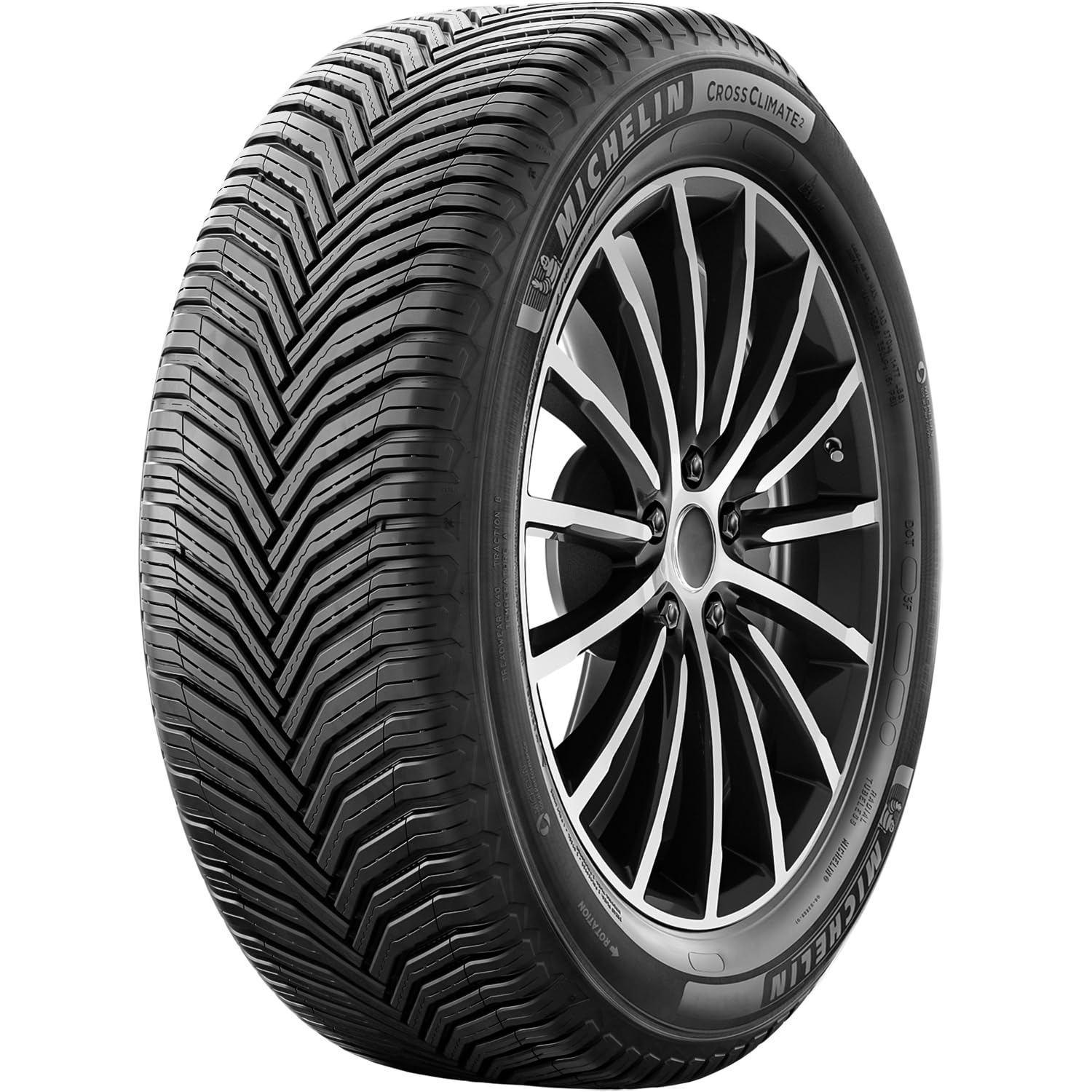
9. Michelin Cross Climate 2 A/W 215/55R18 95H Passenger Car Tire
The 3PMSF-certified all-season that acts like a winter tire without the seasonal swap.
This is the only tire here with a 3 Peak Mountain Snowflake certification, often called 3PMSF. That is an industry marking that means the tire has passed a standardized test for severe snow traction — the kind of rating a dedicated winter tire earns. If you live in northern New England or drive to a ski mountain every weekend, that certification is the single most reassuring spec on any tire in this review. It comes on a 215/55R18 fitment, a 95 load index capable of 1521 pounds, and a 24.4-pound weight.
Beyond the certification, the CrossClimate 2 stops shorter than four leading competitive tires in dry and wet conditions, according to the manufacturer. The rain and snow performance is the most-raved-about trait. It also delivers up to one extra year of tread life and holds its performance even when worn. What that means in practice: as the tread wears down over years of New England seasons, the snow grip does not fall off a cliff the way it can on a standard all-season tire.
The honest note is that it is not a dedicated winter tire — for genuine deep-snow or ice driving, a studded winter set still wins. But for the vast majority of New England drivers who want one tire for all four seasons, this is the closest blend you can buy. It carries a higher purchase point than budget options, and that reflects the certification and the stopping distance engineering.
What makes it special
- 3PMSF-certified for severe snow traction — the only one here
- Stops shorter than four leading competitors in dry and wet, per the maker
- Up to one extra year of tread life, with performance held even when worn
- Strong snow and rain performance is what owners rave about
The fair caveat
- Not a substitute for a dedicated winter tire in deep snow and ice
- Higher purchase point than the budget picks
Reserve it for: northern New England drivers and ski-country regulars who want winter-grade snow traction with all-season convenience.
It may be overkill if: you drive mostly cleared city roads and the budget picks above already cover your snow days.
Understanding the Specs
Load Index and Load Range
Load index is a number that tells you how much weight a single tire can safely carry. A higher number means more weight capacity. The Goodyear Fortera HL carries a 110 load index, meaning it can support heavy SUV loads, while the Falken Ziex ZE950 carries a 94. Load range tells you the tire’s construction class — SL is standard load, XL is extra load. As a rule of thumb, match the load index to your vehicle’s weight including passengers and cargo. If you regularly haul a full vehicle, a load range of XL or a higher load index gives you more margin.
Treadwear Warranty and 3PMSF Certification
A treadwear warranty is the mileage number the manufacturer backs. It usually requires documented rotations and excludes uneven wear. The Michelin Defender2 carries an 80,000-mile limited treadwear warranty, the highest here. Separately, 3PMSF stands for Three-Peak Mountain Snowflake, a certification that the tire passed a severe-snow traction test. The Michelin CrossClimate 2 carries it. A 3PMSF tire grips noticeably better in deep snow than a standard all-season tire — even though it is still not a dedicated winter tire. When you compare tires, weigh both the warranty and whether you actually need the snow certification for your driveway.
FAQ
Do I need a separate winter tire if I buy the Michelin CrossClimate 2?
What does the M+S or 3PMSF mark actually mean on a tire?
How long do the tires in this review actually last?
Is a 110 load index too stiff for my SUV?
Will a 30.5-inch tire fit my vehicle?
Can I mix tire brands on my car?
Does a higher load range like XL affect ride comfort?
How often should I rotate all-season tires in New England?
Are all-season tires good enough for black ice?
Why does tire weight matter when choosing a set?
Final Thoughts: The Verdict
For most New England drivers, the all season tires for new england winner is the Goodyear Fortera HL because its 110 load index, staggered snow-and-rain grooves, and 60,000-mile tread life warranty cover the full four-season mix in one set. If true winter bite matters most, the Michelin CrossClimate 2 is the only tire on this list with 3PMSF certification (the three-peak mountain snowflake mark for severe snow). And for the longest-lasting family SUV set, the Michelin Defender2 carries an 80,000-mile limited treadwear warranty that outlasts every other pick here.
How We Picked
We do not accept paid placement. Every pick is matched to a real buyer and a real use-case; we do not hands-on test units.
Sources & Methodology
Specifications: manufacturer listings and product documentation. Review insights: verified customer reviews, as of November 2026. Pricing: not shown on this page (it changes often); check the current price via the retailer link.
As an Amazon Associate, Gadgets Feed earns from qualifying purchases. This does not affect which products we feature.