
Our readers keep the lights on and my morning glass full of iced black tea. As an Amazon Associate, I earn from qualifying purchases.
Specs are compiled from manufacturer listings and verified buyer reviews and can change over time — please confirm the key details on the product page before buying.
If you are dealing with a musty smell, a damp basement, or a bathroom wall that never quite dries out, the right air purifier will pull mold spores straight out of the air before they settle again. The LEVOIT Core 400S-P takes the top spot: a true HEPA filter plus a live PM2.5 sensor that shows spore-laden air dropping in real time. Below you will find eleven units sorted by what each one actually does best, so you can match one to your room, your budget, and how much noise you can live with.
I’m Min — the founder and writer behind Gadgets Feed. This guide is built by comparing the manufacturers’ published specifications and the patterns across verified customer reviews, so you get each pick’s real strengths and trade-offs instead of marketing spin.
Mold is stubborn because the spores are tiny and light, so they hang in the air and drift from room to room long after you have scrubbed the visible patch. Every pick below uses true HEPA media, and each is sized to a specific room type so you are not paying for coverage you will never use. If you want a shortlist you can trust, this breakdown of the best air purifier for mold keeps the focus on filtration and real room size.
Our Picks at a Glance


How To Choose The Best Air Purifier For Mold
Mold spores are not heavy. They ride the air like dust, which is why a purifier has to move a large volume of air through a fine filter, repeatedly, to make a dent. Three numbers decide whether a unit can actually do that job in your space: the filter grade, the CADR, and the room size the maker rates it for.
Start with the filter grade, not the fan
A true HEPA filter is the baseline. It is tested to trap particles down to 0.3 microns, and mold spores typically fall in that range or larger, so the media catches them rather than pushing them back into the room. A pre-filter sits in front and grabs hair, lint, and larger debris so the HEPA layer does not clog early. On top of that, an activated carbon layer handles the musty smell that usually comes with a mold problem. Skip a unit that lists only an ionizer or a “HEPA-type” filter, because neither gives you the tested capture rate you are paying for.
Match CADR and coverage to the room
CADR stands for Clean Air Delivery Rate — the measured volume of filtered air the unit pushes out per minute, in cubic feet. A higher smoke or dust CADR means more air scrubbed per minute, which matters in a humid basement where spores keep regenerating. The coverage figure the maker quotes is tied to a number of air changes per hour, so a room rated for a full-house figure in one hour gets much less turnover if you need several passes. Read the spec as “how many times per hour can this unit cycle my room” and size accordingly.
Decide how quiet it has to be
Decibels are a log scale, so a 23.5 dB unit is meaningfully softer than a 27 dB one in a silent bedroom. If the purifier will run overnight beside your bed, look for a sleep mode that dims or kills the display lights and drops the fan to its lowest setting. If it lives in a basement or utility room, noise matters far less and you can prioritize raw airflow instead.
Quick Comparison
| Model | Best For | Rated Coverage | Filter System | Sleep-Mode Noise | Amazon |
|---|---|---|---|---|---|
| LEVOIT Core 400S-P★ Best Overall | Smart all-rounder | 1,718 ft² | 3-stage HEPA + carbon | 24 dB | Amazon |
| LEVOIT Vital 200S-PQuietest Operator | Quiet bedrooms | 1,875 ft² | HEPA + carbon | 27 dB | Amazon |
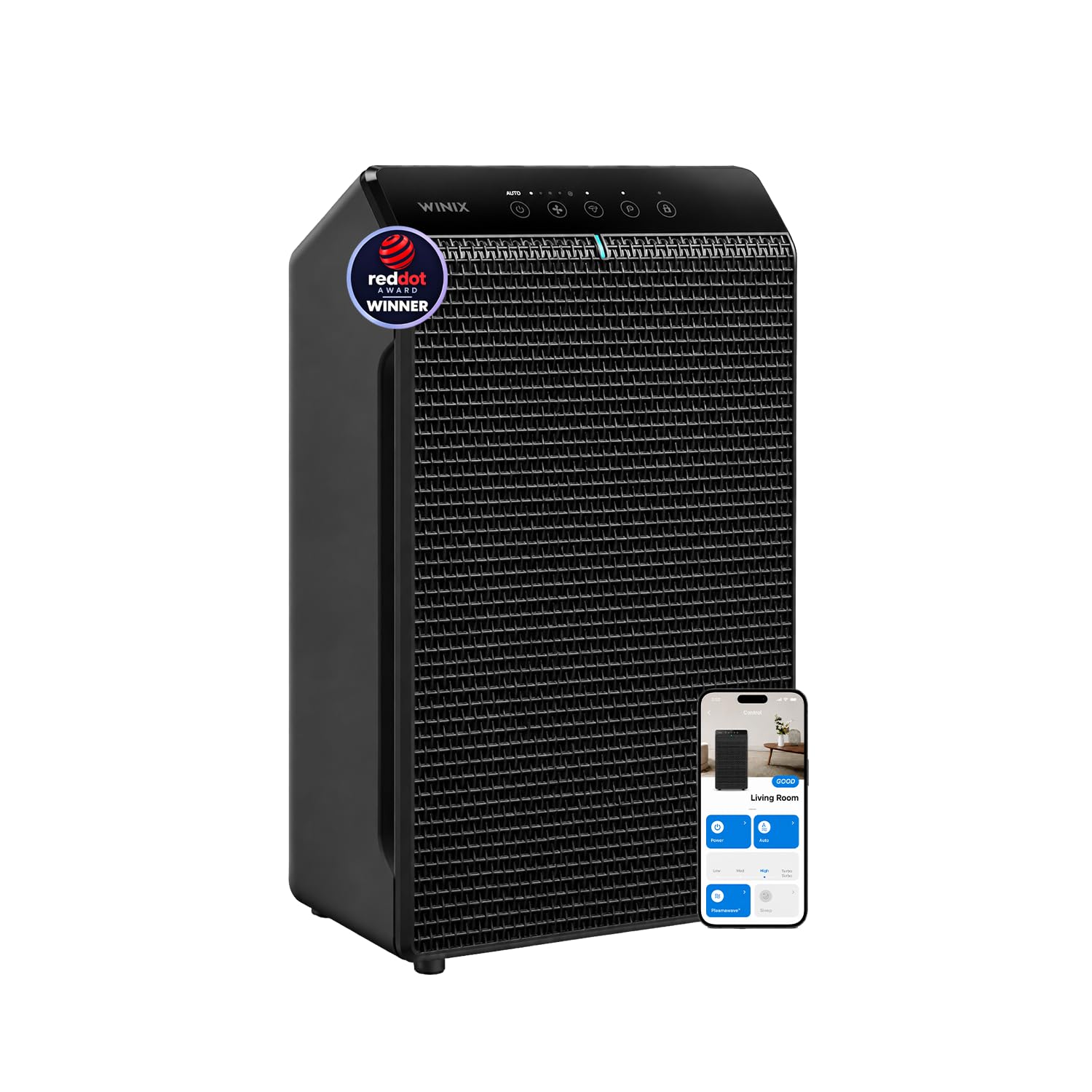
| WINIX 5520Fastest Turnover | Big rooms, fast turnover | 1,882 ft² in 1 hr | True HEPA + deodorization carbon | 23.5 dB | Amazon |
| Honeywell HPA030 | Simple tower for a spare room | 200 sq ft | True HEPA | — | Amazon |
| COWAY Airmega 150 | Clean cartridge swaps | 1,035 ft² in 60 min | HEPA + carbon + washable | — | Amazon |
| Aurora AR100W | Small rooms and nurseries | 1,100 ft² in 1 hr | 3-stage HEPA | 24 dB | Amazon |
| LG PuriCare 360 | 360-degree room coverage | 2,059 ft² in 1 hr | NanoFiber True HEPA + carbon | — | Amazon |
| AirDoctor AD2000 | Bedrooms and nurseries | 1,220 ft² in 1 hr | UltraHEPA + carbon | — | Amazon |
| Shark NeverChange Max HP301 | Filter-change fatigue | 1,300 sq ft in 1 hr | NanoSeal + washable debris filter | — | Amazon |
| Blueair Signature SP4i | Huge open-plan spaces | 3,385 ft² per hour | 7-stage HEPASilent | 23 dB | Amazon |
| AirDoctor AD3500 | Whole-floor coverage | 2,520 ft² in 1 hr | UltraHEPA + carbon | — | Amazon |
In‑Depth Reviews
1. LEVOIT Smart Air Purifiers for Home Large Room Up to 1718 Ft² Core 400S-P
Our pick — 4.5+★ from 17,000+ verified ratings; the strongest balance of quality and price.
The one that tells you what is floating in your air, then quietly cleans it
The piece that makes this unit worth its place at the top is the AirSight Plus sensor. It is a laser particle counter that reads PM2.5 — the fine airborne particles that mold spores travel alongside — and shows you the number live on the display. Turn Auto Mode on and the fan speeds up on its own when that number climbs, so a damp corner that suddenly kicks up spores gets handled without you touching a button. For a mold problem that matters: the PM2.5 readout shows spores clearing instead of leaving you to guess.
Underneath the smart layer sits a genuine three-stage stack. A pre-filter takes the dust, lint, fibers, hair, and pet fur first, a main filter captures 99.97 percent of airborne particles down to 0.3 micron, and an activated carbon layer adsorbs smoke and odors — which is the musty note you are trying to kill. The AHAM Verified CADR figures back it up: 231 CFM for smoke, 240 for dust, and 259 for pollen, rated for rooms up to 1,718 ft² once per hour. At 12.8 pounds it is a shelf-and-forget box, and the VeSync app handles schedules, timers, and filter-life tracking if you would rather not reach behind it.
What wins people over is raw performance — it is by far the most-discussed thing in the feedback, with quiet operation right behind it. It runs as low as 24 dB in Sleep Mode, which drops the fan to its lowest setting and dims the display, and you can kill the lights entirely if you need blackout darkness. The honest catch is filter life: that is the one recurring gripe, because a dusty room or a heavy-pet home will eat through the media faster than the estimate suggests. Plan for a filter swap every few months in a dusty or pet-heavy room and it keeps cleaning.
Where it earns the crown
- Live PM2.5 readout with Auto Mode that reacts to real air quality instead of a timer
- 99.97 percent particle capture down to 0.3 micron through three filter stages
- Rated 1,718 ft² per hour, so it can carry a whole floor without breathing hard
- 24 dB Sleep Mode with a fully dimmable display
What to plan around
- Owning it means committing to regular filter replacements
- Auto Mode relies on the sensor staying clean, so wipe the intake now and then
Buy this one if: you want set-and-let-it-run filtration that shows you proof the air is cleaner.
Think twice if: you would rather never think about filter purchases again.
2. LEVOIT Smart Air Purifier for Home Large Room up to 1875 Ft² Vital 200S-P
Two intakes instead of one, built to swallow pet hair before it clogs
Most purifiers breathe through a single front grille. The Vital 200S-P pairs a traditional air inlet with an additional U-shaped inlet, and the point is practical: airborne pet hair and odors get pulled in from two directions rather than piling up against one face. In a damp room where the air keeps circulating, that second intake means slightly more air passes the HEPA media with every pass. It is a small mechanical idea that pays off in a home with shedding animals alongside the moisture problem.
The filtration is independently AHAM Verifide, with CADR ratings of 250 CFM for smoke, 254 for dust, and 289 for pollen. Rated coverage is 1,875 ft², and the design targets allergy households specifically, catching pollen, pet hair, dander, and dust so those particles stop recirculating through the room. Compare it with the Core 400S-P above: 289 CFM pollen versus 259 CFM gives this one the edge on pollen-sized particles, while the Core leads on smart features and dust CADR. If you are choosing between the two Levoits, let your trigger decide.
What owners gush about is how little noise it makes, and that is the most-discussed strength in the feedback by a wide margin, with air quality second. At 27 dB it is a touch louder on paper than the WINIX below at 23.5 dB, but in practice it disappears into a bedroom hum. The trade-off is size — at 13.2 pounds and a taller body, it needs real shelf or floor space rather than a corner nook. Filter costs are routinely described as inexpensive, which takes some of the sting out of long-term ownership.
The allergy-first angle: this one is engineered for the household where sneezing and pet dander are the daily battle, with the AHAM-tested CADR figures on the box rather than buried in a listing image.
One thing to measure first: the footprint is generous, so check your intended spot before assuming it tucks neatly beside the bed.
Best fit: allergy-prone homes with pets where the purifier runs overnight in a bedroom.
Look elsewhere if: floor or shelf space is genuinely tight.
3. WINIX 5520 Air Purifier for Home Large Room Up to 1882 Ft² in 1 Hr
The workhorse that clears a large room in a single hour
Look at the coverage ladder and you see exactly where this unit belongs. It cleans 470 sq ft in 15 minutes, 627 sq ft in 20 minutes, 941 sq ft in 30 minutes, and a full 1,882 sq ft in one hour. For a mold problem in a finished basement or an open living area, that progression is the whole argument: you get usable air in the first fifteen minutes rather than waiting out a full cycle.
Air quality handling is genuinely automatic here. A built-in sensor measures the room and adjusts fan speed in real time, and a visual LED indicator tells you the state of the air at a glance. The light-automated sleep mode is a neat bit of engineering — the unit drops into its quiet, energy-efficient setting when the room darkens and returns to Auto Mode the moment light returns. At 23.5 dB on its slowest speed it is the quietest unit on this list by the numbers, and it beats the Vital 200S-P’s 27 dB for anyone who truly needs silence beside a pillow.
The filter stack is built for damp, smelly rooms: a washable fine mesh pre-filter catches the largest particles and rinses clean, an advanced odor-control carbon filter reduces VOCs and household odors from cooking, pets, and smoke, and a true HEPA layer does the fine work. AHAM Verified and UL Certified back the claims. Performance and effectiveness dominate the owner feedback, with noise a close third. The trade-offs are real but small: it is 13.3 pounds, heavier than the 6.8-pound Aurora by a wide margin, so plan its spot rather than shuffling it. The Winix Smart App covers remote control, and it is one of the newer listings here, so long-term data is still accumulating.
Reasons it clears rooms fast
- 1,882 ft² in one hour, with 470 sq ft already handled in 15 minutes
- Washable mesh pre-filter rinses clean instead of costing you a replacement
- 23.5 dB on the slowest speed, the softest figure on this page
- Sleep mode triggers off room darkness, not a timer
Worth knowing before you buy
- Heavier than most picks here, so decide the spot once
- Odor control leans on the carbon layer, which has a finite service life
The pick for: basements, open-plan rooms, and anyone who needs fast air turnover more than app extras.
Not the pick for: someone who needs to carry a purifier between rooms daily.
4. COWAY Air Purifiers for Home Bedroom up to 1,035ft² Airmega 150

The filter change that does not leave a dusty mess on your floor
Replacing a filter in a mold-plagued room is the moment everything you just filtered out gets a chance to go airborne again. Coway’s cartridge design solves that specific annoyance: the filters are contained on one portable cartridge, so you pull the whole block out and slot the new one in without shaking loose a cloud of trapped particles. In a damp basement where the media is loaded with spores, that is not a small thing.
The HyperCaptive stack combines a HEPA filter, a carbon filter, and a washable filter, and the maker rates it to reduce 99.97% of 0.3-micron particles — pollen, pollutants, and other allergens — plus 99% of volatile organic compounds and odor. Coverage runs to 518 sq ft in 30 minutes or 1,035 sq ft in 60 minutes. A touch display handles fan speed, power, light on/off, and filter reset, and Auto Mode keeps monitoring the room and adjusting fan speed as conditions shift. The 3-year warranty is the longest stated coverage on this list.
Ease of use is what people praise most, followed by value for money, and the design and appearance earn their own share of compliments — this is a unit you will not mind leaving in a living room. The honest friction is the power button: several buyers report issues with it, which is the kind of control-panel fault that shows up over time rather than on day one. Odor removal and physical size get mixed feedback too, so measure before you commit. Expect a good-looking workhorse for a bedroom or study, and it delivers.
The maintenance story: vacuuming and rinsing the washable layer is simple, and the cartridge swap keeps the dirty work contained — the two reasons this one suits a household that hates filter chores.
The honest caveat: the power button has drawn recurring complaints, so treat the control panel gently and keep the receipt.
Choose it for: a bedroom or study where clean filter swaps and a long warranty matter more than raw airflow.
skip it if: you want the simplest possible control interface with nothing to think about.
5. Honeywell HPA030 HEPA Tower Air Purifier for Medium/Large Rooms
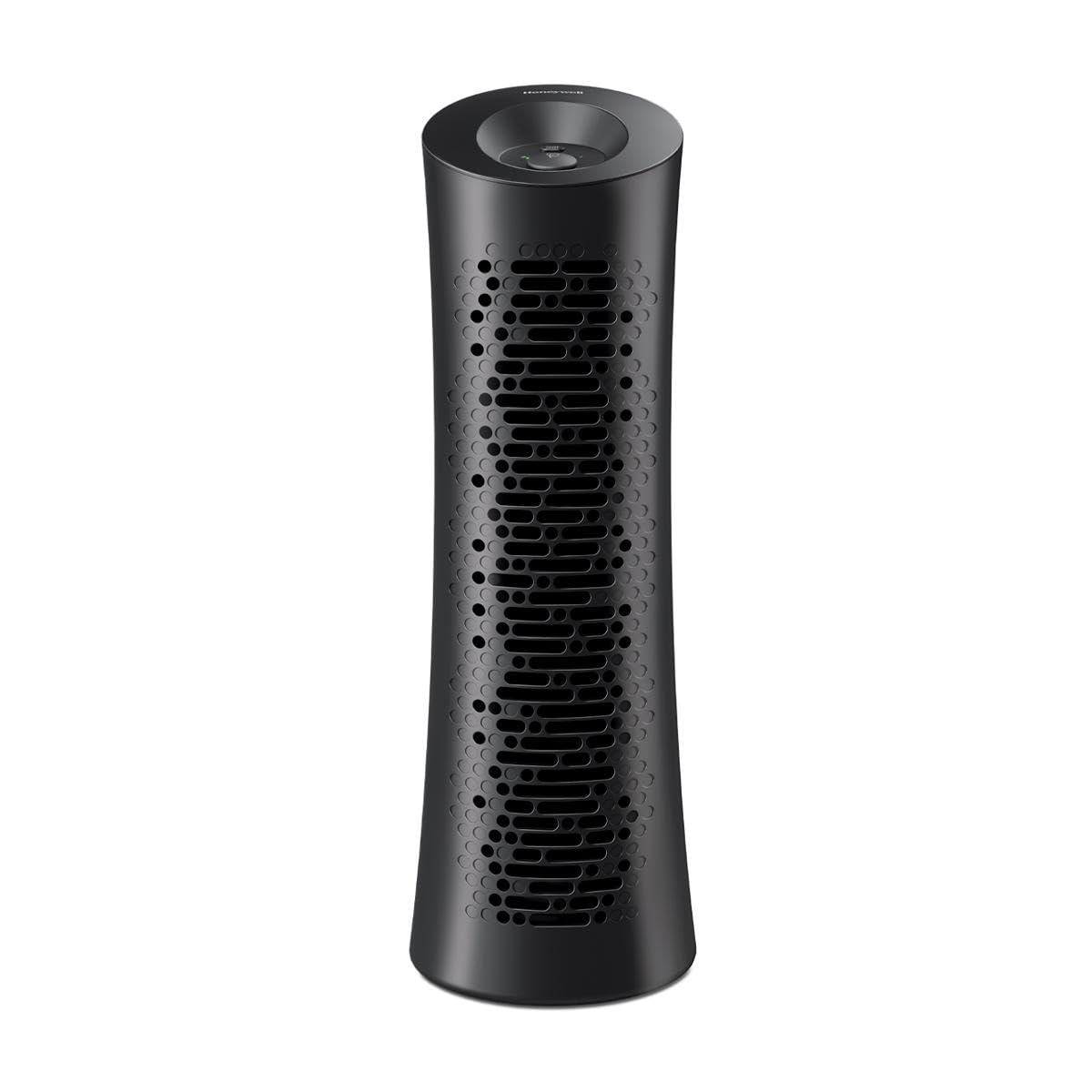
A plain tower that does the HEPA job without a single app
Not every damp room needs a sensor and a phone app. The HPA030 is a straightforward tower: four air cleaning levels on one-touch LED electronic controls, an automatic filter replacement indicator, and a true HEPA filter rated to capture up to 99.97% of particles as small as 0.3 microns. That list includes dust, pollen, pet dander, smoke, and mold spores by name — the exact lineup you are trying to clear out of a musty spare room or a small office.
Coverage is stated for medium to large rooms at 150 square feet, and Honeywell rates the unit to filter and circulate the air in that space up to 5 times an hour. That turnover rate is the number that actually matters for mold, because spores regrow in humid air and you want them cycled out repeatedly rather than once. It stands 26 inches tall and weighs 10 pounds, a slim tower that fits against a wall without dominating a small room.
Air quality is what owners praise most, with build quality close behind — and musty smells are the specific odor people call out as improved, which lines up exactly with a damp-room use case. The mixed feedback lands on noise: it is quiet on the lowest setting, and a little loud above that. Value and reliability draw a split verdict too. Treat it as a dependable HEPA tower for a 150 sq ft room, not a silent bedside unit — the upper fan speeds are audible.
Why it fits a spare room: four manual speeds and a filter light mean zero setup friction — plug it in, pick a level, walk away.
The honest limit: it is built for a 150 square foot space, so it will not carry an open-plan floor, and the upper fan settings are audible.
Reach for this if: you want a no-app, no-sensor HEPA tower for a small bedroom, office, or laundry-room-adjacent space.
Pass if: your mold problem spans a large open area or you need library silence at high fan speeds.
6. Aurora AR100W Air Purifier for Mold, Smoke, Dust, Odors, Pollen, Allergens
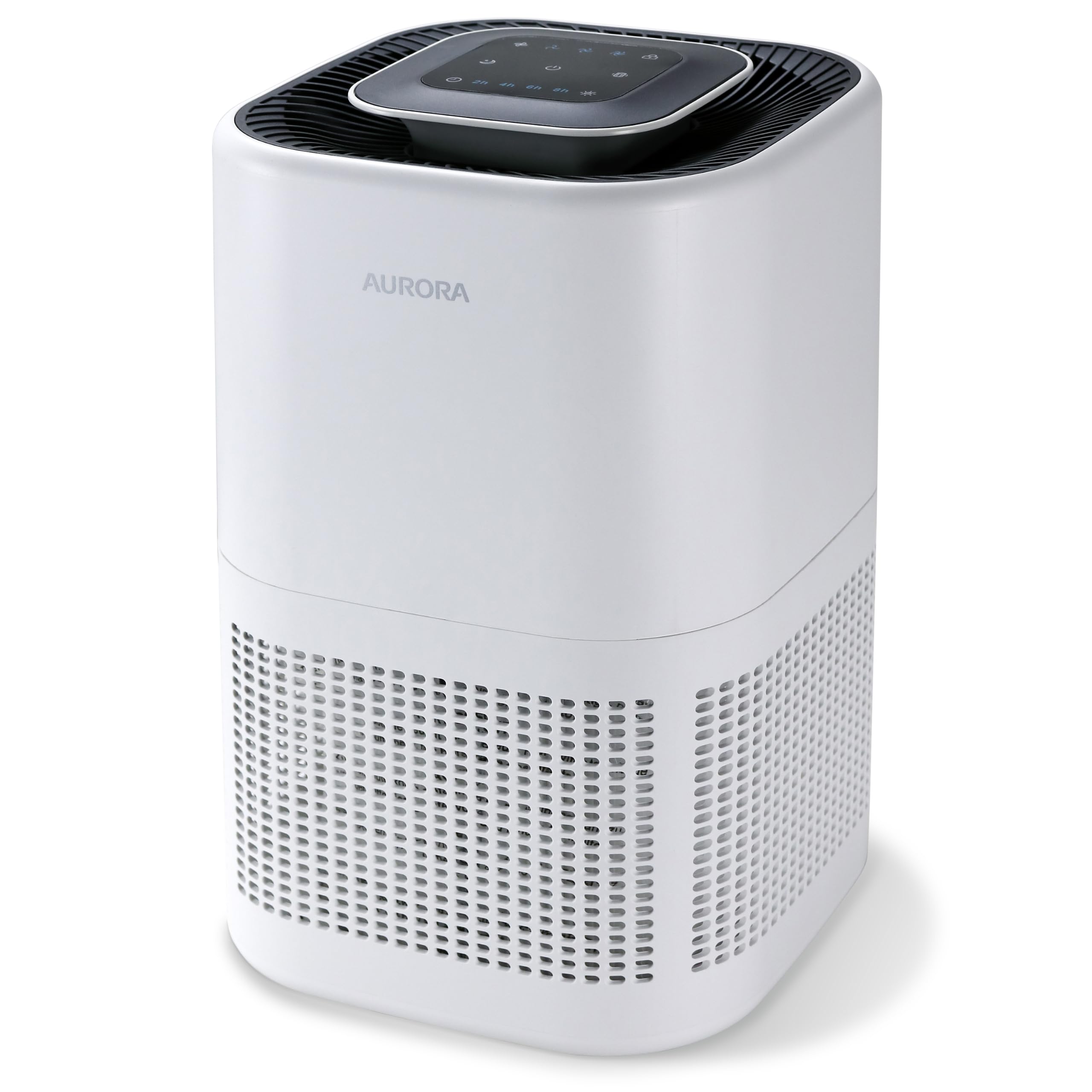
Mold named right on the box, in a body you can actually move
Here is the entry point for a first purifier, and it does not dance around the problem. Mold is listed first among the contaminants the 3-stage system targets, alongside allergens, germs, dust, pet dander, pollen, odors, and cigarette smoke. The filtration is rated to remove 99.97% of airborne particles as small as 0.3 microns — the same benchmark the far pricier units here claim — which is the number that matters when you are chasing spores.
It is also the lightest pick on this page at 6.8 pounds, and that 6.8 pounds against the WINIX’s 13.3 is the kind of gap you feel when you carry it up a staircase or move it between rooms. Certification comes from FCC, TUV, CARB, and EPA, and replacements use the Aurora AR10F filter. The catch is that the listing is newer, so there is less owner history to lean on than the big names carry — and the 1,100 ft² figure is a single pass per hour, so a genuinely damp room will need the higher fan speeds.
What makes it the value pick
- Mold explicitly listed among the particles the HEPA layer targets
- 24 dB sleep mode with a light-off function for nurseries
- 6.8 pounds, easy to lift and reposition
- Seven-button panel puts fan speed, timer, and lock control in one place
Set expectations here
- 142 CFM is modest, so it suits small to medium rooms rather than a whole floor
- Newer to the market, with a shorter track record than the established brands
Made for: a first mold-focused purifier in a bedroom, nursery, or study where a light, simple unit wins.
Not for: a large humid basement that needs several air changes an hour.
7. LG PuriCare 360 Air Purifier with NanoFiber True HEPA
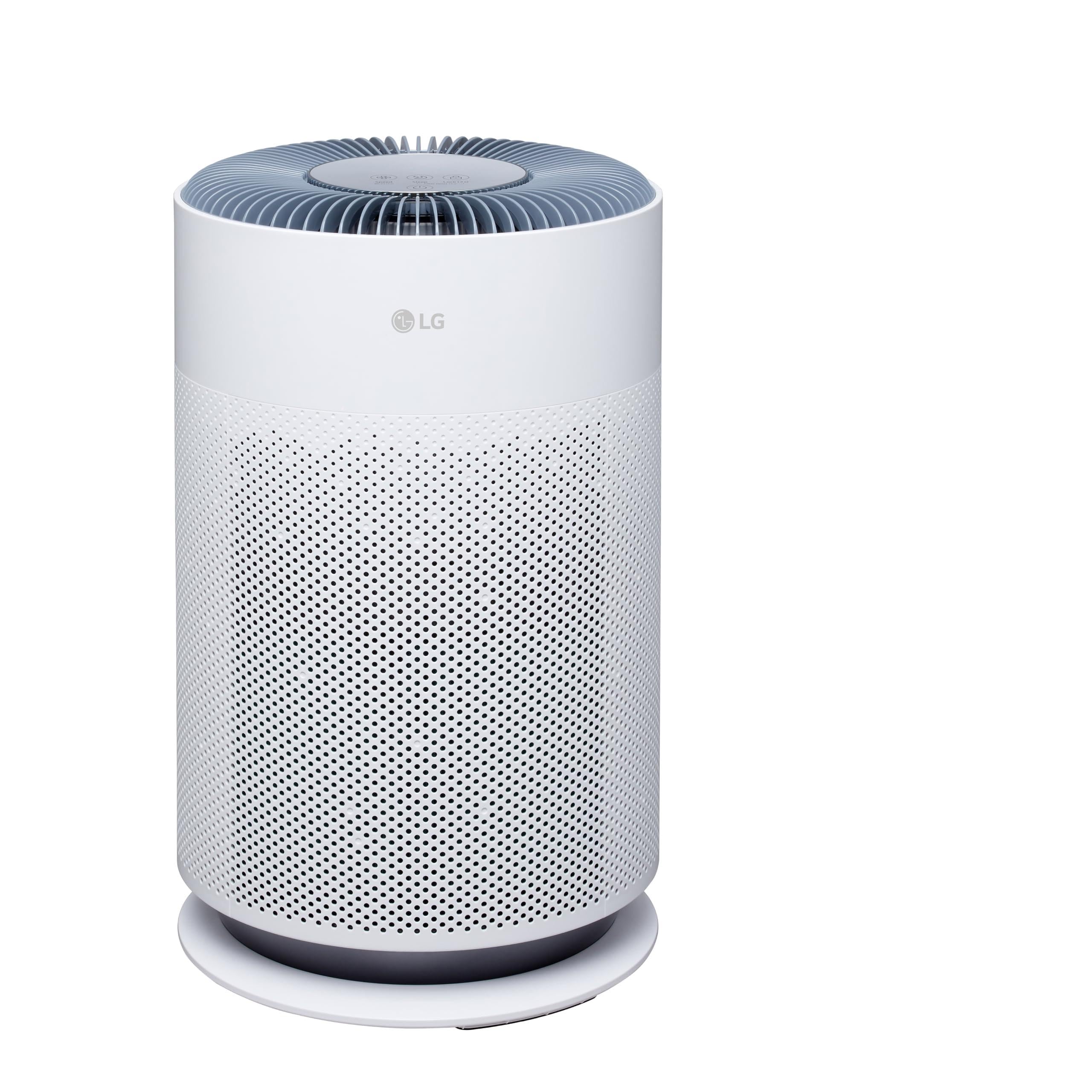
Pulls air from every direction, including the corner your old unit ignored
A purifier with a front intake can only clean the air it happens to face. The PuriCare 360 draws from all around its cylindrical body, which matters in a room where spores drift freely — a sofa blocks a front-facing grille, but it cannot block a 360-degree intake the same way. Rated coverage is 2,059 sq ft at one air change per hour, or 429 sq ft at 4.8 air changes per hour, so you can pick the turnover you need for a genuinely damp space.
The filter is a NanoFiber True HEPA, which traps on average 99.97% of particles 0.3μm in size. Two more layers support it: a removable pre-filter for larger particles and an activated carbon filter to keep the air smelling fresh. The sensor is the standout spec — it reads down to PM 1.0, meaning it detects particles as small as one micron, finer than the PM2.5 sensors on most units here. An LED ring on top shifts from red through orange and yellow to green as the air improves, so you can read the room’s status from across the floor.
WiFi and app control let you adjust settings remotely, and the feedback consistently points to strong performance and effective detection of air quality shifts, with quiet operation and a good-sized HEPA filter rounding out the praise. Airflow and app control both get their own mentions. The catch: 14.9 pounds in a 12.4-inch-wide footprint means it wants a dedicated floor spot rather than a shelf, and the 360 design only pays off if you place it out in the open rather than against a wall.
The engineering angle: PM 1.0 detection is a finer sensor than most competitors ship, so it responds to smaller particles, which is precisely the range where spores live.
Placement is everything: push this into a corner and you waste the 360-degree intake — it belongs in the middle of the room.
Worth it when: your room is open enough to place it centrally and you want the finest particle sensor here.
Rethink it if: you need a slim unit tucked against a wall or into a tight corner.
8. AIRDOCTOR AD2000 Air Purifier for Home, Bedroom/Nursery
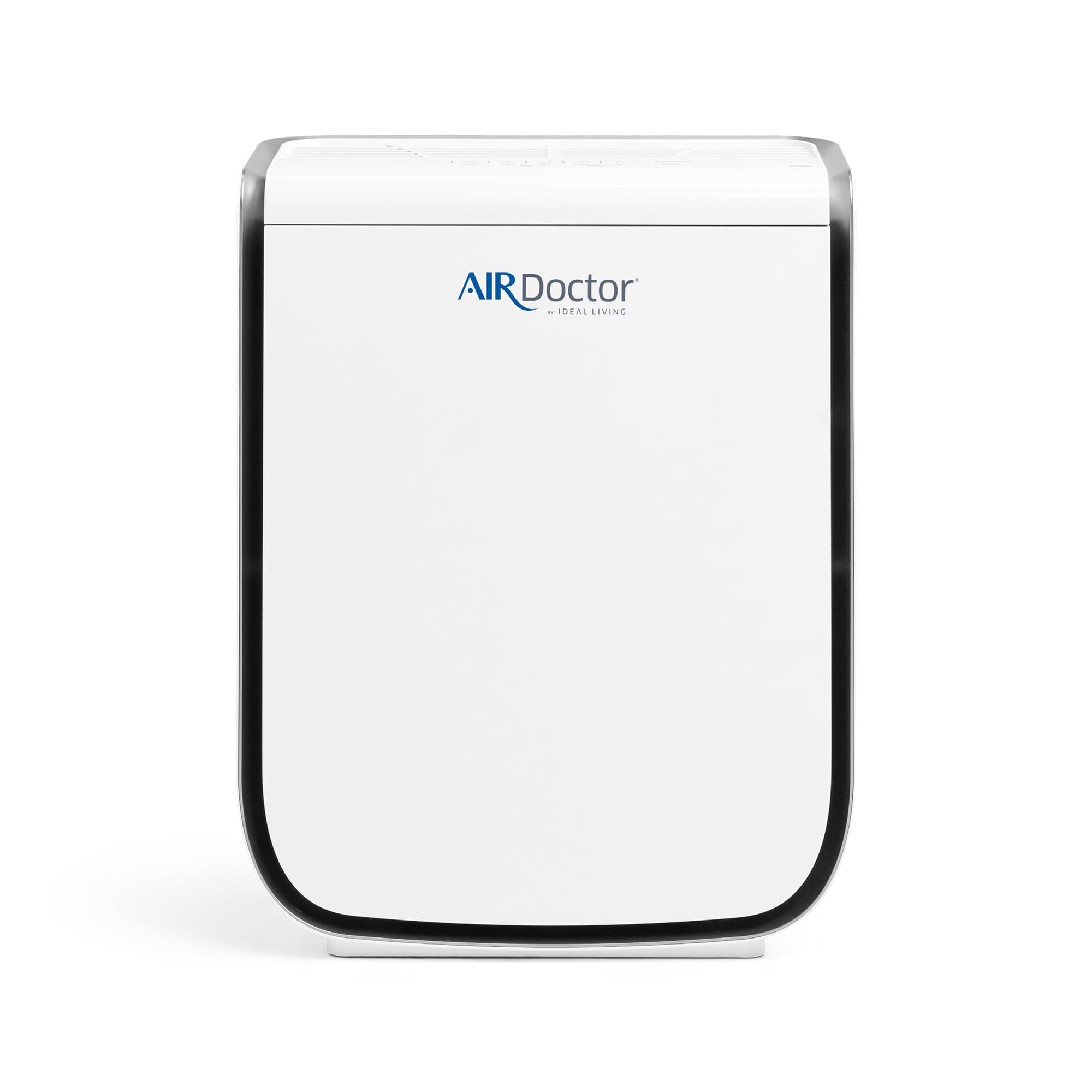
A filter spec built for the particles you cannot see
Standard true HEPA is rated to 0.3 microns. The AD2000’s UltraHEPA layer is rated to capture 99.99% of airborne particles at 0.003 microns, which is the finest capture figure on this page and the reason this unit commands its premium. Mold spores, dust, smoke, pet dander, bacteria, and viruses all fall on the removal list, and the 3-stage stack — pre-filter, premium activated carbon, UltraHEPA — is backed by third-party testing per the manufacturer.
Coverage is fast: it rapidly cleans 305 ft2 in 15 minutes and up to 1,220 ft2 in a single hour. Halo PM2.5 sensors monitor the air live and display color-coded quality levels, Auto Mode adjusts fan speed and triggers Boost when needed, and there are four fan speeds plus a timer and filter indicator. The carbon stage uses activated carbon with potassium permanganate to break down gases and airborne chemicals, aimed at cooking fumes, wildfire smoke, pet smells, and VOCs.
Build quality is what people praise most, with effectiveness a close second, and the noise level earns consistent approval for a unit this capable. The honest trade-off is running cost: value for money is the one place owners split, and the maintenance schedule is explicit — carbon every 6 months, UltraHEPA every 12 months. Filters must be genuine AirDoctor parts to keep the tested performance. It is also the lightest full-size unit here at 7.98 pounds against the AD3500’s 24, so it is easy to move between bedrooms.
Why the filtration stands out
- 99.99% capture at 0.003 microns, the finest rating in this group
- 1,220 ft2 in one hour, with 305 ft2 handled in 15 minutes
- Halo PM2.5 display with Auto Mode and a Boost setting
- 7.98 pounds, light enough to move between rooms
Costs to weigh
- Two filters on separate schedules — carbon at 6 months, UltraHEPA at 12
- Genuine filters only, which keeps running costs in the premium tier
The right call for: a nursery or bedroom where you want the smallest-particle capture available and do not mind premium filter costs.
Another route: if running costs rule, a HEPA-at-0.3-micron unit handles mold spores for less.
9. Shark NeverChange Air Purifier Max, HP301

The purifier that stops nagging you about replacement filters
The name is the pitch. Shark’s NeverChange filtration is built to cut out the filter-replacement treadmill, and the maker claims up to saved on replacement filters in the first 5 years compared with the cost of replacing filters on leading competitor units. If your mold problem means the media loads up fast, that claim is aimed squarely at you. A Debris Defense washable filter pulls in hair, dust, and dander before it ever reaches the HEPA layer — remove the screens and vacuum, wipe, or rinse them in seconds.
The filtration claim itself exceeds HEPA standards. Anti-Allergen NanoSeal is rated to trap 99.98% of large, small, and micro-sized particles, with the allergen note referring to non-living matter. Coverage reaches up to 1,300 sq. ft. in one hour, which suits a large bedroom, living room, or basement. CleanSense IQ shows your air quality adjusting in real time on the display, and — worth knowing — “Clean Air 100%” means airborne particle concentration is at or below the sensor’s detection limit, not that the air is entirely free of pollutants.
Performance and air quality dominate the feedback, with noise a solid third, and the auto mode earns genuine admiration for adjusting fan speed to conditions on its own. Dimmable lights keep sleep interruption low. The mixed note is value for money and, to a lesser degree, dust removal — this is a premium-tier unit and the feedback splits on whether the filter savings justify the outlay. The Odor Neutralizer cartridge releases a pleasant scent alongside its odor guard, which some buyers will love and others will not want in a bedroom.
The long-game argument: washable debris screens plus long-lasting HEPA means far fewer purchases over the life of the unit, which is where the savings claim comes from.
One design choice to note: the odor cartridge adds a scent to the room, so a fragrance-free bedroom setup is not what you get here.
Built for: households tired of buying filters every few months and willing to pay up front to stop.
Consider something else if: you want zero scent in the room or need the lowest entry cost.
10. BLUEAIR Air Purifiers for Home Large Room up to 3,385 Ft², Signature SP4i
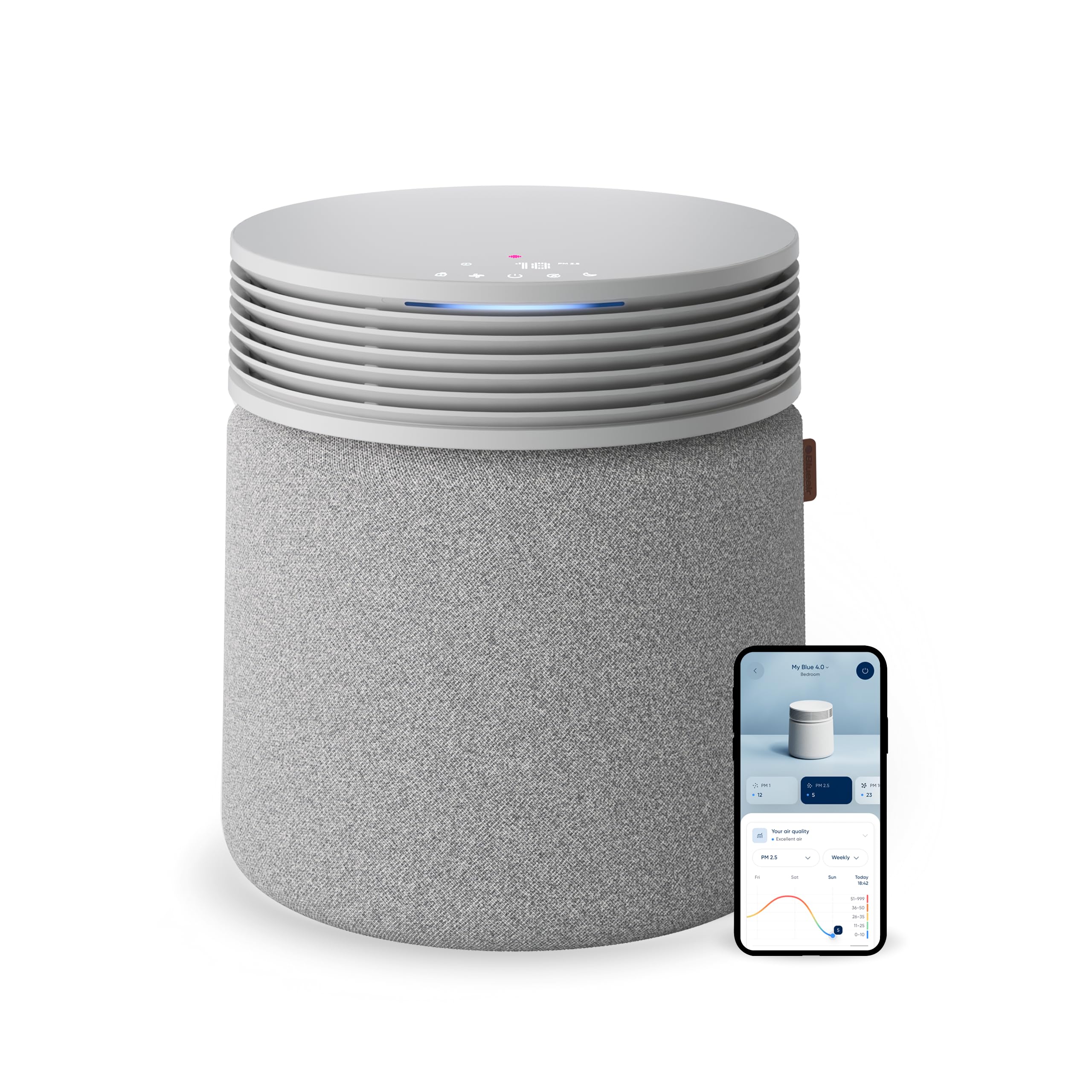
One box for the whole open floor plan, table included
Nothing else on this list touches the coverage figure. The SP4i cleans rooms up to 705 sq ft in just 12.5 minutes and 3,385 sq ft every hour, which is the sort of number you need for an open-plan kitchen and living space where damp air from one zone drifts into the next. If your mold issue is in a big, connected area rather than one closed bedroom, this is the unit sized for the job.
The filtration is a 7-stage HEPASilent system rated to capture 99.97% of airborne particles down to 0.3 microns, finer than the 0.3-micron HEPA standard, with OdorFence Technology working on odors, gases, and VOCs. A real-time air quality indicator sits built into the air outlet, showing pollution levels across 5 colors from excellent blue to poor red, plus a subtle animation while it cleans. Quiet operation reaches as low as 23 dB, and the Blueair app handles fan speed, schedules, and settings, with Auto Mode adjusting as indoor conditions change.
The design is genuinely furniture-grade — a modern body that doubles as a stylish side table, with interchangeable pre-filters available in a range of colors to match the room. Performance and air quality lead the praise, with design and odor removal right behind. The two mixed notes are noise on the higher settings and value, so know that this is a premium-priced machine that some buyers feel is overpriced for what it does. Set it in the open, switch on Auto Mode, and the side-table body blends into the room.
What the big numbers buy you
- 3,385 sq ft per hour, the largest coverage on this page
- 7-stage HEPASilent captures down to 0.3 microns
- 23 dB at its quietest, with 5-color air quality display
- Doubles as a side table and takes swappable color pre-filters
Trade-offs to accept
- Noise climbs noticeably at higher fan speeds
- Premium tier pricing that some owners question
Right for: big open-plan homes where a single stylish unit must cover a connected living and kitchen area.
Not right for: small bedrooms where the extra coverage would be wasted.
11. AIRDOCTOR AD3500 Air Purifier for Home, Medium/Large Rooms up to 2520 ft²

Floor-wide coverage and the same fine-particle filter as its smaller sibling
This is the AD2000’s bigger brother, and it keeps the feature that separates the AirDoctor line: UltraHEPA filtration rated to capture 99.99% of airborne particles at 0.003 microns. Dust, smoke, pet dander, and mold spores are all on the removal list, and a premium activated carbon stage with potassium permanganate handles toxic gases, odors, pet smells, cooking fumes, wildfire smoke, and VOCs. If you want one machine to cover a whole floor rather than a single room, this is where the coverage jumps.
It rapidly cleans 630 ft2 in 15 minutes and up to 2,520 ft2 in an hour, which is more than double the reach of the AD2000’s 1,220 ft2 hourly figure. Halo PM2.5 sensors monitor the room live with color-coded quality levels, Auto Mode adjusts fan speed and activates Boost when needed, and there are four fan speeds plus a timer and filter indicator. Maintenance follows the same schedule as the smaller unit — carbon every 6 months, UltraHEPA every 12 months, genuine filters only.
Build quality is the most-praised trait, followed by air quality, and the unit earns specific credit for odor removal and easy cleaning. The two mixed notes are value and noise, and on value it is easy to see why: this is the most premium unit here, and the filter schedule is a standing cost. At 24 pounds against the AD2000’s 7.98, it is a machine you position once and leave alone. For a large, humid lower floor where spores keep coming back, the coverage is worth the weight.
The coverage math: 2,520 ft2 in one hour with 99.99% capture at 0.003 microns is a serious combination for a big damp basement or a full open floor.
The honest trade-off: it is the heaviest and priciest pick on this page, and the reaction to its value is divided — this is a buy-once, budget-for-filters decision.
Choose it for: a large damp floor where one powerful unit beats several small ones, and premium filtration is the priority.
Think smaller if: you only need to clean one bedroom or you are not prepared for ongoing filter costs.
Understanding the Specs
CADR (Clean Air Delivery Rate)
CADR is the measured volume of filtered air a purifier pushes out per minute, quoted separately for smoke, dust, and pollen — the three particle types the AHAM test uses. A higher number means more air scrubbed per minute, so it cleans a room faster. For mold, the dust and pollen figures are the closest stand-ins for spore-sized particles, since spores behave much like dust in the air. Read CADR alongside the coverage figure, because a unit that cycles a room once an hour at a big number will not clean a damp space as effectively as one running several passes on a smaller room.
HEPA Particle Ratings and Micron Size
A micron is one millionth of a meter, and the smaller the particle size a filter claims, the more microscopic material it traps. True HEPA is tested to capture 99.97% of particles down to 0.3 microns, which covers most mold spores and the particles they ride on. A filter rated to 0.3 microns or to 0.003 microns is claiming a finer capture level than the HEPA standard, which is why those units sit in the premium tier. Look at what the rating covers, too — a HEPA layer handles the particles and a carbon layer handles the odors and gases, so a unit with only one of those is doing half the job in a musty room.
FAQ
Will a true HEPA air purifier actually remove mold spores from the air?
Do I need to fix the mold problem before buying an air purifier?
How often should I replace the HEPA filter in a mold-affected room?
Is a washable pre-filter worth having in a damp basement?
How quiet is quiet, and can a purifier run in a bedroom overnight?
Does a higher CADR always mean a better purifier for mold?
Should I size the purifier for one room or my whole home?
Does the carbon filter matter for mold, or is HEPA enough?
Is it safe to run an air purifier all night in a child’s room or nursery?
Will an air purifier help with damp-smell odors as well as spores?
Final Thoughts: The Verdict
For most homes fighting mold, the best air purifier for mold is the LEVOIT Core 400S-P, because it pairs genuine three-stage HEPA filtration rated to 99.97% at 0.3 microns with a live PM2.5 sensor and Auto Mode that reacts to your actual air — the crowd favorite here at 4.5+ stars across 17,000+ ratings. If speed in a large damp room is what you need, reach for the WINIX 5520 and its 1,882 sq ft hourly turnover at 23.5 dB. And for a whole open floor where the finest possible particle capture matters, the AirDoctor AD3500 covers 2,520 ft2 in an hour with UltraHEPA filtration. Whatever you choose, pick the filter grade first and the fan speed second — that is the order that actually clears spores.
How We Picked
We do not accept paid placement. Every pick is matched to a real buyer and a real use-case; we do not hands-on test units.
Sources & Methodology
Specifications: manufacturer listings and product documentation. Review insights: verified customer reviews, as of November 2026. Pricing: not shown on this page (it changes often); check the current price via the retailer link.
As an Amazon Associate, Gadgets Feed earns from qualifying purchases. This does not affect which products we feature.