
Nothing kills the satisfaction of finishing a painting, refurbishing a piece of furniture, or sealing a handmade gift quite like a spray that turns cloudy, yellows after a few months, or leaves an uneven, gritty texture. The final coat is what separates a project that looks “done” from one that looks professional — it is the difference between colors that pop and colors that look muted under a foggy layer.
I’m Min — the co-founder and writer behind Gadgets Feed. I have spent countless hours cross-referencing technical datasheets, customer application reports, and real-world spray patterns to identify which acrylic sealer sprays actually deliver on their crystal-clear, non-yellowing promises without clogging or frosting.
After methodically analyzing spray nozzles, drying times, finish consistency, and archival safety across seven competing formulas, I assembled this guide to the best acrylic sealer spray that balances protection with a flawless final look.
How To Choose The Best Acrylic Sealer Spray
Selecting the right sealer spray involves more than grabbing the glossiest can on the shelf. Factors like UV resistance, chemical composition, and nozzle atomization determine whether your finish looks like a gallery piece or a science experiment gone wrong. Pay close attention to these three areas before you commit.
Finish Type: Gloss, Satin, or Matte
The sheen level dictates the final visual character of your work. Gloss formulas amplify color depth and contrast, making them ideal for abstract paintings and high-impact craft pieces. Matte finishes reduce glare and hide surface imperfections, which miniature painters and photorealism artists prefer. Satin splits the difference, offering mild reflection without the full shine of gloss.
Chemical Base: Water-Based vs. Solvent-Based Aerosol
Water-based sealers clean up with soap and water, produce low odor, and generally resist yellowing over time. However, they can raise the grain of raw wood and require careful brushing to avoid streaks. Solvent-based aerosol sprays dry faster and lay down a more uniform film on vertical surfaces, but the strong fumes demand ventilation, and some formulations contain VOCs that may interact with underlying paint layers.
Application Method and Nozzle Quality
A precise, clog-resistant nozzle makes the difference between a smooth, self-leveling coat and a splattered mess. Look for sprays that atomize the liquid into a fine mist — wide, uneven droplets lead to pooling, orange-peel texture, and frosty patches. Good spray sealers also allow the user to clear the nozzle by inverting the can and spraying after each use, extending the can’s life significantly.
Quick Comparison
On smaller screens, swipe sideways to see the full table.
| Model | Category | Best For | Key Spec | Amazon |
|---|---|---|---|---|
| Mont Marte Gloss Acrylic Varnish | Water-Based Gloss | Brush-on application on canvas | 250 ml (8.5 fl oz) | Amazon |
| Minwax Polycrylic Protective Finish Spray | Water-Based Aerosol | Sealing painted wood surfaces | 11.5 oz aerosol | Amazon |
| GRANOTONE Clear Coat Acrylic Varnish | Liquid Varnish Pair | Decoupage and mixed-media crafts | 100 ml (3.3 fl oz) each | Amazon |
| Vallejo Acrylic Matt Varnish Spray | Premium Matte Aerosol | Wargaming miniatures and models | 400 ml (13.52 fl oz) | Amazon |
| Grumbacher Picture Matte Varnish | Artist Matte Spray | Oil and acrylic canvas paintings | 11.25 oz can | Amazon |
| Plaid Clear Acrylic Sealer (Matte) | Budget Matte Aerosol | Multi-surface craft projects | 12 oz can | Amazon |
| Plaid Clear Acrylic Sealer (Gloss) | Budget Gloss Aerosol | High-shine craft and decoupage | 12 oz can | Amazon |
In‑Depth Reviews
1. Grumbacher Picture Matte Varnish

Grumbacher’s matte varnish is formulated specifically for fine-art oil and acrylic paintings, with a removable feature that allows conservators to strip the coating using pure gum spirits of turpentine. The spray produces a fine, even mist that levels without orange-peel texture, and the matte finish deadens surface glare completely without introducing a hazy white cast.
The 11.25-ounce can covers approximately 8 to 10 medium-sized canvases, and the formula requires a 5-day cure for acrylic paintings before application. Users consistently report that two thin coats, allowed to dry overnight between passes, transform uneven gloss patches into a uniform, gallery-ready matte surface that still allows the underlying brushwork to read clearly.
Be aware that the mist is aggressive — several reviewers note the fine particles can travel and settle on nearby electronics or furniture, so outdoor application or a dedicated spray booth is strongly recommended. The odor is also notably strong and persists for a day or two, making ventilation non-negotiable.
Why it’s great
- Removable with turpentine for archival conservation
- Produces a uniform matte with zero sheen variation
- Thin coats self-level without pooling
Good to know
- Strong solvent odor requires outdoor ventilation
- Fine mist can drift onto nearby surfaces
2. GRANOTONE Clear Coat Acrylic Varnish (2-Pack)

This kit from GRANOTONE gives you both a gloss and a matte varnish in 100-milliliter bottles, which is a smart approach if your projects switch between high-shine decoupage and flat-finish mixed media. The liquid formula is water-based, non-toxic, and anti-crazing, meaning it won’t crack or spiderweb over paint layers that haven’t fully settled.
Users applying this over acrylic-painted Christmas ornaments and decoupage projects report that the clarity is exceptional — no ambering or clouding after drying. The gloss bottle delivers a deep, wet-look shine that makes colors pop, while the matte side produces a velvety surface with near-zero reflection. Both dry quickly enough to allow a second coat within about twenty minutes.
Because these are brush-on rather than spray, you get more control over coverage on small or intricate items, but you also risk visible brush strokes if the application is rushed. The included components are just the two bottles, so you will need to supply your own clean brush or sponge for each finish type.
Why it’s great
- Two finishes in one affordable pack for versatility
- Non-yellowing and anti-crazing formula
- Very low odor compared to aerosol options
Good to know
- Brush-on format can leave visible strokes on large flat areas
- 100 ml bottles go fast on big projects
3. Vallejo Acrylic Matt Varnish Spray

Vallejo is a dominant name in the model-painting world, and this matte varnish spray is built specifically to protect primed wood, metal, resin, and plastics — the standard materials found in wargaming miniatures and scale models. The 400-milliliter can holds roughly four times the volume of a typical craft spray, making it a cost-effective choice for anyone sealing armies of figures.
The formula dries to a flat, non-reflective finish that resists UV yellowing and develops strong scratch resistance once fully polymerized. Users report that the spray pattern is uniform and the atomization is fine, but the material comes out noticeably wet — heavy passes or spraying above 50 percent humidity can produce frosted patches or temporary gloss. A light dusting from about 40 centimeters is the technique that delivers the best matte result.
One trade-off is that the Vallejo spray darkens the underlying paint slightly, enriching saturation and deepening shadows, which modelers generally appreciate but fine-art painters may find undesirable. Also, the nozzle can be difficult to clear completely, so soaking it in warm water between extended sessions is a common user fix.
Why it’s great
- Excellent volume-to-value ratio for heavy users
- Genuine flat matte with strong scratch resistance
- Works on plastics and resin without etching
Good to know
- Wet spray pattern risks frosting if applied too heavily
- Darkens paint slightly, which may alter intended hues
4. Minwax Polycrylic Protective Finish Spray
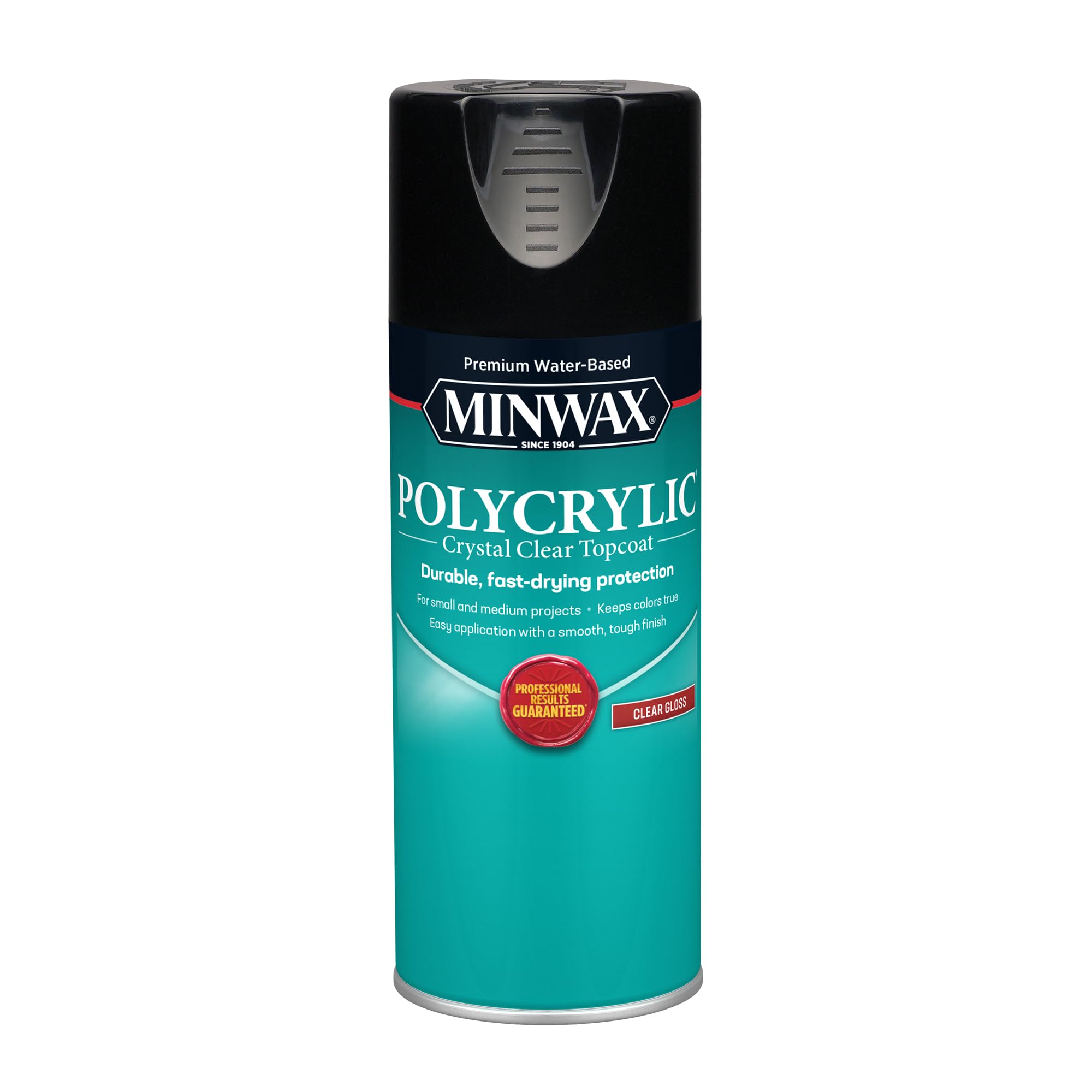
Minwax is a household name in wood finishing, and the Polycrylic spray brings a crystal-clear, water-based gloss designed specifically for interior wood projects. It applies as a fine mist that dries quickly enough to allow recoats after just one hour, and the non-yellowing formulation is ideal for light woods like maple and ash where ambering would ruin the natural tone.
This spray covers roughly 100 square feet per can, making it practical for furniture-sized projects. Users praise the smooth, self-leveling application when the can is shaken thoroughly and the nozzle is kept clean, but the nozzle itself is the weak point — several reviews mention pooling and droplet slinging when the tip isn’t cleared after each use. Inverting the can and spraying until clear gas comes out resolves this completely.
The formula has very little odor as far as aerosol sealers go, which makes it tolerable for indoor use with light ventilation. However, it is not suited for raw, unsealed wood that might absorb the water base unevenly — a pre-coat of shellac or a wood conditioner is recommended in those cases to avoid a raised grain finish.
Why it’s great
- Fast-drying with a 1-hour recoat window
- Crystal clear gloss that resists yellowing on light woods
- Low odor for an aerosol sealer
Good to know
- Nozzle clogs easily if not cleared after every session
- Water-based formula can raise wood grain on raw surfaces
5. Mont Marte Gloss Acrylic Varnish Signature

Mont Marte’s Signature varnish is a brush-on liquid that lays down a thick, self-leveling gloss coat dries to a transparent, high-shine finish in roughly 30 minutes. The water-based formulation is non-toxic when wet, making cleanup simple with soap and water, and the included brush allows immediate application straight from the bottle — no additional tools required.
Artists who have used both spray and brush varnishes consistently report that this Mont Marte product reveals fine details that spray versions obscure, because the liquid settles into brush texture rather than sitting on top of it. The gloss is deep and mirror-like, and the film hardens into a permanent layer that resists dust and light degradation over years of display.
The main issue reported is packaging fragility — several customers received bottles that broke during shipping, which suggests the glass or plastic container could use better protective packaging. Additionally, brush application takes more practice than spraying; users who rushed their coats ended up with visible drag marks or bubbles that did not self-level completely.
Why it’s great
- Thick gloss finish reveals hidden paint detail
- Dries to a hard, archival permanent film
- Mild odor and simple water cleanup
Good to know
- Bottle can arrive damaged due to thin packaging
- Brush strokes and bubbles require careful application to avoid
6. Plaid Clear Acrylic Sealer (Matte)

Plaid’s matte acrylic sealer is a staple among crafters for good reason — the 12-ounce can delivers a reliable, consistent matte finish across wood, metal, canvas, and terra cotta surfaces without breaking the budget. The spray dries to a crystal-clear, non-reflective coating that protects against minor scuffs and dust accumulation, and the formula cures fast enough to handle within minutes.
Users have successfully applied this sealer over oil pastels, painted rocks, and even finished Longhorn skulls, reporting that the spray pattern is strong and even with no sputtering. The matte finish is a true satin-to-flat sheen that does not leave a chalky white residue, provided the can is shaken thoroughly and the ambient humidity stays below 60 percent.
The most consistent complaint is the strong solvent odor — this is not a low-fume formula, and using it indoors without a respirator or heavy ventilation is not advisable. Several reviewers also mention that the spray can be somewhat aggressive out of the nozzle, requiring a light hand and a distance of at least 8 to 10 inches to avoid pooling on small pieces.
Why it’s great
- Reliable matte finish without white residue
- Works on multiple surface types including canvas and terra cotta
- Budget-friendly with consistent quality
Good to know
- Strong fumes require outdoor or well-ventilated application
- Spray can be too heavy for small, delicate items
7. Plaid Clear Acrylic Sealer (Gloss)

The gloss version of the Plaid sealer delivers a shiny, wet-look finish that transforms flat acrylic paint into a vibrant, polished surface. Like its matte sibling, it comes in a 12-ounce aerosol and works across wood, metal, canvas, and terra cotta, making it a versatile option for crafters who want a consistent brand across finish types.
Users have used this gloss sealer on decoupage projects, painted rocks, and even automotive touch-ups, noting that the gloss level is deep without looking plasticky. The spray dries clear and hard within minutes, and the finish prevents peeling or chipping on flexible surfaces like craft foam or paper mache. Multiple thin coats build up to a durable, reflective layer.
The same strong odor and nozzle sensitivity apply here — this is not a gentle spray, and drips can cause visible discoloration if not wiped and re-sprayed immediately. Additionally, the gloss finish accentuates every imperfection in the underlying paint job, so any brush strokes, dust specks, or uneven layers become more obvious after sealing.
Why it’s great
- High-gloss finish that makes colors pop
- Durable coating prevents peeling and scratching
- Fast-drying with quick coat stacking
Good to know
- Drips leave permanent marks if not corrected immediately
- Gloss highlights surface imperfections and dust nibs
FAQ
Can I use acrylic sealer spray over oil-based paint?
How long should I wait between coats of acrylic sealer spray?
Why does my acrylic sealer look white or frosty after drying?
Final Thoughts: The Verdict
For most users, the best acrylic sealer spray winner is the Grumbacher Picture Matte Varnish because its archival removability and dead-flat finish suit serious artists who value conservation and presentation quality. If you want a versatile 2-bottle kit for mixed finishes on crafts, grab the GRANOTONE Clear Coat Varnish Pack. And for high-volume miniature sealing on a budget, nothing beats the Vallejo Acrylic Matt Varnish for sheer coverage and model-specific protection.