
Our readers keep the lights on and my morning glass full of iced black tea. As an Amazon Associate, I earn from qualifying purchases.
Specs are compiled from manufacturer listings and verified buyer reviews and can change over time — please confirm the key details on the product page before buying.
Your engine’s age and the viscosity grade (the oil’s thickness rating, like 5W-30) in your owner’s manual decide which motor oil you should buy. Match both and almost any full synthetic here keeps your engine clean and quiet. Mismatch them and you waste money on an oil change that protects poorly. The nine oils below are ones real owners keep re-buying, sorted so you can pick in minutes rather than hours.
I’m Min — the founder and writer behind Gadgets Feed. This guide is built by comparing the manufacturers’ published specifications and the patterns across verified customer reviews, so you get each pick’s real strengths and trade-offs instead of marketing spin.
You will see how high-mileage formulas differ from standard synthetics, what the numbers on the bottle actually mean, and which grade suits a turbocharged engine versus an older one. The top pick holds 4.5+ stars across 10,000+ owners. Read on for the plain-English breakdown of the automotive motor oils worth putting in your crankcase.
Our Picks at a Glance
How To Choose The Best Automotive Motor Oils
Two decisions do almost all the work here: the viscosity grade stamped in your owner’s manual, and whether your engine has crossed the mileage line where seal conditioners start to matter. Everything else — brand loyalty, bottle shape, marketing claims — is secondary. Nail those two and the rest of the label is just detail.
Start With The Viscosity Grade, Not The Brand
A grade like 5W-30 is two numbers in one. The 5W is the cold-flow number — the lower it is, the more easily the oil moves when you turn the key on a frosty morning. The 30 is the thickness at running temperature, and it has to match what your engine was built for. Putting 0W-20 in an engine spec’d for 5W-30 changes how the oil film behaves under load, and no amount of premium branding fixes that. Check the manual or the oil cap first, then shop.
Standard Synthetic Versus High-Mileage Synthetic
High-mileage oils carry seal conditioners — additives that help older rubber seals stay pliable so they grip better and weep less. They also tend to pack extra detergents to lift deposits out of an engine that has been around a while. If your odometer is past the point where the maker recommends the high-mileage formula, that bottle is the smarter buy. On a newer engine, a standard full synthetic leaves more headroom for the long drain intervals the manufacturer guarantees.
Read The API And ILSAC Line On The Back
The API service category (something like API SP) and the ILSAC spec (like ILSAC GF-6A) are the compatibility stamps that tell you the oil meets a recognized industry baseline. Modern turbocharged engines lean on these to control low-speed pre-ignition, a knock that can damage a small boosted motor. If the back label lists the spec your manual asks for, you are covered. If it doesn’t, keep looking — this is the one shortcut you should never take.
Quick Comparison
| Model | Best For | Viscosity | Volume | Type | Amazon |
|---|---|---|---|---|---|
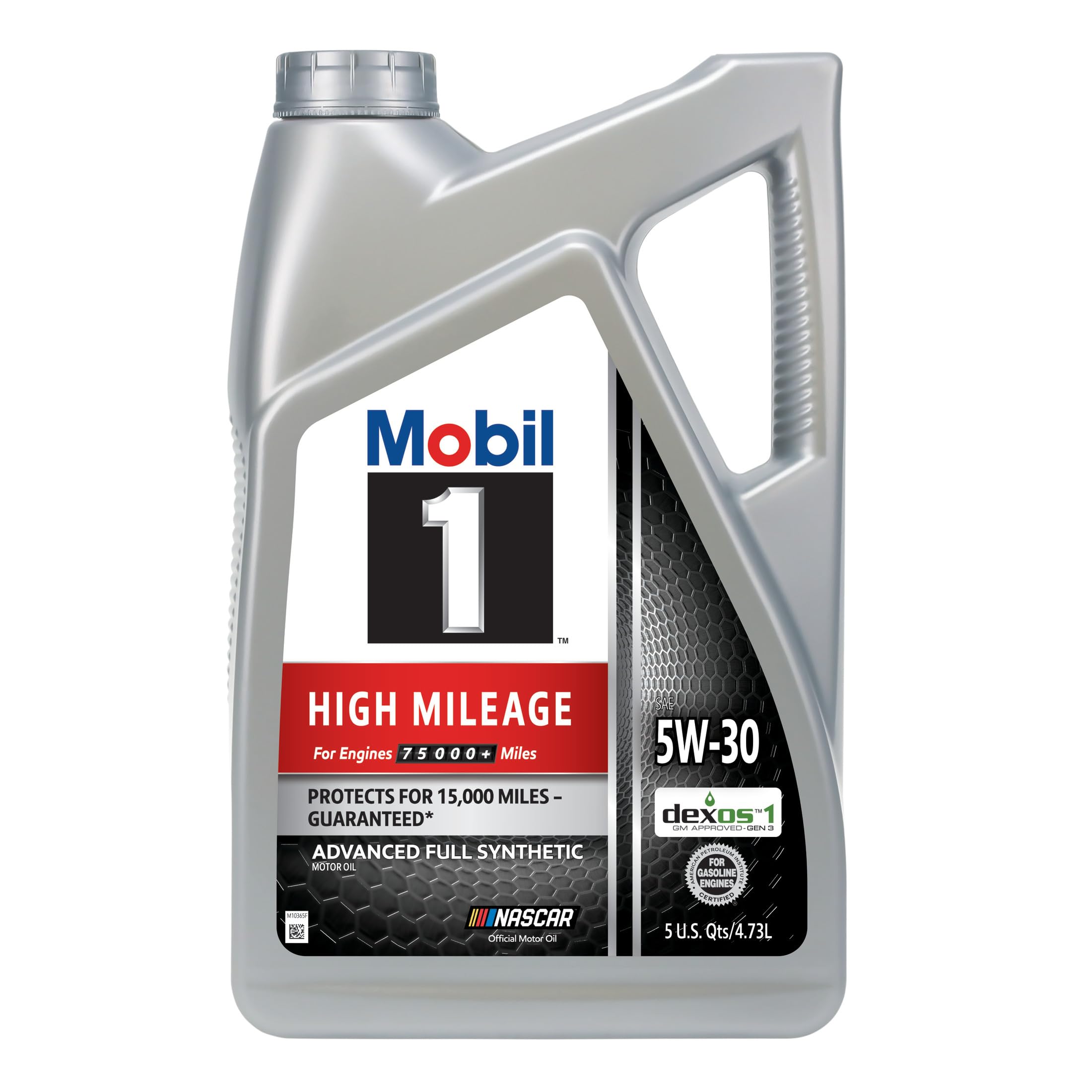
| Mobil 1 High Mileage Full Synthetic 5W-30★ Best Overall | Engines past 75,000 miles | 5W-30 | 5 Quart | Full Synthetic | Amazon |
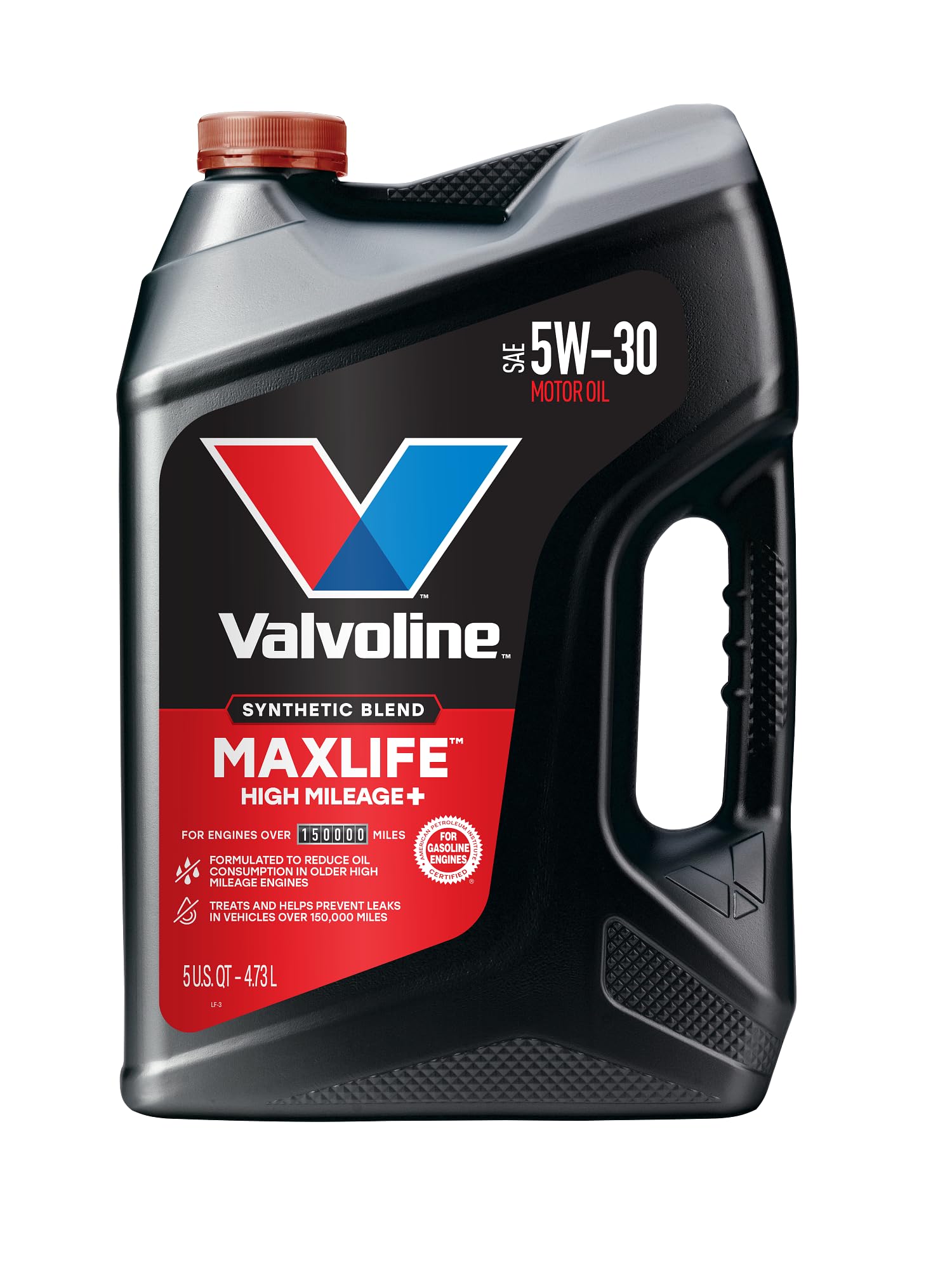
| Valvoline MaxLife High Mileage+ 150K 5W-30Best for Leaks | Leaky, high-mileage engines | 5W-30 | 5 quarts | High Mileage Synthetic | Amazon |
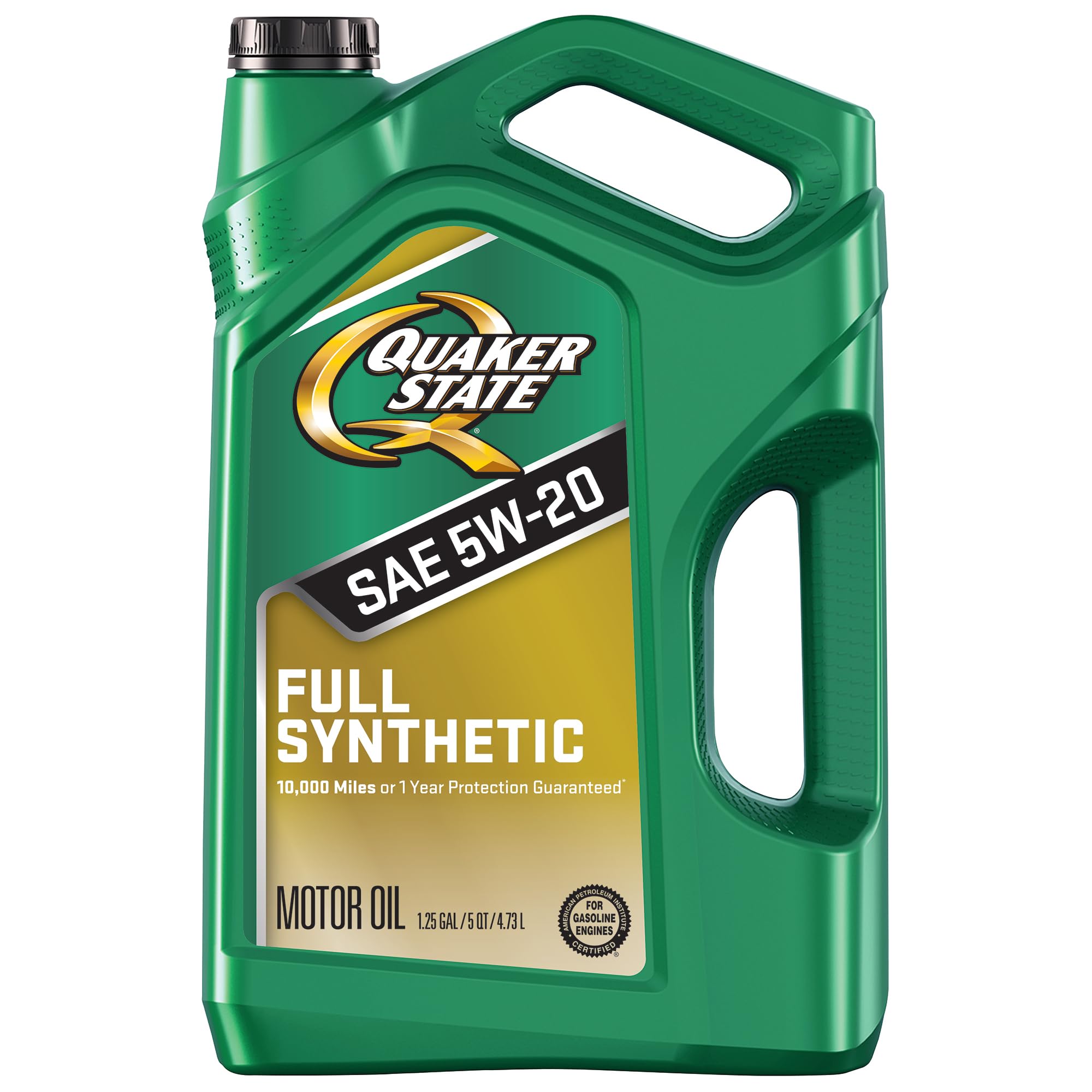
| Quaker State Full Synthetic 5W-20Best for Turbos | Turbocharged and performance engines | 5W-20 | 5 Quart | Full Synthetic | Amazon |
| Castrol EDGE 5W-30 Advanced Full Synthetic | Long drain intervals and hard driving | 5W-30 | 5 quarts | Advanced Full Synthetic | Amazon |
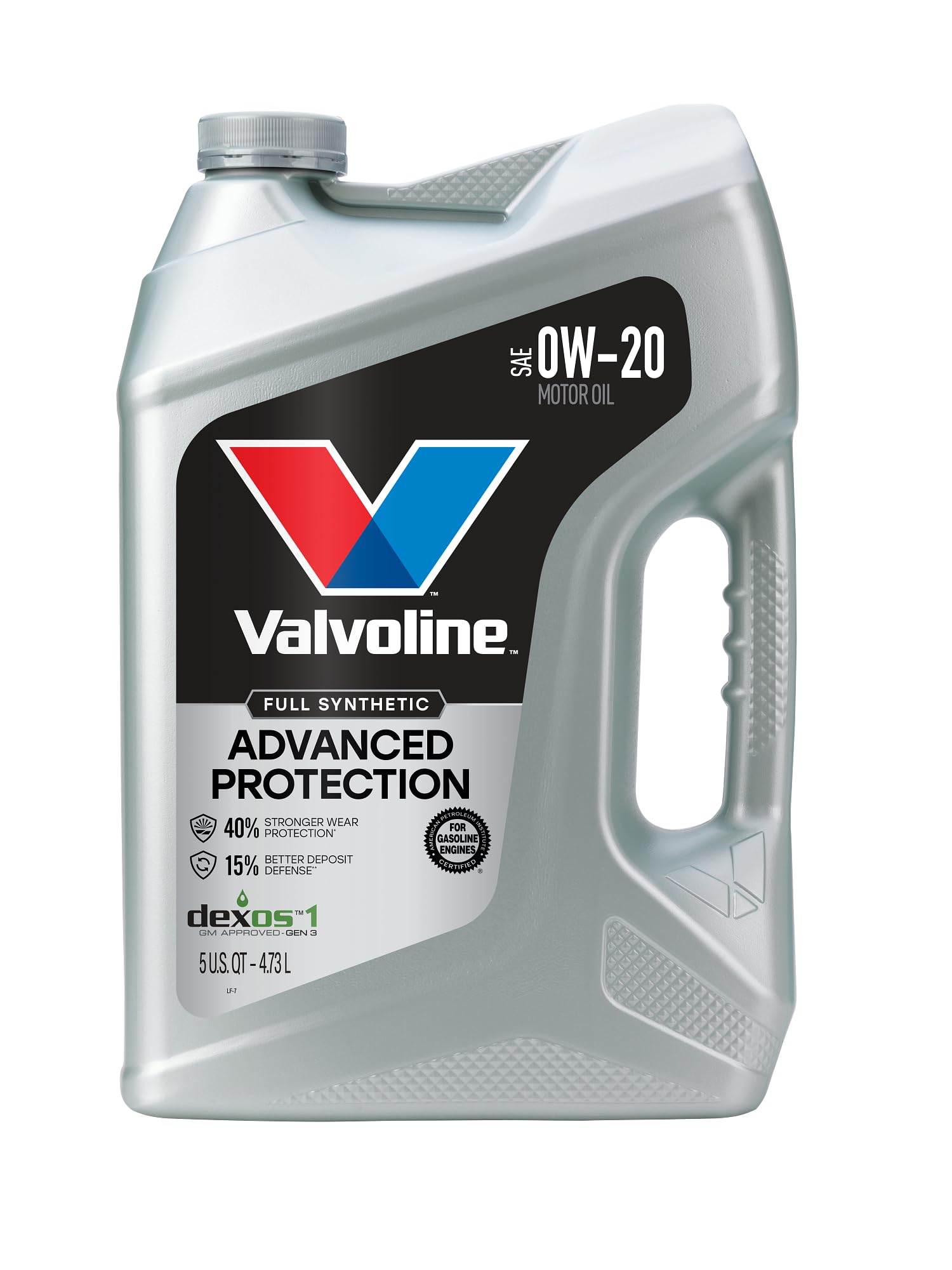
| Valvoline Advanced Full Synthetic 0W-20 | Cold-climate cold starts | 0W-20 | 5 quarts | Full Synthetic | Amazon |
| Mobil 1 Advanced Fuel Economy 0W-20 | Hybrids and mileage chasers | 0W-20 | 5 Quart | Full Synthetic | Amazon |
| Quaker State Full Synthetic 0W-20 | Everyday modern engines | 0W-20 | 5 Quart | Full Synthetic | Amazon |
| K&N 5W-30 Synthetic Engine Oil | All-weather protection | 5W-30 | 5 qt | Full Synthetic | Amazon |
| Pennzoil Platinum High Mileage 5W-30 (6 Pack) | Stocking up for high-mileage engines | 5W-30 | 6 x 1 Quart | High Mileage Full Synthetic | Amazon |
In‑Depth Reviews
1. Mobil 1 High Mileage Full Synthetic Motor Oil 5W-30, 5 Quart
Our pick — 4.5+★ from 10,500+ verified ratings; the strongest balance of quality and price.
The one that made the whole high-mileage category a real decision — a guaranteed 15,000 miles between changes.
Mobil 1’s 15,000-mile guarantee is the number that separates this bottle from the field. That is a manufacturer-backed drain interval, not a suggestion, and it means fewer Saturdays under the car for anyone doing highway miles. The other key figure is the 75,000-mile threshold: this oil is built for an engine that has earned some wear, with additives included to help fight the sludge that builds where old oil breaks down.
What keeps people buying it is simply how the engine behaves afterward. The most-discussed trait is quality, and the second is performance — the kind of feedback that comes from a motor running clean and quiet rather than any one clever additive. Owners describe engines that feel like new again and run smoothly all the way to the next drain. Mobil also lists a seal conditioner among the highlights, which is the piece that matters on an older motor where rubber seals have stiffened.
The honest catch is that this is not the bottle for a new engine. High-mileage oils lean on seal conditioners, and some owners point out those additives can swell seals slightly, so you want them when the seals are already aged, not fresh. Match it to a 5W-30 engine and it delivers.
Where it earns its keep
- 15,000-mile drain guarantee means fewer changes per year
- Built for engines at 75,000 miles and beyond
- Sludge-fighting additives for an engine with history
- Buyers report smoother running and better fuel economy
Worth knowing first
- Not the right formula for a brand-new engine
- 5W-30 only — check your manual before ordering
Reach for this if: your odometer is past 75,000 miles and you want long gaps between oil changes.
Pass it over if: the manual calls for a different viscosity or your engine is still fresh.
2. Valvoline MaxLife High Mileage+ 150K 5W-30 Motor Oil 5 Quart
Built for the engine that has already seen 150,000 miles — and the drip tray under it.
Where the Mobil 1 above starts at 75,000 miles, Valvoline aims this one at the 150,000-mile territory, where oil consumption and a spot of seepage become the daily reality. The formula is loaded with seal conditioners — additives that help old, hardened rubber seals stay supple so they grip better and weep less. If your car marks its parking spot, this is the bottle in the line-up built specifically to address that.
Owners talk about running older, tired engines well past what they expected. A 230,000-mile Toyota that ran better after the change gets passed around as the kind of result people are chasing, and the broader pattern is engines that quiet down and stop burning through oil quite so fast. Valvoline also claims 10% better wear protection than industry standards along with 15% stronger sludge defense — both maker figures, both worth knowing, neither a substitute for your manual. The flash point of 394 °F tells you it holds up before it vaporizes, which matters on a hot-running older motor.
Noise is where the feedback splits. Some engines tap and rattle as before, so do not buy this expecting a worn valve train to go silent. Treat any quieting as a bonus, not a promise.
Who this fits: the owner of a well-used 5W-30 engine who wants the leaks and oil burn to slow down a little.
The honest gap: it cannot undo mechanical wear, and owners still hear high-mileage engine noise afterward.
Right call for: 150,000-mile-plus engines dealing with seeping seals and rising oil consumption.
Look elsewhere if: your engine is newer or already runs clean and quiet.
3. Quaker State Full Synthetic 5W-20 Motor Oil, 5-Quart
The long-warranty pick for a turbocharged motor that wants a thinner 5W-20 film.
Quaker State backs this one with a warranty of up to 10 years or 300,000 miles, provided you keep feeding the engine only its oil. That is a serious commitment for a full synthetic, and it is the standout figure on the label. The 5W-20 grade suits engines built for a thinner oil film — modern turbocharged motors and the higher-performance end of the SUV and truck world.
The formula meets GM dexos1 Gen 3, Ford WSS-M2C960-A1, and Chrysler MS-6395, so a good span of domestic turbos are covered out of the gate. Owners cite quality as the reason they keep coming back, with value close behind — a full synthetic that does not ask for premium-brand money. It resists oxidation, which is what keeps the oil fresher between changes, and it is built to protect against deposit formation on the way.
The one spec you must respect is the grade. If your cap reads 5W-30, this 5W-20 is the wrong call, turbo or not, and the warranty only covers engines run on this exact viscosity. Fast enough to settle the choice.
The number to remember: a warranty stretching to 10 years or 300,000 miles when this oil is used exclusively.
Check before you buy: 5W-20 is thinner than 5W-30, so only 5W-20 engines qualify for the coverage.
Made for: turbocharged 5W-20 engines where a 10-year or 300,000-mile warranty is the deciding factor.
Not your bottle if: your manual calls for a 5W-30 or another grade.
4. Castrol EDGE 5W-30 Advanced Full Synthetic Motor Oil, 5 Quarts

The longest drain figure on this list — 20,000 miles between changes on a 5W-30.
You can go 20,000 miles or one year, whichever comes first, between changes with Castrol EDGE — that is the interval Castrol states for this oil, and it is why this bottle earns its spot for anyone doing serious mileage. Castrol also claims viscosity breakdown resistance (how well the oil keeps its thickness under heat and stress) measured at three times the leading full synthetic and ten times better high-stress performance. Both are maker figures from Castrol’s own tests, and both point to an oil built to stay thick under load.
What owners value is the headroom. The engine holds up over the long drain, the oil meets GM dexos1 Gen 3 along with the Ford and Chrysler specs listed, and it keeps small engines running cleanly from the GMC Acadia 3.1L to the F150. Owners also flag that it satisfies the VW 502 00 standard, which widens the fit to a lot of European engines. The flash point of 230 °C is the highest on this list, meaning the oil tolerates heat before it thins, which is the trait that matters when you push a motor hard.
Go in knowing the trade-off: a 20,000-mile interval assumes you follow the maker’s conditions and do not ignore a warning light. It is a long leash, not a free pass on maintenance.
Why owners keep buying it
- 20,000-mile interval — the longest on this list
- Viscosity holds up under heat; 230 °C flash point
- Broad approvals including GM dexos1 Gen 3 and VW 502 00
- Full synthetic performance at a mid-range price
Before you pour
- The long interval depends on following the maker’s guidance
- 5W-30 grade only — confirm before ordering
Take this one: if you drive a lot of miles and want the longest gap between oil changes available here.
Think again if: your engine needs a different viscosity or you change oil far more often than the interval allows.
5. Valvoline Advanced Full Synthetic SAE 0W-20 Motor Oil 5 QT
A winter-first formula that flows fast from a cold start and quiets down once warm.
Valvoline engineered this one for the worst minutes of your engine’s day: the cold start, when thick oil has not yet reached the metal and most wear happens. The 0W number is the cold-flow half of the grade, and low-temperature flow is exactly what this formula is built to deliver. Pair that with a flash point of 200 °C and you have an oil that moves quickly on a freezing morning and holds together when the engine is hot.
The maker’s claims are focused on defense: 40% stronger wear protection, 15% better deposit defense, and up to 2.5X better heat protection than industry standards. Owners describe a car that runs better than before and feels smoother than Mobil 1 at the wheel, and several single out its cold-weather performance. The oil meets ILSAC GF-7A, API SQ, Ford WSS-M2C962-A1, Chrysler MS-13340, and GM dexos 1 Gen 3, so most 0W-20 engines are covered.
The one thing to weigh is fit. Some owners note leakage or oil consumption, which usually traces back to an engine with tired seals rather than the oil itself. On a newer, tight 0W-20 engine it is a strong match.
The winter argument: a 0W-20 formula with 40% stronger wear protection built for the cold-start window.
Where it can fall short: reports of leakage on older, tired engines suggest the seals are the real issue, not the formula.
Best matched to: a cold-climate 0W-20 engine that starts hard in winter and wants smoother running when warm.
Skip if: your engine is older and already losing oil.
6. Mobil 1 Advanced Fuel Economy Full Synthetic Motor Oil 0W-20, 5 Quart
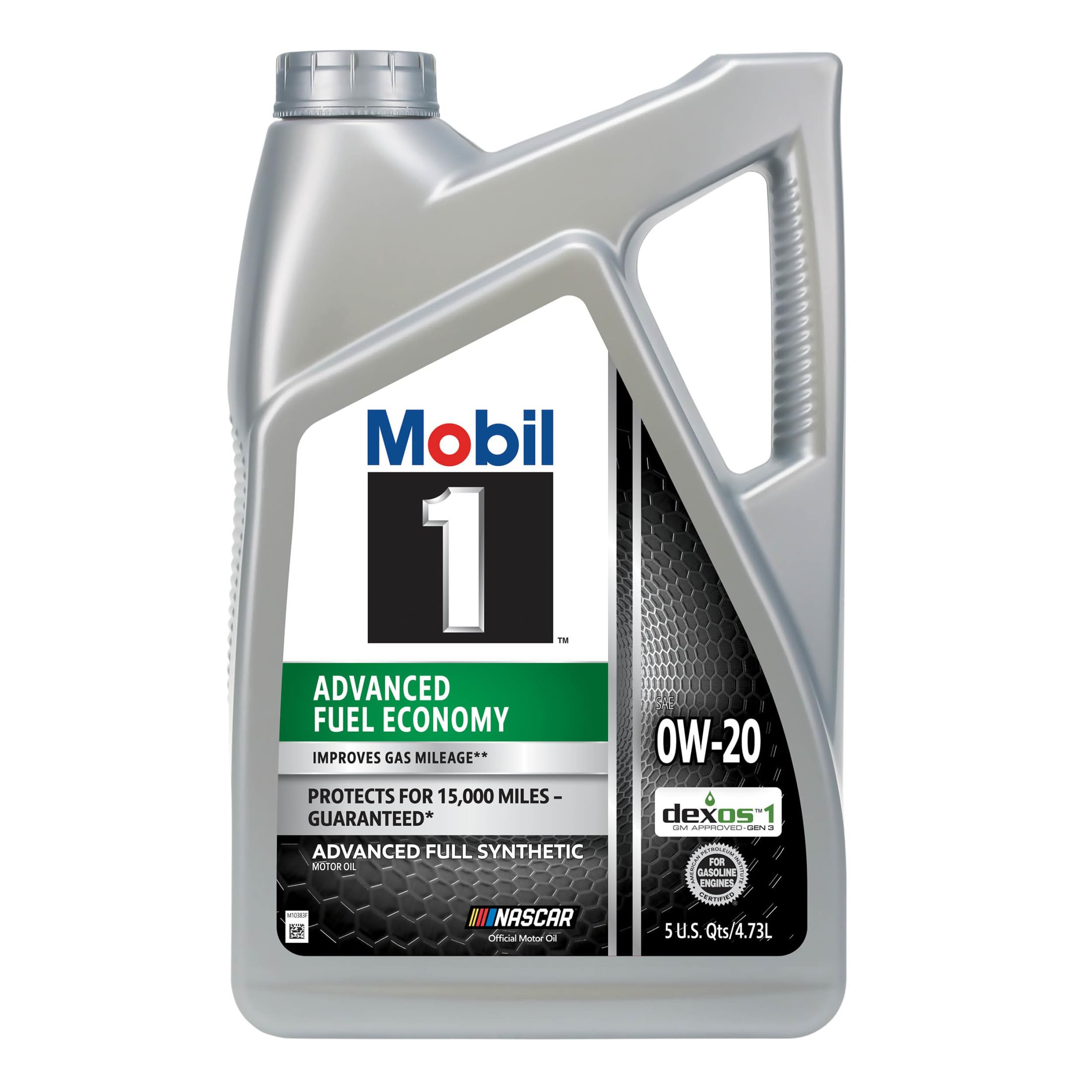
The mileage chaser that happens to suit hybrid engines — a 0W-20 built to trim fuel use.
Fuel economy is the headline promise here. Mobil 1 designed this 0W-20 to improve gas mileage, and owners mention it delivering at the pump. It protects for 15,000 miles under the same guarantee that backs the Best Overall pick, and it is listed as suitable for hybrid vehicles — a detail that matters as more 0W-20 hybrids fill driveways. It also carries Mobil’s usual additives to fight sludge.
The strongest feedback centers on performance across a wide set of cars, from the Honda CRV to a 2011 Camry SE, with smooth flow even on a cold start. Owners also like that it meets Toyota and Honda specifications, which removes the guesswork for a huge share of Japanese-engine drivers. The flash point of 224 °C shows it stays stable in a hot running motor. If your goal is a quieter, more efficient commute, this is the bottle built for that brief.
One caution: fuel-economy gains are real but modest, and the 0W-20 grade only fits engines specified for it. Put it in a 5W-30 motor and you lose the benefit entirely.
What it does well
- Improves gas mileage, with 15,000-mile protection guaranteed
- Listed as suitable for hybrid vehicles
- Meets Toyota and Honda specs, per owners
- Sludge-fighting additives protect the long haul
Worth a thought
- 0W-20 only — a 5W-30 engine gains nothing
- Fuel savings are modest, not dramatic
Choose it when: you run a 0W-20 hybrid or efficiency-minded car and want to shave fuel costs.
Not for you if: your engine calls for 5W-30 or you drive mainly short, cold trips.
7. Quaker State Full Synthetic 0W-20 Motor Oil, 5 Quart

The same 10-year Quaker State warranty, now in a 0W-20 grade for modern engines.
This is the 0W-20 twin of the 5W-20 Quaker State above, and it shares the headline protection: a warranty of up to 10 years or 300,000 miles when you use only this oil. Owners rate quality as the reason they stay, with value right behind — a full synthetic that keeps maintenance costs low without a premium-brand surcharge. The 0W-20 grade suits a range of modern engines.
What owners prize most is trouble-free running. It performs quietly and repeatedly, never causing the engine problems that send people searching for a different product. The formula meets GM dexos1 Gen 3, Ford WSS-M2C962-A, and Chrysler MS-6395, and it resists oxidation to stay fresher between changes. If you are looking to hold a modern engine on a reliable, economical diet, this is the sensible choice.
The niche it does not fill is the high-mileage one. There are no seal conditioners listed here, so an older, oil-burning engine gets more benefit from the high-mileage bottles higher up.
The value case: a 10-year or 300,000-mile warranty on a 0W-20 full synthetic that owners keep coming back to.
Missing piece: no seal conditioners, so it is not the pick for an older engine losing oil.
A good fit for: a modern 0W-20 engine on a tight maintenance budget.
Move up if: your engine has passed high mileage territory and needs seal protection.
8. K&N Motor Oil: 5W-30 Synthetic Engine Oil, 5 qt, 104102

For the driver who sees summer heat and a January cold snap in the same month.
K&N’s pitch is that weather should not dictate how the oil behaves. This 5W-30 is built to keep the engine running smooth in both cold and hot conditions, using the brand’s SyntaMax additive package to protect critical components as temperatures swing. The formula aims at the two things that shorten an engine’s life quietly: contaminants and sludge buildup.
Owners describe the results simply — the engine runs better and the oil holds up. That is the short version, and for a full synthetic it is the version that counts. K&N lists reduced wear and tear among the promises, and the 4.73-liter fill is a full change for most four-cylinder engines. The brand’s name travels further here than some others, so if you already trust K&N for filtration, the matching oil makes a tidy pair.
The honest gap is proof. This is a newer entry with a smaller track record than the big-volume bottles above, so if you want years of owner history behind a choice, the Mobil 1 or Castrol are safer bets.
In its favor: a 5W-30 formulated to run smooth through both cold snaps and summer heat.
Worth weighing: a shorter track record than the established bottles on this list.
Pick it for: a 5W-30 engine in a climate that throws both extremes at it, from a brand you already know.
Go established instead if: you want a long history of owner feedback behind the choice.
9. Pennzoil Platinum High Mileage Full Synthetic 5W-30 Motor Oil, 1 Quart (6 Pack)

Six single quarts instead of one jug — topped up and stocked up for an older engine.
This one arrives as a six-pack of one-quart bottles, which changes how you use it. A 5-quart engine change takes five of the six, leaving a quart in the trunk for top-ups — the exact habit a high-mileage engine asks for. That packaging pairs naturally with what is inside: a full synthetic built for vehicles past 75,000 miles, with the same 15,000-mile protection guarantee as the label’s bigger-format siblings, and proven to help stop leaks on those older motors.
Pennzoil also makes a cleanliness claim — pistons kept cleaner than required by the toughest industry standard, based on Sequence IIIH results — and says the formula delivers less oil burn-off than high-mileage oils made from crude oil. It lists faster low-temperature flow and protection in extreme heat, plus approvals including Chrysler MS-6395 and Ford WSS-M2C961-A1. If you want the case for a well-used engine kept tidy and leak-free, this packaging makes it easy to stay on schedule.
Small-format bottles cost more per quart than a single jug, so convenience is the premium you pay. For a second car or a top-up-dependent old engine, that trade can still make sense.
The case for the six-pack
- One-quart bottles suit a 5-quart change plus a top-up
- 15,000-mile protection guarantee built into the price
- Proven to help stop leaks past 75,000 miles
- Cleaner pistons than the toughest industry standard requires
Trade-offs you accept
- Costs more per quart than one large jug
- Six individual bottles take more shelf space
Suits you if: you keep a high-mileage 5W-30 engine topped up and want the oil ready on the shelf.
Not worth it if: you change oil in one go and prefer the single-jug format.
Understanding the Specs
The Viscosity Grade (5W-30, 0W-20)
The first number is the winter half — how thick the oil is when cold. A lower number flows sooner at startup, so 0W reaches the moving parts faster than 5W on a freezing morning. The second number is the running-temperature half — the thickness once the engine is warm. Put simply, 0W-20 suits engines built for a thinner film, while 5W-30 suits ones designed for a slightly thicker one. Match the grade to your manual, not to what is left on the shelf.
API And ILSAC Specifications
These are the letters and codes on the back label — API SP or ILSAC GF-6A, for example — that certify the oil meets an industry baseline for things like deposit control and wear protection. They matter most for modern turbocharged engines, where the wrong spec can allow harmful low-speed pre-ignition. The rule is simple: find the spec your owner’s manual names, and confirm the bottle lists it. Extras like GM dexos1 Gen 3 or VW 502 00 simply widen which engines the oil is approved for.
Drain Intervals And Guarantees
The mileage figure a maker puts on a bottle — 15,000 miles, 20,000 miles — is the length of time the oil is guaranteed to protect, or one year, whichever comes first. It is a ceiling, not a target. Short trips and stop-and-go traffic wear oil faster, so treat the manufacturer’s number as the maximum you can trust. The Quaker State bottles go a step further with a warranty covering up to 10 years or 300,000 miles on the engine when you use only that oil.
Seal Conditioners And High-Mileage Formulas
Once an engine passes a certain age, rubber seals stiffen and can weep. A high-mileage oil adds seal conditioners to help those seals stay supple, plus extra detergents to lift away deposits. That is what makes a bottle like Valvoline MaxLife appropriate for a 150,000-mile engine while leaving a newer one to a standard full synthetic. If your car leaves a spot on the driveway or burns a little oil, look for the high-mileage label. If it runs clean, the extra additives are simply not needed.
FAQ
Is full synthetic motor oil worth it over conventional oil?
What does 5W-30 actually mean on the bottle?
How often should I change full synthetic motor oil?
Can I mix high-mileage oil with regular synthetic oil?
What is the difference between 0W-20 and 5W-30 oil?
Does high-mileage motor oil really stop leaks?
Will motor oil void my warranty if I use the wrong spec?
How much oil does a typical four-cylinder engine take?
Is a hybrid engine safe to run on the same motor oil?
Do I need a high-mileage oil at 75,000 miles?
Final Thoughts: The Verdict
For most drivers, the Mobil 1 High Mileage Full Synthetic 5W-30 is the winner: it pairs a 15,000-mile guarantee with a formula aimed at engines past 75,000 miles, and its 4.5+ star rating across 10,000+ owners backs that up. That means one high-mileage oil change can last you a year. If you drive a lot and want the longest gap between changes, the 20,000-mile Castrol EDGE is the better match. For an older engine weeping oil at 150,000 miles, reach for the Valvoline MaxLife with its seal conditioners (additives that help keep old seals soft). Any of the three will treat your engine right — just confirm the viscosity grade in your manual before you buy.
How We Picked
We do not accept paid placement. Every pick is matched to a real buyer and a real use-case; we do not hands-on test units.
Sources & Methodology
Specifications: manufacturer listings and product documentation. Review insights: verified customer reviews, as of November 2026. Pricing: not shown on this page (it changes often); check the current price via the retailer link.
As an Amazon Associate, Gadgets Feed earns from qualifying purchases. This does not affect which products we feature.