
Our readers keep the lights on and my morning glass full of iced black tea. As an Amazon Associate, I earn from qualifying purchases.
Specs are compiled from manufacturer listings and verified buyer reviews and can change over time — please confirm the key details on the product page before buying.
Buying a balance bike is mostly a bet on one thing: whether the seat will still fit your child in six months. The picks below all have a seat or handlebar that moves, and each one is built for a slightly different kid and a slightly different stage.
I’m Min — the founder and writer behind Gadgets Feed. This guide is built by comparing the manufacturers’ published specifications and the patterns across verified customer reviews, so you get each pick’s real strengths and trade-offs instead of marketing spin.
You will see seat height ranges, weight limits, and tire types laid out plainly, so you can match a bike to your child’s inseam rather than guess. The result is a short, honest shortlist for the best adjustable balance bike.
Our Picks at a Glance


How To Choose The Best Adjustable Balance Bike
Most balance bikes fail for one boring reason: the seat stops fitting. A child grows an inch or two, the saddle bottoms out or tops out, and suddenly the bike is too small to glide on. Adjustability is the feature that decides how many seasons you get.
Start With Inseam, Not Age
Age ranges on the box are rough guesses. What actually matters is whether your child’s feet can sit flat on the ground while they are on the saddle. Measure the inside leg from crotch to floor, then compare that to the seat’s lowest and highest setting.
Some bikes publish that fit directly. The Strider 12 Pro, for example, fits children with a 12–18 in. inseam. Others, like the bicystar 14 Inch, size their seat to a 13.5″–22″ inseam. Use that number first and everything else second.
Match The Tire To Your Ground
Tires set the ride feel. Foam and EVA tires are airless, so they never go flat, and they roll quietly on hardwood. Air-filled rubber tires grip loose gravel and grass better but can puncture.
If your child rides mostly on pavement or inside the house, airless is the lower-maintenance call. If your rides happen on gravel paths or uneven ground, real air tires are worth the extra care.
Read The Weight Limit As A Build Signal
The maximum weight recommendation tells you something about how beefy the frame is. A bike rated to 110 pounds is built very differently from one rated to 40 pounds. For a toddler, either works, but the higher rating often points to a sturdier feel.
Quick Comparison
| Model | Best For | Seat Height Range | Weight Limit | Tire Type | Amazon |
|---|---|---|---|---|---|
| Retrospec Cub★ Best Overall | First-timers aged 18 months to 3 years | 11 to 14.5 inches | 50 pounds | Airless, puncture-proof | Amazon |
| Bobike Toddler Balance BikeBudget Champion | Quick-assembly budget pick | Adjustable (range not listed) | 40 pounds | Not listed | Amazon |
| SEREED Toddler Balance BikeTop Performer | Heavier toddlers and long growth | 11.8 to 16.5 inches | 110 pounds | EVA foam | Amazon |
| Liberry Baby Balance Bike | New walkers aged 12 to 24 months | 9.7 to 11 inches | 55 pounds | EVA tires | Amazon |
| KRIDDO Toddler Balance Bike | Older toddlers ready to glide | 14.17 to 18.5 inches | — | Puncture-proof 12-inch | Amazon |
| Radio Flyer Steady Start | Least wobbly first rides | Adjustable (range not listed) | — | Treaded wheels | Amazon |
| bicystar 14 Inch | Gravel and grass riding | 13 to 21 inches | 110 pounds | Rubber air tires | Amazon |
| Retrospec Baby Beaumont | Style-minded toddlers on pavement | From 13 inches | — | Air-filled cushioning | Amazon |
| Strider 12 Pro | Long-haul use and hand-me-downs | 11 to 17 inches | — | Foam rubber, never-flat | Amazon |
In‑Depth Reviews
1. Retrospec Cub Toddler Balance Bike for Ages 18 Months – 3 Years – 12in No-Pedal Beginner Bicycle with Adjustable Seat, Puncture-Proof Tires & Safe Low Frame Design
Our pick — 4.5+★ from 600+ verified ratings; the strongest balance of quality and price.
The confidence builder that puts small feet flat on the ground from day one.
The seat on the Retrospec Cub moves from 11 to 14.5 inches, and that low starting point is the whole point. A toddler who can plant both feet on the floor feels in control from the first push. The quick-release handlebars move too, so the cockpit grows as your child does.
What seals it for beginners is the tire choice. These are airless, puncture-proof tires, which means no flat to fix and no pumping to do before a ride. They roll on pavement, grass, and dirt paths without complaint. The frame is alloy steel at 10 pounds, rated to 50 pounds of rider weight, with rounded edges and non-slip grips.
The build holds up to real toddler abuse — the frame and wheels take the bumps that come with learning, and parents report kids gliding unassisted within about two weeks. The one fit note: at 10 pounds, this is the heaviest pick here against the Liberry’s 5 pounds, so the smallest riders may need a hand at first.
What earns it first place
- Airless, puncture-proof tires mean zero flat-fixing and zero pumping.
- Rounded edges and a low center of gravity keep early wobbles manageable.
- Quick-release handlebars extend the usable life by a season or more.
Where it asks a little more
- 10 pounds is on the heavier side for a toddler to wrestle solo.
- Rated to 50 pounds, so bigger four-year-olds will outgrow the weight rating before the seat tops out.
Go for it: households with a 1-to-3-year-old who needs both feet flat on the ground right now.
Pass if: your child is already near 50 pounds or riding hard and wants a taller 14-inch frame.
2. Bobike Toddler Balance Bike Toys for 2 to 5 Year Old Girls Boys Adjustable Seat and Handlebar No-Pedal Training Bike Best Gifts for Kids
The lowest-cost way to put a toddler on two wheels without tools or fuss.
Assembly takes minutes and the tool kit is in the box, so this is the pick for a parent who wants the bike ready before nap time ends. The Bobike carries both an adjustable seat and adjustable handlebars, which is rare at the entry tier.
You can split the middle steel section apart, so carrying it outdoors or stashing it in a car takes less effort. The steel frame stays steady on paved paths and sidewalks. Size and long-term durability are where it gets murkier: a fair share of little ones fit it well at two years old, while other buyers report it runs small and wears faster than expected with heavy use.
Treat it as a starter bike that gets your child gliding cheaply, and it delivers. Treat it as a bike that survives four years and three kids, and you may be disappointed.
The honest read: the low weight rating and smallish sizing point to a bike for the early toddler years, not the whole 2-to-5 window on the label.
Smart buy for: a first bike on a tight budget, especially for a two-year-old.
Think twice if: you want one bike to last until kindergarten — the 40-pound rating caps it early.
3. SEREED Toddler Balance Bike 2 Year Old Adjustable Bike Toy for 2-5 Boy Girl
A carbon steel frame rated to 110 pounds that barely weighs more than your toddler’s backpack.
Here is the number that sets the SEREED apart: a maximum weight recommendation of 110 pounds. The Bobike above caps out at 40 pounds, so this frame is built to a far beefier spec while still weighing just 7.7 pounds. A wide, tough carbon steel frame carries that load, and a safe footrest pad and rubber grips round out the cockpit.
Adjustment is tool-free here. Quick-release levers let you raise the seat from 11.8 to 16.5 inches and the handlebars from 19.6 to 22.5 inches without hunting for a wrench. That range is the widest seat span on this list and starts nearly as low as the Retrospec’s 11 inches, so it works for a small two-year-old and still fits a taller four-year-old.
The EVA foam tires are airless and never go flat, so they roll quietly on indoor floors and need no pumping. A bonus plate and stickers let kids personalize the frame. The one trade-off is grip on loose gravel — airless foam is quieter and needs no maintenance, but real rubber bites harder on uneven ground.
Why it climbs this high
- 110-pound frame rating — nearly three times the Bobike’s 40 pounds.
- Widest seat range at 11.8 to 16.5 inches, so it fits the longest.
- Tool-free quick-release levers for seat and handlebars.
- Noiseless EVA foam tires that never go flat.
Where it gives ground
- Foam tires trail rubber air tires on loose gravel grip.
- No brakes, so downhill glide needs supervision.
Pick this one: if you want one bike to carry a fast-growing child from two to five without re-buying.
Look to the bicystar instead: if most rides happen on gravel, where rubber air tires grip better.
4. Liberry Baby Balance Bike Ride Toy for 1 2 Years Old Adjustable Seat, Green
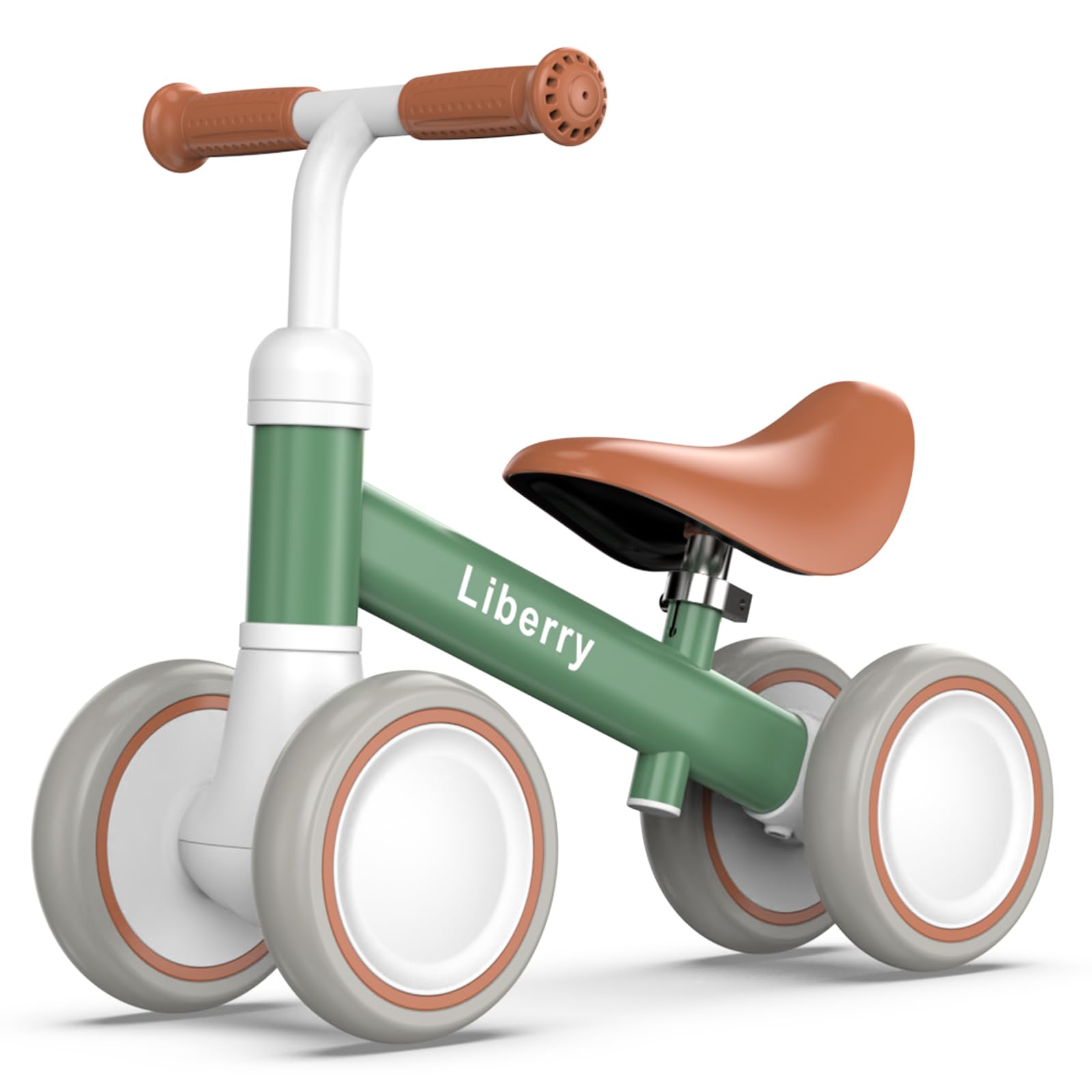
Four wheels and a 5-pound frame for the toddler who is barely walking yet.
Most balance bikes here are two-wheelers. This one is not — the Liberry uses a four-wheel design with closed wheels, which adds stability and keeps small feet from getting pinched. At 5 pounds, it is half the Retrospec Cub’s 10 pounds, so a 12-month-old can actually push it around solo.
The seat adjusts from 9.7 to 11 inches, and that low floor is deliberate. This bike is built for new walkers aged 12 to 24 months who need to keep feet on the ground constantly. The PU seat and rubber handlebars hold up better than foam grips, which tend to tear. EVA tires keep the ride quiet and the house floor unmarked.
The max load is 55 pounds, and the frame is strengthened steel. The clear limit: this is an indoor and smooth-pavement bike. Skip it on gravel or uneven roads, where the four-wheel setup and small wheels struggle. For the 12-to-24-month stage, that narrow focus is the point.
Where it shines: the ride stays steady and the seat adjusts simply as your baby grows.
Made for: a 12-to-24-month-old taking first steps who needs maximum stability.
Hold off if: your child is already confident on two wheels and rides outdoors on rougher ground.
5. KRIDDO Toddler Balance Bike 2 Year Old: Toddler Bike Toys for 2-5 Years Old
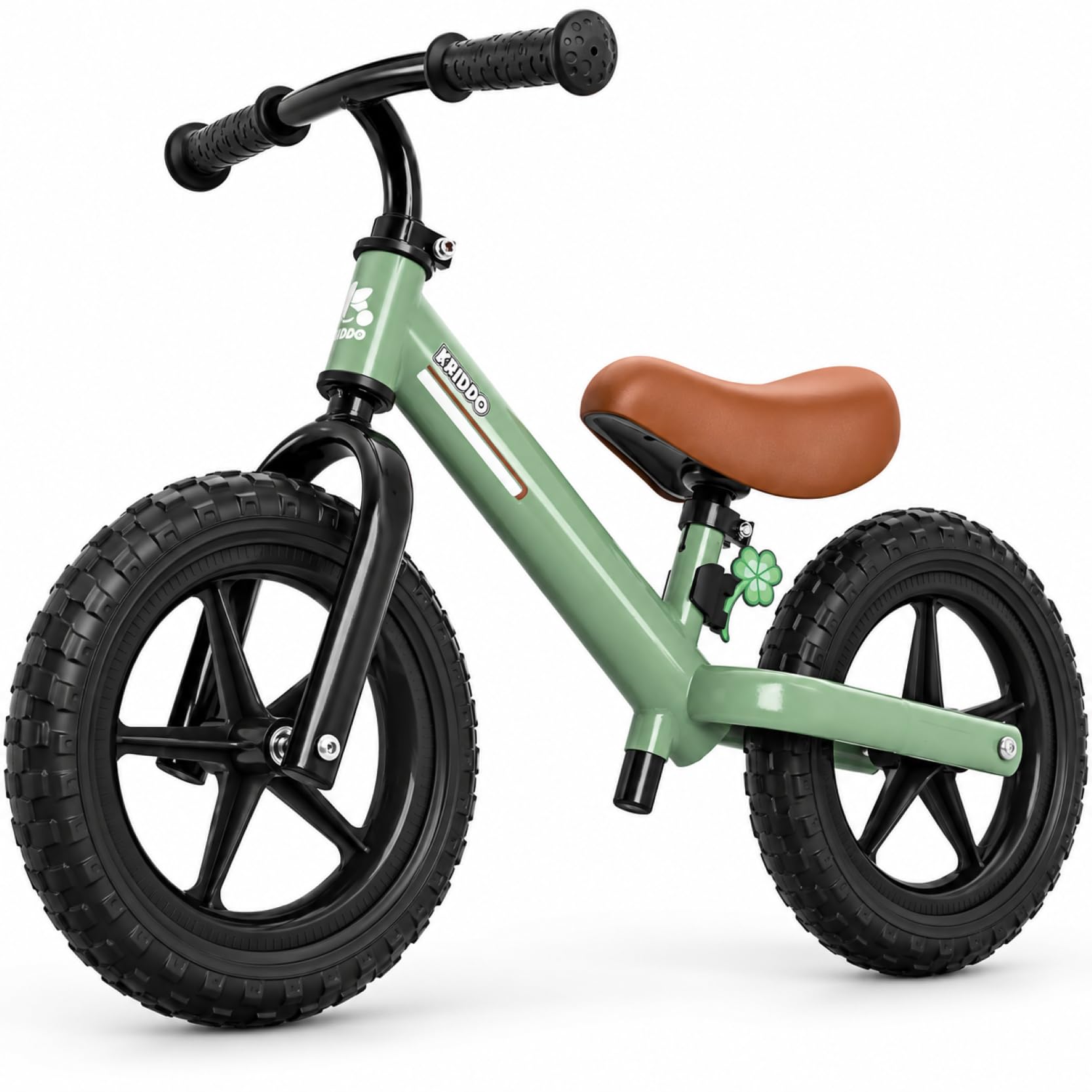
A tall seat range plus dual-bearing wheels turn gliding into a genuinely smooth ride.
Dual-bearing wheels are the reason the KRIDDO rolls so freely. Ball bearings cut resistance, so a toddler who is still building leg strength can keep the bike moving with light pushes. The 12-inch puncture-proof tires take on tracks, grass, carpets, pavements, and wood floors without scratching.
Fit is the other story. The seat moves from 14.17 to 18.5 inches and the handlebars from 20.08 to 21.65 inches — this is the tallest seat range on this list by a clear margin. That makes it a bike for a taller two-year-old or a growing three-to-five-year-old, not a small early walker. Two adjustable plates, a flower and a clover, attach under the seat so kids can make it their own.
The recurring note is that fit and durability run mixed. Some parents say the sizing fits their toddler well and that balance and steering come within a few days; others feel it runs small for older riders or wears under heavy use. It is a strong pick for the right-sized toddler, not a universal one.
What clinches it: that 14.17-to-18.5-inch seat range, well above the 11.8-to-16.5-inch span on the SEREED, serves a taller child far longer.
Best match: a taller two-to-five-year-old who needs a higher saddle than the smaller picks offer.
Not for: a short 12-to-18-month-old, where that tall 14.17-inch starting seat will leave feet dangling.
6. Radio Flyer Steady Start Balance Bike, for Kids Ages 1-3, Red

One wide front wheel and two rear wheels let it stand up on its own, no kickstand needed.
If your toddler is still wobbly, this is the bike built around that. The Steady Start uses a stable 3-wheel design — a wide front wheel and dual rear wheels — so it stands on its own when parked. A low center of gravity keeps early scoots from tipping, and the tool-free adjustable padded seat and comfort handgrips grow with your child.
The treaded wheels are quiet, which matters more than you think. They roll across hardwood, carpet, cement, and paved paths without a clatter, so indoor play does not drive the household up the wall. The alloy steel frame weighs 7 pounds, easy enough for a young rider to manage.
The honest catch is that a three-wheel base makes leaning into a proper glide harder as skills build. It is a training stage, not a long-term two-wheeler. For the very first weeks of learning to scoot and balance, though, the extra stability is exactly the point.
Reach for this if: your one-to-three-year-old is nervous on two wheels and needs a bike that cannot tip over while parked.
Look elsewhere once: they start leaning into turns, when a two-wheel design glides more naturally.
7. bicystar 14 Inch Balance Bike for Kids 3-5 with Rubber Air Tires, Blue

Real inflatable rubber tires that grip gravel, where foam tires slip and slide.
This is the pick for the family whose rides happen on gravel trails and grass, not just smooth driveway. The bicystar runs inflatable rubber air tires, which grip loose ground far harder than the foam tires on the SEREED or the Retrospec Cub. The trade-off is honest: air tires can puncture, where foam tires never do.
The seat spans 13 to 21 inches to fit a 13.5″–22″ inseam, with handlebars from 21.6 to 24 inches. That is a wide window, so a four-year-old will not feel the bike is too small too fast. A wide carbon steel frame is rated to 110 pounds, matching the SEREED’s limit, and a padded seat with a coasting footrest keeps the ride comfortable.
At 8.5 pounds it is easy to steer and easy to toss in the trunk for an outing. Assembly is quick and the tools are in the box. The one thing to note is the maintenance — you will occasionally need to check air pressure, which the foam-tire bikes never ask of you.
Standout spec: the 13-to-21-inch seat range is the second-widest here, and combined with a 110-pound frame it is the best long-haul 14-inch option on this list.
Suits you if: your three-to-five-year-old rides on gravel, grass, or trails where grip matters most.
Choose a foam-tire pick if: you would rather never pump or patch a tire in your life.
8. Retrospec Baby Beaumont Kids’ Balance Bike for Toddlers, No Pedals, Cushioning Air Filled Tires for Boys and Girls Ages 18 Months – 3 Years, with Adjustable Seat Height
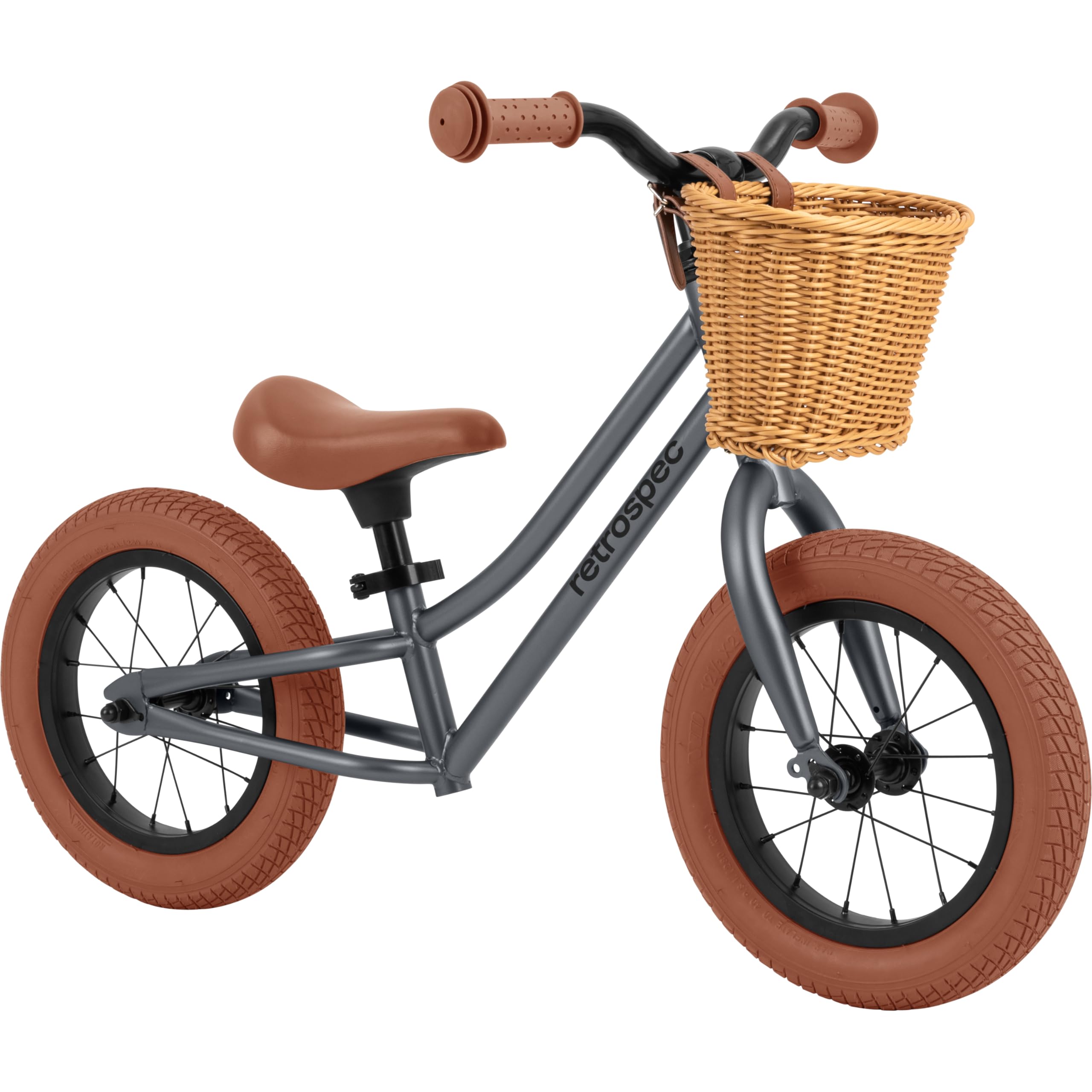
The low step-through frame makes mounting and dismounting easy for the shortest riders.
A low step-through frame is a quiet luxury on a toddler bike. It means a small child can climb on and off without swinging a leg over a top tube, which keeps them close to the ground if they lose balance. The Beaumont pairs that with a seat that adjusts from 13 inches up, plus adjustable handlebars.
The air-filled tires are the other headline here. Wide, grippy treads roll across sidewalks and grass with a cushioning feel that foam tires cannot match. The alloy steel frame weighs 9.3 pounds, on the heavier side, but the low frame and step-through design offset that for mounting. It is rated for ages 18 months to 3 years.
Where it asks for patience is weight and price tier. A toddler wrestler may find 9.3 pounds a handful to maneuver solo at first, and this sits in the premium bracket. For a stylish, cushioned first bike on pavement, it earns its keep.
Good fit: a toddler who needs the easiest possible mounting from a low frame and a cushioned ride.
Weigh the trade-off if: your child is small enough that 9.3 pounds feels like a lot to steer.
9. Strider 12 Pro, Aluminum Balance Bike for Kids Aged 1–5 Years, Black Pearl
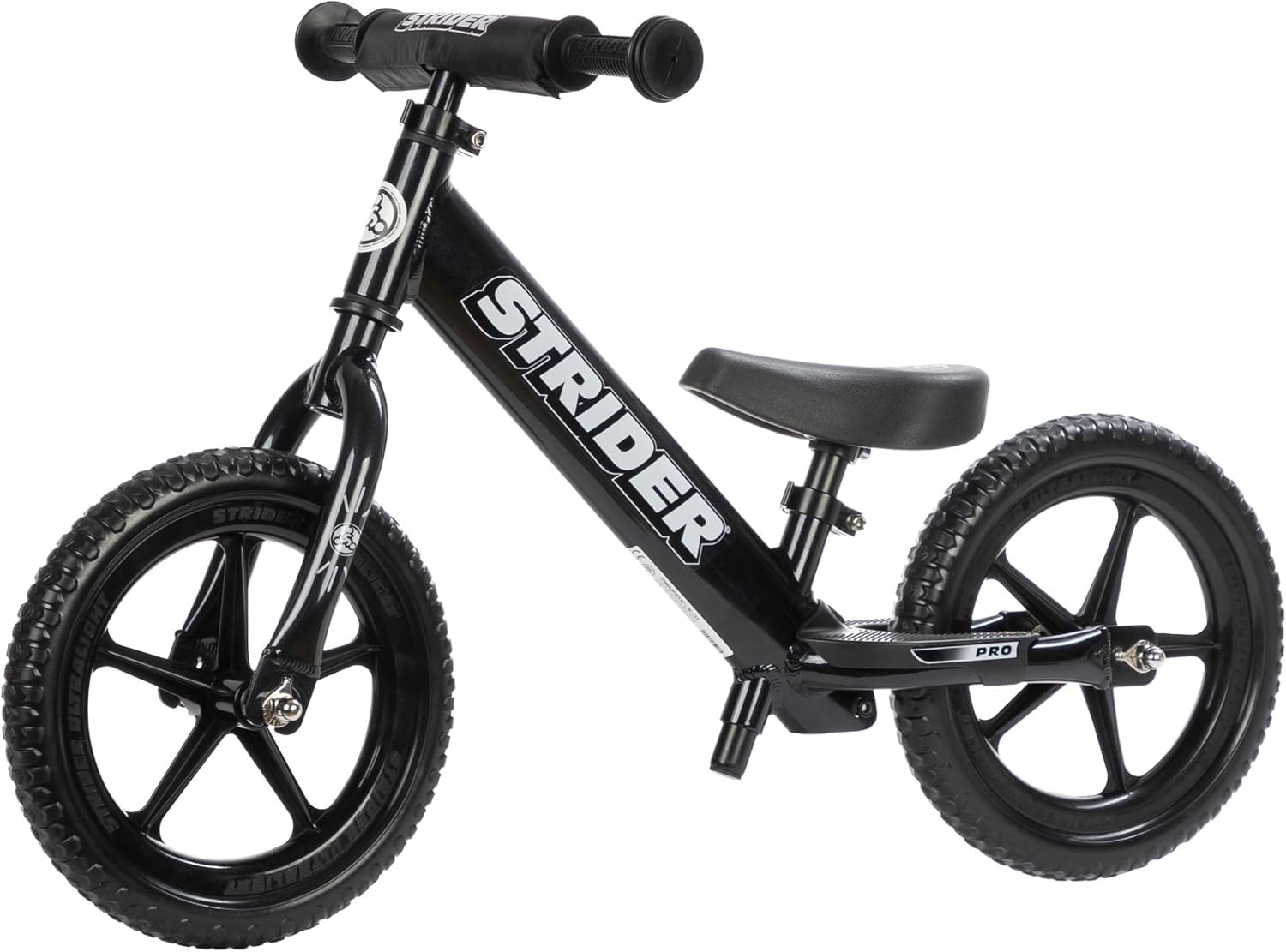
An aluminum frame at 5.6 pounds — the lightest build here, by a wide margin.
Weight is the whole argument for the Strider 12 Pro. At 5.6 pounds, it undercuts the bicystar’s 8.5 pounds by nearly three pounds, so a small rider can steer and lift it with far less effort. The aluminum frame is the reason, and it is a big part of why this bike commands premium money.
The seat adjusts from 11 to 17 inches and fits an inseam of 12–18 inches, while the handlebars move from 18 to 22 inches. That range covers a genuine 1-to-5-year stretch, so this is a bike that hands down through siblings. Foam rubber tires never go flat, and the cockpit has mini grips for easy control. Assembly is quick with the included tools.
The disagreement in the reviews centers on value. Some families call it worth the spend for a bike that lasts years and weighs almost nothing; others feel the premium is steep for what a toddler needs. Kids take to it — plenty bring it everywhere, even to bed. The foam tires, though, are the one spot where air-tire fans will push back on loose ground.
Where the money goes: the 5.6-pound aluminum build is what separates it from every steel-frame pick here, and that lightness is what a small child feels first.
For the long run: families who want one ultra-light bike that serves kids from age one to five and then passes down.
Skip if: you cannot justify a premium tier for a bike that lives on foam tires, which grip loose gravel less than rubber.
Understanding the Specs
Adjustable Seat and Handlebar Height
Seat height range is the span the saddle can move through, from its lowest to its highest setting. A wide range means one bike fits your child longer. The Strider 12 Pro spans 11 to 17 inches, while the KRIDDO tops out at 18.5 inches for taller riders. Bar height matters too — moving the grips up as the child grows keeps their arms in a comfortable position rather than reaching.
Weight Limit and Frame Material
The maximum weight recommendation is the load the frame is rated to carry. Higher ratings usually point to a sturdier build. The SEREED and bicystar are both rated to 110 pounds, while the Bobike is rated to 40 pounds. Frame material walks alongside this: aluminum like the Strider’s keeps the bike lightest, while carbon steel builds trade a little weight for a higher rated load.
Tire Types Explained
Airless foam and EVA tires never go flat and roll quietly, which suits indoor floors and paved paths. Air-filled rubber tires grip loose gravel and grass better but can puncture and need occasional inflation. Choose foam for zero maintenance and rubber for better grip on rough ground.
Inseam Fit
Inseam is the length from the crotch to the floor. Match it to the seat’s lowest setting so feet reach the ground. The Strider 12 Pro fits a 12–18 inch inseam, and the bicystar fits a 13.5″–22″ inseam. Getting this right is more useful than any age range on the box.
FAQ
How do I know an adjustable balance bike will fit my child as they grow?
Are foam tires or rubber air tires better on a balance bike?
What does the maximum weight recommendation tell me about a balance bike?
Is a three-wheel balance bike better for a beginner than a two-wheel one?
Do balance bikes have brakes?
How much does a balance bike weigh, and does it matter?
What age should I buy an adjustable balance bike for?
Can my child use a balance bike indoors?
How long does assembly take on these balance bikes?
Final Thoughts: The Verdict
How We Picked
We do not accept paid placement. Every pick is matched to a real buyer and a real use-case; we do not hands-on test units.
Sources & Methodology
Specifications: manufacturer listings and product documentation. Review insights: verified customer reviews, as of November 2026. Pricing: not shown on this page (it changes often); check the current price via the retailer link.
As an Amazon Associate, Gadgets Feed earns from qualifying purchases. This does not affect which products we feature.