
Our readers keep the lights on and my morning glass full of iced black tea. As an Amazon Associate, I earn from qualifying purchases.
Specs are compiled from manufacturer listings and verified buyer reviews and can change over time — please confirm the key details on the product page before buying.
Your apartment door opens onto a shared hallway, your landlord does not want holes in the wall, and a landline plus a two-year contract makes no sense for a place you might leave next spring. So you want a kit that sticks to the frame, talks to your phone, and sounds a siren loud enough to cut a break-in short. Every pick below installs wirelessly with no drilling and no permanent mounting — the thing that matters most when you do not own the walls.
I’m Min — the founder and writer behind Gadgets Feed. This guide is built by comparing the manufacturers’ published specifications and the patterns across verified customer reviews, so you get each pick’s real strengths and trade-offs instead of marketing spin.
Below you will find nine systems broken down by sensor count, siren volume, connectivity, and whether they charge you every month. The quick table lets you scan trade-offs in seconds, the reviews explain the catches, and the spec section decodes what all of it means in a hallway-sized home. Read on for the best apartment security system picks that install cleanly, protect hard, and leave zero marks behind.
Our Picks at a Glance
How To Choose The Best Apartment Security System
An apartment kit does a different job than a house system. You are covering one or two entry points, maybe a hallway and a bedroom, and you cannot start renovating. That shapes every decision you make below.
Start with sensor count, not features
Count your doors and windows before you buy anything. A studio needs a door sensor and one motion detector. A two-bedroom usually wants a contact sensor on every accessible window plus a motion detector covering the hall. Kits here range from small starter setups up to twenty-four-piece bundles, and extra sensors on most of these systems can be added later.
Contact sensors (the two-piece pads that stick to a door or window and its frame) tell you something opened. Motion detectors (the small units that sense movement in a room) tell you someone is moving inside. You want both, because a door sensor alone cannot see someone who came in through a window.
Wireless mounting is non-negotiable for renters
Look for adhesive strips or screw-in options you can skip entirely. Almost every pick here uses adhesive backing or a plug-in hub, so your security deposit stays intact. If a system demands wall screws into doorframes, skip it — that is a house product wearing the wrong label.
Decide if you want a subscription
Free systems send app push alerts and sound their own siren. Subscription systems add 24/7 professional monitoring, where a real person watches for alarms and contacts emergency services. Neither is wrong — but a renter on a budget usually gets enough protection from a no-fee kit, while someone traveling often may want the human backup.
Quick Comparison
| Model | Best For | Sensors Included | Siren / Alert Volume | Connectivity | Amazon |
|---|---|---|---|---|---|
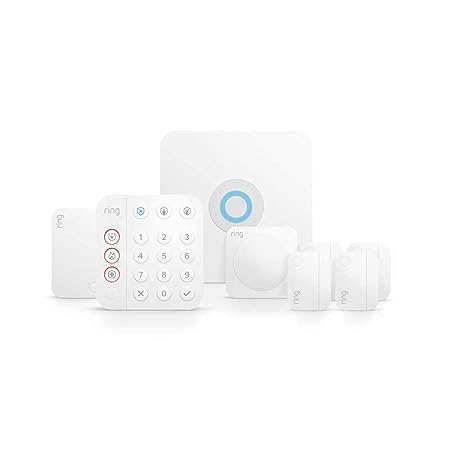
| Ring Alarm 8-Piece Kit (Refurbished)★ Best Overall | Best Overall | 8 pieces: base, keypad, 4 contact, 1 motion, range extender | — | Wi-Fi + optional Ring Protect Plan | Amazon |
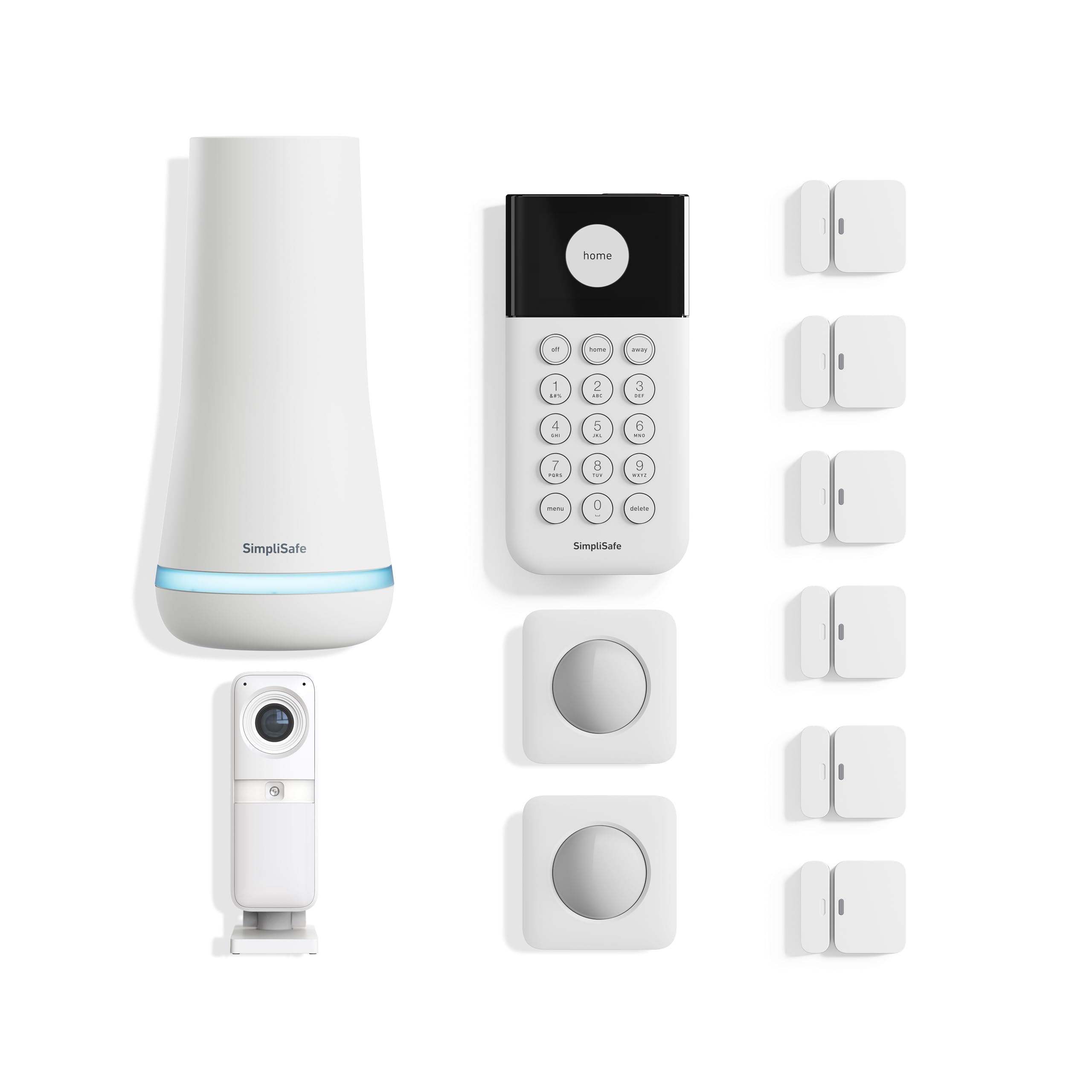
| SimpliSafe 11-Piece Gen 3Premium Pick | Premium Pick | 11 pieces: base, camera, keypad, 2 motion, 6 entry | 95 dB | Wireless, no contract monitoring optional | Amazon |
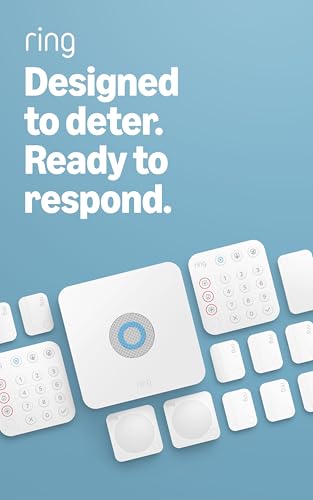
| Ring Alarm 14-Piece KitBest for Larger Apartments | Best for Larger Apartments | 14 pieces: base, 2 keypads, 8 contact, 2 motion, range extender | — | Wi-Fi + optional Ring Protect Plan | Amazon |
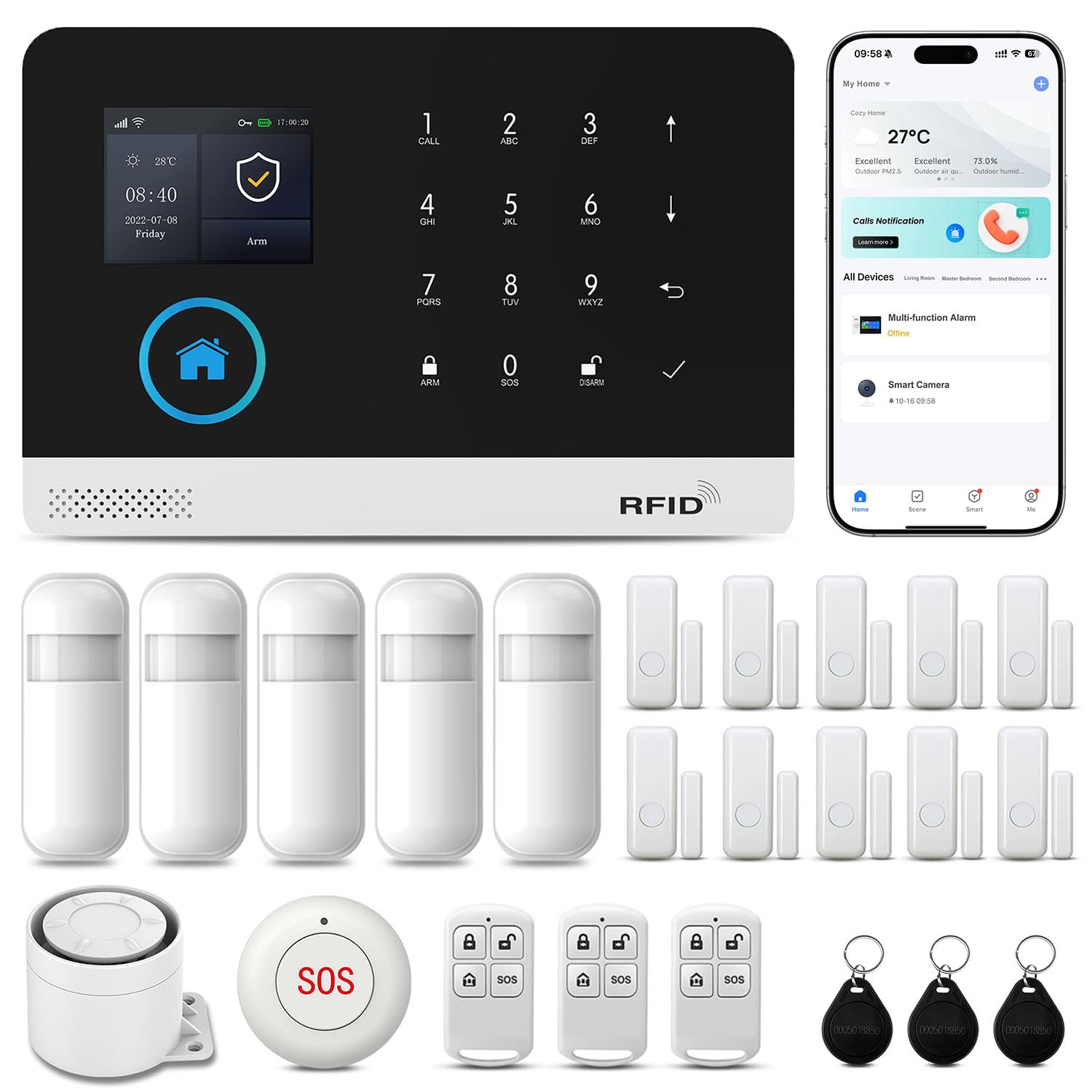
| PGST 24-Piece Wi-Fi + 4G System | Most Sensors | 24 pieces incl. door/window sensors, motion detectors, SOS button | 120 dB | 2.4GHz Wi-Fi + 4G SIM fallback | Amazon |
| PGST 22-Piece with 2K Camera | Best with Camera | 22 pieces incl. 2K HD camera and SOS device | 120 dB | 2.4GHz Wi-Fi + 4G SIM fallback | Amazon |
| Hapippofa GEN 2 16-Piece Touchscreen Kit | Best Touchscreen Hub | 16 pieces incl. 6 door/window, 3 PIR motion, wired siren | 120 dB siren / 100 dB rated | 2.4GHz Wi-Fi + optional 4G SIM | Amazon |
| Arlo Home Security System SS1201 | Best All-in-One Sensors | 2 All-in-One Sensors + wired keypad hub | Built-in hub siren | Wi-Fi + SecureLink | Amazon |
| tolviviov 15-Piece Wi-Fi Kit | Budget Champion | 15 pieces: base, keypad, 1 motion, 10 door sensors, 2 remotes | 120 dB | 2.4GHz Wi-Fi only (no 5GHz) | Amazon |
| TUGARD 13-Piece GSM/Wi-Fi System | Most Bundled Pieces | 13 pieces incl. camera, siren, 4 window sensors, 2 PIR, RFID cards | 4 sones | GSM 2G + Wi-Fi | Amazon |
In‑Depth Reviews
1. Like-New Ring Alarm 8-Piece Kit
Our pick — 4.5+★ from 850+ verified ratings; the strongest balance of quality and price.
The refurbished Ring kit that puts a full apartment alarm on your hallway door without a single hole in the frame.
Eight pieces is the number to remember here: one base station, one keypad, four contact sensors, one motion detector, and one range extender. That loadout maps cleanly onto a 1-2 bedroom apartment — four windows or doors covered, one motion detector watching the main walkway, and a keypad by the entrance so you can arm the thing on your way out. If your building has a dead corner, the extender bridges it.
What earns this the top spot is how little friction there is between unboxing and arming. Setup runs through the Ring app, and the installation process is what owners single out above everything else. A refurbished unit ships tested and certified to look and work like new, and it carries the same limited warranty as a new device. You may get a generic Amazon-branded box rather than retail packaging — cosmetically irrelevant, functionally identical. This is the crowd favorite by a wide margin — 4.5+ stars across 800+ ratings, the strongest score with the deepest review base of any pick here.
The trade-off is the subscription. Remote arming from anywhere, keeping your system online if Wi-Fi drops, and 24/7 professional monitoring all sit behind a Ring Protect Plan, sold separately. Without it, you still get local siren and mobile notifications, but the remote-anywhere layer goes quiet. On connectivity, expect to spend a little time getting the hub onto your network — that is the one recurring gripe, and it is a setup nuisance rather than a daily problem. Unlike the SimpliSafe below, there is no camera in the box, so this is alarm-first, video-second.
What makes it the default pick
- Eight pieces cover a 1-2 bedroom apartment from the start
- Refurbished unit arrives tested and certified, with the same limited warranty as new
- Range extender solves the thick-wall dead-zone problem renters hit
- Alexa voice arming and disarming with a Ring Protect plan
Where it asks more of you
- Remote arm and 24/7 monitoring require a separate Ring Protect Plan
- Hub-to-Wi-Fi pairing can take a few attempts
- No camera included — video costs extra hardware
Take this one if: you want a proven eight-piece alarm on a hallway door and bedroom windows without drilling anything.
Look past it if: you need a camera in the same box or refuse to pay for remote arming.
2. SimpliSafe 11-Piece Wireless System Gen 3
Eleven pieces, a two-way audio camera, and a monitoring agent who can talk to an intruder through the speaker.
Most apartment kits stop at a siren. This one adds a person. With 24/7 live guard protection, monitoring agents can see and speak to whoever tripped the alarm through the camera’s two-way audio (sound in and out through the camera) — a different level of response when your front door opens into a shared corridor. The kit is generous: one base station, one indoor wireless camera, one keypad, two motion sensors, and six entry sensors. Six contact sensors (the kind that trip when a door or window opens) will cover every window in a one-bedroom and then some.
The motion sensors detect movement within 35 feet with a 90 degree field of view, and they are built to tolerate pets under 60lbs. That 60lb pet tolerance is what keeps a cat’s 2am hallway crossing from triggering the siren. The keypad is smash-safe with backlit buttons that light up when you need them and go dark when you do not — a small thing that matters when you are punching in a code in a dim hallway. Google Assistant and Alexa can both arm the system.
Setup is plug-in and place — no wiring, no drilling, exactly the renter brief. The honest catch is that the monitoring and live guard features need an optional plan, and connectivity reports are genuinely split: some setups link to Wi-Fi immediately, others fight it. If your router sits far from the base station, plan for that. It still lands at 4.0+ stars across 400+ ratings, which is strong, and the value side is what buyers keep circling back to.
The reason to stretch: the combination of an indoor HD camera, two-way audio, and live agents who can intervene is the closest thing here to having someone on site. For a ground-floor apartment or a unit with a vulnerable entry, that layer is worth paying for.
The fair warning: the camera, the live guard, and the professional monitoring all sit behind an optional subscription. Buy it for the hardware and the option, not as a free-forever system.
The right fit: a renter who wants human backup watching the door, not just an app notification.
Think twice if: your Wi-Fi barely reaches the living room — the base station needs a solid connection.
3. Ring Alarm 14-Piece Kit
Fourteen pieces and two keypads — the version you buy when your apartment has more doors than you first counted.
Two keypads is the tell. This kit is built for a 2-4 bedroom home, and that framing fits a larger apartment or a unit with a separate entrance, a back door, and a hallway worth covering. Inside the box: one base station, two keypads, eight contact sensors, two motion detectors, and one range extender. Eight contact sensors means you can cover every accessible window plus both doors, and still have spares for a storage closet or a bike-room door. Two motion detectors let you watch two separate zones instead of one.
What has made this the most trusted Ring configuration is sheer weight of experience — 4.5+ stars across 6,400+ ratings, the deepest review base of anything on this list. The installation story repeats itself: the Ring app walks you through pairing each sensor, and setup is what the review pages praise most. Expandability is the other quiet win. You can add more contact sensors, motion detectors, and accessories at any time, so the system grows with a move rather than dying at it.
Same subscription caveat as its eight-piece sibling: remote arming, keeping the system online when Wi-Fi drops, and 24/7 professional monitoring all need a Ring Protect Plan. Reliability and connectivity are the two areas where feedback splits — a minority hit app hiccups or pairing trouble, which is a setup-phase friction rather than a nightly problem. If you compare the two Ring kits directly, the 14-piece is the pick for a two-bedroom with a back entrance; the eight-piece suits a tighter one-to-two-bedroom floor plan.
Who this is built for: a renter in a bigger unit who would rather over-cover than realize a window was missed. Eight contact sensors and two motion detectors leave room for the door you forgot about.
The thing to know: this is the same Ring ecosystem and the same optional plan — if you resent subscriptions, the free-alert systems further down this list will sit better.
Best matched to: a two-bedroom with multiple entries where covering everything matters more than saving on sensor count.
Not for you if: you are in a studio — you would be paying for sensors you will never mount.
4. PGST 24-Piece Wi-Fi + 4G Home Alarm System
Twenty-four pieces, a 4G fallback that keeps working when the building internet dies, and a 120 dB siren in the box.
The number that decides this one is 4G. Most apartment systems live or die by your Wi-Fi, and in a rental building the router is often the landlord’s shared connection — unpredictable at best. This hub supports 2.4GHz Wi-Fi and a 4G network, and it automatically switches to the SIM card when Wi-Fi goes offline. For a renter whose internet is not fully under their control, that dual path is a real safety net, not a spec-sheet ornament. Note that 5G is not supported.
Then there is the sheer count. Twenty-four pieces covers doors, windows, and motion with room to spare, plus a portable emergency SOS device that triggers an immediate alarm on the app and the main hub when pressed. The included remote control carries the same function. For a household with an older parent or a child, that SOS button is the fastest way to trigger the alarm without a phone. The siren hits 120 dB, loud enough to be painful in a narrow hallway. Setup is the unusual part: everything arrives pre-paired from the factory, so there is no manual pairing step, and installation is quoted at 10 minutes. Control runs through the Smart Life or Tuya app, and Alexa or Google voice control is supported.
Here is the catch, and it is a specific one: do not use the in-app SMS or phone-call alarm features unless you accept third-party fees. The core alarm functions stay free, with no monthly fee and no subscription requirement. The unit itself measures 4.7 x 3.1 x 3.1 inches, which is compact enough to sit on a shelf or a side table without shouting for attention. Security quality is the aspect that lands best with buyers, and the easy setup backs it up.
Why the count and the 4G both matter
- 24 pieces cover every entry point in a large apartment with spares
- Automatic 4G SIM fallback keeps alerts flowing when Wi-Fi drops
- 120 dB siren is loud enough to be heard through walls
- SOS button and remote give elderly family members a one-press alarm
The fine print to read before buying
- In-app SMS and phone alarms carry third-party fees — skip those features
- 5G Wi-Fi is not supported, so a 5GHz-only network will not work
- A 4G SIM requires its own cellular plan, sold separately
Pick this when: your building’s Wi-Fi is unreliable and you want the alarm to survive a router outage.
Move along if: you only need one door covered — the sensor count would be wasted.
5. PGST 22-Piece Wi-Fi + 4G System with 2K Camera
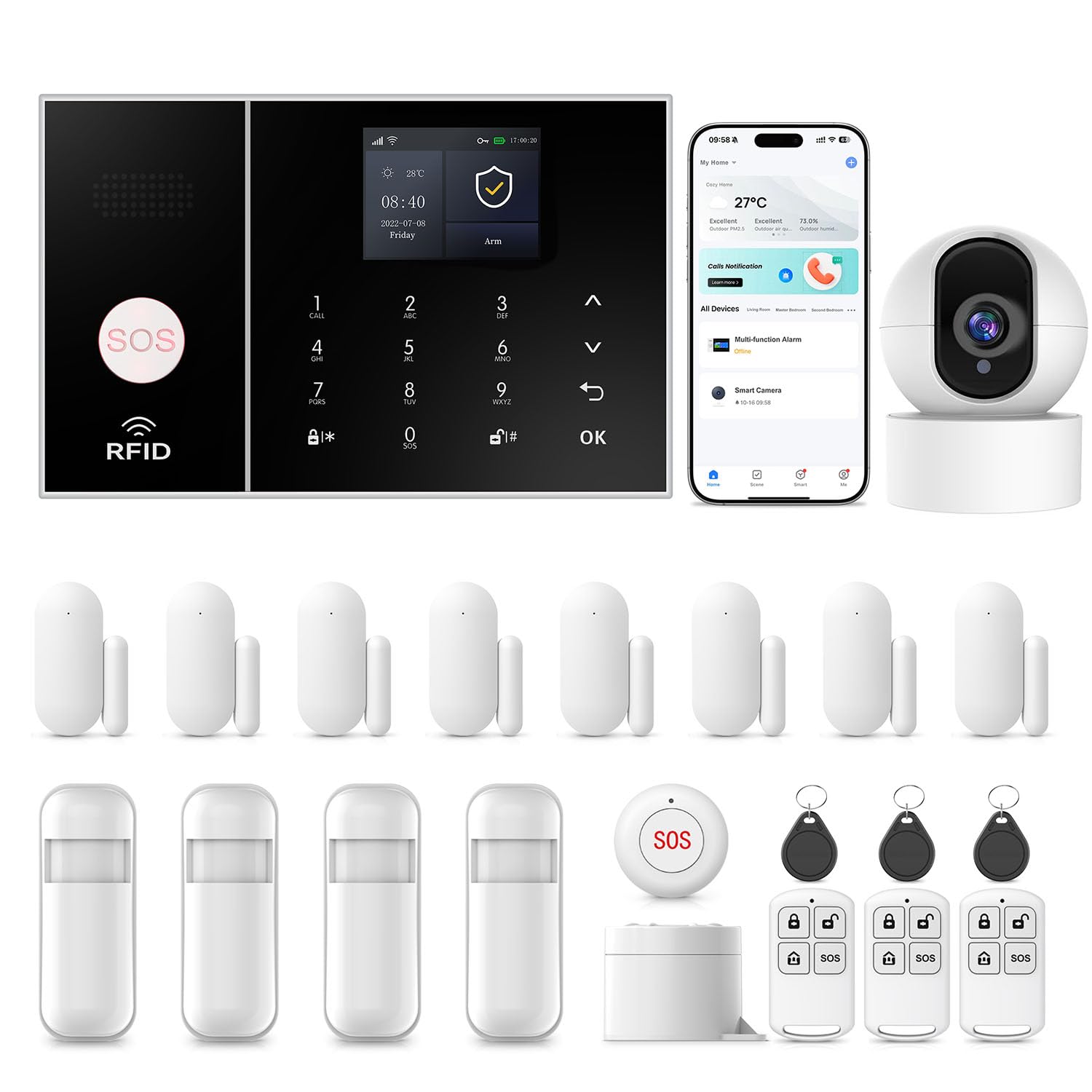
A 2K camera, a color screen that shows the weather, and tamper protection that screams if someone pulls the hub off the shelf.
Two features make this the pick for anyone who wants eyes as well as ears. The first is the 2K HD camera, which pairs with the door and window sensors and motion detectors for remote visual monitoring. The camera needs no subscription — the maker states there are no monthly fees for it, and it supports a MicroSD card up to 256GB, sold separately. That last point matters: you supply the card, you own the footage, no cloud bill.
The second is tamper protection. The hub has a physical tamper-proof design, so unauthorized removal triggers an alarm that needs a security code to silence, and it fires phone, SMS, and app alerts at the same time. For an apartment where the hub might sit on a hallway console within arm’s reach of the door, that is a genuinely useful layer — an intruder cannot simply unplug the box and walk away quietly. The main unit’s color screen shows system status, weather, and date, and supports 10 international languages, which is a nice touch for a multilingual household.
On the alarm side, the main unit emits over 110dB when triggered, with 120 dB listed in its specifications, alongside app notifications, phone calls, and SMS alerts. Connectivity is 2.4GHz Wi-Fi with a 4G SIM slot for phone and SMS alarm functions when Wi-Fi is down (5G is not supported). Everything stays free after activation. The 22 pieces mean broad coverage, and a compact SOS device is included for elderly family members or children. At just 9.6 ounces, the hub is light enough to place on a shelf with a strip of adhesive rather than a screw. The one real limit: the MicroSD card for local recording is not in the box.
The camera angle: a 2K camera with no monthly subscription and local MicroSD storage is a rare combination in this price bracket. You get footage, you keep footage.
The self-supply item: budget for a MicroSD card up to 256GB if you want recording — it is sold separately and the camera’s storage depends on it.
Reach for it if: you want a camera watching the entry without a cloud subscription attached.
Leave it if: cameras inside a rental make you uneasy — the sensor-and-siren kits cover the door without filming anything.
6. Hapippofa GEN 2 16-Piece Touchscreen Alarm Kit

A tap-to-arm touchscreen hub that the whole household can run without opening an app first.
Not everyone in an apartment wants to dig out a phone to disarm the alarm. The touchscreen hub here solves that — status is visible at a glance, and Stay Arm, Away Arm, Disarm, and SOS modes are each one tap away on the panel itself. That one-tap panel matters in a shared flat where a roommate, a partner, or a visiting parent needs to arm the system without a tutorial. The 16 pieces break down as one touchscreen hub, six door/window sensors, three PIR motion detectors, two remote controls, two RFID key fobs, one SOS button, and one wired siren.
The wired siren is the other standout. It rates at 120dB (about as loud as a rock concert) and mounts externally to the hub, so the alarm bell sits where an intruder hears it clearly instead of muffled inside a plastic box on a shelf. Connectivity is 2.4GHz Wi-Fi (the standard home Wi-Fi band) for remote arm and disarm plus Smart Life app alerts. A 4G SIM slot handles alarm phone calls and SMS if you add a compatible SIM and cellular plan (both sold separately; 5G Wi-Fi is not supported). Range to the sensors is listed at 100 feet — comfortable for any apartment layout.
Setup is DIY with pre-paired sensors, which cuts down the pairing slog. One honest flag: the installation method is listed as screw-in, so check it against your lease — the hub can sit on a desktop instead of a wall, but the external siren mounting may want hardware. There are no verified buyer reviews on this listing yet, so the track record is unproven next to the Ring and SimpliSafe kits above. You are buying on the spec sheet and the touchscreen workflow.
Where the touchscreen earns its place
- One-tap Stay, Away, Disarm, and SOS modes on the panel
- Six door/window sensors and three motion detectors cover a two-bedroom
- 120dB wired siren mounts externally for a clearer alarm sound
- RFID key fobs let family members disarm without a code
What to weigh before ordering
- Screw-in installation method is listed — check your lease before wall-mounting
- No verified customer reviews yet, so long-term reliability is unknown
- 4G calling and SMS need a separate SIM and cellular plan
Suits you if: more than one person lives in the apartment and nobody wants to fumble for a phone at the door.
Skip the wall mount if: drilling is off the table — the hub works on a desktop, but plan the siren placement carefully.
7. Arlo Home Security System SS1201
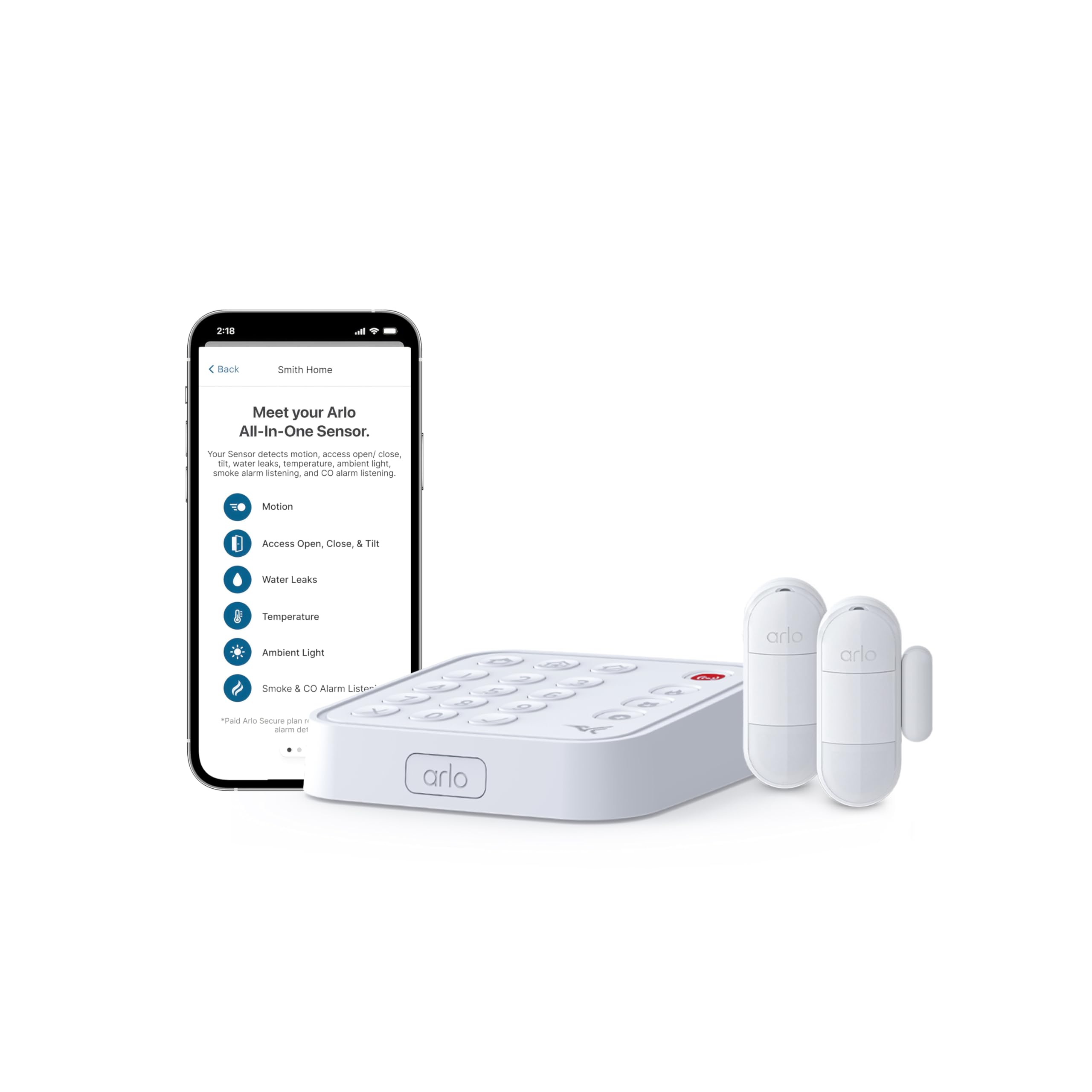
Two sensors that each watch for eight different things — motion, open doors, water leaks, freezing, and more.
Where most kits throw a pile of single-purpose sensors at you, Arlo bundles the jobs into one unit. Each All-in-One Sensor handles eight detection functions: motion, open/close, water leak, freeze, smoke and CO alarm detection, tilt, and ambient light change. Two of them ship in the box alongside a 6-in-1 Keypad Sensor Hub with its own built-in siren and smoke/CO listening. For a small apartment, that is a tidier wall than six separate white plastic pads stuck to every surface.
The plug-in hub is the setup story. No wiring into the wall, no battery swap in the hub itself, and the whole system installs DIY. Arlo also uses SecureLink for what it describes as a longer-range, more secure connection for paired devices, and everything runs through the Arlo Secure App with customizable widgets on your dashboard. One Tap Emergency Response buttons fire a call to fire, police, or medical responders. Professional monitoring is available with no contract, including video and image verification so false alarms get filtered before dispatch — that last feature is what keeps an accidental trip from becoming a wasted emergency response.
The counterweight is real, and it is the reason this sits lower than its hardware suggests. Wi-Fi connectivity is the aspect buyers hit hardest — reports of trouble connecting the system to a local network come up repeatedly, and reliability feedback is not warm. Some owners consider it a premium product, others feel the money did not land where they expected. At 3.0+ stars, this is the pick for someone drawn to the sensor design specifically, not for someone who wants the safest statistical bet. The monitoring trial converts to a paid plan after it ends.
The design win: eight detection functions in one sensor housing is genuinely clever for a small space — leak and freeze detection in a rental utility closet alone justifies the idea.
The honest caution: network pairing and day-to-day reliability are the weak spots, and the professional monitoring trial becomes a paid plan afterward. Buy it for the sensor concept, and be ready to troubleshoot the connection.
Worth it for: the renter who wants fewer gadgets on the walls and values leak and freeze detection alongside intrusion alerts.
Not the safe bet if: you want a system you never have to think about — the Wi-Fi pairing is the recurring friction.
8. tolviviov 15-Piece Wi-Fi Alarm Kit

Ten door sensors for the price of a dinner out — the kit that covers every window in a one-bedroom without a subscription.
Ten door sensors. That is the entire argument for this kit. Most apartment systems give you four and let you buy the rest, while this one hands you a bundle that covers every window, the front door, and the balcony door in a typical one-bedroom. Add one motion sensor, one keypad, two remote controls, and the Wi-Fi base station and you have 15 pieces total. Expansion goes up to 20 sensors and 5 remote controls or keypads, so it grows if the layout does. It measures 10.24 x 7.86 x 2.68 inches against the PGST 24-piece at 4.7 x 3.1 x 3.1 inches — a wider, flatter box that is easier to tuck on a shelf than a tall tower.
The siren rates at 120Db, which is loud enough to make a point. Installation is DIY and purely adhesive — the sensors mount with included strips or hardware, no drilling needed. Everything runs through the companion app and connects to Alexa for hands-free control. No monthly fees, which means the alerts and the siren stay free for as long as you own it. That combination is why quality and ease of setup are the two things buyers praise most, with the loud alarm close behind. For a basic apartment protection setup, it delivers more coverage per dollar than anything else on this list.
Two limits are worth knowing before you order. First, this is a 2.4GHz-only system — it will not connect to a 5GHz network, so check your router settings rather than discovering it at setup. Second, reliability is the one area with split feedback, so treat it as a solid basic alarm rather than a mission-critical one. It still carries 4.0+ stars across 900+ ratings, a healthy score for the price tier.
Why budget shoppers keep landing here
- Ten door sensors cover a full one-bedroom’s windows and doors from the start
- No monthly fees — alerts and siren stay free permanently
- 120Db siren is genuinely loud
- Alexa voice control and app remote management
What to plan around
- 2.4GHz Wi-Fi only — no 5GHz support
- Reliability feedback is mixed, so it is a basic alarm not a critical infrastructure unit
- Expansion caps at 20 sensors and 5 remotes
Made for: a first apartment where covering every window matters more than premium app polish.
Rule it out if: your router runs 5GHz only and you cannot switch to the 2.4GHz band.
9. TUGARD 13-Piece GSM SMS Wi-Fi Alarm System
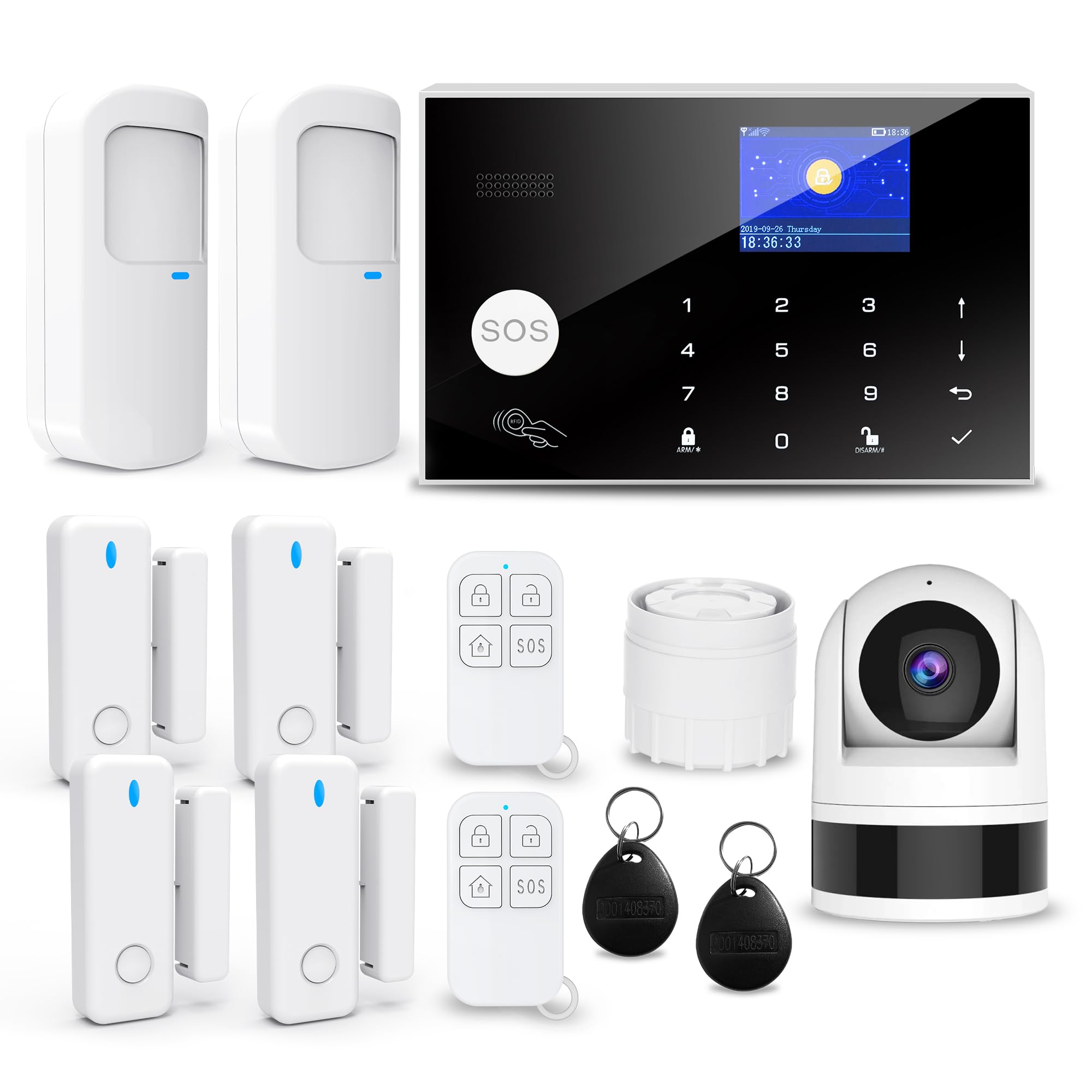
A camera, an external siren, remote controls, and RFID cards — the most different pieces crammed into one apartment kit.
Look at what actually arrives: one alarm host, one siren, four window sensors, two PIR motion sensors, two remote controls, two RFID cards, and a C20 camera. That is a wide spread of hardware, and the RFID cards are an unusual convenience — swipe instead of code-typing when you come in with grocery bags. The external siren breaks out of the hub, so the alarm bell is its own unit rather than a speaker buried in plastic. The maker positions it for apartments, garages, and offices specifically because it handles remote alarm reception without needing phone lines run into the building.
Battery life is the standout spec: The system supports up to 100 sensors and 10 remote controls, so it scales far beyond a single apartment if you ever move into a bigger place. Compatible devices include smartphones, tablets, Alexa, Google Home, and Siri Shortcuts, and sensors can sit within 100 feet of the control panel. The audible noise rating is listed as 4 sones — a measurement of sound output rather than decibels, and useful mainly as a relative comparison against other siren ratings.
The split here is setup. Some buyers find it straightforward, others describe it as very complicated, and that difference is the thing to plan for. If you are comfortable with app-based pairing and a manual, this is a lot of hardware for the money. If you want a system that installs itself, look at the Ring kits. Reliability and functionality are the strong points, both landing positive in buyer feedback. There are no verified ratings on this listing yet, so the track record is thin.
The underrated feature: 3.01 years of battery life means the maintenance chore practically disappears — no ladder, no quarterly battery run.
The variable: ease of setup is genuinely mixed, so budget an evening for pairing rather than assuming a ten-minute job.
Fits the tinkerer: someone who wants maximum hardware — camera, siren, remotes, RFID — and does not mind a longer setup session.
Not ideal for: a first-time alarm buyer who wants the app to walk them through everything.
Understanding the Specs
Siren Volume (dB and Sones)
Decibels measure how loud the alarm sounds. A 120 dB rating is loud enough to be painful in a small hallway and will carry through apartment walls. Some listings use sones instead — a different scale measuring perceived loudness, where a higher number means a fuller, more intrusive sound. If one product quotes dB and another quotes sones, you cannot directly compare the two numbers. Pick a system whose sound rating is stated in dB if you want an apples-to-apples read against other kits.
Wi-Fi versus Wi-Fi plus 4G
Wi-Fi means your alarm hub talks to the internet through your home router. If the router drops, the hub loses its connection to your phone. A Wi-Fi plus 4G system adds a SIM card slot that takes over when Wi-Fi fails, so alerts still reach you. That matters in apartments where the internet comes from a shared building connection you do not control. Do not confuse 4G with 5G Wi-Fi — a hub that supports 2.4GHz Wi-Fi will not connect to a 5GHz-only network, regardless of the cellular band.
Contact Sensors and Motion Detectors
Contact sensors are two-piece pads that stick to a door or window and its frame; when the gap opens, the alarm knows. Motion detectors sense movement in a room and cover a defined area. A door sensor catches someone opening a door. A motion detector catches someone already inside. You want both for real coverage, and most kits here combine them.
Subscriptions and Monitoring
Free systems send app notifications and sound a local siren. Subscription systems add 24/7 professional monitoring, where a person watches incoming alarms and contacts emergency services, sometimes with video verification. Read the listing carefully: remote arming, cloud backup, and monitoring are often behind a paid plan even when the hardware has no fee. Systems with no monthly fee keep alerts and siren working indefinitely.
FAQ
Will an apartment security system work without drilling holes in the wall?
Do these systems need Wi-Fi to send alerts to my phone?
Which apartment security system has no monthly fee?
How many sensors do I need for a one-bedroom apartment?
Will a 120dB siren be loud enough to scare off an intruder?
Can I take an apartment security system with me when I move?
Does an indoor security camera in a rental record without a subscription?
What happens if my Wi-Fi router goes down while the alarm is armed?
Can I add extra sensors to these kits later?
Is a touchscreen hub better than an app-only system for an apartment?
Will pets set off the motion detectors?
Final Thoughts: The Verdict
For most renters, the apartment security system winner is the Like-New Ring Alarm 8-Piece Kit. It covers a 1-2 bedroom floor plan with four contact sensors and a motion detector, includes the range extender that fixes thick-wall dead zones, and arrives tested and certified with the same limited warranty as a new unit. It also carries the highest score with the deepest review base of any kit here, so you are not the first person taking the risk.
Want a camera and a human on the other end of the alarm? Reach for the SimpliSafe 11-Piece Gen 3 — two-way audio and live guard agents give a ground-floor unit a different level of response. And if your building’s Wi-Fi is the landlord’s problem rather than yours, the PGST 24-Piece Wi-Fi + 4G system keeps the alarm alive when the router drops, with a 120 dB siren and an SOS button for family members.
One thing worth saying plainly: the Ring 14-piece has more reviews than the eight-piece pick, but the eight-piece holds the higher score at 4.5+ stars and matches a tighter apartment better. Buy the kit that fits your actual door and window count, not the one with the bigger box.
How We Picked
We do not accept paid placement. Every pick is matched to a real buyer and a real use-case; we do not hands-on test units.
Sources & Methodology
Specifications: manufacturer listings and product documentation. Review insights: verified customer reviews, as of November 2026. Pricing: not shown on this page (it changes often); check the current price via the retailer link.
As an Amazon Associate, Gadgets Feed earns from qualifying purchases. This does not affect which products we feature.