
Our readers keep the lights on and my morning glass full of iced black tea. As an Amazon Associate, I earn from qualifying purchases.
Specs are compiled from manufacturer listings and verified buyer reviews and can change over time — please confirm the key details on the product page before buying.
You have ants in the kitchen and a dog who licks the floor — that combination is exactly why this list exists. Every pick below is a formulation explicitly labeled safe for use around dogs and pets when used as directed, so you can treat the trail without clearing the house or worrying about what your dog sniffs afterward. The real decision depends on form: a powder you dust into cracks, a sealed bait station your dog can’t open, or a spray you aim at the ants themselves.
I’m Min — the founder and writer behind Gadgets Feed. This guide is built by comparing the manufacturers’ published specifications and the patterns across verified customer reviews, so you get each pick’s real strengths and trade-offs instead of marketing spin.
Work through the form factors first — bait, dust, or spray — because that single choice decides where you can safely use the product in a home with a dog. The rest is placement and reapplication timing, which is what separates a one-week fix from a losing battle. My breakdown of the ant killer safe for dogs market covers eight picks and tells you which one fits your floor plan and your dog’s habits.
Our Picks at a Glance

How To Choose The Best Ant Killer Safe For Dogs
In a house with a dog, the product form matters more than the brand name on the bottle. A bait station sits on the floor as a sealed plastic cover, which is a completely different risk picture from a powder you dust along the baseboards or a spray you mist onto surfaces. Pick the form first, then pick the product inside that form.
Bait stations: the option your dog cannot get into
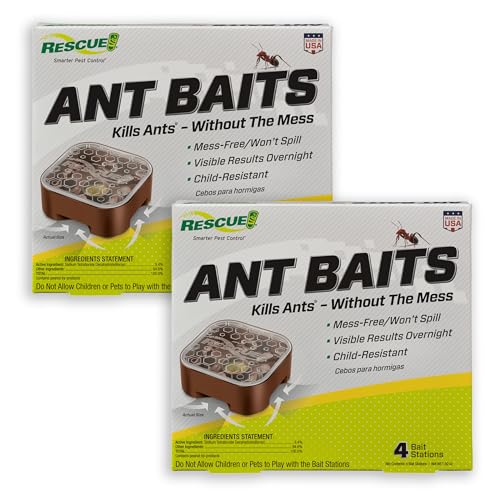
A bait station is a closed plastic container holding poison that ants walk into and carry home. The seal is the whole point, and the good ones are built to resist tampering by kids. Look for a borax-based active ingredient, because borax is toxic to ants while the station keeps it out of reach of your dog. The trade-off is speed: ants have to find the station, feed, and drag the bait back to the nest, so your floor does not clear instantly.
Dusts and powders: strongest under baseboards, messiest on open floor
Diatomaceous earth (a fine powder made from fossilised aquatic organisms) dries ants out by clinging to their outer shell. Because it works by mechanical action rather than a chemical one, ants cannot build resistance to it. The catch for dog owners is drift — the fine powder puffs into the air and settles where it lands. So it belongs in cracks, crevices, and wall voids, not across an open kitchen floor your dog walks on. Food-grade diatomaceous earth is the version sold for household use around people and pets.
Sprays: fastest on the trail, but they are surface treatments
An essential-oil spray kills the ants you hit directly and leaves a residue that discourages the next wave. Peppermint, clove, spearmint, geraniol, and citronella are the usual actives. Read the label instruction carefully on these, because most say the product is safe around pets when used as directed — and the direction usually means spraying surfaces, letting them dry, and keeping animals out of the room until the mist settles. None of these are meant to go on your dog’s skin or on food preparation surfaces.
What to check before you buy
Confirm the label names dogs or pets explicitly rather than just saying “natural.” Check the active ingredient so you know whether you are dealing with borax, an essential oil, or diatomaceous earth. Look for the reapplication interval, since outdoor perimeter sprays get washed off by rain. And note whether the product treats the trail only or the whole colony, because that changes how long you will be at it.
Quick Comparison
| Model | Best For | Form | Active Ingredient | Pet-Safety Wording | Amazon |
|---|---|---|---|---|---|
| Diatomaceous Earth Food Grade & Peppermint Powder★ Best Overall | Cracks and crevices | Powder | Diatomaceous earth, peppermint oil | Food-grade, safe around people and pets | Amazon |
| RESCUE! Ant Baits – 2 PackSafest Placement | Homes with dogs and kids | Bait station | Sodium Tetraborate Decahydrate (Borax) | Child-resistant design | Amazon |
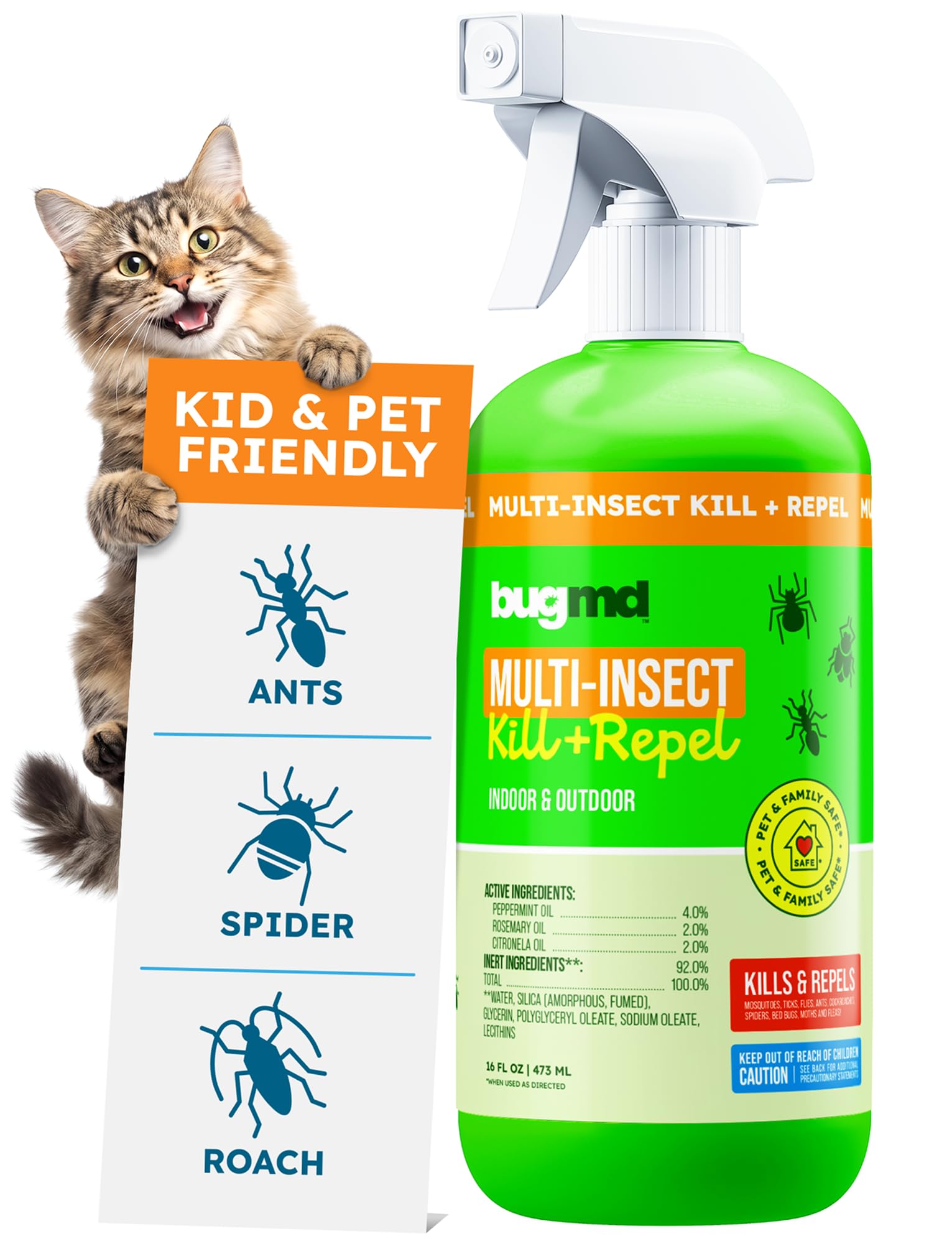
| BugMD Pet Safe Multi-Insect KillerMost Versatile | Multi-pest household spray | Spray | Peppermint, rosemary, citronella oils | Formulated for use around children and pets | Amazon |
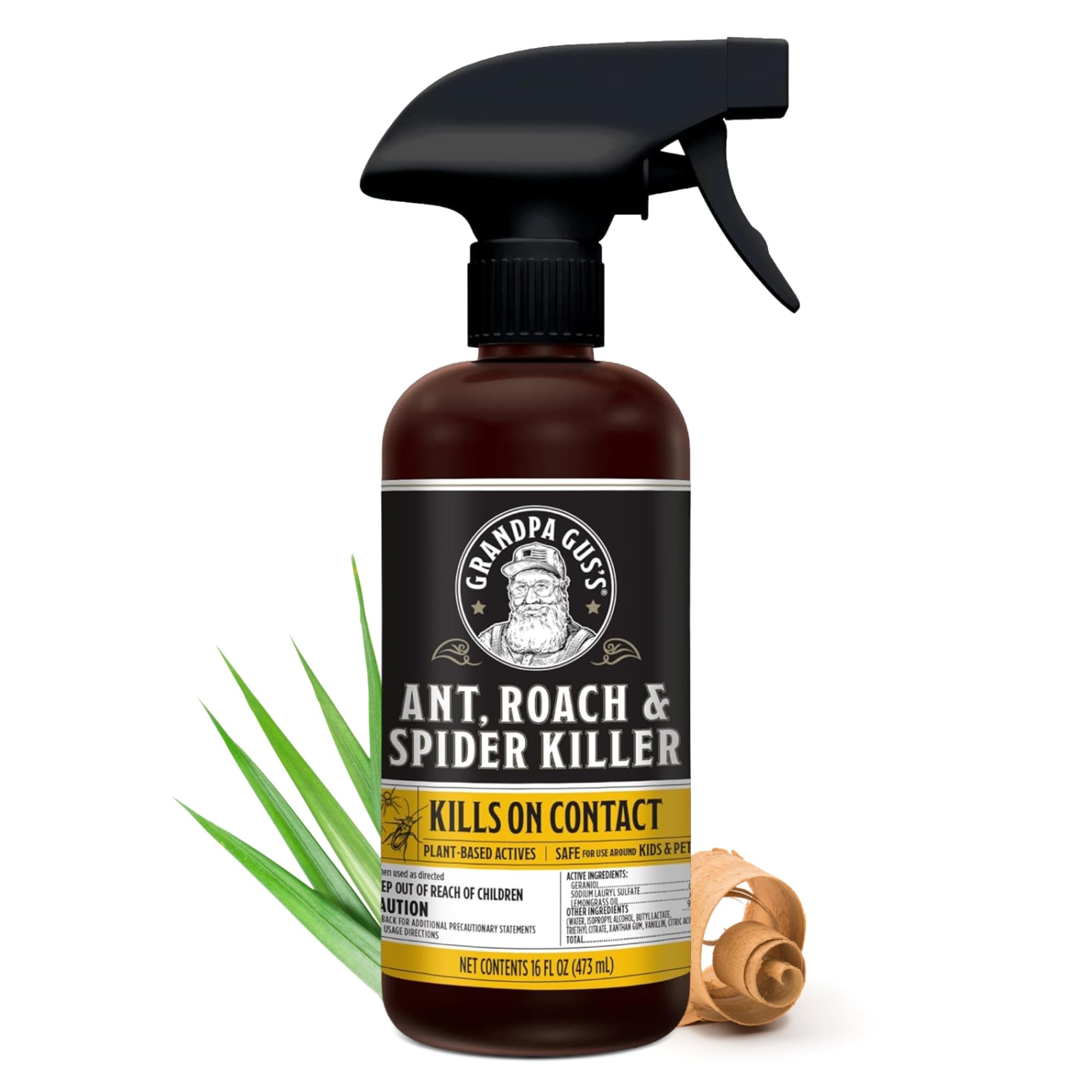
| Grandpa Gus’s Bug Pest Killer Spray | No-stain surface spraying | Spray | Geraniol, lemongrass oil | Safe around kids and pets when used as directed | Amazon |
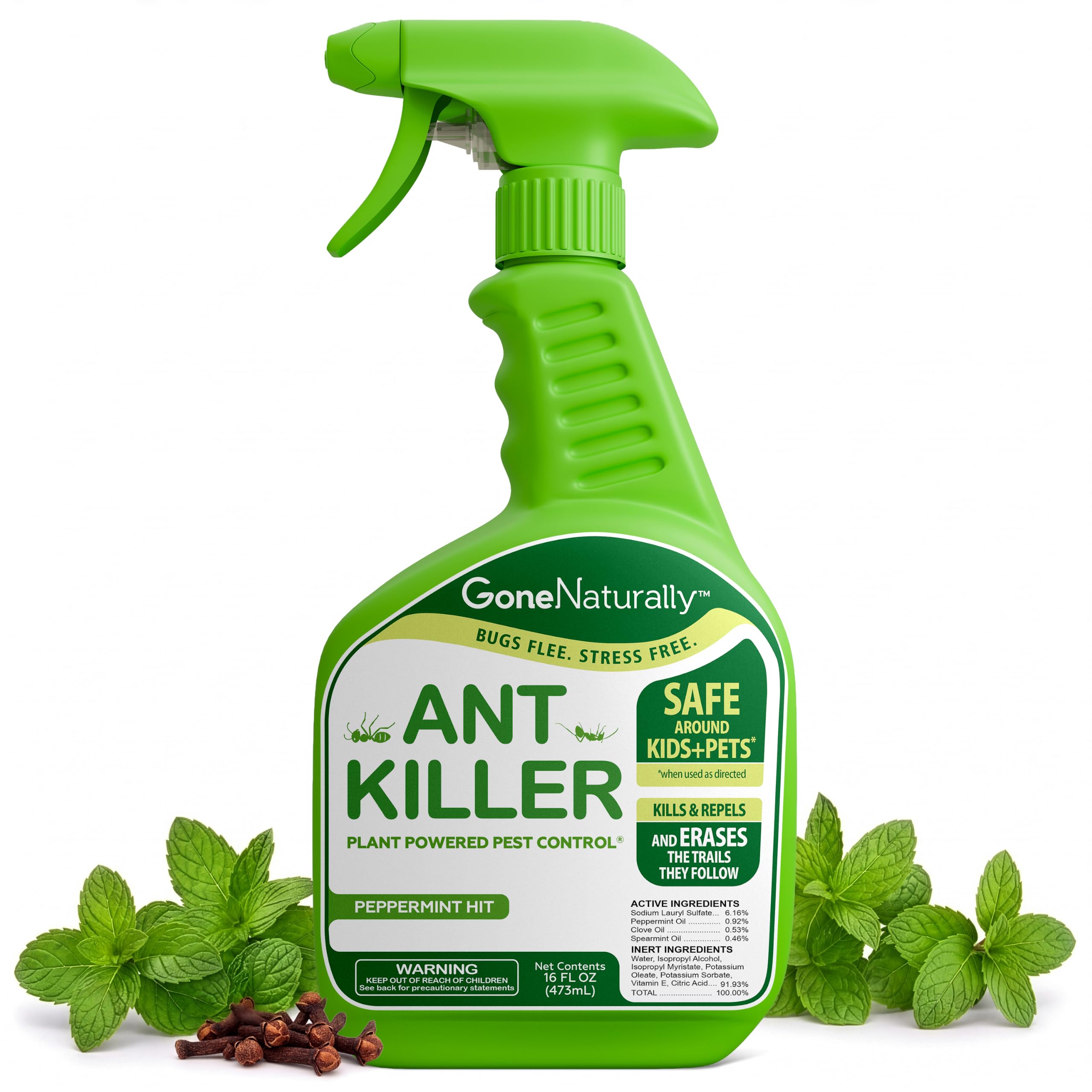
| Ant Killer – Indoor & Outdoor Peppermint Spray | Killing the trail directly | Spray | Peppermint, clove, spearmint oils | Safe around kids and pets when used as directed | Amazon |
| Peppermint Oil Spray for Bugs | Whole-home indoor and outdoor | Spray | Peppermint, clove, spearmint oils | Safe around kids and pets when used as directed | Amazon |
| EcoVenger Ant Killer & Nest Treatment | Large areas and heavy infestations | Spray | Geraniol, citronella oil, cedarwood oil, Sodium Lauryl Sulfate | Safe around children, elderly, pets, birds, fish | Amazon |
| BugMD Bed Bug Spray, Roach and Ant Killer Kit | Multi-pest coverage, mix-your-own | Concentrate kit | Clove Oil (0.5%), Cottonseed Oil (0.5%) | Safe around kids and pets when used as directed | Amazon |
In‑Depth Reviews
1. Diatomaceous Earth Food Grade & Peppermint Powder for Crawling Insect and Pest Control – 1 lb
Our pick — 4.5+★ from 800+ verified ratings; the strongest balance of quality and price.
The powder that never stops working, because ants can’t build resistance to a physical kill.
For a dog owner, the appeal of this one is straightforward: it is food-grade diatomaceous earth blended with peppermint oil, packed as a 16 Ounce tub. Diatomaceous earth is a fine powder made from fossilised aquatic organisms, and it kills crawling insects by clinging to their outer shell and drying them out. Because that is a physical action rather than a chemical one, ants do not develop resistance to it — unlike sprays they can adapt to over repeated use. The peppermint oil adds a scent that crawling insects tend to avoid, so you get two mechanisms in one container.
The version worth understanding is coverage. You apply it into cracks, crevices, and around entry points to build a barrier rather than spreading it across open floor, which suits a home with a dog because the powder stays out of the walking path. It is labeled for both indoor and outdoor use and is suitable for organic gardening, so it works as a perimeter dust as well as a baseboard treatment. What wins people over is the effectiveness of the barrier — it is the thing that gets discussed most in the review pages, followed closely by the visible drop in ant numbers. The scent also gets consistent approval, which matters when a treatment is sitting under your kitchen cabinets for weeks.
Where this falls short of a bait product is colony reach. It kills ants that cross the treated line, but it does not recruit the colony to carry anything back to the nest, so a heavy infestation behind a wall may keep producing new foragers. The other honest catch is drift — fine powder puffs when disturbed, so a light dusting beats a heavy pour, and you should keep your dog out of the immediate area while you are applying it. For a barrier job in a dog-owning home, it is the pick I would start with.
What earns it the top slot
- Food-grade diatomaceous earth, labeled clean with no additives or fillers
- Physical kill action, so ants cannot build up resistance the way they can to sprays
- Works indoors in cracks and outdoors as a barrier, in one 16 Ounce container
- Peppermint oil adds a repellent scent on top of the drying action
Where it stops short
- Kills on contact with the barrier only — it does not bait the colony back to the nest
- Fine powder drifts, so heavy application makes a mess and needs care around a dog
Reach for this if: you want a low-toxicity barrier along baseboards, door thresholds, and cracks where your dog does not walk.
Think twice if: the nest is behind a wall and you need the colony itself wiped out — a borax bait station does that job better.
2. RESCUE! Ant Baits – 2 Pack – 8 Bait Stations
Eight sealed stations your dog can nose at all day without getting inside one.
If your dog is the type to investigate anything new on the floor, a sealed bait station is the least stressful way to treat an ant problem. You get 8 stations in this 2-pack, each a closed plastic housing holding bait built on Sodium Tetraborate Decahydrate — borax, essentially. Borax is toxic to ants and is not toxic to children and pets at the levels in the station, and the housing is lab tested against child tampering. That combination is why it sits high on this list for a dog household: the poison is inside a container, not dusted across your floor.
Setup takes no time at all. The stations arrive ready to use with nothing to activate, nothing to spill, and nothing to mix. You place them where you see ants — the manufacturer excludes carpenter, harvester, fire, and Pharaoh ants, so this is a product for common house and pavement species. From there the mechanism does the work: ants enter, take the bait, and carry it back to the nest, sharing it with the colony. That is the difference between killing the ants you can see and killing the ones you cannot. The dual bait technology is described as starting within hours, with a visible reduction in your home within days.
The honest fit note here is speed, and it is the one thing the reviews argue about most. Some households see the floor clear inside a day; others are still watching traffic on day three. That is not a defect so much as how bait works — a colony has to be recruited before it collapses, and colony size varies. If you need ants dead on sight this afternoon, a direct spray gets you there faster. If you want the nest itself handled and you want to stop worrying about what your dog is sniffing, this is the cleaner answer.
Why it earns its place: the tamper-tested housing plus a borax active ingredient means the treatment sits on your floor without your dog being able to reach the poison inside.
Set expectations: visible results are measured in days, not minutes, and it does not cover carpenter, harvester, fire, or Pharaoh ants.
The dog-household default: buy this when the ants are trailing across open floor your dog uses and you want the poison physically enclosed.
Look elsewhere when: the species is carpenter or fire ant — this station is not labeled for either.
3. BugMD Pet Safe Multi-Insect Killer and Repellent Spray
One bottle that hits ants, spiders, and roaches — and pushes mice out of the garage too.
Ants are rarely the only pest in a dog household, and this spray is built for the broader job. It kills ants, spiders, and roaches on contact using peppermint, rosemary, and citronella oils, and it is formulated for use around children and pets when used as directed. For scale reference, the bottle is a compact 7.83 x 4.09 x 2.99 inches — noticeably smaller in footprint than the 8.58 x 6.5 x 3.11 inch indoor/outdoor spray elsewhere on this list. It stores easily under a sink or on a garage shelf.
Where it earns its keep is the perimeter work. It suits non-porous surfaces around the home — baseboards, windowsills, and kitchen areas — and you reapply every three to five days to keep the barrier in place. The concentrated peppermint scent pulls double duty as a rodent deterrent, which is the part most buyers do not expect: the same spray that clears ants off a windowsill also helps push mice away from basements and storage areas. What wins people over is straightforward effectiveness against the insects you actually see, and the fact that it is not as harsh as conventional bug spray is the reason it gets used indoors at all.
Two things to know before you commit. First, the scent is strong and opinion is split on it — some find the mint pleasant, some find it heavy in a small kitchen. Second, the effect is a repellent barrier rather than a nest treatment, so you are reapplying every few days rather than solving the colony once. Used as a surface spray and left to dry before your dog returns, it is a genuinely useful bottle to have on the shelf.
The double-duty angle: peppermint, rosemary, and citronella oils kill on contact and leave a residue that deters, with the same scent working against rodents in garages and basements.
The honest limit: it is a surface treatment you refresh every three to five days, not a one-and-done colony kill, and the mint scent is polarising.
Worth grabbing if: ants are coming in at windowsills and baseboards and you want one spray that also handles spiders and roaches.
Pass on it if: strong mint smells bother you, or you need something that reaches the nest rather than the surface.
4. Grandpa Gus’s Ant, Roach, and Spider Bug Pest Killer Spray, 16 Fl Oz
Geraniol and lemongrass do the killing, and the formula leaves carpets and fabrics alone.
Here is the specific spec that matters for indoor spraying: no staining. This 16 Fl Oz bottle is powered by geraniol and lemongrass oil, both plant-based essential oils, and the manufacturer states plainly that it will not stain carpets, fabrics, or any surface. If you have ever hesitated to spray along a door frame because of what it might do to the rug underneath, that claim is the whole pitch. At 1.19 pounds it is also marginally lighter in hand than the 1.26-pound indoor/outdoor spray on this list, which makes a difference over a long perimeter pass.
The kill mechanism is worth understanding. Geraniol and lemongrass soak into an insect and shut down its central nervous system, so the knockdown is fast on anything you hit directly. Targets are ants, roaches, and spiders, and the intended spots are baseboards, window frames, door frames, cabinet edges, and foundation cracks — the entries, in other words, not the middle of the floor. It is ready to use with no mixing; you shake it, hold the bottle about 12 inches from the insect, and pull the trigger two or three times to cover it. The scent is described as light and fresh, with no need to clear the room after spraying.
Now the part you should weigh honestly: effectiveness divides opinion sharply. Some households find it really works and come back for more; others report no result at all, and the smell splits the same way — nice to some, unpleasant to others. That spread often depends on species and how directly the spray hits. It kills what you spray, but it is not the product for a nest you cannot see. It is also not for use on food preparation surfaces or on skin, so keep it off the countertop and off your dog.
Strongest reasons to buy
- Geraniol and lemongrass oils shut down an insect’s nervous system on contact
- Will not stain carpets, fabrics, or surfaces, per the manufacturer
- EPA minimum risk essential oils, with no need to clear the room after spraying
- Ready to use — shake, hold 12 inches away, two or three trigger pulls
What to weigh first
- Results vary widely by household — direct contact matters, and some report no effect
- Not for food preparation surfaces or skin, so countertop ants need another method
The fit here: homes with carpets and upholstery near the entry points where ants are getting in.
Not the fit: a colony living behind a cabinet — this kills on contact, not at the source.
5. Ant Killer – Indoor & Outdoor Ant Killer Spray for Carpenter, Pavement & Little Black Ants – Peppermint Oil Ant Spray, 16oz
Kills the ants in front of you, then wipes out the scent trail that brought them.
Most ant sprays stop at the ant. This one targets the chemical breadcrumb trail. Peppermint, clove, and spearmint oils kill the Carpenter, Harvester, Argentine, Odorous, Pavement, and little black ants you spray directly, then the residue erases the invisible pheromone trail that leads the rest of the colony to your kitchen. That second half is the useful part in a dog household: you are not chasing individual ants around the floor, you are shutting down the route. It dries in minutes without a sticky residue, which is why it can go along a baseboard without leaving a film your dog picks up on a paw.
For outdoor duty it doubles as a perimeter barrier. The intended spots are doorways, windowsills, patios, decks, garage thresholds, driveway edges, and foundation lines — you spray the entry points and the residue discourages new trails from forming. Respray as required and after rain, since weather washes the barrier down. Inside, it is a surface and area spray: fine for play areas, bedrooms, and pet corners when used as directed, but never applied to skin, pets, or food. Cat households get a specific instruction — spray surfaces only, keep cats out of the room, and let it dry before they come back. Caged birds come out of the room before spraying and stay out until the area is dry and aired.
It is worth being clear about what this replaces. Bait traps work by getting ants to carry poison home, and that can take 2 to 4 weeks to show results. This is a different form factor entirely — you aim it at the ants and the trail, with nothing to set out and nothing to monitor. The manufacturer’s routine for an active problem is daily spraying for 5 days, then as required. What wins people over is the visible kill: it works fast on the ants you hit, and the mint scent is clean while you are spraying it and light once it dries. If your dog is the reason you want the ants gone today rather than in a fortnight, this is the direct route.
The standout detail: it kills the six named species you spray and then breaks the pheromone trail so the rest of the line stops arriving.
Plan around this: outdoor coverage fades after rain and needs respraying, and it is a surface spray — never onto your dog or onto food surfaces.
Choose it when: the ants are marching a visible route across your floor or foundation and you want them stopped on sight.
Choose something else when: the nest is out of reach and you would rather bait the colony than keep spraying the survivors.
6. Peppermint Oil Spray for Bugs – Extra Strong Insect Repellent & Bug Spray for Home, 16oz

One peppermint bottle for the whole house — baseboards inside, patio furniture outside.
This is the widest-net spray in the group. Extra-strong peppermint, clove, and spearmint oils kill the ants, roaches, spiders, silverfish, earwigs, and other crawling insects you spray directly, and it handles flying insects with the same direct hit. The scope of the job is the point: kitchen baseboards, bedrooms, and basements inside, plus patios, door frames, and garden furniture outside. One bottle in the cupboard covers all of it, which is a different proposition from buying a separate indoor spray and a separate outdoor one.
The application details are the ones that decide whether you make a mess. It is ready to use — shake and spray, no dilution and no fogging — and it dries clear on baseboards, counters, and most finishes. Dark or sealed surfaces are the exception, so spot-test those first. The manufacturer’s efficiency note is worth repeating because it saves product: a light targeted mist covers more ground than a heavy soak, and every bottle stretches across hundreds of sprays. For an active problem the routine is daily for 5 days, then as required. The peppermint scent lingers afterward and keeps repelling ants, roaches, and spiders, which is the second half of the job.
Two practical caveats. The value question divides opinion — some households come back for another bottle, others feel it does not stretch far enough for what they paid. And bottle leakage is a recurring complaint, so check the seal when it arrives and store it upright. The safety wording is the same as its stablemate: it is a surface and area spray, not for skin or pets, and cat households should spray surfaces only, keep cats out until dry, and remove caged birds from the room before spraying.
Why it covers more ground
- Peppermint, clove, and spearmint oils handle ants, roaches, spiders, silverfish, and earwigs
- Indoor and outdoor in one bottle — baseboards, patios, door frames, garden furniture
- Dries clear on most finishes with no mixing, dilution, or fogging needed
- Residual peppermint scent keeps repelling after the spray has dried
What to watch
- Bottle leakage comes up repeatedly — check the seal on arrival and store upright
- Value splits opinion, and dark or sealed surfaces need a spot test before full spray
Best matched to: a household that wants one bottle doing indoor baseboards and outdoor patio edges without buying two products.
Think again if: you need colony-level control — this repels and kills what it touches, but the nest stays put.
7. EcoVenger Ant Killer & Nest Treatment (32 OZ)
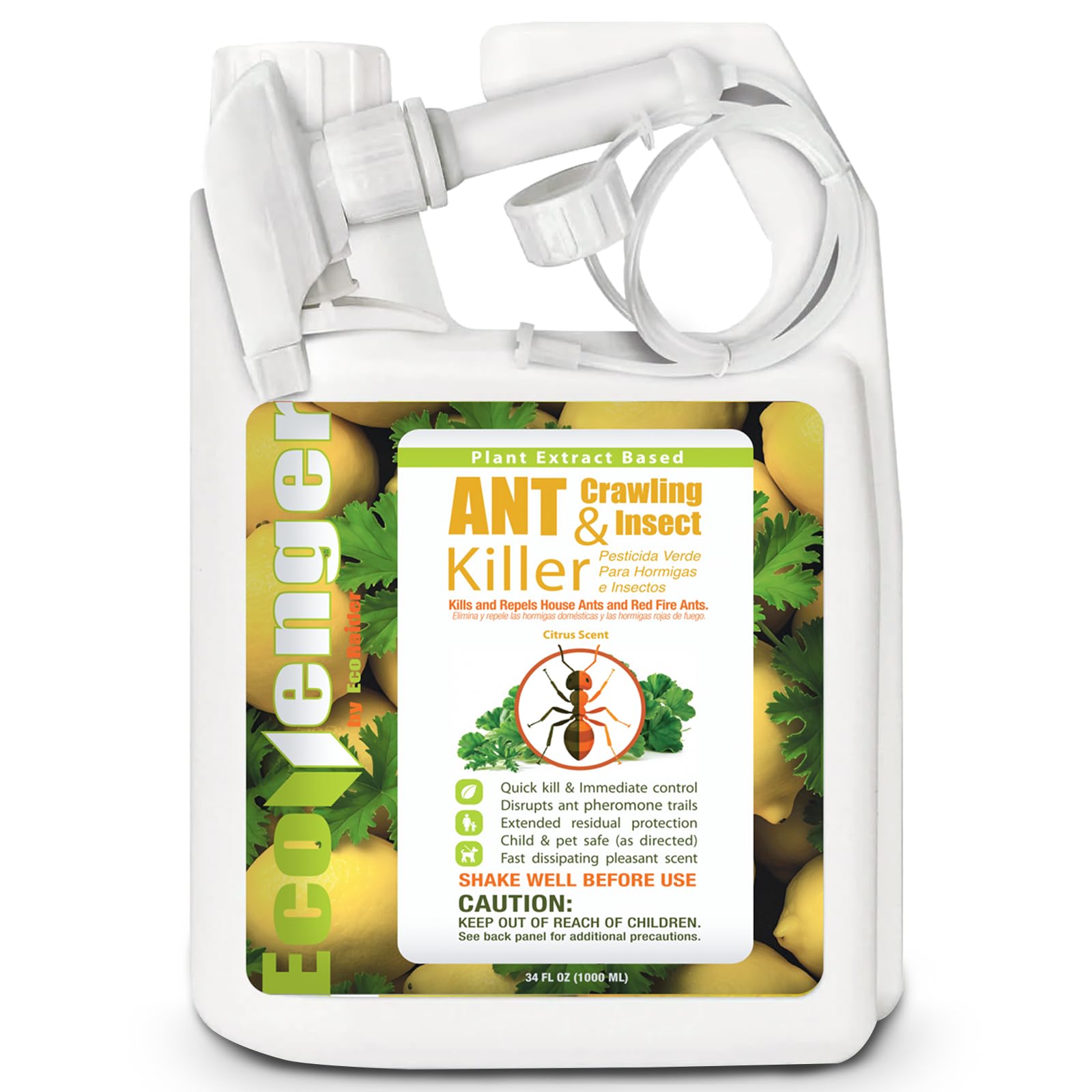
A 32-ounce bottle that claims a one-minute kill and a four-week barrier in one pass.
Two numbers define this product. It is a 32 Fluid Ounce bottle — double the size of the 16-ounce sprays here — and the manufacturer states it kills 100% of house ants in 1 minute and fire ants in 6 minutes. It also disrupts pheromone trails to stop foraging and prevents re-entry for 4 weeks and beyond. The active ingredients are geraniol, citronella oil, cedarwood oil, and Sodium Lauryl Sulfate, built around a plant-powered formula that the maker says isolates the most potent insecticidal botanical compounds. Beyond ants, it targets roaches, beetles, silverfish, spiders, and springtails, and it works on both Odorous House Ants and Fire Ants.
On the pet side, this is the most explicitly worded label in the group. The manufacturer states the formula was tested by an EPA-authorized safety lab and proven safe for use around children, the elderly, pets, birds, and fish. It leaves no stains, requires no room evacuation, and the scent dissipates quickly. At 2.3 pounds it is the heaviest bottle here, so expect a workout on a long foundation pass, but the volume means fewer refills on a large property. Nozzle care matters — the manufacturer notes the nozzle contains delicate parts that can be damaged in transit or by improper use, and they provide a free replacement if it arrives compromised.
Be realistic about the mixed signals. Effectiveness splits sharply: some households report it working instantly, others report no result at all, and the smell divides the same way with some finding it pleasant and some too strong. Value and spray performance draw criticism in places. This is the product to pick when you want one large bottle for a big perimeter job and you value the explicit pet-safety testing, not when you want a guaranteed instant outcome on a tough infestation.
The scale argument: 32 fluid ounces, a stated 1-minute kill on house ants and 6-minute kill on fire ants, with re-entry prevention claimed for 4 weeks and beyond.
The fair warning: results are genuinely split between households, the scent is strong to some noses, and nozzle damage in transit is a known risk the maker covers.
The right buyer: large yards and long foundation lines where a big bottle and an explicit pet-safety test report matter more than speed of certainty.
Not the right buyer: if you need a repeatable result on the first attempt — the outcomes reported here vary too much for that.
8. BugMD Bed Bug Spray, Roach and Ant Killer – Pet Safe (64 oz Kit)

A concentrated kit that makes 64 ounces of spray and covers 40-plus pests, not just ants.
The coverage list is the reason to buy it over a single-purpose spray. It kills ants, spiders, fleas, ticks, mites, flies, moths, mosquitoes, and carpet beetles on contact, with most pests described as down within 30 minutes. It also handles roaches and cockroaches, including German cockroaches and species resistant to traditional pesticides, and it treats bed bugs and their eggs and nymphs on mattresses, box springs, luggage, upholstery, and baseboards. That range makes it an all-in-one for someone moving into a new place or dealing with a rental that has been sitting empty. The refillable bottle cuts down on plastic on repeat orders.
The honest trade-off is twofold. First, this is a concentrate — you are mixing it yourself, which is a little more work than a ready-to-use spray and means measuring instead of grabbing and going. Second, reported effectiveness is genuinely divided: some households find it works and is worth the money, others report it doing nothing. What the scent and safety side has going for it is clear approval — the plant-based formula is the thing that gets praised most, alongside the safety for kids, babies, and pets. On a heavy bed bug or roach job, this kit gives you volume and reach that a 16-ounce bottle does not.
The case for the kit
- Makes 64 oz of ready-to-use formula from 2 concentrates plus a refillable bottle
- Clove Oil (0.5%) and Cottonseed Oil (0.5%) with no synthetic pesticides
- Targets ants, roaches, bed bugs and eggs, spiders, fleas, ticks, and more
- Plant-based formula that keeps the refillable bottle in rotation
The case against
- You mix it yourself — more measuring than a ready-to-use spray
- Reported effectiveness divides sharply between households
Pick this one if: you are outfitting a new or empty home and want one kit for ants, roaches, and bed bugs at once.
Leave it if: you want zero measuring and a formula that behaves the same in every household.
Understanding the Specs
Active ingredient: borax vs essential oils vs diatomaceous earth
These three work in completely different ways, and that changes everything about how you use them around a dog. Borax, the active in a bait station, is toxic to ants and is kept away from pets by the sealed housing — the poison is inside, not on the floor. Essential oils like peppermint, geraniol, clove, and citronella act on contact by shutting down an insect’s nervous system, then leave a scent that repels the next wave. Diatomaceous earth is a mechanical killer: the fine powder clings to an insect’s shell and dries it out, so ants cannot build resistance to it the way they can to a spray used repeatedly.
Contact kill vs colony kill: which problem you actually have
Contact products kill the ants you hit; colony products kill the nest. If ants are trailing across your floor and you want them gone this afternoon, a direct spray is the tool. If the trail keeps regenerating no matter how many you kill, the colony is behind a wall or under a slab and you need a bait the ants carry home — that takes longer, measured in days, and the station has to stay in place while they recruit. For a heavy, recurring infestation, the two together make more sense than either one alone.
Why “safe around pets when used as directed” is a real instruction
That wording is not a disclaimer to skip past — it is the operating manual. For every spray here it means a surface and area treatment, never applied to skin or to your dog, and never onto food preparation surfaces. In practice that means spraying baseboards and door frames, letting the surface dry, and keeping your dog out of the room until it does. Cat households get a stricter line on most of these labels: spray surfaces only, keep cats out until dry. Caged birds come out of the room before spraying.
Reapplication interval and rain
A barrier only works while it is there. The essential-oil sprays here call for refreshing every three to five days, and outdoor perimeter treatments need respraying after rain because weather washes the residue away. Bait stations sit until the ants are done, then go in the bin. Diatomaceous earth stays effective as long as it stays dry and undisturbed, which is why it suits crevices and wall voids better than open floor. Match the reapplication rhythm to the product and you stop wasting both time and formula.
FAQ
Is borax in a bait station actually safe to have on the floor with a dog?
Which is faster for a dog household — a bait station or a spray?
Can I spray an essential-oil ant product near my dog’s bed or food bowl?
Does diatomaceous earth stop working after a while?
How long does a peppermint ant spray keep repelling after it dries?
Will these products work on carpenter ants and fire ants?
Is a concentrate kit harder to use than a ready-to-use spray?
What should I do if my cat shares the house with the dog?
Do I need to clear the whole house after spraying an essential-oil ant killer?
Can I use a powder and a spray in the same room?
Final Thoughts: The Verdict
For most homes with a dog, the winner is the Diatomaceous Earth Food Grade & Peppermint Powder. It carries 4.5+ stars across 800+ ratings, it is food-grade, and because it kills by physical action rather than chemistry, ants never adapt to it — dust the cracks and entry points and the barrier keeps working. That makes it the least stressful product to live with in a house where a dog roams the floor.
If your dog is the type to investigate anything new on the floor, though, skip the dust and go with the RESCUE! Ant Baits. The borax sits inside eight tamper-tested stations, so the treatment is on the floor without the poison being reachable, and the ants carry it back and kill the nest you cannot see. And if ants are already marching a visible route across your kitchen and you want them stopped this afternoon, reach for the indoor/outdoor peppermint spray — it kills six named species on contact and erases the pheromone trail that brought them in.
Whichever you choose, remember that every one of these is labeled safe around pets when used as directed, and that direction matters as much as the product. Spray the baseboard, not the dog. Let the surface dry before the room is shared again. Keep the bait stations out of a heavy chewer’s path. Do those three things and a dog household can deal with an ant problem without a second thought about the floor.
How We Picked
We do not accept paid placement. Every pick is matched to a real buyer and a real use-case; we do not hands-on test units.
Sources & Methodology
Specifications: manufacturer listings and product documentation. Review insights: verified customer reviews. Pricing: not shown on this page (it changes often); check the current price via the retailer link.
As an Amazon Associate, Gadgets Feed earns from qualifying purchases. This does not affect which products we feature.