
Our readers keep the lights on and my morning glass full of iced black tea. As an Amazon Associate, I earn from qualifying purchases.
Specs are compiled from manufacturer listings and verified buyer reviews and can change over time — please confirm the key details on the product page before buying.
You want a 4 inch muffler pipe that slips over your old tubing, seals tight, and doesn’t rattle loose on the first rough road. The short answer: buy by material and by fit style first, not by length. A 4 inch outside-diameter (OD) pipe is measured across the outside of the tube. A 4 inch inside-diameter (ID) pipe is measured inside the wall. Mixing those two up is the single most common reason a replacement pipe won’t seal. Below, every pick is a genuine 4 inch pipe, sorted so you can grab the right one in about five minutes.
I’m Min — the founder and writer behind Gadgets Feed. This guide is built by comparing the manufacturers’ published specifications and the patterns across verified customer reviews, so you get each pick’s real strengths and trade-offs instead of marketing spin.
Most buyers just need a straight length of stainless to replace a rusted section or delete a muffler, and the picks below cover that job at every budget level. What separates a good buy from a return is wall thickness, weldability, and whether the ends are flared for a slip fit — so read the sizing notes before you order anything. The right 4 inch muffler pipe depends on matching your existing tube’s diameter and its weld-or-clamp ends.
Our Picks at a Glance


How To Choose The Best 4 Inch Muffler Pipe
Exhaust work is unforgiving about size. A pipe that is a fraction off on diameter will leak, buzz, or refuse to slide on at all. Pick your pipe on four things: the diameter measurement type, the material, the wall thickness, and whether the ends are flared or straight-cut.
Know whether your truck uses OD or ID
An OD pipe measures across the outside of the tube, while an ID pipe measures the inside of the wall. Your factory system is likely one or the other, so crawl under the vehicle and measure the pipe you are joining. A slotted, flared pipe end slides over an OD pipe, which is why most muffler-delete jobs want a flared end rather than a plain cut.
Pick the steel for your climate
T-304 stainless resists rust in wet and corrosive environments, which matters if your truck sees road salt. Lower-grade steel and galvanized pipe cost less and still work, but they will not hold up as long in a coastal or winter-salt climate. If you plan to weld, mild steel is the easiest to lay a bead onto.
Match the shape to the job
A straight length replaces a rotted section or deletes a muffler. A mandrel bend (a pipe formed around a die so it keeps its full round shape through the turn) routes around an axle or frame rail without pinching airflow. A flex pipe has a corrugated band in the middle that absorbs engine movement and dampens vibration so the rest of the system isn’t stressed.
Quick Comparison
| Model | Best For | Pipe Length | Material | Shape | Amazon |
|---|---|---|---|---|---|
| JY PERFORMANCE 47.3 in Straight Pipe★ Best Overall | Best overall all-rounder | 47.3 in | T-304 stainless | Straight | Amazon |
| TORDXICS 16.5 in Flex PipeBest for Vibration | Best for vibration control | 16.5 in | T-304 stainless | Flex | Amazon |
| A-KARCK 45 Degree BendBest Bend | Best for routing a turn | — | Mild steel | 45° bend | Amazon |
| JY PERFORMANCE 30 in Replacement Pipe | Best muffler-replacement fit | 30 in | T-304 stainless | Straight | Amazon |
| A-KARCK 30 in Straight Pipe | Best flared slip-fit ends | 30 in | Stainless steel | Straight | Amazon |
| BIGREAT 48 in Straight Pipe | Best for long runs | 48 in | T-304 stainless | Straight | Amazon |
| TBAPFS 47.25 in Straight Pipe | Best polished finish | 47.25 in | T-304 stainless | Straight | Amazon |
| Walker Heavy Duty 43381 Flex Pipe | Best ID fit for big trucks | 36 in | Galvanized steel | Flex | Amazon |
| BIGREAT 409 Steel 48 in Pipe | Best budget long pipe | 48 in | 409 steel | Straight | Amazon |
In‑Depth Reviews
1. JY PERFORMANCE 4 Inch Stainless Steel Exhaust Pipe, 47.3 Inch Long
Our pick — 4.5+★ from 400+ verified ratings; the strongest balance of quality and price.
Stainless that resists the salt and holds its polish — the safe first pick for most trucks
The number to plan around is 47.3 inches of tube at a 4 inch outside diameter (the width across the outer wall), cut from T-304 stainless steel. That length reaches most frame-rail runs without a splice, so you are welding or clamping one joint instead of three. T-304 is the higher-grade stainless of the two common options here, and it resists rust in wet and corrosive environments — the difference you notice after a winter of road spray.
What wins people over is the build itself. The pipe is thick enough at 17 gauge (1.4mm) to butt-weld without blowing through, and it holds up as a solid, straight section rather than a soft tube that deforms under a clamp. Buyers overwhelmingly lead with quality when they describe it, and the value lands right behind — this is the straight section you weld in once and forget.
The honest catch is material consistency. The steel itself and the wall thickness both draw split opinions, with some calling the metal excellent and others doubting it is genuine 304 or finding the wall on the thin side. For a daily-driver repair in a dry climate that changes nothing. If you are building a show truck or welding heavy boost tubing, measure the wall yourself before you commit.
What earns it the top spot
- 47.3 inch length covers most runs with a single joint
- T-304 stainless resists rust in wet, salty conditions
- 17 gauge (1.4mm) wall is weld-friendly
Where it can disappoint
- A few buyers question whether the steel is true 304
- Wall thickness draws split opinions — some find it thin
Reach for this if: you need one long stainless straight section and want the highest-rated, most-proven 4 inch pipe on the shelf — it carries 4.5+ stars across 400+ ratings, the strongest record on this list.
Look elsewhere if: you need a flex joint or a bend, since this is a rigid straight length only.
2. TORDXICS 4” x 16.5” Length Universal T304 Stainless Steel Exhaust Flex Pipe
The short flex section that soaks up engine shake before it cracks your welds
If your exhaust drones and buzzes at highway speed, or your last weld cracked just past the header, a flex pipe fixes the cause. This one runs 16.5 inches at 4 inch diameter, pre-cut from T-304 stainless, so it drops straight into the run without trimming. Compare that to the 48 inch straight lengths in this list and you see the trade instantly: far shorter, but it bends with the engine instead of fighting it.
The construction is a single roll band, which is what gives a flex pipe its give while holding up to heat cycling. It works for weld or clamp installs, so you can go either route depending on your tools. Buyers report it coming through a salty road season with no discoloration or corrosion on the braid.
Flexibility is the one split point — a few find it stiffer or softer than expected, so check your angle before you cut it in. The stainless build handles corrosion, but a flex band is still a wear part, so mount it so it isn’t the lowest thing near a speed bump.
Why it earns a slot: it does the one job a straight pipe can’t — absorbing movement so the rest of the system stays intact. It takes weld or clamp installs, so it fits how you already work.
The expected catch: it’s 16.5 inches, so it’s a connector, not a full replacement run. Pair it with a straight length if you’re rebuilding a long section.
Pick this when: vibration or a cracked joint is the actual problem and you want a stainless flex section that survives the weather.
Skip it when: you only need rigid straight tubing with no movement to absorb.
3. A-KARCK Exhaust 45 Degree Tube 4″ OD, Mild Steel Mandrel Bend
A 45-degree elbow with flared ends so it slides on and keeps full round
Every straight pipe on this list hits a wall when your exhaust needs to turn around an axle or clear a frame rail. This is the piece that solves that: a 4 inch outside-diameter mandrel bend at 45 degrees, made of mild steel. A mandrel bend keeps the tube at full size through the curve instead of necking down, which is what keeps exhaust flowing instead of choking.
The ends are flared for a sliding fit, and the elbow is full size so your joining pipe seats cleanly. Owners note the female end of the elbow lines up well with the stock pipe — the fit is the second thing they talk about after quality. Mild steel takes a weld easily, so this is the one for anyone building a custom system by cutting and welding.
There is real length to work with, so you can trim it to the angle and reach your layout needs. The trade is material: mild steel will surface-rust faster than stainless if you drive in salt. Paint it or accept the patina, and it will do its job.
Reasons it sits here
- 45-degree bend routes around obstacles a straight can’t
- Full-size mandrel curve keeps airflow round
- Flared ends slide on for easier installation
- Mild steel welds cleanly for custom builds
Fitting notes
- Mild steel rusts faster than stainless in salt climates
- It’s a single bend, so plan other sections separately
Best match: custom builders who are cutting and welding their own system and need the run to turn 45 degrees.
Think twice if: you want a rust-proof finish from the start — this is mild steel, not stainless.
4. JY PERFORMANCE 4″ Muffler Replacement Pipe, 30 Inch Length

A 30-inch muffler delete that steps straight into the space your old can left
When you pull the factory muffler off, you need a pipe that matches its footprint — that is what this 30 inch piece does. It runs a 4 inch inlet and 4 inch outlet with a 4 inch diameter and 30 inch overall length, cut from 304 stainless with a 17 gauge (1.4mm) wall. The in-and-out sizing means it bolts in where the muffler was, so you are not fabricating adapters.
The polished finish forms a protective film that resists scaling and rust, and it arrives looking sharp enough to show. Owners rate quality and fit nearly equally high, the pairing that matters most on a muffler-delete section. At 4.5 pounds it is one of the heaviest 30-inch pipes here, which points to a solid wall rather than a tin shell.
The one thing to know: this is a muffler-replacement specific length, so measure your old section before ordering. If you need a longer uninterrupted run, you will be splicing two of these or stepping up to a 47 to 48 inch pipe instead.
What clinches it: the 4 inch inlet-and-outlet format drops into a muffler’s spot without adapter work, and the 304 stainless holds up to weather.
Measure first: 30 inches is a targeted length. Confirm your gap matches before you commit.
For the muffler-delete crowd: if you’re pulling the factory can and want a bolt-in stainless section, this is sized for exactly that.
Not for: long custom runs that need more than 30 inches of continuous tube.
5. A-KARCK 4” Muffler Replacement Pipe, Straight 30″ Mandrel Tube
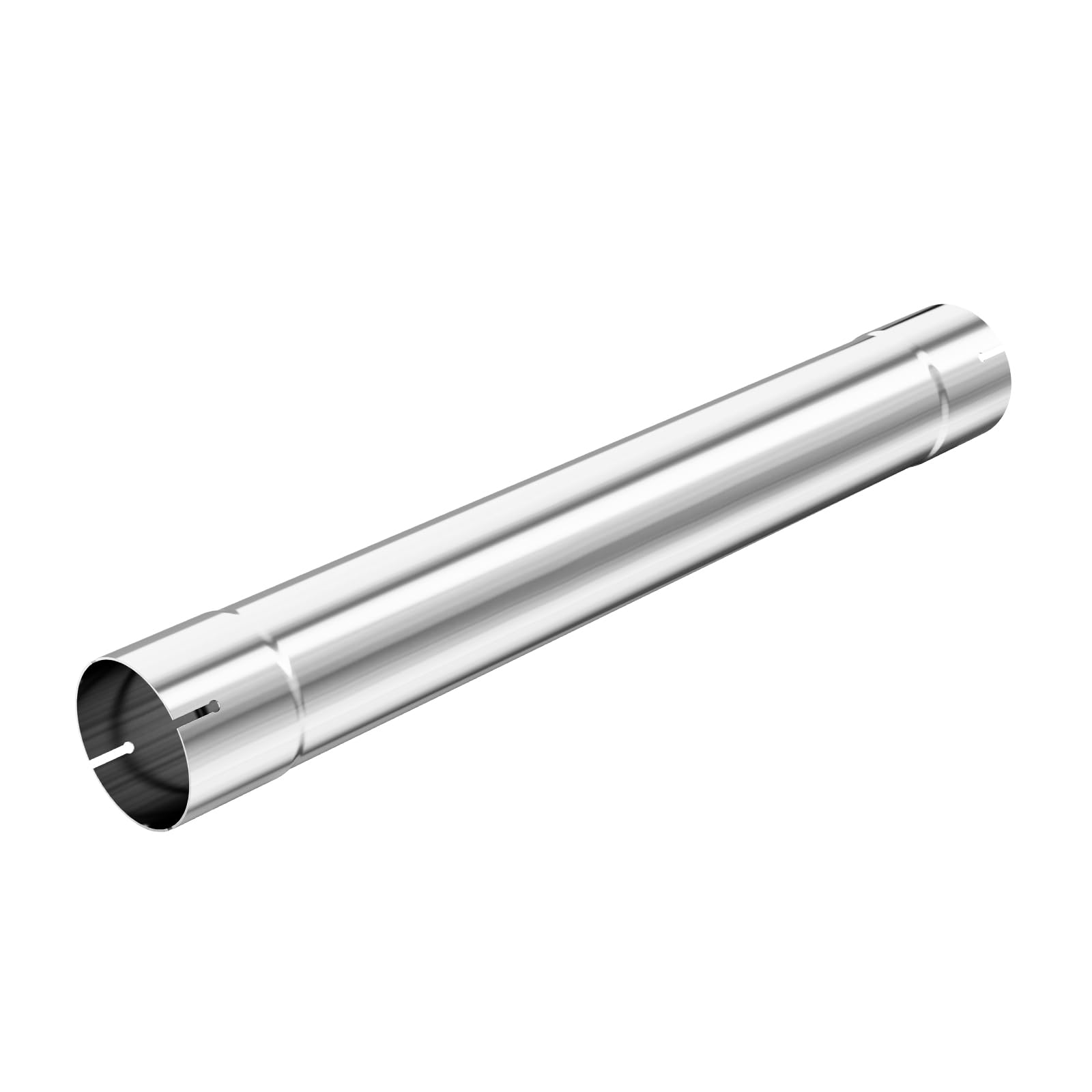
Flared and slotted at both ends, so it slides onto your stock pipe without a fight
The detail that sets this one apart is on the ends. Both ends are flared and slotted — flared so they slide over the mating pipe, slotted so you can cinch a clamp down — which is the fast route when you don’t want to weld. It runs 4 inch inlet and outlet at 30 inch overall length in stainless steel, with a smooth surface that won’t bite your hands during install.
Fit is the headline here. Owners describe it sliding straight into the old muffler’s spot without prying or coaxing. The clean, simple structure also lets you cut it to length if your layout calls for a shorter piece, so you can DIY the whole swap yourself.
The stainless resists rust and corrosion, but this is the piece for the straightforward swap — trucks, cars, SUVs, jeeps. If your job needs a twist or a flex joint, this straight length alone won’t do it and you’ll want to add a bend or flex section.
Where it shines
- Flared and slotted ends make clamping fast
- Smooth surface is easy on the hands
- Can be cut to length for custom layouts
- Fits a wide range of cars, trucks, and SUVs
Keep in mind
- Straight only — no bend or flex built in
- Measure your existing pipe’s size before ordering
Made for: the DIY swapper who wants a clamp-on stainless replacement without welding gear.
Hold off if: your route has a curve — you’ll need a bend to go with it.
6. BIGREAT OD 4” 48 Inch Length Straight DIY Custom Mandrel Exhaust Pipe
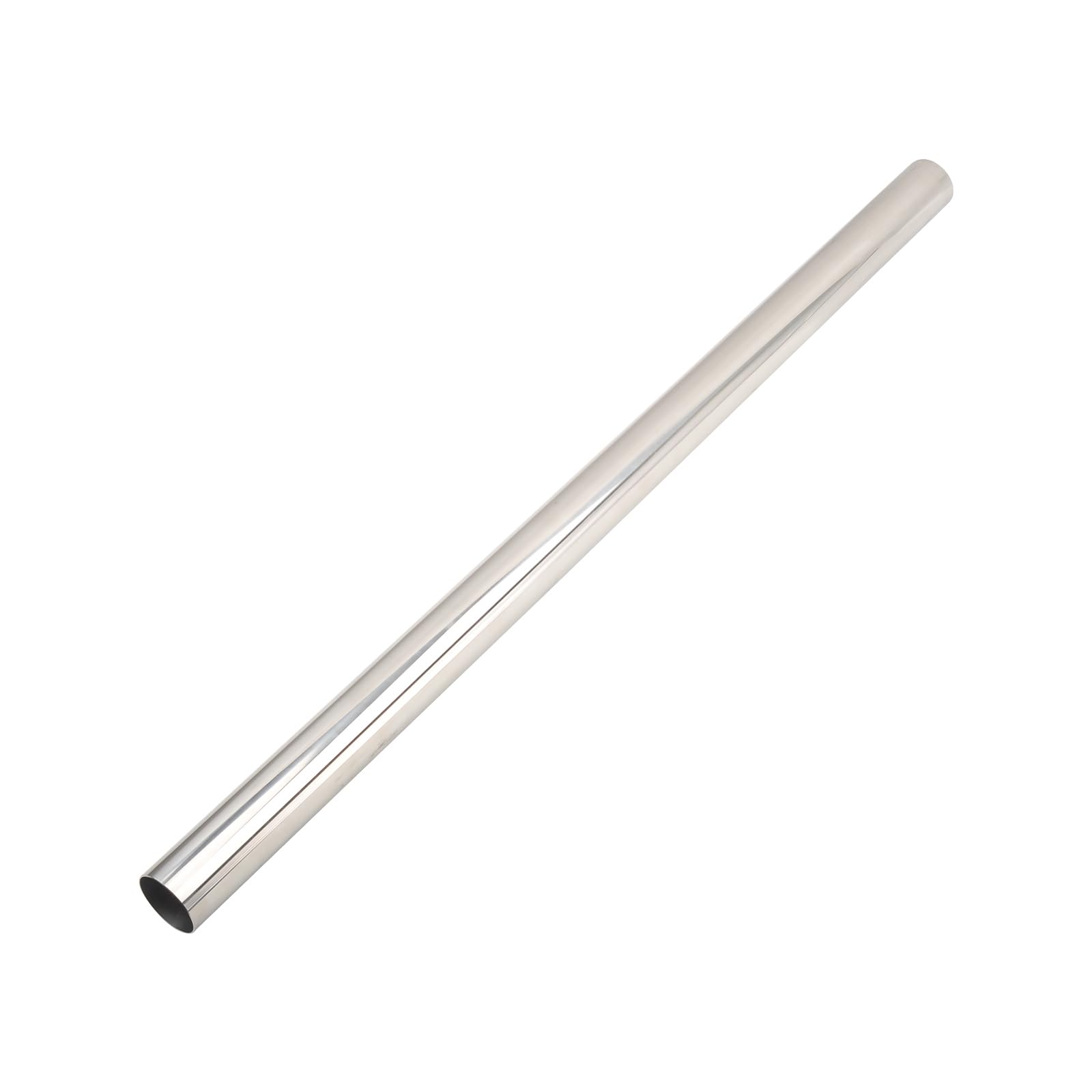
A full 48 inches of mandrel-formed stainless for builds that need real reach
Long runs go wrong when you stitch short sections together and every joint is a leak waiting to happen. This is the fix: 48 inches of continuous tube at 4 inch outside diameter, formed from T-304 stainless with computerized mandrel bending for round, consistent walls. Put it next to the 16.5 inch flex pipe and the math is plain — 48 inches versus 16.5, so you cover a rebuild span in one piece instead of chaining connectors.
The polished appearance and sturdy feel are what owners talk about first, then durability and value. It is a genuine DIY stick — cut it, weld it, and route your exhaust, air intake, or intercooler piping however your build needs. That flexibility is the appeal for anyone doing a turbo or custom layout.
Two honest quirks: several note the piece runs about 1/2 inch shorter than advertised, so measure twice and allow for the gap. Wall thickness also splits opinions, with some calling it thick and others finding it a touch under 0.065 inch. Neither ruins a daily repair, but leave yourself margin if your cut is tight.
Why long builds like it
- 48 inches covers more of the run per piece
- Computerized mandrel forming keeps the wall round
- T-304 stainless resists corrosion
- Cut-and-weld friendly for custom routing
Plan around these
- Runs about 1/2 inch shorter than advertised — measure for it
- Wall thickness draws split opinions
Go here for reach: custom and turbo builds that want one long stainless section to cut to size.
Watch the tape: if your gap is exact, account for the short fall before you cut.
7. TBAPFS Stainless Steel 4” Inch Straight DIY Custom Mandrel Exhaust Pipe

A straight 47.25 inch T-304 stick with a polished look that holds up on display
For a build where the exhaust is part of the look, this straight pipe brings the shine. It is a 4 inch outside-diameter, 47.25 inch (120cm) length of T-304 stainless with computerized mandrel forming, polished to a bright finish. Owners rave about the polished finish, which is why this one earns its slot on looks alone.
The mandrel forming keeps the tube round for consistent flow, and the T-304 steel resists rust so the finish stays bright in wet weather. It is a do-it-yourself stick for exhaust or intercooler systems, so you decide the length and the routing. Our fit note is a cross-check: 47.25 inches here versus the 48 inch BIGREAT piece — a small difference that matters if your gap is exact.
The finish draws split opinions — some love the bright mirror look, others expect a slightly different sheen. Mount it as-is for a showy engine bay, or scuff it if you want it to blend under the truck.
What sells it: the polished T-304 finish that stays bright and resists rust, on a mandrel-formed 47.25 inch stick.
The trade on finish: the polished look is a matter of taste — bright from the start, but judge the sheen against your build.
Choose it if: you want a clean, polished stainless section that looks as good as it flows.
Move on if: you need exactly 48 inches — this one is just shy of it.
8. Walker Heavy Duty 43381 Universal Exhaust Flex Pipe 4″ Inlet (ID) 4″ Outlet (ID)

Inside-diameter sizing for bigger truck systems, with flex-lock to kill the shake
Here is the measurement that trips people up: this flex pipe is sized by inside diameter — 4 inch inlet and 4 inch outlet measured inside the wall. If your system is an ID setup, that is exactly what you need. It runs 36 inches long in galvanized steel with flex-lock construction, which dampens vibrations and movement while inhibiting leaks. It weighs 5 pounds, a solid unit built for heavier-duty applications.
The galvanized steel is chosen to fight corrosion, and the burr-free finish keeps the joint seating clean. It is made to work with strap band clamps, so plan on clamping for a tight fit rather than welding. For a big-truck exhaust or a repair where the whole system shakes, the flex-lock band is the part doing the quieting.
The obvious catch: this is an ID pipe, so it will not slide over an OD system without a mismatch. Check the Amazon Confirmed Fit bar and enter your year, make, model, engine, and trim before you buy. If the bar shows an “i” with extra notes, read them — that is where fitment gotchas hide.
Why truck owners want it
- Flex-lock construction dampens vibration and inhibits leaks
- Galvanized steel inhibits rust
- Burr-free ends seat cleanly
- Designed for strap band clamps
Check before you buy
- Inside-diameter sizing will not fit an OD system
- Confirm fitment with the Confirmed Fit bar first
Right call for: bigger ID systems that shake and need a dampening flex section with 4 inch inside diameter.
Wrong call if: your pipe measures by outside diameter — this will be the wrong fit.
9. BIGREAT 409 Steel 4” Inch OD Straight Exhaust Pipe Mandrel Tubing Pipe
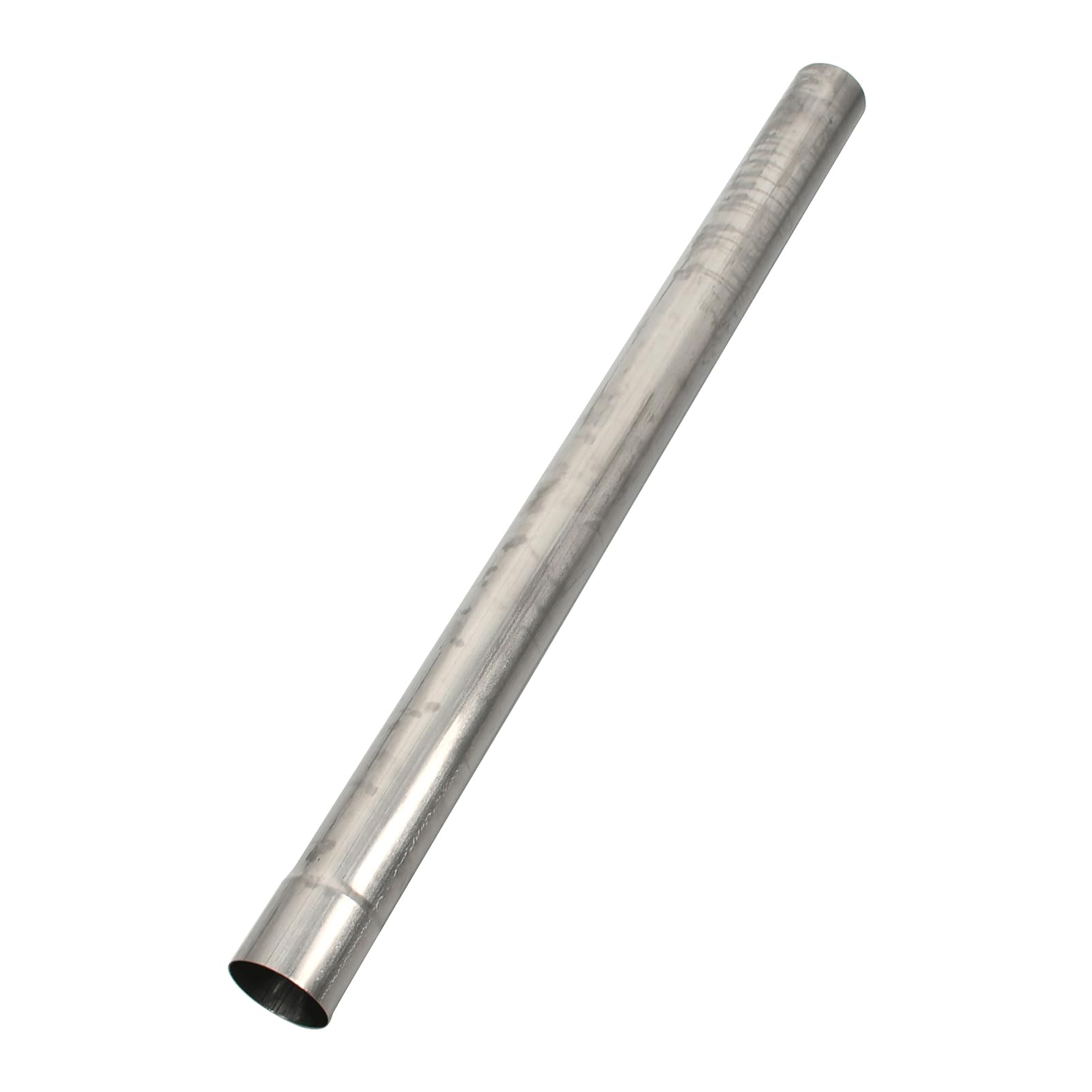
A budget 48-inch stick in 409 steel with an expanded end for easy slip-fit
If you want the most tube for the least outlay, this is the close. It gives you 48 inches of 4 inch outside-diameter pipe in 409 steel, with computerized mandrel bends for a consistently round wall. That is the same 48 inch reach as the pricier stainless picks, but in 409 — a milder steel that keeps the cost down while still giving you strength for a straight run.
The easy-install detail is on the end: one end is expanded so the mating pipe slips in for a clean joint. It’s a do-it-yourself stick for exhaust systems, so you cut and route it to your build. Owners rate the quality high and call the 409 metal better than typical local exhaust-shop grade for replacements and muffler deletes.
Where it differs from the T-304 options: 409 steel will surface-rust faster if you drive in heavy salt. For a dry-climate repair or a build you’ll maintain, that is fine. For a coastal truck you plan to keep for years, pay up for the stainless.
Why it wins on value: 48 inches of 409 steel with an expanded slip-fit end — real reach without the stainless markup.
The honest limit: 409 will rust sooner than T-304 in salt, so this is the dry-climate or budget pick, not the forever pipe.
Grab it if: you want a long 48 inch section on a budget and don’t fight winter road salt.
Pay up if: you drive coastal or salted roads and need the rust resistance of T-304 instead.
Understanding the Specs
OD versus ID — the fit that decides everything
Outside diameter (OD) is measured across the outer wall of the tube; inside diameter (ID) is measured inside the wall. Most straight replacement pipes here are OD, while a few flex sections like the Walker are sized ID. A mismatch either way means the pipe won’t seal, so measure the pipe you’re joining before you order. When in doubt, match the type — OD to OD, ID to ID — and use the flared or expanded ends to slide the joint together.
Wall thickness and gauge
Gauge is a way of stating how thick the pipe wall is — a lower gauge number means a thicker wall. Several of these pipes run 17 gauge (1.4mm), which is thick enough to butt-weld without burning through and holds its shape under a clamp. A thicker wall resists warping and lasts longer, while thinner tubing is easier to cut but dents more readily. If you’re welding under boost or heat, favor the thicker wall.
T-304, 409, and mild steel
T-304 is the higher-grade stainless, chosen to resist rust in wet and corrosive environments. 409 steel and galvanized steel are more budget-minded — strong and workable, but they surface-rust sooner in salt. Mild steel is the easiest of all to weld, which is why custom bend builders reach for it, but it needs paint or upkeep. Pick the steel to your climate: salt and coast push you toward T-304.
Straight, bend, or flex
A straight pipe replaces a rotted section or deletes a muffler. A mandrel bend — formed around a die so it keeps full round through the turn — routes around an axle or frame without choking flow. A flex pipe carries a corrugated band that absorbs engine movement and dampens vibration, protecting your welds. Most rebuilds use a mix: a straight length for the main run, a bend for the turn, and a flex to soak up shake.
FAQ
How do I know if I need a 4 inch outside diameter or inside diameter pipe?
Will a 4 inch exhaust pipe fit my truck?
What is the difference between T-304 and 409 steel in an exhaust pipe?
Can I cut and weld a 4 inch mandrel exhaust pipe to length?
Do I need a flex pipe or is a straight pipe enough?
How long does a stainless exhaust pipe last compared to mild steel?
Are flared and slotted pipe ends better than plain cut ends for installation?
Will a 30 inch muffler replacement pipe fit where my factory muffler was?
Can I use a 4 inch pipe for an intercooler or air intake setup?
What tools do I need to install a 4 inch muffler pipe?
Final Thoughts: The Verdict
For most trucks, the JY PERFORMANCE 47.3 inch straight pipe is the pick that covers the job — T-304 stainless, a weld-friendly 17 gauge (1.4mm) wall, and enough length to reach across a run with one joint, at the strongest rating on this list. If your problem is shake or a cracked weld, add the TORDXICS flex pipe; if your exhaust has to turn, the A-KARCK 45 degree bend handles the corner. And if you’re watching the budget and drive in a dry climate, the BIGREAT 409 steel pipe gives you 48 inches without the stainless markup.
How We Picked
We do not accept paid placement. Every pick is matched to a real buyer and a real use-case; we do not hands-on test units.
Sources & Methodology
Specifications: manufacturer listings and product documentation. Review insights: verified customer reviews, as of November 2026. Pricing: not shown on this page (it changes often); check the current price via the retailer link.
As an Amazon Associate, Gadgets Feed earns from qualifying purchases. This does not affect which products we feature.