
Our readers keep the lights on and my morning glass full of iced black tea. As an Amazon Associate, I earn from qualifying purchases.
Specs are compiled from manufacturer listings and verified buyer reviews and can change over time — please confirm the key details on the product page before buying.
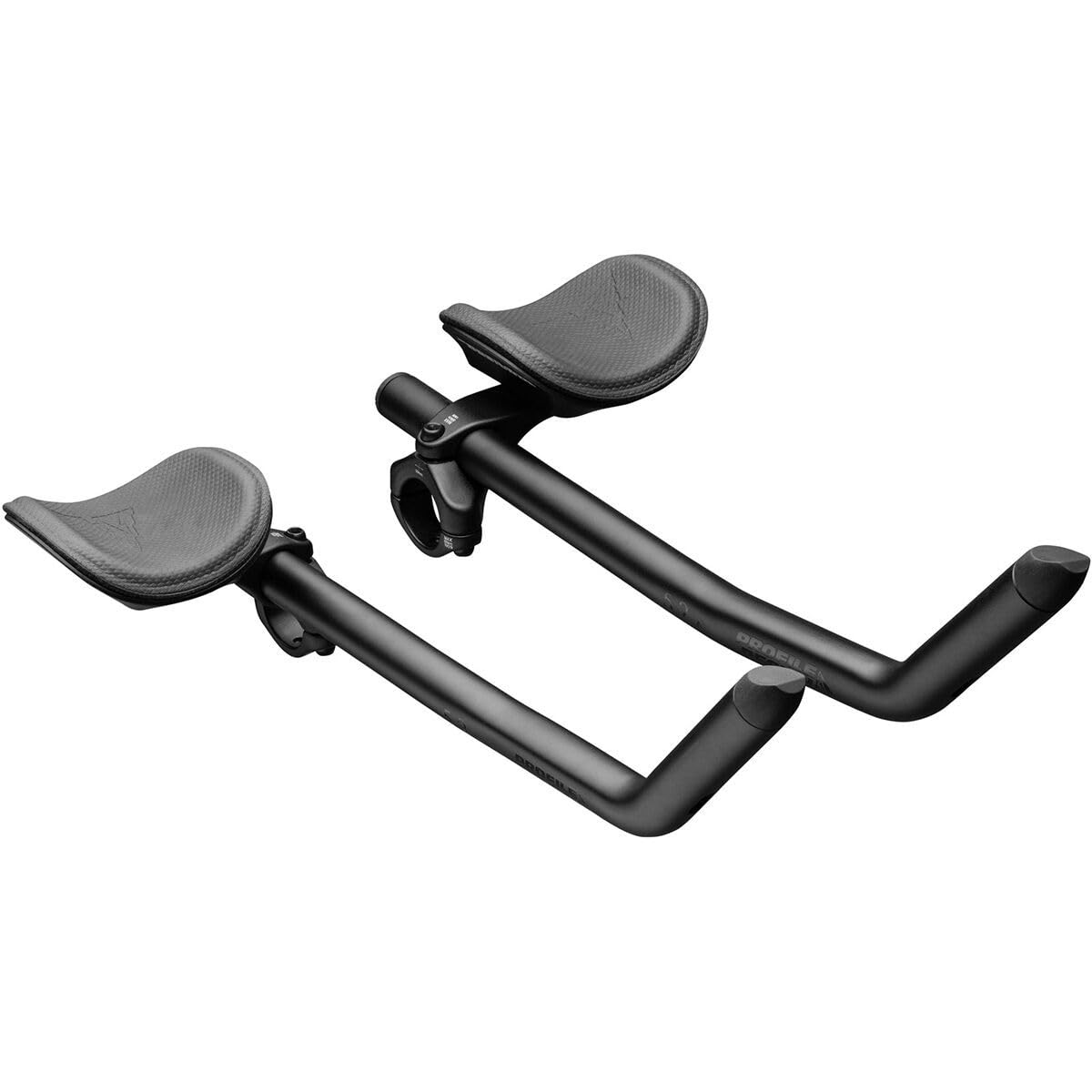
If you want the most aero position your road bike can give you without buying a whole new frame, a set of clip-on aero bars is the cheapest speed you will ever bolt on. They clamp onto your existing handlebar and drop your forearms and elbows into a narrow tuck, which is the position that actually cuts through the wind. The catch is fit: a bar that clamps onto your handlebar is useless if its reach is too short for your torso or its armrests sit too low for your shoulders. This guide sorts the real options by the three things that decide whether you keep them on the bike — clamp size, extension length, and how much you can move the pads.
I’m Min — the founder and writer behind Gadgets Feed. This guide is built by comparing the manufacturers’ published specifications and the patterns across verified customer reviews, so you get each pick’s real strengths and trade-offs instead of marketing spin.
Every pick below lists its clamp size, extension length, and weight, plus where it genuinely falls short. To choose the right set of aero bars for triathlon, match your handlebar diameter and your body to the bar’s range.
Our Picks at a Glance


How To Choose The Best Aero Bars For Triathlon
An aero bar has one job and three variables. The job is to hold your forearms level and close together so your torso lies flat and your frontal area shrinks. The variables are whether it clamps to your bar, how far it reaches forward, and how much you can shift the armrests around. Get those three right and almost any bar on this list will work for you. Get one wrong and you will be returning it.
Start with your handlebar clamp diameter
Your handlebar diameter is the hard limit. A 31.8 mm bar (the modern road standard) fits most clip-ons here. A 26.0 mm or 25.4 mm handlebar needs a shim (a thin sleeve that adapts the clamp) or a bar that lists that size directly. The BBB AeroBase handles 26 mm and 31.8 mm, so it fits either bar without extra parts. The Profile Design Legacy takes 31.8 mm natively but needs separately purchased shims for 26.0 mm. Measure your bar before you order anything.
Then check extension length against your torso
Extension length is the straight tube your forearm rests on. The BBB AeroMax runs 350 mm, the Deda Parabolica Uno tops out at 350 mm, and the Profile Design Sonic/Ergo/52a stretches to 400 mm. A short extension on a long torso pushes your elbows behind your shoulders, which is less aero and more strain on your neck. Taller and longer-armed riders should lean toward the 400 mm end.
Decide how much adjustability you actually need
Armrest width, fore-aft position and height are what let you dial the bar to your shoulders rather than the other way round. Flip-up brackets and multi-position armrests give you more room to tune. If you plan to switch the bars on and off between a road ride and a race, a quick-release clamp saves real time. If you set them once and leave them, fixed brackets are simpler and lighter.
Quick Comparison
| Model | Best For | Clamp Fit | Extension | Weight | Amazon |
|---|---|---|---|---|---|
| BBB Cycling AeroMax BHB-60★ Best Overall | First aero setup on a road bike | 25.4 / 31.8 mm | 350 mm J-bend | 350 g | Amazon |
| Profile Design Airstryke V2Most Adjustable | Riders who want flip-up brackets | 31.8 mm | Adjustable stack and reach | 1.7 pounds | Amazon |
| Profile Design Sonic/Ergo/52aLongest Reach | Long-torso riders needing reach | 31.8 mm bracket | 400 mm | 564 g | Amazon |
| BBB Cycling AeroBase BHB-52 | Aggressive deep tuck on a race bike | 26 / 31.8 mm | Adjustable length | 504 g | Amazon |
| Deda Elementi Parabolica Uno | UCI-rule racing and internal shifters | 31.7 mm | 350 mm J-bend | 404 g | Amazon |
| Profile Design Legacy | Budget tri fit with three mount points | 31.8 mm (26.0 with shims) | Split extension | 565 g | Amazon |
| Controltech Sirocco Mini | Light carbon build and stem mount | 31.8 mm | 213 mm max | 363 g | Amazon |
| REDSHIFT Quick-Release | Swapping road and aero mid-ride | 31.8 mm (26.0 with shims) | Adjustable, L or S-bend | 1.4 pounds | Amazon |
| FSA Vision Team Clip-on | Tight-budget entry into aero | 31.8 mm | 230–270 mm | 1.4 pounds | Amazon |
In‑Depth Reviews
1. BBB Cycling AeroMax BHB-60
Our pick — 4.5+★ from 250+ verified ratings; the strongest balance of quality and price.
The lightest way onto aero bars on this list, and it fits two handlebar standards from the start.
At 350 g, the BBB AeroMax is the lightest aluminium clip-on here, against 404 g for the Deda Parabolica Uno. Compare it with the Profile Design Legacy at 565 g, and you are clipping on a bar that adds less weight to the front of your bike. For a road bike you ride all week and race on Sunday, that difference is the whole point: the bar should feel like it isn’t there when you are sitting up and chatting.
The J-bend extension runs 350 mm, and both the length and the width of the armrests adjust to your preferences. J-bend means the tube turns up at the end, which gives your hands a natural spot to grip without cocking your wrists. The EVA foam padding is the soft layer under your forearms, and it is the difference between a long effort that is merely uncomfortable and one that leaves marks. The clamping mechanism fits both 25.4 mm and 31.8 mm handlebars, so you do not need to buy a shim to mount it.
No aero bar at this weight is going to feel like a custom fit cockpit, and the foam padding is the part that wears first on any clip-on. That is a fair trade for a bar that clamps on and adjusts without special tools. If you are adding aero to a road bike you already own, this is the simplest way in.
What earns the top spot
- 350 g is the lightest aluminium clip-on in this lineup, 215 g under the Profile Design Legacy’s 565 g
- Fits both 25.4 mm and 31.8 mm handlebars without buying shims
- 350 mm J-bend extensions plus adjustable armrest length and width
- EVA foam padding cushions forearms on longer efforts
Where it asks for care
- Foam padding is the first part to wear on any clip-on bar
- No flip-up bracket, so the pads stay put when you sit up
Solid first upgrade: a road rider who wants aero speed without a new bike or a shim kit.
Hold off if: you need a flip-up armrest for crowded group rides.
2. Profile Design Airstryke V2
Flip-up brackets mean the pads tuck out of the way when you sit up for a climb or a corner.
Stack and reach are the two numbers that decide whether aero bars feel right or leave your shoulders burning. This Airstryke V2 lets you adjust both, and the brackets flip up so the armrests fold out of the path of your hands. On a winding tri course or a rolling training ride, that is the difference between leaving the bars on all season and pulling them off after one frustrating ride.
The extension, flip-up brackets, Ergo armrests and 10 mm Ergo pads all come in the box. The adjustability is what buyers praise most, and the comfort and sturdiness rank right alongside it. Buyers report these bars holding up for a decade of use. At 1.7 pounds the Airstryke V2 is 0.3 pounds heavier than the FSA Vision Team’s 1.4 pounds, and that weight buys you the moving brackets.
The honest catch: fit draws mixed reactions, since one clamp has to suit a wide range of handlebars and body shapes. Set your stack and reach properly before you tighten everything down and it is a very cooperative bar. Riders chasing the last gram of weight should look elsewhere; everyone else gets a genuinely livable setup.
The reason to pick it: flip-up brackets plus stack and reach adjustment make this the most forgiving fit on the list for a rider who is not sure where their arms want to sit.
The trade-off: 1.7 pounds is the premium you pay for moving hardware, and fit splits opinion.
Reach for this if: you ride a mixed course and want the pads out of the way on the climbs.
Look elsewhere if: you want the lightest bar for a flat time trial.
3. Profile Design Sonic/Ergo/52a Aerobar
Four hundred millimetres of extension for riders who keep sliding forward on shorter bars.
If you are long in the torso, most clip-ons will run out of tube before you run out of arm. The Sonic/Ergo/52a solves that with 400 mm extensions — 50 mm more reach than the BBB AeroMax and the Deda Parabolica Uno, both at 350 mm. That extra stretch lets a tall rider get their elbows under their shoulders instead of behind them, which is where the aero actually lives.
The armrest width sweeps from 124 mm to 290 mm in 18.5 mm steps, so you can narrow the pads until your arms are as close as your shoulders allow. Grip angle is 52 degrees, which tilts your hands into a neutral position rather than forcing your wrists flat. Weight comes in at 564 g, and the Sonic brackets, AL extensions, Ergo armrests and 10 mm pads are all included.
This is a newer release built as the replacement for the Sonic 50a, so it does not carry the long track record of the older Profile Design designs. What it does carry is the reach a big rider needs. Pick it for the length, not for the pedigree.
Best matched to: taller and longer-armed riders who need every one of those 400 mm.
Think twice if: you are compact and a 350 mm extension already reaches comfortably.
4. BBB Cycling AeroBase BHB-52

An ergo-bend profile that pulls your chest low and your posture into a proper race tuck.
The BHB-52 is built around a downward ergo-bend angle, which drops your upper body into an aggressive and deep position. That is the posture you want on a flat tri leg where you are holding the tuck for a long stretch. It is not the bar for a rider who wants to sit up every few minutes.
The clamping mechanism fits both 26 mm and 31.8 mm handlebars, so it covers older road bars as well as modern ones. The length of the extensions adjusts, and there are two armrest options to choose from. The foam padding takes some of the sting out of time trial efforts. At 504 g it sits in the middle of the pack on weight, between the 350 g AeroMax and the 565 g Profile Design Legacy.
An aggressive bend is a commitment. If your back or neck is not used to a deep tuck, this bar will tell you quickly. Riders with a flexible spine and a race on the calendar will get along with it well; casual weekend riders should pick a bar with a more forgiving bend.
The draw of the deep position
- Ergo-bend angle creates an aggressive, low race posture
- Clamps to both 26 mm and 31.8 mm handlebars
- Adjustable extension length with two armrest choices
- Foam padding softens longer time trial efforts
Who should pick a gentler bend
- The deep posture demands back and neck flexibility
- 504 g is heavier than the AeroMax
A confident pick for: flexible riders chasing a low, flat-course tuck.
Better to pass if: you want an upright, all-day-comfort position.
5. Deda Elementi Parabolica Uno

Race-legal hardware for riders who want their bar-end shifters to run clean inside the tube.
If you plan to line up at a UCI-sanctioned time trial or triathlon, the Parabolica Uno is engineered for that table. It carries UCI Approval under the 3:1 rule, which governs the maximum depth-to-width ratio of an aero profile. That is not a spec you will ever feel on the road, but it is the one that keeps you legal at the start line.
The extensions are J-bend, built from 6061 aluminium, and run up to 350 mm. They accept internally routed bar-end shifters, so the shifter cable disappears inside the extension instead of looping in the wind. The armrests are fully adjustable and come with pads, and the stack height can be set to 10, 15 or 30 mm with the included riser spacer kit. Weight is 404 g.
At 404 g it is heavier than the 350 g AeroMax, and it is a race-focused bar with less everyday adjustability than the flip-up Airstryke V2. If you never route shifters through your extensions, you are paying for a feature you will not use. If you do, the clean cable run is worth having.
Why racers pick it: UCI 3:1 approval plus internal shifter routing make this a commit-to-racing bar.
What you give up: the extra reach of the 400 mm Sonic/Ergo/52a and the flip-up convenience of the Airstryke V2.
Fits best with: sanctioned racing and internally routed shifters.
Skip unless: you race under UCI rules or run your cables internally.
6. Profile Design Legacy Aero Bar
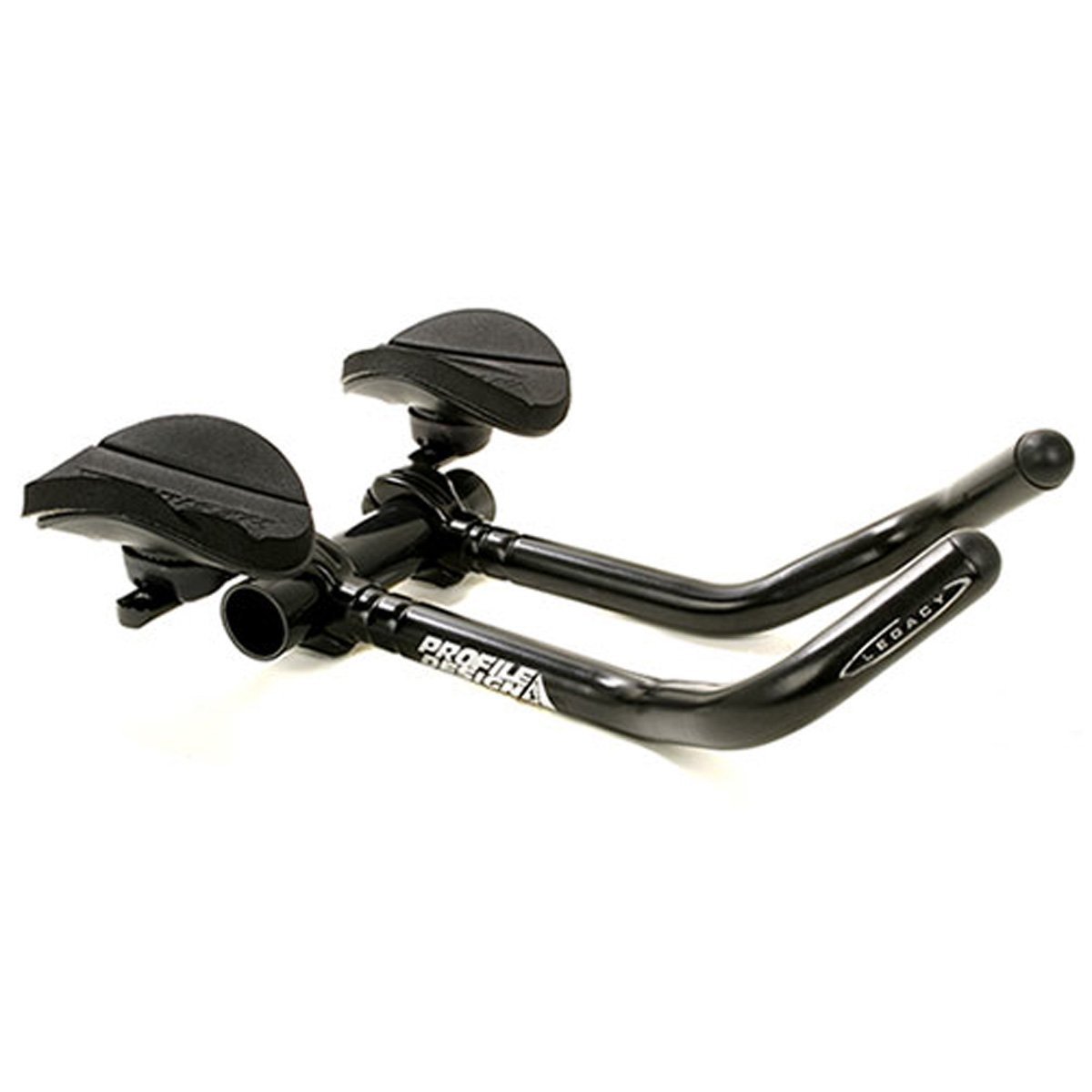
Three mounting positions and venturi armrests — a fit-tinkerer’s bar that leaves room to experiment.
The Legacy’s party piece is choice: a split extension with low armrest bridges and three mount positions. That means you can shift the armrests fore-aft across three set places instead of one, and the low bridges tuck the pads close to the bar for a flatter profile. Venturi armrests and pads come with it, and both left and right clip-on bars plus the armrest kit are in the box.
It uses the Profile Design zb bracket system, and it clamps 31.8 mm bars directly — 26.0 mm bars need separately purchased shims. Installation is what wins people over here; it goes on cleanly and stays put. Performance and comfort on long rides get just as much praise, and the build quality holds up over time.
Two things to know before you order. At 565 g it is 215 g heavier than the 350 g BBB AeroMax, which is the price of that extra bridge hardware. And the length and fit split opinion: what is adequate for one rider feels too short for another. If you are on the tall side, measure your reach against the split extension before committing.
Worth choosing for: riders who want to tune armrest position across three mounts.
One fair caution: the length suits some riders and feels short for others, so check your reach first.
7. Controltech Sirocco Mini

A carbon mini bar you can mount to the stem or the handlebar, built for a compact tuck.
Carbon fiber brings the Sirocco Mini down to 363 g, and it gives you two mounting choices most bars here do not offer: a stem-mounted position or a handlebar-mounted one. That flexibility matters when your handlebar already carries a computer mount and a light. It clamps a 31.8 mm bar directly.
This is a mini bar, and the numbers say so. Maximum extension length is 213 mm — about half the 400 mm of the Sonic/Ergo/52a and well short of the 350 mm bars. The armrests sit at a 45-degree angle, which suits a short, steep tuck rather than a long stretched-out position. It is a bar for a rider who wants a compact, low-profile setup, not one who needs reach.
Short extension means short reach, and that is the whole story here. If you are tall or long-armed, this bar will leave your elbows behind your shoulders. If you want a light, tucked cockpit and you are compact, it fits the bill. Check the specifications against your bike before ordering — the 213 mm limit is real.
The lightweight angle: 363 g of carbon with a choice of stem or handlebar mounting.
The hard limit: 213 mm of maximum extension rules out long-torso riders.
Built for: compact riders who want a light, low-profile cockpit with mount flexibility.
Not for: long-armed riders who need real reach.
8. REDSHIFT Quick-Release

Clips on and off in seconds without tools — the one bar you can pull mid-ride.
The REDSHIFT’s patented quick-release mechanism lets you switch between your road position and your aero position while you are riding. Pull the bars off for a climb or a technical descent, then clip them back on into the exact same setup without any tools. For a rider who wants aero on the flats but does not want the pads in the way everywhere else, nothing else here does that job.
Adjustability is broad: extension length, arm pad fore-aft, arm pad width and height all move. Height adjustment needs an extension riser, which is sold separately. It fits 31.8 mm handlebars directly and 26.0 mm bars with shims, also sold separately. You choose between L-bend and S-bend aluminium extensions at checkout. Ease of use is what wins people over, and installation and adjustability rank right behind it.
Two honest notes. First, the bars are reported to rattle during use — a known trade-off of quick-release hardware that you can usually tighten out. Second, opinions on value are mixed, which is expected for a bar with moving parts. At 1.4 pounds it matches the FSA Vision Team’s weight and is 0.3 pounds lighter than the 1.7-pound Airstryke V2.
Why the mechanism sells it
- Patented quick-release lets you swap road and aero positions mid-ride
- Removes and reinstalls in seconds without tools
- Extension length, pad fore-aft, pad width and height all adjust
- Choose L-bend or S-bend aluminium extensions
The honest trade-offs
- Owners mention rattling during use
- Height adjustment needs a separately sold extension riser
Pick it when: you want aero only when the road suits it and road position the rest of the time.
Know before you buy: quick-release hardware can rattle, so budget time to snug it down.
9. FSA Vision Team Clip-on

A low-cost alloy clip-on that reaches from 230 to 270 mm — short, light, and simple.
The Vision Team is the entry point on this list, and it keeps the basics. The alloy extensions adjust from 230 mm to 270 mm, so you can dial the reach without changing parts. The J-bend design folds your hands into an aerodynamic position for time trials and triathlons. It is built for a 31.8 mm basebar and finishes in black.
At 1.4 pounds it is 0.3 pounds lighter than the Airstryke V2, and it matches the REDSHIFT on weight. There is no flip-up bracket and no quick-release — just a clip-on bar with an adjustable length. That simplicity suits a first-time aero buyer.
The catch is the reach range. At 270 mm maximum it is 80 mm shorter than the 350 mm BBB AeroMax and 130 mm shorter than the 400 mm Sonic/Ergo/52a. Compact riders will not notice; longer torsos will. This is a starter bar: buy it to try aero, not to race a long time trial.
A sensible start for: compact riders testing aero for the first time on a budget.
Pass if: your reach needs more than that 270 mm ceiling.
Understanding the Specs
Clamp Diameter
The clamp is the collar that wraps your handlebar, and its diameter has to match your bar exactly. 31.8 mm is the modern road standard, and most bars here clamp it directly. A 26.0 mm or 25.4 mm bar needs a shim or a bar that lists that size. Buying a 31.8 mm bar for a 26.0 mm handlebar without shims means it will not mount at all.
Extension Length
The extension is the tube your forearm rests on. It sets your reach. A 350 mm extension suits most riders; a 400 mm extension gives long-torso riders room to get their elbows under their shoulders. A 213 mm mini bar is a compact tuck and will feel short for taller riders. Match the extension to your body before anything else.
FAQ
Will aero bars fit my road bike handlebar?
Do clip-on aero bars make a real difference on a triathlon course?
What is the difference between J-bend, S-bend and L-bend extensions?
How long should my aero bar extensions be for my height?
Can I switch aero bars between road and aero position during a ride?
What are flip-up brackets and why do they matter?
Are aero bars legal for UCI races?
Do I need a riser kit to raise the armrests?
How much do aero bars weigh and does it matter?
Can I route my bar-end shifters through the aero extensions?
Final Thoughts: The Verdict
For most riders stepping into aero, the BBB Cycling AeroMax BHB-60 is the one to start with. It is the lightest aluminium clip-on here at 350 g, it fits both 25.4 mm and 31.8 mm handlebars without a shim, and its 350 mm J-bend extensions plus adjustable armrests cover most body types. If you ride a rolling course and want the pads to fold away on the climbs, the Profile Design Airstryke V2 gives you flip-up brackets with stack and reach adjustment. And if your torso needs the longest reach, the Profile Design Sonic/Ergo/52a stretches to 400 mm, which the rest of this list cannot match.
Start with the boring step: measure your handlebar clamp diameter and your reach. Everything else — the bend, the padding, the flip-up hardware — is tuning. Any of these nine will hold your forearms where they need to be; the right one just needs less fiddling to get there.
How We Picked
We do not accept paid placement. Every pick is matched to a real buyer and a real use-case; we do not hands-on test units.
Sources & Methodology
Specifications: manufacturer listings and product documentation. Review insights: verified customer reviews, as of November 2026. Pricing: not shown on this page (it changes often); check the current price via the retailer link.
As an Amazon Associate, Gadgets Feed earns from qualifying purchases. This does not affect which products we feature.