
Our readers keep the lights on and my morning glass full of iced black tea. As an Amazon Associate, I earn from qualifying purchases.
Specs are compiled from manufacturer listings and verified buyer reviews and can change over time — please confirm the key details on the product page before buying.
You already know the size — 235/45R17 — so the real question is which tire in that size deserves your money. The short answer: match the tire to how you actually drive. If you want one sensible all-rounder that stays quiet and handles rain, the Starfire WR is the pick. If you face real winter ice, you need a dedicated winter tire instead. If you drive a sporty sedan or coupe and want maximum dry grip, pay more for a summer performance tire. Every pick below is ranked on that basis.
I’m Min — the founder and writer behind Gadgets Feed. This guide is built by comparing the manufacturers’ published specifications and the patterns across verified customer reviews, so you get each pick’s real strengths and trade-offs instead of marketing spin.
Buying tires depends on fitment and season, not brand loyalty. Every tire here is the exact 235/45R17 size, so the differences come down to tread compound, load rating and how loud the cabin gets. The right set of 235/45r17 tires depends on whether you drive through snow, chase dry grip, or just want a calm commute.
Our Picks at a Glance


How To Choose The Best 235/45R17 Tires
Those numbers on your sidewall tell you exactly which tire fits your car — they are a fitment code, not decoration. The 235 is the tread width in millimeters (the tire’s footprint across the road). The 45 is the sidewall height as a percentage of that width, so the sidewall is 45% of 235mm. The R17 means it mounts on a 17-inch wheel. Get any one of those wrong and the tire either will not seat on your rim or will throw off your speedometer reading. Every tire in this guide is the correct 235/45R17, so you can compare on performance instead of arithmetic.
Match the tire to the season you actually drive in
This is the single biggest fork in the road. An all-season tire blends compounds to work across a wide temperature range, which makes it the sensible default for most drivers. A winter tire uses a softer compound that stays pliable in low temperatures — the difference shows up on ice and packed snow, not on a dry summer highway. A summer tire uses a stickier compound tuned for warm pavement and gives up cold-weather grip in exchange. If your winters involve freezing rain, ice or regular snow, an all-season tire will get you moving but a dedicated winter tire is the tool built for that job.
Read the load index and speed rating before you commit
The load index is a number that tells you how much weight each tire can support — a 94 carries less than a 97, and an XL (extra load) rating means the tire is built to handle more. On a heavier sedan or a car that regularly carries passengers and cargo, that headroom matters. The speed rating is the letter after the load index, and it caps the maximum sustained speed the tire is engineered for. A W rating is higher than a V, which is higher than an H. Most buyers never approach those speeds, but a higher speed rating usually signals a stiffer, more heat-resistant construction.
Weigh treadwear warranty against how you drive
A long treadwear warranty is a confidence signal, not a guarantee you will hit that mileage. Warranties run from 30,000 miles on a focused summer tire up to 80,000 miles on a touring all-season. The catch is that the warranty covers manufacturing defects and premature wear under normal conditions — it does not rescue a tire you never rotated or ran under-inflated. If you want the longest coverage in this group, a touring all-season is the direction to look. If you want maximum grip and accept faster wear, a performance-focused tire trades tread miles for cornering confidence.
Quick Comparison
| Model | Best For | Load Index | Tire Type | Treadwear Warranty | Amazon |
|---|---|---|---|---|---|
| Starfire WR All-Season★ Best Overall | All-around daily driving | 94 | All-Season (M+S) | 40,000 miles | Amazon |
| General Tire Altimax Arctic 12Winter Specialist | Ice and snow driving | 97 | Studdable Winter | 72 months coverage | Amazon |
| Toyo Extensa HP IILightest Option | Light, nimble handling | 97 | All-Season | — | Amazon |
| Firestone FireHawk A/S V2 | Year-round performance | 97 | All-Season UHP | 50,000 miles | Amazon |
| General Tire G-Max AS-07 | Spirited year-round driving | 94 | All-Season UHP | 50,000 miles | Amazon |
| Yokohama Advan Sport A/S + | Cornering confidence | 97 | All-Season UHP | — | Amazon |
| Continental TrueContact Tour 54 | Longest wear coverage | 97 | Touring All-Season | 80,000 miles | Amazon |
| Continental ExtremeContact Sport 02 | Warm-weather grip | 94 | Summer | 30,000 miles | Amazon |
| Michelin Pilot Sport 4S | Maximum performance | 97 | Summer | — | Amazon |
In‑Depth Reviews
1. Starfire WR All-Season 235/45R17 94W Tire
Our pick — 4.5+★ from 750+ verified ratings; the strongest balance of quality and price.
Carries a 40,000-mile warranty and stays hushed where most all-seasons start humming.
For a driver who wants one set of tires to handle commuting, rain and the occasional slushy morning, this is the balanced bet. The 94W rating means a 94 load index (a weight-carrying measure) and a W speed rating (a high-speed capability tier). In everyday terms, that is a standard-load tire built for a normal sedan or compact crossover, not a heavy hauler.
What wins people over is the quiet. It is made by Cooper Tire & Rubber Company, and the ride quality and low cabin noise are the things drivers keep coming back to. Rain handling draws steady praise too, which matters because wet braking is where cheap tires expose themselves. The M+S marking means it is rated for mud and snow, so it will get you through light winter weather rather than leaving you stranded.
The honest catch is durability. Some tires in this line last several seasons; a few have worn out inside seven months. Treat rotation and correct inflation as non-negotiable and the 40,000-mile warranty gives you a backstop. The load index of 94 is also lower than the 97-rated options further down this list, so if you regularly load the car heavy, that headroom is worth thinking about.
What earns it the top slot
- Quiet, comfortable ride that keeps the cabin calm on long commutes
- Rated for mud and snow, so light winter duty is covered
- 40,000-mile treadwear warranty backs the purchase
- Strong reputation for quality and value among owners
Where to set expectations
- Durability experience varies — some sets wear faster than expected
- 94 load index offers less weight headroom than 97-rated tires
Reach for this if: you want a calm, quiet all-season that handles rain and light snow without overthinking the purchase.
Look elsewhere if: your winters mean real ice or you routinely carry a fully loaded car.
2. General Tire Altimax Arctic 12 Studable-Winter Radial Tire 235/45R17 97T XL
The one here actually built for ice — a studdable winter tire with an XL load rating.
If your driveway ices over every January, this is the tire on this list designed for exactly that. The compound is tuned to stay soft in low temperatures, which is what gives it grip on freezing rain and packed snow where an all-season turns slick. The 97T rating pairs a 97 load index with a T speed rating, and the XL (extra load) designation means it is built for heavier vehicles.
Snow performance is where this tire lives up to its billing, and buyers consistently point to grip and traction as the reasons it works. The 45-day trial period is worth knowing about — you get a window to judge it in real conditions. Treadwear coverage runs to 72 months of limited coverage, a long window for a winter tire you will seasonally swap on and off.
Noise is the trade-off you should plan for. Winter tread is louder on dry pavement than an all-season, and while the quiet ride draws some credit here, you will hear the difference on a bare highway in spring. That is a seasonal compromise, not a defect — plan to store these when temperatures climb and they will serve you well year after year.
Seasonal judgment: this is a purpose-built winter tire, and reviewing it against summer tires would be unfair. On ice and snow it does what an all-season simply cannot, and the 97 XL load rating matches the extra-load options near the top of this list.
The honest note: it is louder on dry roads and it is not a year-round solution. Run it through winter, swap it out in spring.
Built for: drivers in cold climates who see ice and snow every season and want a tire that does not flinch.
Not the pick if: you live somewhere mild and want a single year-round set.
3. Toyo Tires EXTENSA HP II All-Season Radial Tire 235/45/17 97W
At 22.5 pounds, it is the featherweight of the group that still carries a 1609-pound load rating.
Weight is an underrated spec, and this tire makes it a selling point. Unsprung weight — the mass of wheel and tire at each corner — affects how eagerly your car turns in and how quickly the suspension reacts over bumps. At 22.5 pounds, this tire is lighter than the Firestone FireHawk A/S V2 at 25.4 pounds, and the difference is something you will feel more on a small sedan than a big SUV.
That same 1609-pound load capacity and 97 load index pair with a W speed rating (the highest tier on this list alongside the Firestone), which means this all-season is not a soft-tuned comfort tire. Steering response stays crisp, which is the kind of feedback a driver who cares about handling actually notices. It is an all-season, so the compound covers dry and wet roads across the calendar rather than one narrow season.
Here is the trade-off: this model carries no published treadwear warranty figure, unlike the 40,000-mile and 50,000-mile options elsewhere in this guide. That absence is not a red flag, but it does mean your confidence rests on how the tire actually wears rather than on a stated mileage promise. If a written mileage guarantee is what helps you sleep at night, look at the Firestone or Continental options.
Reasons to like it
- Lightest tire in the group at 22.5 pounds, which sharpens turn-in feel
- 1609-pound load capacity and a 97 load index
- W speed rating signals a handling-focused construction
Watch-outs
- No published treadwear warranty mileage to lean on
- Fewer owner reviews to reference than the volume sellers here
Top pick for: drivers with a nimble car who want a light, responsive all-season and do not need a mileage promise.
Consider the alternative if: a stated treadwear warranty is part of how you buy.
4. Firestone FireHawk A/S V2 UHP All Season 235/45R17 97W XL
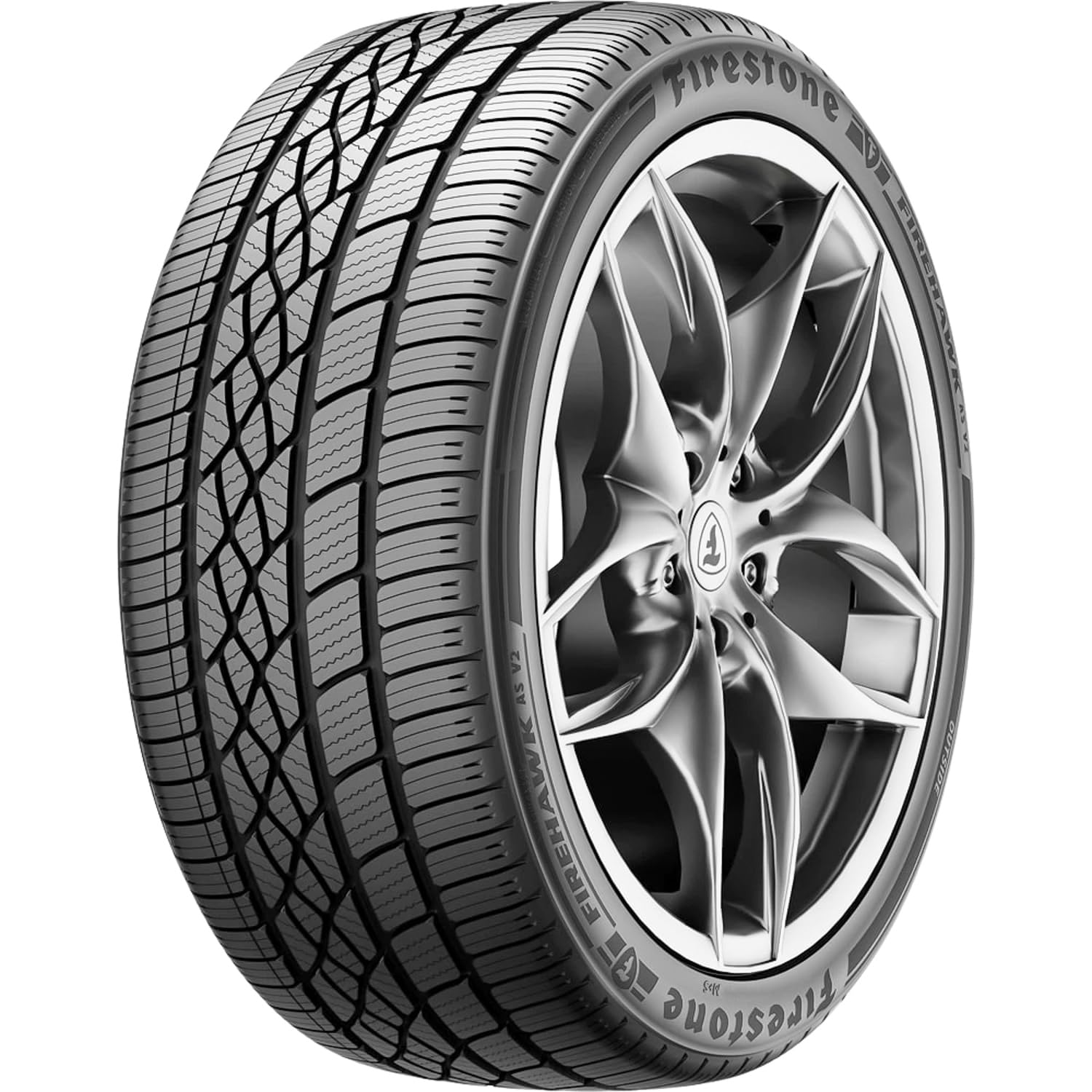
High-performance all-season grip with a 50,000-mile warranty — a combination that rarely arrives together.
Here is the tire for someone who owns a sporty coupe or sedan and refuses to run a second set of wheels. The FireHawk A/S V2 is built for coupes and sedans with year-round traction, and the 97W XL rating means a 97 load index, a W speed rating and extra-load construction. That is genuine headroom for a car that carries both speed and weight.
The warranty is the standout differentiator. At 50,000 miles of limited manufacturer tread life coverage, it outlasts the Starfire’s 40,000-mile coverage by a full 10,000 miles — the same margin the General G-Max AS-07 carries over the Starfire. Firestone also builds in a long-wearing tread compound to fend off uneven wear, and the design adds biting edges for snow and slush traction. In plain terms, you get a tire that grips in warm weather and still bites into light snow.
If you live where snow is serious, this is not your winter solution — the snow capability here covers slush and light accumulation, not deep drifts or solid ice. It is also a heavier tire at 25.4 pounds, so a driver tuned into steering feel may notice it compared with the 22.5-pound Toyo. For most sporty-car owners, that extra mass buys you a warranty and handling that hold up over a long ownership run.
Where the value sits: the year-round performance focus and the 50,000-mile warranty make this the strongest pick for a sporty daily that never sees a garage rack of spare tires.
The caveat to absorb: deep snow and ice still call for a dedicated winter tire, and at 25.4 pounds it is on the heavier end of this group.
Made for: sporty coupe and sedan owners who want one set of tires that handles all four seasons and comes with mileage coverage.
Keep looking if: you want the lightest possible tire or face harsh winter conditions.
5. General Tire G-Max AS-07 UHP All Season 235/45ZR17 94W

Built for the driver who treats the on-ramp as a personal challenge.
This is the tire that fits the daily driver who likes to push a little. General engineered it with outstanding wet and dry braking, light snow traction and low road noise, and the 94W rating caps it at a 94 load index with a W speed rating. That combination is the profile of an ultra-high-performance all-season — one that prioritizes grip and brake response over maximum load capacity.
At 23.8 pounds, it sits lighter than the Firestone FireHawk A/S V2 at 25.4 pounds, and lighter rubber at the corners helps the suspension track the road more precisely. The 50,000-mile limited tread life coverage matches the Firestone’s figure — which is a strong showing for a UHP all-season — and quiet-operation is a stated design goal rather than an afterthought. Spirited daily drivers are the exact audience this tire targets.
The honest limitation: a 94 load index and 1477-pound load capacity gives this tire less weight headroom than the 97-rated XL options. If your car is heavy and you routinely carry passengers and gear, check your door-jamb sticker before committing. For a smaller, lighter car driven enthusiastically, that rating is a non-issue and the braking response is the reward.
Why it earns a spot
- Outstanding wet and dry braking — the response matters on every stop
- 50,000-mile limited tread life coverage on a UHP tire
- 23.8 pounds, lighter than the Firestone at 25.4 pounds
- Low-road-noise tuning for a comfortable drive
Think it over if
- 94 load index gives less weight capacity than the 97 XL options
- Snow traction is engineered for light snow, not deep winter
This is the one for: smaller or mid-weight cars driven with enthusiasm, where braking feel and grip count more than maximum payload.
Check your sticker first if: you drive a heavy sedan and frequently load it up.
6. Yokohama 235/45R17 97W Advan Sport A/S +

Extra-large shoulder blocks and Z-grooves make this the cornering-tuned choice of the group.
Turn-in is what this tire was built around. Extra-large shoulder blocks stiffen the outer edge of the tread so the tire resists rolling under in a hard corner, and the tune sidewall sharpens steering response. If you own a handling-focused sedan and notice the small differences in how the car bites into a curve, this is the tire whose design rewards that attention.
Wet and winter capability is worked in through Z grooves and wavy sipes — thin cuts in the tread block that create additional biting edges for traction on wet and light winter roads. A four-pitch tread variation breaks up the tread pattern to reduce road noise, and the flatter contour plus advanced rubber compound are aimed at fighting uneven wear over the tire’s life. At 1609 pounds of load capacity and a 97 load index, it out-carrys the 1477-pound capacity of the Starfire.
The honest note: the ride quality is the point that divides opinion. A tire tuned for cornering stiffness tends to feel firmer over rough pavement, so if comfort is your top priority, the smoother Starfire or Continental TrueContact Tour 54 is a better fit. The tire is a genuine all-season, but the performance bias means you are choosing handling feel first.
The handling case: shoulder blocks, stiff sidewall and Z grooves add up to a tire that feels planted through corners and confident in the wet. That load capacity of 1609 pounds gives it real weight headroom too.
The comfort trade-off: a cornering-focused build leans toward a firmer ride, so buyers who want a soft, plush tire should look at the touring-oriented options instead.
Make this your pick if: you value cornering confidence and responsive steering over a cloud-soft ride.
skip it if: ride smoothness is what you notice first every time you drive.
7. Continental TrueContact Tour 54 All Season 235/45R17 97V XL

An 80,000-mile warranty — the longest coverage on this list by a wide margin.
If you want to buy tires and not think about them again for a long time, start here. Continental backs the TrueContact Tour 54 with up to 80,000 miles of limited manufacturer tread life coverage. Compare that to the 50,000-mile coverage on the General G-Max AS-07 — a 30,000-mile gap — and you see why this is the touring-longevity pick. The 97V XL rating means a 97 load index, a V speed rating and extra-load construction.
Continental’s EcoPlus Technology is claimed to cut rolling resistance for fuel savings while keeping wet stopping distances short and extending tread life. What buyers notice most is the quiet. Road noise from pavement imperfections gets effectively muffled, which is exactly what you want on a long commute or highway trip. Wet braking and handling draw praise too, and the tire has the light-snow traction to get you through a cold snap.
Fuel savings is the one point where reviews split — some owners see the efficiency benefit, others less so. Treat any fuel claim as a bonus rather than the reason to buy. The real reason to buy is the combination of the longest warranty in this group, a quiet cabin and confident wet grip. It is the tire for the sensible long-haul driver, not the weekend canyon runner.
What makes it the touring choice
- 80,000-mile limited tread life — the longest on this list
- Exceptionally quiet ride that muffles road imperfection noise
- Confident wet braking and handling
- 97 XL load rating and light-snow traction
The fair caveats
- Fuel-savings experience varies from owner to owner
- Touring focus means it is tuned for comfort over sharp handling
The right tire for: long-commute and highway drivers who want maximum warranty coverage and a quiet cabin.
Less suited to: drivers chasing sharp cornering feel who would trade some warranty for more grip.
8. Continental ExtremeContact Sport 02 Summer 235/45ZR17 94W

A summer tire that brakes hard in the wet and still wears better than most sports rubber.
This one is for the driver who has a second set of wheels for winter and wants the sharpest summer performance they can get. Continental built it with SportPlus Technology for responsive handling, grip on dry and wet roads, and short braking distances in both conditions. The 94W rating means a 94 load index with a W speed rating — a standard-load tire tuned for speed and steering feel rather than heavy payloads.
What is unusual here is the tread life. Summer performance tires are typically the fastest-wearing category, yet Continental rates this one for up to 30,000 miles of limited tread life coverage. ROUSH Performance and the AMG Driving Academy both run this tire, a sign its grip holds up under track-level abuse. At 22.6 pounds it is the lightest tire in this group, and that low unsprung weight sharpens turn-in.
The important honest point is seasonality. This is a summer compound — it is not designed for cold-weather grip, and you should not run it in snow or ice. If your region has real winters, plan a seasonal swap. Treat it as the fair-weather performance tire it is, and the braking response and handling are the payoff.
The performance read: At 22.6 pounds it is the second-lightest tire here behind the 22.5-pound Toyo, and SportPlus Technology keeps wet and dry braking distances short. The 30,000-mile warranty is generous for this class.
The season reality: a summer tire, plain and simple. Cold-weather driving is not what it was built for.
Ideal for: warm-climate drivers and enthusiasts who want sharp braking and handling and can swap to winter tires.
Not the fit if: you want one set of tires to cover all four seasons.
9. Michelin Pilot Sport 4S 235/45ZR17 (97Y) XL

The max-performance summer tire that serious sports-car owners build their wheel setup around.
Derived from the Michelin Pilot Super Sport, the Pilot Sport 4S is positioned as a benchmark in max-performance summer tires. It is spec’d with a 97Y rating — a 97 load index (higher than the 94 on the Continental ExtremeContact Sport 02) with a Y speed rating and extra-load construction. In practical terms, you get the load capacity of the heavier-duty options and the speed headroom of a true performance tire. It is the tire for a car whose handling is the whole point of owning it.
Dry grip and wet braking are the core strengths, and the sidewall construction is tuned to keep control stable at high speed. Mercedes-AMG, Ferrari and Porsche fit this tire as original equipment, so its grip is validated on cars with far more power than yours. It also comes with extras worth knowing about: a 3-year flat tire changing assistance plan, six years of standard defect warranty and a 60-day satisfaction guarantee under the Michelin Promise Plan.
Two limits to weigh honestly. The 1609-pound load capacity and 97 XL rating give real headroom, but this is a summer tire — it is not built for cold-weather grip. And with fewer owners having posted impressions than the volume picks here, you are leaning more on the manufacturer spec and the brand’s engineering reputation than on a wide base of driver experience. For a driver who wants the sharpest summer setup, that is a fair trade.
The performance argument
- 97Y XL rating — higher load index than the 94-rated summer option here
- 1609-pound load capacity gives genuine headroom
- Michelin Promise Plan with a 60-day satisfaction guarantee
- Built from the Pilot Super Sport lineage for dry grip and wet braking
What to keep in mind
- Summer-only construction — no cold-weather grip by design
- Fewer owner reviews to reference than the high-volume picks
The one for: sports-car owners who want a max-performance summer tire and a full set of ownership guarantees.
Turn away if: you need all-season coverage or want a broad track record of owner feedback before you buy.
Understanding the Specs
Load Index and Load Capacity
The load index is a number that tells you how much weight a single tire is rated to carry. A 94 carries less than a 97, and an XL (extra load) marking means the tire is reinforced for heavier vehicles. Pair it with load capacity in pounds: the Starfire is rated 1477 pounds, the Yokohama and Toyo are rated 1609 pounds. Give yourself headroom on a car that carries passengers, cargo or a heavier body. Check the door-jamb sticker on your car to see what load index it needs.
Speed Rating and Tire Type
The speed rating letter — T, V, W or Y — caps the maximum sustained speed the tire is engineered for, and higher letters usually signal stiffer, more heat-resistant construction. Tire type is the bigger decision. An all-season compound covers a wide temperature range, so one set works from summer heat to cold mornings. A winter tire uses softer rubber that stays pliable in the cold for ice and snow grip. A summer tire uses stickier rubber tuned for warm pavement. Match the type to your climate first, then use the speed rating to fine-tune.
Treadwear Warranty
The treadwear warranty is a stated mileage promise from the manufacturer, ranging from 30,000 miles on the Continental ExtremeContact Sport 02 to 80,000 miles on the Continental TrueContact Tour 54. It covers premature wear under normal use, not neglect. Rotate your tires, keep them inflated to spec, and the warranty is a backstop if a tire wears out early.
Tire Weight
A lighter tire reduces unsprung weight at each corner, which helps the suspension react more quickly and can sharpen turn-in feel. The ExtremeContact Sport 02 at 22.6 pounds and the Extensa HP II at 22.5 pounds are the lightest here; the Firestone FireHawk A/S V2 at 25.4 pounds is the heaviest. On a small, nimble car that lightness is noticeable; on a bigger vehicle it matters less.
FAQ
What does 235/45R17 actually mean on a tire?
Can I put a 97 load index tire on a car that calls for 94?
Is a 235/45R17 winter tire worth buying instead of an all-season?
Can I use a summer tire like the Pilot Sport 4S in cold weather?
How long will a set of 235/45R17 tires actually last?
Does the speed rating on a 235/45R17 tire really matter?
What is the difference between an all-season and a UHP all-season tire?
Do I need to rotate 235/45R17 tires for the warranty to stay valid?
Is a heavier tire like the 25.4-pound FireHawk worse than a lighter one?
Can I mix a winter tire with an all-season on the same car?
Final Thoughts: The Verdict
Want one set of 235/45R17 tires that handles real life — commuting, rain and light snow — without paying for performance you never use? Start with the Starfire WR All-Season. It is the top pick here, and the reason is simple: it stays quiet, handles wet roads with confidence, and comes backed by a 40,000-mile warranty. If your winters mean ice and snow, add the General Tire Altimax Arctic 12 to the seasonal rotation. Drive a sporty car and want maximum handling? The Firestone FireHawk A/S V2 gives you year-round performance with a 50,000-mile warranty. And the Continental TrueContact Tour 54 is the pick for long-commute drivers who want the absolute longest coverage in the group at 80,000 miles.
How We Picked
We do not accept paid placement. Every pick is matched to a real buyer and a real use-case; we do not hands-on test units.
Sources & Methodology
Specifications: manufacturer listings and product documentation. Review insights: verified customer reviews, as of November 2026. Pricing: not shown on this page (it changes often); check the current price via the retailer link.
As an Amazon Associate, Gadgets Feed earns from qualifying purchases. This does not affect which products we feature.