
The sub-$200 camera market is a battlefield where old-school optical zoom from legacy brands fights for survival against modern, spec-heavy contenders promising 4K and 8K video. Your biggest challenge isn’t finding a camera that powers on—it’s finding one that delivers image quality that actually surpasses the smartphone already in your pocket. The right choice here means understanding that sensor quality and lens optics matter far more than inflated megapixel counts.
I’m Min — the co-founder and writer behind Gadgets Feed. I spend countless hours analyzing technical specifications, customer sentiment, and real-world performance data to separate genuine value from marketing fluff in this exact price tier.
After comparing image stabilization performance, optical zoom range, sensor types, and battery life across dozens of models, this guide reveals the top options for finding the ideal camera for $200.
How To Choose The Best Camera For $200
The $200 tier is crowded with options ranging from established brands with genuine optical hardware to newer entrants packing high-resolution claims. The key is knowing which specifications actually translate to better photos and which are just numbers on a box.
Optical Zoom vs. Digital Zoom
Optical zoom uses the lens to magnify the image physically, preserving full resolution. Digital zoom simply crops and enlarges the pixels, reducing clarity. For a camera to justify its existence over your phone, optical zoom is essential. Look for 4X to 5X optical zoom as the baseline—the Kodak FZ55’s 5X optical zoom at 28mm wide-angle is a genuine advantage that no phone at this price can match.
Sensor Size and Type
Sensor technology determines low-light performance and dynamic range. CCD sensors, found in older digital cameras, can produce pleasing colors but struggle in dim conditions. Modern CMOS sensors offer better power efficiency and video capabilities. Pay attention to actual sensor size when mentioned—the Xtra Edge action camera’s 1/1.3-inch sensor is notably larger than typical point-and-shoot sensors and directly contributes to its cinematic 4K output.
Battery System and Real-World Stamina
This is often the most overlooked spec. AA-battery-powered cameras like the Kodak AZ255 offer convenience and universal availability, but alkaline AAs drain quickly. Rechargeable Ni-MH AAs (2300mAh or higher) are required for decent longevity. Proprietary lithium-ion batteries, like the one in the Kodak FZ55, provide better runtime and more stable power delivery but require carrying a charger. Budget-tier cameras with small lithium cells may only deliver 45 minutes of active shooting.
Quick Comparison
On smaller screens, swipe sideways to see the full table.
| Model | Category | Best For | Key Spec | Amazon |
|---|---|---|---|---|
| Kodak Pixpro AZ255 | Premium Point-and-Shoot | Optical zoom reach | 25X optical zoom, 16mm wide-angle | Amazon |
| Insta360 GO Ultra | Premium Wearable | Hands-free POV capture | 53g weight, 1/1.28-inch sensor | Amazon |
| Xtra Edge Action Camera | Mid-Range Action Cam | Waterproof 4K adventure | 1/1.3-inch sensor, waterproof to 52 ft | Amazon |
| Kodak Pixpro FZ55 | Mid-Range Point-and-Shoot | Everyday compact shooting | 5X optical zoom, 16MP CMOS sensor | Amazon |
| 8K Video Camera Camcorder MWIRB | Mid-Range Camcorder | Vlogging with external mic | 8K video at 15fps, IR night vision | Amazon |
| XNSIAKXA 8K Digital Camera | Mid-Range Vlog Camera | Creativity with 360° dial | 88MP sensor, 16X digital zoom | Amazon |
| Aboobu 8K Digital Camera | Mid-Range Vlog Camera | WiFi sharing with 64GB storage | 3.2-inch touchscreen, dual-lens | Amazon |
| Minolta 48MP Digital Camera | Budget Point-and-Shoot | Creative filters and selfies | Rear selfie lens, 4K UHD video | Amazon |
| Kodak PIXPRO FZ43 | Budget Starter Camera | Kids and casual learning | 4X optical zoom, 16MP CCD sensor | Amazon |
In‑Depth Reviews
1. Kodak PIXPRO AZ255-BK 16MP Digital Camera

The Kodak PIXPRO AZ255 stands out in the $200 category because it offers genuine optical zoom hardware that no smartphone can touch. With 25X optical zoom and a 24mm wide-angle lens, you get the ability to frame wildlife, sports, or distant landscapes without losing resolution to digital cropping. The 16MP CMOS sensor delivers balanced color reproduction, and the optical image stabilization (OIS) helps keep telephoto shots reasonably steady—something digital stabilization alone cannot replicate.
This camera runs on AA batteries, which is both a strength and a compromise. Alkaline cells drain quickly, but rechargeable Ni-MH batteries (2300mAh or higher) give respectable runtime for a full day of casual shooting. The 1080p Full HD video is adequate for vlogging and family moments, though you won’t get 4K here. The 3-inch LCD is bright enough for outdoor framing, and the ergonomic grip makes it comfortable for extended handheld shooting sessions.
Real-world reviews confirm the zoom quality is clean without visible distortion, and autofocus locks reliably in good light. The macro mode is particularly useful for close-up detail shots. Beginners will appreciate the scene modes and auto setup, while more experienced users can access manual settings to learn photography fundamentals. For the budget-conscious buyer who prioritizes optical reach over video specs, this is the most capable all-rounder in the price tier.
Why it’s great
- 25X optical zoom is unmatched at this price
- Optical image stabilization improves telephoto shots
- Manual controls available for learning photography
Good to know
- Requires high-capacity rechargeable AA batteries for decent life
- No 4K video recording
- Bulky for pocket carry
2. Insta360 GO Ultra Creator Bundle
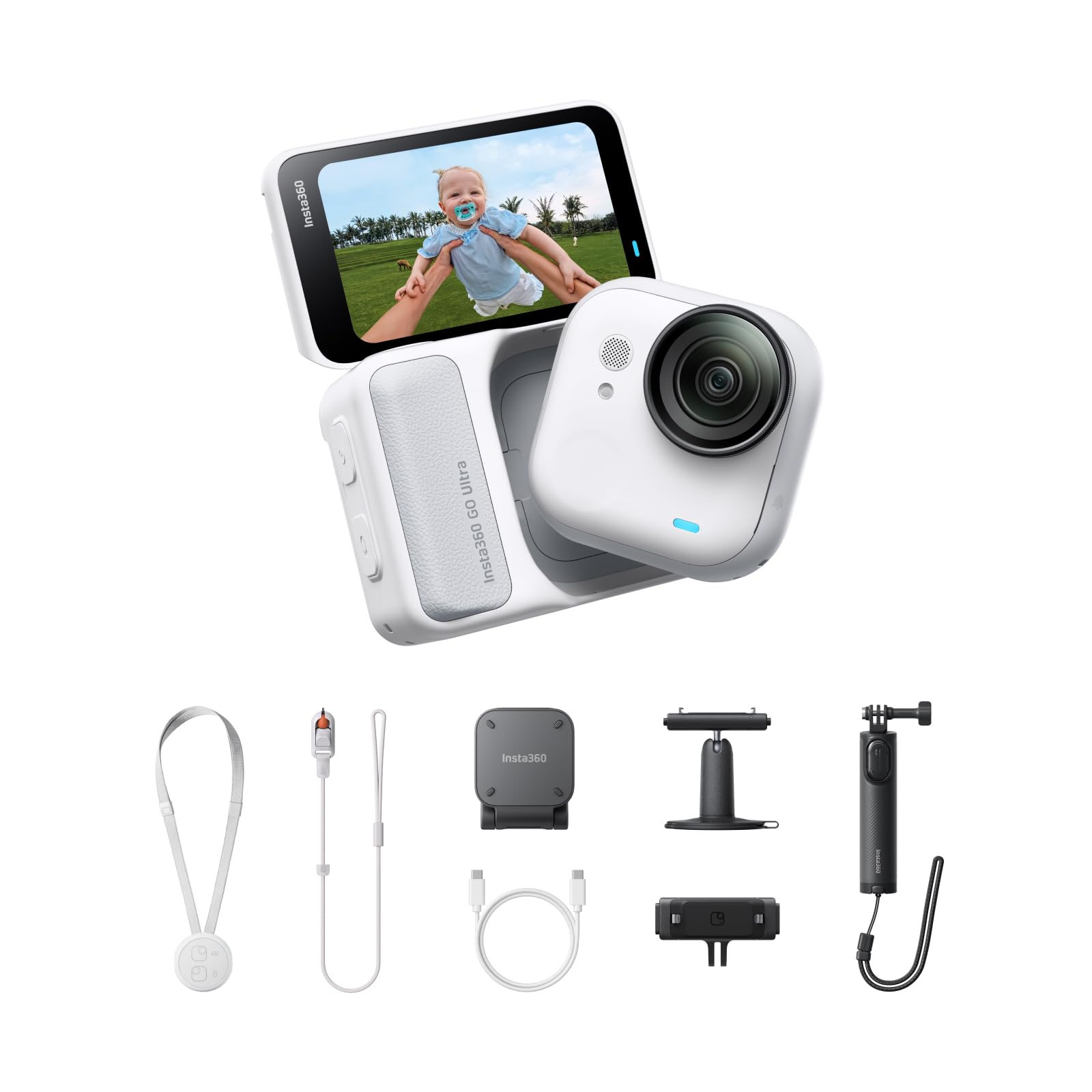
The Insta360 GO Ultra is a completely different proposition from traditional point-and-shoots. At just 53 grams and the size of a watch, this wearable camera clips to your cap, hangs from a magnetic pendant, or mounts on handlebars for true hands-free POV capture. The 1/1.28-inch sensor paired with the 5nm AI chip delivers exceptional low-light performance for its size class—a feat confirmed by reviewers who upgraded from previous-generation wearable cameras. The 4K60fps video with Active HDR handles high-contrast scenes admirably.
The magnetic mounting ecosystem is the standout feature here. The included Magnet Pendant, Easy Clip, and Mini 2-in-1 Tripod let you attach the camera to surfaces and clothing in seconds. The 200-minute total battery life (70 minutes standalone, 3 hours with the Action Pod dock) is impressive, and the 12-minute fast charge to 80% solves the biggest pain point of tiny action cameras. FlowState Stabilization and 360 Horizon Lock ensure buttery footage whether you’re cycling or running.
While the price point is above the $200 mark, the GO Ultra’s unique capabilities justify the stretch for the right user. The AI-powered auto-editing feature finds highlights and creates polished videos automatically, which is a massive time saver for daily content creators. The IPX8 waterproof rating to 33 feet (10m) means pool and beach shooting are worry-free. For vloggers, cyclists, runners, and anyone who values hands-free operation above all else, this is the most innovative camera in its price orbit.
Why it’s great
- Incredibly lightweight at 53g for true wearable use
- Fast charge reaches 80% in 12 minutes
- AI-powered auto-editing saves hours of work
Good to know
- Action Pod is splash-proof only, not fully waterproof
- Battery is non-swappable
- MicroSD card sold separately
3. Xtra Edge Action Camera 4K
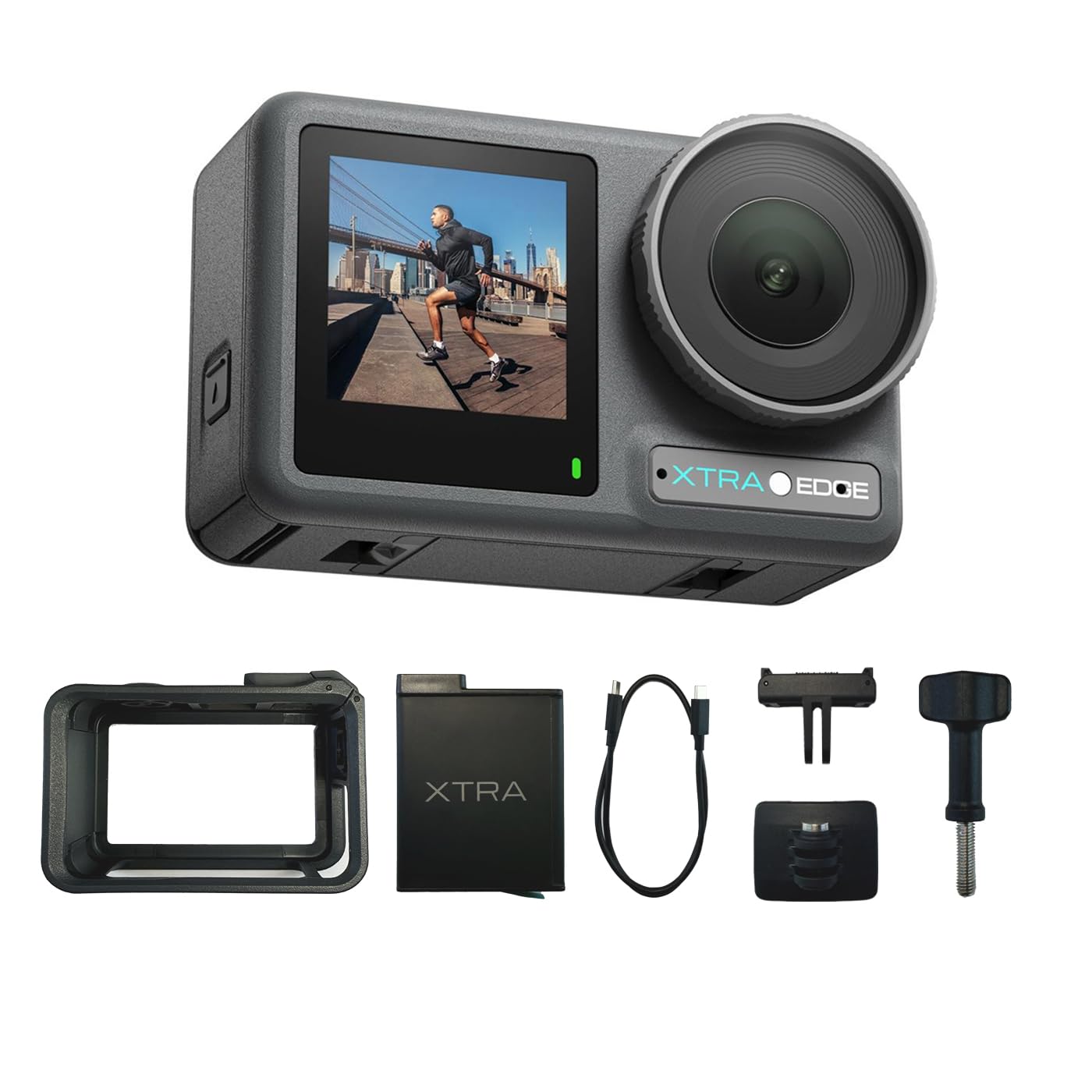
The Xtra Edge Action Camera delivers a rare combination in the $200 segment: a genuinely large 1/1.3-inch sensor that captures rich, true-to-life detail in 4K cinematic video. The hyper stabilization system is remarkably effective, producing buttery-smooth footage during mountain bike rides and trail runs without the jello effect common in cheaper action cams. The waterproof rating to 52 feet (without a case) makes it a serious competitor for snorkeling, swimming, and rainy-day adventures.
The Universal Quick Mount with magnetic lock is a thoughtful design detail—it lets you switch between horizontal and vertical shooting in seconds, which is a massive convenience for multi-platform content creation. The standard bundle includes the Dual-Facing Mount Adapter, a cold-resistant battery, and a protective frame that switches orientation. Battery life clocks in at roughly 3 hours of continuous recording, which outlasts many premium competitors that cost twice as much.
Reviewers consistently praise the xTRA Edge for its premium build feel and intuitive menu system. The 4K footage is color-rich and sharp, with stabilization that rivals GoPro’s HyperSmooth in good light. The main compromise is low-light performance—the sensor struggles in dim conditions, producing grainer footage than larger-sensor cameras. For daytime adventure vlogging, biking, and water sports, this is the best value action camera under $200.
Why it’s great
- Large 1/1.3-inch sensor delivers vivid 4K video
- Hyper stabilization matches premium action cams
- Waterproof to 52 feet without additional case
Good to know
- Low-light footage is noticeably grainier
- Battery recharge is slow
- Touchscreen can be less responsive when wet
4. Kodak PIXPRO FZ55 Digital Camera (Blue)

The Kodak PIXPRO FZ55 is the most sensible everyday companion in this price range. Its 5X optical zoom (28mm wide-angle to 140mm equivalent) gives you real framing flexibility that no phone can replicate, especially for group shots and moderate telephoto work. The 16MP CMOS sensor captures well-saturated colors with pleasing contrast straight out of camera, requiring minimal editing. At 1080p Full HD, video quality is perfectly adequate for travel clips, family gatherings, and simple vlogging.
Form factor is where the FZ55 shines. It’s compact enough to slide into a purse or small bag without adding noticeable bulk, making it much more likely to be carried daily than a larger bridge camera. The rechargeable lithium-ion battery offers strong all-day stamina—real users report getting through a full day of sightseeing on a single charge. The 2.7-inch LCD is smaller than some competitors, but it’s bright enough for outdoor composition and playback.
The camera supports SD, SDHC, and SDXC cards up to 512GB, so storage capacity is virtually unlimited. This is a “point-and-shoot” in the truest sense: Auto mode produces reliably good results with zero learning curve. Advanced users won’t find manual exposure controls, but the scene modes cover portraits, landscapes, and night scenes competently. For casual family photographers, travelers, and anyone who wants better zoom reach than their phone delivers, the FZ55 is the most balanced choice.
Why it’s great
- Compact size fits easily in a purse or small bag
- 5X optical zoom beats any smartphone telephoto
- Excellent battery life for all-day outings
Good to know
- No manual exposure controls
- 2.7-inch LCD is smaller than some rivals
- Memory card not included
5. 8K Video Camera Camcorder MWIRB
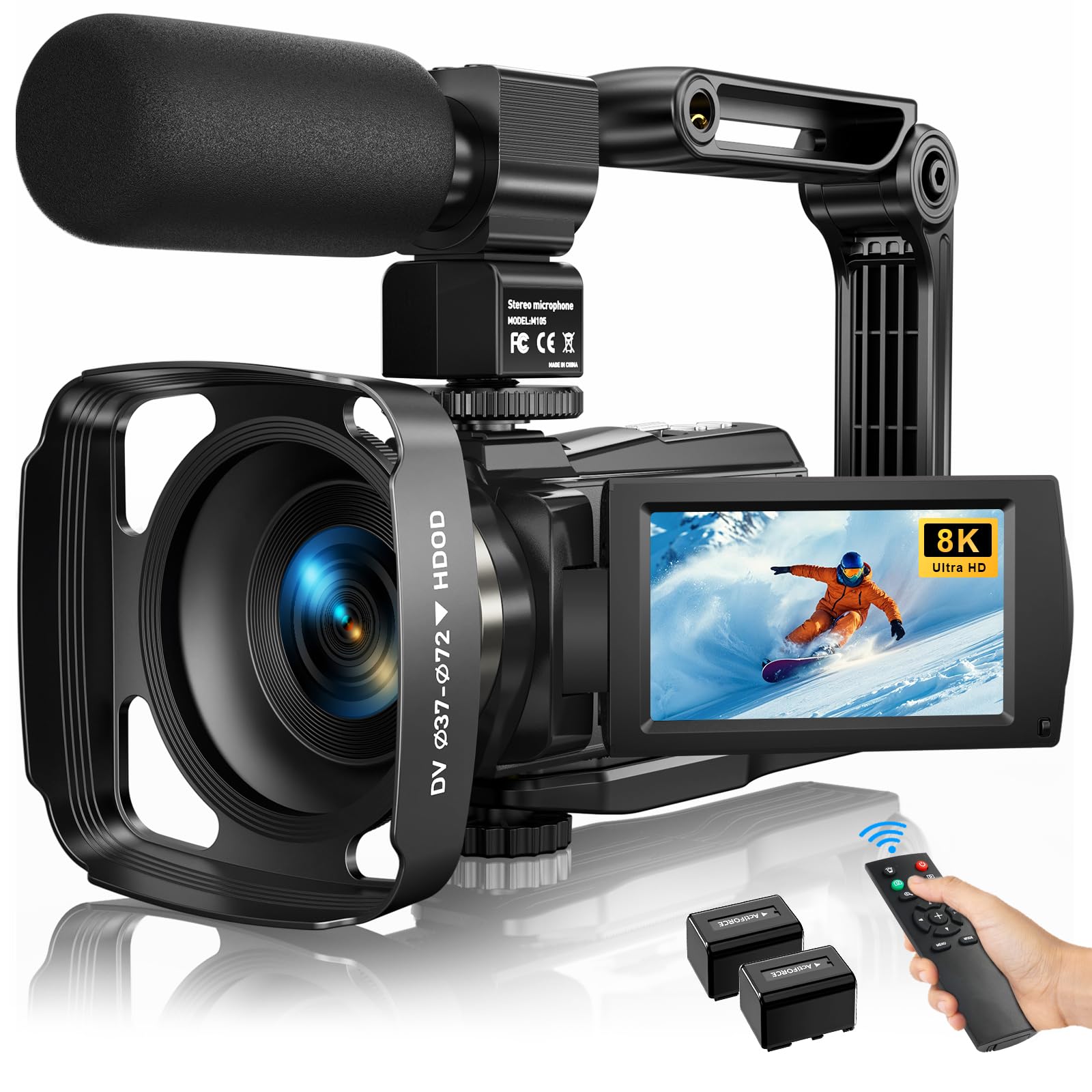
The MWIRB 8K Video Camera Camcorder is built around an 88MP sensor that can record 8K at 15fps, but the more practical resolutions are 6K at 30fps and 4K at 30fps where its image quality stabilizes. The 18X digital zoom is best used sparingly, as it degrades resolution quickly past 4X. The 3-inch 270-degree rotatable touch screen is a genuine asset for self-recording and vlogging, allowing easy framing without awkward wrist angles.
Where this camera earns its place is the accessory package. The included external X-Y stereo microphone captures clear audio that separates it from built-in-mic-only cameras—a critical factor for YouTube and podcast creators. The 6-axis anti-shake works well for walk-and-talk vlogging, and the infrared night vision mode produces usable black-and-white footage in complete darkness, something no other camera in this price tier offers. The WiFi connectivity via the iSmart DV2 app allows instant transfer to social media.
Reviewers consistently note the good image quality in well-lit conditions and the beginner-friendly interface. The included remote control enables self-recording from any angle, and the camcorder can double as a webcam via USB for live streaming. The main limitation is battery life—two batteries are included, but heavy use will drain one in about 45 minutes of 4K recording. For entry-level vloggers who need good audio and night vision capability, this is a uniquely feature-rich option.
Why it’s great
- External stereo microphone delivers superior audio
- IR night vision captures footage in complete darkness
- Rotatable touch screen simplifies vlogging self-recording
Good to know
- 8K mode limited to 15fps
- Battery life around 45 minutes in 4K recording
- App can have connection stability issues
6. XNSIAKXA 8K Digital Camera
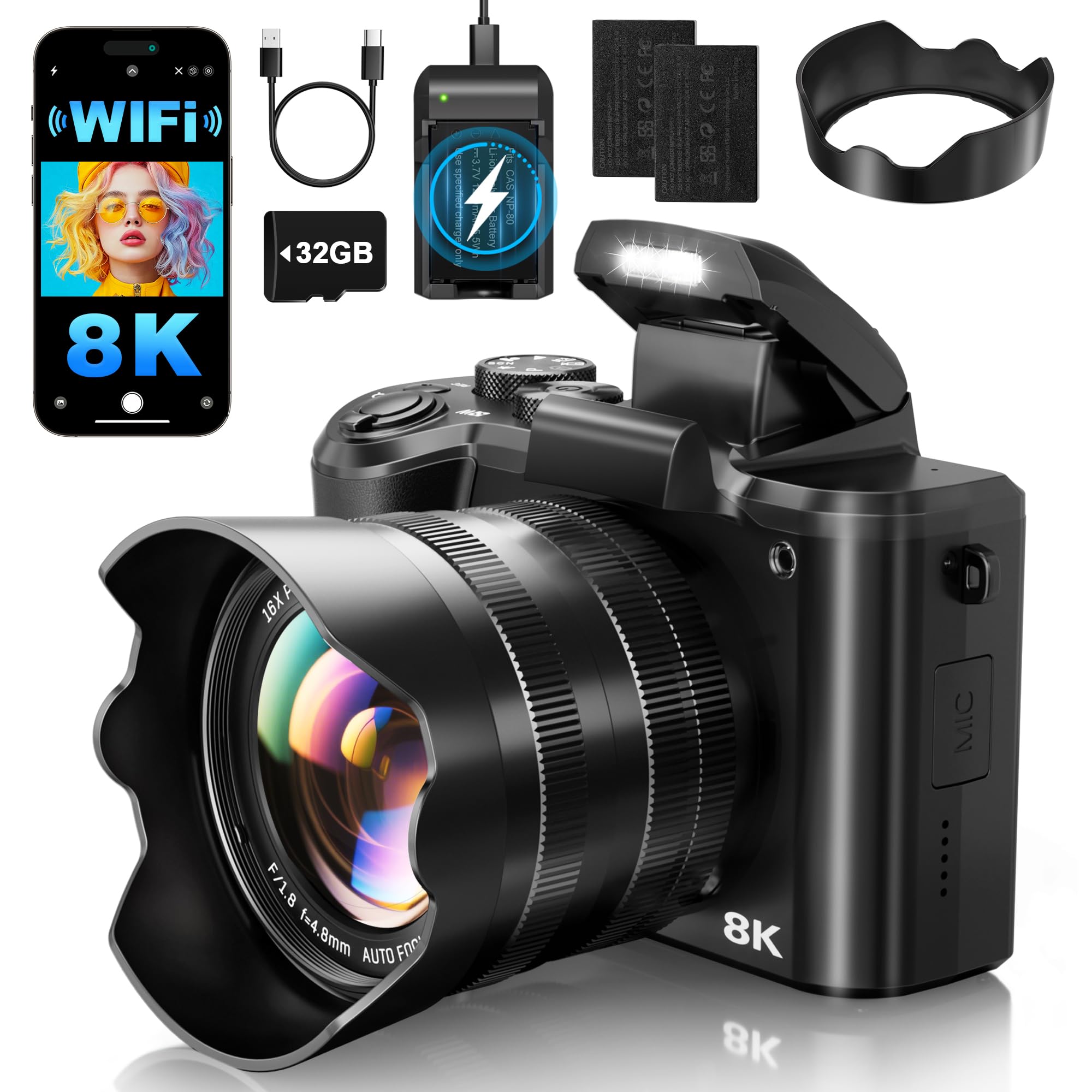
The XNSIAKXA 8K Digital Camera targets beginners who want creative control without complex menus. Its defining hardware feature is the 360° rotary dial that instantly switches between modes—Time-lapse, Slow Motion, Filters, Portrait, Landscape, and more—eliminating the friction of deep menu diving. The 88MP sensor combined with phase-detection and contrast-detection autofocus (with 79 autofocus points claimed) provides a responsive shooting experience for its class.
The dual-lens design enables seamless switching between front and rear cameras for vlogging, and the 3.2-inch IPS touch screen is responsive for tap-to-focus and menu navigation. WiFi connectivity via the iSmart DV2 app enables quick social media sharing. The kit includes two batteries, a 32GB SD card, lens hood, camera bag, and cleaning cloth—everything needed to start shooting immediately. The 12-month hassle-free promise adds peace of mind for first-time buyers.
Positive real-world reviews highlight the good image detail in well-lit conditions and the ease of use for beginners. The 16X digital zoom is usable up to about 4X before quality drops noticeably. The battery life concerns mentioned by some users are real—active shooting drains a battery in about 45 minutes, so the second battery is essential for longer outings. The autofocus can struggle in low light, producing soft images. For content creators and beginners who want a learning tool with creative flexibility, the XNSIAKXA delivers solid value.
Why it’s great
- 360° rotary dial makes mode switching fast and intuitive
- Complete kit includes all accessories and carrying case
- Dual lenses enable easy selfie and vlog switching
Good to know
- Battery life limited to roughly 45 minutes per charge
- Autofocus performance drops significantly in low light
- Digital zoom degrades image quality quickly past 4X
7. Aboobu 8K Digital Camera
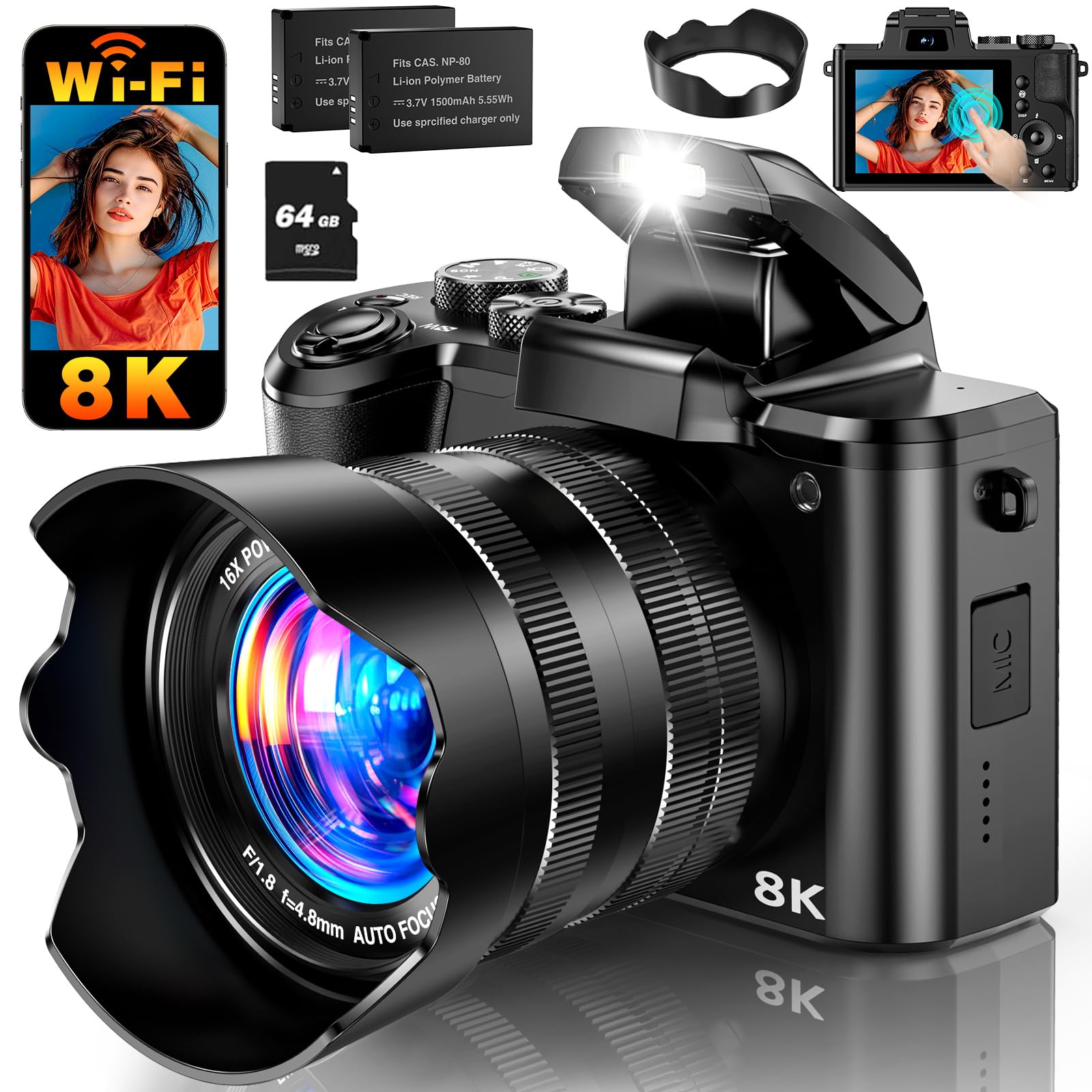
The Aboobu 8K Digital Camera is a complete out-of-box solution for beginners who want everything included without extra purchases. The 64GB memory card pre-installed means you can shoot immediately, and the dual 8K-capable lenses with the 3.2-inch IPS touch screen provide a modern interface that feels more like a smartphone than a traditional camera. The 6-axis anti-shake stabilization is noticeably effective for handheld video, reducing the jitter that plagues budget cameras.
The WiFi connectivity through the iSmart DV2 app works reliably for transferring photos to a phone for social sharing, though the transfer speed is not instant. The 16X digital zoom is best at moderate distances—pushing to the maximum introduces noticeable grain. The 360° rotary dial for mode switching mirrors the same creative flexibility found in more expensive vlog cameras. The included flash and lens hood add practical value for low-light and lens flare reduction.
Customers report strong photo and video quality in good daylight, with sharp details and vibrant colors that exceed budget expectations. The battery life is decent for a camera at this price, with two batteries covering a full day of casual shooting. A minority of reviewers report graininess and quality that doesn’t match the 8K claims—this is consistent with the digital-up-scaling nature of many budget 8K cameras. For the beginner who wants the most complete kit with the least hassle, the Aboobu is a compelling all-in-one package.
Why it’s great
- Includes 64GB memory card—ready to shoot out of the box
- Large 3.2-inch touch screen is responsive and easy to use
- WiFi sharing app works reliably for social media uploads
Good to know
- 8K resolution is interpolated, not true 8K
- Digital zoom quality degrades noticeably at max range
- Some units have reported battery calibration issues
8. Minolta 48MP Digital Camera

The Minolta 48MP Digital Camera brings a well-known brand name to the budget segment with a rear selfie lens that makes portrait capture effortless. The 48MP resolution is interpolated from a lower native sensor, but at its core, this is a camera designed for social sharing rather than large prints. The 4K video recording produces usable footage for casual content, and the 16X digital zoom allows basic reach, though at the cost of detail at maximum magnification.
Creative features are the main attraction here. Nine scene modes plus color filters, slow motion, and time-lapse modes provide variety without requiring post-processing skills. The 2.8-inch LCD is adequate for composition and playback, though it can be difficult to see in direct sunlight. The digital image stabilization helps smooth out hand shake, but it’s not as effective as optical stabilization—slow and deliberate movement during video is recommended for best results.
Real-world battery life is a mixed bag: one reviewer reported roughly 140 images at highest quality without flash before the battery needed charging. The shutter lag is noticeable, which means action shots require anticipation. Low-light performance is passable with flash, but noise increases significantly in natural dim light. The complete package includes a 32GB memory card, case, and strap, making it ready for immediate use. For the budget buyer who wants creative filters and a brand they recognize, the Minolta is a solid entry point.
Why it’s great
- Rear selfie lens is excellent for portraits and group shots
- Creative scene modes and filters reduce need for editing
- Complete kit includes memory card and carrying case
Good to know
- Battery lasts about 140 shots at high quality
- Noticeable shutter lag for action photography
- 48MP resolution is interpolated, not native
9. Kodak PIXPRO Friendly Zoom FZ43-RD

The Kodak PIXPRO FZ43 is the most accessible entry point into dedicated cameras, and its 4X optical zoom with a CCD sensor produces images with a nostalgic color profile that some users actively prefer. The 16MP resolution combined with a 6X digital zoom gives users flexibility to crop images without immediate quality loss. At 720p HD, video recording is limited, but this camera’s primary purpose is still photography for beginners, kids, and casual users.
The AA battery system is the FZ43’s defining compromise. Alkaline batteries drain rapidly—a user might get only 15-20 minutes of active shooting. Higher-capacity rechargeable Ni-MH batteries (2300mAh or higher) are essentially required for practical use, and even then, the camera may report low battery prematurely while continuing to work. The 2.7-inch LCD is adequate for composition, and the full-sized SD card slot handles cards up to 32GB reliably. The macro mode is surprisingly capable for close-up shots, though handheld blur is common without steady support.
Customer reviews are polarized between budget buyers delighted by the value and users frustrated by the rapid battery drain and inconsistent low-light performance. The camera produces good clear photos in decent daylight, but images become soft and noisy in dim conditions without the flash. The true optical zoom is a genuine highlight—it delivers zoomed images that retain more detail than any smartphone digital crop. As a first camera for a child, a travel beater, or a learning tool for photography basics, the FZ43 is the cheapest reliable option available.
Why it’s great
- Genuine 4X optical zoom preserves image detail
- Least expensive entry point for a dedicated camera
- Uses universally available AA batteries
Good to know
- Requires high-capacity rechargeable AA batteries for usability
- Poor low-light performance without flash
- Video limited to 720p HD
FAQ
Is optical zoom more important than megapixels for a camera under $200?
Can a budget camera under $200 produce better photos than a modern smartphone?
Why do some budget cameras advertise 8K video for under ?
Should I prioritize a camera with a rechargeable battery or AA batteries?
Final Thoughts: The Verdict
For most users, the camera for $200 winner is the Kodak PIXPRO AZ255 because its 25X optical zoom and optical image stabilization deliver results no phone can touch at this price. If you want hands-free wearable capture and the ability to mount your camera anywhere, grab the Insta360 GO Ultra. And for adventure vloggers who need waterproof 4K shooting with robust stabilization, nothing beats the Xtra Edge Action Camera.