
No one to roll the dice with. No one to negotiate a truce. No one to blame when your plan collapses. Solo board gaming is a specific discipline — a quiet war between you and a system designed to test every resource, every turn, and every decision you make. The right game turns an empty table into a space of genuine tension, where victory feels earned and defeat teaches a real lesson.
I’m Min — the co-founder and writer behind Gadgets Feed. I’ve spent hundreds of hours researching the solo board game market, analyzing rulebooks, component quality, replay value, and the mechanical depth that separates a one-time puzzle from a game you’ll want to return to again and again. This guide cuts through the noise to find the games that truly deliver for a single player.
Whether you are a veteran gamer seeking a new challenge or a curious newcomer looking to explore the world of analogue solo experiences, you have come to the right place to find the absolute best 1 player board games for your shelf and your solo adventures.
How To Choose The Best 1 Player Board Games
The solo board game market has expanded dramatically, offering everything from quick 20-minute puzzles to sprawling 90-minute campaigns. Choosing the right one depends on your available table space, session length, and tolerance for rule complexity. Focus on these three factors to narrow your search.
Replayability and Variable Setup
A solo game you can only beat once is a puzzle, not a board game. Look for systems that randomize the starting state: multiple enemy or boss configurations, variable player powers, modular boards, or a deck of event cards that change each session. Games with a campaign mode or unlockable content extend life dramatically. The best titles in this category thrive on the promise that no two plays feel identical.
Playtime and Table Space
Your available real-world constraints matter as much as the design. A 60-90 minute game with a large board and dozens of tokens demands a dedicated space and a flexible schedule. Compact box games with 30-45 minute playtimes fit comfortably on a coffee table and suit weeknight sessions. Measure your playing area before buying — many excellent solo games require surprisingly little room.
Complexity and Rule Clarity
Without other players to catch your mistakes, you rely entirely on the rulebook. Games with clear, well-indexed rules and player aids reduce friction. If a game’s BGG complexity rating exceeds 3.5, budget at least one full read-through and a practice round. Conversely, games rated under 2.5 often hit the table immediately with minimal setup time, making them ideal for newcomers to solo gaming.
Quick Comparison
On smaller screens, swipe sideways to see the full table.
| Model | Category | Best For | Key Spec | Amazon |
|---|---|---|---|---|
| Roll Player | Premium | Deep strategic character creation | 60-90 min playtime; 73 dice | Amazon |
| Final Girl Starter Set | Premium | Horror movie solo narrative | 20-60 min; modular killer combos | Amazon |
| The Night Cage | Mid-Range | Atmospheric co-op or solo escape | Tile-laying labyrinth; 1-5 players | Amazon |
| Warp’s Edge | Mid-Range | Time-loop space combat | 30-45 min; bag-building mechanic | Amazon |
| Box ONE | Mid-Range | Puzzle adventure experience | Requires internet; 1 player only | Amazon |
| Under Falling Skies | Budget-Friendly | Compact dice placement defense | 35 min; campaign + modular cities | Amazon |
| Kinfire Delve: Callous’ Lab | Budget-Friendly | Tactical card & dice dungeon crawl | 60 min; 64 Well Master cards | Amazon |
In‑Depth Reviews
1. Roll Player Board Game

Roll Player flips the typical RPG narrative: instead of playing the hero, you build the hero from the ground up using dice drafting and placement. The 73 colorful dice in the box feed into a character sheet where you align attributes, class, alignment, and backstory to maximize Reputation Stars. The solo mode functions as a tight optimization puzzle where every die roll forces a trade-off between what your character needs and what the scoring objectives demand.
With an estimated playtime of 60-90 minutes and a weight that lands comfortably in the mid-complexity range, Roll Player rewards repeated plays through variable market cards and multiple character class combinations. The expansion adds monster hunting that integrates seamlessly for players wanting more narrative arc. Player boards are sturdy and the gold tokens add a satisfying tactile element to resource tracking.
Set up takes about five minutes — lay out the market, draw your class and alignment, grab the dice bag, and you’re building. The rulebook is clear enough to get through on a first read, though a solo reference card would have been a welcome addition. For solo gamers who love spreadsheets and optimization loops, this is a foundational title.
Why it’s great
- Deep strategic decisions with simple action rules
- High replayability through variable class/alignment/market combos
- Expansion integrates seamlessly for extended campaigns
Good to know
- Player boards can tear at folded edges over time
- Solo mode is an optimization puzzle with no AI opponent
2. Final Girl Starter Set

Final Girl puts you in the role of a lone protagonist fighting against a slasher killer in an iconic location, and it does so with a modular system that keeps every game fresh. The starter set includes the Core Box and the Happy Trails Horror feature film, giving you one killer (Hans the Butcher) and two playable girls with distinct abilities. Each session runs between 20 and 60 minutes, depending on how aggressively you push through the terror deck and how many items you search for.
The game mechanics revolve around hand management, area movement, and dice rolls for combat — but the real draw is the tension curve. You never feel safe. The killer’s terror cards escalate the pressure unpredictably, forcing you to adapt or die. Adding more Feature Film boxes expands the killer and location pool exponentially, making this a system that could sustain dozens of plays without feeling samey.
Setup requires watching a YouTube playthrough to internalize the flow, as the rulebook is functional but not the clearest in the category. Once the turn structure clicks, the game sings. The components are high quality, and the art style leans into classic horror tropes without being gratuitous. For solo players who want emergent narrative and genuine suspense, this is a top contender.
Why it’s great
- Highly modular system with mix-and-match killers and locations
- Genuine tension and emergent storytelling in every session
- Quick setup once you learn the flow
Good to know
- Rulebook clarity could be improved for first-time solo players
- Requires expansions for full variety beyond starter content
3. The Night Cage

The Night Cage is a cooperative tile-laying game where you navigate a shifting maze lit only by a candle. As a solo experience, you control two characters in a labyrinth that reveals itself one tile at a time. Wax Eaters stalk the darkness, and the pressure to find the gate before the maze collapses creates a constant, quiet panic. The core innovation is the limited vision mechanic — you only see what your candle illuminates, and the rest is unknown darkness.
Playtime averages around 40 minutes, and the advanced mode adds new monsters and obstacles that increase the difficulty substantially. The tile system means every game generates a unique map, and the brown and clear component palette reinforces the oppressive atmosphere. Playing in a dim room with thematic music amplifies the experience considerably.
The rulebook could benefit from a more structured explanation of edge cases, but the core loop is intuitive after one practice round. The box is a standard square that fits easily on a shelf, and the tile quality holds up to repeated shuffling. For solo players who prioritize atmosphere and spatial reasoning over combat math, this is an easy recommendation.
Why it’s great
- Unique limited-vision mechanic creates genuine tension
- High replayability through random tile layout and advanced mode
- Strong atmospheric presentation with minimal component footprint
Good to know
- Rulebook clarity could be improved for edge cases
- Best atmosphere requires dim lighting and minimal distraction
4. Warp’s Edge

Warp’s Edge is a bag-building solo game that simulates a time-loop space battle. You pilot one of four starfighters against five alien motherships, drawing tokens from a bag to upgrade your arsenal between warps. The loop mechanic means you play through the same encounter multiple times, but each run lets you carry forward improved skills and knowledge. The 109 pilot tokens and 18 skill cards create meaningful variety across sessions.
The included choose-your-path storybook adds lightweight narrative framing without bogging down the core gameplay. Each starfighter has a unique weapon loadout that changes your approach, and the motherships behave differently based on their AI deck. The bag-building feels more controlled than dice-rolling because you can plan around known probabilities, but the warp tokens still inject enough chaos to keep tension high.
Setup is quick — shuffle the enemy deck, populate the bag, choose your ship and mothership, and you’re flying in under two minutes. The rulebook is one of the cleaner examples in the solo space, with clear iconography and turn flow. The cartoonish art style may not appeal to everyone, but the mechanical design is sharp enough to forgive any aesthetic reservations.
Why it’s great
- Bag-building mechanic feels fairer and more strategic than pure dice
- Time-loop design with progressive upgrades provides satisfying growth arc
- Quick setup and 30-45 minute playtime fits busy schedules
Good to know
- Cartoonish art style may not suit all tastes
- Formula can feel solved after several plays without expansions
5. Box ONE

Box ONE is an interactive puzzle adventure designed by Neil Patrick Harris that requires only one player and an internet connection. The game unfolds as a series of connected puzzles that you solve using physical components in the box and digital responses on a companion website. The 10.5 x 10.5 inch box feels substantial, and the production values — card stock, box construction, insert design — are noticeably above average for the category.
The puzzles start straightforward and escalate in cleverness, though experienced puzzle solvers may blow through the entire experience in under three hours. The core hook is that the box itself becomes part of the puzzle — you interact with it in ways that feel rewarding and tactile. Internet access is mandatory for progressing, and the website sequences are well-designed with minimal friction.
The biggest caveat is replayability. Once you’ve solved every puzzle, there is no procedural generation or variable setup to justify a second playthrough in the same timeframe. It’s a premium one-shot experience, not a game you return to monthly. Buyers should calibrate expectations accordingly — this is a puzzle box, not a campaign game.
Why it’s great
- Exceptional production quality and tactile puzzle design
- Clever, escalating puzzle sequence that respects the player’s intelligence
- Family-friendly difficulty that works well for mixed-age groups
Good to know
- Zero replayability after completing the puzzle chain
- Mandatory internet access for every step of the experience
6. Under Falling Skies
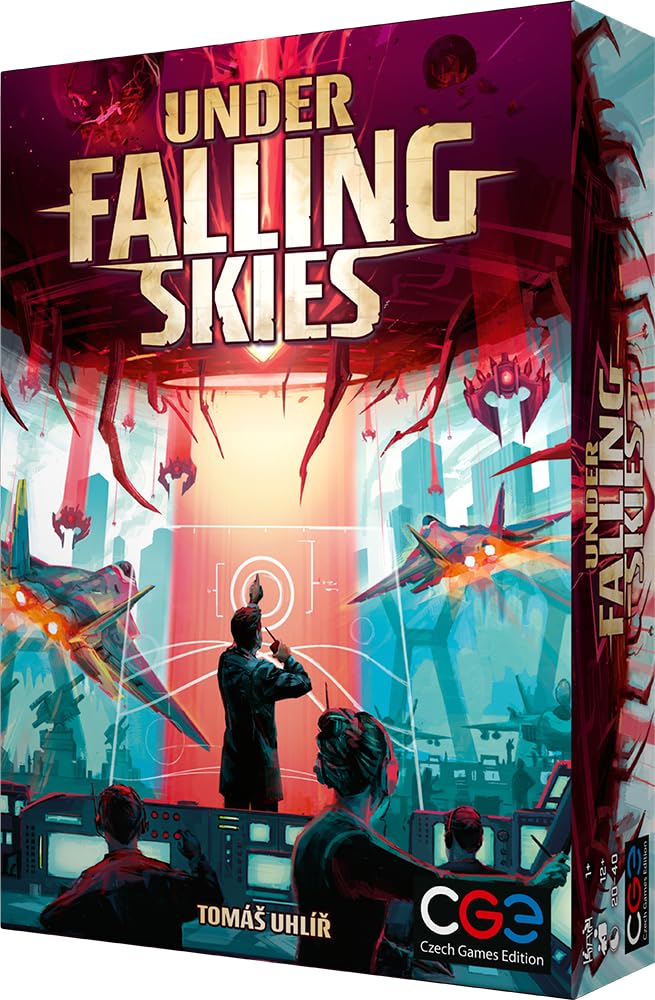
Under Falling Skies started as a 9-card nanogame that won a design contest in 2019, and the retail version is a masterclass in how much game can fit into a compact box. You command the forces of a city defending against an alien invasion using dice placement. Each die you allocate determines both your action and the threat level, creating a constant push-pull between offense and defense. The box measures roughly 7 x 5 inches and fits easily in a bag.
The campaign mode adds persistent upgrades across multiple games, and the modular city system means you can rearrange rooms to create different defensive configurations. The 35-minute playtime is accurate once you internalize the flow, and the variable difficulty settings (adjustable by choosing different alien AI decks) keep the challenge calibrated to your skill level. The dice allocation mechanic is delightfully punishing — a bad roll forces genuinely hard choices.
Component quality is solid for the price tier, though the cardboard tokens could benefit from thicker stock for frequent shuffling. The rulebook is clean and easy to reference during play. For solo gamers with limited shelf space or who travel frequently, this is the most efficient use of square inches in the entire category.
Why it’s great
- Exceptional value in a compact, travel-friendly box
- Campaign mode adds meaningful progression across sessions
- Tense dice placement with tough, meaningful trade-offs
Good to know
- Cardboard tokens are functional but not premium weight
- Not playable on an airplane tray table due to small token layout
7. Kinfire Delve: Callous’ Lab
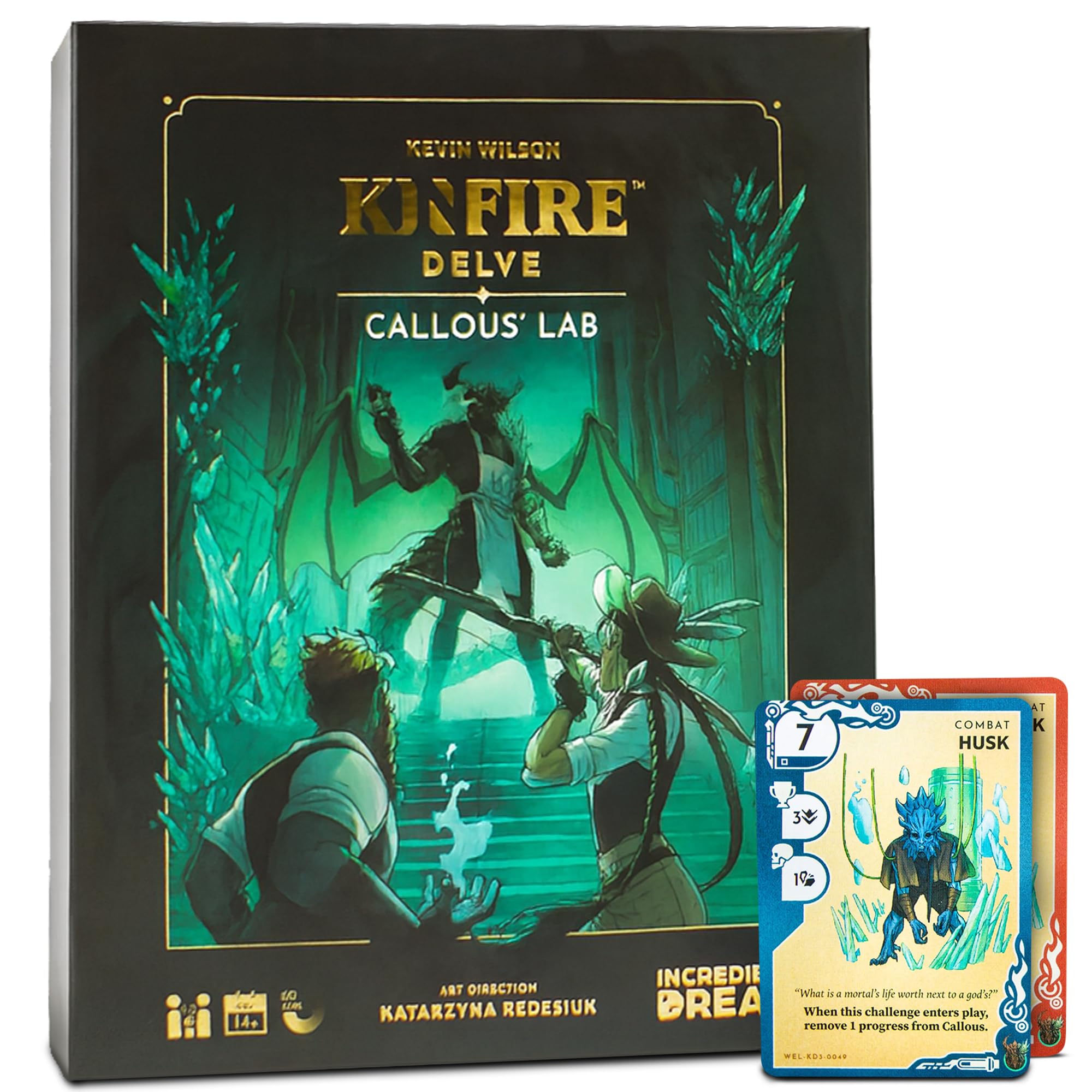
Kinfire Delve: Callous’ Lab is a tactical card and dice game designed for solo or two-player cooperative play. You descend through a series of color-matching challenges using Valora’s ranged attacks or Roland’s risk-reward fire magic. The core mechanic involves playing cards that match the color of each challenge — red, green, blue, or wild-white — while rolling custom dice that can advance progress or inflict penalties. The 64 Well Master cards and 40 Seeker cards create a dense, replayable dungeon crawl in a box smaller than a hardcover novel.
The resource management layer adds meaningful tension. Running out of cards triggers Exhaustion tokens that impose ongoing penalties, forcing you to balance aggressive clearing with careful hand preservation. The final boss fight against Callous draws from several forms, ensuring that even after multiple plays, the encounter demands different approaches. Dice Tower awarded it the Seal of Excellence, and fan reviews consistently praise the balance between puzzle logic and dice risk.
The rulebook is concise but covers all edge cases without excessive page-flipping. Setup is slightly longer than average for a card game — expect three to five minutes to separate the Well Master deck from the Seeker deck and arrange tokens. The box insert doubles as a dice tray, a thoughtful touch that reduces table clutter. For budget-conscious solo gamers who want a tight, tactical experience without the footprint of a full board, this is a standout option.
Why it’s great
- Excellent balance of tactical card play and dice risk management
- Compact box with modular components that mix with other Kinfire sets
- Multiple boss forms provide replayability beyond the base setup
Good to know
- Setup requires separating two decks and arranging tokens
- Progress tracking tokens can feel tedious without the companion app
FAQ
Can I play these games on a small coffee table?
How much replay value should I expect from a solo board game?
Final Thoughts: The Verdict
For most solo gamers, the best 1 player board games winner is the Roll Player because it combines deep strategic dice drafting with high replayability through its character class and market card system. If you want emergent narrative and genuine horror tension, grab the Final Girl Starter Set. And for a compact, travel-friendly option that punches well above its box size, nothing beats the Under Falling Skies.