
The moment that steel-toe sole loses contact with a greasy shop floor is the moment your day turns into a hazard report. For anyone who spends their shift on slick concrete, wet tile, or oil-slicked surfaces, the difference between a stable stride and a dangerous fall comes down to one critical feature: the rubber compound and tread pattern of your footwear.
I’m Min — the co-founder and writer behind Gadgets Feed. I’ve spent weeks cross-referencing customer reports on wet-surface performance, outsole durometer testing data, and tread-depth specifications to isolate which boots actually resist hydroplaning on industrial floors versus which ones just advertise it.
Whether you work in a commercial kitchen, on a construction site, or in a mechanic’s bay, finding reliable anti slip work boots is a decision that affects your stability and safety shift after shift.
How To Choose The Best Anti Slip Work Boots
Slip resistance isn’t a single number you can look up on a box. It’s a function of the outsole material, the tread pattern’s geometry, and how those two interact with the specific surface you work on. Here are the three factors that separate a truly grippy boot from a marketing label.
Outsole Compound and Durometer
The hardness of the rubber, measured on the Shore A durometer scale, determines how the boot deforms against the floor. A softer rubber (around 55-65 Shore A) conforms to microscopic surface irregularities and creates more friction on smooth, wet surfaces. Harder compounds wear longer but can slide on polished concrete or wet tile. Most premium slip-resistant boots use a proprietary oil-resistant rubber blend around the 60-70 Shore A range to balance grip and durability.
Tread Pattern Depth and Geometry
The depth of the lugs matters: deeper channels (4-6 mm) evacuate water, oil, and debris from under the boot, allowing the rubber to make direct contact with the floor. Flat, wedge-style soles with micro-grooves excel on smooth, wet surfaces where mud traction isn’t needed, while aggressive chevron or multi-directional lugs work better on uneven terrain. Look for patterns that incorporate angled bars, siping (thin cuts), or hexagonal shapes that actively channel liquids sideways rather than trapping them.
ASTM F2913 Slip-Resistance Certification
The ASTM F2913 standard measures the coefficient of friction (COF) on a variety of floor surfaces under both wet and dry conditions. A boot that meets this standard has been tested on a specific contaminated surface (usually wet tile or oily steel) and demonstrated a minimum COF of 0.40. While not all boots carry this certification, those that do provide a verifiable baseline for purchase decisions. Look for the ASTM F2913 mark on the boot’s tongue or heel pull-tab.
Quick Comparison
On smaller screens, swipe sideways to see the full table.
| Model | Category | Best For | Key Spec | Amazon |
|---|---|---|---|---|
| Timberland PRO Intercept | Mid-Range | Lightweight all-day comfort | 8.5 oz per boot, steel toe | Amazon |
| Timberland PRO 8IN MaxTrax | Premium | Heavy-duty wet traction | MaxTrax slip-resistant outsole | Amazon |
| Irish Setter Two Harbors | Premium | Oil rig and rough terrain | 11″ shaft, steel toe | Amazon |
| Thorogood 1957 Series | Premium | Premium leather durability | Wedge outsole, WP leather | Amazon |
| SUREWAY Slip On | Mid-Range | Quick on/off station boot | Composite toe, slip-on | Amazon |
| NORTIV 8 Cowboy Boot | Budget | Wide feet and barn work | Square toe, steel toe | Amazon |
| BOIWANMA Steel Toe | Budget | Entry-level value | Steel toe, leather | Amazon |
In‑Depth Reviews
1. Timberland PRO Intercept Steel Safety Toe

The Timberland PRO Intercept hits a rare sweet spot: a steel-toe boot that weighs close to a gym sneaker. At roughly 8.5 ounces per boot, it eliminates the lead-foot fatigue that plagues long shifts on concrete. The athletic upper combines mesh panels with synthetic overlays, allowing air circulation that keeps feet cool during 12-hour kitchen or warehouse stints.
Multiple customer reports confirm zero foot pain or blisters after full-day wear on unforgiving concrete floors, and the outsole provides solid traction on wet tile surfaces without the clunky feel of a traditional work boot. The integrated steel toe meets ASTM safety standards while the profile remains low-profile enough to pass for a heavy-duty sneaker.
The one recurring note involves the front toe cap area being susceptible to dents from heavy impacts, and several users recommend sizing down half a step for a locked-in fit. If you prioritize lightweight agility and all-day breathability over heavy-duty leather armor, this is the top performer in the mid-range bracket.
Why it’s great
- Extremely lightweight athletic feel reduces foot fatigue on concrete
- Breathable mesh upper keeps feet cool during long shifts
Good to know
- Toe cap area can dent from repeated heavy impacts
- Runs half size large for some foot shapes
2. Timberland PRO 8IN MaxTrax Slip Resistant WP Boot

The Timberland PRO 8IN with MaxTrax outsole is built specifically for environments where water, grease, and oil coat the floor. The outsole’s multi-directional lugs and proprietary rubber compound create exceptional wet-surface grip that users describe as confidence-inspiring on slick warehouse floors and wet loading docks. The 8-inch shaft provides substantial ankle support without restricting movement.
Customer reviews spanning three years of heavy use (40-60 hours per week) report that these boots eliminate the lower back pain associated with less supportive footwear, and the waterproof membrane keeps feet bone-dry through slushy parking lots and rain-soaked job sites. The steel toe and electrical hazard protection add a layer of safety for industrial settings.
Some users note the boot feels slightly heavy compared to sneaker-style safety shoes, though the supportive chassis is a trade-off most consider worthwhile for the durability. The break-in period is minimal, with many owners reporting zero discomfort from the first wear onward, making this a strong recommendation for anyone who needs max wet traction without sacrificing long-term comfort.
Why it’s great
- MaxTrax outsole delivers exceptional grip on wet and oily surfaces
- Waterproof construction keeps feet dry in wet conditions
Good to know
- Heavier than athletic-style work shoes
- 8-inch shaft may feel restrictive for those used to low-cut boots
3. Irish Setter Two Harbors 11″ Steel Toe Work Boot

The Irish Setter Two Harbors is a purpose-built boot for the most punishing work environments, including oil rigs where standard boot soles melt from heat and chemical exposure. Owners report that the outsole resists degradation from petroleum-based contaminants better than most competitors, and the anti-slip tread pattern maintains traction on greasy steel deck plates. The 11-inch shaft offers exceptional ankle stability and mud protection.
Customer loyalty runs deep here — multiple verified owners are on their third pair, citing the boot’s ability to hold up in conditions that destroyed other brands within months. The waterproof membrane passes the test after 15 months of daily outdoor use in rain and snow, and the steel toe meets rigorous safety standards for heavy industrial environments.
The primary consideration is the taller shaft, which can take effort to lace up and may feel restrictive for those who prefer mobility-oriented boots. Some users note minor sole separation after extended use, though this appears at the tail end of a two-year lifespan in extreme conditions. For anyone working in oil fields, chemical plants, or rugged outdoor sites, this is the benchmark for durability and grip.
Why it’s great
- Outsole resists melting and degradation from petroleum products
- Proven durability with 2+ year lifespan in heavy industrial use
Good to know
- 11-inch shaft requires more effort to lace and may limit ankle mobility
- Occasional sole separation after extended heavy use
4. Thorogood 1957 Series 8″ Waterproof Moc Toe Work Boot

The Thorogood 1957 Series represents the top of the wedge-sole category, with a full-grain leather upper that molds to the foot over time and a slip-resistant wedge outsole that maximizes surface contact on flat, smooth floors. The wedge design provides a stable platform for standing on concrete all day while the outsole’s micro-grooves create friction on wet tile surfaces where lugged soles can skid.
Multiple owners on their sixth pair confirm the durability is exceptional, with the boots surviving welding sparks, pipefitting abuse, and motorcycle riding while maintaining structural integrity. The waterproof membrane and removable comfort insole work together to keep feet dry and reduce foot soreness during 10-hour shifts, and the electrical hazard protection adds a safety layer for industrial environments.
The main drawback involves the lacing system, which some users find challenging to tighten evenly, and the premium price point places it firmly in the investment category. However, for tradespeople who value resoleable construction, classic moc-toe aesthetics, and proven slip resistance on smooth surfaces, the Thorogood 1957 Series delivers long-term value that justifies the upfront cost.
Why it’s great
- Resoleable wedge outsole design extends boot lifespan significantly
- Full-grain leather upper breaks in beautifully and provides lasting durability
Good to know
- Lacing system can be tricky to tighten evenly
- Premium pricing may not suit all budgets
5. SUREWAY Slip On Work Boots for Men
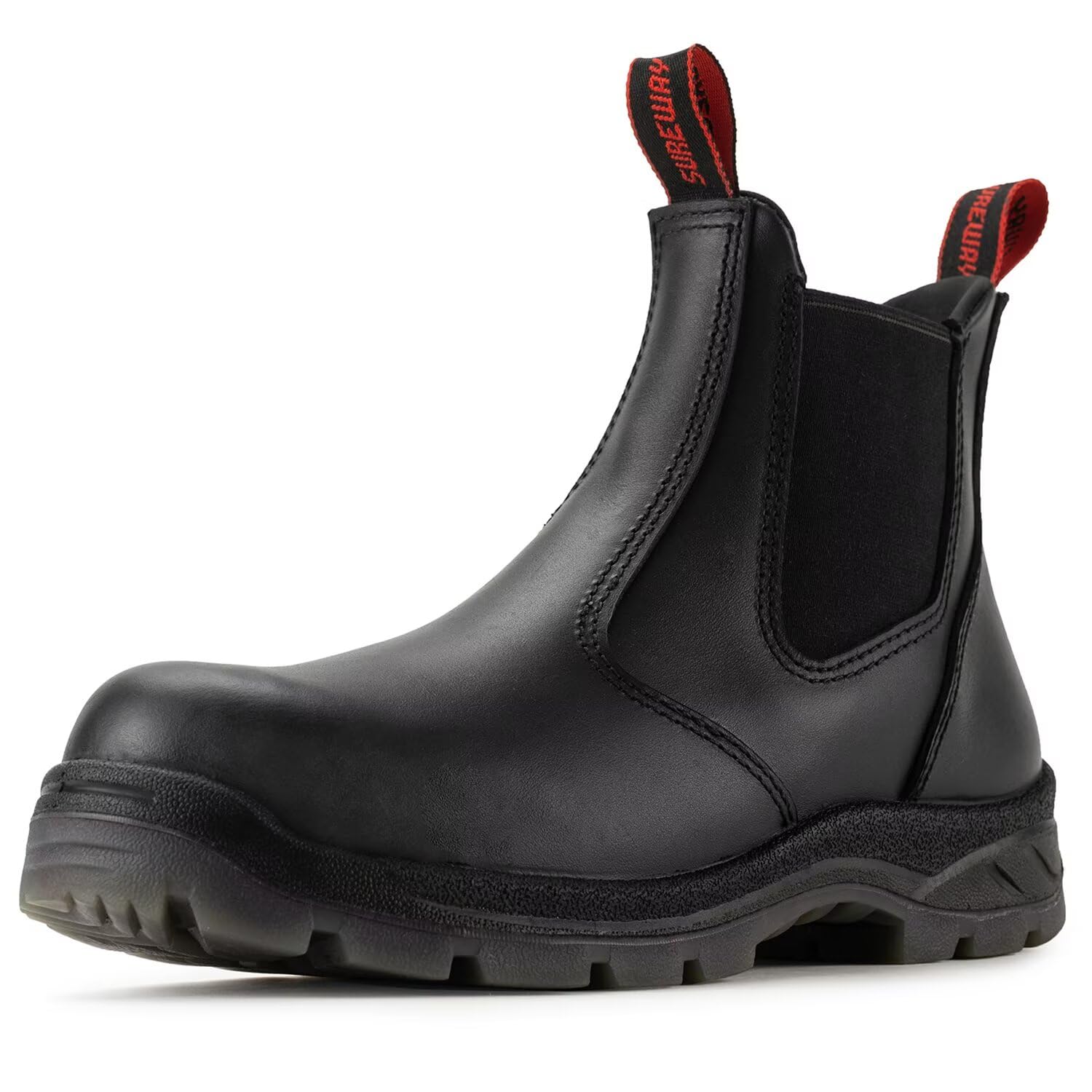
The SUREWAY Slip On boot is engineered for professionals who need to transition quickly between response situations. Firefighters and mechanics specifically praise the slip-on design that allows boot-up in seconds and kick-off removal just as fast, a critical feature for station work where time matters. The composite toe meets safety standards while keeping the boot lighter than steel alternatives.
The non-slip outsole delivers reliable traction on wet apparatus bay floors and slick garage surfaces, and the waterproof construction keeps feet dry during exterior operations. Multiple customer reviews from fire service personnel confirm the boot remains comfortable even during extended shifts, with a replaceable insole that allows customization for arch support needs. The initial stiffness from the composite toe softens after a few days of wear.
The trade-off comes in weight: at a slightly heavier build than some pull-on boots, the SUREWAY may feel substantial for smaller-framed individuals. The slip-on design also means less ankle support compared to lace-up 8-inch boots, so users tackling uneven terrain may want to look at higher-cut options. For station work, quick-response scenarios, and light industrial settings, the convenience-to-protection ratio is genuinely excellent.
Why it’s great
- Slip-on design enables rapid boot-up and removal for emergency response
- Replaceable insole allows personalized arch support customization
Good to know
- Heavier than average for smaller-framed users
- Less ankle support than traditional lace-up 8-inch boots
6. NORTIV 8 Steel Toe Cowboy Boots
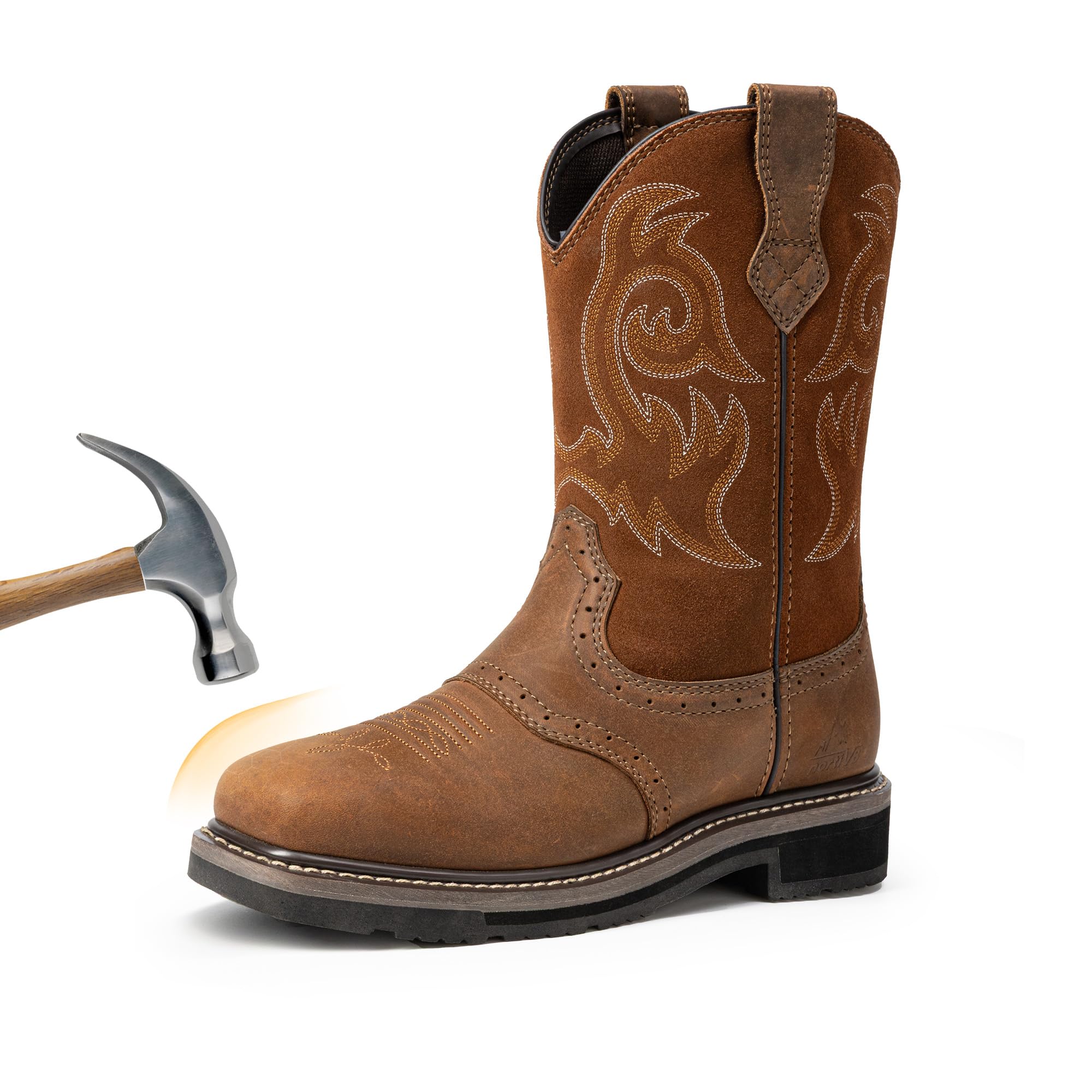
The NORTIV 8 Cowboy Boot takes a Western-style approach to slip resistance, combining a square toe that accommodates unbendy feet with a wide upper that fits comfortably over thick work socks. The outsole provides excellent grip on wet surfaces, with one customer specifically noting zero slipping on a wet barn floor that had been treacherous with previous boots. The heel design also resists picking up mud and muck.
At this price point, the full-grain suede leather delivers surprising durability: after five months of three-times-weekly wear, the boots show only cosmetic discoloration from snow exposure while maintaining structural integrity and waterproofing. The steel toe adds hazard protection for construction and farming environments without making the boot feel overly heavy. The square toe design also allows room for toe splay during long days on your feet.
Comfort-oriented users should note that the leather lacks significant insulation, making these a better choice for warmer months or indoor work. Sizing is the other variable — several users recommend sizing down half a step, and those with wide feet may find the standard width accommodates them better than expected. For budget-conscious buyers who need a roomy, grippy boot for barns, fields, or light industrial work, this is a solid entry.
Why it’s great
- Square toe design offers exceptional room for wide feet and toe splay
- Outsole resists muck buildup while providing reliable wet-surface traction
Good to know
- Leather provides minimal insulation for cold weather use
- Sizing inconsistent, requiring half-size adjustment for optimal fit
7. BOIWANMA Steel Toe Work Boots

The BOIWANMA Steel Toe boot is the value play in this lineup, delivering surprising quality for a fraction of the premium tier cost. Multiple customers describe the boot’s comfort as excellent straight out of the box, with the leather upper showing a texture that looks more expensive than the price suggests. The steel toe meets impact standards, and the outsole provides basic traction on dry surfaces.
The build quality over time is impressive for the price: owners report the boots holding up well under regular work conditions, with one customer buying a second pair after the first exceeded expectations. The availability of sizes from 7 to 17 in both medium and wide widths solves a real pain point for big-footed workers who struggle to find affordable safety footwear. The waterproof membrane does an adequate job in light rain and wet grass.
The major caveat comes from several customers who report that the soles are not genuinely slip-resistant on wet or oily floors — the rubber compound lacks the aggressive tread chemistry found in dedicated slip-resistant boots. If your work surface is consistently dry, these represent a fantastic value. But if you face slippery conditions regularly, the savings won’t compensate for a preventable fall.
Why it’s great
- Exceptional value with surprisingly good build quality for the price
- Extended size range (7-17) accommodates hard-to-fit foot sizes
Good to know
- Outsole lacks real slip resistance on wet or oily floors
- Leaves black scuff marks on lighter colored flooring surfaces
FAQ
What does the ASTM F2913 slip-resistance standard test?
Are wedge-sole work boots safer on wet floors than lugged boots?
Final Thoughts: The Verdict
For most users, the anti slip work boots winner is the Timberland PRO Intercept because it combines lightweight athletic comfort with a steel toe and solid wet-surface traction at a mid-range price. If you need extreme wet and oily surface grip for heavy industrial environments, grab the Timberland PRO 8IN MaxTrax. And for the most durable option that resists petroleum-based contaminants on rugged terrain, nothing beats the Irish Setter Two Harbors.