
Tracking your blood pressure at home is only useful if the numbers you see are actually correct. A monitor that reads high when your pressure is normal, or low when it’s elevated, creates false confidence or unnecessary panic — neither is acceptable when managing cardiovascular health. The difference between an accurate monitor and a noisy one comes down to clinical validation, sensor quality, and cuff fit, not price tag or brand flashiness.
I’m Min — the co-founder and writer behind Gadgets Feed. I’ve spent countless hours cross-referencing clinical validation protocols, oscillometric sensor specs, and real-user consistency data to separate the monitors that deliver reliable readings from those that don’t.
After researching dozens of models, I’ve narrowed the field to the devices that pass stricter accuracy benchmarks and real-world repeatability tests, which you’ll find detailed in this guide to the accurate blood pressure monitor.
How To Choose The Best Accurate Blood Pressure Monitor
Home blood pressure monitors vary widely in measurement precision, and a model that looks good on Amazon can still be off by 15 mmHg on your arm. The buying decision hinges on three pillars: clinical accuracy validation, cuff sizing that matches your arm circumference, and memory features that help you track trends instead of single readings.
Clinical Validation Is Non‑Negotiable
Look for monitors that explicitly state FDA clearance, or validation from organizations like the British and Irish Hypertension Society (BIHS) or the European Society of Hypertension (ESH). These protocols test the device against a mercury sphygmomanometer across a wide range of pressures. Without this stamp, the monitor’s accuracy is an unknown variable, regardless of how many five-star reviews it has collected.
Cuff Size Matters More Than You Think
Using a cuff that is too small inflates your systolic reading by 10 to 20 mmHg, while an oversized cuff can underreport it. Measure the circumference of your bicep midpoint, and match it to the cuff range printed on the package. Multiple-cuff kits are a practical solution for households with different arm sizes, as they eliminate the guesswork for each user.
Memory Capacity and Multi‑User Tracking
A single reading tells you very little — trends are what doctors rely on. Choose a monitor with at least 60 stored readings per user, and consider dual-user models if more than one person in your home needs daily monitoring. Bluetooth syncing with smartphone apps adds convenience for long-term trend analysis, but the monitor’s onboard memory ensures you never lose data even without your phone nearby.
Quick Comparison
On smaller screens, swipe sideways to see the full table.
| Model | Category | Best For | Key Spec | Amazon |
|---|---|---|---|---|
| Omron Gold | Premium | AFib detection & tracking | AFib detection, Bluetooth, dual-user | Amazon |
| FDA-Cleared URION U80A | Premium | Large display & multi‑user | 4.5” LED, ≤±3mmHg, 199 memories | Amazon |
| AQESO 2‑Cuff | Mid‑Range | Small & extra‑large arms | M/L + XL cuffs, 2×500 memories | Amazon |
| iHealth Track 550BT | Mid‑Range | iPhone & Apple Health sync | Bluetooth, 99 memories, color‑coded | Amazon |
| Glucoracy Rechargeable | Mid‑Range | Travel & compact storage | Rechargeable, 2×99 memories, 6.4 oz | Amazon |
| Microlife BPM2 | Budget | Clinical AA rating & simplicity | BIHS AA rated, 60 memories | Amazon |
| AQESO 3‑Cuff | Budget | Multiple arm sizes in one box | 3 cuffs (7″‑21″), triple‑user 99×3 | Amazon |
In‑Depth Reviews
1. Omron Gold Blood Pressure Monitor (BP5360)
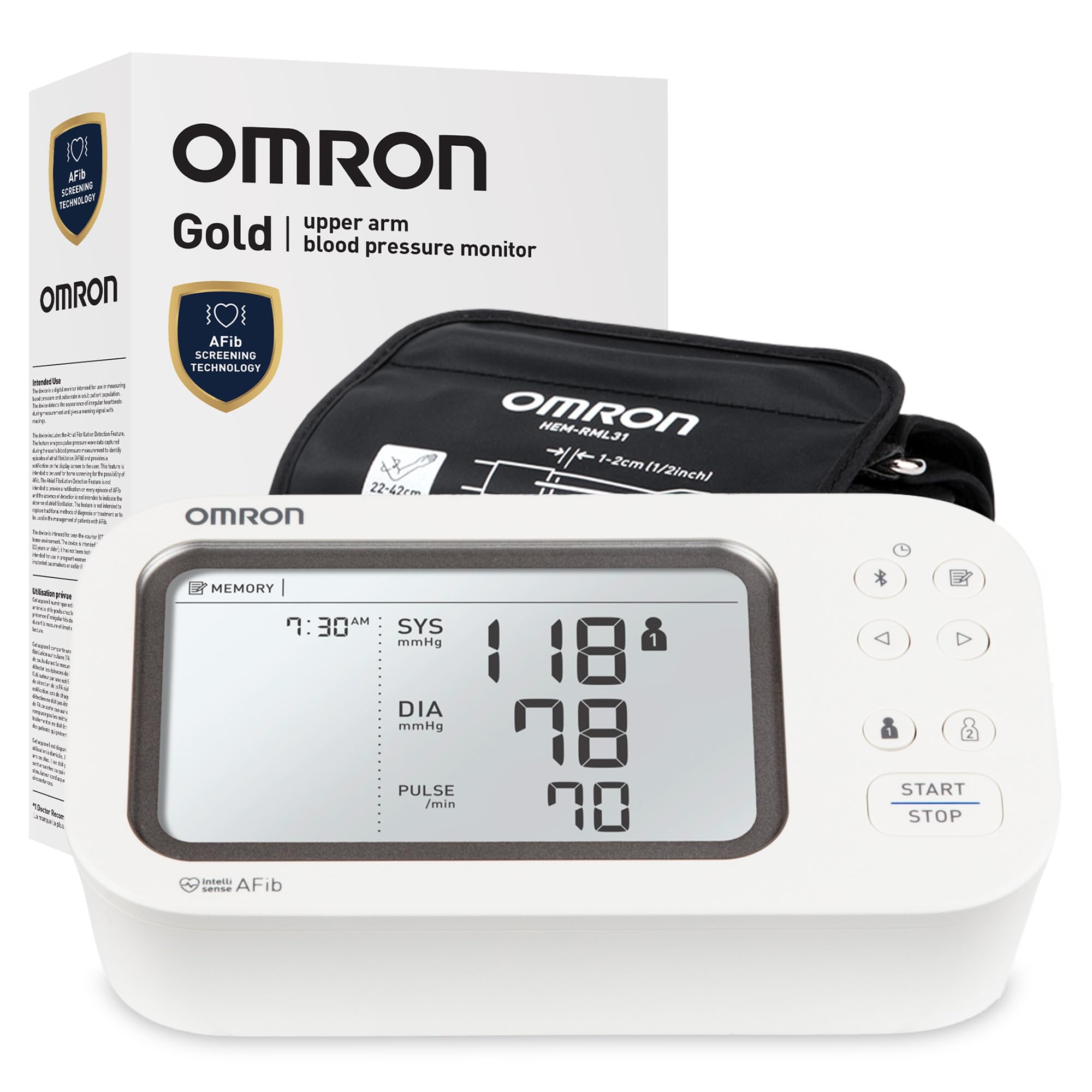
The Omron Gold sits at the top of this list because it is the only monitor here with built-in Atrial Fibrillation (AFib) detection — a feature that actively screens for irregular heart rhythms during every measurement. This is the #1 doctor and pharmacist recommended brand for a reason: the oscillometric sensor and deflation algorithm have been clinically validated across diverse patient populations. The wide-range D-ring cuff fits arms 9 to 17 inches, which covers the vast majority of adult users, and the Bluetooth connection to the Omron connect app syncs readings seamlessly to Apple Health and Google Fit.
Dual-user support with separate memory banks means two people can track their own trends without mixing data, and the High Morning Average Indicator flags dangerous morning spikes linked to cardiovascular risk. Real user feedback highlights consistent readings that align with doctor’s office measurements, and the automatic logging removes any friction from daily tracking. The included storage case keeps everything organized for travel, and the four AA batteries mean you can start monitoring immediately out of the box.
The one caveat is that the AFib detection feature, when triggered, displays a warning symbol but does not show the actual blood pressure reading during that measurement — a safety-first design that may frustrate users with diagnosed atrial fibrillation who simply want the numbers. A small number of users report that the monitor refused to display readings entirely when A-fib was detected, though this is by design to prevent reliance on potentially inaccurate data.
Why it’s great
- Clinically validated AFib detection provides an extra heart‑health screen
- Bluetooth sync with Apple Health and Google Fit for effortless trend tracking
- Dual‑user memory with separate profiles for households
Good to know
- AFib detection may block reading display when triggered
- Uses four AA batteries, not rechargeable
2. FDA‑Cleared Upper Arm BP Monitor (URION U80A)
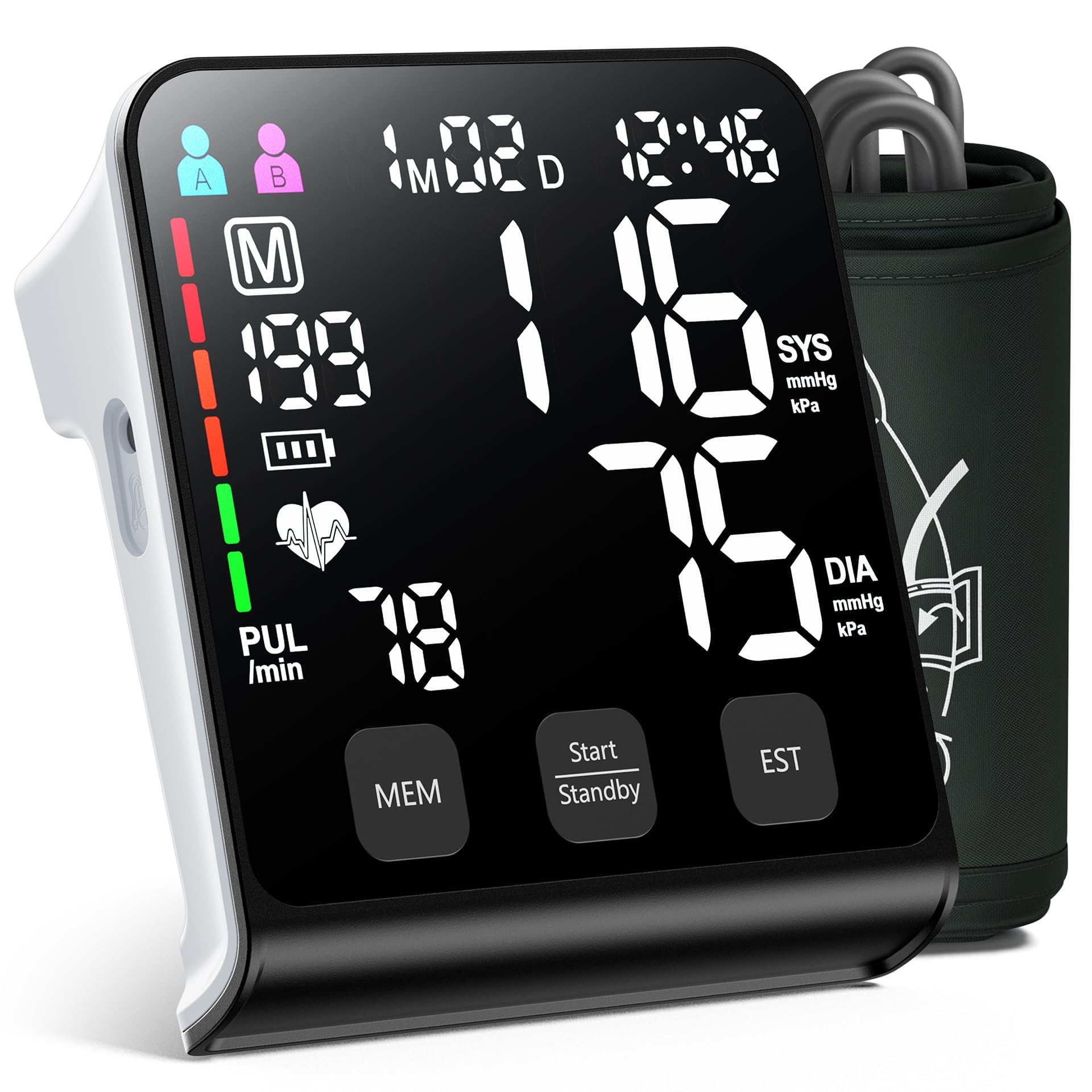
This URION model earns its premium placement through a combination of FDA clearance, a massive 4.5-inch backlit LED screen, and an error margin of just ≤±3 mmHg for both systolic and diastolic readings. The display is genuinely large enough to read from across the room — a critical feature for seniors or anyone with visual impairments — and the blood pressure classification bar color-codes results so you instantly know whether you’re in a normal, elevated, or hypertensive range.
Dual-user memory stores up to 199 readings per person, and the one-touch operation means even a first-time user can get an accurate reading without navigating complex menus. The adjustable cuff accommodates a wide range of arm circumferences, and the integrated irregular heartbeat detector adds an extra layer of safety. Both battery and USB power options give you flexibility for home or travel use.
Real buyers consistently describe the readings as matching their doctor’s office monitor, and the scratch-resistant acrylic panel ensures the display stays clear through daily use. The compact footprint (4.7 x 4.7 inches) means it won’t clutter your nightstand or bathroom counter, and the included storage bag protects it during transport.
Why it’s great
- 4.5‑inch LED display is the largest and clearest in this price tier
- FDA‑cleared with ≤±3mmHg accuracy specification
- Dual‑user 199‑reading memory tracks long‑term trends
Good to know
- Not rechargeable — requires continuous power via USB when using cable
- Display may feel large for very small nightstands
3. AQESO Blood Pressure Machine 2‑Cuff (M/L + XL)

This AQESO model solves one of the most common accuracy problems in home monitoring: the wrong cuff size. It ships with two cuffs — a medium/large (9–17 inches) and an extra-large (13–21 inches) — so households with both average-sized and larger arms get a proper fit without buying additional accessories. The oscillometric technology used here delivers fast readings in roughly 30 seconds, and the WHO classification bar on the large backlit LCD gives you an immediate visual cue about where your reading falls on the hypertension spectrum.
Each of the two users can store up to 500 readings, which is more memory than most mid-range monitors offer by a wide margin. This makes it easy to track changes over weeks or months without worrying about data overwrites. The USB Type-C power option gives you flexibility, though the device requires a continuous power connection when using USB — it is not rechargeable.
Buyers who tested this monitor side-by-side with doctor’s office equipment reported consistent readings within 3–5 mmHg, which is well within the acceptable range for home monitoring. The ergonomic D-ring cuffs are easier to self-apply than traditional wrap styles, and the one-touch operation eliminates the learning curve that often causes user error with less intuitive designs.
Why it’s great
- Two cuffs ensure accurate fit for different arm sizes in one household
- 500 readings per user — massive memory for trend tracking
- Large backlit LCD with WHO classification bar
Good to know
- USB power requires continuous connection, not rechargeable
- Bulky at 1.54 pounds — less portable than one‑piece designs
4. iHealth Track Smart Upper Arm Monitor (550BT)
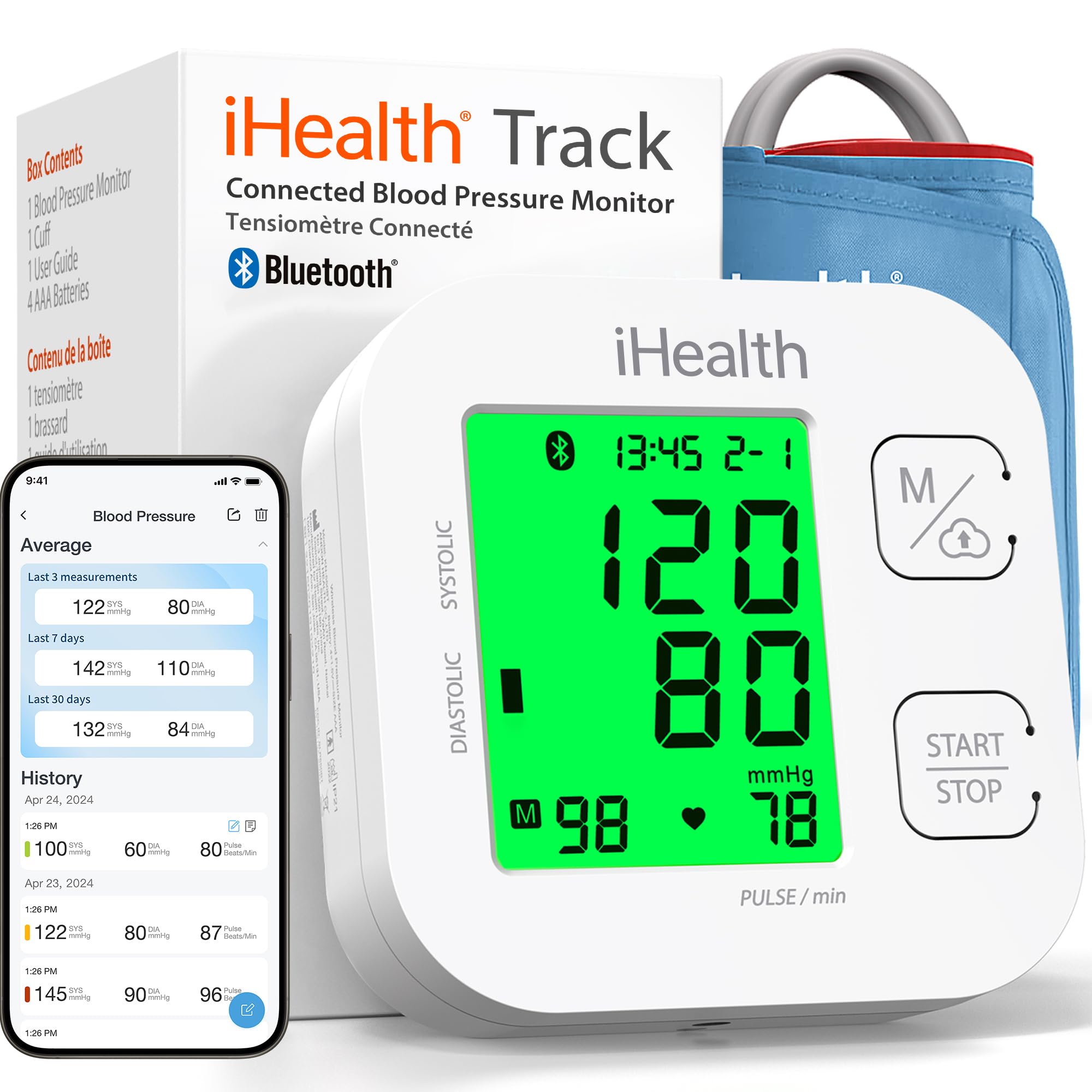
The iHealth Track delivers the most polished smartphone integration in this guide. Bluetooth syncing to the free iHealth app is effortless on both iOS and Android, and the app automatically transfers readings to Apple Health — a feature that users with iPhones consistently praise as flawless. The large multi-color backlit display turns green, yellow, or red based on your reading’s classification, so you can interpret results at a glance without consulting a chart.
The wide-range cuff fits arms 8.7 to 16.5 inches, and the ESH 2010 clinical validation confirms its accuracy meets European standards. Onboard memory stores up to 99 readings, which is sufficient for a single user tracking daily trends over three months. The automatic irregular heartbeat detection adds a valuable health screen, and the two-button operation is intuitive enough for elderly family members to use without assistance.
One recurring observation from buyers is that the iHealth app contains persistent advertisements that can be difficult to dismiss. Many experienced users recommend ignoring the app entirely and manually logging readings, since the monitor works perfectly as a standalone device. The AAA battery power means you’ll need to keep spares on hand, but battery life is reported as excellent with daily use lasting several months.
Why it’s great
- Flawless Apple Health syncing for automatic data logging
- Color‑coded display provides instant visual interpretation
- ESH 2010 clinical validation for reliable accuracy
Good to know
- App contains persistent ads that can be intrusive
- Uses AAA batteries, not rechargeable
5. Glucoracy Rechargeable Upper Arm Monitor
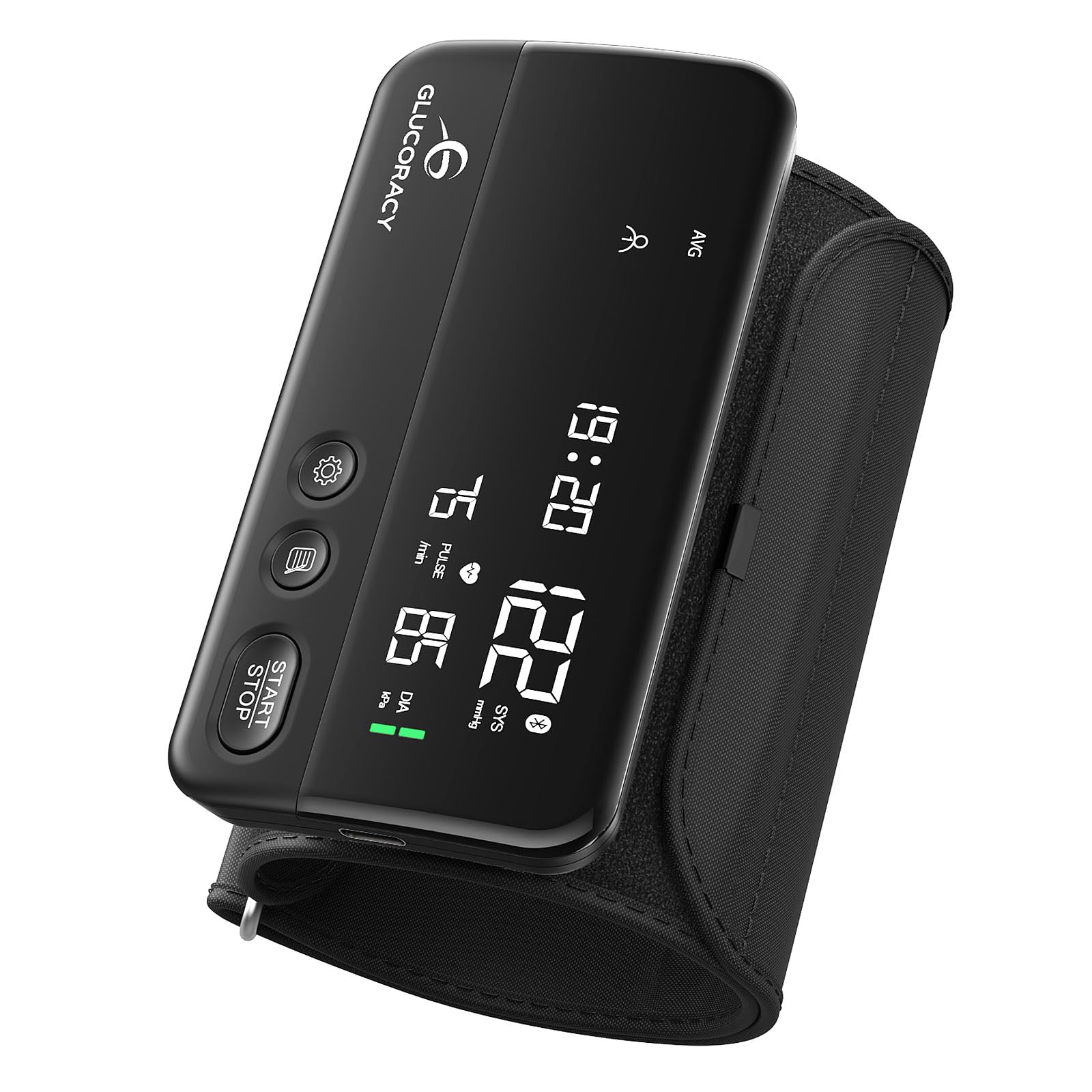
At just 6.4 ounces, the Glucoracy is the lightest monitor in this lineup and the only one with a built-in rechargeable battery. A two-hour charge delivers 200+ readings, which is enough for months of daily monitoring. The one-piece design eliminates loose tubes and separate cuffs, making it genuinely pocketable in the included storage bag — a significant advantage for travelers who need accurate readings on the road without the bulk of traditional monitors.
The adjustable cuff covers 10.6 to 16.5 inches, and the high-definition backlit color display provides clear readings in any lighting condition. Dual-user memory stores 99 readings per person, and the 6-level reading indicator makes it easy to interpret results. Buyers who compared this monitor side-by-side with an Omron reported close agreement, typically within 5 mmHg, which is acceptable for general health tracking.
The advanced smart chip and high-sensitivity sensors inside are designed to filter out motion artifacts and breathing interference, which helps maintain consistency across multiple measurements. The automatic shut-off after two minutes of inactivity preserves battery life, and the USB charging means you can top it up from any laptop, power bank, or wall adapter. This is the monitor to grab if your primary concern is portability without sacrificing accuracy.
Why it’s great
- Rechargeable battery eliminates ongoing cost of disposables
- Ultra‑light 6.4‑ounce one‑piece design for travel
- Consistent readings within 5 mmHg of clinical monitors
Good to know
- Adjustable cuff range limited to 10.6″‑16.5″
- Not clinically validated by BIHS or ESH
6. Microlife BPM2 Automatic Digital Monitor
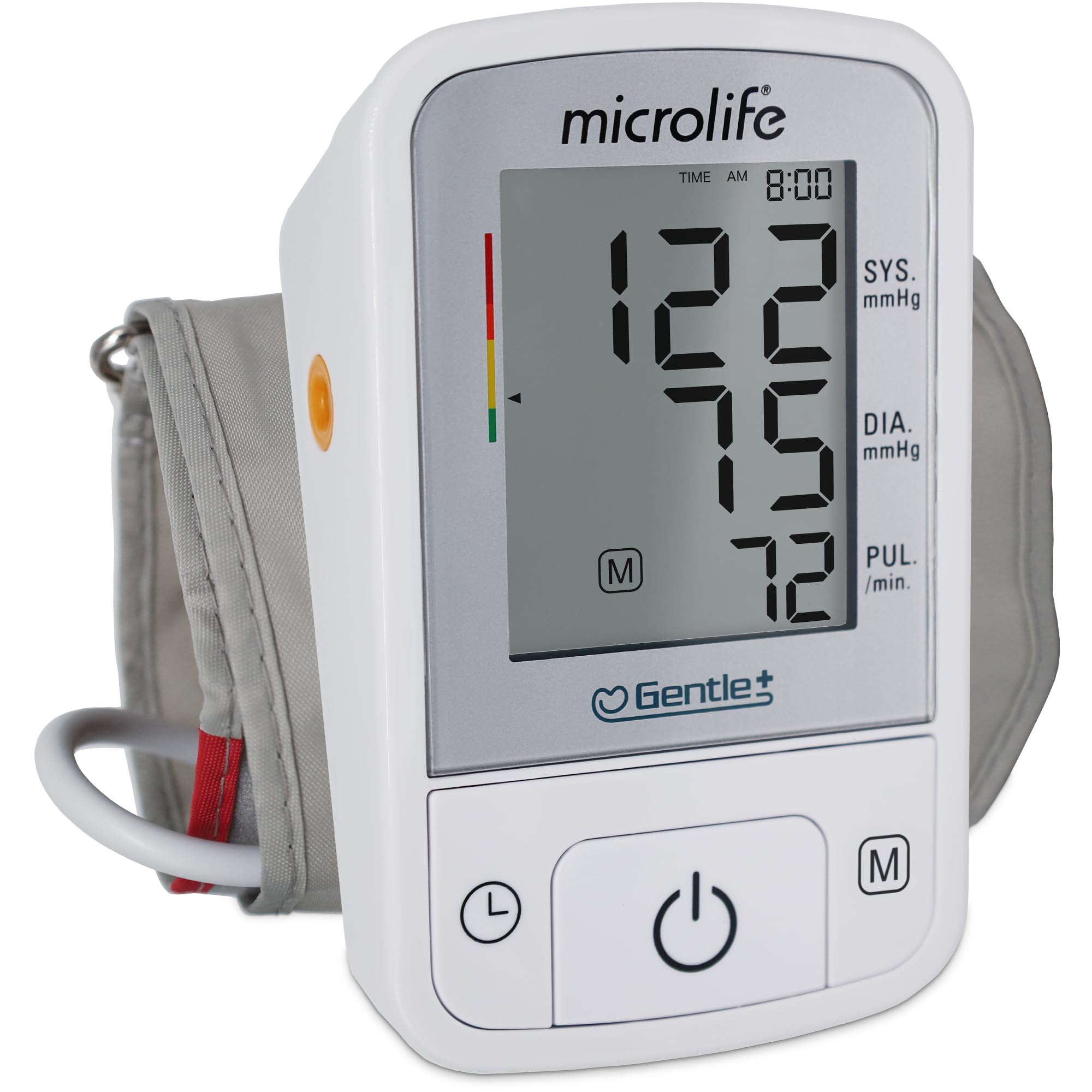
The Microlife BPM2 carries a BIHS AA rating — the highest accuracy certification a blood pressure monitor can earn from the British and Irish Hypertension Society. This clinical validation is rare in the sub- category and means the device has been rigorously tested against a mercury standard across a broad population. The Gentle+ Technology uses lower inflation pressure and shorter measurement cycles, which reduces the uncomfortable squeezing sensation that many users dislike about traditional cuffs.
The wide-range cuff fits 8.7 to 16.5 inches and features a contoured design with soft outer fabric that makes self-application easier than standard D-ring cuffs. Onboard memory stores 60 readings, and the large buttons with one-touch start/stop are simple enough for elderly users to operate without frustration. The hypertension risk indicator and irregular heartbeat detector provide additional health insights beyond just the systolic/diastolic numbers.
Users who have owned this model for a decade report that it maintains accuracy over years of daily use — a durability claim that few competitors in this price range can match. The AA batteries (included) last a long time, and the monitor works with an optional AC adapter for users who prefer not to worry about battery replacements. The only downside is the lack of Bluetooth or smartphone connectivity, but for buyers who prioritize clinical accuracy above all else, this is a minor tradeoff.
Why it’s great
- BIHS AA rating — highest clinical accuracy certification available
- Gentle+ Technology reduces cuff discomfort during inflation
- Proven durability with many units lasting over 10 years
Good to know
- No Bluetooth or smartphone app connectivity
- Only 60‑reading memory — less than many competitors
7. AQESO Blood Pressure Machine 3‑Cuff (Small, M/L, XL)

This AQESO kit is the most inclusive cuff solution in the guide, packing three separate cuffs that cover arm circumferences from 7 inches (small child-sized) all the way up to 21 inches (extra-large). The upgraded ASP (Accurate Signal Processing) technology and proportional valve system work together to adjust deflation speed based on the specific cuff in use, which directly improves measurement repeatability — a feature typically found in more expensive monitors.
Triple-user mode with 99 readings per user means three family members can track their own history independently. The large backlit LCD display with oversized digits is genuinely easy to read in dim light, and the one-touch operation removes any complexity. The WHO classification bar gives you an instant visual reference for where your reading falls. Power options include four AAA batteries or USB Type-C, though the USB connection requires continuous power.
Buyers who brought this monitor to their doctor’s appointment confirmed that readings matched the clinic’s equipment, validating the ASP technology’s real-world accuracy. The cloth storage bag keeps all three cuffs organized, and the 30-second measurement cycle is fast enough for morning routines. Some users reported unit failures after several weeks, but the manufacturer’s responsive customer service (offering refunds or replacements within 12 hours) mitigates this concern significantly.
Why it’s great
- Three cuffs cover the widest arm range (7″‑21″) of any monitor tested
- Triple‑user memory with 99 readings per profile
- Proportional valve improves consistency across cuff sizes
Good to know
- Some units reported failure within the first few weeks
- USB requires continuous power — not rechargeable
FAQ
How do I know if my home monitor is accurate against my doctor’s device?
What does a BIHS AA rating actually mean for a blood pressure monitor?
Should I buy a wrist monitor instead of an upper arm monitor?
What is the difference between D‑ring and pre‑formed cuffs for accuracy?
Final Thoughts: The Verdict
For most users, the accurate blood pressure monitor winner is the Omron Gold because it combines AFib detection, Bluetooth connectivity, and dual-user support in a clinically validated package trusted by doctors. If you want a massive display and FDA clearance at a lower price point, grab the FDA-Cleared URION U80A. And for households with multiple arm sizes needing the best cuff versatility, nothing beats the AQESO 2-Cuff.