
Scoliosis demands a seating solution that actively supports the natural curvature of your spine rather than forcing it into a rigid, factory-molded shape. A standard office chair with a flat back panel often exacerbates the lateral curve, creating pressure points and fatigue that make long hours at a desk a painful ordeal. The right chair uses adjustable lumbar support, contoured backrests, or active sitting mechanics to distribute weight evenly and keep the spine aligned without fighting its natural form.
I’m Min — the co-founder and writer behind Gadgets Feed. My analysis digs into lumbar adjustability ranges, seat depth mechanisms, and support materials to find chairs that genuinely accommodate asymmetrical spinal loading.
After evaluating dozens of models for adjustability and postural support, I’ve curated this guide to the best chair for scoliosis to help you find a seat that reduces rather than reinforces discomfort.
How To Choose The Best Chair For Scoliosis
Selecting a chair for scoliosis is about matching the chair’s adjustability to your specific curve pattern, not just buying the most expensive model. An ill-fitting chair can amplify asymmetry, while a properly tuned one distributes pressure evenly across the back.
Lumbar Support Adjustability
The lumbar support must move in multiple planes, not just up and down. Look for chairs that allow forward and backward depth adjustment of the lumbar pad. This lets you fill the gap on the concave side of a scoliotic curve while avoiding excessive pressure on the convex side.
Seat Depth and Waterfall Edge
A seat pan that slides forward and backward prevents the front edge from cutting into the back of the thighs. A waterfall edge reduces pressure behind the knees, promoting better circulation and allowing you to sit deeper into the backrest where support matters most.
Active Sitting or Core Engagement
Chairs that encourage micro-movements — rocking, tilting, or perched kneeling — force the core to engage, reducing static loading on the spine. This can be particularly helpful for scoliosis sufferers who need to avoid locking their spine into a single position for hours.
Quick Comparison
On smaller screens, swipe sideways to see the full table.
| Model | Category | Best For | Key Spec | Amazon |
|---|---|---|---|---|
| Steelcase Leap | Premium | Maximum Adjustability | 7 Points of Adjustability | Amazon |
| Hbada X7 Smart | Premium | Automated Lumbar Tracking | 8D Massage + 3-Level Heat | Amazon |
| Vari CoreChair | Premium | Active Core Engagement | Tilting Mechanism + Seat Depth | Amazon |
| WorkPro Quantum 9000 | Mid-Range | All-Day Mesh Comfort | Ratchet Back Height + Seat Depth | Amazon |
| TRALT Ergonomic | Mid-Range | Adjustable Headrest & Lumbar | 3.5″ High-Density Foam Cushion | Amazon |
| ELABEST Mesh Chair | Mid-Range | Budget Adjustable Lumbar | Bionic-Curve Backrest + Synchro-Tilt | Amazon |
| MOLENTS Mesh Chair | Mid-Range | Forward/Backward Lumbar Tuning | 2-Way Adjustable Lumbar | Amazon |
| Sleekform Kneeling Chair | Budget-Friendly | Open Hip Posture | Boucle Upholstery + Backrest | Amazon |
| NYPOT Kneeling Chair | Budget-Friendly | Entry-Level Active Sitting | Adjustable Seat + 250 lb Capacity | Amazon |
In‑Depth Reviews
1. Steelcase Leap Office Chair

The Steelcase Leap is the gold standard for scoliosis seating because of its seven distinct points of adjustability. The lower back firmness dial allows you to dial in exactly the right amount of lumbar pressure for your curve, while the 3D LiveBack technology mimics the spine’s natural shape, contouring to your specific position rather than forcing your spine into a predetermined shape.
The Natural Glide System lets the seat slide forward as you recline, keeping your posture in check and your back against the backrest even during micro-movements. With a seat depth adjustment and four-directional armrests, you can fine-tune every contact point to avoid the pressure mismatches that scoliosis users often experience on the concave side of a curve.
Users report that it requires a short break-in period, but once adjusted, it provides the most customizable support in this class. Delivered fully assembled, saving time. The 16-year lifespan reported by refurbished users speaks to its build quality.
Why it’s great
- Seven independent adjustments including lumbar firmness and seat depth.
- Natural Glide System keeps spine aligned when reclining.
- No assembly required out of the box.
Good to know
- Heavy unit at around 57 lbs.
- Premium price point may be a barrier.
2. Hbada X7 Smart Ergonomic Chair
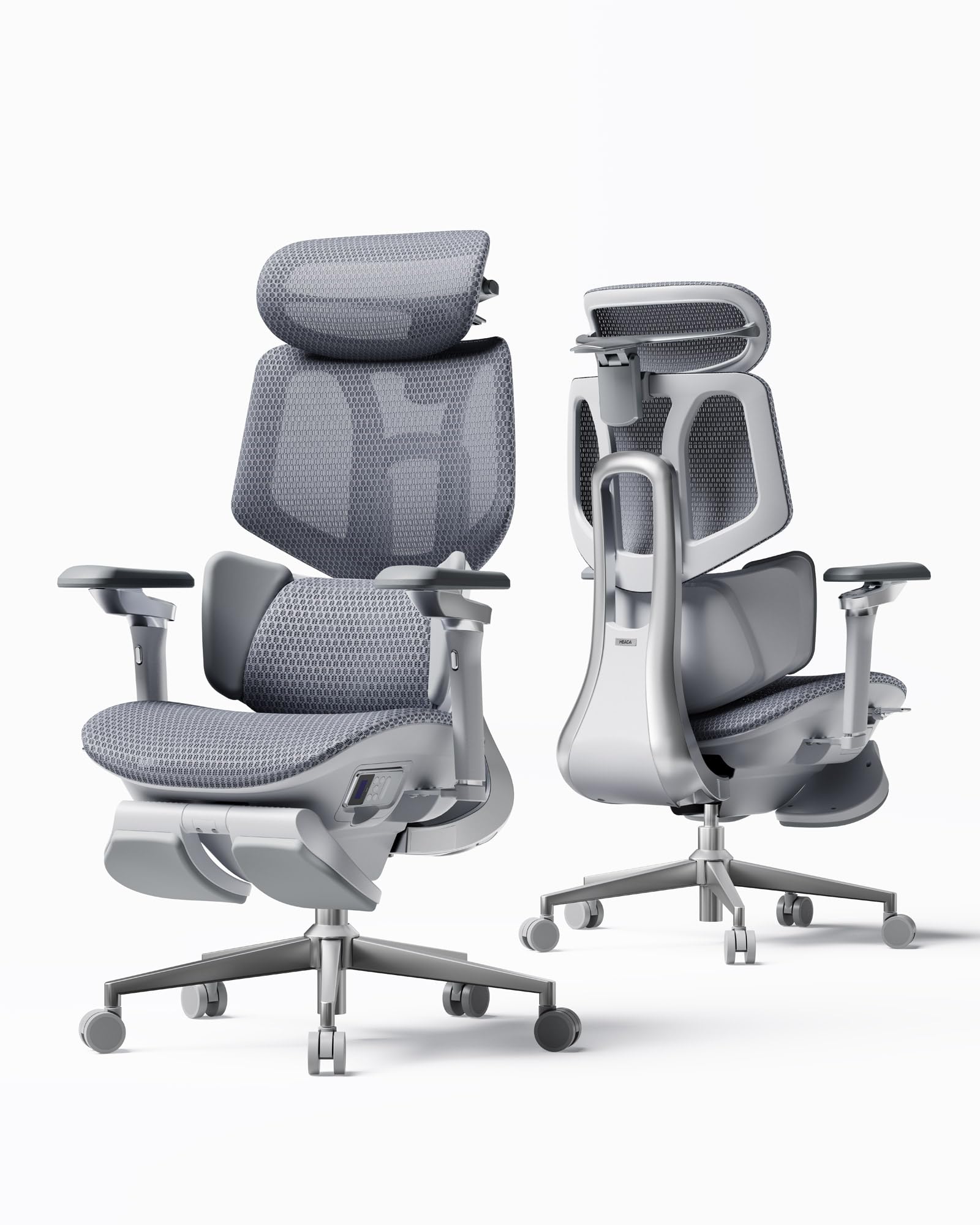
The Hbada X7 introduces a gravity-sensing base that auto-adjusts lumbar support intensity based on your seated weight distribution — a unique feature for scoliosis where pressure distribution is inherently uneven. The 6D adjustable waist pillow can be positioned precisely to support the concave side of a curve, while the 8D massage rollers with three-level heating (40–50°C) actively relieve muscle fatigue on the convex side that often overworks.
The dual-fan cooling system in the ventilated seat cushion prevents heat buildup during extended sessions, a clear advantage over foam seats that trap heat and sag asymmetrically over time. The 4D headrest with 70° rotation and 55mm sliding ensures neck alignment even with a pronounced C-curve in the upper spine.
Tall users should note that the standard gas cylinder might be insufficient for ergonomic positioning above 6 feet. The 720° omnidirectional armrests syncing with the 140° recline allow you to shift positions without losing arm support — critical for avoiding shoulder strain from compensatory posture.
Why it’s great
- Automated lumbar tracking adjusts to uneven weight distribution.
- Integrated massage and heat therapy for muscle relief.
- Dual-fan cooled seat prevents pressure point heat buildup.
Good to know
- Gas cylinder may be too short for users over 6 feet.
- Some moving parts may feel gimmicky at first.
3. WorkPro Quantum 9000 Series

The WorkPro Quantum 9000 brings ratchet-based back height adjustment and independent seat depth adjustment to a mid-range price point. For scoliosis users, the ability to raise or lower the backrest without compromising the lumbar support position is essential — a static backrest often aligns perfectly with one curve zone while missing another.
The mesh fabric promotes airflow to keep you cool, and the waterfall front edge reduces pressure behind the knees, allowing you to scoot deeper into the chair where the adjustable lumbar sits. The fully adjustable armrests pivot and lift to accommodate different shoulder heights caused by thoracic curve rotation.
Several long-term owners report that after 4-6 years of daily use, the main wear is on the armrest cushions, with the mesh and mechanics still functioning well. The BIFMA certification and limited lifetime warranty add peace of mind.
Why it’s great
- Ratchet back height adjusts independently of lumbar.
- Seat depth slides forward and backward for thigh fit.
- Excellent long-term durability with minimal wear.
Good to know
- Armrest pivot lacks lock, can drift during use.
- May require a 3-week break-in period for some users.
4. Vari CoreChair
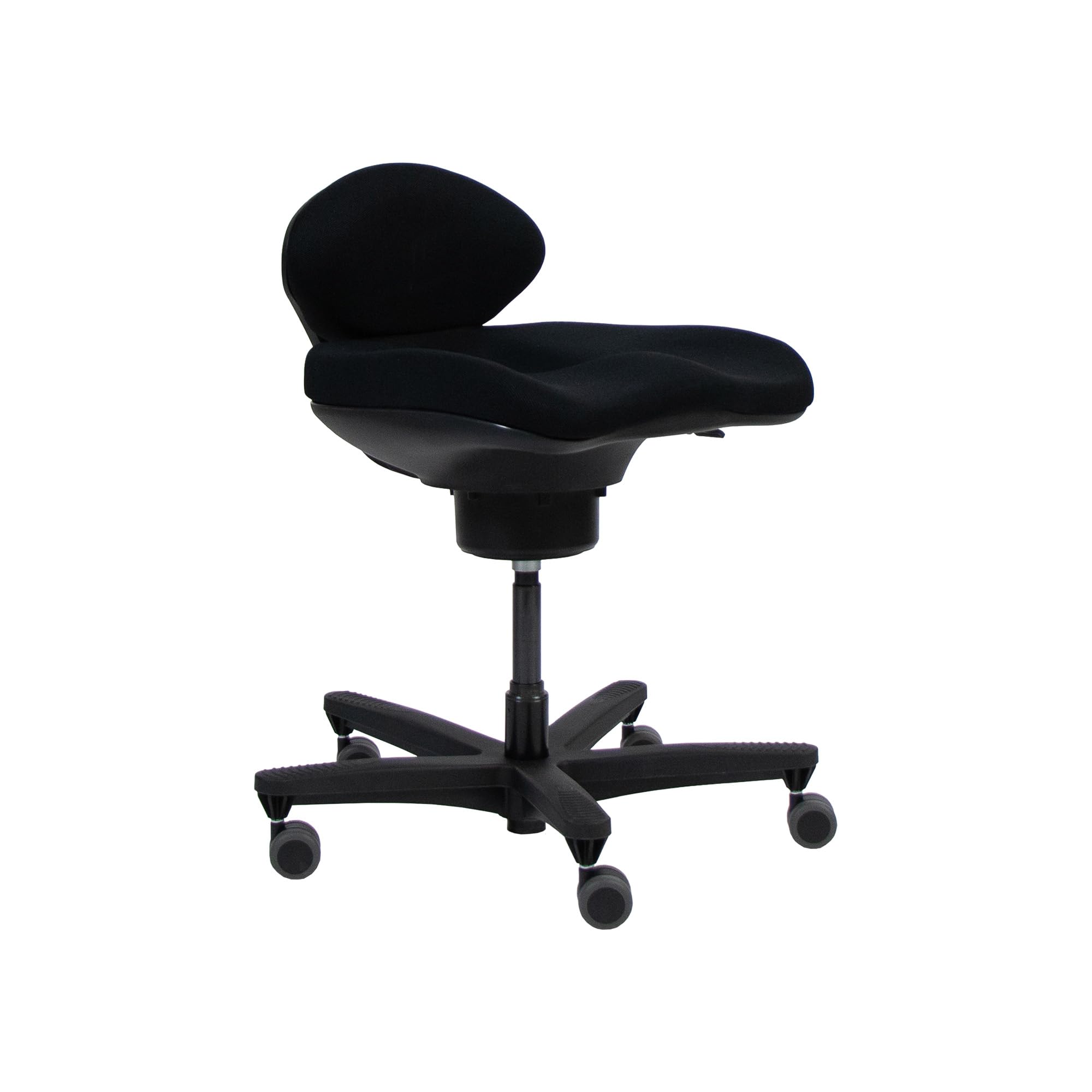
The Vari CoreChair is an active sitting solution that forces your core to engage through its patented tilting mechanism, reducing static spinal loading. For scoliosis, this is a double-edged sword — the constant micro-movements prevent the spine from locking into a harmful position, but the firm seat requires core strength to maintain stability.
The seat depth adjusts from 16.75 to 18.33 inches and height from 17 to 21.5 inches, accommodating a range of leg lengths. The armless design allows unrestricted upper body movement, which is helpful for scoliosis users who need to shift weight frequently between sides. The 3D knit upholstery breathes better than leather or dense foam.
Users consistently describe it as “the most uncomfortable chair you’ll ever love” — the hard seat is intentional, preventing you from settling into a sedentary slump. Best suited for standing desk setups where you alternate between perching and standing, rather than the primary 8-hour chair for deep focus work.
Why it’s great
- Active tilting mechanism engages core to offload spine.
- Adjustable seat depth and height for custom fit.
- Compact design slides under standing desks.
Good to know
- Hard seat pan may be uncomfortable for extended sitting.
- Lowest height may be too high for shorter users.
5. TRALT Ergonomic Office Chair
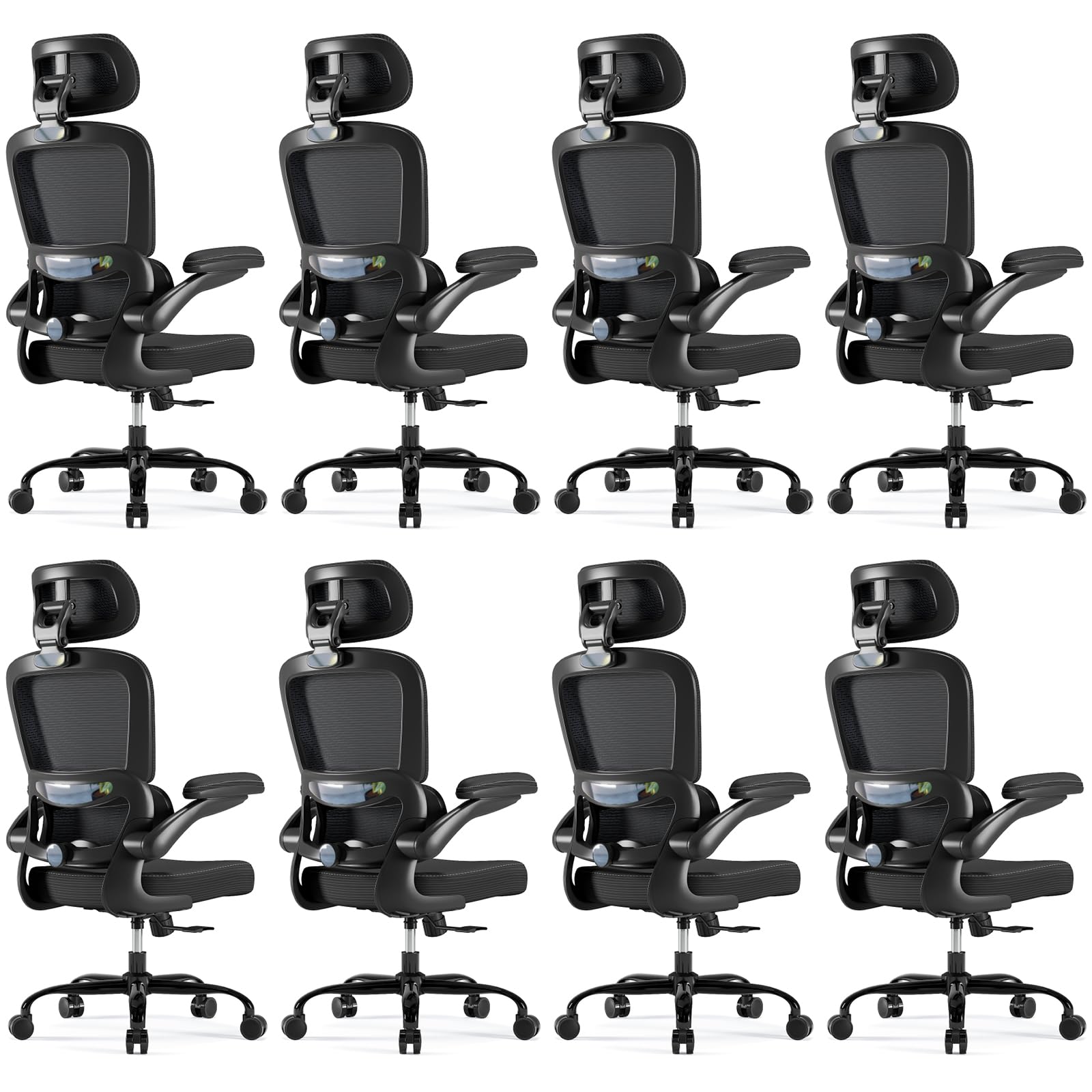
The TRALT chair balances generous cushioning with adjustability, featuring a 3.5-inch high-density sponge seat that resists sagging — important for scoliosis users who need even weight distribution across the ischial tuberosities. The adjustable lumbar support and headrest allow you to target both the lumbar and thoracic sections of a curve, while the flip-up armrests provide clearance for shifting positions or moving close to the desk.
The mesh back accelerates air circulation to reduce stuffiness, and the 20-inch wide seat distributes weight for users sized 5’5″ to 6’2″. The 330-pound weight capacity via a metal base and Class-3 gas lift ensures stability even during active leaning. Assembly takes about 25 minutes with clear instructions included.
Shorter users (around 5’1″) report that the headrest remains comfortable without pushing the head forward — a risk with fixed headrests that can exacerbate neck curvature. The flip-up armrests are slightly less stable for heavy leaning but offer versatility for tight spaces.
Why it’s great
- Thick high-density foam seat resists asymmetric sagging.
- Adjustable headrest and lumbar for dual-curve targeting.
- Flip-up armrests save space and aid position changes.
Good to know
- Flip-up arms less stable for heavy leaning.
- Some users replaced casters for better floor glide.
6. ELABEST Ergonomic Mesh Office Chair

The ELABEST T96 uses a bionic-curve backrest designed to mimic the spine’s natural S-shape, with an adjustable lumbar support that moves independently of the backrest. This separation is crucial for scoliosis — it allows you to position the lumbar pad directly against the curve’s apex without affecting the upper back posture.
The synchro-tilt mechanism with three lockable positions and adjustable tension provides range of motion without allowing you to lock into a static harmful posture. The full-mesh seat actively prevents heat buildup and promotes blood flow to the legs — a common issue with foam seats that can compress asymmetrically on one side.
The 3D adjustable armrests customize height, width, and angle to match each shoulder’s position independently, accommodating shoulder height asymmetry common in scoliosis. Several users report successful resolution of lower back pain within days of switching, and the BIFMA 5.1 certification assures commercial-grade durability.
Why it’s great
- Bionic-curve backrest mimics natural spinal S-shape.
- Synchro-tilt with lockable positions prevents static posture.
- Full-mesh seat promotes leg circulation and stays cool.
Good to know
- Armrests may be too wide for smaller frames.
- Best suited for users 5’5″ to 5’10” under 200 lb.
7. MOLENTS Ergonomic Mesh Chair

The MOLENTS chair stands out for its 2-way adjustable lumbar support that moves both up/down and forward/backward — rare at this price point. For scoliosis, the ability to push the lumbar pad deeper on the concave side creates a custom fill that prevents slouching into the curve, while the forward/backward depth adjustment lets you control the amount of pressure against the spine.
The full-mesh seat and back are made from a skin-friendly premium mesh that remains taut and supportive even under heavier loads. Users up to 6’2″ and 200+ lbs report no creaking or frame flex. The 3D armrests adjust in height, width, and angle, though some shorter users find them too short for optimal arm positioning.
Assembly takes about 15 minutes with labeled parts, and the manufacturer proactively reaches out via email to offer warranty registration and accessory support — a level of aftercare that adds confidence for a long-term purchase. One user reported elimination of lower back pain in three days after switching.
Why it’s great
- 2-way lumbar adjusts in height and depth for curve fill.
- Premium taut mesh supports larger frames without sag.
- Proactive customer service with warranty follow-up.
Good to know
- Armrests may be too short for taller users.
- Wheels roll poorly on carpet; a mat is recommended.
8. Sleekform East Austin Ergonomic Kneeling Chair
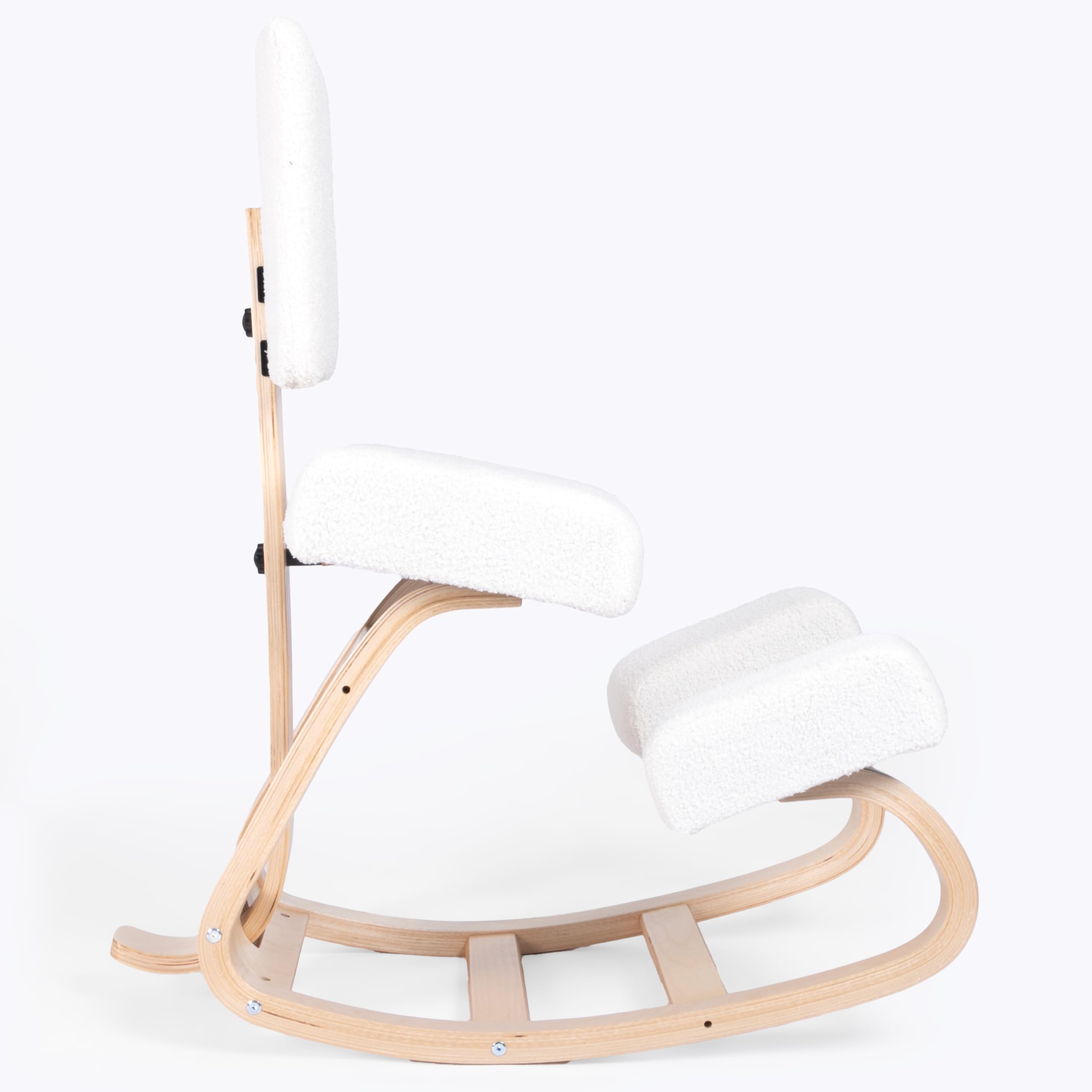
The Sleekform East Austin kneeling chair uses an open hip design that tilts the pelvis forward, naturally decompressing the lumbar spine and reducing pressure on the lower back. This pelvic tilt can be beneficial for scoliosis with lumbar curve involvement, as it creates space between vertebrae that may be compressed in a standard seated position.
The boucle upholstery with backrest offers more padding than budget kneeling chairs, and the rocking feature allows you to shift pressure points between your knees and seat throughout the day. The engineered wood frame supports up to 250 pounds and includes an adjustable height frame to match desk height.
Assembly takes about 20 minutes with no tools required. Some users note that the kneeling pad fabric feels scratchy on bare knees, and the structure flexes more than higher-end Balans designs, but for the price it provides an accessible entry into active sitting for scoliosis relief. A few users reported a strong chemical smell that dissipated after a few days.
Why it’s great
- Open hip design decompresses lumbar spine.
- Includes backrest for upper body support.
- Tool-free assembly in about 20 minutes.
Good to know
- Kneeling pad fabric may feel scratchy on bare skin.
- Structure flexes more than higher-end alternatives.
9. NYPOT Ergonomic Kneeling Chair
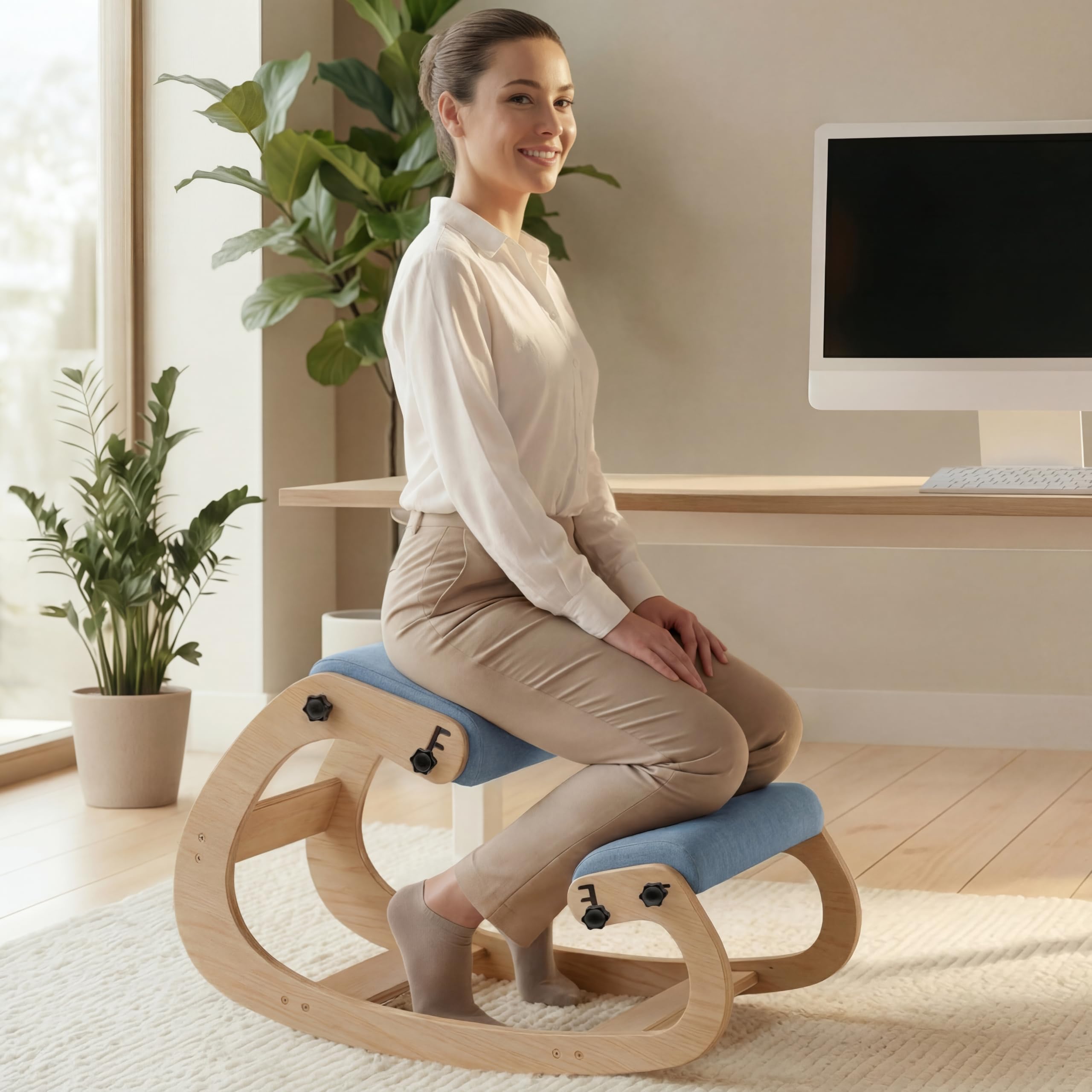
The NYPOT kneeling chair offers adjustable seat pads that let you customize the angle and height to match your body proportions — critical for scoliosis where one hip may sit higher than the other. The gentle rocking motion shifts pressure points and prevents the static loading that aggravates spinal curves over time.
The sturdy wood frame supports up to 250 pounds, and the thick high-density sponge cushions maintain shape during extended use. It functions as a kneeling chair, cross-legged chair, or meditation stool, making it versatile for different work scenarios. The 5-year warranty provides long-term confidence.
The main trade-off is the learning curve — most users experience shin soreness during the first week as the body adjusts to the new posture. Some users report that the seat and knee pads are too firm, causing discomfort after 30 minutes, so gradual adaptation is recommended. The included notepad and phone holder are thoughtful additions.
Why it’s great
- Adjustable seat pads accommodate hip height asymmetry.
- Gentle rocking prevents static spinal loading.
- Backed by a 5-year warranty.
Good to know
- Requires adaptation period; initial shin discomfort common.
- Seat pad padding is firm and may cause pressure points.
FAQ
Can a kneeling chair help with scoliosis?
Is a mesh or foam seat better for scoliosis?
How important are adjustable armrests for scoliosis?
Should I choose a chair with a headrest for scoliosis?
Final Thoughts: The Verdict
For most users, the best chair for scoliosis winner is the Steelcase Leap because its seven points of adjustability let you fine-tune every contact point to match your specific curve shape. If you want active core engagement and spinal decompression, grab the Vari CoreChair. And for a budget-friendly entry into active sitting, nothing beats the Sleekform East Austin for its open hip design and included backrest.