
Running a 100-amp sub-panel to your shop, garage, or barn demands the right gauge of copper conductor — anything less risks voltage drop, overheating, and failed inspections. The difference between a safe, code-compliant installation and a fire hazard often comes down to the purity of the copper, the quality of the PVC insulation, and the number of strands per conductor.
I’m Min — the co-founder and writer behind Gadgets Feed. I’ve spent hundreds of hours cross-referencing UL listings, ampacity tables, and buyer feedback to separate the wires that hold up under load from those that arrive scuffed or under-spec.
This guide breaks down the top options for residential and light-commercial wiring so you can confidently pick the right 2 thhn wire for your sub-panel, feeder line, or heavy-duty appliance circuit.
How To Choose The Best 2 THHN Wire
Selecting the right 2 AWG copper wire for a sub-panel or feeder run involves more than just matching gauge numbers. The insulation type, strand count, and certification standards all determine whether your installation passes inspection and delivers reliable power for decades.
Ampacity and Temperature Ratings
2 AWG THHN copper wire is rated for 130 amps at 90°C, but the National Electrical Code (NEC) often requires derating based on termination temperature limits. Most residential breakers and lugs are rated at 75°C, which drops the allowable ampacity to 115 amps. If you’re feeding a 100-amp sub-panel, 2 AWG is the correct choice, but always check the breaker’s terminal rating before finalizing your run.
Strand Count and Flexibility
Standard building wire uses 19 strands for 2 AWG, which provides a good balance of flexibility for bending through conduit while maintaining enough rigidity for secure terminations. Fewer strands (like 7-strand) are stiffer and harder to pull around 90-degree bends, while higher strand counts (like 49-strand welding cable) are more flexible but not always code-compliant for in-wall installation.
Jacket Material and Environmental Resistance
THHN wire features a PVC insulation layer with a nylon outer jacket that resists abrasion, moisture, gasoline, and oil. This dual-layer construction allows use in both wet and dry locations. For underground runs or direct burial, you’ll need UF-B or THWN-2 rated cable — standard THHN is suitable only for conduit or protected indoor runs.
Quick Comparison
On smaller screens, swipe sideways to see the full table.
| Model | Category | Best For | Key Spec | Amazon |
|---|---|---|---|---|
| Stock Wire 2 AWG 100ft | Premium | 100A sub-panel feeder | 130A ampacity, 19 strands | Amazon |
| Nassau Electrical 2 AWG 100ft | Premium | 125A sub-panel build | THHN/THWN-2 rated | Amazon |
| Stock Wire 4 AWG 150ft | Mid-Range | Long conduit runs | 95A at 90°C, 19 strands | Amazon |
| Stock Wire 2 AWG 50ft | Mid-Range | Short feeder or appliance | 130A ampacity, UL listed | Amazon |
| Ancor 2 AWG 25ft | Premium | Marine/salty environments | Tinned copper, UL 1426 | Amazon |
| Stock Wire 4 AWG 100ft Green | Mid-Range | Grounding electrode | 95A ampacity, green jacket | Amazon |
| Stock Wire 4 AWG 50ft | Budget | Branch circuits | 95A at 90°C, 50ft cut | Amazon |
In‑Depth Reviews
1. Stock Wire 2 AWG 19-Stranded THHN Black Copper Building Wire (100ft Cut)

This 100-foot roll of 2 AWG THHN from Stock Wire is the standard for feeding a 100-amp sub-panel in a garage or workshop. The 19-strand compressed copper construction gives you enough flexibility to navigate conduit bends while maintaining the rigidity needed for clean terminations at the breaker panel. The PVC and nylon jacket is rated for 600 volts and handles 130 amps continuous at 90°C, which means you can safely run a 100-amp feeder with headroom to spare.
Buyers consistently report that the wire arrives at the correct length with minimal scuffing, and it pulls through Schedule 40 PVC conduit without excessive friction. The annealed copper takes a solid crimp on standard 2 AWG lugs, and the black jacket makes phase identification straightforward. For anyone building out a detached garage or adding a heavy-up to an existing panel, this is the length and gauge that avoids running short mid-pull.
Some users have noted minor surface scuffs near the cut ends, which is typical for spool-cut wire but doesn’t affect the conductor or insulation integrity. If you need a full 100 feet for a longer run between structures, this length saves you from splicing and maintains voltage drop within acceptable limits for a 100-amp service at up to 100 feet.
Why it’s great
- Full 100 feet of 19-strand 2 AWG pure copper
- UL listed and CSA certified for wet/dry locations
- Competitive price compared to big-box retail per-foot cost
Good to know
- Some reports of scuffed jacket near cut ends during shipping
- Only black available — need separate colors for multi-phase runs
2. Nassau Electrical Supply 100FT 2 AWG THHN Stranded Copper Building Wire 600V Black

The Nassau Electrical Supply 2 AWG THHN wire offers dual-rated THHN/THWN-2 certification, meaning it’s approved for both dry and wet locations with the same 90°C ampacity rating. This makes it a strong candidate for feeder runs that pass through damp crawlspaces or exterior conduit where moisture resistance is critical. The 19-strand copper conductor is compressed to reduce overall diameter, making it slightly easier to pull through 1.5-inch or 2-inch PVC conduit.
Buyers feeding 125-amp sub-panels report that the wire terminates cleanly in Square D and Eaton breakers, with the insulation stripping easily without nicking the copper strands. The nylon jacket resists abrasion well during pulls around existing wires in crowded conduit, and the 23-pound spool weight is manageable for one person to maneuver into position. If you’re upgrading to a 125-amp service entrance, this wire handles the higher load without needing to step up to 1/0 gauge.
A few users noted that the wire can arrive tightly coiled, which introduces memory that makes straightening more effort. Allow extra time to uncoil and let the wire relax before pulling, especially in longer runs where twists accumulate. For wet-rated applications requiring THWN-2, this is the most direct option in the 2 AWG category.
Why it’s great
- Dual THHN/THWN-2 rated for wet location use
- 128-amp ampacity ideal for 125A sub-panel feeders
- Compressed conductor eases conduit pulls
Good to know
- Coil memory can make straightening time-consuming
- Heavier spool at 23 pounds for a single run
3. Stock Wire 4 AWG 19-Stranded THHN Black Copper Building Wire (150ft Cut)

For longer branch circuits, sub-panel feeders under 60 amps, or situations where you need a full 150 feet of continuous conductor without splicing, this Stock Wire 4 AWG THHN in the 150-foot cut is the economical choice. The 4 AWG gauge carries 95 amps at 90°C and 85 amps at 75°C, which covers 60-amp and 70-amp sub-panel feeders comfortably while keeping voltage drop below 3% on runs approaching 150 feet.
The 19-strand compressed copper construction pulls smoothly through conduit, and the nylon jacket resists the abrasion that comes with longer drag distances. Buyers who used this wire for 100-amp shop feeders (combined with 2 AWG for the hot legs and a 4 AWG neutral or ground) report that it meets code expectations and holds up to the physical demands of a full pull. The annealed copper takes a clean crimp without cracking at the lug.
Since this is a 4 AWG wire, verify your breaker and terminal lugs accept this gauge. Some larger 100-amp breakers require a minimum 2 AWG wire — 4 AWG is not sufficient for a 100-amp feeder on its own. This wire is best matched to a 60-amp or 70-amp breaker for a small sub-panel or as a ground wire for a 100-amp system.
Why it’s great
- 150-foot continuous length reduces splicing requirements
- 95-amp capacity handles 60A and 70A feeders with headroom
- Smooth 19-strand copper pulls easily through conduit
Good to know
- 4 AWG not rated for 100-amp feeder on its own
- Black color only limits phase identification
4. Stock Wire 2 AWG 19-Stranded THHN Black Copper Building Wire (50ft Cut)

The 50-foot cut of Stock Wire’s 2 AWG THHN is the smart buy when your sub-panel is within 50 feet of the main breaker. For a 100-amp feeder at this distance, voltage drop is negligible, and you avoid paying for wire you won’t use. The 19-strand compressed copper with nylon jacket is the same quality as the longer spools, rated for 130 amps at 90°C and 115 amps at 75°C.
Buyers consistently note this wire costs less per foot than buying from big-box retailers, and the delivery directly to your door saves a trip to the store. The annealed copper strips cleanly and accepts compression lugs or mechanical lugs with equal reliability. If you’re wiring a short run from the main panel to an attached garage sub-panel or a large appliance like an EV charger, this length covers the need without excess coil.
Some customers reported minor kinks and jacket scuffs near the cut ends, which can reduce usable length by a few inches. Inspect the full length before pulling and trim any damaged ends. For most short-run installations, the savings over longer spools makes this the most cost-effective 2 AWG option.
Why it’s great
- Low cost per foot compared to retail stores
- UL listed, CSA certified, and RoHS compliant
- Full 130-amp rating for 100A sub-panel feeders
Good to know
- Kinks and scuffs possible near cut ends
- Not suitable for runs longer than 50 feet without voltage drop concerns
5. Ancor 114502 Tinned Copper Battery Cable, 2 AWG, Red – 25ft
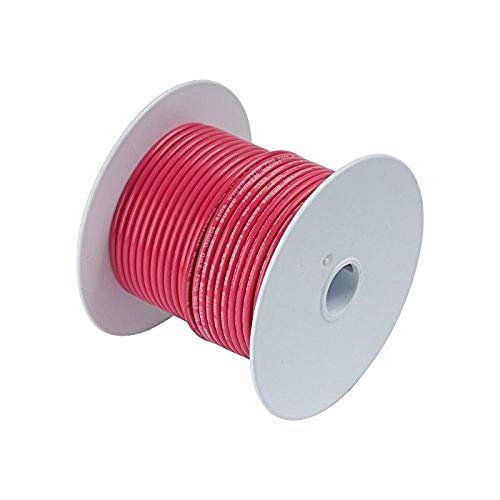
The Ancor 114502 is purpose-built for marine and saltwater environments where standard THHN would corrode within months. The key difference is the tinning process — each bare copper strand receives a continuous layer of tin that blocks oxidation, even when directly exposed to salt spray, battery acid, or bilge moisture. This wire exceeds UL 1426, US Coast Guard CFR Title 46, and ABYC standards, making it the default choice for boat electrical systems and any outdoor application where corrosion resistance is non-negotiable.
The Type 3 stranding is ultra-flexible, with many more fine strands than standard 19-strand building wire. This flexibility resists fatigue from vibration in marine environments and makes routing through tight spaces in engine compartments far easier. The PVC insulation is rated at 600 volts, 105°C dry and 75°C wet, and it stays pliable down to -40°F, so you can work with it in cold weather without the jacket cracking.
This is not standard THHN building wire — it’s a tinned marine cable with flexible stranding that is not ideal for in-wall conduit pulls where NEC compliance requires THHN/THWN-2. Use it for battery banks, inverter connections, trolling motor wiring, or any exposed marine application where corrosion protection is the priority. The 25-foot length suits typical boat wiring projects or auxiliary battery setups.
Why it’s great
- Fully tinned copper resists saltwater corrosion
- Ultra-flexible Type 3 stranding for tight bends
- Meets strict USCG and ABYC marine standards
Good to know
- Not NEC-certified as THHN for in-wall installation
- Higher cost per foot than standard building wire
6. Stock Wire Green 4 AWG 19-Stranded THHN Copper Building Wire (100ft Cut)

The green-jacketed version of Stock Wire’s 4 AWG THHN serves one primary function — equipment grounding conductor (EGC) for sub-panels and large appliance circuits. The green color throughout the insulation eliminates the need for tape or heat shrink to identify the ground, which is a requirement under NEC Section 250.119. The 19-strand construction and 600-volt PVC/nylon jacket match the quality of the black version, rated for 95 amps at 90°C.
Buyers have used this wire successfully as a ground for 100-amp sub-panel feeders (paired with 2 AWG hots and neutral), as a gas meter bonding conductor, and as a grounding electrode conductor for service entrances. The 100-foot length covers longer ground runs where the ground rod or cold water pipe is distant from the panel. Users report that the wire strips cleanly and accepts ground lugs without issue.
Remember that a 4 AWG copper ground is rated for circuits up to 100 amps per NEC Table 250.122. If your feeder breaker is 125 amps, you need to size up the ground to 3 AWG or 2 AWG depending on the exact table values. Verify your breaker size before purchasing to ensure code compliance for the grounding conductor.
Why it’s great
- Green jacket eliminates need for identification tape
- 100-foot length covers long grounding runs
- Sized correctly for up to 100-amp circuits per NEC
Good to know
- Not sufficient for 125-amp or larger panel grounds
- Only available in green — not for hot or neutral use
7. Stock Wire 4 AWG 19-Stranded THHN Black Copper Building Wire (50ft Cut)
The 50-foot cut of Stock Wire’s 4 AWG THHN offers the lowest entry point for getting quality stranded copper building wire. It’s rated for 95 amps at 90°C and 85 amps at 75°C, which covers 60-amp oven circuits, 50-amp EV charger feeds, and smaller sub-panels. The 19-strand compressed copper and nylon jacket are identical to the longer spools, so you’re not sacrificing quality for the lower total investment.
Buyers have used this wire for everything from 50-amp RV pedestal feeds to 60-amp welder outlets, consistently noting that it pulls through conduit with minimal effort. The annealed copper accepts a clean termination in standard 60A and 70A breakers, and the UL listing gives confidence in code compliance. If you’re wiring a single high-draw appliance or a small detached structure, this length covers the typical 25-foot to 40-foot run without excess.
At 50 feet, voltage drop for a 60-amp load at 240 volts is under 2%, well within acceptable range. For longer runs, you should step up to the 100-foot or 150-foot spools, or consider 2 AWG to keep voltage drop below 3%. This is the wire to grab when you need a short, cost-effective feeder or branch circuit and don’t want to pay for more length than required.
Why it’s great
- Lowest total cost for quality 4 AWG copper
- Handles 60A and 70A breakers with headroom
- UL listed and CSA certified for wet/dry locations
Good to know
- Not enough length for runs over 50 feet
- 4 AWG too small for 100-amp feeder circuits
FAQ
Can 2 AWG THHN wire feed a 100-amp sub-panel?
What is the difference between THHN and THWN-2 wire?
Is 19-strand 2 AWG better than 7-strand for conduit pulling?
Final Thoughts: The Verdict
For most users, the best 2 thhn wire for a 100-amp sub-panel feeder is the Stock Wire 2 AWG 100ft because it delivers the correct length for most residential runs with proven 19-strand quality and UL listing. If you need wet-location certification for underground conduit, grab the Nassau Electrical Supply 100FT. And for a short-run 100-amp feeder where budget matters most, nothing beats the value of the Stock Wire 2 AWG 50ft.