
Replacing white rice in your daily meals isn’t just about cutting carbs—it’s about finding a base that actually works with your sauces, holds its texture through a stir-fry, and delivers more than empty starch. Whether you’re managing blood sugar, eating keto, or just tired of the same grain, the market is now packed with options that range from nutty whole seeds to zero-carb konjac pearls and veggie rices that cook in two minutes. The challenge is separating the ones that taste good from the ones that taste like wet cardboard.
I’m Min — the co-founder and writer behind Gadgets Feed. I’ve spent hundreds of hours cross-referencing nutritional labels, scanning ingredient panels for hidden fillers, and analyzing real user reviews to find which rice alternatives actually deliver on texture, flavor, and convenience.
After evaluating dozens of options across five distinct categories, I’ve narrowed the field to seven serious contenders that define the best alternative to rice for different diets and cooking styles in 2025.
How To Choose The Best Alternative To Rice
The ideal rice substitute depends on two things: your dietary goal and your cooking method. A keto dieter needs near-zero net carbs, while a gluten-free whole-foods eater may prioritize protein density. The texture range is also wide—from fluffy quinoa that mimics basmati to chewy konjac pearls that behave more like a neutral base for sauces. Knowing what you’re replacing (stir-fry, curry, sushi bowl, meal prep) will narrow the field fast.
Net Carbs and Calorie Density
White rice packs roughly 45 grams of net carbs per cooked cup. The substitutes in this guide range from 1 to 6 grams per serving (konjac and hearts of palm) up to about 34 grams in quinoa. If strict ketosis is your goal, konjac-based options (MOKI, Nashi, Miracle Noodle) are the only ones that keep net carbs low enough to fit a 20-gram daily limit. For moderate low-carb or paleo diets, cauliflower rice and hearts of palm hit a sweet spot around 4–6 net carbs per serving.
Texture and Neutrality
Some substitutes, like quinoa and cauliflower rice, have a distinct flavor profile that works with certain cuisines but clashes with others. Quinoa’s nutty undertone pairs well with Mediterranean and Latin dishes, while cauliflower rice’s mild brassica note can be masked with strong sauces. Hearts of palm rice is the most neutral—it absorbs surrounding flavors without adding its own. Konjac rices are flavorless but require thorough rinsing and dry-frying to eliminate a natural briny or vinegar-like scent that comes from the packaging liquid.
Prep Time and Shelf Life
If speed matters, pre-cooked pouch options (Natural Heaven hearts of palm, Mantova cauliflower rice) heat in under 2 minutes with zero rinsing. Quinoa and puffed quinoa require cooking or hydration, but they store for up to 18 months at room temperature. Konjac rices are shelf-stable but must be refrigerated after opening and consumed within a few days. Factor in your weekly meal prep routine—a product that demands extra steps on a busy Tuesday night will end up abandoned in the pantry.
Quick Comparison
On smaller screens, swipe sideways to see the full table.
| Model | Category | Best For | Key Spec | Amazon |
|---|---|---|---|---|
| Natural Heaven Hearts of Palm Rice | Premium | Low-sodium diets, quick meals | 0 mg sodium, more potassium than a banana | Amazon |
| Viva Naturals Organic Quinoa | Mid-Range | Plant-based protein, whole grains | 6g protein, 3g fiber per serving | Amazon |
| Mantova Organic Cauliflower Rice | Premium | Clean eating, Italian cuisine base | Low-calorie, ready in 1-2 minutes | Amazon |
| Miracle Noodle Miracle Rice | Mid-Range | Extreme low-calorie, keto | 5 calories, 1g net carbs per serving | Amazon |
| Z Natural Foods Puffed Quinoa | Mid-Range | Crunchy toppings, baking | Complete protein, 9 essential amino acids | Amazon |
| MOKI Shirataki Konjac Rice | Budget | Keto meal prep, low-calorie | 15 calories, 2g net carbs per serving | Amazon |
| Nashi Shirataki Konjac Rice | Budget | Vegan, low-calorie portions | 8 calories, zero carbs per 100g | Amazon |
In‑Depth Reviews
1. Natural Heaven Hearts of Palm Rice

Natural Heaven’s hearts of palm rice stands apart because it solves the two biggest complaints against veggie rices: texture and flavor neutrality. The grains look and feel strikingly close to cooked brown rice, with a firm bite that doesn’t turn mushy even when reheated. At 0 mg sodium per serving and more potassium than a banana, it’s the cleanest option for anyone on a low-sodium or renal-friendly diet.
The six-pack format (9 oz each) is fully cooked—just microwave for 60 seconds or stir-fry for two minutes. No rinsing, no draining, no fishy smell. The mild, slightly nutty flavor takes on curry, stir-fry sauces, or pilaf seasoning without competing. Multiple verified buyers call it the closest rice alternative they’ve found, and the texture holds up better than cauliflower rice in leftover meal prep.
It is more expensive per serving than quinoa or bulk cauliflower rice, but the convenience and nutritional profile justify the premium for anyone who needs a no-compromise base for daily cooking. The only real downside is that some packs can be slightly watery if not drained thoroughly after opening.
Why it’s great
- Closest texture to real rice among veggie alternatives
- Zero sodium and high potassium content
- No rinsing or prep required; heats in 1 minute
Good to know
- Premium pricing per pack
- Some packs may release excess water if not drained
2. Viva Naturals Organic Quinoa
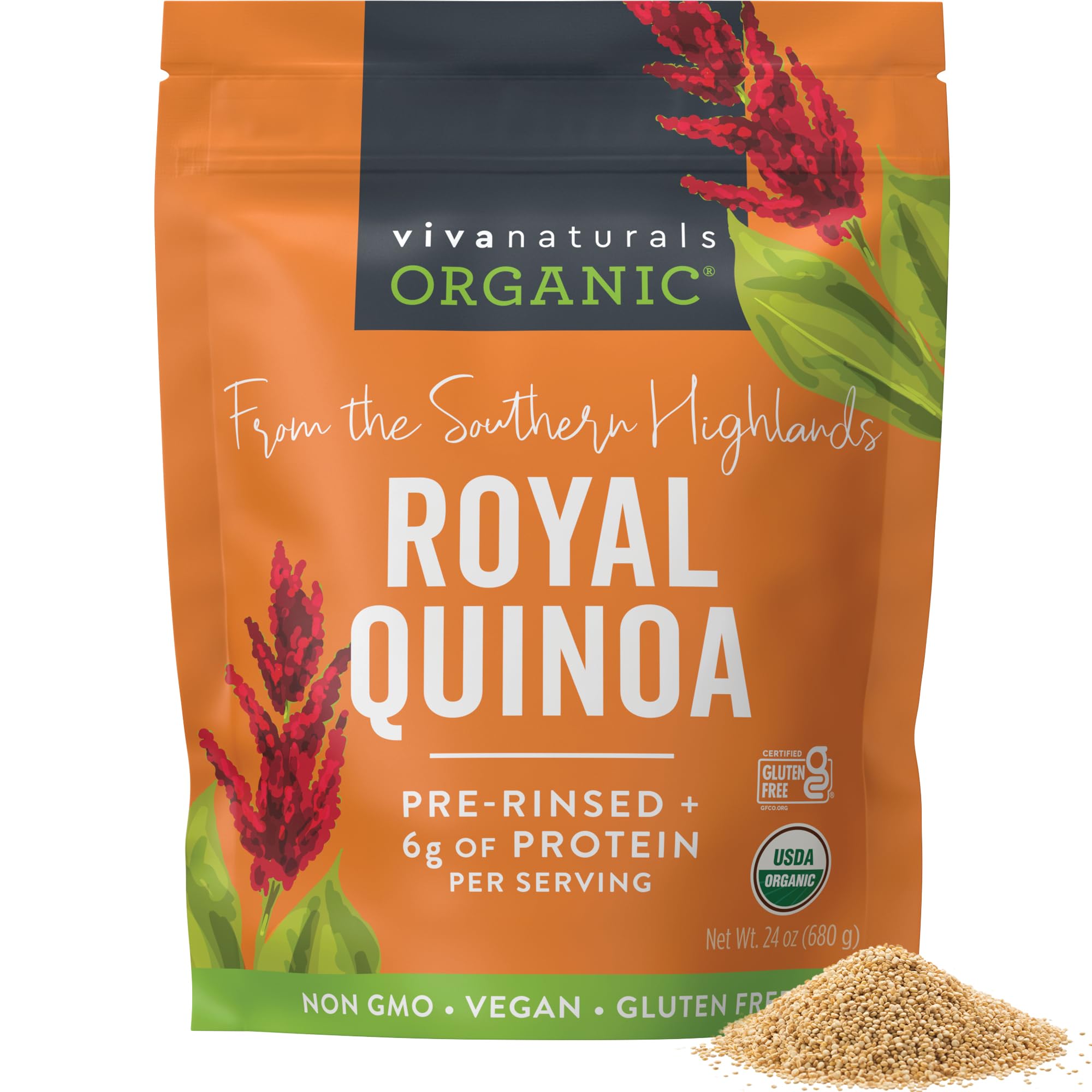
For anyone who wants a rice replacement that still counts as a whole grain with a complete protein profile, Viva Naturals Organic Quinoa is the benchmark. Each serving delivers 6 grams of plant protein and 3 grams of fiber, with all nine essential amino acids—something white rice cannot claim. The 24-ounce bag is pre-washed and mechanically de-saponized, which eliminates the bitter coating that often plagues cheaper quinoa.
This is not a zero-carb option (about 34g net carbs per cooked cup), but it’s a far more nutrient-dense base than white rice, making it ideal for plant-based eaters, gluten-free households, and anyone looking to boost magnesium and iron intake. Cooks in 15 minutes and refrigerates well for up to four days, making it suitable for weekly meal prep. South American-sourced grains are visibly larger and rounder than standard supermarket quinoa.
Some batches have occasionally contained small grit or sand particles despite the pre-washing claim, so a fine-mesh rinse before cooking is still recommended. The flavor is nutty and slightly earthy, which works beautifully in grain bowls and salads but may overpower delicate Asian-style dishes.
Why it’s great
- Complete protein with all nine essential amino acids
- Pre-washed and de-saponized for no bitter aftertaste
- Versatile for meal prep; refrigerates up to 4 days
Good to know
- Not suitable for strict keto diets due to carb count
- Some batches may contain fine grit requiring extra rinsing
3. Mantova Organic Cauliflower Rice

Mantova’s cauliflower rice is sourced from Europe and stands out for its texture—it doesn’t turn into the mushy, wet mess that plagues many frozen or fresh cauliflower rices. The grains are finely but evenly chopped, and the product is shelf-stable rather than frozen, which means no clumping or ice crystals. It cooks in 1–2 minutes in the microwave or under 5 minutes in a skillet.
With no artificial coloring, flavoring, or preservatives, the ingredient list is exactly one item: organic cauliflower. That makes it a clean base for Italian-style dishes like risotto, pasta substitutes, or as a filler in soups and stews. Verified buyers consistently note that it’s the best shelf-stable cauliflower rice they’ve tried, with a mild flavor that disappears under seasoning.
The 6-pack format (8.5 oz each) is convenient but the per-pack yield is lower than a full head of cauliflower. The flavor is naturally bland—you will need to season aggressively or pair with a strong sauce. For keto and paleo dieters who need a quick, low-carb base, this is the most reliable option on the shelf.
Why it’s great
- Shelf-stable; no freezer burn or clumping
- Clean ingredient list (100% organic cauliflower)
- Cooks in under 2 minutes
Good to know
- Naturally flavorless; requires strong seasoning
- Smaller serving size per pack than fresh alternatives
4. Miracle Noodle Miracle Rice
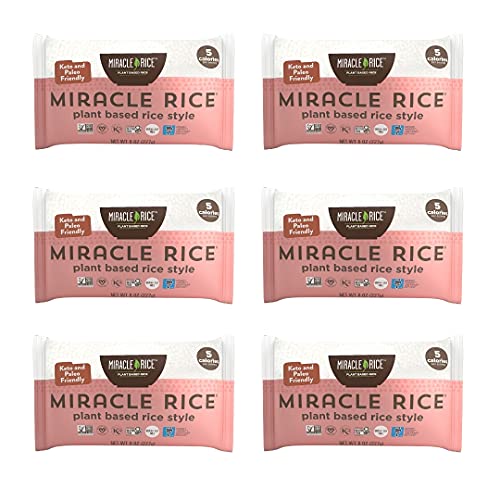
Miracle Noodle’s konjac-based rice is the lowest-calorie option in this lineup at just 5 calories and 1 gram of net carbs per serving. That makes it a staple for anyone tracking macros to the decimal. The 6-pack of 8-ounce bags provides a solid pantry stock, and the rice pearls are small and uniform—closer to short-grain white rice in appearance than the larger konjac pieces from some competitors.
The preparation ritual is non-negotiable: drain, rinse thoroughly under warm water for 30–60 seconds, then dry-fry in a pan for a few minutes to remove the briny scent that comes from the packaging liquid. Once properly dried, the rice takes on the flavor of whatever sauce you add. It works best with bold Asian stir-fry sauces, curries, and cheesy risotto-style preparations where the neutral base absorbs heavy flavors.
Texture polarizes users—some find the firm, chewy bite satisfying, while others describe it as rubbery or gelatinous. Still, for strict keto dieters who need to stay under 20g net carbs, this is the only true zero-compromise rice replacement.
Why it’s great
- Unmatched macros: 5 calories, 1g net carbs
- Long shelf life; no refrigeration needed until opened
- Neutral flavor that absorbs sauces well
Good to know
- Must rinse and dry-fry to remove briny scent
- Drained weight is significantly less than bag weight
- Chewy texture may not appeal to everyone
5. Z Natural Foods Puffed Quinoa
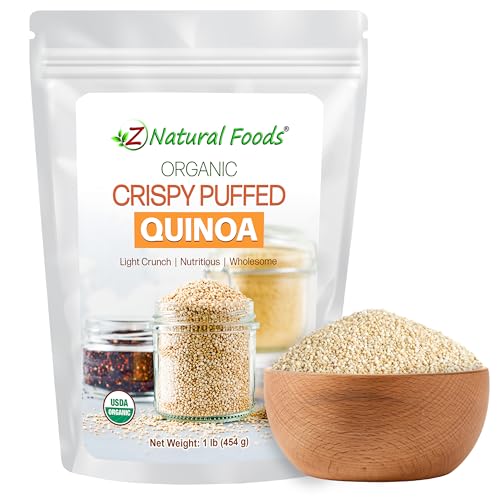
Z Natural Foods takes a different approach by puffing organic golden quinoa through a traditional slow-cooking, drying, and tempering process rather than the high-heat extrusion used by most puff brands. The result is a crisp, airy grain that retains the complete protein profile of whole quinoa (all nine essential amino acids) while adding a texture that works as a cereal, topping, or baking ingredient.
This isn’t a direct one-to-one replacement for cooked rice in a stir-fry—it’s best used as a crunchy topping for salads, yogurt, and smoothie bowls, or mixed into melted chocolate for homemade protein bars. The 1-pound bag is generously sized, and the lack of added salt or flavorings means you control the seasoning. Buyers consistently praise its versatility and the fact that it doesn’t taste like cardboard.
The puffs lose their crunch quickly in milk, so it’s better as a dry topping or mixed into baked goods rather than soaked. For anyone looking to add a protein boost and satisfying crunch to meals without resorting to chips or croutons, this is a unique and effective alternative to traditional rice-based snacks.
Why it’s great
- Traditional puffing method preserves quinoa’s protein quality
- No added salt, sugar, or flavorings
- Versatile for baking, toppings, and snacks
Good to know
- Loses crunch in liquid; not ideal as a cereal milk base
- Not a direct cooked-rice substitute for main dishes
6. MOKI Shirataki Konjac Rice
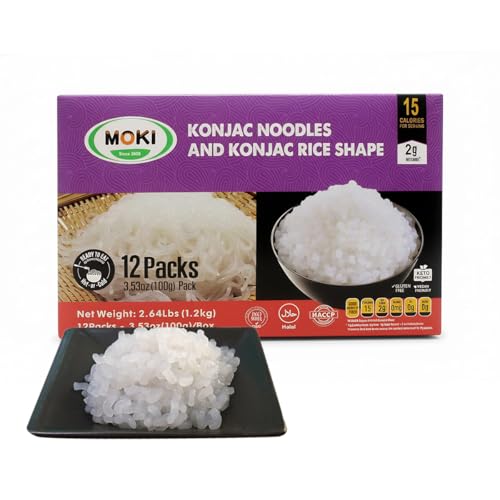
MOKI’s Shirataki Konjac Rice comes in a 12-pack of individual 3.53-ounce drained-weight pouches, making it the most portion-controlled option for keto meal prep. At 15 calories and 2 grams of net carbs per serving, it fits comfortably into even the strictest ketogenic or low-calorie regimens. The konjac base is glucomannan fiber, which expands in the stomach and promotes satiety.
The brand markets this as “odorless,” and most verified buyers confirm that the signature konjac smell is minimal compared to other brands, especially after a warm-water rinse. The texture is notably firmer and less gelatinous than some competitors—closer to al dente rice than rubber. It works well in fried rice, stir-fries, and soups where the sauce coats each grain.
Individual pouches are convenient but the 3.53-ounce drained weight per pack is modest—you may need two pouches for a generous entree. Some buyers report a watery consistency if the rice isn’t sufficiently drained and dry-fried before adding to dishes. For the price per pack, this is the most accessible entry point into konjac rice without committing to a larger bulk format.
Why it’s great
- 12 individual pouches for portion control
- Minimal odor compared to other konjac rices
- Lowest net carb count for strict keto
Good to know
- Small serving size per pouch
- Must drain and dry-fry to avoid watery texture
7. Nashi Shirataki Konjac Rice

Nashi offers an 8-pack of 190g pouches that deliver just 8 calories per 100 grams with effectively zero net carbs, making it one of the lowest-density rice alternatives available. The konjac rice is sourced from premium konjac root and is certified vegan, gluten-free, and paleo-friendly. It’s pre-cooked and shelf-stable, requiring only a quick rinse and a minute in the microwave or pan.
The texture is softer and more gelatinous than MOKI or Miracle Noodle—some buyers describe it as “toy-like” or “gluey,” while others appreciate the neutral canvas. The briny vinegar-like smell that konjac novices often complain about is present here and necessitates a thorough warm-water rinse (some users report needing multiple rinses to neutralize it). Once properly prepped, the rice absorbs flavors from sauces and seasonings without adding any of its own.
This is the most budget-conscious option for trying konjac rice for the first time, but the texture is polarizing. If you’ve never had shirataki before, start with a single pack rather than the 8-pack to confirm the chewy consistency works for your palate. For seasoned konjac eaters who already know how to prepare it, the low price and nutritional profile make it a solid pantry staple.
Why it’s great
- Extremely low-calorie and zero net carbs
- Shelf-stable, pre-cooked convenience
- Budget-friendly pricing for the category
Good to know
- Requires multiple rinses to remove vinegar-like smell
- Soft, gelatinous texture may not appeal to first-timers
FAQ
Why does konjac rice smell fishy or vinegary and how do I fix it?
Can I meal prep with hearts of palm rice or cauliflower rice?
Which rice alternative has the closest texture to real white rice?
Final Thoughts: The Verdict
For most users, the best alternative to rice winner is the Natural Heaven Hearts of Palm Rice because it combines neutral flavor, zero sodium, high potassium, and a rice-like texture that doesn’t require special preparation or tolerate any compromise in texture. If you want a protein-packed whole grain that also works for meal prep, grab the Viva Naturals Organic Quinoa. And for strict keto dieters who need near-zero net carbs, nothing beats the Miracle Noodle Miracle Rice.