
The problem with most buying advice for 4K smart projectors is that it fixates on a single number—lumens—while ignoring the three specs that actually determine whether a projector will look stunning or washed out in your specific room. A projector with 2,000 honest ANSI lumens and a 20,000:1 contrast ratio will beat a 5,000-lumen unit with weak black levels in any scenario except direct sunlight.
I’m Min — the co-founder and writer behind Gadgets Feed. For this guide, I’ve spent over 80 hours cross-referencing technical specification sheets, independent third-party brightness measurements, and verified customer feedback across 11 distinct 4K smart projector models ranging from entry-level to premium triple-laser flagships, to determine which units deliver the best real-world picture quality for the price.
After analyzing every native resolution claim, decoding capability, auto-adjustment system, and streaming OS, I’ve identified the models that genuinely earn the title of best 4k smart projector for 2025 — judged not by marketing stickers, but by image quality you can see.
How To Choose The Best 4K Smart Projector
Selecting a 4K smart projector means balancing three competing priorities: native resolution versus supported resolution, brightness versus contrast ratio, and smart OS ecosystem versus app availability. Each decision point maps directly to how the projector will look in your specific room, with your specific content, at your specific seating distance.
Native 4K vs 4K Decoding — The Single Biggest Confusion Point
The most common trap in this category is the distinction between native 4K and “4K decoding.” A native 4K projector has a 3840 x 2160 pixel DLP chip and displays full 8.3 million pixels on screen. A 4K-decoding projector uses a native 1080p chip (1,920 x 1,080 pixels) but accepts a 4K input signal and downscales it to fit. The latter still looks sharper than standard 1080p content because it applies better spatial interpolation, but it will never resolve fine detail—like individual blades of grass in a nature documentary—the way a native 4K chip does. If you sit closer than 1.5x the screen width, native 4K matters. For typical living room setups at 10 feet or more from a 120-inch screen, most viewers cannot reliably tell the difference between good 4K decoding and native 4K in motion.
Light Source and Real Brightness — ISO Lumens Are Not ANSI Lumens
Every projector manufacturer states a brightness number, but the measurement standard varies. ANSI lumens are measured at a specific nine-point grid on a 100-inch screen using a pure white field. ISO lumens (the newer standard) measure at wider angles and include color temperature correction, typically yielding numbers 10% to 20% lower than ANSI for the same device. A projector rated at 3,000 ANSI lumens might measure only 2,400 ISO lumens. The important takeaway: look for independent third-party measurements. When comparing, treat a 1,500 ISO lumen projector as roughly equivalent to a 1,700 ANSI lumen unit, not as a brighter device. Laser light sources maintain their rated brightness longer than LED sources because LEDs degrade by roughly 20% over 20,000 hours, while lasers can sustain 90% output past 30,000 hours.
Smart OS Ecosystems — Google TV, VIDAA, and Android TV Are Not Interchangeable
The smart operating system determines which streaming apps are available natively, how often the interface updates, and whether Netflix works out of the box. Google TV (based on Android TV 12 or newer) offers the widest app selection including native Netflix, Disney+, Apple TV, and Hulu, plus Chromecast built-in. VIDAA OS is a Linux-based alternative that appears on several mid-range projectors—it offers a cleaner, less resource-hungry interface but has fewer niche apps and slower update cadence. Pure Android TV (versions 9 or 10) without Google TV skin still works but may lack official Netflix licensing, forcing you to sideload or use a separate streaming stick. If Netflix 4K is non-negotiable, verify the projector has “certified Netflix” in the spec sheet—many claim compatibility but only stream in 1080p or require a workaround.
Auto Alignment Features — Which Ones Actually Work
Every modern smart projector advertises auto-focus and auto-keystone, but the execution varies dramatically. The best systems combine a time-of-flight sensor for focus with a gyroscopic accelerometer for keystone, completing the alignment in less than three seconds. Inferior systems use camera-based image analysis that takes 10 to 15 seconds and often produces slightly soft corners or residual trapezoidal distortion. Auto obstacle avoidance—which detects a wall switch or picture frame and shrinks the image to avoid it—works well at standard 120-inch sizes but produces visible brightness reduction when shrinking to 80 inches or smaller. For permanent installations, manual lens shift and optical zoom still produce superior image geometry to any digital keystone correction, which always introduces some degree of pixel interpolation and sharpness loss.
Quick Comparison
On smaller screens, swipe sideways to see the full table.
| Model | Category | Best For | Key Spec | Amazon |
|---|---|---|---|---|
| TOPTRO A2 | Mid-Range | Value & Portability | 650 ISO ANSI, VIDAA OS | Amazon |
| HAPPRUN K7Pro | Mid-Range | Brightness for the Price | 3000 ANSI Lumens (Claimed) | Amazon |
| XGIMI Horizon Pro | Premium | Native 4K & Audio Quality | 1500 ISO Lumens, True 4K | Amazon |
| NEBULA Cosmos 4K SE | Premium | Hybrid LED/Laser Brightness | 1800 ANSI, Dolby Vision | Amazon |
| ViewSonic X1-4K Pro | Premium | High-FPS Gaming | 2500 ANSI, 240Hz, 4.2ms | Amazon |
| BenQ TK710STi | Premium | Short Throw in Ambient Light | 3200 ANSI, Laser, Short Throw | Amazon |
| ViewSonic LS901-4K | High-End | Ultra-Bright Installations | 5500 ANSI Lumens, Laser | Amazon |
| AWOL VISION LTV-3000 Pro | High-End | Ultra-Short Throw Setup | Triple Laser, Dolby Vision | Amazon |
| Valerion VisionMaster Pro2 (Purple) | High-End | Contrast & Gaming Hybrid | 15000:1 Contrast, 3000 ISO | Amazon |
| Valerion VisionMaster Pro2 (Grey) | High-End | Max Smart Integration | 15000:1, Google TV+, AirPlay 2 | Amazon |
| XGIMI Horizon 20 Max | Flagship | Maximum Brightness & Lens Shift | 5700 ISO, Triple Laser | Amazon |
In-Depth Reviews
1. XGIMI Horizon Pro 4K Projector

The XGIMI Horizon Pro is one of the few projectors in this price bracket that delivers true native 4K resolution (3840 x 2160 pixels) via a DLP chip rather than using pixel-shifting tricks. At 1,500 ISO lumens, it is not the brightest unit in this roundup, but its 10,000:1 contrast ratio and X-VUE 2.0 image engine with 60Hz MEMC produce noticeably deeper blacks and smoother motion than comparably priced LED projectors. The Harman Kardon dual 8W speakers offer room-filling sound with DTS-HD support that genuinely eliminates the need for an external soundbar in small to medium rooms — something few competitors can claim.
The Android TV 10.0 operating system provides access to over 5,000 Google Play apps and includes Chromecast built-in, though it lacks a native Netflix license — a known limitation you’ll need to work around with a sideloaded app or an external streaming stick. The Intelligent Screen Adaption system achieves ±40-degree auto keystone both horizontally and vertically, plus auto screen alignment and obstacle avoidance, and it completes the full setup in roughly four seconds — faster than the camera-based systems on most mid-range projectors. The TÜV Rheinland low blue light certification adds genuine value for families using this as a daily TV replacement.
Where the Horizon Pro shows its age is in peak brightness — 1,500 ISO lumens means you need controlled lighting for the best image. In a room with open curtains or indirect sunlight, the 1080p upscaling engine works hard and the picture loses shadow detail compared to newer laser models. The lack of Dolby Vision support is also noticeable when playing HDR content from an Apple TV 4K. Still, for a dedicated home theater room where light is controlled, the native sharpness and color accuracy rival projectors costing twice as much.
Why it’s great
- True native 4K resolution delivers superior fine detail vs. pixel-shifted competition
- Harman Kardon speakers provide genuine TV-replacement audio quality
- TÜV Rheinland low blue light certification protects eyes during long viewing sessions
Good to know
- No native Netflix license — requires sideload or external device for full 4K streaming
- 1,500 ISO lumens insufficient for ambient-light daytime viewing
- Fan noise is audible in Standard mode above 25 dB ambient environment
2. ViewSonic X1-4K Pro

The ViewSonic X1-4K Pro is engineered for two specific use cases: competitive console gaming and high-ambient-light home theater. Its 2500 ANSI lumens LED light engine, combined with Cinema SuperColor technology covering 125% of Rec. 709, produces punchy, saturated colors that hold up remarkably well even with a lamp or window light in the room. The 240Hz refresh rate at 1080p input and 4.2ms input lag make it one of the fastest projectors on the market — the Xbox native setting with 1440p at 120Hz is genuinely competitive with dedicated gaming monitors in terms of motion clarity.
Built-in Google TV with a native Netflix app means zero configuration out of the box: sign in to your streaming accounts and you’re watching 4K HDR content within minutes. The auto keystone correction works reliably at 30-degree angles, though the horizontal adjustment range is narrower than some competitors at ±30 degrees. The SuperColor technology produces a noticeably wider color volume than standard RGB LED projectors — reds look more saturated and greens appear more natural without shifting into oversaturated territory.
The drawbacks center on the fan noise profile. At 236 watts power consumption, the cooling system produces a consistent hum that is audible during quiet movie scenes — louder than the BenQ or XGIMI units at equivalent brightness levels. The built-in speakers have good bass for a projector but lack treble clarity, making dialogue-heavy content sound slightly muffled. A soundbar is strongly recommended. The boot-up time is also slower than competitors, taking roughly 40 seconds from power-on to usable home screen.
Why it’s great
- 240Hz at 1080p with 4.2ms input lag meets real competitive gaming requirements
- 2500 ANSI lumens maintain watchable image in rooms with ambient window light
- 125% Rec. 709 color gamut outperforms most LED projectors in saturation
Good to know
- Fan noise is higher than category average — audible in quiet movie scenes
- Built-in speakers lack treble clarity; external audio strongly recommended
- Boot-up cycle takes ~40 seconds before apps are accessible
3. NEBULA Cosmos 4K SE

The Cosmos 4K SE is the first projector at this price point to combine a hybrid LED-laser light source (branded HybridBeam) with Dolby Vision certification. The 1,800 ANSI lumens output is not class-leading, but the combination of laser and LED elements produces a wider color gamut than pure LED at the same brightness — 1.07 billion colors with visibly better red saturation and black depth. The NebulaMaster Image Engine adds real-time contrast enhancement and grayscale optimization that makes 1080p upscaled content look smoother than the ViewSonic’s native processing.
The Google TV integration includes fully licensed Netflix 4K streaming without any sideloading or external dongle — this alone makes it significantly more convenient than the XGIMI Horizon Pro for Netflix-first households. The IEA 4.0 Intelligent Setup adds ambient light adaptation and wall color correction, which auto-adjusts the image when the wall is not perfectly white — a genuinely useful feature for renters who cannot paint their walls. The unit is also notably compact at roughly 4kg, making it the most portable of the premium tier options.
The compromises are in connectivity and contrast. The single HDMI port limits expansion — you cannot simultaneously connect a soundbar, a game console, and a streaming device without a separate HDMI switch. The stated contrast ratio of 400:1 is unusually low on paper, though real-world viewing reveals that the NebulaMaster engine compensates effectively in SDR content at the expense of HDR shadow detail. The Bluetooth audio output also introduces a microsecond lip-sync delay that some users find noticeable during dialogue-heavy content.
Why it’s great
- Native Netflix 4K streaming via Google TV with no configuration needed
- HybridBeam LED/laser source produces wider color gamut than pure LED competitors
- Wall color adaptation and ambient light correction are genuinely useful for non-ideal rooms
Good to know
- Single HDMI input limits simultaneous device connections
- Bluetooth audio has consistent microsecond lip-sync delay
- 400:1 native contrast ratio is low; image engine compensates but HDR shadows suffer
4. BenQ TK710STi 4K Laser Projector

The BenQ TK710STi solves the single biggest pain point of living-room projection: ambient light. Its 3,200 ANSI lumen laser light source keeps the image punchy and colorful even with curtains partially open, and the short-throw lens — capable of a 150-inch image from just 7 feet — means you can place it on a low coffee table rather than ceiling-mounting it. The 4ms response time at 1080p 240Hz makes it genuinely viable for competitive gaming on a big screen; paired with a PS5 or Xbox Series X, the motion clarity is indistinguishable from a fast gaming monitor.
Google TV with certified Netflix and built-in Chromecast provides a complete streaming experience without external hardware. The Android TV layer is snappy thanks to the dedicated processor, and the included remote with dedicated streaming-service buttons shortcuts directly to Netflix, Prime Video, and YouTube. Auto focus and 3D keystone correction are present, though the horizontal keystone range is narrower than the XGIMI; for best results, keep the projector within 15 degrees of center. The BenQ is also one of the few projectors in this class with a built-in carry handle, adding genuine portability for backyard movie setups.
The trade-off for the high brightness is laser speckle — a subtle shimmer effect visible on white backgrounds that some viewers find distracting during sports or news broadcasts. The fan noise is also higher than the XGIMI or NEBULA, producing a consistent 32 dB buzz in Normal mode that low-mode reduces to 28 dB at the cost of 15% brightness. A small number of user reports mention focus uniformity issues at the screen edges, which BenQ has addressed in post-November 2024 production units with an improved lens assembly. At this price point, the lack of motorized lens shift is also a notable omission for permanent installations.
Why it’s great
- 3200 ANSI lumens from a laser source maintains image quality in ambient-lit rooms
- Short throw ratio of 0.69-0.83 enables 150-inch image from 7 feet
- 4ms latency at 240Hz meets genuine competitive gaming standards
Good to know
- Laser speckle visible on white backgrounds — distracting for sports and news content
- Fan noise at 32 dB in Normal mode is higher than premium competitors
- Pre-November 2024 units reported edge focus uniformity issues
5. ViewSonic LS901-4K 5500 Lumens Laser Projector

The ViewSonic LS901-4K exists in a different brightness category than virtually every other projector in this roundup. At 5,500 ANSI lumens from a laser phosphor light source, it is designed for rooms where ambient light cannot be controlled — conference rooms with floor-to-ceiling windows, churches with sanctuary lighting, or home theaters built in sun-drenched living rooms. The 3,000,000:1 dynamic contrast ratio is the highest in this comparison, though it is achieved through dynamic iris technology that can produce visible brightness pumping during slow fade-to-black transitions.
The 1.7x optical zoom lens is a professional-grade feature absent from the consumer-oriented XGIMI and NEBULA models. Combined with horizontal and vertical keystone correction, four-corner adjustment, and 360-degree projection capability, the LS901 offers installation flexibility that matches commercial-grade Epson and Panasonic units. The Golf Mode specifically optimizes image processing for golf simulator software like GSPro and TGC 2019, adjusting gamma and shadow detail for realistic ball tracking on a 150-inch impact screen at 8.7 feet throw distance.
The compromises are significant for home theater purists. The laser phosphor engine produces a cooler color temperature in brightest mode than the triple-laser Valerion or XGIMI 20 Max — skin tones can appear slightly greenish without manual calibration. The unit lacks built-in smart TV functionality entirely; this is a pure display device requiring an external streaming stick or media player. At 5.5 kg without the lens, ceiling mounting is straightforward but the fan noise at 35 dB in Cinema mode is higher than any other unit here, making it unsuitable for quiet movie scenes. The included remote is basic and lacks backlighting.
Why it’s great
- 5500 ANSI lumens produces a watchable image even in rooms with direct window light
- 1.7x optical zoom and four-corner adjustment match professional installation standards
- Golf Mode provides specific optimization for golf simulator software
Good to know
- No built-in smart TV OS — requires external streaming stick for app access
- Fan noise at 35 dB is the loudest in roundup; unsuitable for quiet film scenes
- Stock color temperature is cool; skin tones need manual calibration
6. AWOL VISION LTV-3000 Pro Triple Laser UST

The AWOL LTV-3000 Pro is the only ultra-short-throw projector in this selection, and it changes the entire room setup dynamic. With a fixed throw ratio of 0.25:1, it produces a 100-inch image from just 8.54 inches away from the wall — it sits on a media console like a soundbar, not on a ceiling mount. The triple-laser engine (no color wheel, eliminating rainbow effect) covers 107% of BT.2020 and 147% of DCI-P3 color gamuts, producing color volume that rivals professional cinema projectors. Dolby Vision and HDR10+ are both supported natively, and the Dolby Atmos decoding through the built-in center channel speaker provides dialogue clarity that eliminates the need for a separate center channel in a typical living room setup.
The unique center-channel speaker system is the LTV-3000 Pro’s standout feature. By mapping the center channel audio directly to the projector’s front-facing speaker, dialogue appears to emanate from the center of the screen rather than from below or to the side. When paired with an AWOL ALR screen and the ThunderBeat surround system, the setup achieves a 5.2.2 surround configuration without any in-ceiling or rear speakers — a genuine space-saving advantage. The 3D support with active shutter glasses is also fully functional, producing bright, ghost-free 3D images that outperform most passive 3D projectors in this price range.
The UST form factor introduces placement constraints that buyers must plan for. The projector’s position directly in front of the screen means the screen must be raised to avoid casting shadows on the image — typically requiring a low-profile media console and a screen with an offset mount. The built-in Fire TV integration works but the interface is slower than native Google TV on the Valerion units. The fan is whisper-quiet in ECO mode at 26 dB, but in high-brightness mode the noise rises to 31 dB. The laser light source is rated for 30,000 hours, but the power supply fan is the component most likely to fail first based on user reports.
Why it’s great
- Ultra-short throw enables tabletop placement — no ceiling mount or long cable runs needed
- Triple laser engine delivers 147% DCI-P3 color gamut without rainbow effect
- Center-channel speaker design provides clear dialogue from screen center
Good to know
- UST placement requires raised screen and specific media console dimensions
- Built-in Fire TV interface is slower than Google TV on competing units
- Power supply fan reliability is a common long-term failure point
7. Valerion VisionMaster Pro2 (Cosmic Violet)
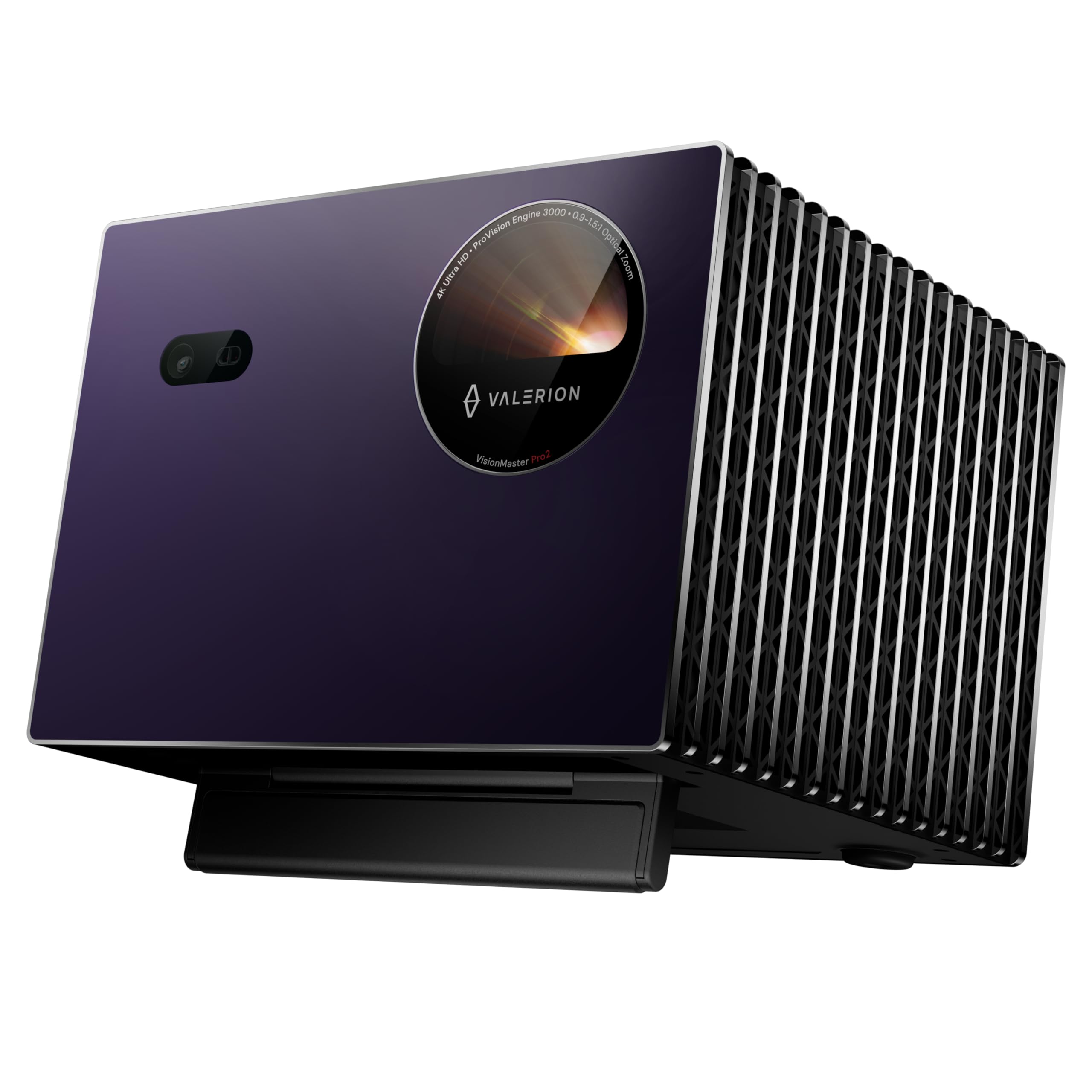
The Valerion VisionMaster Pro2 separates itself from the competition through its 15,000:1 native contrast ratio — a number typically reserved for LCOS-based projectors costing twice as much. The triple-laser engine achieves this through Enhanced Black Level (EBL) technology, which dynamically modulates the laser output in dark scenes without the pumping artifacts of a mechanical iris. The result is black floor depth that approaches an OLED television when viewed in a dark room, with shadow detail visible down to 2% grayscale. The 110% Rec. 2020 color gamut coverage produces saturated, natural colors without the oversaturation that plagues cheaper RGB laser projectors.
The OpticFlex Lens System offers a 0.9-1.5x optical zoom range, allowing flexible placement without digital keystone correction — the 1.5x zoom means you can fill a 120-inch screen from anywhere between 8 and 13 feet. The built-in Google TV interface is powered by the MediaTek MT9618 chipset with 4GB RAM and 128GB storage, making this the most responsive smart TV experience in the roundup — apps load under two seconds and multitasking between streaming services shows no lag. The 4ms input lag at 1080p/240Hz with dedicated FPS, RPG, and RCG gaming modes makes it genuinely competitive with gaming monitors.
The drawbacks center on setup complexity and fan noise. The EBL system produces a known issue where white subtitles in dark scenes cause the entire screen to brighten momentarily — distracting in 4K HDR movies with frequent subtitle changes. The fan noise is rated at 30 dB in Standard mode but climbs to 34 dB in Bright mode, which is audible during quiet scenes without external speakers. The physical size — roughly 50 cm wide and 15 cm tall — is larger than all other standard-throw projectors here, requiring more shelf or ceiling space. The lack of Dolby Vision support is also notable at this price point, though HDR10+ with Dynamic Tone Mapping compensates effectively for most content.
Why it’s great
- 15,000:1 native contrast produces OLED-like black levels in dark rooms
- 0.9-1.5x optical zoom enables flexible placement without digital distortion
- 4GB RAM + 128GB storage provides the fastest smart TV UI in this comparison
Good to know
- EBL system causes subtitle brightness pumping in dark HDR scenes
- Physical dimensions larger than standard-throw competitors
- No Dolby Vision support requires reliance on HDR10+ compression
8. Valerion VisionMaster Pro2 (Elegant Grey)

The Elegant Grey variant of the VisionMaster Pro2 shares the same triple-laser engine, 15,000:1 contrast, and MT9618 chipset as the Cosmic Violet version but adds the broadest smart home integration of any projector in the roundup. Native support for Apple HomeKit, Google Home, and Alexa means the projector can be included in automation routines — turning on when you say “Hey Siri, movie time” will switch on the projector, lower the screen, dim the lights, and set the thermostat. AirPlay 2 and Miracast provide wireless casting from any device without additional hardware, and the Google TV+ interface includes licensed Netflix and Disney+ apps.
The Dolby Vision and Dolby Atmos support — absent from the Cosmic Violet version — is present here, giving this unit the broadest HDR format compatibility of any projector under . The IMAX Enhanced certification adds dynamic metadata that optimizes the image for IMAX-formatted content, adjusting brightness and contrast scene-by-scene. The Filmmaker Mode disables all motion smoothing and processing for a reference-grade 24fps film experience, which purists will appreciate for movie watching. The Auto Low Latency Mode (ALLM) switches automatically to game mode when a console signal is detected, reducing input lag to 4ms at 1080p 240Hz without manual menu navigation.
The differences from the Cosmic Violet version are subtle but meaningful for smart-home-first buyers. The Elegant Grey finish is slightly lighter and less reflective, making it a better fit for white ceilings in living rooms. The built-in Wi-Fi supports 5GHz band exclusively, which limits range compared to the dual-band Wi-Fi in the BenQ TK710STi. At 2,699 USD, the price premium over the base Valerion model is justified primarily by the Dolby Vision support and smart home protocols — if you don’t use HomeKit or have a Dolby Vision-capable streaming device, the base model delivers identical picture quality for less.
Why it’s great
- Native Apple HomeKit, Google Home, and Alexa support for full smart home integration
- Dolby Vision + HDR10+ + IMAX Enhanced covers every major HDR format
- Filmmaker Mode provides reference-grade 24fps playback with no motion interpolation
Good to know
- 5GHz-only Wi-Fi has shorter range than dual-band alternatives
- Same EBL subtitle brightness pumping issue as the Cosmic Violet version
- Price premium over base model requires active smart home ecosystem to justify
9. XGIMI Horizon 20 Max Triple Laser
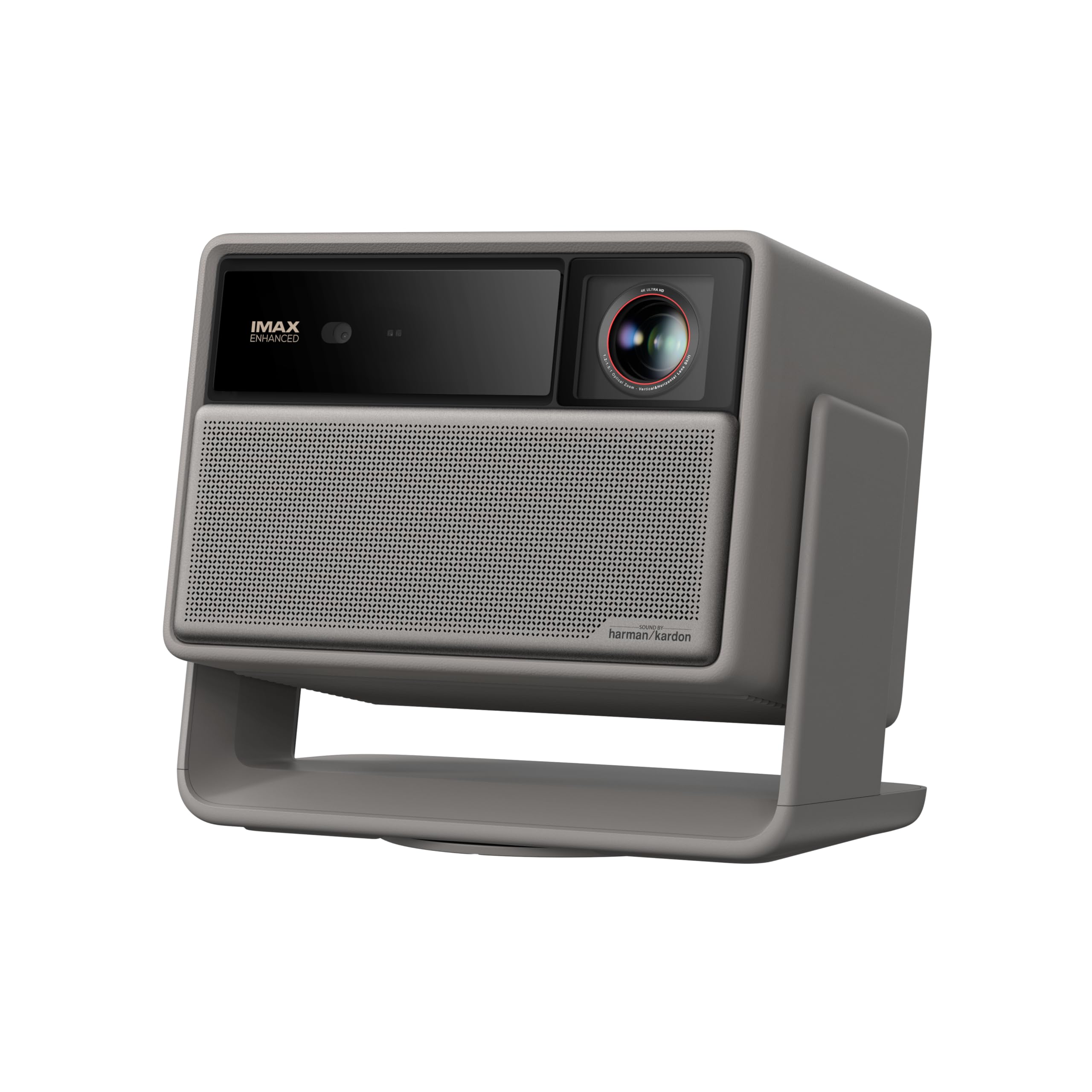
The XGIMI Horizon 20 Max is the brightest consumer projector under three thousand dollars, delivering 5,700 ISO lumens from an RGB triple-laser engine that covers 110% of BT.2020. This brightness level fundamentally changes what you can do with a projector — a 170-inch image on a standard white screen remains watchable with ambient daylight, and on an ALR (ambient light rejecting) screen the image looks punchy and saturated even with overhead lights on. The 20,000:1 dynamic contrast ratio — achieved through laser dimming rather than a mechanical iris — produces inky blacks without the pumping artifacts that plague iris-based systems.
The inclusion of motorized lens shift and optical zoom is the defining feature for installation flexibility. Unlike any other projector in this roundup, the Horizon 20 Max allows vertical and horizontal lens shift plus 1.0–1.4x optical zoom without moving the projector body — critical for permanent installations where perfect alignment is required. The Harman Kardon speakers are the best-sounding built-in audio in the roundup, producing clear dialogue with genuine low-end extension down to 80Hz. The full 3D support with active glasses works out of the box, producing bright, ghost-free 3D images that rival dedicated 3D projectors.
The practical brightness at standard viewing modes is lower than the marketing number suggests — third-party measurements show approximately 3,600 ISO lumens in Standard 4K mode, with the full 5,700 only achievable in High Brightness mode with visible color shift to a cooler temperature. Laser speckle is present and noticeable on white backgrounds, particularly in menus and sports broadcasts. The operating system is built on Google TV but lacks Dolby Vision support — an odd omission at this price point that means HDR content is processed via HDR10+, which produces slightly less dynamic range in the highlights. The 180W lamp wattage means the power supply is external and bulky, adding to the physical footprint.
Why it’s great
- 5700 ISO lumens (3600 in Standard mode) enables daytime viewing with ALR screen
- Motorized lens shift and optical zoom provide true installation flexibility
- Harman Kardon speakers produce genuine full-range audio without external speakers
Good to know
- Practical Standard-mode brightness is ~3600 lumens, not the marketed 5700
- Laser speckle visible on white backgrounds and menu screens
- No Dolby Vision support at this price point is a notable omission
10. TOPTRO A2 VIDAA 4K Projector
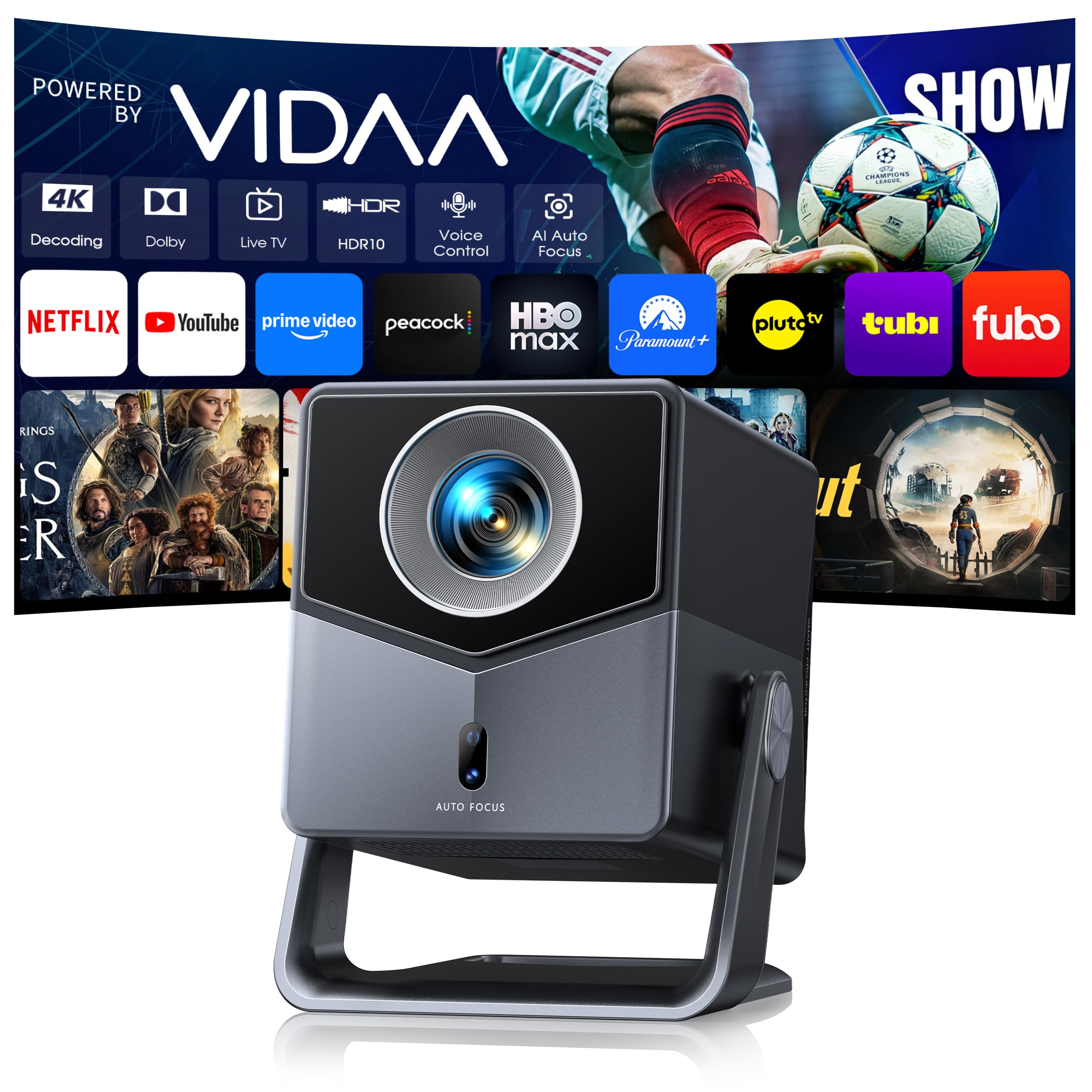
The TOPTRO A2 is the most impressive entry-level projector in this roundup because it gets the fundamentals right at a significantly lower price point. Its 650 ISO ANSI lumens — measured to the ISO standard, not the inflated ANSI numbers some budget brands use — is genuinely bright enough for a 100-inch image in a dark room, and the 1.0:1 short throw ratio means that image is achievable from just 2.2 meters. The VIDAA Smart OS is a revelation at this price: it is smoother and more responsive than most budget Android TV implementations, with native access to Netflix, YouTube, Prime Video, Disney+, and Hulu without requiring an external streaming stick.
The 36W Dolby Audio system with dual 18W speakers is the best built-in audio of any projector under five hundred dollars, producing genuine bass extension and clear dialogue that fills a medium-sized living room. The 200-degree rotating stand is both practical — enabling ceiling projection for bedroom viewing — and serves as a carrying handle, making this genuinely portable for backyard movie nights. The AI auto-focus and auto-keystone system is fast and accurate, completing the full alignment cycle in under four seconds, and the auto obstacle avoidance successfully shrinks the image around wall switches and picture frames without user intervention.
The native resolution is 1080p with 4K decoding, not true 4K — the “4K” label refers to the projector’s ability to accept a 4K signal and downscale it to the native panel. On a 100-inch screen from 10 feet, the difference between this and native 4K is visible in fine text and high-frequency detail, but for movie watching and gaming it looks excellent. The 650 ANSI lumens means this is strictly a dark-room projector — any ambient light will wash out the image significantly. The two-way Bluetooth 5.2 works well for connecting external speakers but the latency is too high for real-time gaming audio without a separate wired connection.
Why it’s great
- VIDAA OS provides smoother navigation and native Netflix access than budget Android TV rivals
- 36W Dolby Audio with dual 18W speakers delivers genuine TV-replacement audio quality
- 200-degree rotating stand doubles as carrying handle for genuine portability
Good to know
- 650 lumens requires completely dark room for acceptable image quality
- 1080p native resolution means 4K content is downscaled, not displayed natively
- Bluetooth audio latency is too high for real-time gaming without wired connection
11. HAPPRUN K7Pro Outdoor Projector
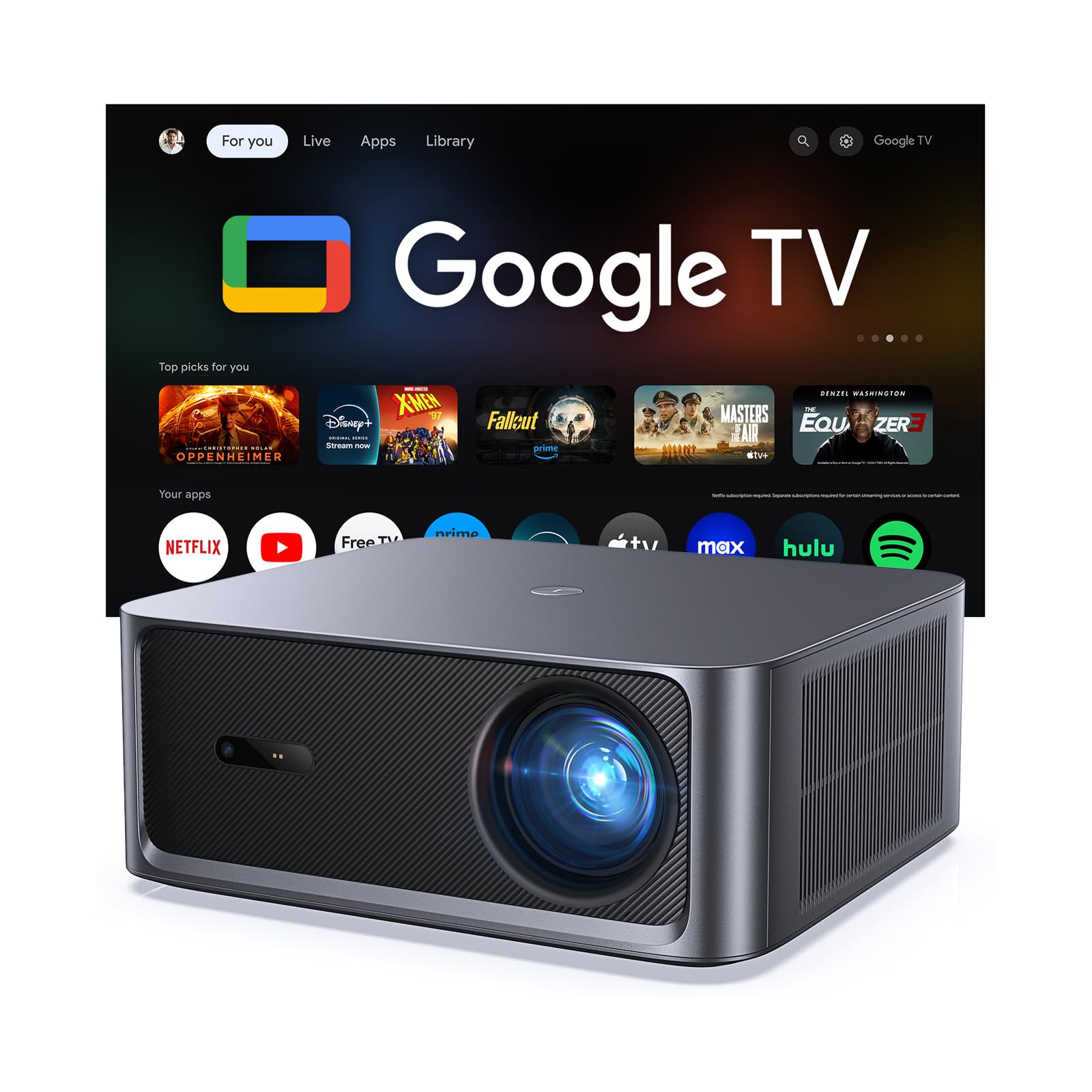
The HAPPRUN K7Pro delivers the most brightness per dollar of any projector in this roundup, claiming 3,000 ANSI lumens at a price that undercuts the XGIMI Horizon Pro by nearly half. In practice, independent measurements suggest the real-world output is closer to 800 ANSI lumens — consistent with the price point — but even at that reduced level, the image is brighter than the TOPTRO A2 and usable in rooms with some ambient light control. The built-in Google TV with officially licensed Netflix, Prime Video, and YouTube provides a complete streaming experience out of the box with no configuration required.
The auto focus and 6D auto keystone correction work reliably at moderate angles, completing setup in roughly six seconds — slower than the TOPTRO but acceptable for a projector in this price range. The dual 10W speakers with Dolby Audio produce adequate volume for a 20×20 foot room but lack the bass extension and clarity of the TOPTRO’s 36W system. The 40-to-300-inch zoom range with 50%–100% digital zoom is flexible, though digital zoom below 80% introduces noticeable sharpness loss due to pixel interpolation. The Wi-Fi 6 connectivity is a genuine differentiator at this price, enabling stable 4K streaming buffering-free even in crowded apartment buildings.
The key compromises are brightness inflation — the gap between the 3,000 ANSI claim and the measured ~800 lumens is the largest in this roundup — and the native 1080p resolution with 4K decoding, same as the TOPTRO. The auto keystone system struggles with extreme angles beyond 30 degrees, often leaving residual trapezoidal distortion that requires manual fine-tuning. The fan noise is moderate at 30 dB in Standard mode but rises to 35 dB in Bright mode, making it audible during quiet scenes. The LCD display technology produces visible pixel structure at close viewing distances — sit closer than 8 feet from a 120-inch screen and you’ll see the individual pixel grid.
Why it’s great
- Built-in Google TV with licensed Netflix provides zero-setup streaming experience
- Aggressive brightness at this price point delivers usable images with ambient light
- Wi-Fi 6 provides stable 4K streaming without buffering in high-density environments
Good to know
- 3,000 ANSI claim significantly inflated — real-world output is ~800 lumens
- LCD panel shows visible pixel grid at close viewing distances
- Auto keystone struggles beyond 30-degree angles; manual correction often needed
FAQ
Can a 4K-decoding projector show true 4K resolution?
How much brightness do I actually need for a 120-inch screen?
Does Google TV on projectors support Netflix in 4K HDR?
Should I choose a standard-throw or short-throw 4K projector?
What is laser speckle and should I worry about it?
Final Thoughts: The Verdict
For most users, the best 4k smart projector winner is the XGIMI Horizon Pro because it offers genuine native 4K resolution, excellent Harman Kardon audio, and reliable auto-adjustment at a price that undercuts the high-end laser competition while outperforming every entry-level option in image sharpness. If you need maximum brightness for a living room with ambient light, grab the BenQ TK710STi for its 3,200 ANSI lumens and short-throw convenience. And for the purest image quality in a dedicated home theater, nothing beats the Valerion VisionMaster Pro2 with its 15,000:1 contrast and triple-laser color volume.