
The difference between a great day on the trail and a miserable one often comes down to what’s in your food bag. Heavy cans, soggy instant noodles, and bland bars kill morale faster than blisters. The right meal delivers dense calories, simple prep, and a flavor that actually makes you want to eat it after a 15-mile day.
I’m Min — the co-founder and writer behind Gadgets Feed. After spending dozens of hours analyzing customer feedback, rehydrating ratios, calorie density, sodium levels, and shelf-life guarantees across the leading brands, I’ve broken down exactly which backpacking meals earn their weight in your pack.
This guide cuts through the marketing to rank the best options by real-world performance, nutritional value, and ease of preparation. Whether you prioritize stoveless speed or gourmet rehydration, you’ll find the right fit among these top-rated backpacking meals.
How To Choose The Best Backpacking Meals
Not all backpacking meals are equal. A 300-calorie snack bar will leave you hungry on a high-elevation climb, while a pouch that requires 20 minutes of simmering might be overkill for a simple lunch break. Focus on three core factors to match a meal to your trip.
Calorie Density and Weight
Every ounce in your pack costs energy to carry. Look for meals delivering at least 100 to 125 calories per ounce. The highest-density options push past 150 calories per ounce and eliminate the need for a stove entirely. Lower density meals add water weight during rehydration but can offer a more filling volume.
Prep Method and Time
Stoveless meals — bars or cold-soak pouches — save the weight of a stove, fuel canister, and pot. Freeze-dried and dehydrated pouches typically require boiling water and a 8-to-12 minute wait. If you hike in dry conditions where fuel is scarce, or you prioritize minimalist speed, choose a no-cook meal. If hot food at camp is non-negotiable, look for pouches with a wide base for stable reheating.
Nutritional Profile and Digestibility
High exertion demands a balance of carbs for quick energy and protein for muscle repair. Excessive sodium can cause bloating or excessive thirst. Meals with whole-food ingredients and no artificial preservatives tend to digest easier on a stressed stomach. Check the sodium per serving: under 600 mg is ideal for most day hikers, while ultra-endurance trekkers may need more to replace electrolyte loss.
Quick Comparison
On smaller screens, swipe sideways to see the full table.
| Model | Category | Best For | Key Spec | Amazon |
|---|---|---|---|---|
| Greenbelly Backpacking Meals | Stoveless Bar | Ultralight / No-Cook Trips | 650 calories per pouch | Amazon |
| Mountain House Chicken & Mashed Potato | Freeze-Dried | Classic Comfort Meal | Two servings per pouch | Amazon |
| GOOD TO-GO Weekender 3-Pack | Dehydrated | Gourmet Flavor / Low Sodium | Cooked by chefs, not scientists | Amazon |
| Wild Zora Cliffside Coconut Berry | Paleo Breakfast | Clean Ingredients / Breakfast | No added sugar or grains | Amazon |
| BIGHORN Butter Chicken and Rice | Freeze-Dried | High Protein / Big Flavor | 140g protein per 4-pack | Amazon |
| Harmony House Backpacking Kit | DIY Ingredients | Customizable / Bulk Meals | 70+ servings per kit | Amazon |
| Mountain House Adventure Weekender Kit | Freeze-Dried Kit | Emergency / Multi-Day Variety | 30-year shelf life | Amazon |
In‑Depth Reviews
1. Greenbelly Backpacking Meals

Greenbelly redefines what a backpacking meal can be by eliminating the stove, pot, and fuel entirely. Each pouch delivers two dense bars totaling 650 calories and over 5 ounces of performance food. Hikers on multi-day stage races and ultra-endurance treks report steady energy without bonking, making this a serious tool for weight-conscious adventurers.
The texture lands somewhere between a Rice Krispie treat and a chewy granola bar, though it is dry — plan to drink water with each bite. The resealable zip bags keep the bars crisp even after days in a pack. Customers highlight the 30/30/30 macro split as ideal for preventing bloating while sustaining high output on 40-mile desert treks.
Formulated by a gourmet chef and handmade in small batches, Greenbelly avoids the dense, brick-like consistency of typical protein bars. The flavors are intentionally muted to avoid palate fatigue over a full day of eating. For ultralight hikers who refuse to carry a stove, this is the gold standard.
Why it’s great
- Zero cook time or cleanup
- 650 calories per pouch at high density
- All-natural, gluten-free ingredients
Good to know
- Dry texture requires ample water
- Packaging can be tough to open without a knife
- Not a hot meal if you crave warmth at camp
2. Mountain House Chicken & Mashed Potato
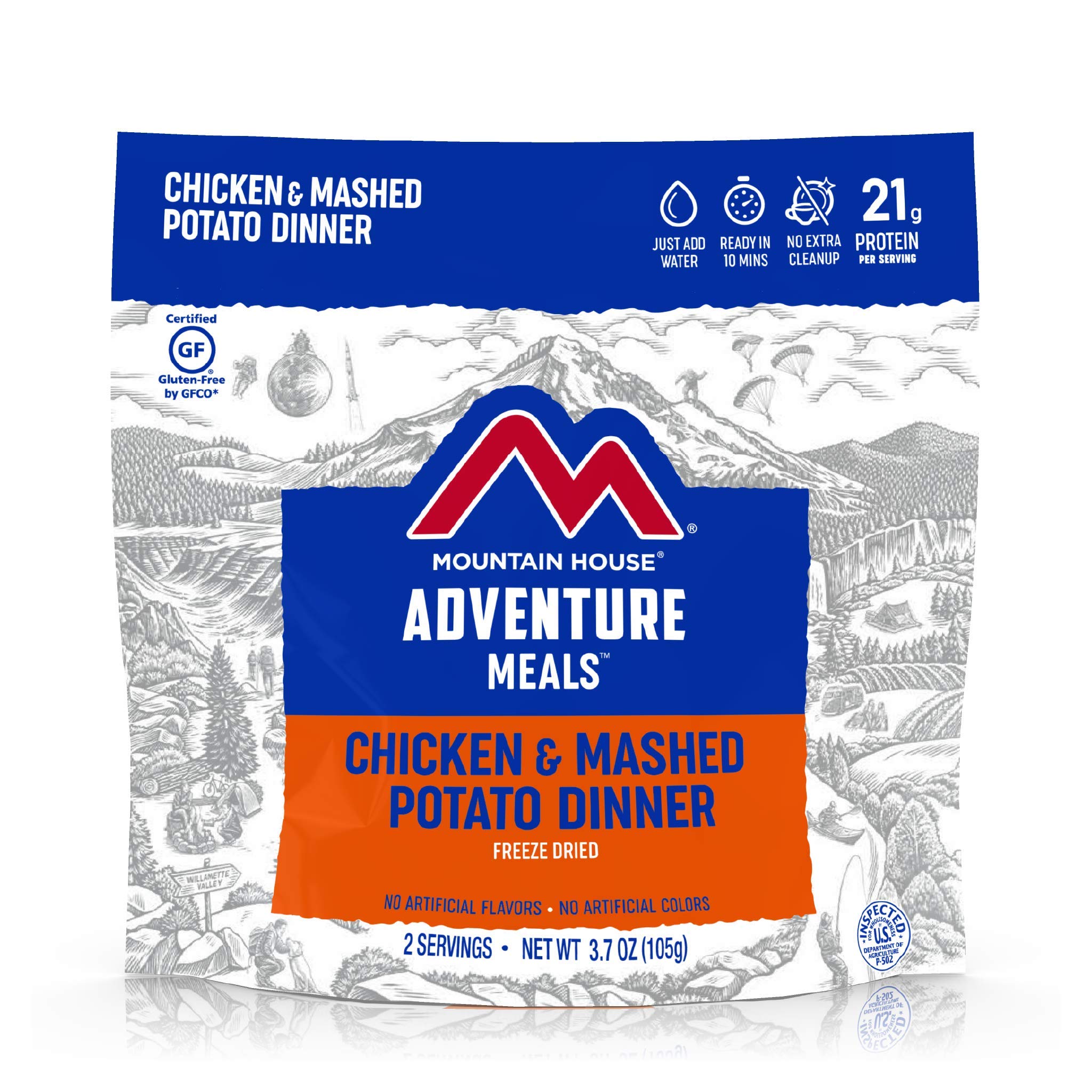
Mountain House has been a pillar in the backpacking food category since 1969, and their Chicken & Mashed Potato pouch proves why. The freeze-dried meal rehydrates into a creamy, herb-seasoned mash with tender chicken pieces that taste like real food, not artificial fillers. Users consistently rate it as one of the best-tasting options in the category.
The 4.48-ounce pouch provides two servings — enough for one hungry hiker or a split with a partner. Prep requires only hot water and a 10-minute wait, and the pouch doubles as the bowl, eliminating cleanup. The 30-year taste guarantee on shelf life makes this a reliable choice for emergency storage as well as weekend trips.
Some users note the seasoning is mild and recommend adding garlic, rosemary, or pepper for a bolder flavor. The meal retains heat for an extended period, so transferring to a bowl can speed up cooling. For a straightforward, comforting dinner that requires zero cooking skill, this pouch is hard to beat.
Why it’s great
- Creamy texture with real chicken pieces
- 30-year proven shelf life
- No artificial flavors or colors
Good to know
- Mild flavor may need added seasoning
- Pouch stays very hot for a long time
- Price per serving is higher than DIY options
3. GOOD TO-GO Weekender 3-Pack

GOOD TO-GO takes a chef-driven approach to backpacking meals, using dehydration rather than freeze-drying to retain original texture and nutrients. The Weekender 3-Pack includes two entrees and one breakfast — often a Thai Curry, a Pesto Risotto, and a Hearty Oatmeal — all crafted by real cooks, not food scientists. The result is a noticeably cleaner flavor profile with lower sodium than typical freeze-dried options.
Handmade and packaged in Kittery, Maine, these meals contain no preservatives and are certified gluten-free. Rehydration requires boiling water and a brief simmer, which takes slightly longer than a standard freeze-dried pouch but yields a more authentic texture. Reviewers consistently praise the Thai Curry as a standout, calling it satisfying and well-spiced without being overwhelming.
The 2-year shelf life is shorter than freeze-dried competitors, but the trade-off is a meal that tastes significantly closer to homemade. The oatmeal breakfast, however, has been described as bland by several users, so planning to supplement with dried fruit or nuts can improve the morning experience. For hikers who prioritize flavor and clean ingredients over maximum shelf stability, this is a top contender.
Why it’s great
- Real chef-developed recipes with bold flavor
- Low sodium and no preservatives
- Dehydrated texture is more like fresh food
Good to know
- Requires simmering, not just hot water
- 2-year shelf life is shorter than freeze-dried pouch
- Breakfast oatmeal is bland on its own
4. Wild Zora Cliffside Coconut Berry
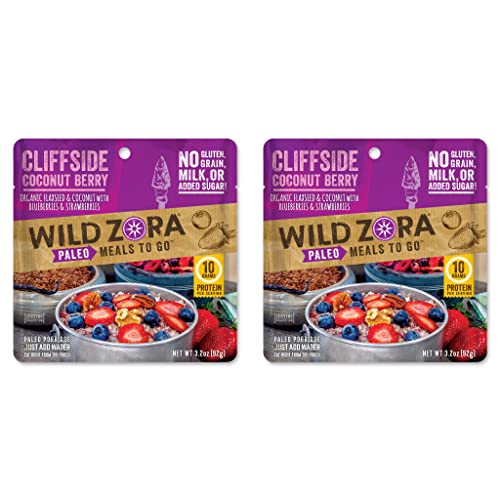
Wild Zora stands out in the backpacking meal category for its commitment to Paleo-friendly, grain-free, and no-added-sugar ingredients. The Cliffside Coconut Berry breakfast combines real berries, crunchy pecans and walnuts, and a touch of mango into a freeze-dried pouch that rehydrates into a naturally sweet, satisfying morning meal. Each pouch is made in small batches in Loveland, Colorado, by a woman-owned, family-run business.
The preparation is simple — add hot or cold water directly to the pouch and wait a few minutes. Reviewers note that the berries plump up beautifully, and the texture is far superior to standard instant oatmeal. The absence of added sweeteners means the sweetness comes entirely from the fruit, which some hikers find too mild; a drizzle of honey can easily fix that.
A significant limitation is the shelf life, which customers report as approximately 6 to 9 months — far shorter than Mountain House. This makes Wild Zora better suited for immediate trips or regular rotation rather than long-term emergency storage. For the health-conscious backpacker who wants a breakfast that fuels without causing digestive distress, this is a premium option.
Why it’s great
- No added sugar or artificial ingredients
- Grain-free, paleo-friendly, gluten-free
- Real fruit pieces with great rehydration texture
Good to know
- Short shelf life (6–9 months)
- Nut pieces are large halves, can be chunky
- Price per serving is higher than many competitors
5. Harmony House Backpacking Kit
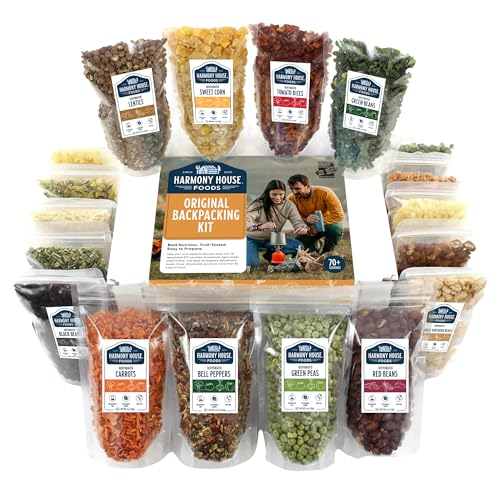
Harmony House takes a completely different approach: instead of pre-made meals, you get individual pouches of air-dried vegetables, beans, and lentils that you combine and season yourself. The kit weighs just 4.35 pounds but yields over 70 servings, giving you complete control over portion sizes and flavor profiles. Backpacker Magazine named it an Editor’s Choice winner for its versatility and value.
Each ingredient is gently air-dried at peak nutrient value, with no additives, preservatives, or GMOs. The kit includes a wide variety of vegetables — cabbage, peppers, carrots, celery, onions, and tomatoes — plus protein-rich beans and lentils. Users report creating Mexican, Italian, Creole, Indian, and ramen-inspired meals by mixing different pouches and adding their own seasonings, noodles, or rice.
The trade-off is that these are not instant meals. You must rehydrate and cook the ingredients with some simmering time, and the vegetables need at least 10–15 minutes to soften fully. Some vegetables like peas and green beans take longer to hydrate than others, so planning ahead is essential. For the DIY backpacker who enjoys customizing meals and saving weight by carrying only dry ingredients, this kit is unmatched.
Why it’s great
- 70+ servings in a single lightweight kit
- 100% natural, non-GMO, no preservatives
- Endless customization with your own spices
Good to know
- Requires cooking; not instant
- Some vegetables hydrate slowly
- You must add your own seasoning for flavor
6. BIGHORN Butter Chicken and Rice
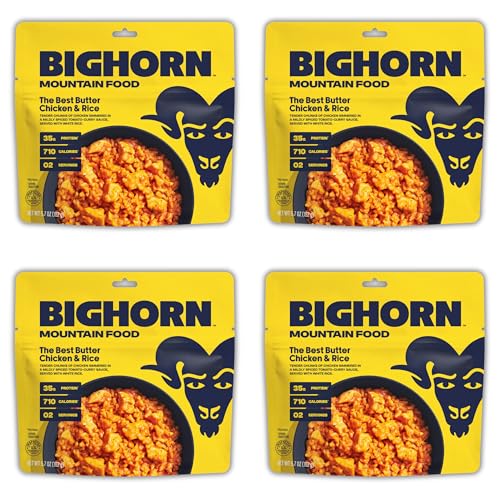
BIGHORN Mountain Food aims to set a higher standard for backcountry meals, and their Butter Chicken and Rice delivers on that promise. Each 4-pack provides 8 servings, 140 grams of protein, and 2,840 total calories. The freeze-dried meal includes generous chunks of real chicken and chunky vegetables in a rich, savory curry sauce that stands out among typically bland trail food.
Rehydration is straightforward: add hot water to the pouch, stir, and wait. Users emphasize following the water measurement carefully — adding too much leads to a soupy result, while the correct amount yields tender rice and perfectly soaked chicken. The portion size is substantial; two adults reported having leftovers after splitting a single bag.
Some hikers note the nutritional profile includes higher fat and sodium than other options, making it more of an indulgent meal than a daily staple. The flavor, however, is consistently described as excellent, with the sauce being the standout element. For high-calorie, high-protein refueling after a big mileage day, this is a delicious treat.
Why it’s great
- Excellent butter chicken flavor with tender meat
- 140g protein across 4 pouches
- Large, satisfying portion sizes
Good to know
- High in sodium and fat
- Water measurement must be precise
- Premium price per pouch
7. Mountain House Adventure Weekender Kit
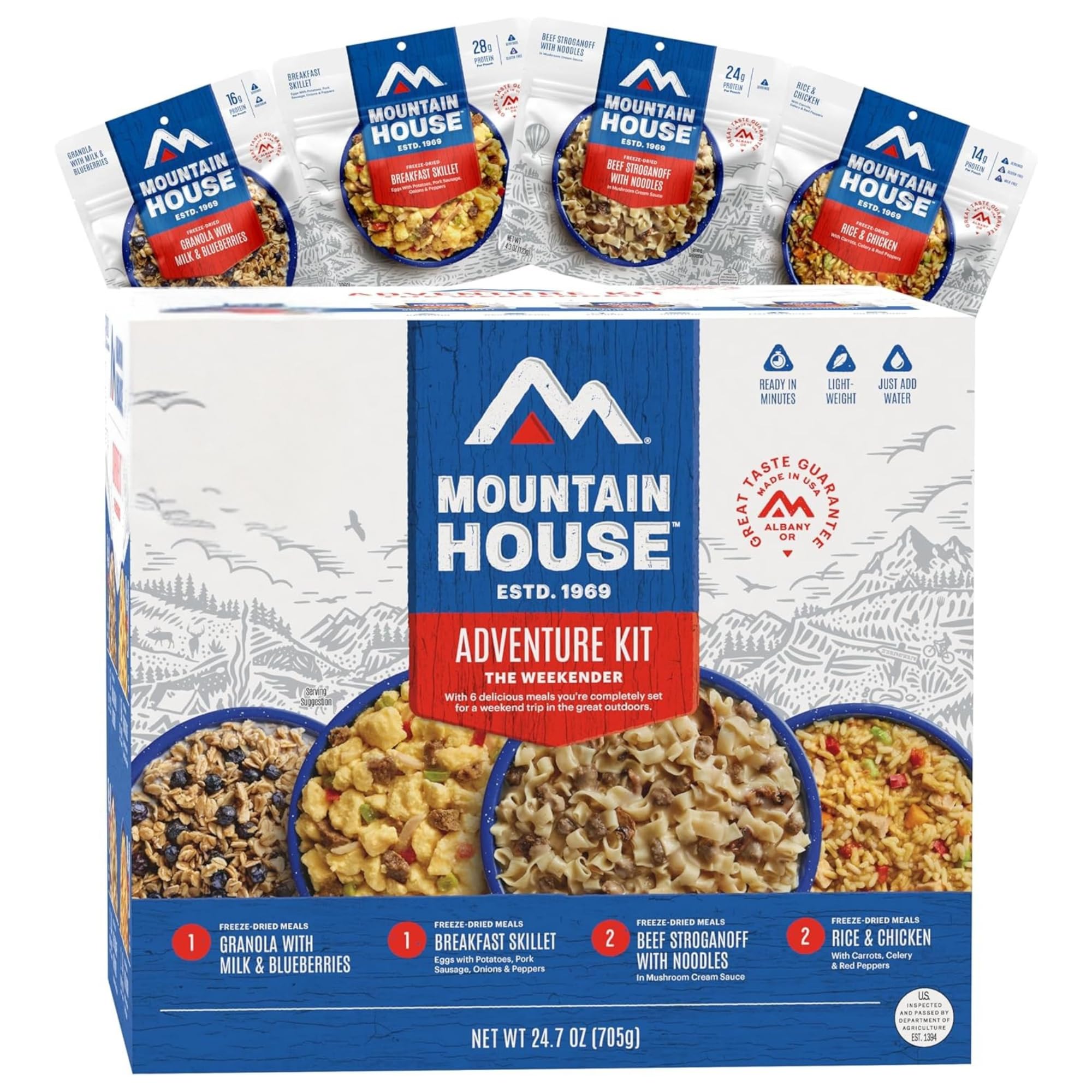
The Mountain House Adventure Weekender Kit bundles six pouches — two breakfasts, two lunches, and two dinners — into a single box weighing just 2.4 pounds. The lineup includes Granola with Milk & Blueberries, Breakfast Skillet, Rice & Chicken, and Beef Stroganoff with Noodles. Each pouch is freeze-dried and ready in under 10 minutes with only boiling water.
This kit is designed for short trips or emergency preparedness, with the legendary 30-year shelf life backing every pouch. The variety ensures you won’t get bored over a weekend, and the per-serving cost is lower than buying individual pouches. The Granola with Blueberries is a standout, requiring only cold water for a quick, no-cook breakfast that reviewers call the best item in the box.
Not all meals are created equal — the Breakfast Skillet has been described as having eggs with a styrofoam-like texture, though the overall flavor is still decent. The Beef Stroganoff and Rice & Chicken are more reliable, with good portions and satisfying taste. For a pre-assembled weekend solution that requires zero planning, this kit delivers dependable performance.
Why it’s great
- Budget-friendly per serving compared to singles
- 30-year shelf life for emergency storage
- Includes breakfast, lunch, and dinner variety
Good to know
- Breakfast Skillet texture is below average
- Pouches can be tricky to reseal
- Some meals need extra water for proper rehydration
FAQ
How many calories per day should I pack for backpacking?
Can I rehydrate freeze-dried meals with cold water?
What is the difference between freeze-dried and dehydrated meals?
Final Thoughts: The Verdict
For most users, the backpacking meals winner is the Greenbelly Backpacking Meals because it eliminates the stove entirely while delivering dense, balanced calories that keep you moving all day. If you want a hot, comfort-food dinner, grab the Mountain House Chicken & Mashed Potato for its reliable taste and legendary shelf life. And for the DIY hiker who wants total control over ingredients and flavor, nothing beats the versatility of the Harmony House Backpacking Kit.