
The typical modern shoe lifts your heel, squeezes your toes, and numbs the sensory feedback your feet need to move naturally. Barefoot minimalist shoes strip away that cushioning and support, forcing your foot’s intrinsic muscles to activate with every stride—a shift that can resolve chronic knee pain, improve balance, and strengthen arches that have been lazy for years inside padded trainers.
I’m Min — the co-founder and writer behind Gadgets Feed. I’ve spent countless hours analyzing sole thicknesses, toe-box geometries, drop measurements, and ground-feel characteristics across dozens of brands to isolate what actually matters when transitioning to a more natural gait.
Whether you’re recovering from an injury, strengthening weak ankles, or simply curious about walking as nature intended, this guide breaks down the top contenders to help you find the perfect pair of best barefoot minimalist shoes for your specific needs and daily routine.
How To Choose The Best Barefoot Minimalist Shoes
Jumping into barefoot shoes without understanding the core specs can lead to sore calves, plantar fascia strain, or buying a shoe that isn’t actually minimalist. Focus on these three areas before you add anything to your cart.
Sole Thickness and Flexibility
A true barefoot shoe has a sole measuring between 3mm and 8mm, depending on whether it’s for road, trail, or casual wear. Thicker soles offer more protection from sharp stones but reduce ground feedback. The sole should also bend easily with your hand—if it resists torsion, your foot’s natural flex is being restricted.
Toe Box Shape and Volume
Look for a foot-shaped toe box that allows your toes to splay naturally, not a tapered “wide” that still pinches the pinky toe. Your big toe should have at least a thumbnail’s width of space in front. High-volume feet need brands that offer deeper uppers; low-volume feet should avoid models that feel loose even when laced tight.
Zero Drop and Stack Height
Zero drop means the heel and forefoot sit at the same height off the ground. This is non-negotiable for barefoot shoes because any heel elevation tilts your pelvis forward and alters your natural stride. Stack height—the total thickness of the sole—should be under 10mm for a genuine barefoot experience.
Quick Comparison
On smaller screens, swipe sideways to see the full table.
| Model | Category | Best For | Key Spec | Amazon |
|---|---|---|---|---|
| FLUX FOOTWEAR Adapt Runners | Premium | All-day wear & recovery | Zero drop, 6mm stack | Amazon |
| Peluva Strand ATR | Premium | Trail running & hiking | 5-toe design, 8mm sole | Amazon |
| Vivobarefoot Magna Forest ESG | Premium | Hiking & rugged terrain | Michelin outsole, 4mm stack | Amazon |
| ALTRA Escalante 4 | Mid-Range | Road running & walking | FootShape toe box, zero drop | Amazon |
| Xero Shoes Prio Neo | Mid-Range | Gym training & casual | Removable insole, 5.5mm FeelTrue sole | Amazon |
| Hike Footwear HF Stride | Budget-Friendly | Entry-level transition | Ultra-light, thin sole unisex | Amazon |
| Xero Shoes Prio Suede | Budget-Friendly | Everyday casual & city walks | Flexible suede, 5.5mm sole | Amazon |
In‑Depth Reviews
1. FLUX FOOTWEAR Adapt Runners
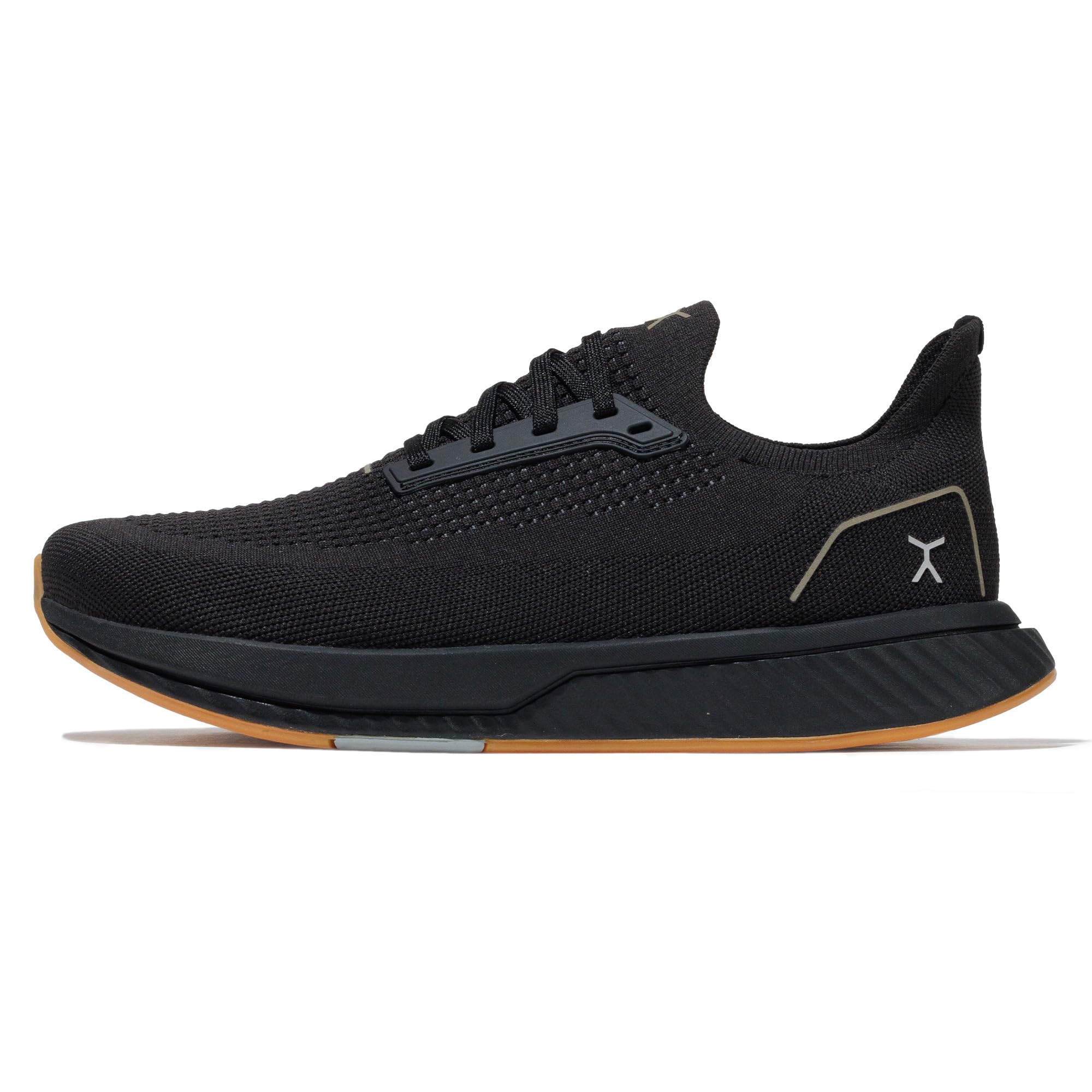
FLUX FOOTWEAR has engineered the Adapt Runner to bridge the gap between extreme minimalism and all-day wearability. The zero-drop platform and wide anatomical toe box allow your toes to splay naturally, while the thin, flexible sole delivers precise ground feedback without sacrificing protection on pavement. Users report immediate relief from knee and back pain, even after walking 15,000 steps a day on concrete floors.
The upper uses a breathable knit that adapts to your foot shape over the first week, eliminating the stiffness that plagues many barefoot shoes out of the box. Reviewers with flat feet and post-surgical ankles consistently note that the Adapt Runner provides enough lateral stability for tennis and court sports without the rigid structure that limits natural foot movement.
Durability is a standout feature here—several long-term users report the same pair remaining comfortable after years of daily 5-6 mile walks. The only minor critique involves initial tightness that resolves after a short break-in period, and one user noted a sole-separation issue that appears to be an isolated manufacturing variance rather than a systemic flaw.
Why it’s great
- Exceptional longevity compared to other minimalist runners
- Provides real support for flat feet and post-surgery recovery
- Breathable knit upper adapts to foot shape over time
Good to know
- Initial fit runs slightly tight; size up half a size
- Rare reports of sole separation under heavy use
2. Peluva Strand ATR
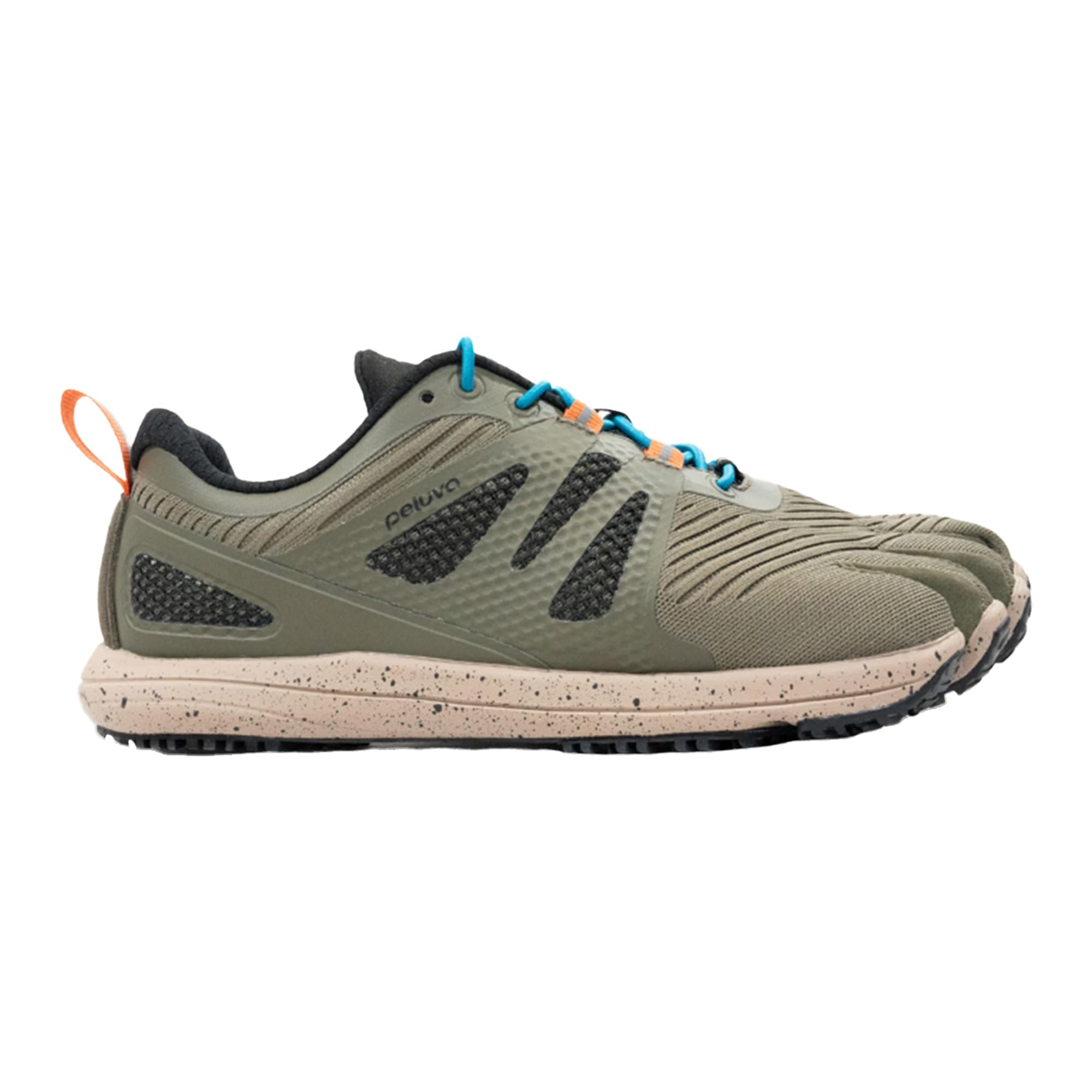
The Peluva Strand ATR is a dedicated five-toe trail shoe that solves the classic barefoot dilemma: how to get ground feel without turning every rocky descent into a bruise fest. The individual toe pockets allow each digit to grip and splay independently, and the outsole provides enough traction for technical trails while preserving a zero-drop, minimalist profile. Elite trail runners have used these for ultra-distance efforts like the Tour du Mont Blanc.
Unlike early five-toe designs that felt like rubber gloves for your feet, the Strand ATR uses a woven upper that breathes well and doesn’t trap moisture. The 8mm stack height offers more protection than road-focused barefoot shoes, making it suitable for gravel, roots, and loose dirt without dulling proprioceptive feedback. Users transitioning from traditional five-toe brands report a noticeably more natural feel and better lateral stability.
The main consideration is the five-toe sock requirement—the brand’s own socks wore out quickly for some users, so investing in higher-quality toe socks is recommended. Sizing up from your normal shoe size is also common, as the toe pockets need accurate length to prevent the big toe from jamming against the front.
Why it’s great
- Individual toe pockets enable natural splay and grip on trails
- Balances ground feel with meaningful puncture protection
- Proven durability for ultra-distance trail running events
Good to know
- Requires five-toe socks, which can wear quickly
- Most users need to size up half a size
3. Vivobarefoot Magna Forest ESG
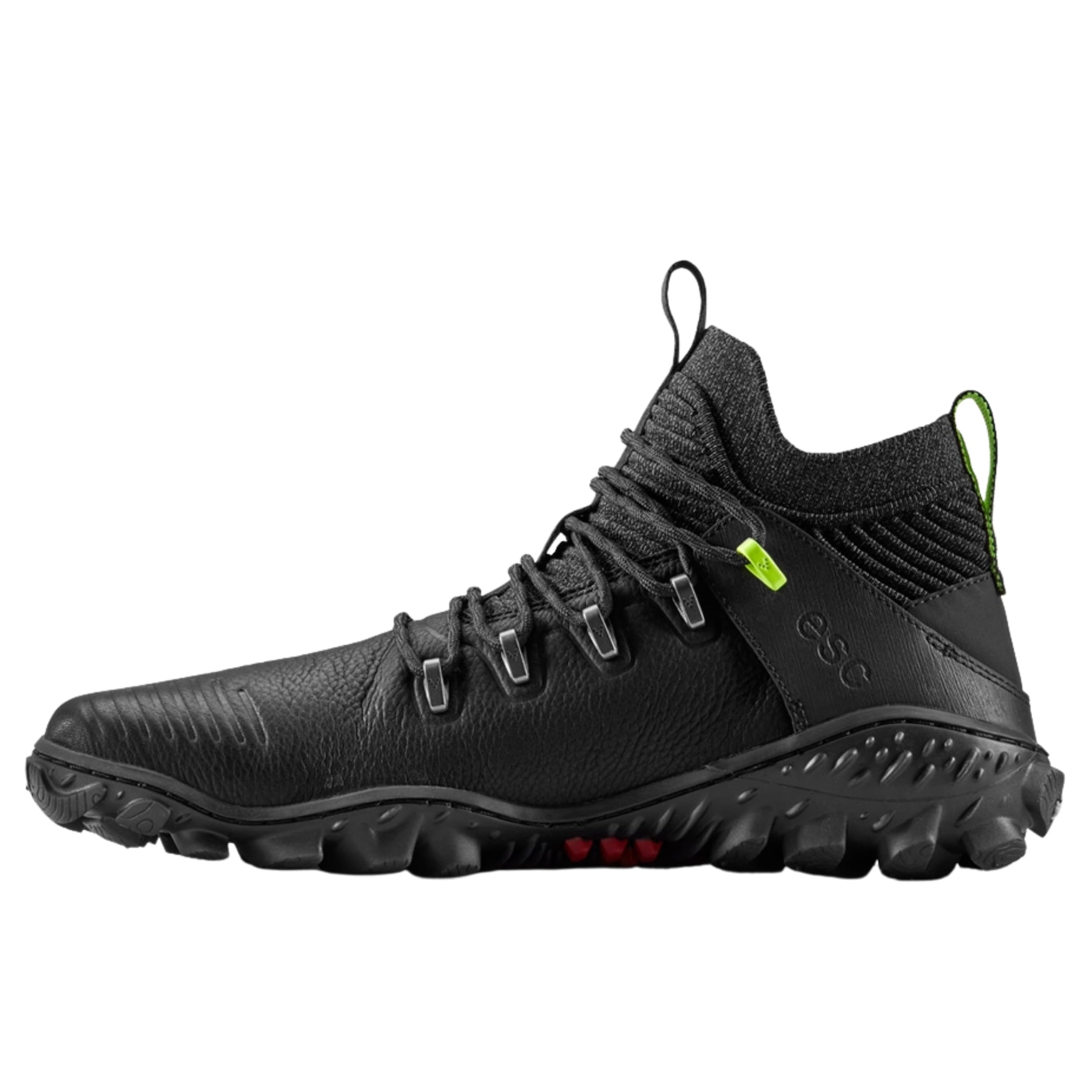
Vivobarefoot’s Magna Forest ESG takes the brand’s signature 4mm stack height and wraps it in a rugged leather-and-wool upper designed for wet, cold, and uneven terrain. The Michelin outsole provides deep lugs that bite into soft ground—mud, forest duff, loose scree—without the stiff shank of traditional hiking boots. Users in the Pacific Northwest praise its grip on slick, root-covered trails.
The leather and wool combination naturally regulates temperature and resists odor even after multiple days of hiking without washing. Despite its boot-like appearance, the Magna Forest weighs less than most trail runners and folds easily for packing. The large thumb loop at the heel makes it easy to pull on, even with cold or wet hands.
The most common complaint is width: this is not a true wide barefoot shoe. Users with naturally wide feet or high-volume forefeet report that the toe box feels restrictive and the upper is tight across the instep. Ordering a size up helps, but those with especially broad feet may find it unwearable. It also runs small, so sizing down by half a size from your Vivobarefoot size is often recommended.
Why it’s great
- Michelin outsole offers exceptional grip on soft, wet terrain
- Leather-wool upper stays odor-free and regulates temperature
- Very lightweight and packable for a boot-style shoe
Good to know
- Narrow toe box compared to other barefoot brands
- Runs small; most users size down half a size
4. ALTRA Escalante 4

ALTRA’s Escalante 4 is the entry point for runners and walkers who want the benefits of a wide toe box and zero-drop platform but aren’t ready for the extreme thinness of a true barefoot sole. The FootShape toe box gives your toes room to spread without the five-toe compartmentalization, and the 23mm stack height (with a 0mm drop) provides enough cushion for road running while keeping your foot in a neutral position.
The knit upper is soft and forgiving, accommodating overlapping toes and bunions without pressure points. Multiple reviewers with arthritis and Morton’s toe report that the Escalante 4 is the only shoe they can wear pain-free for extended walks. The outsole tread is durable, and the shoe holds up well as a daily trainer for both running and gym use.
It’s important to note that the Escalante 4 is not a minimalist shoe in the strictest sense—it has more stack and cushion than the true barefoot options on this list. It’s best viewed as a transitional shoe for those moving from traditional running shoes toward barefoot. The laces are also notoriously short and slippery, with many users replacing them with no-tie alternatives.
Why it’s great
- Generous FootShape toe box relieves bunion and toe pain
- Zero-drop platform corrects heel-strike gait
- Soft knit upper accommodates overlapping or sensitive toes
Good to know
- Not a true minimalist shoe; contains moderate cushioning
- Stock laces are short and prone to coming undone
5. Xero Shoes Prio Neo
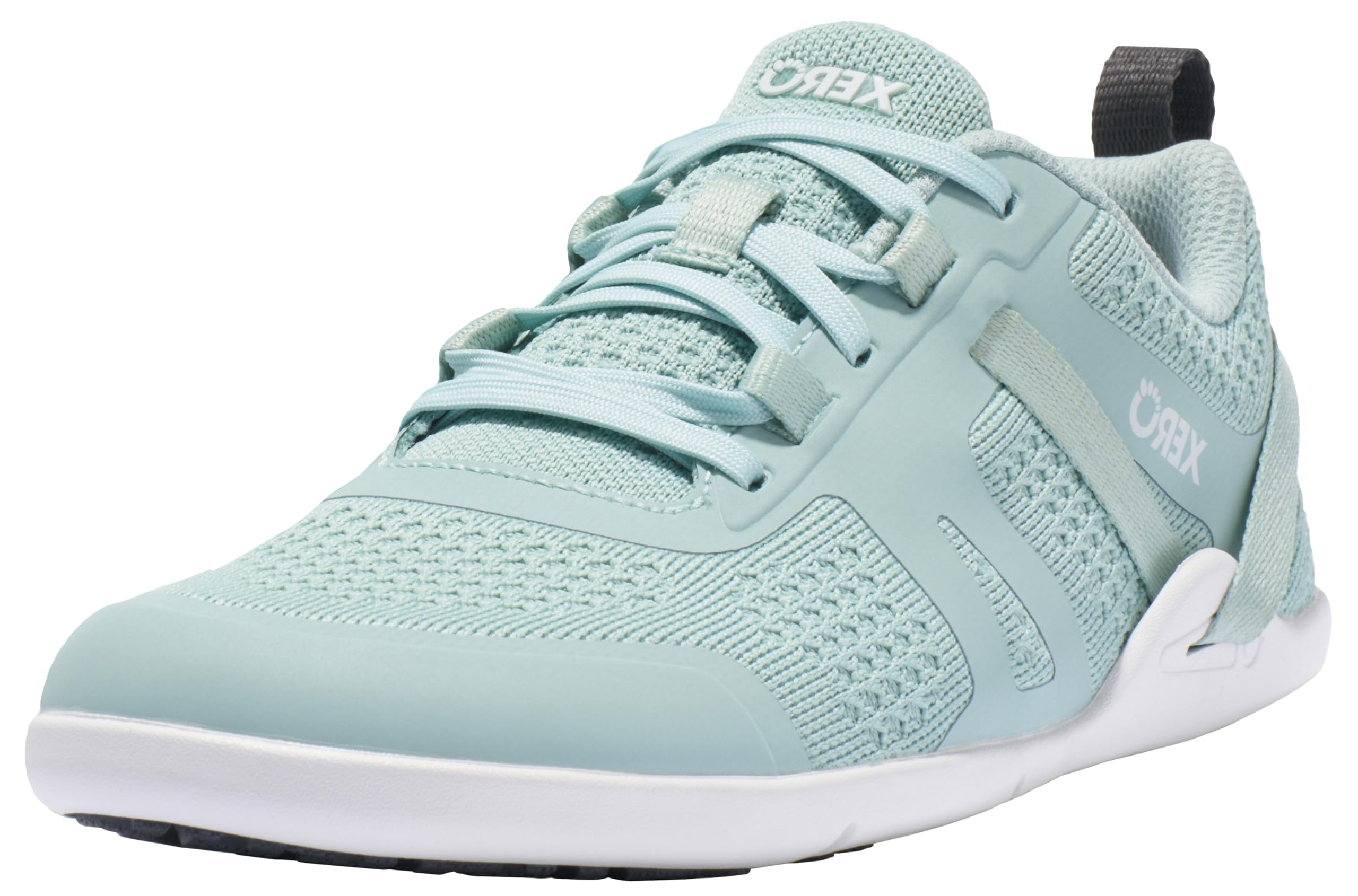
The Xero Shoes Prio Neo is built for the gym floor, delivering a 5.5mm FeelTrue sole that gives you direct sensation of the ground while deadlifting, squatting, or doing plyometrics. The wide toe box allows your toes to grip the floor for better balance, and the zero-drop platform keeps your hips and spine aligned under load. Users transitioning from heavily cushioned Brooks and ASICS trainers report immediate improvements in their heavy heel strike and overall balance.
The upper is a stretchy knit that feels more like a slipper than a training shoe, which makes it incredibly comfortable for all-day wear but also means it runs slightly shorter in length than other Xero models. Reviewers with Morton’s toe and hammer toes found the Prio Neo pain-free where traditional shoes caused discomfort. The removable insole gives you the option to add a tiny bit of cushion during the transition period, then pull it out for true barefoot feel once your feet strengthen.
The primary irritation is the laces—they are excessively long and tend to come undone when stepped on, so plan to either double-knot or swap them for shorter aftermarket laces. Some users also note that the shoe appears shorter than same-size alternatives, though the toe room remains adequate once your foot is inside.
Why it’s great
- Removable insole allows gradual transition to barefoot feel
- Extremely flexible sole ideal for weightlifting and gym work
- Stretchy knit upper accommodates toe deformities comfortably
Good to know
- Excessively long laces that come untied easily
- Runs slightly short; size up if between sizes
6. Hike Footwear HF Stride
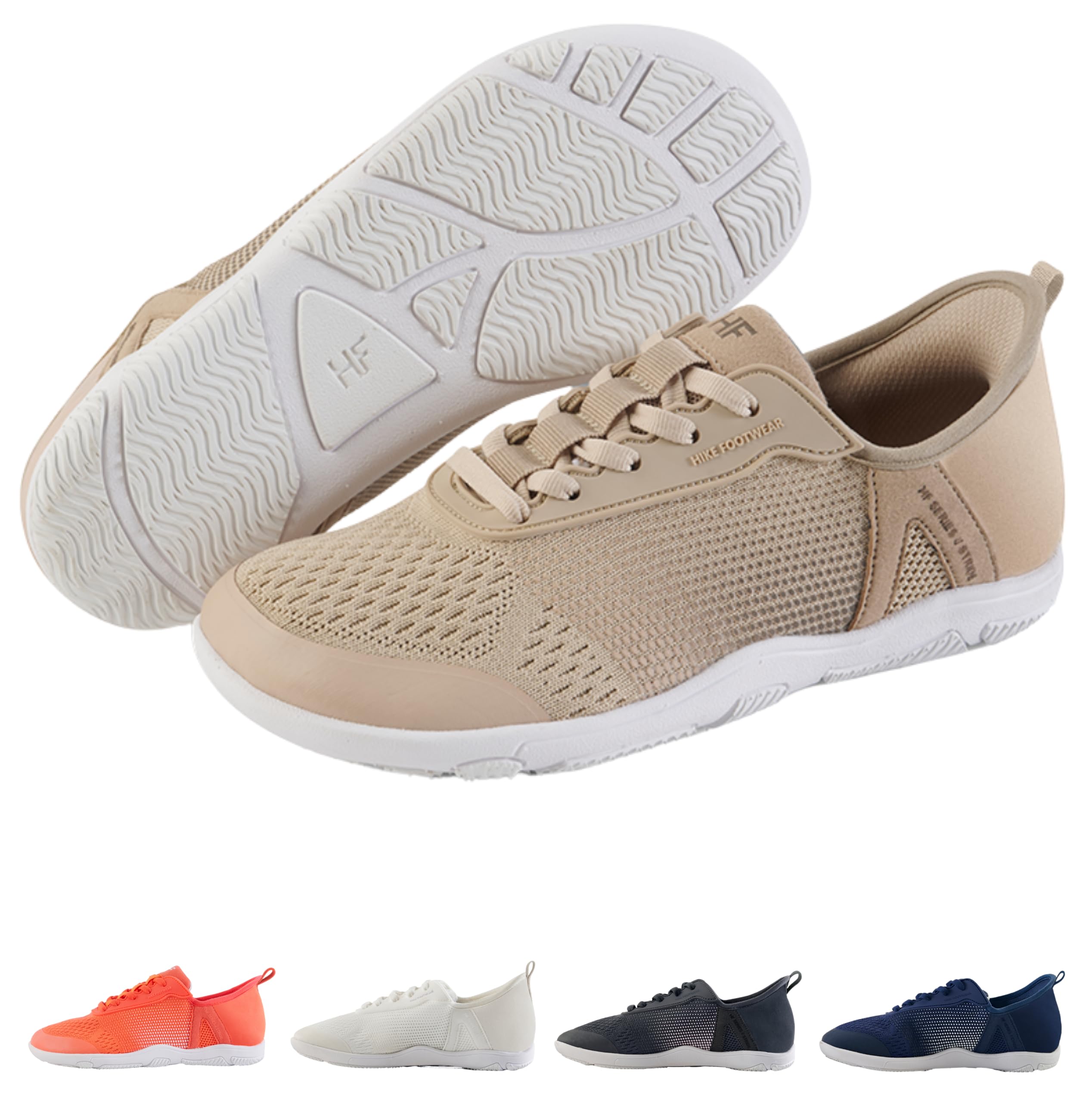
The Hike Footwear HF Stride is a no-frills entry-level barefoot shoe that prioritizes ground feel and affordability. The thin, flexible sole and wide toe box replicate the sensation of walking barefoot, and the minimalist upper is light enough that you’ll forget you’re wearing shoes. Users report dramatic improvements in balance after just one week of wear, with corresponding reductions in back, hip, and knee discomfort.
The unisex sizing means you need to pay close attention to the size chart—most users report that the shoe runs small, with half-sizers needing to order up to the next whole size. The laces are basic and many users swap them for elastic alternatives to create a true slip-on experience. The traction is adequate for pavement and hard-packed trails but not aggressive enough for loose dirt or mud.
Consider the HF Stride a transitional tool rather than a long-term investment. The materials and build quality are entry-level, and the shoe is best suited for casual daily wear or as a second pair to rotate with a more durable barefoot option. For the price point, however, it delivers genuine barefoot biomechanics that cost three times as much from premium brands.
Why it’s great
- Genuine wide toe box and zero-drop at an entry-level price
- Noticeable balance and posture improvements in under a week
- Lightweight enough for effortless daily wear
Good to know
- Runs small; order up a full size for proper fit
- Not suitable for technical trails due to mild traction
7. Xero Shoes Prio Suede
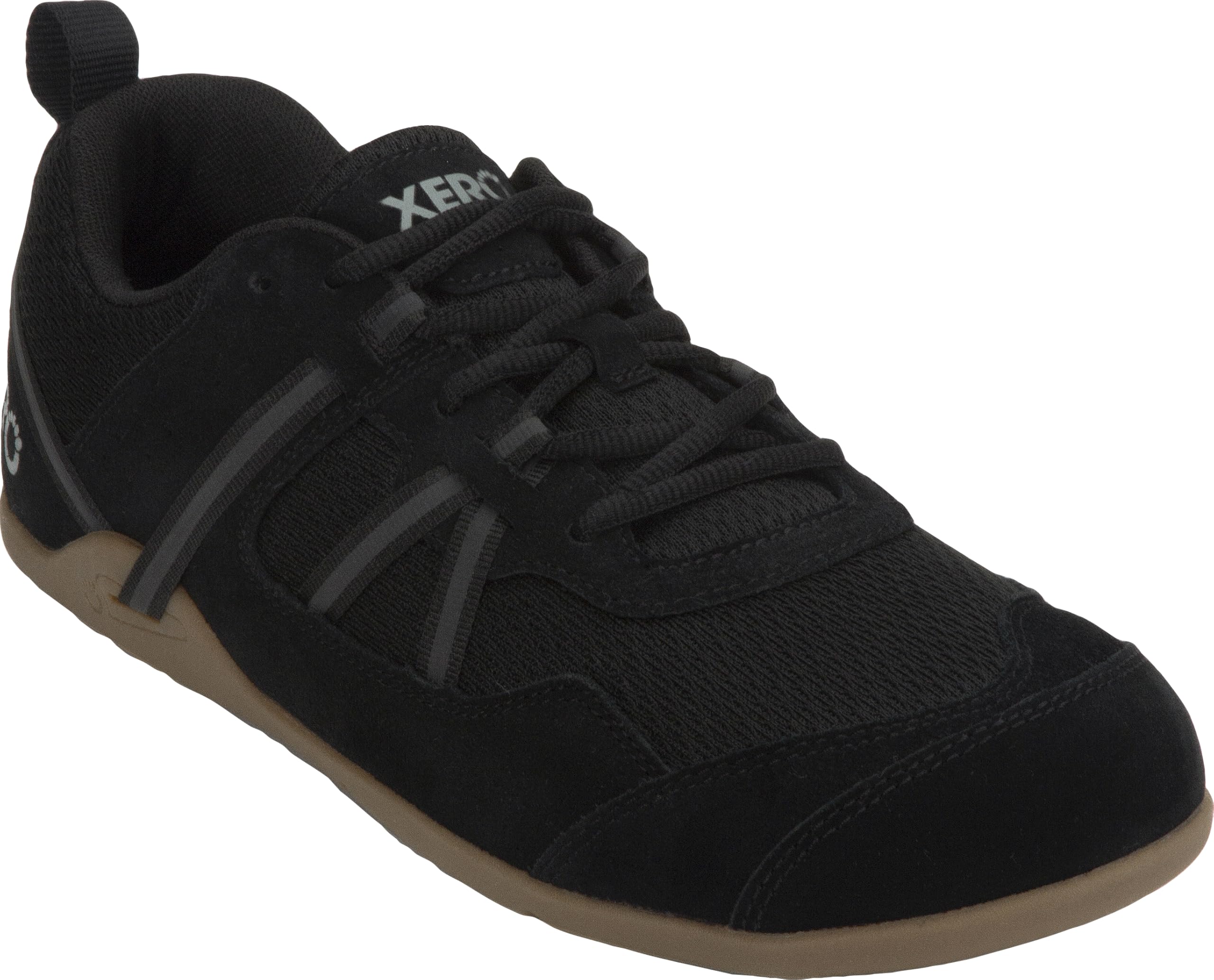
The Xero Shoes Prio Suede applies Xero’s proven barefoot platform to a more casual suede upper, creating a shoe that works for the office, weekend errands, and light gym sessions alike. The 5.5mm FeelTrue sole delivers the same ground feedback as the Prio Neo, but the suede exterior looks more like a classic sneaker than a performance trainer. Users transitioning from scoliosis-related gait issues report that the Prio Suede improved their posture and reduced their limp within weeks.
The wide toe box is moderate compared to true anatomical brands like Vivobarefoot, but still provides noticeably more room than standard sneakers. The suede is durable and holds up well to daily wear, though it is not water-resistant—avoid puddles and wet grass. The minimal cushioning means you’ll feel every pebble and crack, which is exactly the point, but it does take time for your feet to adapt.
The main drawback is that the huarache-style strap system—which wraps around the arch—can be uncomfortable for high-volume feet or those with prominent midfoot bones. Some users also report that the toe splay is not as generous as full-gecko-style brands, so if your primary goal is maximum toe spread, you may want to look at the Peluva or a dedicated five-toe shoe instead.
Why it’s great
- Suede upper provides a more casual, office-appropriate aesthetic
- Proven platform improves posture and corrects gait issues
- Durable construction with moderate toe splay for daily wear
Good to know
- Not water-resistant; suede absorbs moisture quickly
- Huarache straps may irritate high-volume or wide midfeet
FAQ
How long does it take to transition to barefoot shoes safely?
Can I run in barefoot shoes right away?
Are barefoot shoes good for people with flat feet?
Final Thoughts: The Verdict
For most users, the best barefoot minimalist shoes winner is the FLUX FOOTWEAR Adapt Runners because it combines the durability and lateral stability needed for daily wear and court sports with a true zero-drop, wide-toe-box barefoot platform. If you want a dedicated trail shoe with individual toe pockets for maximum splay and grip, grab the Peluva Strand ATR. And for the best value entry into barefoot mechanics without breaking the bank, nothing beats the Hike Footwear HF Stride.