
That “chlorine cocktail” aftertaste you get from tap or cheap purified water isn’t normal. Real artesian water, pulled from deep underground aquifers, should hit your palate with a soft, mineral-balanced smoothness — no plastic leaching, no chemical burn, just pure hydration. The difference between a mediocre sip and a genuinely refreshing one comes down to the water’s source, its natural electrolyte profile, and how it’s bottled.
I’m Min — the co-founder and writer behind Gadgets Feed. I’ve spent countless hours cross-referencing water mineral analysis reports, studying source sustainability ratings, and parsing through thousands of verified buyer reviews to isolate exactly which artesian brands deliver on their promises of purity and taste.
The search for truly clean hydration ends with the right bottle. Here is my curated roundup of the best artesian bottled water, ranked by source quality, mineral integrity, and real-world taste test results.
How To Choose The Best Artesian Bottled Water
Choosing an artesian water isn’t about picking a pretty bottle. It’s about understanding the source aquifer’s geology, the natural mineral composition, and how the water is protected from contaminants. Here are the critical factors to evaluate before you commit to a case.
Source and Filtration
The defining characteristic of artesian water is that it comes from a confined aquifer where the water is under pressure. The best artesian sources are deep underground, protected by layers of impermeable rock. Look for water that is “bottled at the source” to guarantee it hasn’t been trucked and treated. Natural filtration through volcanic rock, like the Mauna Loa or Fiji aquifers, adds beneficial silica and electrolytes without any artificial processing.
Mineral Profile and pH Level
Total Dissolved Solids (TDS) measure the concentration of minerals. A low TDS (like Voss at around 22 ppm) gives a crisp, neutral taste, which many chefs prefer for cooking. A moderate TDS (like Fiji at roughly 210 ppm) offers a soft, silky mouthfeel from silica. A high TDS (like Vichy Catalan at over 2500 ppm) provides a distinct, saline-mineral flavor. The pH level, typically between 7.0 and 9.5 for alkaline artesian waters, affects how the water interacts with acidic foods and your digestion. There is no “best” level — it’s about your personal preference.
Packaging Integrity
Plastic bottles, even BPA-free ones, can still leach trace compounds or impart a “plastic taste” over time, especially in heat. Glass bottles are the gold standard for preserving the water’s original flavor profile. For plastic options, look for a thick, durable PET that resists deformation. Aluminum cans are emerging as a better alternative for single-serve sizes, as they fully block light and oxygen.
Quick Comparison
On smaller screens, swipe sideways to see the full table.
| Model | Category | Best For | Key Spec | Amazon |
|---|---|---|---|---|
| FIJI Natural Artesian | Premium Artesian | Best Overall Daily Drink | 210 ppm TDS / 7.7 pH | Amazon |
| Hawaiian Springs | Volcanic Artesian | Volcanic Mineral Richness | Bottled at Mauna Loa source | Amazon |
| Essentia Water | Ionized Alkaline | Highest pH / Post-Workout | pH 9.5 / 0.0 ppm TDS | Amazon |
| Voss Artesian Still | Ultra-Pure Craft | Pristine Taste in Glass | 22 ppm TDS / Norwegian Source | Amazon |
| Waiakea Hawaiian Volcanic | Volcanic Premium | Occasional Premium Splurge | Volcanic trace minerals | Amazon |
| Vichy Catalan Sparkling | Sparkling Mineral | Medicinal Mineral Water | 2500+ ppm TDS / Glass | Amazon |
| Gerolsteiner Mineral | Sparkling Mineral | Natural Sparkling / Magnesium | High Mg content / Glass | Amazon |
In‑Depth Reviews
1. FIJI Natural Artesian Water
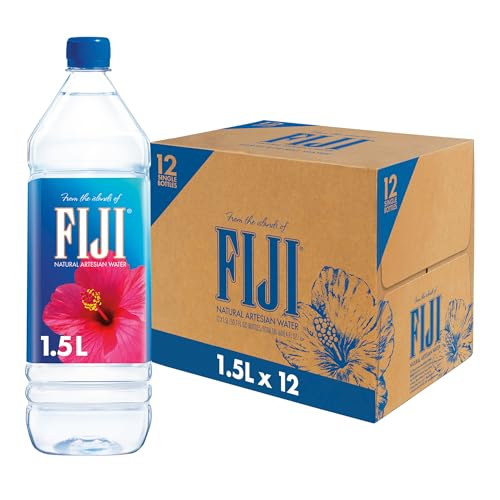
FIJI Water is the benchmark that every other artesian brand is measured against, and for good reason. It originates from a sustainable artesian aquifer in the remote Yaqara Valley on Viti Levu, protected by volcanic rock that naturally silica-enriches the water. This gives FIJI its signature soft, silky mouthfeel — a 210 ppm TDS profile that feels noticeably smoother than most purified waters. The pH of 7.7 falls perfectly neutral, making it an ideal daily driver that does not alter the taste of coffee or tea.
In real-world testing, the 1.5-liter bottle format works well for office desks or kitchen fridge storage. Customers consistently report that it helps them reduce soda consumption because the taste is inviting enough to drink plain. Several reviews note that using FIJI in a fabric steamer produced far less mineral residue compared to other brands, a testament to its balanced mineral content that does not over-deposit calcium scale.
The main criticism is that the 1.5L plastic bottles are not the most portable for on-the-go sipping, and some eco-conscious users wish the brand offered more glass packaging. However, for sheer consistency of taste and reliable hydration, FIJI remains the mass-market artesian king. The 12-pack case provides 608 fluid ounces of water.
Why it’s great
- Naturally occurring double electrolytes compared to most premium brands
- Silica content gives a smooth, non-metallic finish
- Reliable source with zero reports of plastic taste in 1.5L bottles
Good to know
- Only available in plastic bottles; no glass option for this format
- Case weight of 42.8 lbs can make lifting awkward
2. Hawaiian Springs Natural Artesian Water

Hawaiian Springs is sourced from the Mauna Loa aquifer on the Big Island, where rainwater filters through 13,000 feet of porous volcanic rock. This natural filtration process imbues the water with a unique blend of calcium, magnesium, potassium, and silica, resulting in a pH of roughly 7.7. The taste profile is notably clean with a slight alkaline sweetness that many reviewers describe as “fresher than Hawaiian rain.”
Compared head-to-head with FIJI, Hawaiian Springs has a slightly lighter body on the palate, which some drinkers find more refreshing during hot, humid weather. The 1-liter bottle size is a practical middle ground between FIJI’s 1.5L and smaller single-serve bottles. Customers transitioning from sports drinks praise its clean hydration without the added sugar. The brand holds an approved sustainable use rating of 744 million gallons per day from the Mauna Loa system, one of the healthiest aquifers in the world.
The plastic bottles are BPA-free and feel sturdy, though the case weight of 31.6 lbs is manageable. The only consistent complaint is the price point — this is a premium product often found cheaper online than in retail stores. For those seeking a volcanic water that feels untouched, Hawaiian Springs delivers what a bottle of Waiākea or FIJI promises, but often at a better per-ounce value.
Why it’s great
- Triple-source mineral profile (calcium, magnesium, potassium) from deep volcanic filtration
- Case of 12 x 1L bottles offers 406 fl oz for a good volume-per-dollar ratio
- Positive customer feedback on post-workout hydration quality
Good to know
- Plastic bottle, not glass — some users prefer zero plastic contact
- Price volatility on Amazon; can spike depending on supply
3. Essentia Ionized Alkaline Water

Essentia takes a different approach: it starts with municipal water that is micro-filtered and reverse-osmosed to 99.9% purity, then ionized to a pH of 9.5 or higher. While not a natural artesian water, it competes directly in the premium hydration space by offering a clean, alkalized product. The removal of all acidic ions results in a taste that is exceptionally smooth — no bitter notes, no mineral twang.
The 42.3 fl oz (1.25L) bottle size is ergonomic and fits standard car cup holders, a convenience many customers cite as a reason they repurchase. Reviews consistently highlight its effectiveness for relief from acid reflux and its ability to eliminate bitterness in coffee. Several long-term buyers claim they notice improved digestion and less bloating after switching from tap or standard spring water.
The 12-pack case provides 507.6 fluid ounces, making it a cost-effective option for daily consumption. The primary downside is that it lacks the natural mineral diversity of true artesian aquifers — all electrolytes are added back post-purification. Purists may prefer untouched source waters, but for value and consistent high-pH hydration, Essentia is a top contender.
Why it’s great
- Highest pH of any reviewed product at 9.5+ for alkaline buffering
- Zero TDS after RO means zero chance of any mineral aftertaste
- Sturdy, BPA-free bottle design withstands temperature changes
Good to know
- Not a true natural artesian — it’s processed and re-ionized
- Large 42.3 oz bottles may not be convenient for every bag or lunch box
4. Voss Artesian Still Water

Voss is the ultra-premium choice defined by its iconic cylindrical glass bottle. The water is sourced from an artesian aquifer in Iveland, Norway, shielded by layers of ice and rock for centuries. Its TDS level of just 22 ppm makes it one of the purest still waters available — nearly devoid of minerals, which produces a crisp, neutral taste that is completely free of the salty or metallic notes found in high-mineral waters.
The 375ml (12.7 fl oz) glass bottle is a conversation starter, but it also serves a functional purpose: glass is chemically inert and does not leach any flavor compounds, preserving the water’s original purity. Many reviewers reuse the glass bottles for cold brew coffee or as a portable hydration vessel. The lack of minerals also means Voss does not leave scale in coffee machines or kettles, a major advantage for home baristas.
The primary complaint is the cap design — several users found the screw cap nearly impossible to open without assistance, a frustration that could ruin the premium experience. Additionally, the 6-pack case only provides 114.3 fluid ounces, so the cost per ounce is significantly higher than bulk plastic options. Voss is best for those who prioritize pure taste and zero plastic exposure over volume.
Why it’s great
- Second-lowest TDS (22 ppm) ensures completely neutral flavor profile
- Glass bottle eliminates any plastic taste or microplastic contamination risk
- Ideal for use in espresso machines where low minerality prevents scale buildup
Good to know
- Cap design is notoriously difficult to twist; may require tools
- Very low yield per case (114.3 fl oz) makes it an expensive daily option
5. Waiakea Hawaiian Volcanic Water
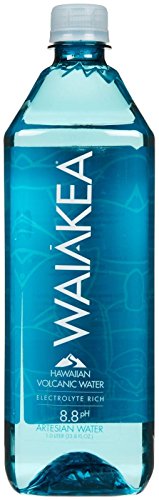
Waiakea sources its water from the Mauna Loa aquifer, filtering through 14,000 feet of volcanic rock. This natural filtration process enriches the water with silica, calcium, and magnesium, creating a taste profile that reviewers describe as having “volcanic spring depth.” The 33.8 ounce (1 liter) bottle has a slightly softer plastic that some users note can be prone to splashing when squeezed during initial opening.
In blind taste comparisons between Waiakea and FIJI, customers frequently call the two nearly indistinguishable, with Waiakea offering a marginally crisper finish. Many buyers treat it as an occasional luxury due to its price point, reserving it for special occasions or to pair with meals. Chefs appreciate its mineral profile for cooking, as it can subtly enhance the flavor of broths and sauces without being overly aggressive.
The availability on Amazon can be spotty — the product goes out of stock frequently, forcing customers to subscribe or pay inflated third-party prices. While the water itself is exceptional, the packaging and supply chain instability prevent it from being a top pick for daily bulk ordering. If you can snag a case at standard pricing, it is among the best-tasting volcanic waters available.
Why it’s great
- Deep volcanic filtration provides a distinct, smooth mineral taste
- 40.56 fl oz per case offers decent volume for premium water
- Consistently praised as a top-tier alternative to FIJI by reviewers
Good to know
- Soft plastic bottle can splatter water if gripped too tightly
- Frequent stock-outs on Amazon; requires vigilant repurchasing
6. Vichy Catalan Sparkling Mineral Water

Vichy Catalan is a historic Spanish mineral water that emerges from the ground at 60 degrees Celsius, rich in sodium bicarbonate, silica, and 27 of the 34 minerals the human body requires. With a TDS exceeding 2,500 ppm, it is a medicinal-style sparkling water that is not meant for gulping down by the liter — users are advised to sip 2 to 4 ounces at a time. The carbonation is fine and persistent, and the flavor is distinctly saline with a mineral-forward profile that some compare to a spa experience.
Clinical studies referenced on the packaging claim benefits for lowering cholesterol, improving digestion, and preventing tooth decay due to its fluoride content. The 1-liter glass bottles are well-packaged for delivery, arriving intact in most cases. Fans of European mineral water culture find it irreplaceable for its unique taste and therapeutic reputation.
The major downside is the high sodium content, which makes it unsuitable for those on a low-sodium diet. Some first-time buyers are put off by the intensely mineral flavor, describing it as having a “medicine-like” taste. It is a specialty water best suited for connoisseurs or those seeking specific digestive health benefits.
Why it’s great
- Extremely high mineral content (2500+ ppm) for therapeutic potential
- Natural carbonation from geothermal source, not injected CO2
- Glass bottles preserve flavor without any plastic contamination
Good to know
- High sodium content restricts usage for those on restricted diets
- Unique “medicinal” taste is polarizing among casual drinkers
7. Gerolsteiner Mineral Water
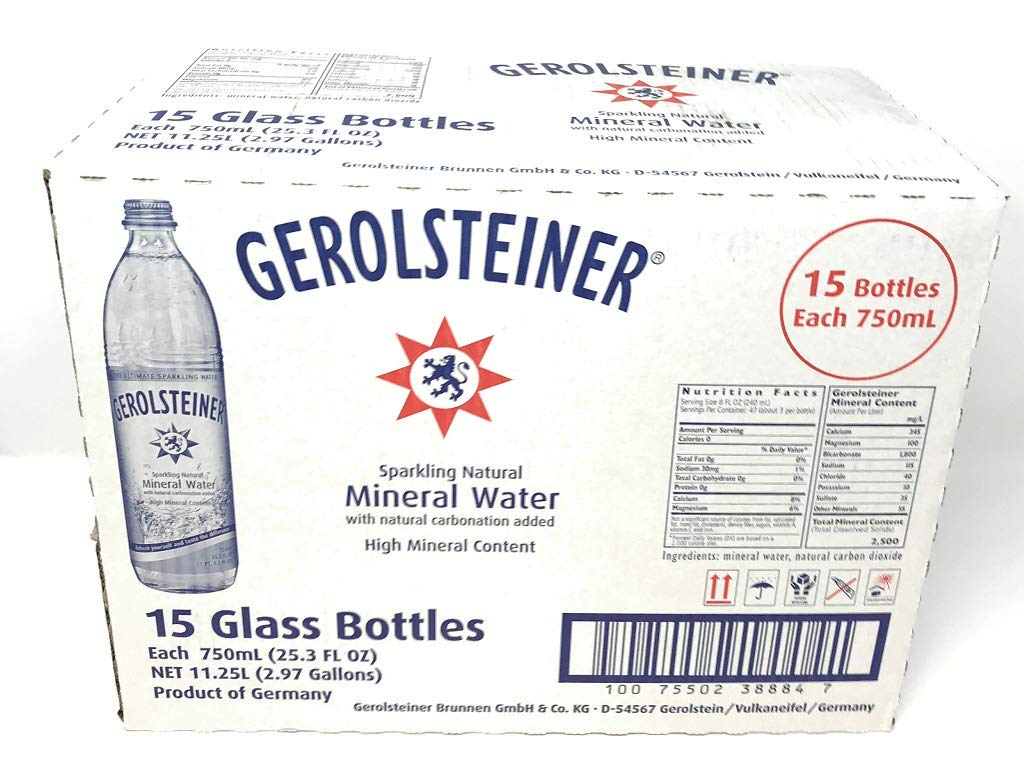
Gerolsteiner is a German mineral classic known for its exceptionally high magnesium content and naturally effervescent carbonation. The 25.3 fl oz glass bottles keep the water crisp and free from any plastic contamination. This is a sparkling water that delivers a sharp, clean bite without the bite being purely acidic — the high mineral content buffers the carbonation, resulting in a smoother effervescence than artificially carbonated club sodas.
Functional medicine doctors often recommend Gerolsteiner for patients needing additional magnesium through dietary sources. Many customers report feeling a sense of refreshment that goes beyond simple hydration, attributing it to the balanced electrolyte profile. The 15-pack case provides a significant volume of water, making it one of the better values in the glass-bottle sparkling category.
The glass bottles are heavy, and the case packaging has been criticized for poor protective padding during shipment. Several reviews mention arriving boxes that were wet or torn, with some bottles broken. The high cost of the case, combined with shipping damage risks, makes it essential to inspect upon arrival. For those who receive it intact, it is widely regarded as one of the best sparkling waters on the market.
Why it’s great
- One of the highest natural magnesium contents of any mineral water
- 15 glass bottles per case provide excellent value in the premium sparkling segment
- Natural carbonation from volcanic source; no added CO2
Good to know
- Shipping packaging is frequently insufficient; damage risk is real
- High cost per bottle if ordered individually or from third-party sellers
FAQ
What is the difference between artesian water and spring water?
Does artesian water have a higher risk of microplastic contamination than purified water?
Can I use artesian water in my espresso machine without scale buildup?
Why does some artesian water have a salty taste?
Is artesian water worth the premium over filtered tap water?
Final Thoughts: The Verdict
For most users, the best artesian bottled water winner is the FIJI Natural Artesian Water because its balanced 7.7 pH, smooth silica mouthfeel, and consistent quality make it the most reliable daily drink. If you want a volcanic-sourced water with even deeper mineral richness, grab the Hawaiian Springs. And for those seeking a completely neutral, no-mineral flavor in a glass bottle, nothing beats the Voss Artesian Still Water.