
Chasing a modern upgrade for a pre-2013 motherboard feels like searching for a part that time forgot. The LGA 1155 socket powered a golden era of Sandy Bridge and Ivy Bridge processors, and a drop-in replacement remains the cheapest way to double the lifespan of an aging desktop without swapping the board, RAM, or power supply.
I’m Min — the co-founder and writer behind Gadgets Feed. I’ve spent countless hours sorting through Xeon compatibility quirks, Ivy Bridge IHS flatness issues, and the precise Turbo Boost tables that separate an everyday workhorse from a gaming sleeper in this legacy platform.
This guide cuts through the clutter to identify the right lga 1155 processor for your specific motherboard, workload, and budget — whether you are resurrecting an old office machine or wringing one last round of frames from a Z77 gaming rig.
How To Choose The Best LGA 1155 Processor
Not every LGA 1155 chip works on every board. Chipset generation (H61 vs. B75 vs. Z77) dictates which CPUs are supported, and a BIOS revision can block a perfectly good Ivy Bridge drop-in. Understanding these constraints before you buy prevents a frustrating compatibility headache.
Ivy Bridge vs. Sandy Bridge — The 22nm Advantage
Ivy Bridge (3rd-gen Core, model numbers 3xxx) shrank the die from 32nm to 22nm, dropping TDP by up to 20 watts on comparable SKUs. This means lower case temperatures, less strain on aging VRMs, and native PCIe 3.0 support. Sandy Bridge (2nd-gen, model numbers 2xxx) is still capable, but Ivy Bridge is usually the smarter choice if your motherboard supports it.
Unlocked vs. Locked — Z77 Motherboard Required
Processors ending in “K” (i5-3570K, i7-3770K) have an unlocked multiplier for overclocking. That feature only works on P67, Z68, and Z77 chipset boards. Dropping a K-series chip into an H61, H67, or B75 motherboard runs it at stock speeds — a waste of the premium. For office PCs and pre-builts, the locked variants are cheaper and run cooler.
Core Count and Hyper-Threading — Where the i7 Earns Its Place
Every Core i5 in this socket has four physical cores and no Hyper-Threading (four threads total). Core i7 chips add eight threads via Hyper-Threading, which meaningfully improves HandBrake encoding, virtual machines, and heavy multitasking. For pure gaming at the time, the i5-3570K often matched the i7-3770K, but modern software benefits from the extra thread count.
Quick Comparison
On smaller screens, swipe sideways to see the full table.
| Model | Category | Best For | Key Spec | Amazon |
|---|---|---|---|---|
| Core i7-3770K | Premium | Overclocking & gaming rigs | 3.5 GHz / 4C8T / 8 MB L3 | Amazon |
| Core i5-3570K | Premium | Budget gaming builds | 3.4 GHz / 4C4T / 6 MB L3 | Amazon |
| Core i7-3770 (Renewed) | Mid-Range | Pre-built office upgrades | 3.4 GHz / 4C8T / 8 MB L3 | Amazon |
| Core i7-3770 (Dell Genuine) | Mid-Range | Dell Optiplex compatibility | 3.4 GHz / 4C8T / 8 MB L3 | Amazon |
| Core i3-4130 | Mid-Range | Low-power HTPC builds | 3.4 GHz / 2C4T / 3 MB L3 | Amazon |
| Core i5-2500 (Renewed) | Budget | Cheapest viable quad-core | 3.3 GHz / 4C4T / 6 MB L3 | Amazon |
| Core i7-6700 | Premium | Skylake compatibility check | 3.4 GHz / 4C8T / 8 MB L3 | Amazon |
In‑Depth Reviews
1. Intel Core i7-3770K Quad-Core Processor 3.5 GHz 8 MB Cache LGA 1155

With a 3.5 GHz base clock that Turbo Boosts to 3.9 GHz on a single core, the i7-3770K is the most powerful fully compatible LGA 1155 processor, provided you pair it with a Z77, Z68, or P67 motherboard. The unlocked multiplier allows air-cooled overclocks comfortably above 4.3 GHz with an aftermarket cooler like the Hyper 212 EVO, making it a legitimate competitor to early Haswell parts in synthetic benchmarks.
Hyper-Threading gives this chip eight threads, which pulls ahead of the i5-3570K by 20 to 40 percent in threaded workloads such as video encoding, ZIP compression, and running virtual machines. The 8 MB L3 cache also reduces latency when accessing frequently used data sets. Real-world desktop responsiveness feels snappy with an SSD, and the HD 4000 integrated graphics can drive a 4K display for media consumption without a discrete GPU.
Keep in mind that the stock Intel cooler is adequate at stock speeds but gets loud under sustained load. For overclocking, budget for an aftermarket cooler and ensure your motherboard has decent VRM heatsinks. This chip commands a premium in the LGA 1155 market, but for the highest single-threaded and multi-threaded performance the socket can deliver, it is the undisputed king.
Why it’s great
- Unlocked multiplier enables substantial overclocking headroom
- Eight threads handle modern multitasking and encoding smoothly
Good to know
- Requires Z68/P67/Z77 chipset for overclocking features
- Integrated HD 4000 graphics are not suitable for modern 3D gaming
2. Intel Core i5-3570K Quad-Core Processor 3.4 GHz 4 Core LGA 1155

The i5-3570K is the sweet spot for a pure gaming rig on LGA 1155. With four physical cores running at a stock 3.4 GHz and a single-core Turbo of 3.8 GHz, it delivers per-core performance nearly identical to the i7-3770K in the vast majority of titles. Overclocking to 4.5 GHz on air is common, and at those speeds it outperforms the stock i7-3770K in CPU-bound gaming scenarios like Total War and BF3.
Built on the 22nm Ivy Bridge architecture, this chip runs cooler than the Sandy Bridge i5-2500K, with idle temperatures in the low 30s°C and load temps around 70°C with a decent air cooler. The HD 4000 iGPU is a meaningful step up from HD 3000, scoring a Windows Experience Index of 6.5 in gaming graphics, roughly matching a discrete GeForce 8600 GTS. For a home office PC, it eliminates the need for a dedicated GPU entirely.
The absence of Hyper-Threading means this chip shows its age in heavily threaded workloads like HandBrake or Cinebench multithreaded tests. If you regularly encode video or run multiple VMs, the i7-3770K is the better choice. For pure frame rates in a Z77 gaming build with a GTX 1060 or RX 580, the i5-3570K gives you 95 percent of the experience for significantly less money.
Why it’s great
- Per-core gaming performance rivals the i7-3770K at a lower price
- 22nm Ivy Bridge runs cooler than Sandy Bridge predecessors
Good to know
- No Hyper-Threading limits threaded productivity workloads
- Stock cooler’s thermal interface material is subpar for overclocking
3. Intel Core i7-3770 Quad-Core Processor 3.4 GHz 4 Core LGA 1155 (Renewed)

For anyone upgrading a Dell Optiplex 7010, HP Compaq 8300, or any H61/B75-based pre-built, the locked i7-3770 is the smartest drop-in you can buy. The 3.4 GHz base clock and 3.9 GHz single-core Turbo deliver immediate, noticeable improvement over the i3-3220 or Pentium G860 these machines shipped with. Hyper-Threading provides eight threads that make a 12-year-old machine feel modern for office work, multi-tab browsing, and light video editing.
Because this is a locked processor with a 77W TDP, it runs comfortably on the small VRMs and weak heatsinks found in budget OEM motherboards. Users report idle temperatures around 35°C and stress temps under 55°C with the stock cooler, with no throttling. Certified refurbished units consistently arrive in working condition, though expect just the CPU in a generic box — no cooler or thermal paste included.
Be aware that some older BIOS revisions do not support Ivy Bridge chips. Check your motherboard manufacturer’s support page before purchasing. For Dell Optiplex 790 and 7010 boards specifically, a BIOS A10 or later is required. The i7-3770 cannot be overclocked, but for pre-builts with locked BIOS, that limitation does not matter — it is simply the fastest officially compatible CPU these boards accept.
Why it’s great
- Works in most H61, B75, and Q75 pre-built motherboards
- Eight threads plus low 77W TDP ideal for cramped OEM chassis
Good to know
- Does not include stock cooler or thermal paste
- BIOS update likely required for older Sandy Bridge-era boards
4. Intel Core I7 Quad Core Processor I7-3770 3.4ghz 8mb Smart Cache Tdp 77w SR0PK (Renewed)

This specific listing is guaranteed to be a genuine Dell OEM pull from a corporate Optiplex or Precision workstation. For owners of the same brand and generation machines, this eliminates the compatibility anxiety of a generic refurbished chip. The SR0PK stepping is the standard i7-3770, identical in specs to the retail version: 3.4 GHz base, 3.9 GHz Turbo, eight threads, 77W TDP.
Users report this CPU running cool even in small-form-factor cases with limited airflow. It is an excellent choice for a budget workhorse build running surveillance software, an Alexa-linked home automation PC, or a dedicated Plex server. The locked multiplier keeps heat manageable, and the eight threads allow seamless handling of multiple background services without stuttering.
Beware that some listings ship the processor only, without the stock heatsink or any thermal compound. Fitment into a non-Dell board should work as long as the CPU socket is LGA 1155 and the BIOS supports Ivy Bridge. The chip is also an easy candidate for a tiny Windows 11 build on older hardware, though Microsoft’s TPM 2.0 requirement may still need a workaround on these legacy platforms.
Why it’s great
- Guaranteed Dell OEM pull ensures Optiplex compatibility
- Runs cool and stable in small-form-factor cases
Good to know
- Processor only — no cooler, no thermal paste included
- Not suitable for overclocking due to locked multiplier
5. Intel CORE I3-4130 3.4 3 LGA 1155 Processor BX80646I34130

The i3-4130 is a Haswell-based dual-core with Hyper-Threading, which makes it architecturally newer than the Sandy Bridge i5-2500 despite having fewer physical cores. Its 3.4 GHz clock and 3 MB L3 cache provide snappy performance for web browsing, office applications, and 1080p video playback. The real standout is power draw: the chip sips around 18 watts during HD video playback, making it ideal for a 24/7 HTPC or a home server.
Integrated HD 4400 graphics are a clear step above the HD 2000/3000 found on earlier LGA 1155 chips. It handles Netflix 4K streaming, light photo editing, and even older esports titles like League of Legends at playable frame rates without a discrete GPU. Users report the stock cooler runs nearly silent and keeps temps below 60°C under sustained stress, which is excellent for a quiet media center build.
Two physical cores, even with Hyper-Threading, is the bottleneck here. Heavy multitasking with a dozen Chrome tabs, a spreadsheet, and a video call will push this chip to its limits. It is not suitable for modern gaming beyond light indie titles. Consider this processor only if your priority is minimal power consumption and fan noise rather than raw compute throughput.
Why it’s great
- Extremely low power draw ideal for 24/7 HTPC use
- HD 4400 graphics handle 4K video and light gaming
Good to know
- Only two physical cores limit heavy multitasking performance
- Not suitable for modern AAA gaming titles
6. Intel Core i5-2500 Quad-Core Processor 3.3 GHz 6 MB Cache LGA 1155 (Renewed)

For the absolute lowest cost to get four physical cores on LGA 1155, the i5-2500 is the price king. The 3.3 GHz base and 3.7 GHz single-core Turbo are built on the 32nm Sandy Bridge architecture, which means higher power draw (95W TDP) than Ivy Bridge but none of the BIOS compatibility headaches. It drops into virtually any LGA 1155 motherboard without a firmware update.
Quad-core performance without Hyper-Threading is sufficient for mid-level office tasks, light video editing in 1080p, and older games up to about 2016. Users upgrading from a Pentium or Core i3 report the system feeling noticeably faster right after installation. The chip lacks PCIe 3.0 support, which slightly limits GPU bandwidth, but the real-world difference with a mid-range card like a GTX 1050 Ti is negligible.
This is a bare CPU — no fan, no thermal paste, no box. The HD 2000 integrated graphics are primitive; expect glitchy 4K video and sub-30 fps in most 3D games. For a home server, a basic office PC, or a child’s first computer, the i5-2500 delivers excellent value. For anything more demanding, save for the i7-3770.
Why it’s great
- Lowest-cost entry to quad-core LGA 1155 computing
- Broadest BIOS compatibility of any LGA 1155 chip
Good to know
- 95W TDP runs hotter than Ivy Bridge alternatives
- HD 2000 graphics struggle with modern video and games
7. Intel Boxed Core I7-6700 FC-LGA14C 3.40 GHz 8 M Processor Cache 4 LGA 1155 BX80662I76700
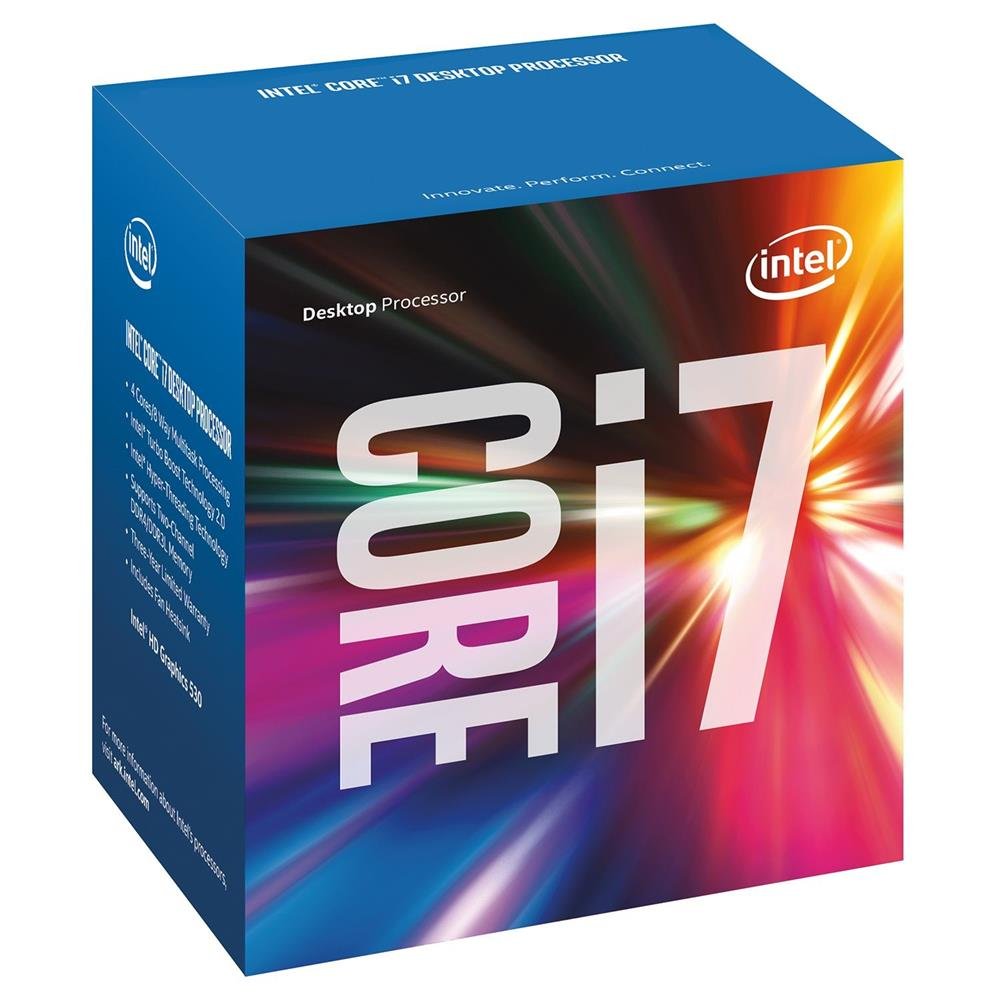
This is an important cautionary listing. The i7-6700 is a Skylake processor that physically fits the LGA 1151 socket, not LGA 1155. Several third-party listings on Amazon have historically miscategorized it under the wrong socket. If you are reading this guide for a true LGA 1155 board, this CPU will not work — the notch positions on the pin grid are different, and forcing it can damage the motherboard socket.
That said, for builders with a compatible LGA 1151 board (H110, B150, Z170, Z270 chipsets), the i7-6700 is a capable quad-core with eight threads, a 3.4 GHz base, and 4.0 GHz Turbo. The HD 530 integrated graphics are a significant upgrade over Ivy Bridge, supporting 4K displays at 60 Hz over DisplayPort. The 65W TDP keeps thermal output low, and the included stock cooler is adequate for stock operation.
If you are specifically shopping for an LGA 1155 processor, skip this listing and focus on the i7-3770 or i5-3570K above. If you mistakenly purchased this for a 1155 board, it will not install. This product serves as a reminder to always double-check the socket generation — printed model numbers and marketing copy on Amazon can be inaccurate for legacy components.
Why it’s great
- Excellent performance for LGA 1151 socket builds
- HD 530 graphics support smooth 4K desktop output
Good to know
- Physically incompatible with LGA 1155 motherboards
- Listing errors on Amazon require careful verification
FAQ
Will an Ivy Bridge CPU work in a Sandy Bridge motherboard?
Can an LGA 1155 CPU support DDR4 RAM?
Is the i5-3570K or i7-3770K better for gaming today?
Final Thoughts: The Verdict
For most users, the lga 1155 processor winner is the Intel Core i7-3770K because it delivers the highest single-threaded clock speed and eight threads for the legacy platform’s peak performance. If you want a pure gaming chip that overclocks beautifully at a lower cost, grab the Core i5-3570K. And for resurrecting an old office PC without swapping the motherboard, nothing beats the locked Core i7-3770.